

After-hours work in a live retail passage
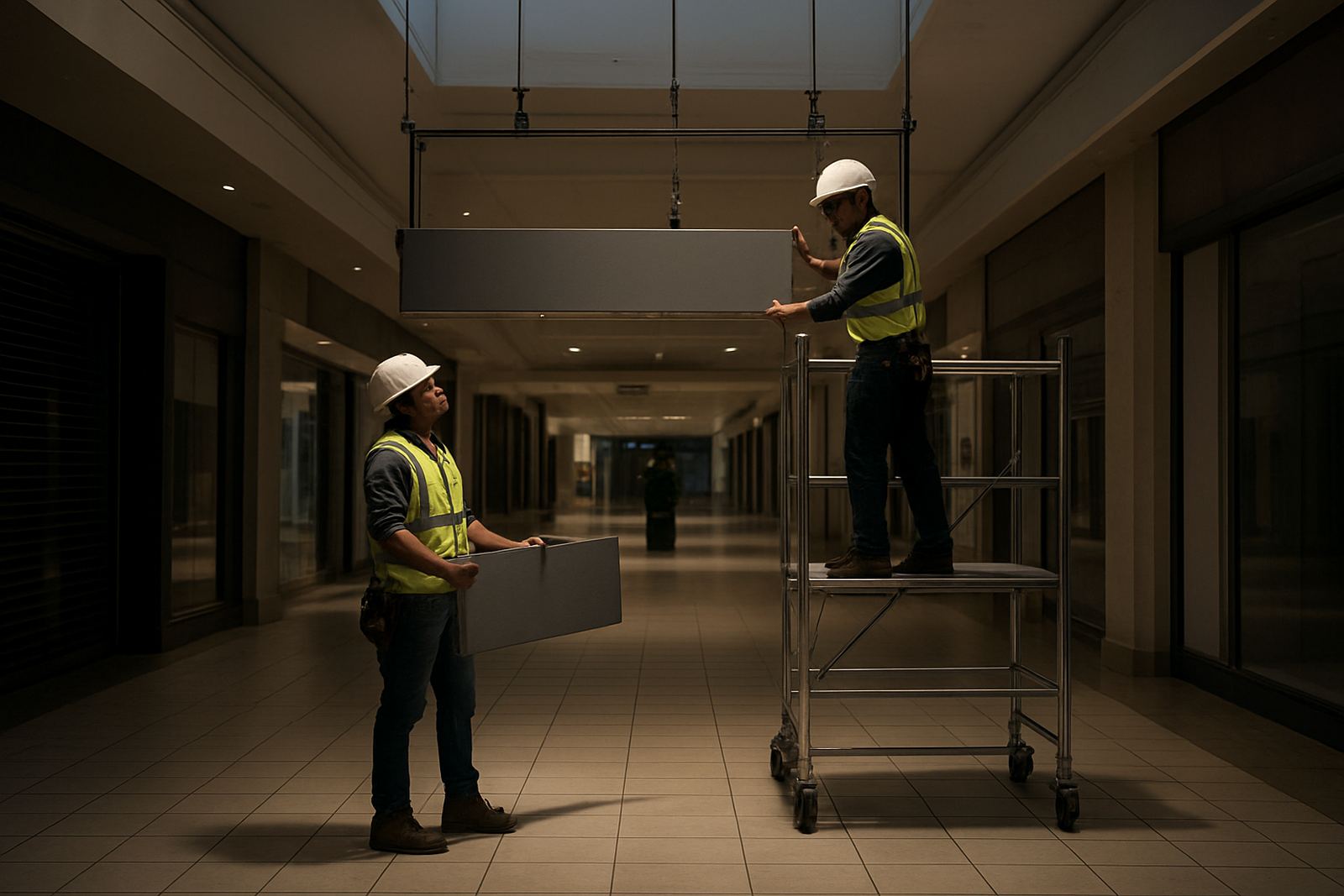
This project came through a sign maker who needed a rigging crew only, with no overlap into their design or fabrication work. The brief was to remove old suspended signs and fit new faces in the same positions, all inside a centre passage where daytime access was not possible and the floor space had to stay clear for trading hours.
We scheduled the work overnight so the centre could reopen on time. The passage had foot traffic, kiosks, glass fronts and cleaning teams moving through the area, so the plan had to be tight. We marked the work zone, protected the floor, and kept materials compact so there was no loose packaging or extra clutter left behind.
What the brief required from our crew
The main requirement was simple: change the suspended signs without damaging the existing fixings, ceiling structure or surrounding finishes. The centre also wanted a crew that understood retail rules, lift planning and working around occupied tenancies, because the site had limited staging space and strict close-up times.
- Remove existing suspended sign faces and hardware in sequence
- Install new sign components at matching heights and alignment points
- Work within an overnight window, with handover before the first trading rush
- Keep the passage open for cleaning and morning tenant access
- Maintain full safety controls for overhead work in a public environment
We also had to factor in power isolation for the lighting circuits, access to the ceiling points, and a clean finish because the installation sat right above a main pedestrian line. There was no room for guesswork and no room for delays either.
Access, safety and lift planning
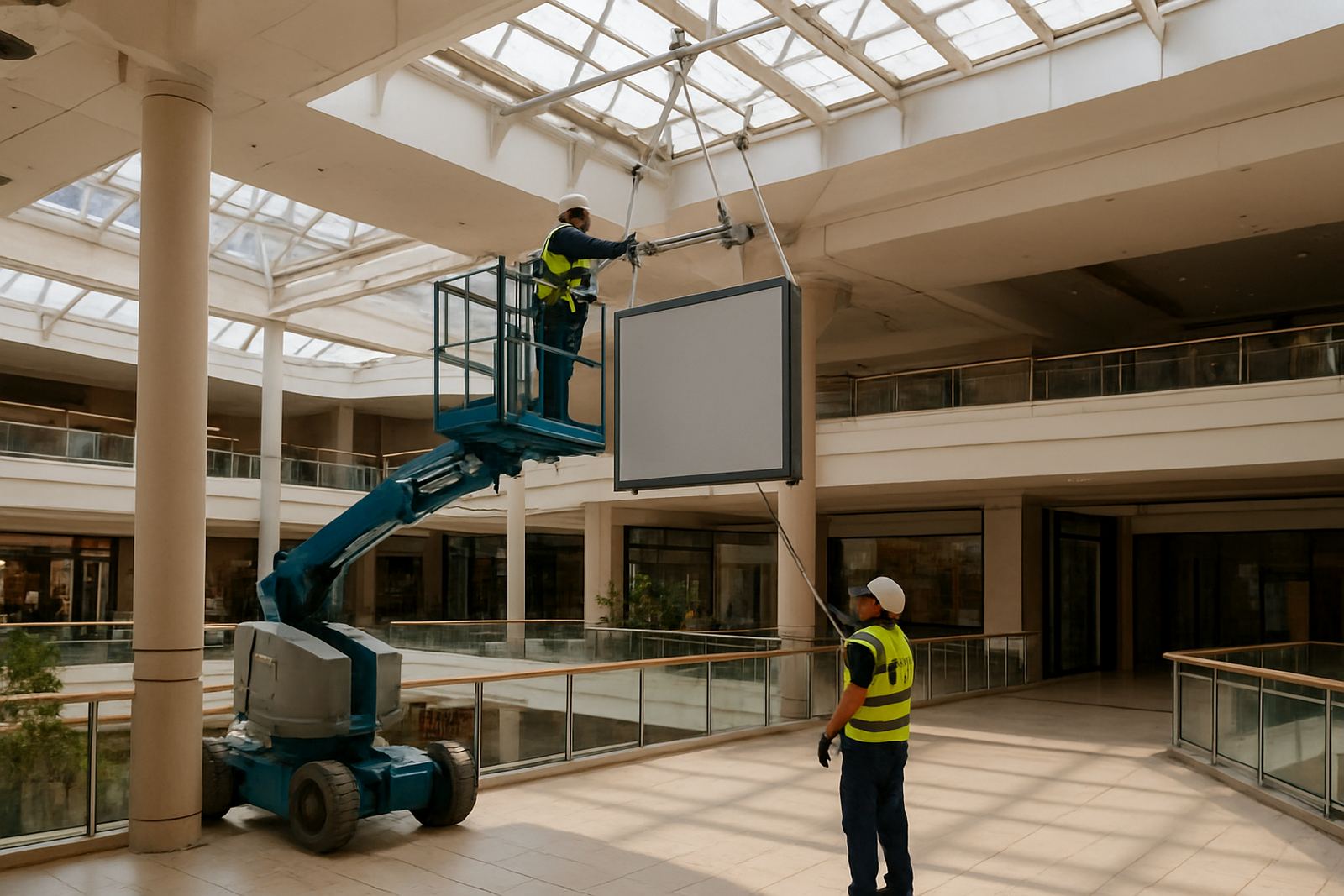
For this type of job, the method matters as much as the fixings. We carried out a site survey before the swap and confirmed the safest access position for each sign bay. Because the work was suspended overhead, we planned the lift sequence so the crew could remove, pass down, and reinstall parts without moving through busy floor areas more than needed.
Our team arrived with scaffold and platform access gear, rigging hardware, tag lines, and first-aid trained supervisors. We also had a safety officer on site to manage the work area and check compliance through the shift. The ceiling height and passage width meant we had to work neatly, and one small mis-step could have affected the retail opening the next day.
- Pre-job survey and access check
- Lift plan for each sign bay
- Tool and hardware check before start
- Floor protection and edge protection where needed
- Final inspection after each swap
Overnight removal and rehang sequence
We completed the job over one night shift, with the removal phase starting after the centre closed and the final checks done before sunrise. The existing signs were carefully lowered, labelled and set aside for disposal or return, depending on the client’s instruction. New sign faces were then lifted into position and secured to the existing support points.
Where the original fixings showed wear, we replaced hardware before rehang so the new signs would sit straight and stay put under daily vibration and air movement from the passage. In a mall setting, even a slight tilt shows up quickly, so the alignment had to be exact. We checked face tension, fixings and light access before signing off. A dropped fastener in this type of space would have caused problems, so all loose items were controlled in bags and trays throughout.
The result for the centre and sign maker
The passage was ready for trading the next morning, with the new suspended signs in place and the area left clean. The centre kept its opening schedule, and the sign maker had a rigging partner who stayed in their lane and did not compete for fabrication work. That is how we prefer to operate, because it keeps the relationship clear and practical.
The finished result was neat, level and safe, with no visible damage to the ceiling line or surrounding finishes. The client also had a record of what was changed, where each sign was installed, and which fixings were reused or replaced. That helps on future maintenance visits and makes the next swap quicker. In a busy retail site that kind of record matters more than people think.
For a centre like this, the main win is not only the finished sign. It is the fact that trading can continue with minimal interruption, and the sign maker can hand over the job knowing the site has been handled properly, not rushed.
What we would repeat on the next mall swap
We would use the same approach again: survey first, overnight access, clear lift plan, and a crew that knows how to work around live retail conditions. That combination reduces risk and keeps the centre staff happy, which is often the difference between a smooth night and a long one.
- Bring pre-cut protection for the floor and ceiling touch points
- Keep all replacement fixings grouped by sign bay
- Use a strict handover checklist before opening time
- Allow extra time for final cleaning and inspection
For shopping centre passages, the job is usually less about raw lifting and more about control, timing and neat execution. This one went well because the plan matched the site, and the crew knew exactly what had to happen before first light. That saved time and kept the centre manager off our backs, which is always a good sign.
Key facts
| Project | Overnight suspended sign swaps in a shopping centre passage |
|---|---|
| Location | Century City, Cape Town |
| Scope | Removal and reinstallation of suspended signs for a sign maker |
| Access method | Lift planning, scaffold access and platform work |
| Timeline | 1 week from survey to completion, with overnight installation |
| Crew | Managing director oversight, supervisor, safety officer and access lead on site |