

Campus brief and what had to be achieved
The client was a sign maker handling a campus wayfinding package in Stellenbosch, with several separate sign types going up across paths, entrances, parking areas and building fronts. They needed a rigging crew that could work independently, protect the finished sign faces, and keep the job moving without stepping into the sign supply side of the project. That is exactly the sort of work we do. Rigging only, no competition with the sign shops we serve.
The brief was straightforward on paper: install a set of directional and identification signs, complete a few removals where old signage had to come down, and leave each point neat for the next trade. In practice a campus brings moving vehicles, students, staff, delivery access, tree cover, uneven paving and a lot of eyes on the job. We planned the lifts so the team could work safely and keep footpaths open as far as possible.
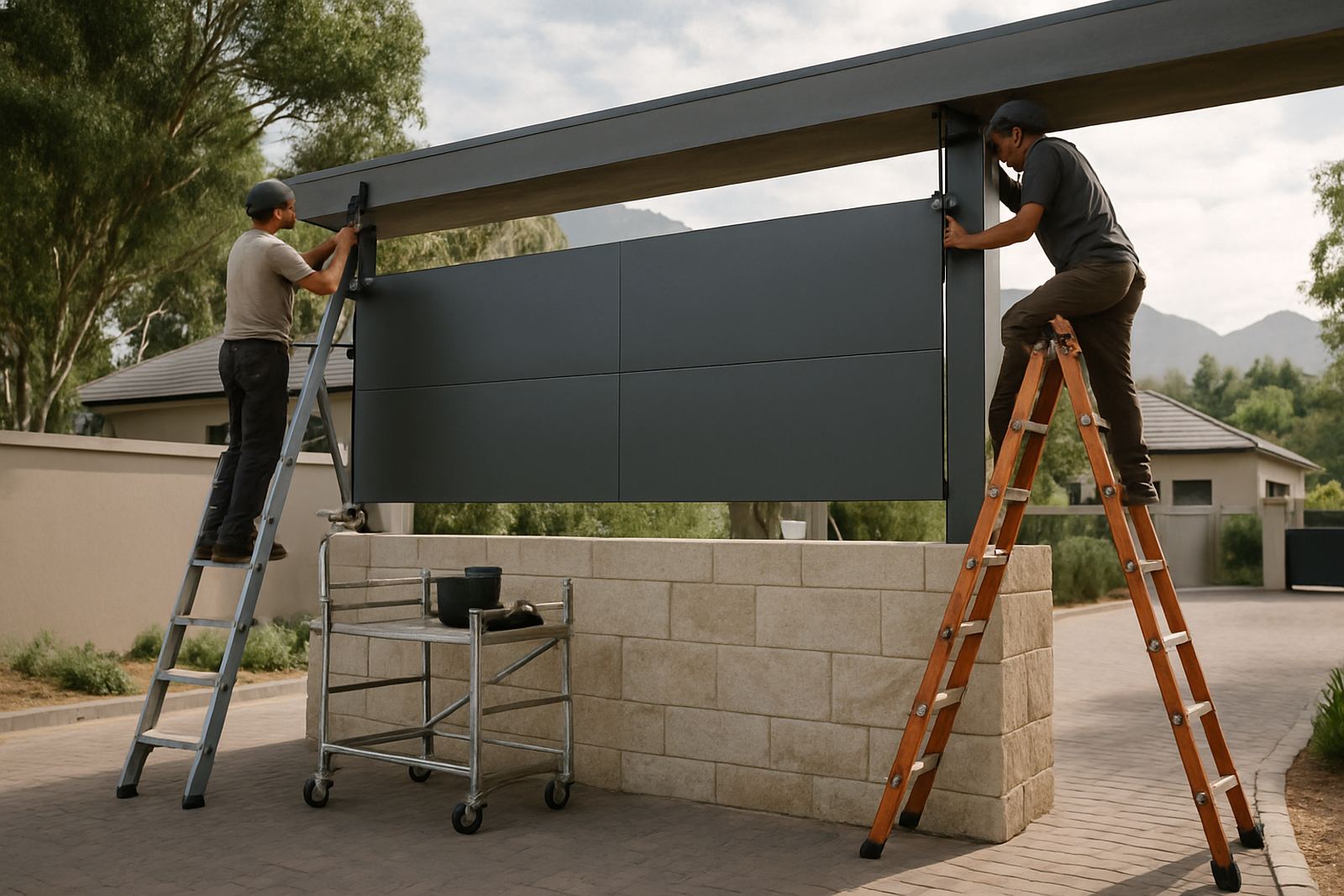
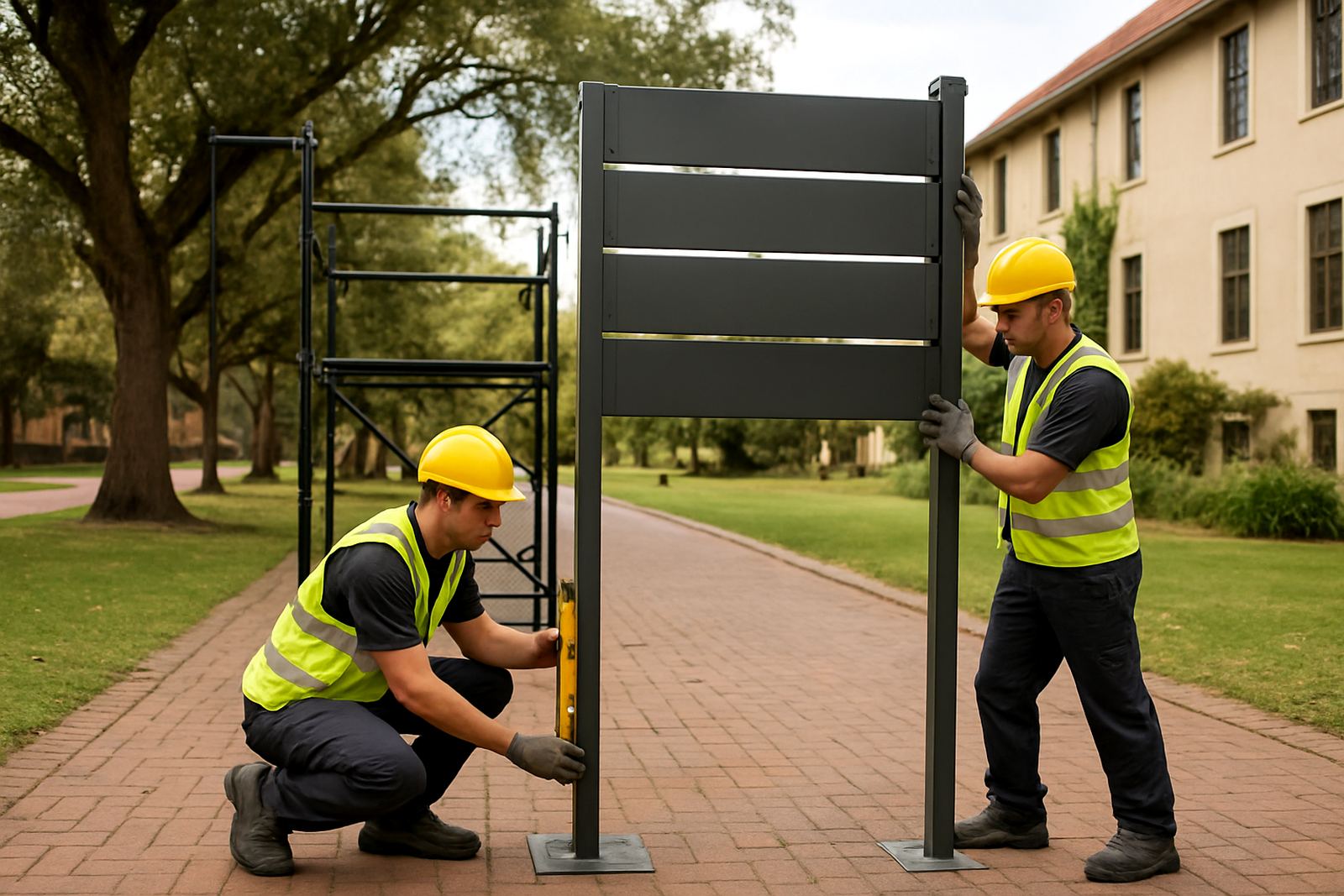
The sign package included small wall-mounted directional boards, larger post-mounted wayfinding signs and a few higher-positioned items where lighting access and reach mattered. The sign maker wanted a crew that could measure, confirm fixing points and handle the install without damaging painted surfaces or garden areas. We built the sequence around the site layout, and kept the handover notes tight so nothing was left unclear.
Access planning for a live learning environment
Because this was a working campus, timing mattered as much as the install itself. We split the work into short runs over several visits rather than trying to force everything into one crowded day. That gave us room to manage pedestrian flow, avoid class-change periods and work around any vehicle access restrictions at the gate. It also helped with noise control near teaching spaces.
Weather was a real factor in Stellenbosch. Wind in exposed sections can affect a lifted panel, and afternoon heat can make handling aluminium, vinyl finished faces and fixings harder than expected. Our team adjusted start times to suit the forecast and the campus schedule. On one morning a light drizzle delayed the first lift, so we used that time for final checks, battery charging and line marking instead of rushing the job.
We also had to deal with mixed surface conditions. Some fixings went into brick or concrete, while other points needed careful alignment over paving joints and planted edges. The rigging team checked every location before drilling so the signs sat square and the fixings matched the substrate. A small mistake on a campus stays visible for a long time, so we took the slower route where needed.
- Pedestrian routes stayed open where possible
- Access points were confirmed before each lift
- Work periods were kept short and tidy
- Fixings were matched to each surface type
What we supplied and how we worked
We supplied a supervised rigging crew with the right access equipment for the job, plus basic tools for alignment, drilling, fastening and final adjustments. The team arrived with scaffold and first-aid training already in place, and with a safety officer involved in the planning before the first sign went up. That matters on campus work because the site can change quickly once people start moving between buildings.
The installation team handled:
- Setting out and confirming each sign position on site
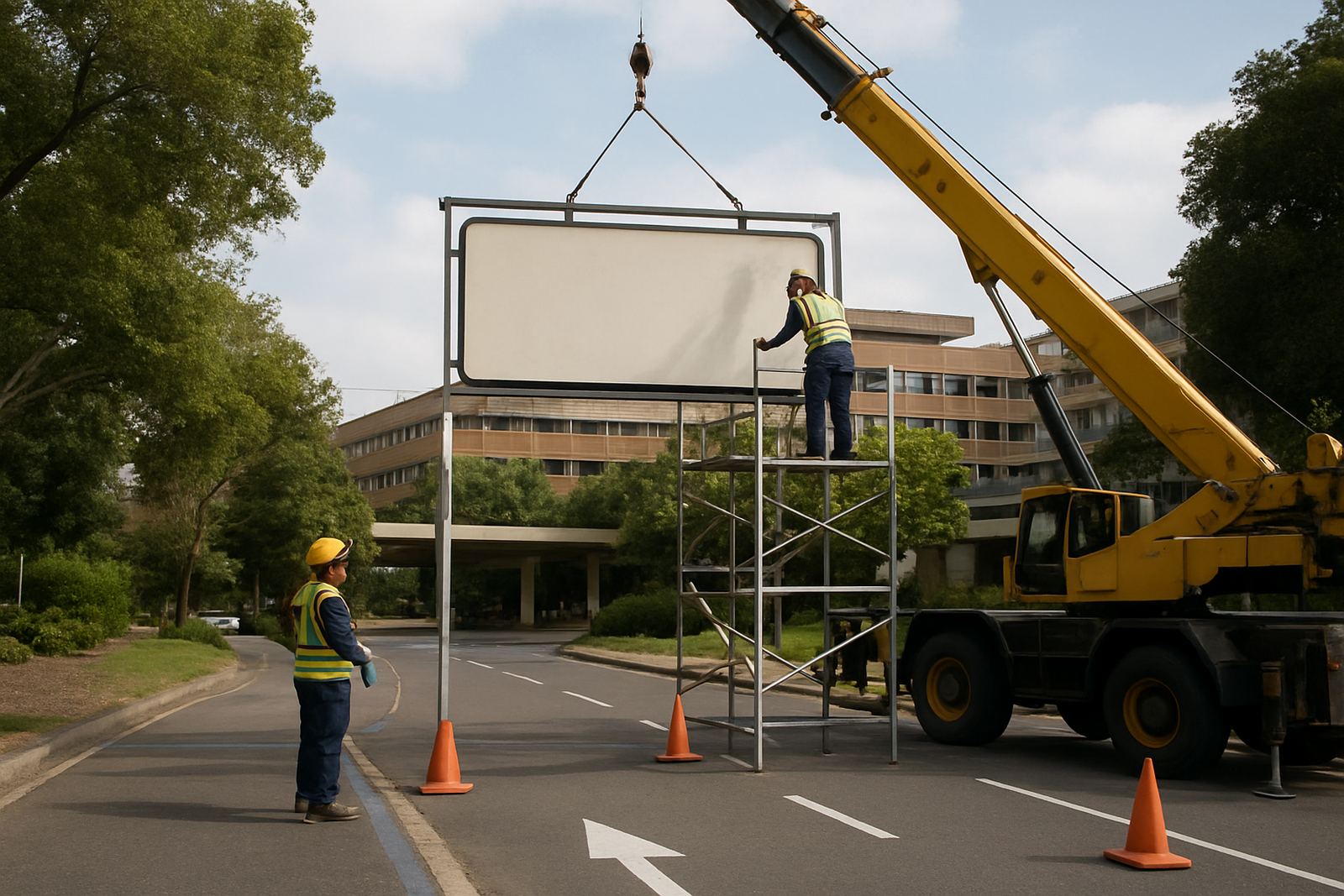
- Safe unloading and movement of sign panels
- Wall, post and frame mounting where required
- Small alignment adjustments after each fix
- Removal and disposal of old signage that the client identified
- Final cleaning of brackets, holes and visible marks where practical
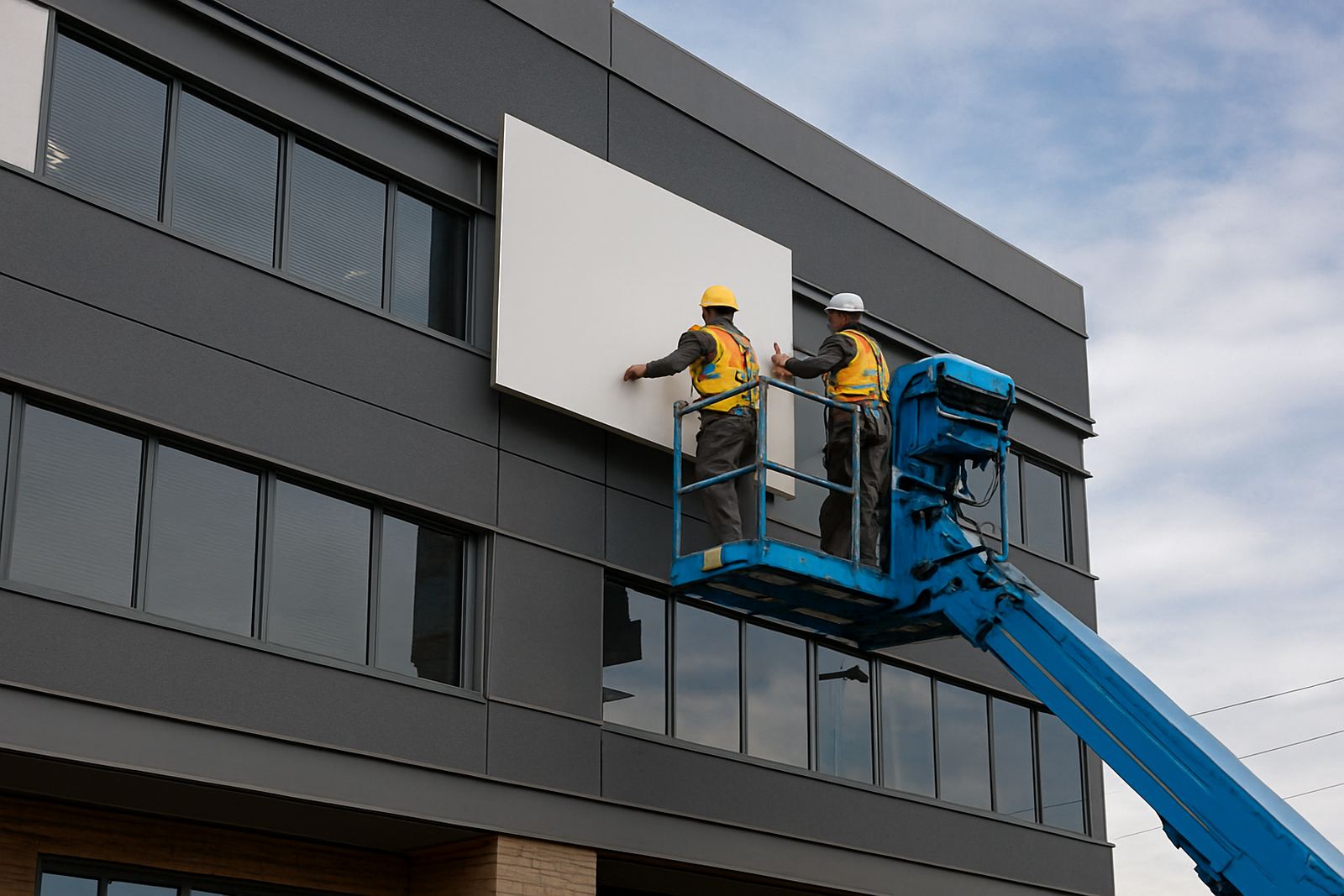
For a few higher access points we used platform work so the team could reach comfortably and avoid overreaching from ladders. That reduced the chance of damage to the sign face and gave a cleaner finish. We also kept the sign maker updated after each section was complete, so they could sign off the next batch with confidence. That kind of step by step communication saves time later, especially when several parties are involved.
Timeline, sequencing and on-site coordination
The full project ran over two weeks from first site check to final sign-off. Week one covered the site survey, lift planning, access checks and the first round of installations. Week two covered the remaining signs, a few corrections after the client walked the site, and the removals where older items had to come off cleanly.
We started with the most visible entries and main directional points, then worked through the less urgent wayfinding positions once the client was happy with line and placement. That order helped everyone see progress quickly and made the later adjustments simpler. It also meant the campus leadership could spot any flow issues early and tell us before the next visit.
The coordination on this job was direct and practical. Our operations side handled the booking sequence, the supervisor managed the crew on the ground, and the client liaison kept the sign maker informed on timings. Gareth van der Merwe oversaw the broader delivery, while the safety officer checked the access plan and the working method. No drama, no repeated site visits for the same issue, just careful sequencing and a clean result.
Results that made the campus easier to read
By the end of the job the campus had clearer wayfinding, better sign consistency and fewer old panels cluttering key routes. The sign maker got a rigging partner who could move at their pace without trying to take over the design or supply side of the project. That is important for trade relationships, especially where several campuses or phases may follow.
The finished result was neat and practical. Signs were aligned properly, fixings were secure, and the remaining surfaces were left ready for any future updates. Staff and visitors could find main points more easily, and the client had a record of where each sign was installed for later maintenance. On a live campus, that record is worth having.
What would we do again? The same approach: short planned visits, clear access checks, a small experienced crew and direct communication with the sign maker before each stage. We would also use the same principle of doing removals before new installs where the site allows it, because that keeps the work area cleaner and reduces clutter for everybody.
Key facts
| Client type | Sign maker serving a campus environment |
|---|---|
| Town | Stellenbosch |
| Scope | Multiple wayfinding sign installs, removals and servicing support |
| Timeline | 2 weeks from survey to final sign-off |
| Access method | Platform work and controlled ground access |
| Crew | Safety-trained rigging team with first-aid cover |