




How to use these safety guides
Use this hub as a starting point when a sign job needs more than a standard installation. Some sites only need a basic lift and a quick fit-off, while others need scaffold, platform work, traffic control, or a planned shutdown window. The guides are grouped by the kind of risk or access issue you are dealing with, so you can choose the most relevant one before work starts.
If your job involves a retail centre, warehouse yard, roadside pole sign, or a live office block, read the guide that matches the site condition first. That helps with permits, access checks, and getting the right crew on site with the right gear. It also avoids delays where a small omission turns into a half-day wait at the gate.
Working at height on sign jobs
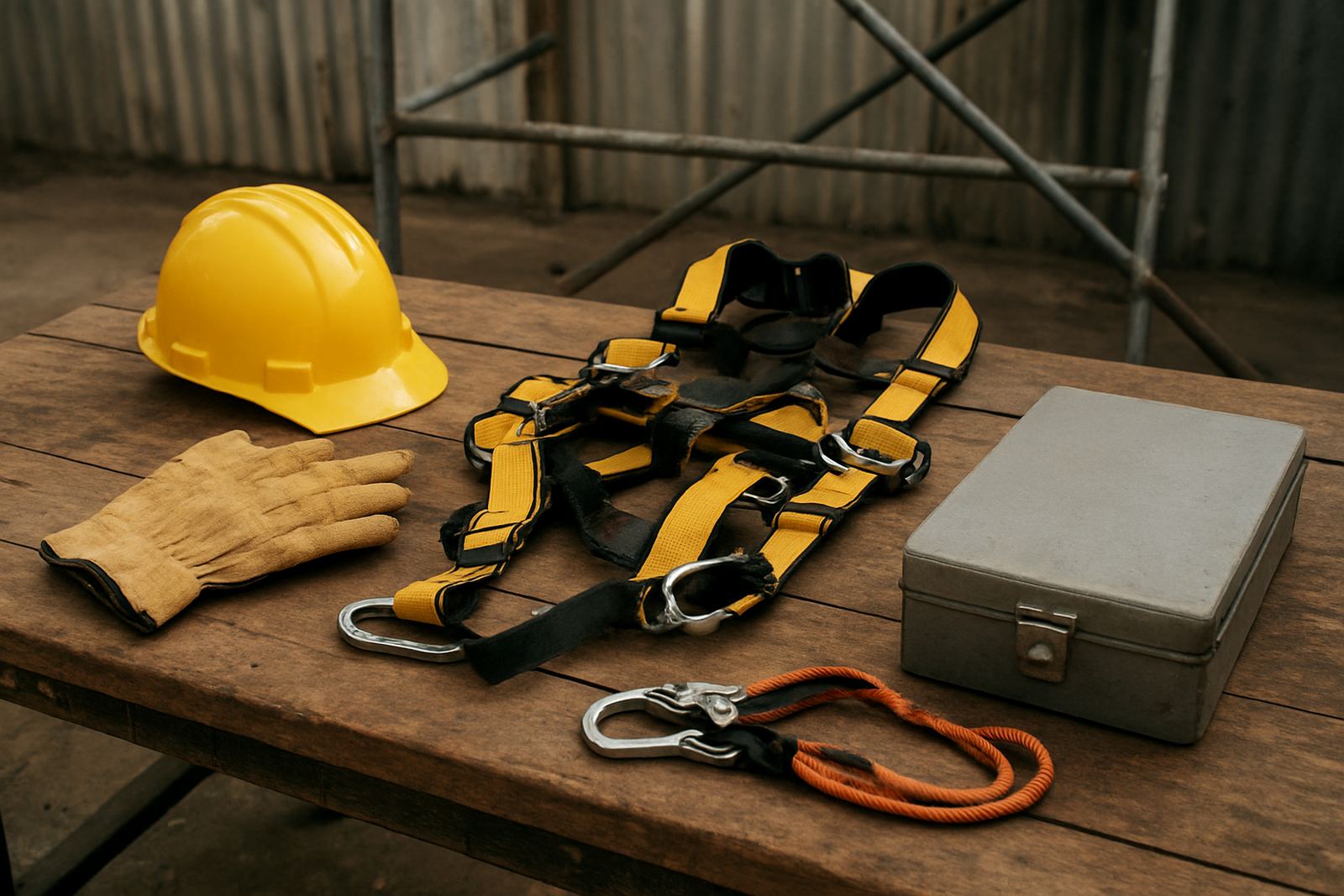
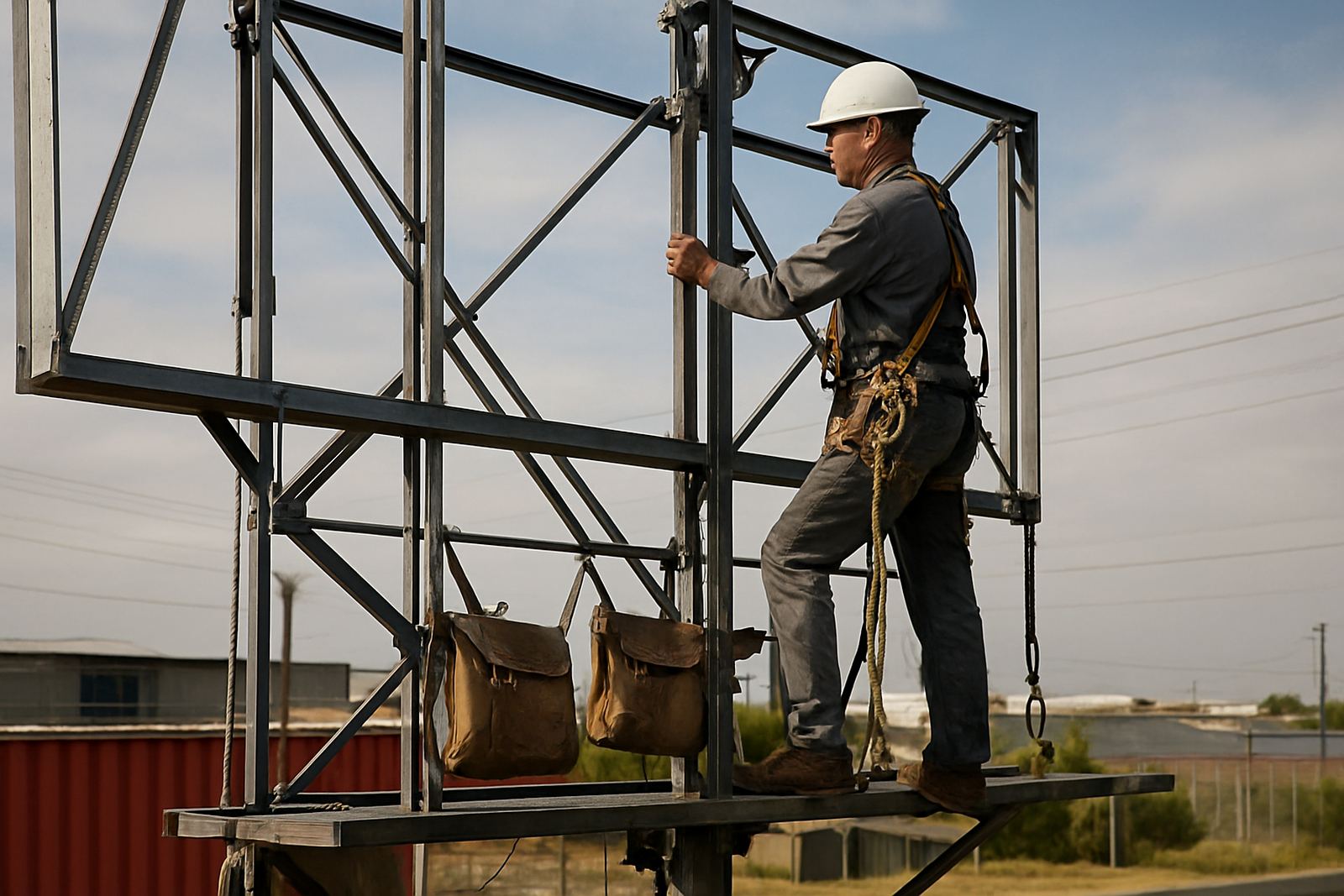
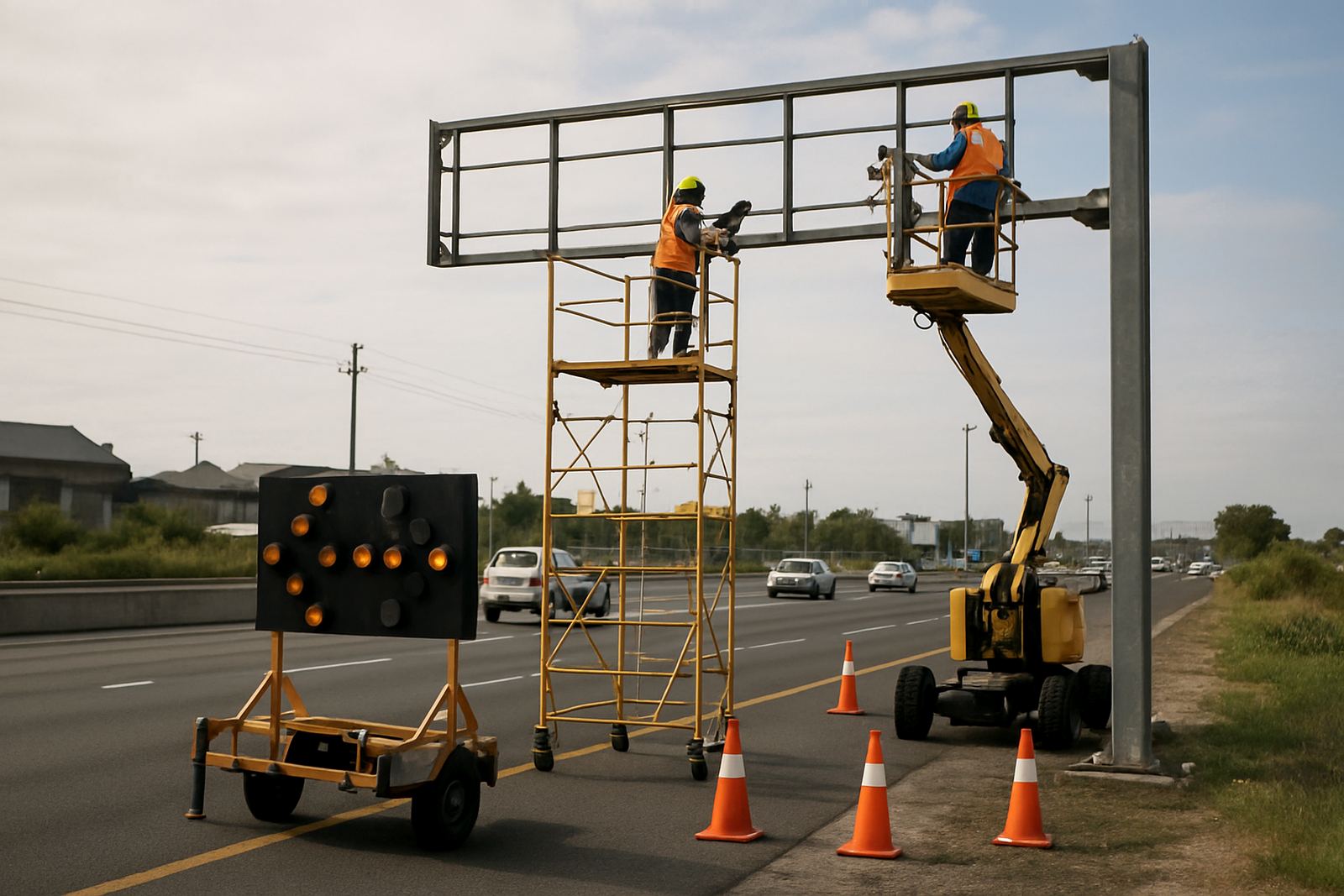
Most sign installations and removals involve height, and that means planning before anyone climbs. A safe job starts with a site survey, a look at the mounting surface, and a clear understanding of where the team can stand, tie off, and move materials. On windy days in Paarden Eiland, Bellville or along the coast, conditions can change quickly so the lift plan should allow for stoppages if needed.
- Check ground conditions for soft tar, potholes, kerbs, or wet paving.
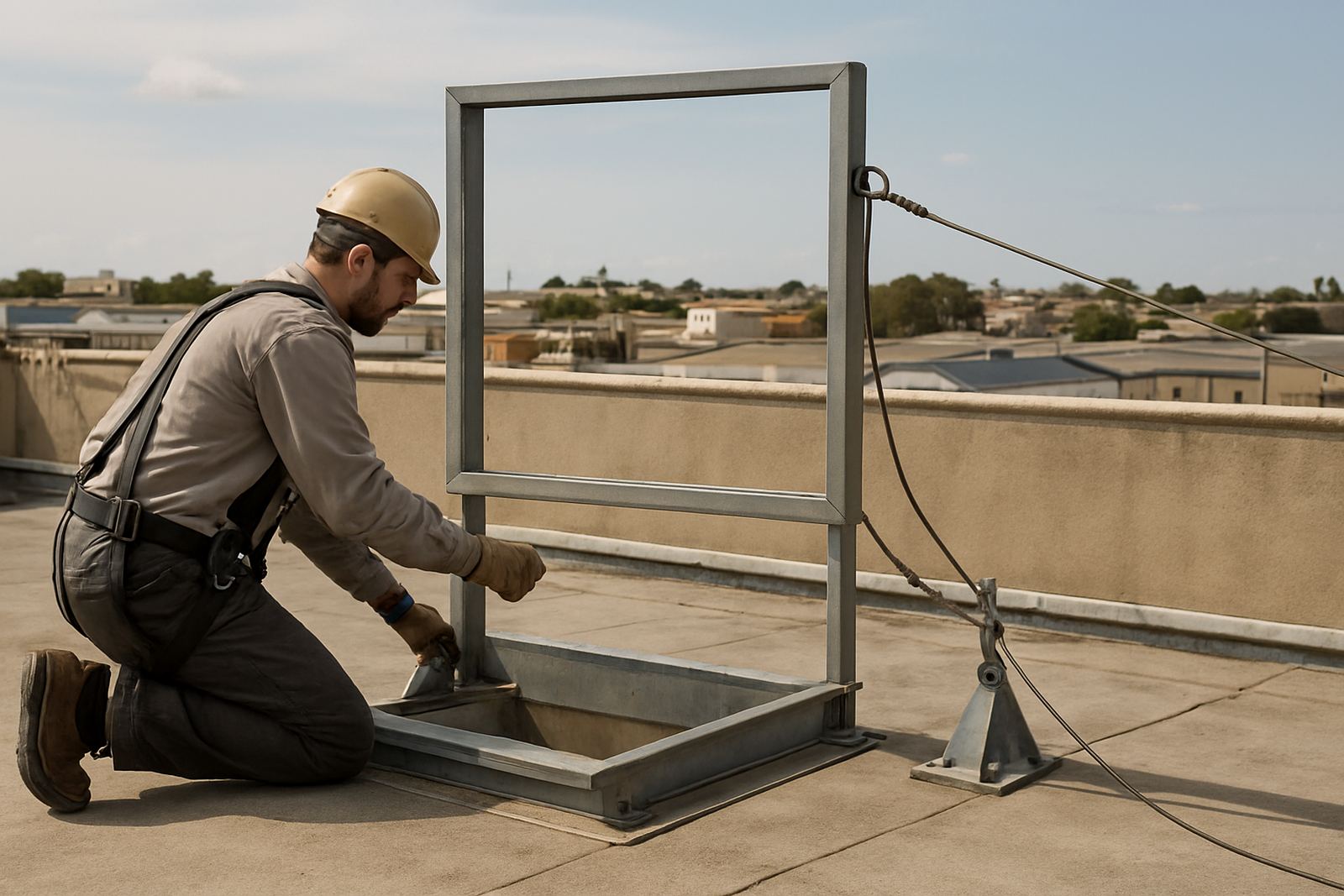
- Confirm anchor points, edge protection, and fall zones before arrival.
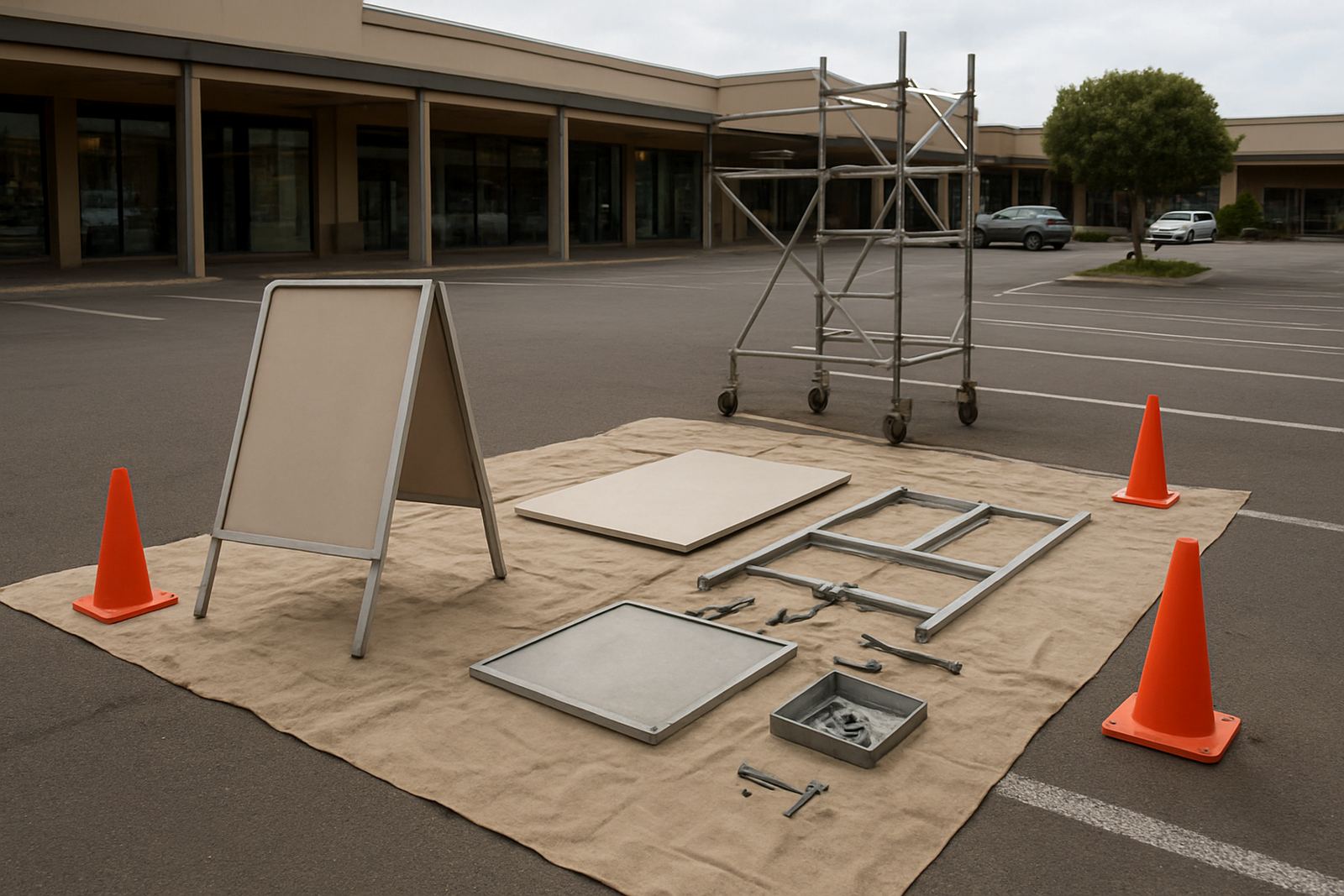
- Keep the public area below the work zone closed off and clearly marked.
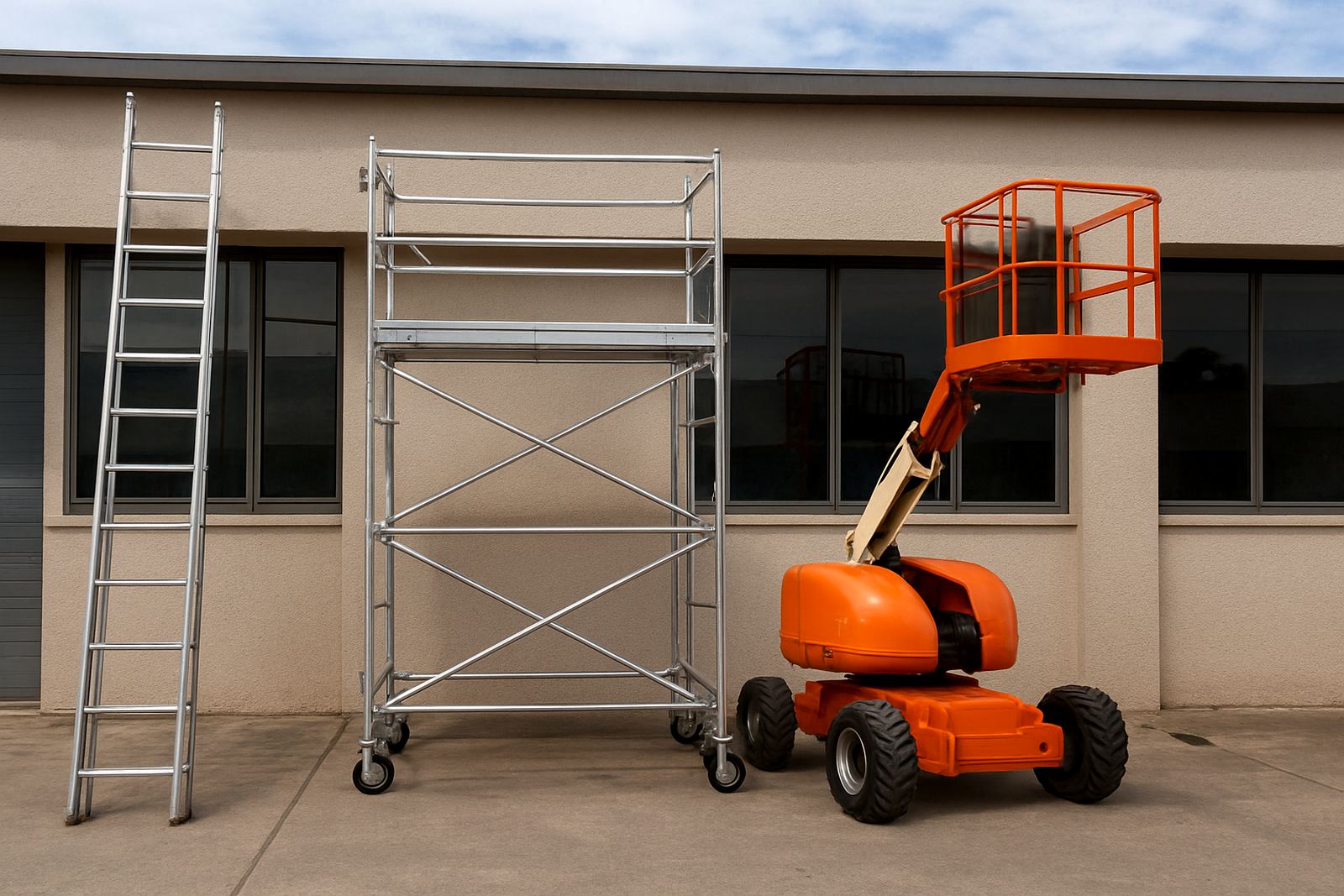
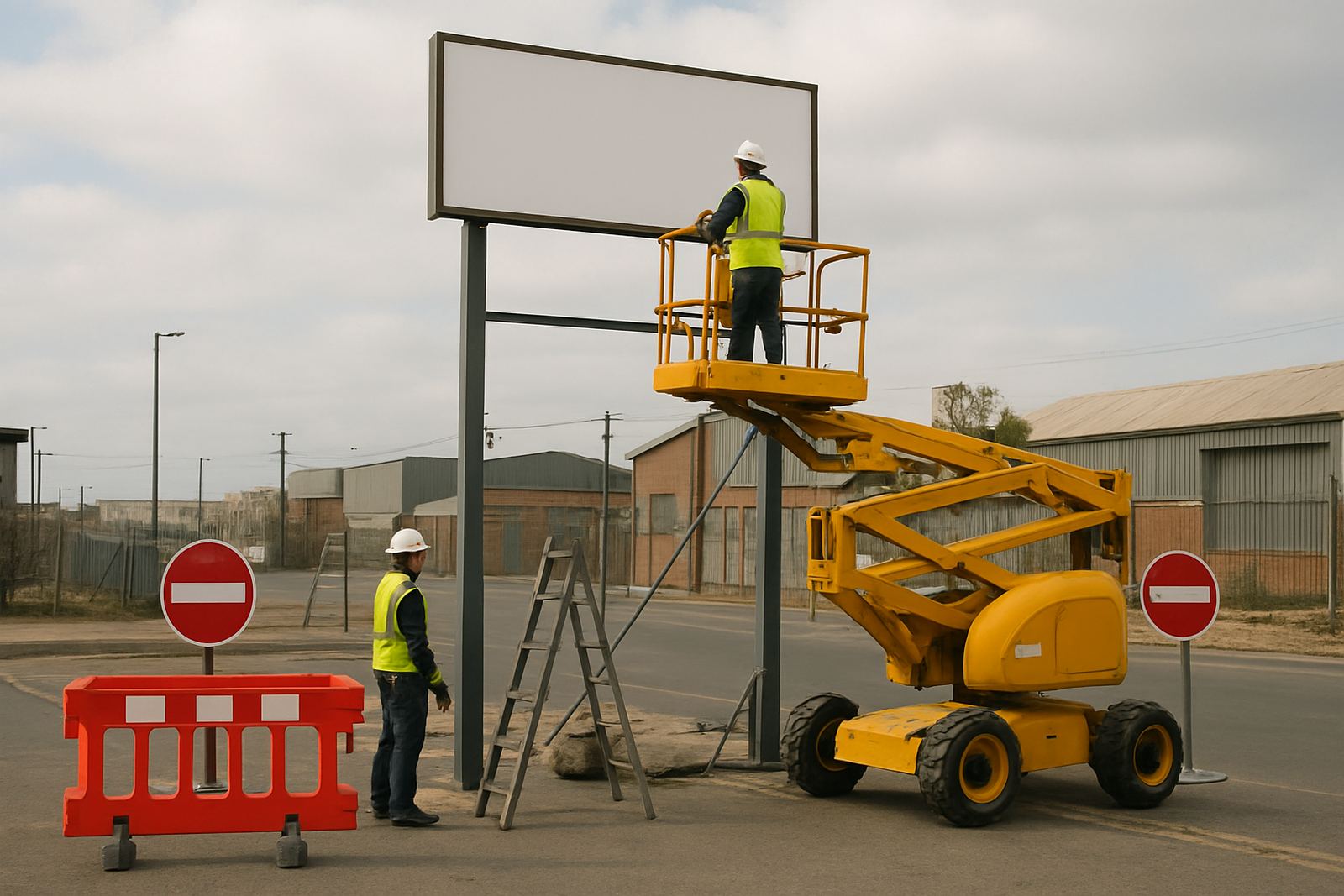
- Use the correct access method for the height, reach and surface condition.
Lift planning for heavy signs and billboard changes
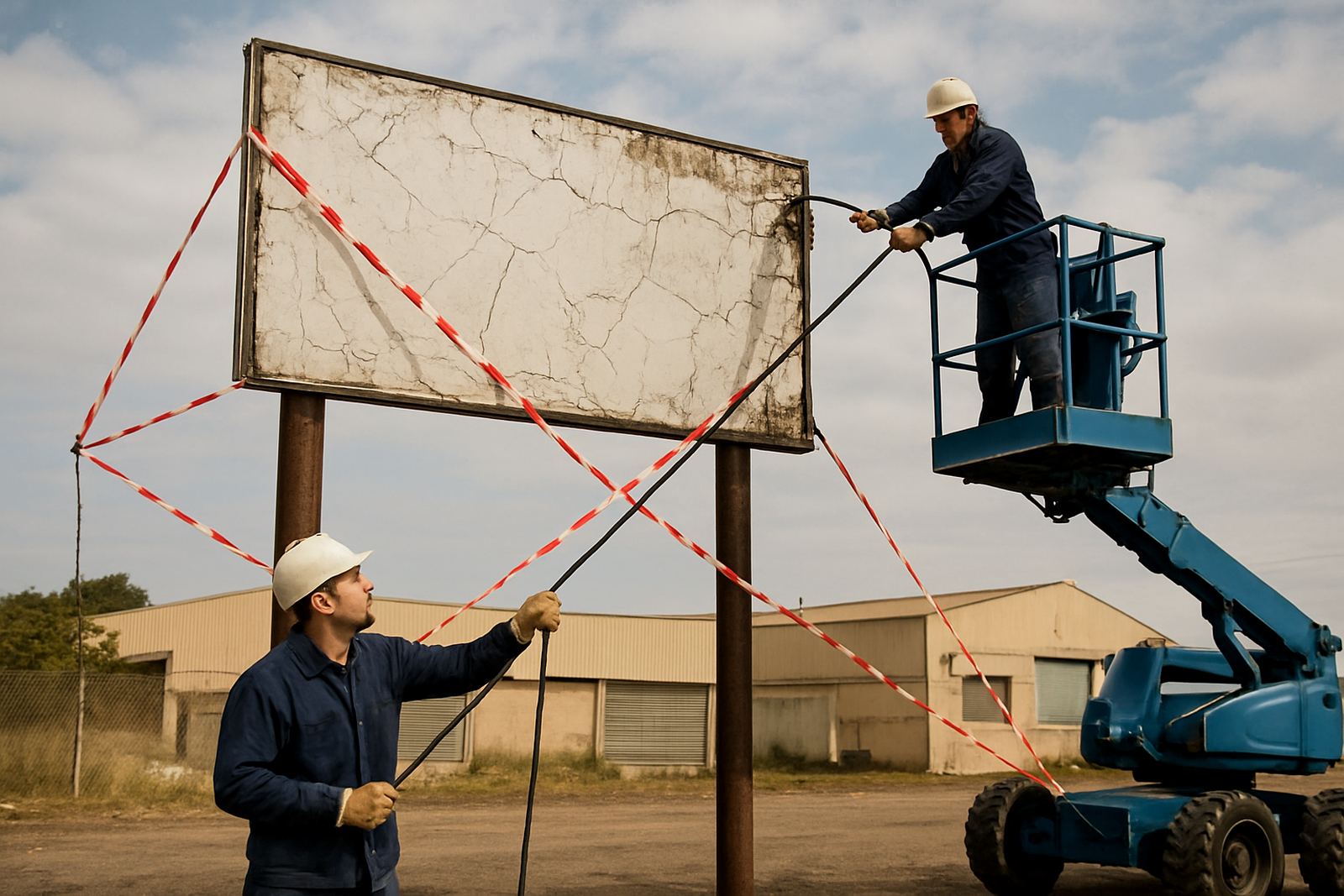
Large signs, fascia panels and billboard face changes need proper lifting plans. Weight, size, wind load and the path of travel all matter, especially on busy sites in Johannesburg CBD, Sandton or Midrand where there may be vehicles, pedestrians and building services to work around. A lift that looks simple from the ground can become tricky once the team has to clear parapets, cables or service pipes.
Before the truck, crane or platform arrives, confirm the method, the load rating, the hand signals, and the landing point. That keeps the job moving and reduces the chance of damage to the sign, the façade, or the people working nearby.
- Measure the sign face and frame, not just the visible panel.
- Allow for wind catch on aluminium, ACM and flex-face material.
- Confirm access times with building security and neighbours if needed.
- Plan where removed parts will be stacked, packed or loaded out.
Live-site safety for malls, offices and street frontages
Many sign jobs happen while a site is still open to the public. That means the crew has to manage noise, dust, access and electrical isolation without disrupting the tenant or building manager. In places like Somerset West, Paarl and the East Rand, busy trading hours often leave only a narrow window to get the work done safely.
Live-site jobs need clear communication with the client, the guards, and the people on the ground. If a sign is above a shop entrance or near an escape route, the safe zone must be set before tools come out. It is better to hold for ten minutes than to push on and risk a fall or injury.
Electrical isolation and lighting access
Illuminated signs need extra care because the work can involve live circuits, ageing fittings, and cramped access behind the face. The first step is to isolate the supply and verify that it is dead before touching any wiring. That sounds basic, but on older sites the labels are often missing or wrong, so the team should not assume anything.
For maintenance visits, lighting access should be planned with enough time to inspect fittings, transformers, cable runs and weather seals. Coastal humidity can affect connections and housings, while load-shedding can create more switch-on and switch-off cycles than the equipment was originally set up for.
What sign makers should send before the crew arrives
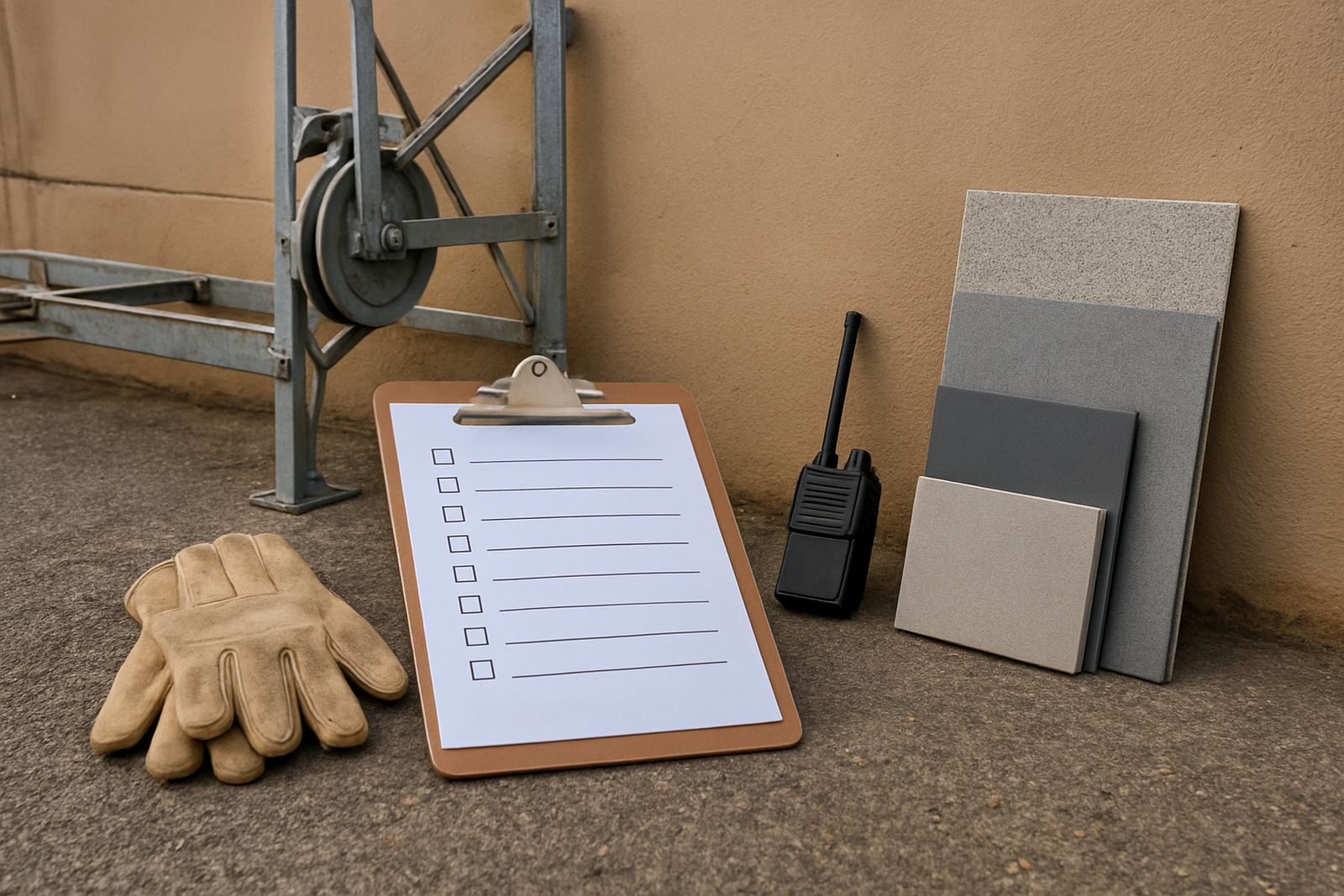
A complete job brief saves time and helps the rigging team arrive ready to work. It also avoids repeat visits where a missing key or permit stops the job at the gate. If the site is in a controlled area, a body corporate, or a plant yard, the access rules should be shared early.
- Site address, contact person and trading hours.
- Clear photos of the sign, mounting point and access route.
- Any height, weight or width details for the unit being moved.
- Permit requirements, induction steps, and parking instructions.
- Whether the work is installation, removal, servicing, or relocation.
The more accurate the brief, the fewer surprises on site. That matters when the crew is working with scaffold, platform access or a crane booking that cannot be extended at short notice.
Choosing the right guide for your job
If the job is about getting a new sign into place, start with the installation guide. If the issue is taking down an old sign for replacement or end-of-lease work, use the removal guide. For flickering lights, weather damage, or repeated call-outs, the servicing guide will usually be the best fit. When the site has access limits, use the guides on lift planning, scaffold access, and platform work first.
For urgent jobs, look for the guide that matches the risk as well as the task. A small repair at ground level is one thing, but a sign above a public walkway or on a tall façade needs a different approach. That is how sign makers keep the job safe, keep the client informed, and keep the site moving without drama.