

What we check on site
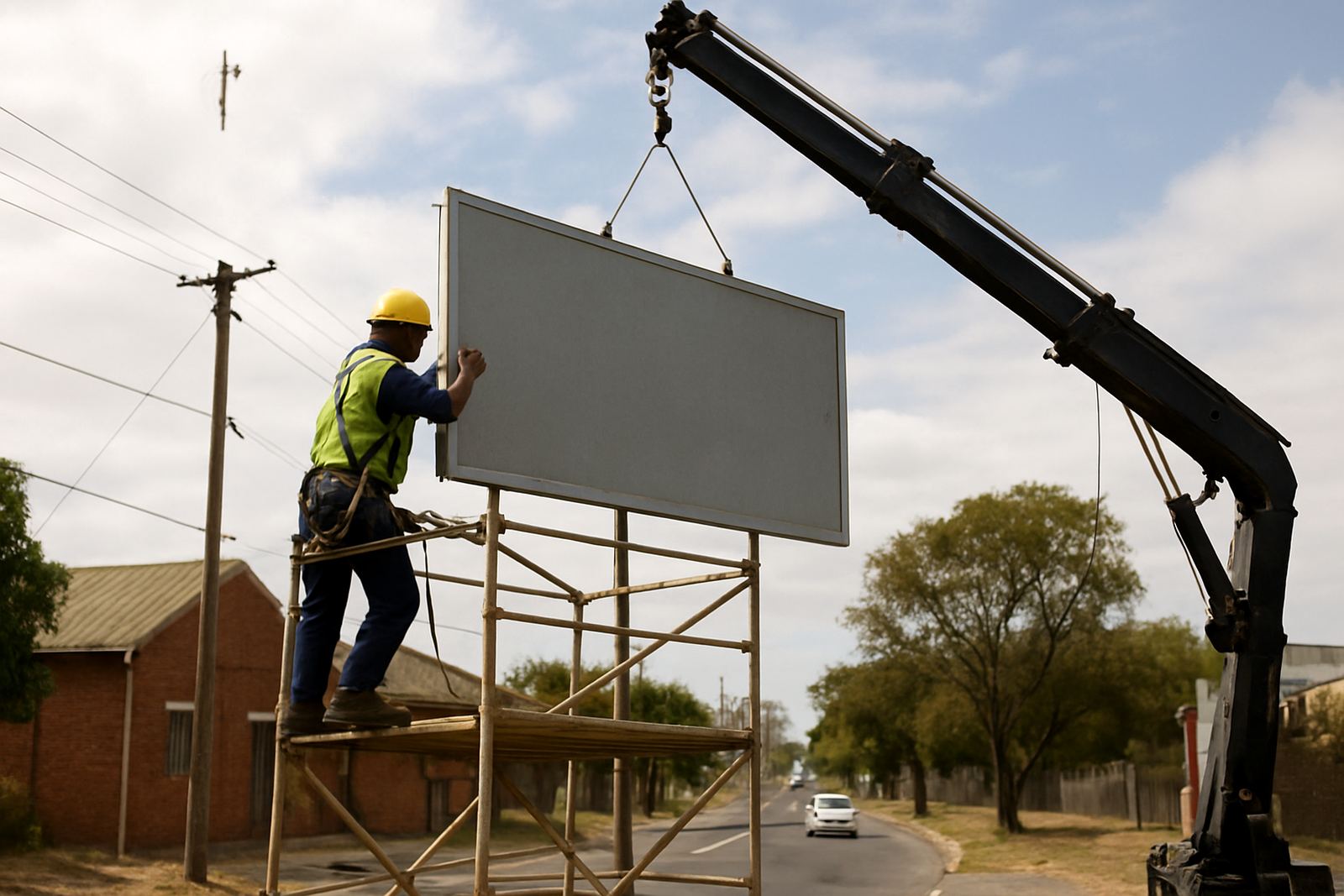
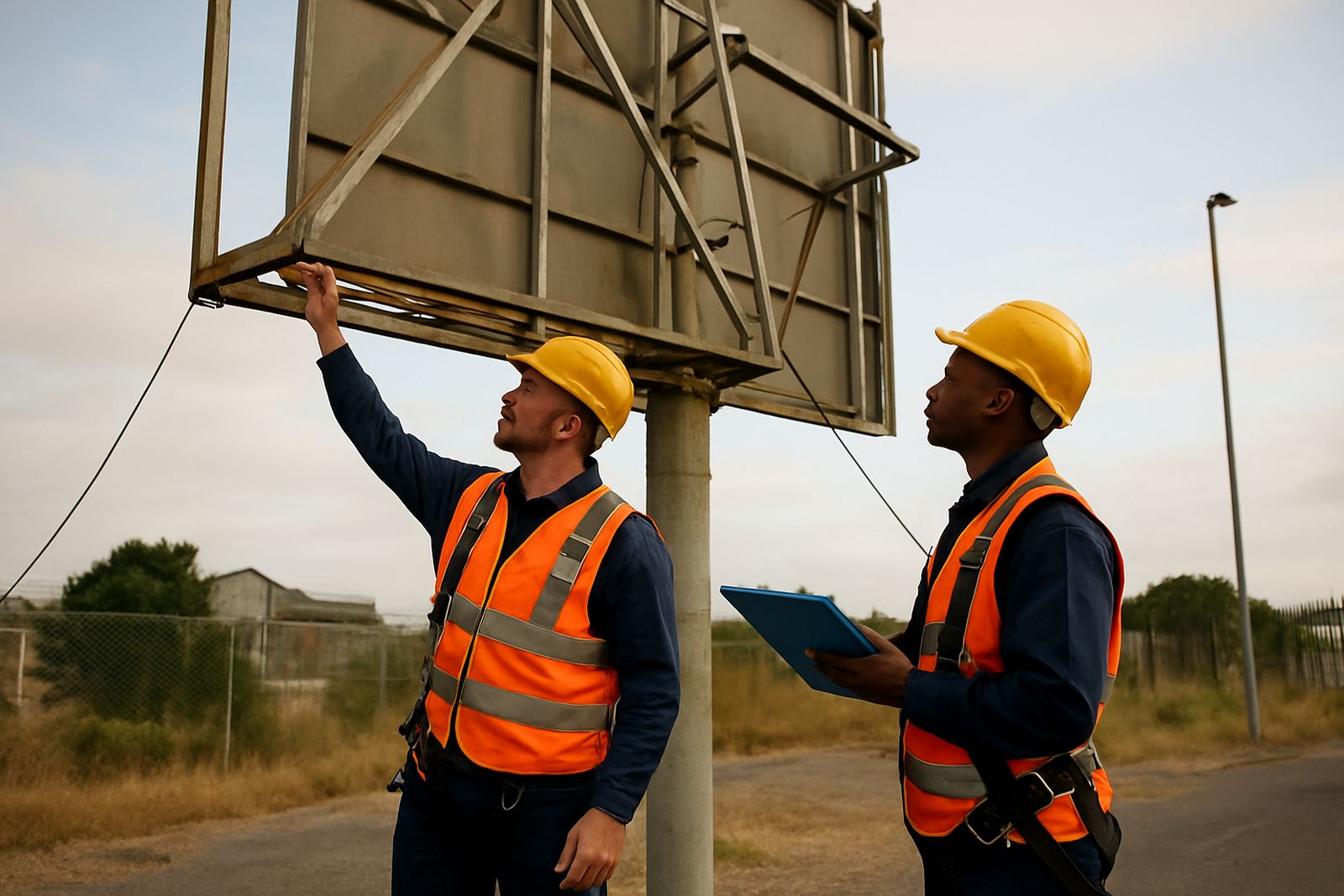
A site survey gives the crew a clear picture of what is waiting for them on the day of install or removal. We look at the building, the mounting surface, access routes, working height and any live services around the sign position. If the site is in Paarden Eiland, Bellville, Somerset West, Paarl, Johannesburg CBD, Sandton, Midrand or the East Rand, we plan for the local conditions that can affect the job.
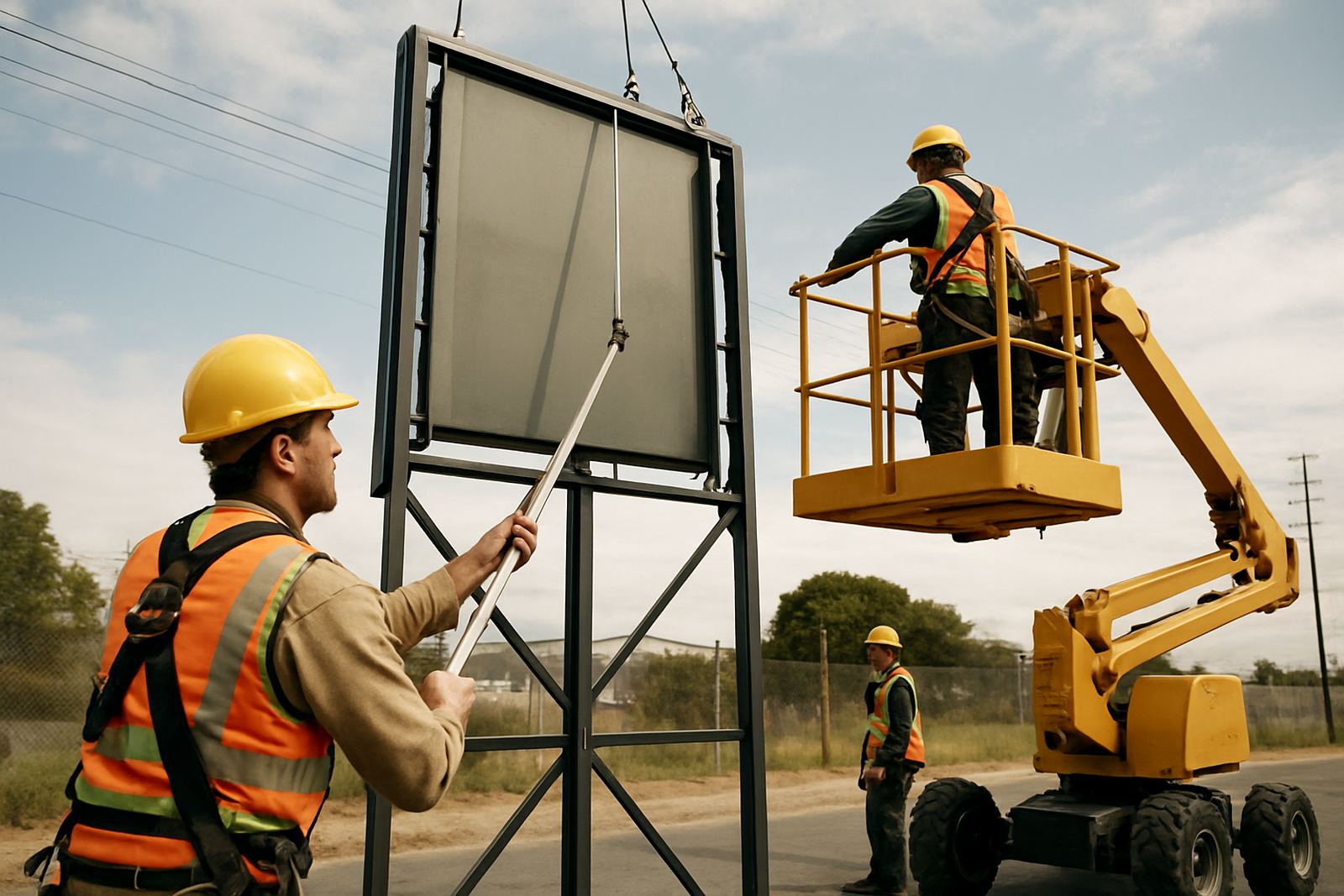
That includes narrow loading bays, busy pavements, roof edges, coastal corrosion in Cape Town, and weather exposure on taller facades. We also check whether scaffold, ladder access, a platform or a lift is the best option for the work.
Why sign makers book us before installation
Sign shops need accurate information before they commit to manufacture or send out a crew. A survey helps reduce surprises at the wall, and it keeps the responsibility for the sign work where it belongs, with the sign maker and the rigging crew working together.
We do rigging only. That means we do not compete with the sign makers we serve, and we do not try to take over their client relationship. Our job is to support the install, removal or servicing stage with the right access plan and the right safety checks.
- Confirm fixing points and surface condition
- Check access for ladders, scaffold or platform work
- Review lifting needs and load handling
- Flag weather, power or traffic issues before the job day
- Help reduce repeat visits and wasted callouts
How the survey booking process works
Use the enquiry form on our contact page and tell us where the sign is, what type of work is needed, and when the site can be accessed. If the job is urgent, say so clearly. Our operations team then checks the details and arranges a survey slot that suits the site and the crew.
For some projects we can work from clear photographs, but a physical visit is better when the sign is high up, on a boundary, over a shopfront, or near other tenants. If the site needs lift planning or scaffold access, we will note that early so the sign maker can budget properly.
- Send the address and suburb
- Describe the sign type and approximate size
- Share any access restrictions or site contact rules
- Tell us if the sign is new, being removed, or needs servicing
What details help us plan the job
The more accurate the site information, the better the plan. We need to know what the surface is made of, whether there are existing fixings, and if the sign will need electrical access for lighting. If the job involves a billboard face change, relocations or emergency callouts, those details matter too.
Our team will also look at where equipment can be parked, where materials can be carried, and whether the site rules allow work during business hours. In some areas you may need municipal or building management approval before any scaffold or platform goes up, so early planning saves time.
- Wall type, roof edge, gantry or free standing structure
- Height from ground level and any overhead obstacles
- Power access for illuminated signs
- Parking, delivery and loading space
- Working hours, tenant restrictions and security access
Safety, access and weather on the day
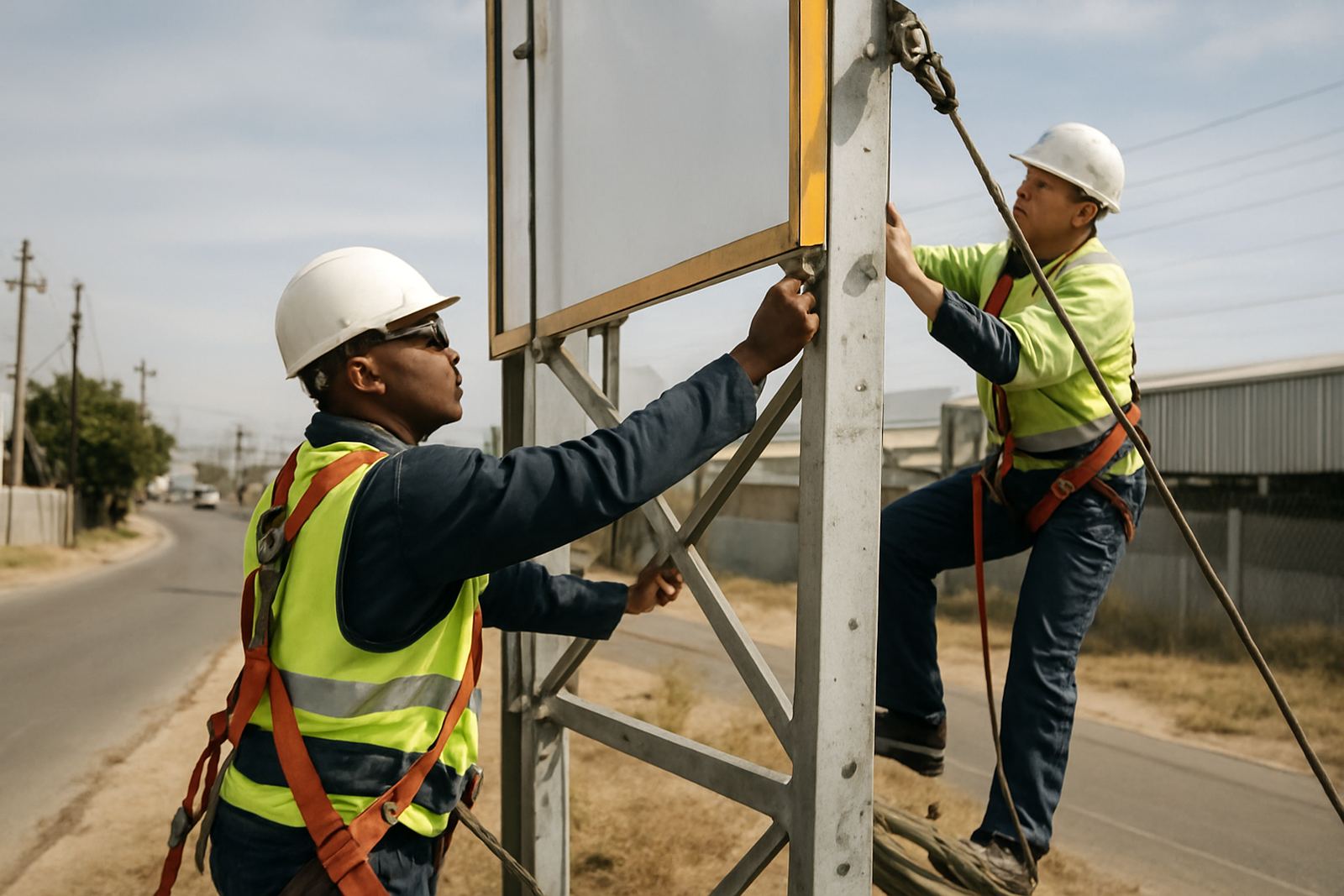
Site surveys are not only about measurements. They are also about keeping people safe. Our crews are safety trained, scaffold aware and first-aid trained, and we check the site with those basics in mind from the start. If the job needs a platform or lift, we plan for the ground conditions, reach and stability before the truck arrives.
In Cape Town, wind and salt air can affect fittings and exposed structures. In Gauteng, height, traffic flow and rooftop access can be the bigger issue. If load-shedding may affect the work, we factor that in as well, especially for illuminated signs and servicing visits.
After the survey: what you receive
Once the survey is done, we feed back the practical points the sign maker needs to move ahead. That may include access notes, lifting recommendations, fixing concerns, and any safety issues that need attention before installation or removal. If we spot a problem with the site, we say so plainly so the next step can be planned properly.
Gareth van der Merwe and the team use those findings to schedule the right crew and equipment. Whether the work is in Paarden Eiland, Sandton, Midrand or the East Rand, the aim is the same: fewer delays, a cleaner handover, and a sign job that starts with the facts.