

Roof signs built for height, wind and access
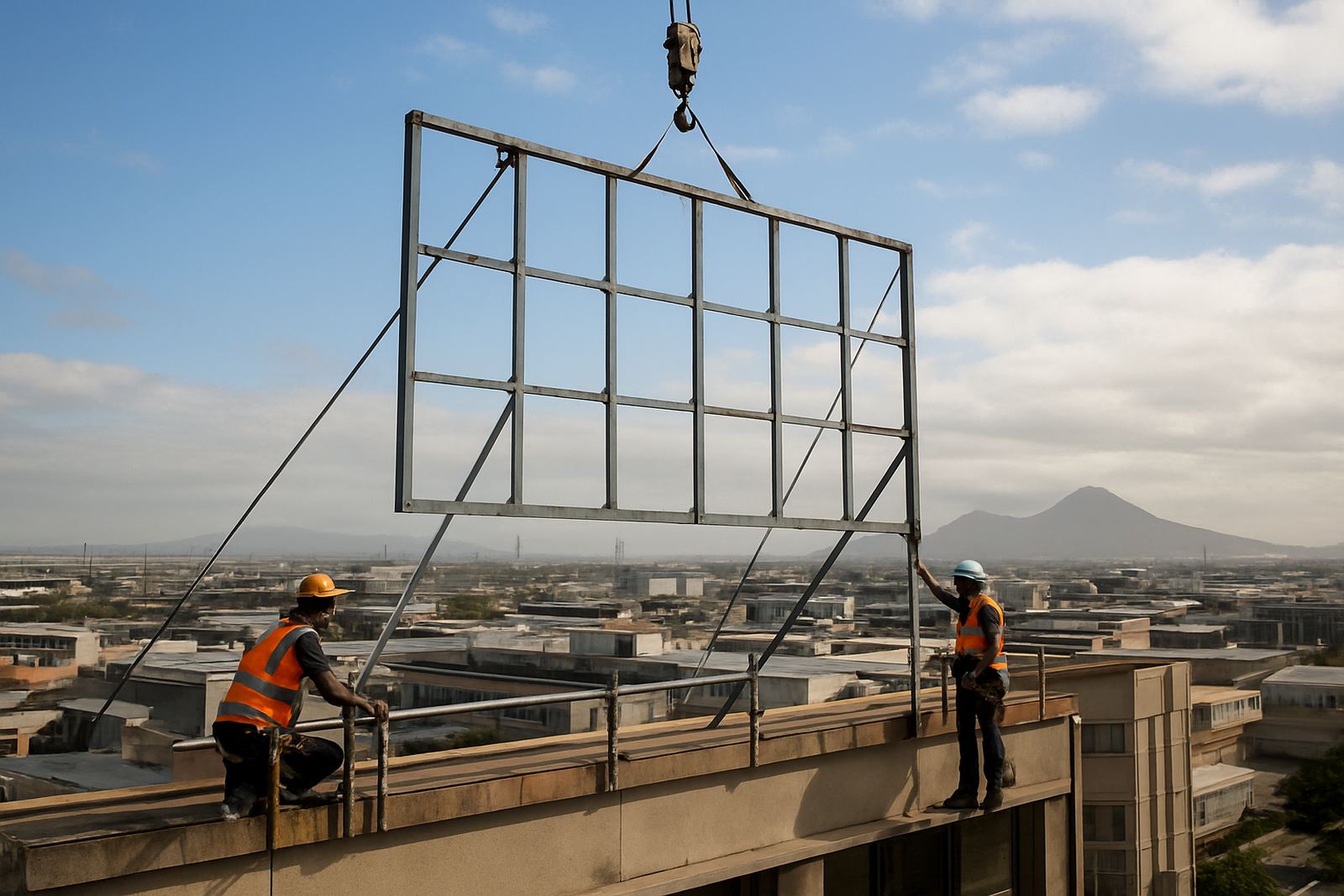
Roof signs are mounted above the building line, usually on a parapet, steel frame, plant room roof or lightweight support structure. They are used when a sign must be seen from the street, parking area, freeway approach or a busy commercial yard. The work is not only about lifting the sign into place. It also means checking the roof edges, anchor points, access path and the way wind will move through the site, especially on taller buildings and exposed corners.
We install roof signs for sign makers who need a rigging crew that stays in its lane. That means we do the lifting, fixing, access and servicing, while the sign shop remains the client-facing supplier. We work across Paarden Eiland, Bellville, Somerset West, Paarl, Johannesburg CBD, Sandton, Midrand and the East Rand, including sites affected by coastal humidity in Cape Town and dust, heat and load-shedding related delays in Gauteng.
Typical roof signs include built-up letter sets, box signs, channel letters, blade signs mounted above parapets and framed logo structures. Sizes can be small 1.2 m wide identification signs or larger display faces of 6 m and more, depending on the building and the wind load. On open sites we may recommend a lower profile sign face, extra fixing points or a more conservative mounting position to keep the structure within safe limits.
Size options, materials and mounting choices
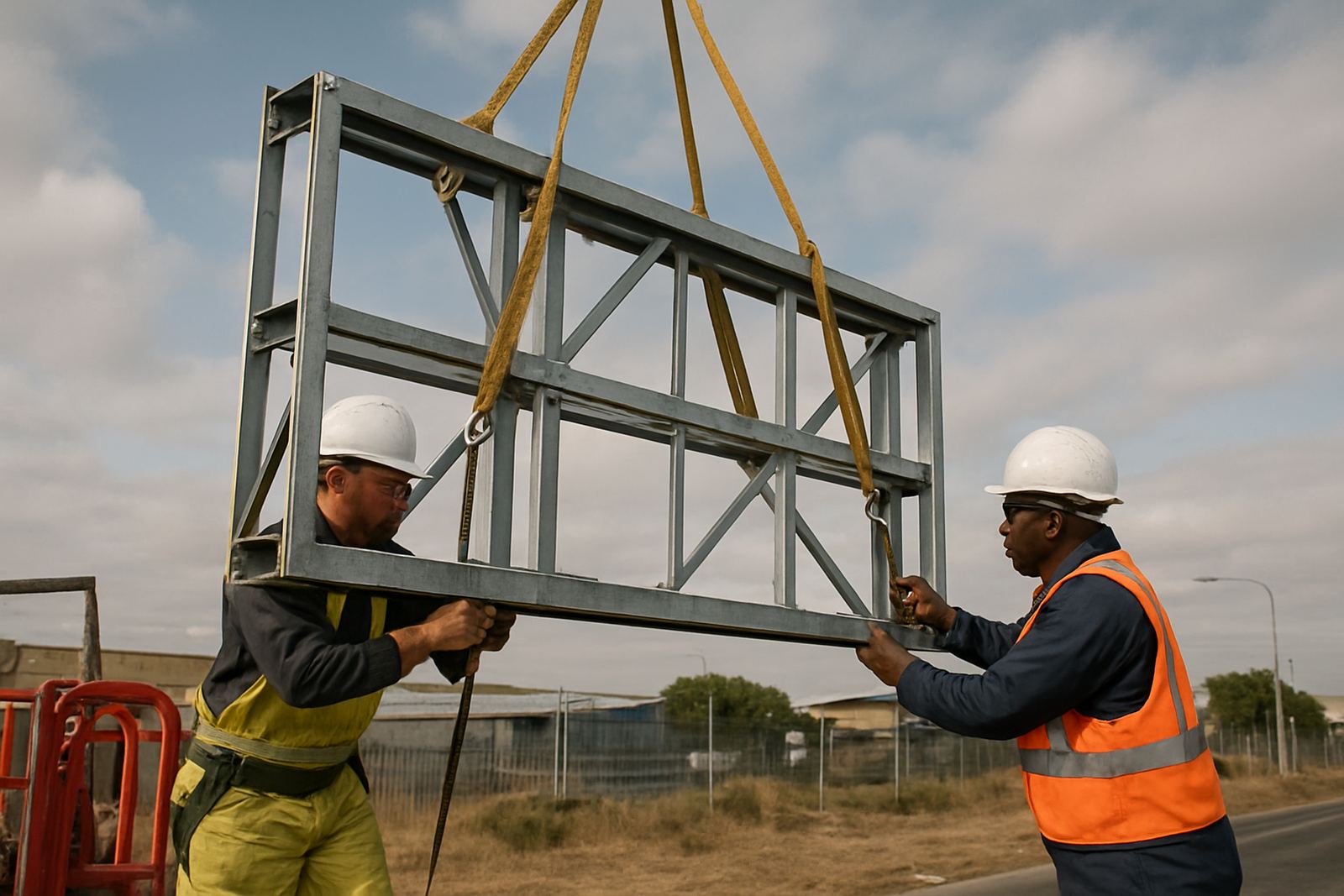
Roof signs are usually made to suit the building rather than the other way round. The right format depends on viewing distance, local authority requirements, structural strength and how often the sign may need servicing. In some cases the sign can be fixed directly to a steel subframe. In others we use standoffs, cleats, wall plates or a freestanding frame that sits above the roof surface.
Common options include illuminated and non-illuminated signs, single-face panels, double-sided signs and letter sets with internal access for servicing. For coastal areas we often suggest corrosion-resistant fasteners and sealed cable routes. In industrial areas, where there is dust or vibration, a more secure fixing arrangement and tighter maintenance schedule can help the sign last longer.
- Small roof identifiers: about 600 mm to 1.5 m high
- Medium signs for retail and office blocks: 1.5 m to 4 m wide
- Large rooftop displays: 4 m to 8 m or more, subject to structure and permits
- Lightbox, built-up letter and framed panel options
- Single-face or double-sided viewing, depending on approach direction
We also check whether the building can take the dead load and any uplift from wind. If the fixing surface is old or water damaged, the installation plan may need to change before the lift goes ahead.
Where roof signs suit best
Roof signs suit commercial buildings that need clear visibility from a distance. They are common on shopping centres, office blocks, warehouses, business parks, fuel sites, apartment buildings and roadside properties. A roof-mounted sign can help a business be seen above tree lines, other buildings and roadside clutter. In busy city areas it can also be the most practical place to place the main brand mark when the street frontage is already full.
These signs are not always the right choice for every property. Low roofs with weak structure, restricted access or heavy services on the roof can make the work more complicated. In those cases we may suggest a different mounting method, a smaller sign face or a ground-level solution instead. For sign makers, the value is in getting an honest rigging view before fabrication starts, so the final sign is actually workable on site.
Roof signs also need to fit the local environment. In Cape Town, wind off the coast can create lift and movement, while in Johannesburg the exposure is often about height, heat, hail risk and building access. A good plan takes all of that into account before the first bolt goes in.
Installation, lift planning and safety controls
Roof sign installation starts with a site survey. We check access routes, the roof edge, existing fixings, overhead services, plant equipment and the best method for getting the sign into position. If a crane, hoist, scaffold tower or platform is needed, we plan that before arrival so the job does not stall on the day. We also look at weather windows, because roof lifts in strong wind are not something to push through.
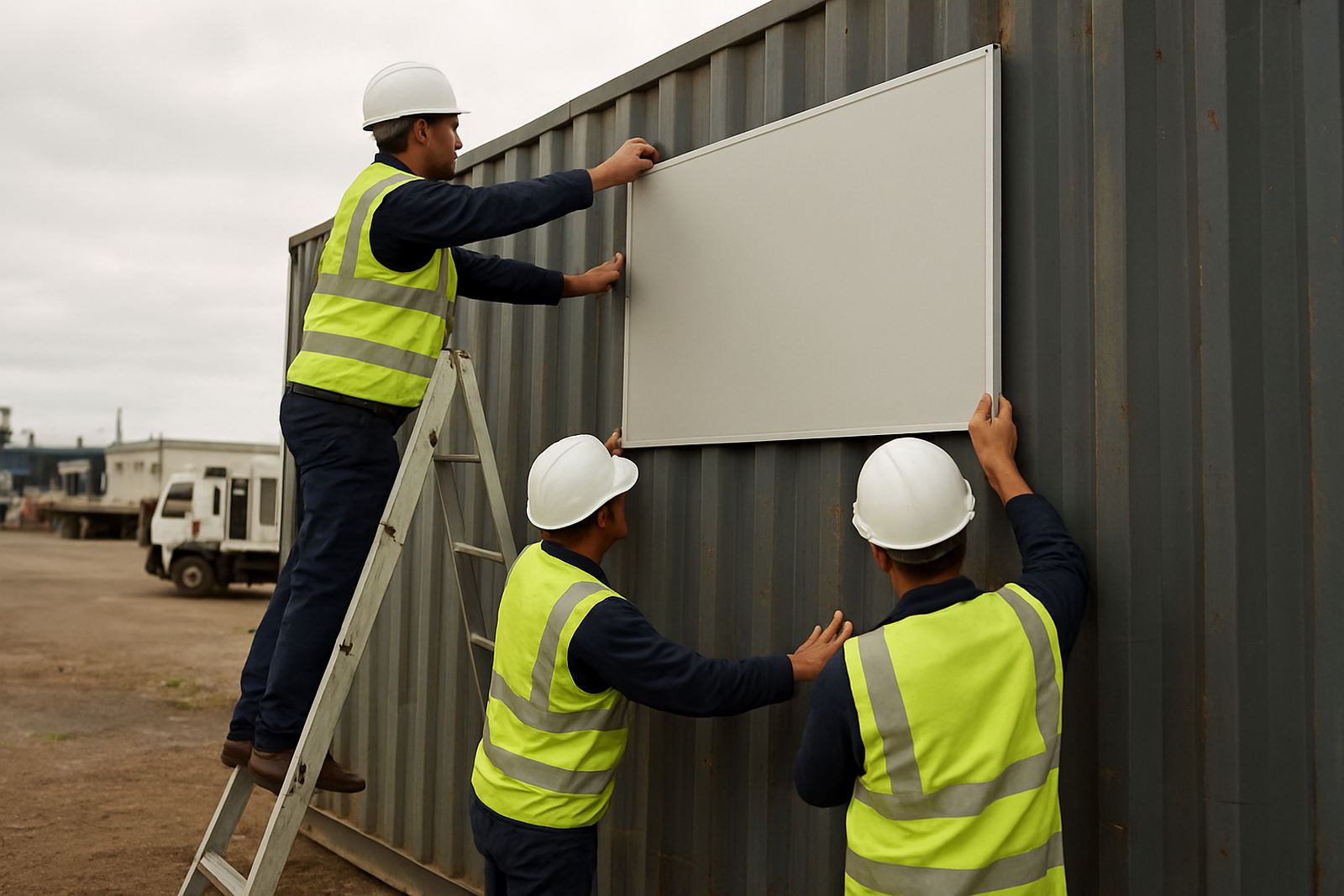
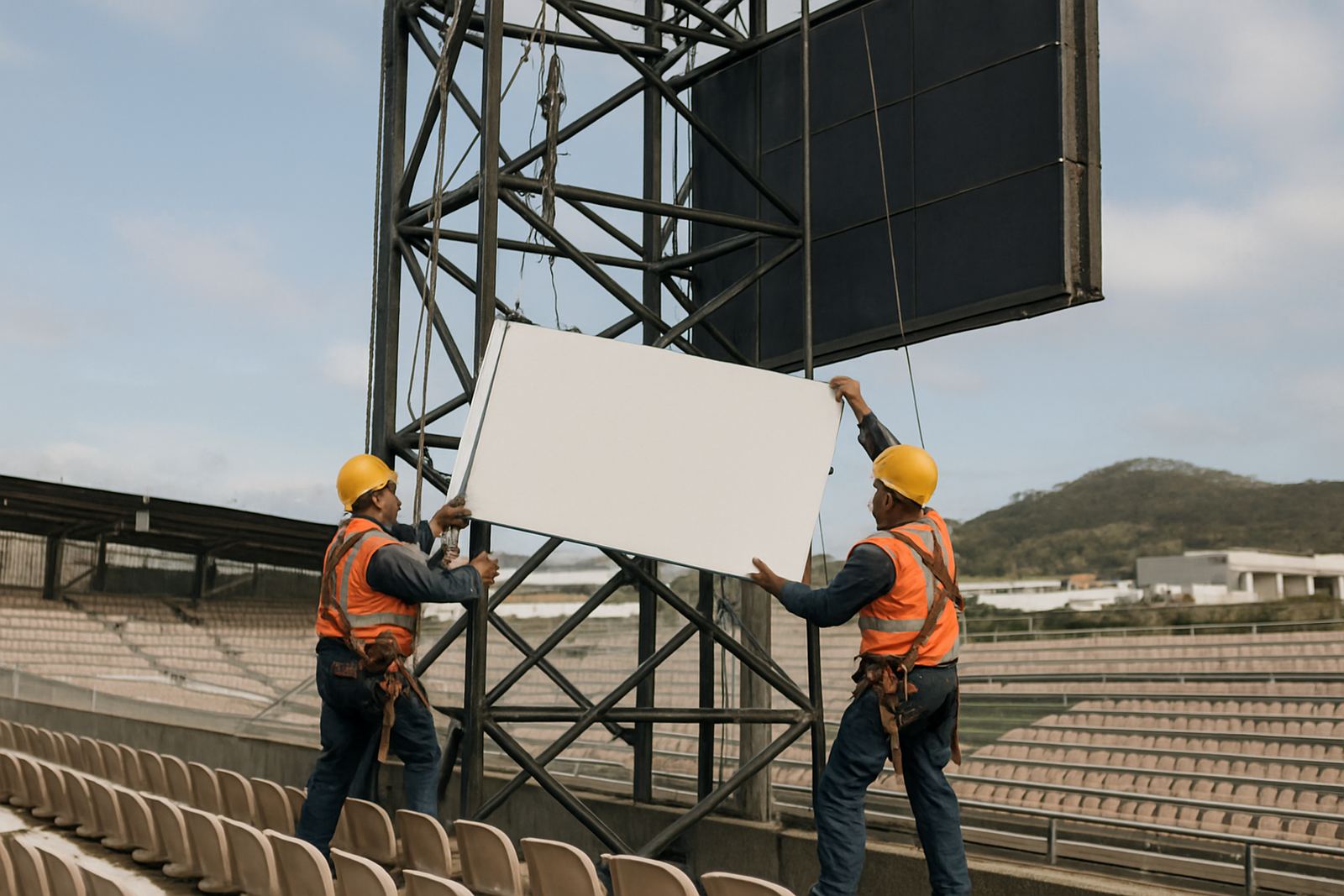
Our crews are trained for scaffold access, platform work, safe lifting and basic emergency response. Depending on the site, we may use fall protection, exclusion zones, spotters and hand-over checks with the sign maker or site contact. On live sites such as retail centres or office parks, we plan around trading hours and pedestrian movement. On industrial sites, we factor in delivery traffic and overhead hazards.
- Pre-install survey and lift plan
- Anchoring and substrate checks
- Access method selection: scaffold, platform, ladder access where suitable
- Wind monitoring and stop-work limits
- Fixing, alignment and final sign-off
We do not cut corners on roof work. A sign that looks simple from the ground can become awkward once you are dealing with height, weather and the roof edge. That is why the sequence matters as much as the hardware.
Power, cabling and service access for illuminated signs
Many roof signs need lighting, and that changes the job. Illuminated letters, lightboxes and halo-lit units need a proper route for power, a safe way to get to the driver or transformer, and enough access for future repairs. We plan for that from the start so the sign can be serviced without unnecessary dismantling later.
Power is usually drawn from the building supply, subject to the site electrical setup and local rules. In some cases a shutdown window is required. If there is no reliable power at the roof point, the sign maker may need to arrange an electrical feed before installation. We can work with the site team on access and fitment, but the electrical sign-off remains with the relevant trade. On load-shedding affected sites, it is worth confirming whether the sign must stay on during outages or whether backup arrangements are needed.
For servicing, we look at how a technician will reach the sign after installation. If lamps, drivers or wiring must be replaced in future, the access point should be safe and practical. That reduces downtime and avoids repeated rigging costs. In coastal areas, weatherproofing need extra attention because salt air can work its way into fittings faster than expected.
Maintenance, removals and replacement work
Roof signs need regular inspection, especially after heavy wind, summer storms or building work nearby. We handle maintenance visits, face changes, removals and sign relocations for sign makers who need a crew on call. A loose bracket, faded face or water ingress can become a bigger issue if it is left too long on a roof.
Our servicing visits can include bolt tightening, alignment checks, cable inspection, lighting access and structural visual checks. If the sign has to come down for refurbishment or tenant changeover, we plan the removal in the same way as an install: access, lifting path, isolation points and safe loading out. Where a sign is being moved to another building, we also check whether the existing frame and fixings are still suitable or whether a new support is needed.
For emergency callouts, we focus on making the sign safe first. That can mean securing a loose section, isolating lighting, or removing a damaged face before wind gets under it. Roof work after bad weather must be handled carefully, so we always assess conditions before anyone goes up.
What to confirm before you order a roof sign
Before a roof sign is fabricated, it helps to have the right information ready. That saves time on site and avoids changes after the sign has already been made. The most useful details are the roof type, approximate mounting height, viewing direction, sign dimensions, whether the sign is lit, and whether there is existing access to the roof.
We also need to know if the building is in a wind exposed area, whether the roof has parapet walls or plant structures, and if there are any site rules around after-hours work, parking, permits or municipal restrictions. On some jobs the client only needs installation. On others the sign needs removal, storage, re-installation or a full maintenance visit as part of the project. The more complete the brief, the smoother the rigging plan.
- Overall sign size and weight
- Mounting height and roof type
- Whether lighting is required
- Access method already available, if any
- Preferred install date and site restrictions
- Any photos of the roof edge, parapet or mounting area
If you are ordering roof signs for a client, send the site details early and we will help with the rigging side. That way the sign is built to fit the building, not forced onto it later.
Key facts
| Service area | Cape Town and Johannesburg, including Western Cape and Gauteng sites |
|---|---|
| Typical width range | 600 mm to 8 m plus, subject to structure and access |
| Mounting options | Parapet fixings, steel subframes, wall plates, standoffs, freestanding frames |
| Access methods | Scaffold, platform work, lift planning, crane assisted lifts where suitable |
| Power needs | Mains supply usually required for illuminated signs; site electrical coordination needed |
| Maintenance | Inspection, tightening, lighting access, removals, relocations and emergency callouts |