What container signs are used for on site
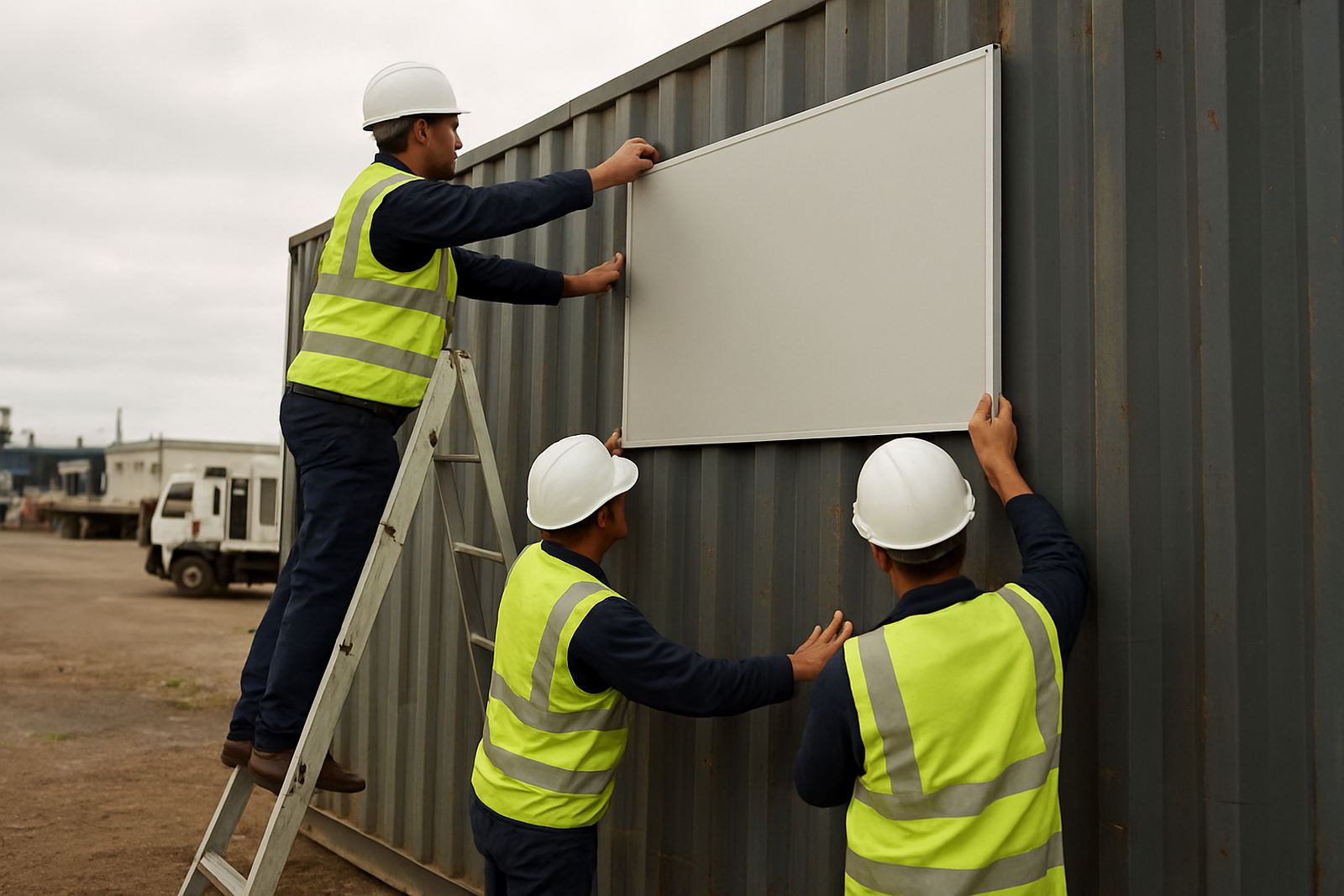
Container signs are mounted onto shipping containers that have been converted into kiosks, pop-ups, ticket booths, site offices or guard rooms. The sign may be fixed to the front face, side wall, roof edge, over a hatch, or on a framed bracket above the container line. On busy sites, the container often sits close to pedestrian flow or vehicle access, so the sign must be easy to see and properly secured against wind, vibration and daily handling.
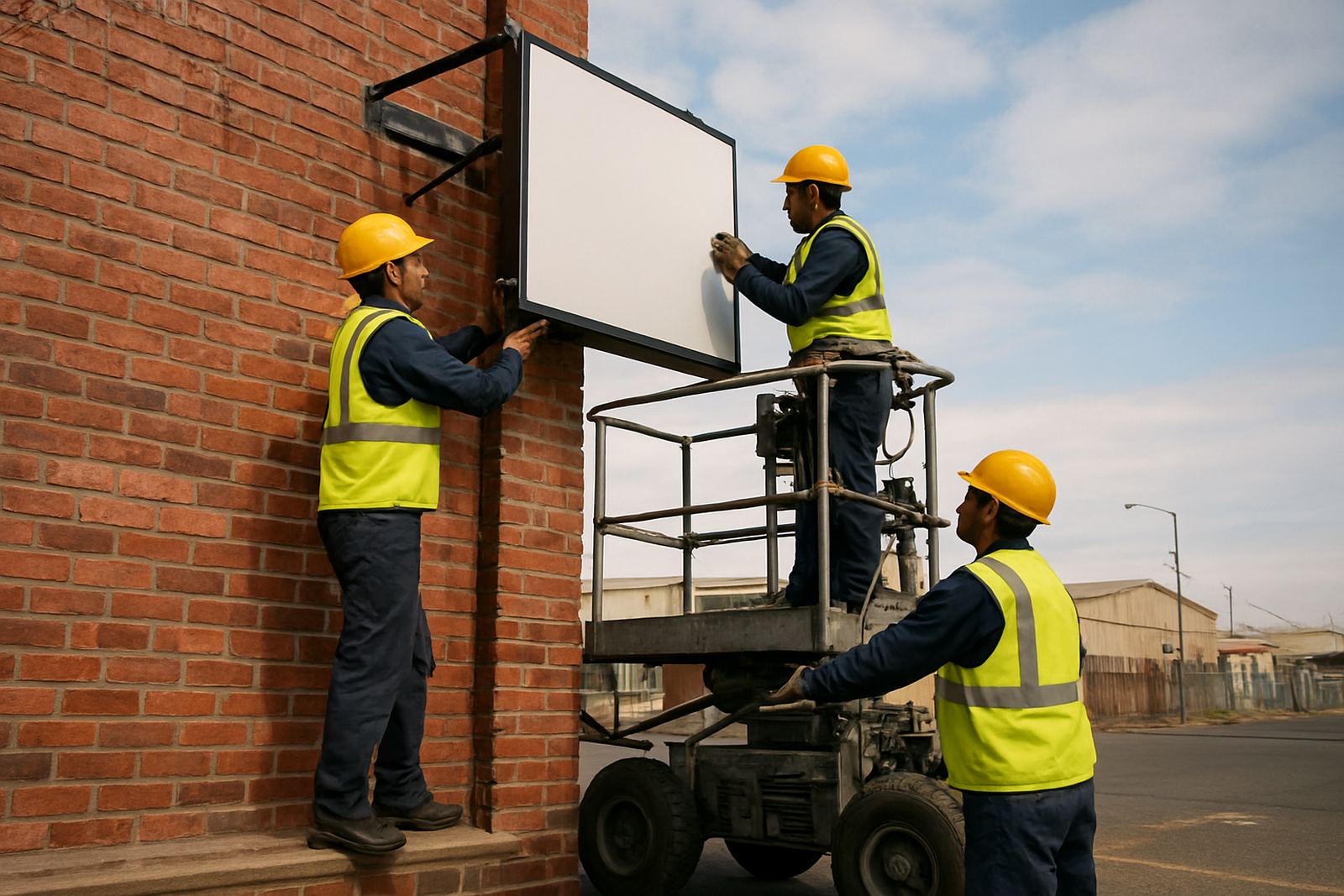
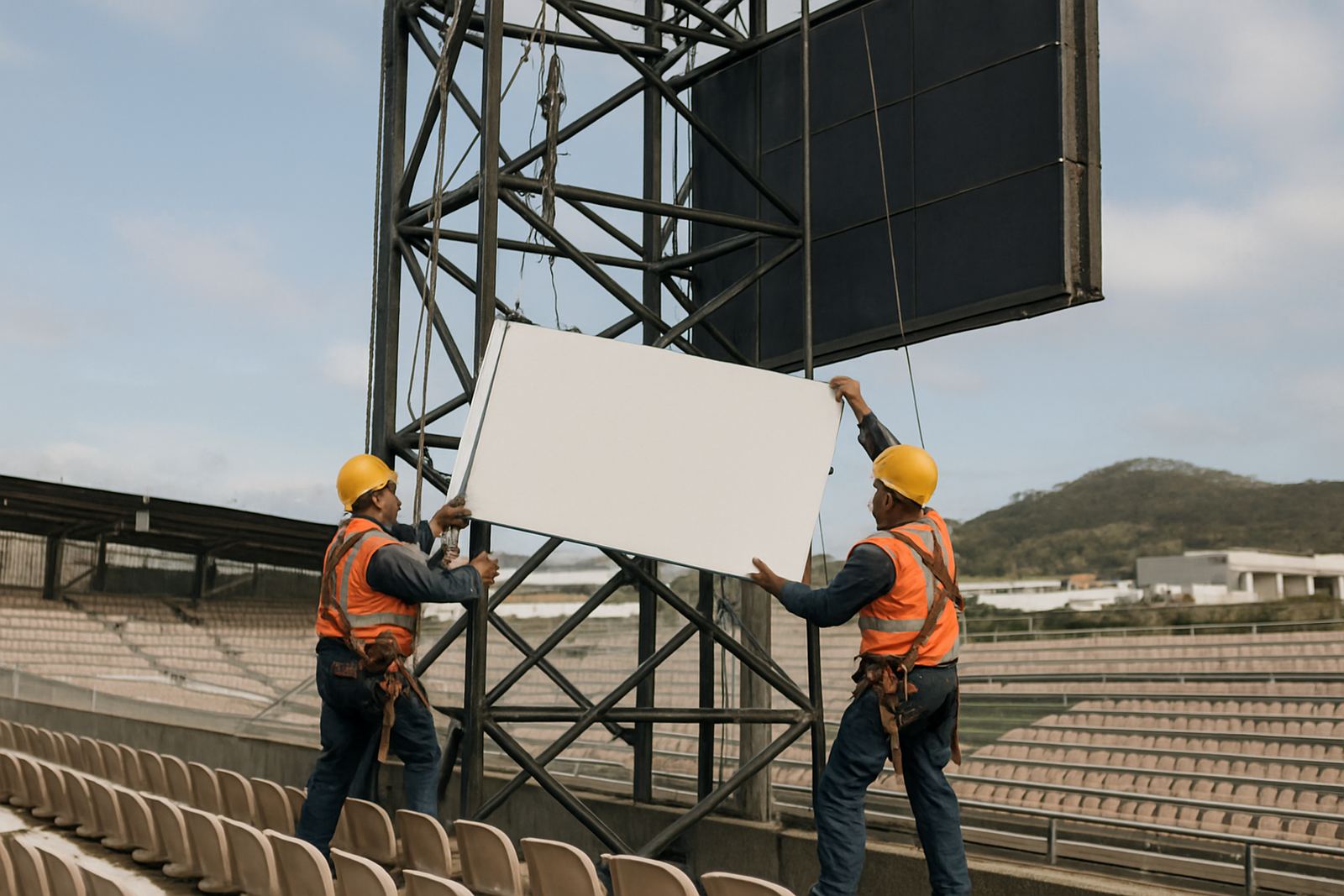
We work only on the rigging side. That means we install, remove and service the sign structure while your sign shop handles the design, fabrication and client relationship. It keeps the jobs clean and avoids overlap, which is important when a container is being used for trading, security or public-facing service work.
Container sign work suits both short-term and long-term use. Some sites need a branded kiosk for a weekend activation, others need a permanent office on a construction site for 12 months or more. We plan the fixings and access method around the container type, the site rules and the available access equipment.
Typical sizes, mounting options and finishes
There is no single container sign size because the container layout, door positions and roof height all affect the final fit. We regularly work on 6 metre and 12 metre containers, plus cut-down units and custom site cabins. Signs can be mounted as individual panels, aluminium composite fascias, flat cut letters, framed boards or lightbox style panels where the structure allows it.
- Panel widths usually range from 1.2 metres to 6 metres depending on the face available
- Common sign heights are 300 mm, 600 mm and 900 mm for fascia bands
- Letter returns and frame depths must suit wind exposure and fixing points
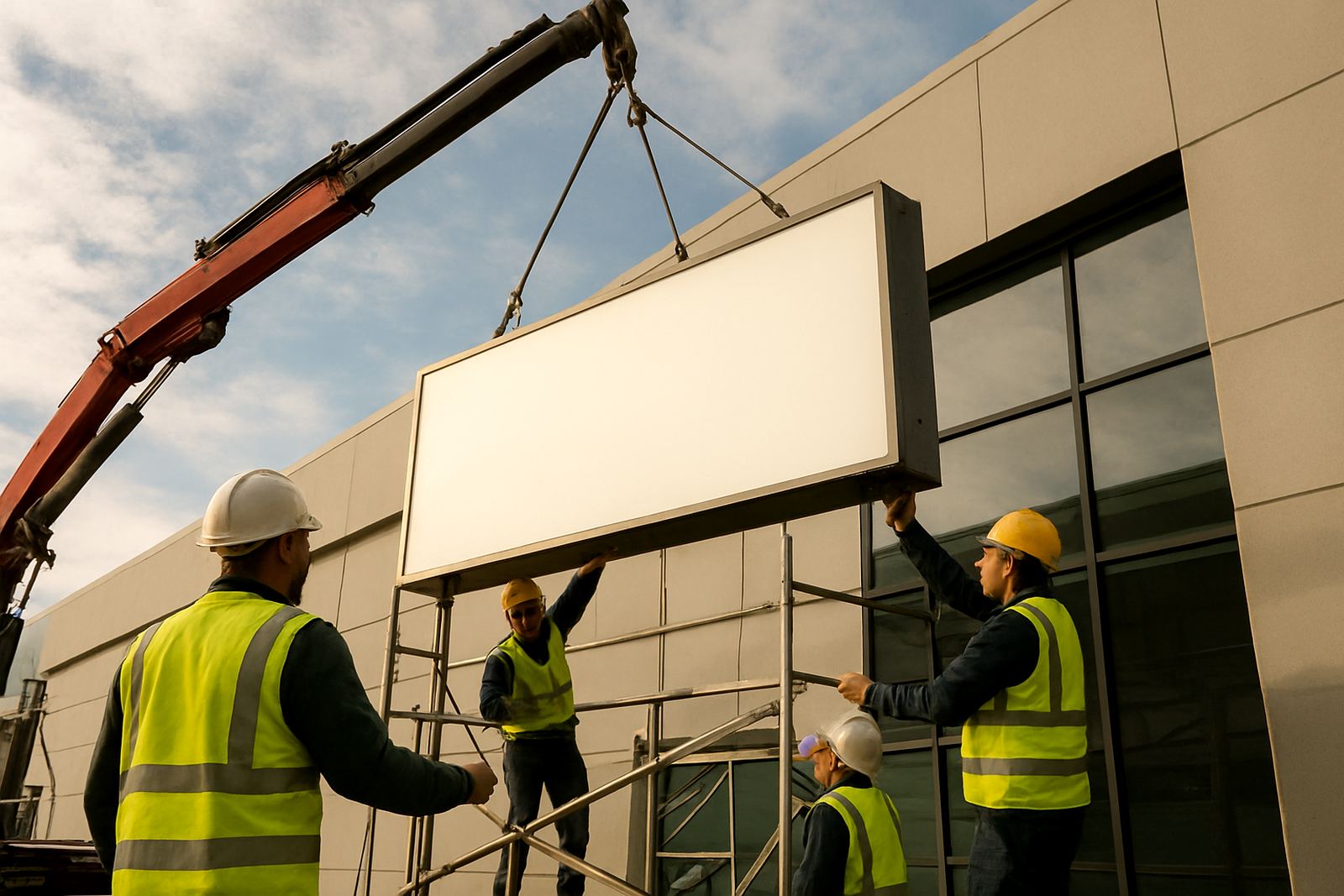
- Roof-mounted signs need extra lift planning and safe access
- Removable fixings are useful where the container is relocated often
We also check for corrugations, door swing, anti-vandal bars, awnings and service boxes before fixing anything. A flat-looking sign can still need a custom standoff or rail to sit level on the container skin. If the unit is painted in a dark colour, the sign may need a stronger contrast or backlighting to remain visible in low light and during load-shedding.
Where container signs work best
Container signs are common on construction sites, temporary retail points, roadworks compounds, event grounds, security entrances and coastal projects where a quick branded setup is needed. They are useful where a permanent brick structure is not available, or where the site may be moved later. In places like Paarden Eiland, Bellville, Somerset West, Paarl, Johannesburg CBD, Sandton, Midrand and the East Rand, containers are often used as support spaces that still need to present a proper front.
Wind and weather matter. In Cape Town, coastal air can corrode poor fixings and salt build-up can mark exposed metal. In Gauteng, dust and UV exposure can make cheaper finishes dull quickly. A container sign should be specified with those conditions in mind, especially if it is close to a freeway, open yard or public pavement.
- Site offices and weighbridge cabins
- Pop-up shops and container cafés
- Security posts and access control points
- Festival bars, ticket booths and event counters
- Temporary sales units at industrial yards
Installation, access and power planning
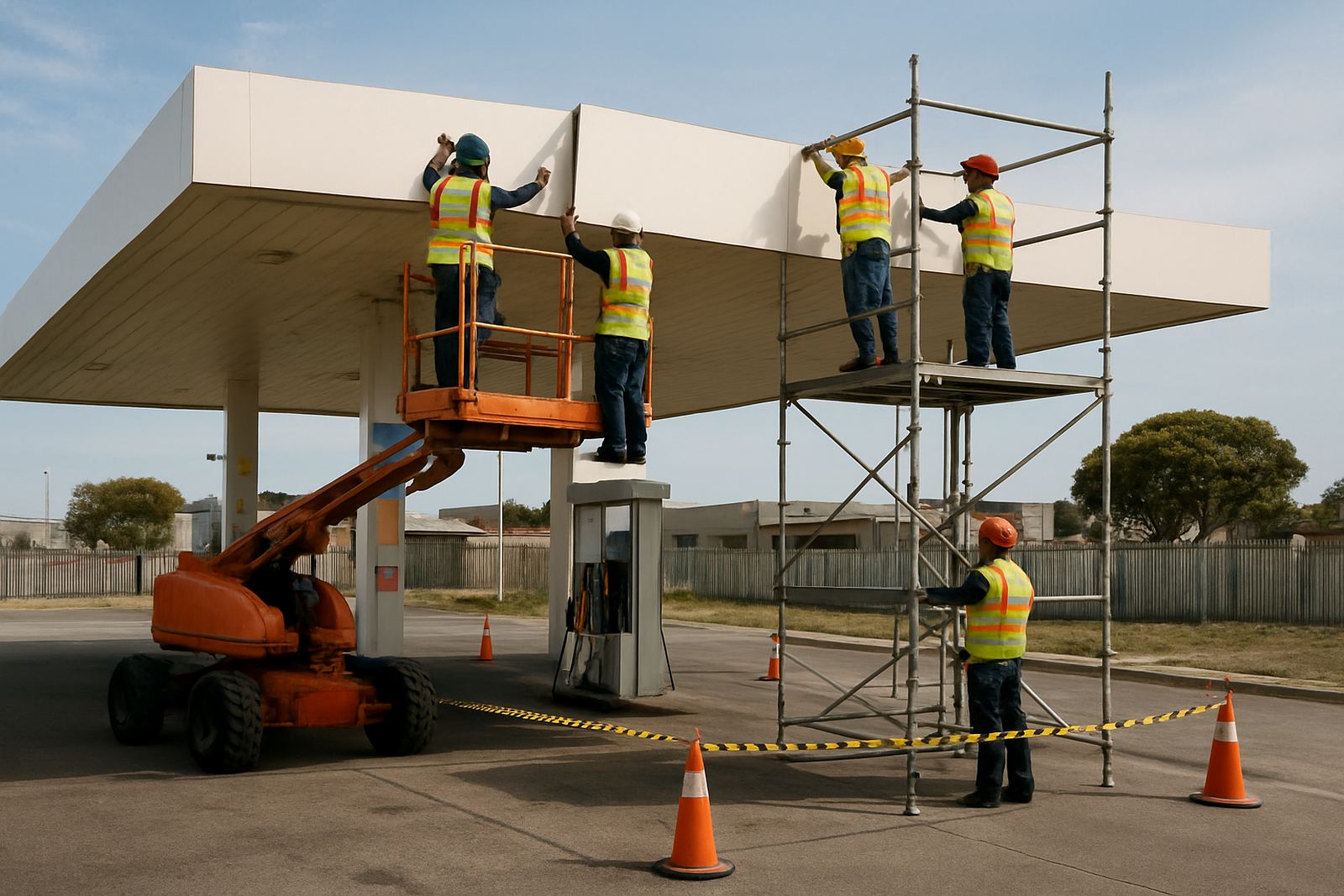
We start with a site survey if the location is not straightforward. That helps us check ground conditions, access height, clearance from overhead cables and whether scaffold, a platform or a lift is needed. For bigger signs, lift planning is part of the job, not an afterthought. We also look at how the container is anchored, because a sign fixed to a unit that can shift or settle will need a different approach from one on level concrete.
Where the sign includes lighting, we need a proper power route, safe isolator point and space for cable protection. Container sites often rely on temporary supply, generators or backup systems, so the electrical side must be planned with that in mind. If the sign is gas illuminated, the bottle position, regulator access and ventilation clearance must be checked before we start. We do not guess on site, especially where there are public access areas or active trading hours.
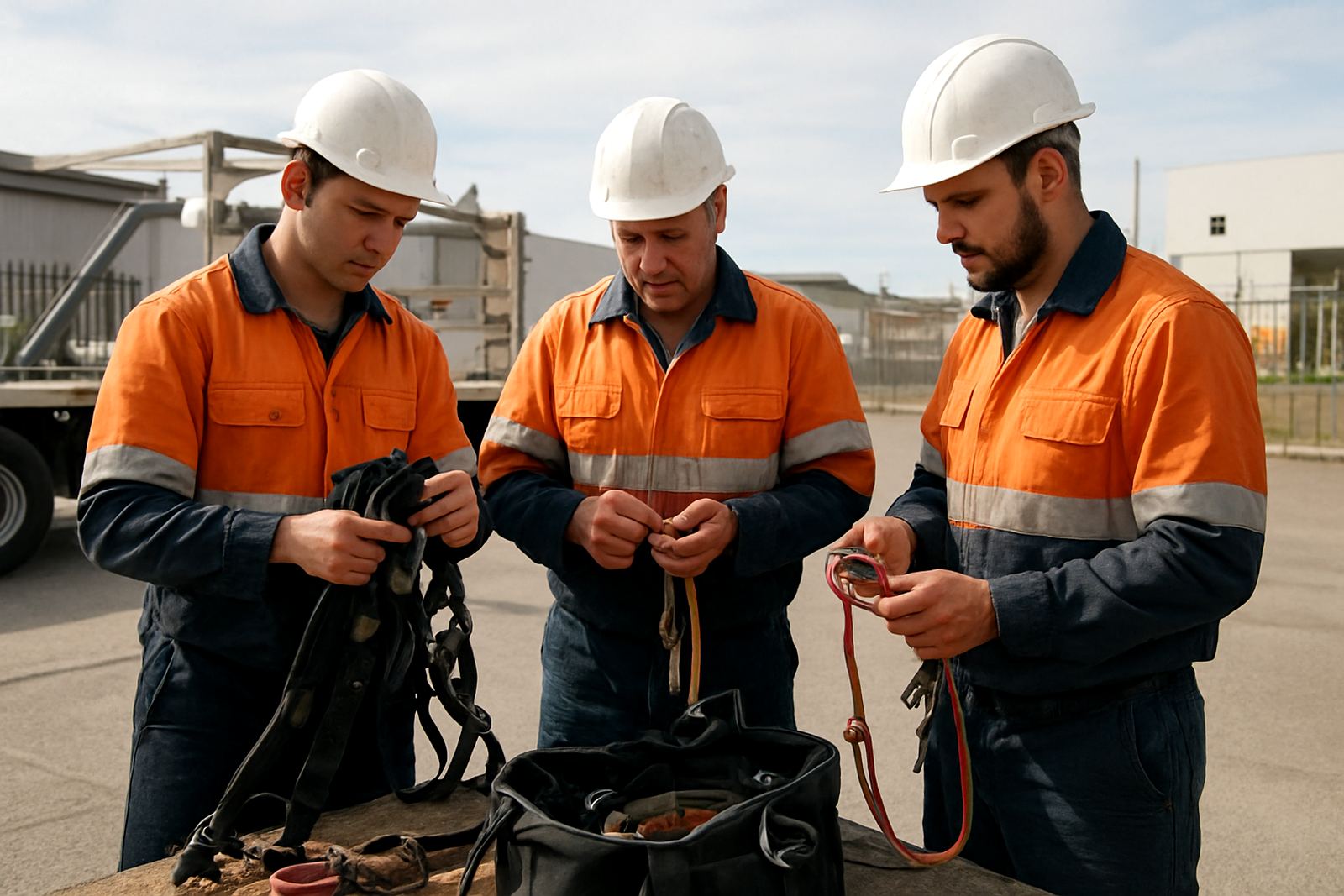
Our crews are scaffold and first-aid trained, and we work with the site constraints rather than forcing a one-size-fits-all method. That matters when the container is placed against a wall, under a canopy or close to vehicle lanes. Good planning keeps the installation tidy and reduces downtime for the sign maker and their client.
Servicing, removal and relocation without damage
Container signs need servicing because containers move, get repainted, are cleaned with pressure washers and often take knocks from loading or site traffic. Over time, fixings can loosen, light fittings can fail and vinyl or face panels can lift at the edges. We carry out sign servicing, emergency callouts and maintenance visits to keep the installation safe and presentable.
When a container is being removed or relocated, the sign should come off in a controlled way. That protects the panel, the container cladding and any lighting or cable entry points. If the sign will be reused elsewhere, we can strip it down carefully, label the parts and hand it back in good condition for re-installation at the new site.
- Check fixings after the first few weeks on site
- Inspect for corrosion around bolts, brackets and weld points
- Clean the face with non-abrasive products only
- Replace failed lamps, drivers or damaged cabling promptly
- Recheck alignment after any container move or lift
What to check before ordering container signage
Before your sign shop sends a container sign for installation, we need the basics. The more accurate the information, the quicker and safer the job. A simple site photo is helpful, but we also need measurements and a clear idea of where the sign must sit on the unit.
- Container length, width and height, in metres if possible
- Exact mounting face, including doors, vents and hatch positions
- Desired sign size and whether it must be visible from one side or both
- Whether lighting is needed, and if so what power is available on site
- Any access limits such as overhead cables, low roofs or restricted hours
- Whether the container will stay in one place or be moved later
If the container is going to a coastal site, ask for fixings and finishes that can handle humidity and salt. If it is a short-term site office, removable fixings may be better than permanent anchors. If the unit is trading at night, visibility and safety lighting matter just as much as the face design. A good brief saves time and avoids rework, which is important when the site must stay open.
Who handles this work and how we fit in
Sign Riggers was founded in 2008 and operates from Paarden Eiland in Cape Town and from Johannesburg for Gauteng work. Gareth van der Merwe leads the business, with Thandi Mokoena coordinating operations, Liam Jacobs supervising rigging, Sibusiso Dlamini handling safety, Ayesha Daniels managing client liaison and Pieter Coetzee looking after fleet and access. Our crews are there to support sign makers, not compete with them, so the relationship stays simple and professional.
Container signs are often part of a bigger rollout, and that is where our role fits well. We can assist with installation, removal, servicing, lighting access, scaffold access, platform work and emergency callouts. Whether the job is a single kiosk in Somerset West or a group of site offices in Midrand, we focus on safe rigging and a neat finish that does the sign itself justice.
Key facts
| Common container sizes | 6 metre and 12 metre units, plus custom cabins and cut-down containers |
|---|---|
| Mounting types | Flat panels, fascia bands, framed boards, lightboxes and letter sets |
| Typical sign heights | 300 mm, 600 mm and 900 mm, depending on face area |
| Access methods | Lifts, scaffold, platform work and controlled roof access where suitable |
| Power options | Mains supply, generator feed or backup power for lit signs |
| Service areas | Paarden Eiland, Bellville, Somerset West, Paarl, Johannesburg CBD, Sandton, Midrand and the East Rand |