

Factory frontage work without interrupting operations
The client was a manufacturing site in Germiston with older exterior signs that had faded, lifted at the edges and no longer matched the current site layout. The brief was straightforward: take down the worn signage, protect the building finishes and install new signs that improved wayfinding, safety and the main site identity. Because trucks were moving in and out during the day, the work had to be planned around live operations rather than shutting anything down.
We started with a site survey to check wall surfaces, fixings, power access and the safest working positions. The frontage included high-level areas above loading movement, so access had to be controlled and clearly marked. We also checked for any loose panels, old adhesive and corrosion around the original mounting points, which is common on industrial buildings that face sun, dust and summer rain in Gauteng.
- Town: Germiston
- Client type: Factory and industrial premises
- Work type: sign removal, sign installation and safety signage updates
- Main constraint: keeping access open for vehicles and staff
Removal of aged signs and site-safe preparation
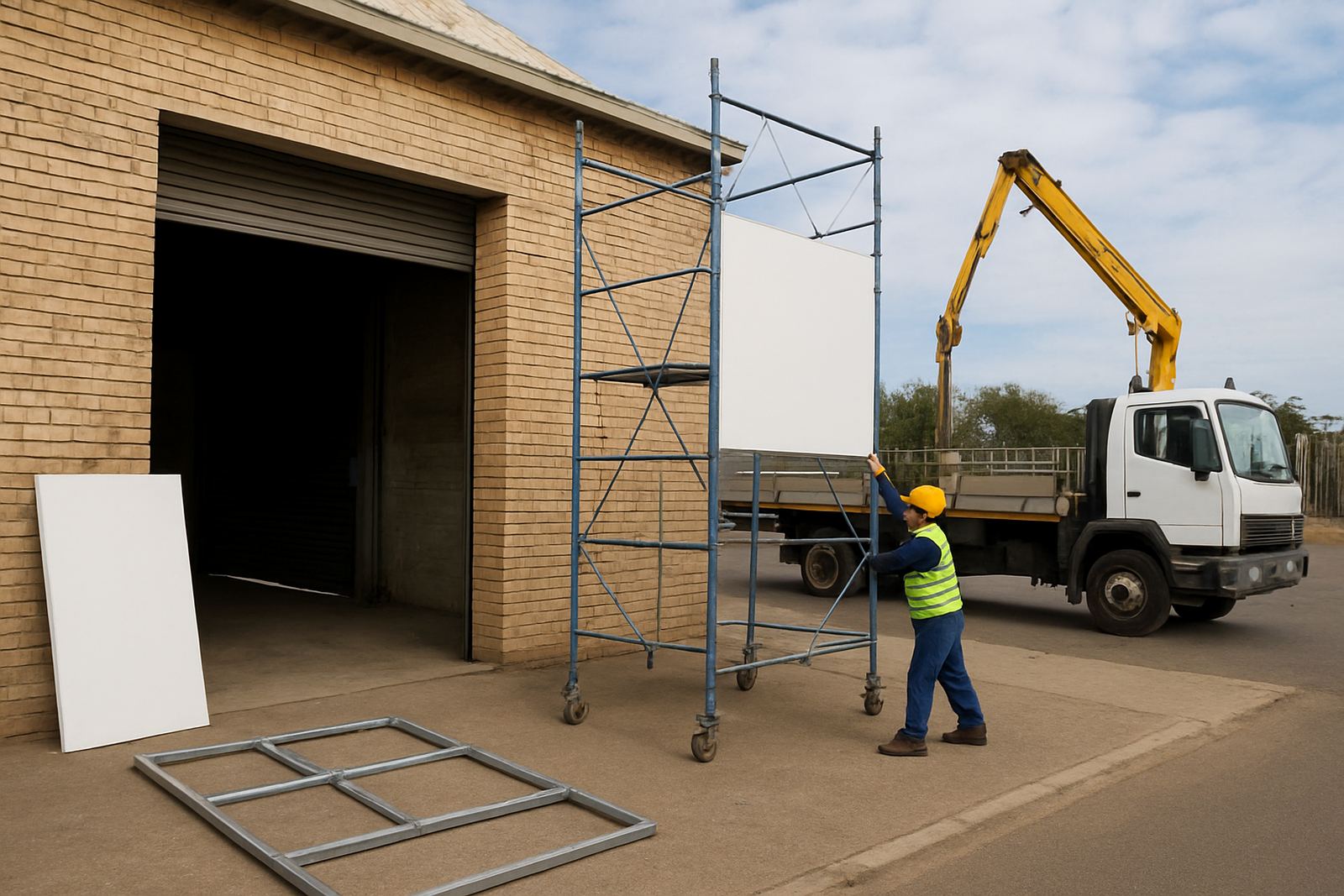
We stripped out the old exterior signs first, working section by section so the wall stayed stable and the site stayed orderly. Any failed fixings were removed cleanly, and we sealed minor holes before the new fittings went in. The old signs had been on the building for years so there was a fair amount of weathering and residue to clear. We also made sure the removal did not leave sharp edges, dangling cable or patchy surfaces that would catch dust and moisture.
Because the factory runs like most industrial sites, there was no room for unnecessary delay. Our team worked with a tight programme and kept the area swept and signed off at each stage. That matters on a site where forklifts, delivery staff and pedestrians all share the same routes, and it also helps with compliance when the safety officer does their own walk-through.
- Removed aged exterior identity signs and directional pieces
- Made good mounting points and cleaned the installation areas
- Checked for loose fixings, corrosion and old adhesive residue
- Kept loading access clear during each work phase
Installing the updated identity and safety signs
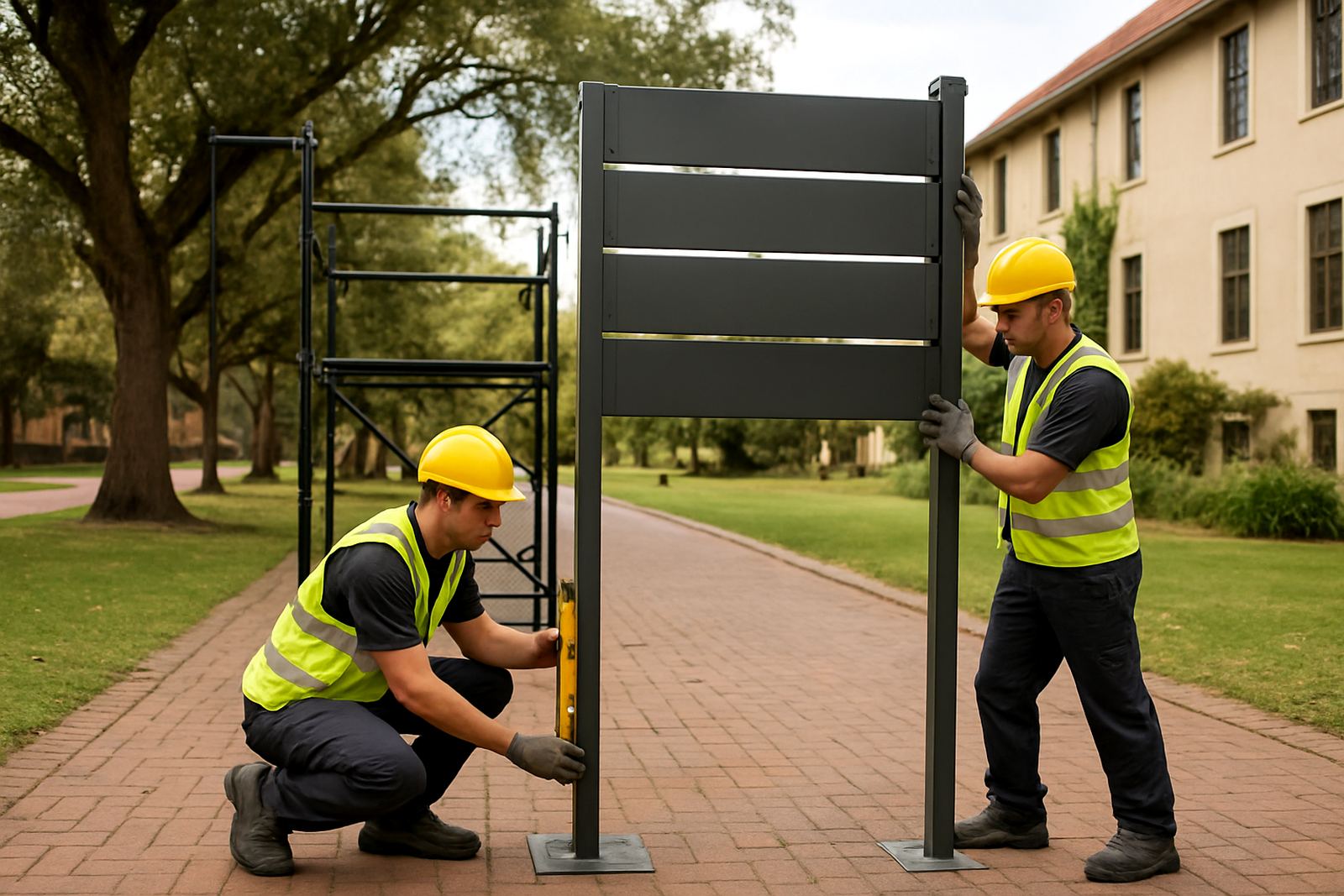
Once the surfaces were ready, we installed the updated signage at the agreed positions and heights. The new signs included the main identity face, safety notices and practical directional points for staff and visitors. Fixing choice depended on the substrate and the sign size, with attention to wind exposure and the need for a neat, level finish across the frontage.
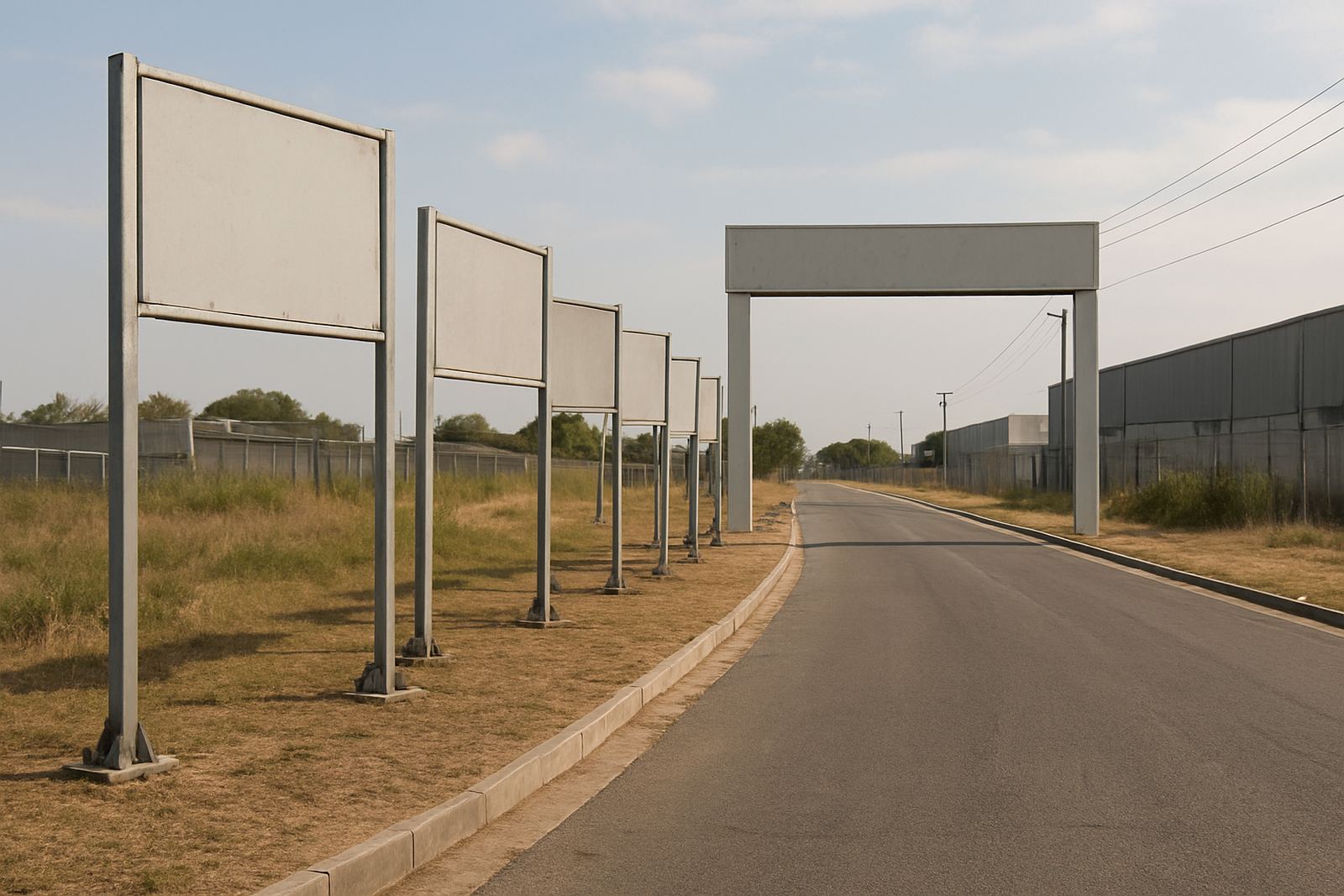
In a factory setting, signage has to do more than look correct. It must be readable from the right distance, stay secure in windy conditions and remain legible in bright sun. We matched the placement to the movement patterns on site, which helps incoming drivers, contractors and staff read the signs before they reach the access points. The result was a cleaner frontage and better control of how people move through the property.
- Sign face alignment checked from ground level and from vehicle approach points
- Fixings selected for industrial wall conditions
- New signage positioned for clear sightlines from entrances and loading bays
- Final checks done before handover to site management
Access, lifts and work at height done properly
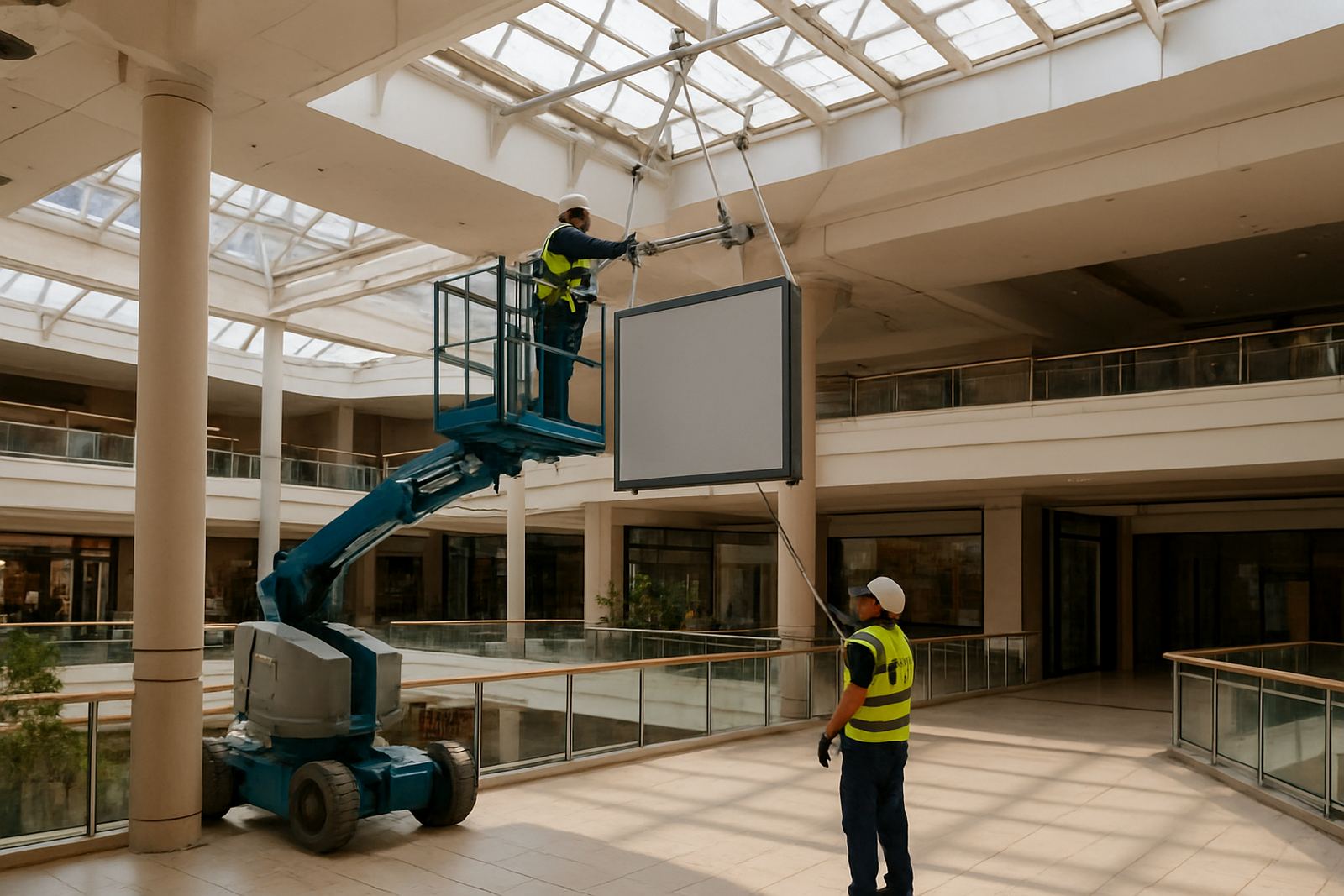
This job needed careful access planning because the signs sat above normal reach and near active factory movement. We used suitable access equipment for the height and the ground conditions, then set out exclusion zones before any lifting started. The team was safety trained and equipped for work at height, which is the only way to handle this kind of site properly. No shortcuts, no standing around under a suspended load, and no guesswork.
We also planned around weather and power conditions. High winds can stop a lift or make alignment difficult, and load-shedding can affect timing where powered access or lighting checks are needed. On this project, our sequencing allowed us to keep the job moving even when the site had other pressures to deal with. It is the kind of practical planning that saves time on industrial work, especially when a factory does not want outside contractors getting in the way.
- Work at height controls and ground exclusion zones
- Pre-start checks on access equipment and fixings
- Sequenced work to reduce disruption to factory traffic
- Weather and site conditions monitored throughout the job
Project timing, handover and result
The full project ran over two weeks from survey to handover. The first week covered assessment, access planning and removal of the aged signs. The second week covered preparation, installation and final checks. That timeline suited the site because it let us work around production hours and still complete the job without pushing into other maintenance work.
The finished result gave the factory a cleaner front elevation, clearer identity and better safety messaging for staff and visitors. The new signs sit properly on the building, the old damaged elements are gone, and the frontage now reads as a maintained industrial site rather than one waiting for attention. For a busy premises in Germiston, that matters because first impressions are not just about looks, they affect how people move and how carefully a site is run.
From the client side, the main win was continuity. Operations carried on, the access routes stayed usable and the upgrade was completed with minimal fuss. That is what we aim for on factory work: proper preparation, steady crews and a result that holds up after the team leaves.
What we would repeat on the next factory job
If we were doing the same type of job again, we would keep the same approach. Start with a proper survey, confirm access points early, and agree the work sequence with the site contact before the first tool comes off the truck. On industrial sites, that early planning saves a lot of back-and-forth later. It also helps when the building has mixed wall types, older fixings or limited space for vehicles and access gear.
We would also keep the same focus on tidy removal before installation. A clean base makes the new signs sit better and reduces the chance of later movement or corrosion. For factories in Gauteng, we recommend checking exterior signs at least once a year, and more often if the site gets strong wind, heavy dust or regular wash-downs. Small issues are easier to fix early than after a panel has failed or a sign has started to lean.
- Survey first, then confirm access and traffic control
- Remove old signage fully before new installation starts
- Allow for weather, power interruptions and live site movement
- Set a simple maintenance visit schedule after handover
Key facts
| Project | Factory exterior sign removal and installation |
|---|---|
| Town | Germiston |
| Duration | 2 weeks from survey to handover |
| Scope | Removal, preparation, installation and final checks |
| Access | Work at height with controlled exclusion zones |
| Outcome | Updated safety and identity signage with minimal disruption |