

Forecourt sign work for a busy Paarl service station
This project was for a fuel site in Paarl serving daily commuter and long distance traffic through the Winelands. The client needed sign rigging support from a team that could work safely around pumps, canopies and live traffic without taking over the sign supply role. Our job was to remove and replace damaged canopy fascia signs, then inspect the remaining panels for looseness, movement and weather wear.
The brief was straightforward but the site conditions were not. We had to work with early trading hours, narrow vehicle routes and constant wind off the mountain side in the afternoons. There was also dust from passing vehicles and strong UV exposure on the fascia panels, which had started to affect fixings and edging. We planned the job so the forecourt stayed open and the client did not have to shut down any pump islands.
What the client needed us to fix
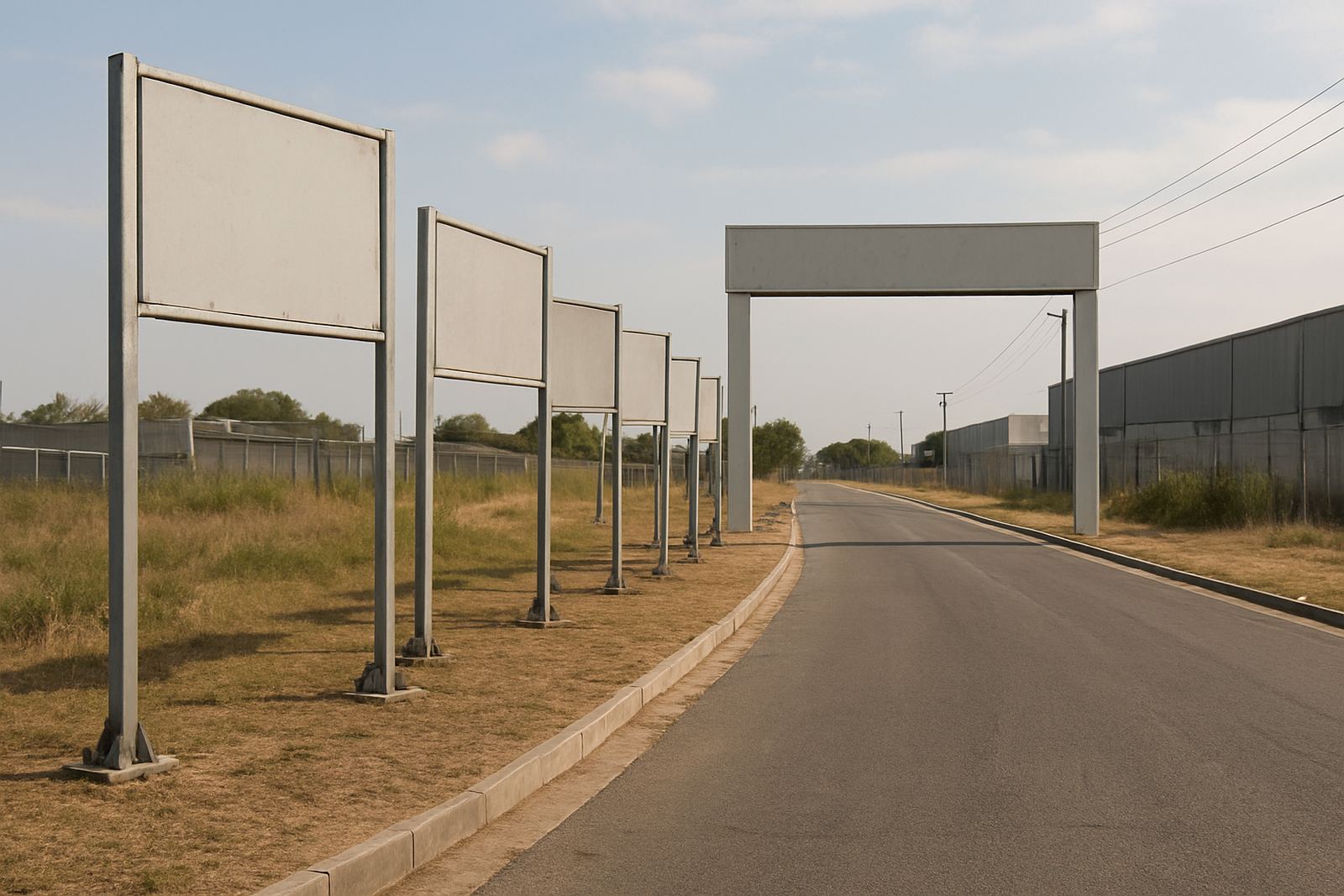
The site had a mixed set of signs along the canopy line, including fascia panels and directional boards. Some of the panels had started to lift at the edges and one section showed signs of movement after repeated wind loading. The client asked for a full check on visible fixings, brackets and access points, plus replacement of the worn canopy faces.
- Remove tired canopy fascia signs without damaging the canopy skin
- Install replacement panels with correct alignment and fixing spacing
- Check security on adjacent sign faces across the forecourt
- Keep the working area safe for customers and staff
- Complete the task with minimal disruption to trading
Because this was a live fuel site, we also had to pay attention to vehicle movement, fire risk controls and the line of sight for drivers entering and exiting the forecourt. The client wanted the work done cleanly, with no loose offcuts or fixings left behind, and that was part of our method from the start.
Access planning, safety and site control
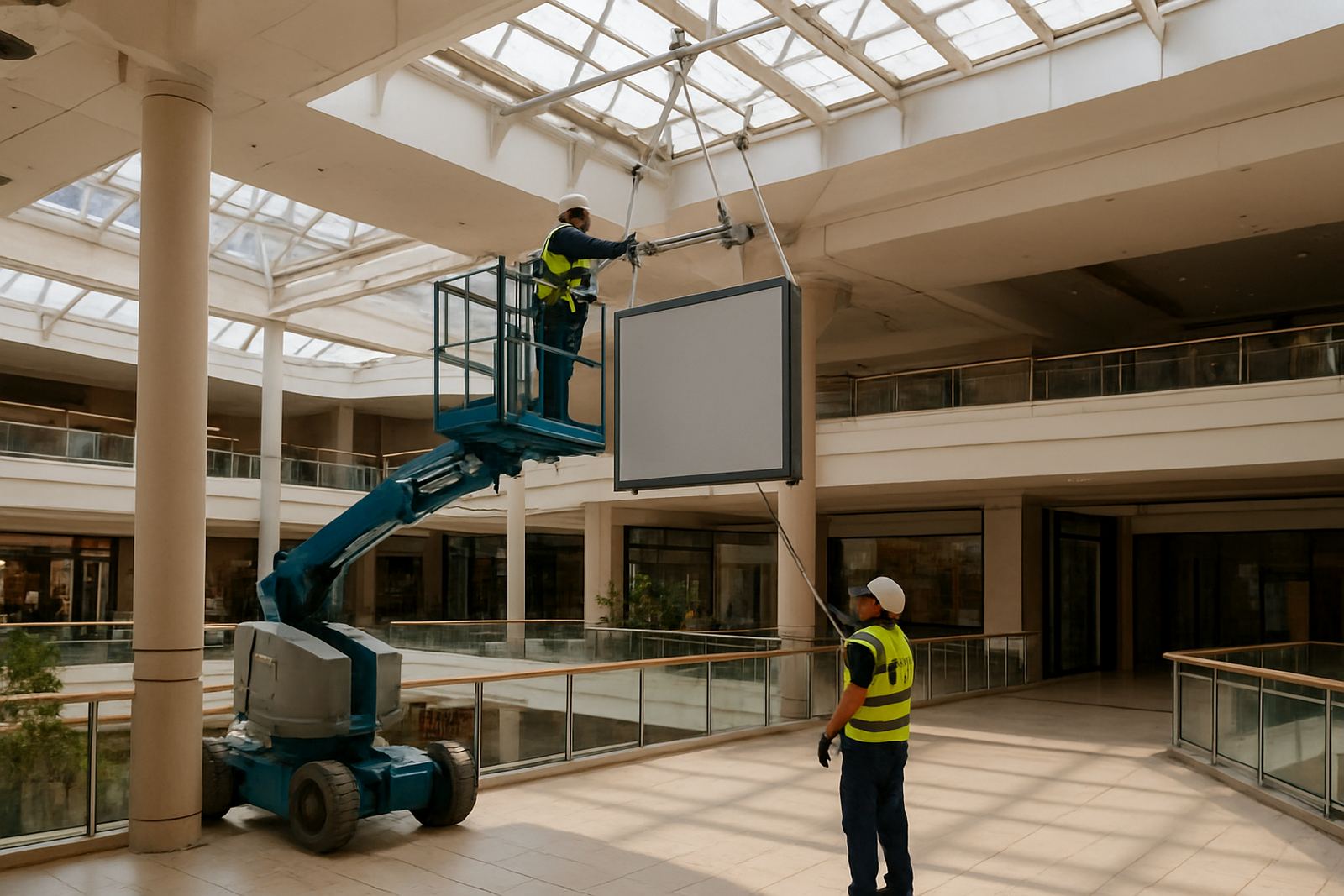
Before the first tool came off the truck, we carried out a site survey and lift plan. That included measuring the canopy face heights, checking where access equipment could be positioned, and confirming safe working zones around the pumps and drive lanes. We also reviewed the weather window, since wind can change quickly in Paarl and affect panel handling on raised access.
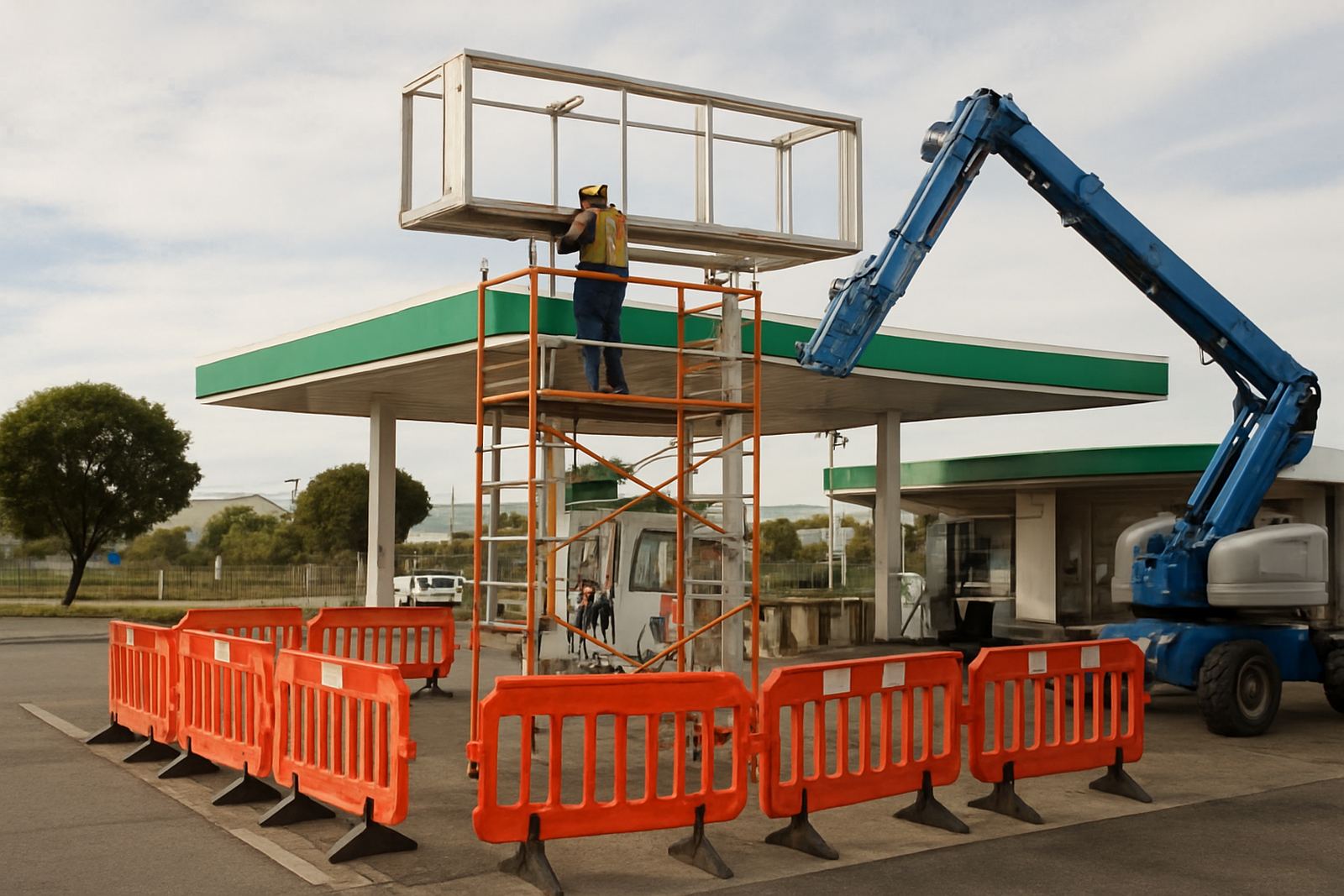
Our crew used scaffold and access procedures suited to the job, with first-aid trained staff on site and a safety officer overseeing the sequence of work. Barriers and cones were placed to protect the work zone, and the team kept a clear line of communication with the site manager throughout the shift. There was no need for the forecourt to close, but we did sequence the work around peak traffic periods so the site kept moving.
- Site survey completed before mobilisation
- Lift plan prepared for canopy face access
- Safety briefing carried out with the full crew
- Work zone marked off to protect public access
- Traffic movement monitored while panels were removed and fitted
Crew, equipment and the replacement scope
The crew on this job came from our Paarl and Cape Town side of operations, with support from our fleet and access lead for the equipment set-up. We used standard sign rigging gear, hand tools, fixings suited to exterior sign work, and access equipment selected to reach the canopy safely. No special fabrication was needed on site, but the panels had to be handled carefully to avoid scratching, bending or water ingress at the seams.
We replaced the fascia signs section by section so the client could keep the rest of the canopy area open. Each new panel was checked for level, edge seal and secure fastening before the next section was opened up. The security check on the surrounding sign faces included a close look at brackets, face retention and any movement at the corners. One loose panel edge was tightened while we were there, which saved the client from a callout later on.
For a forecourt site, small details matter. A panel that sits 5 mm out can catch the eye from the road, and a fastener left slightly proud can become a problem when wind and vibration start working on it. We took the time to align the faces properly and leave the site neat enough for the forecourt team to carry on without extra clean-up.
Timeline from first visit to handover
The project ran over 2 weeks from the first inspection to final handover. Week one covered the survey, measurements and access planning, then we booked the site for the removal and replacement window. Week two was the install visit, panel checks and final sign-off with the client.
The actual on-site work was completed in one main visit with a short return check after the first weather cycle. That follow-up mattered because fuel sites in Paarl take a fair amount of sun, wind and dust, and we wanted to make sure the replaced fascia signs stayed seated exactly as intended. Everything remained in order and the client signed off the work without any further fixes needed.
- Week 1: survey, measurements, lift planning and client approval
- Week 2: removal, replacement, security checks and handover
- Short follow-up: post-install check after weather exposure
Results on the forecourt and what we would repeat
The main result was a cleaner, safer looking forecourt with the canopy fascia signs properly secured and the surrounding panels checked. The client got a practical improvement without interrupting trade, and the site looked more orderly from the road as well as from the pump islands. There were no delays caused by access, and the work held up well after the first stretch of wind and sun.
If we were back on a similar Paarl fuel site tomorrow, we would use the same approach: early survey, tight traffic control, clear access planning and a crew that understands sign work on active commercial sites. We would also repeat the close inspection of every visible panel, because that is where small faults usually show first. For fuel sites, a calm job is a good job, and this one was handled that way from start to finish.
Sign Riggers works only on rigging, removal and servicing for sign makers and site owners who need a steady hand on active jobs. That keeps the relationship clear, the scope practical and the work focused on safe installation and maintenance.
Key facts
| Project | Paarl Fuel Site |
|---|---|
| Location | Paarl, Western Cape |
| Scope | Canopy fascia sign replacement and panel security checks |
| Access | Scaffold and platform-based sign rigging |
| Timeline | 2 weeks from survey to handover |
| Crew focus | Safety trained, first-aid trained and forecourt aware |