

School signage that had to work before the first bell
This project came from a private school in Randburg that wanted a cleaner arrival point and better wayfinding across the campus. The brief covered gateway signage, sports field boards and internal direction signs, all of which had to read well from a vehicle, from the pavement and from a moving crowd between classes and activities.
The school needed a rigging crew that would not compete with the sign shop supplying the branding. Our role was installation only, with the job split into practical stages so the site could stay open and safe. We worked around pick-up and drop-off times, sport practice and normal school traffic, which meant the plan had to be simple and tight.
What the brief asked us to solve
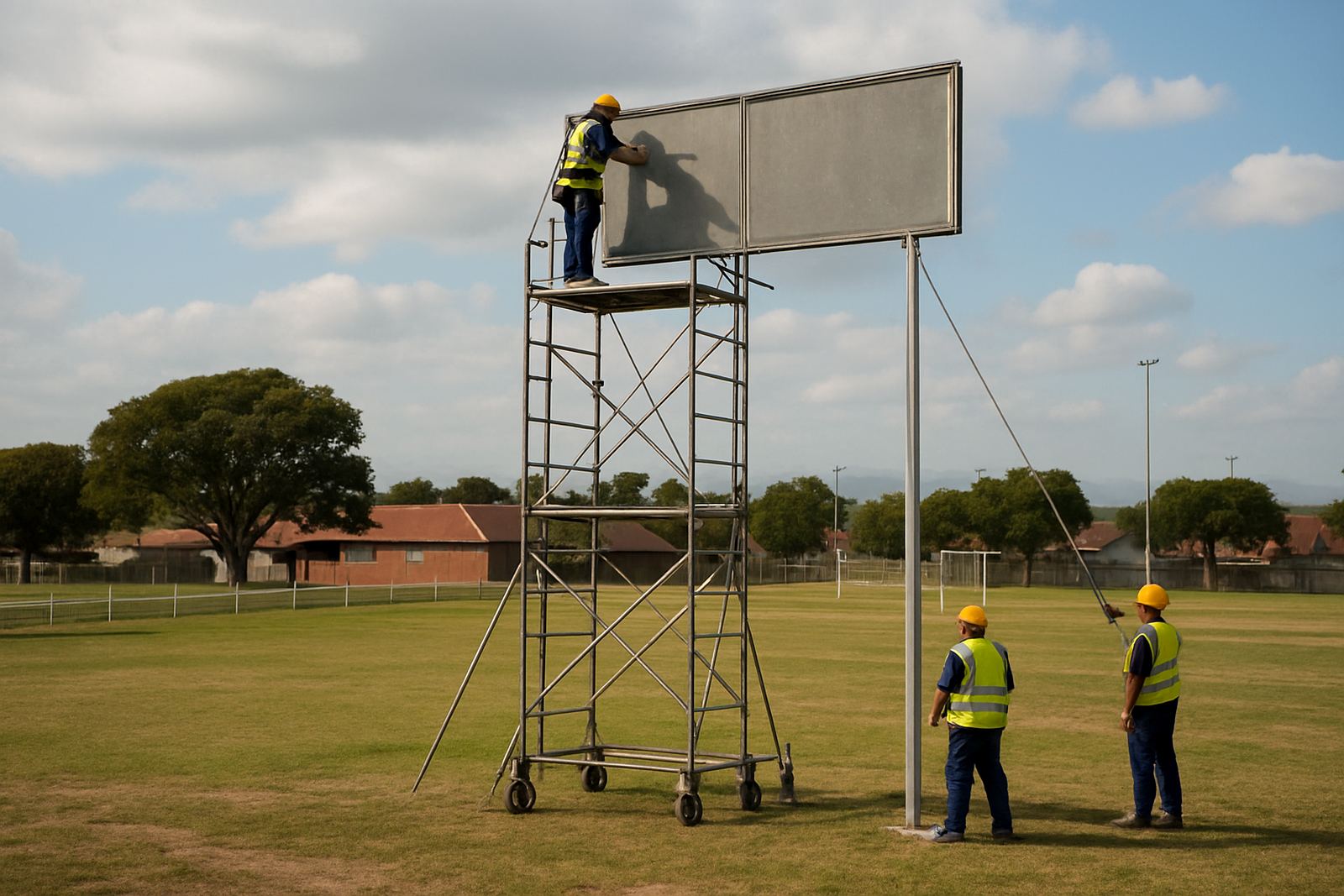
The main challenge was visibility without clutter. The gateway signs had to make the entrance easy to find, while the sports boards needed to stand up to wind, sun and regular ball impact nearby. Inside the campus, the direction signs had to be legible at walking speed and mounted at a height that would not interfere with gates, walkways or cleaning access.
- Gateway signage for the main vehicle entrance
- Sports field boards for match-day and practice areas
- Internal direction signs for classrooms, admin and sport zones
- Safe installation without disrupting lessons or after-school activities
- Work completed with access equipment and spotters on site
There was also a local weather factor to think about. Randburg sees hot afternoons, dust and the odd summer downpour, so the fixings and the mounting points had to be solid enough for long-term use. We checked clearances for existing walls, poles and boundary lines before any lifting started.
How we planned the work on site
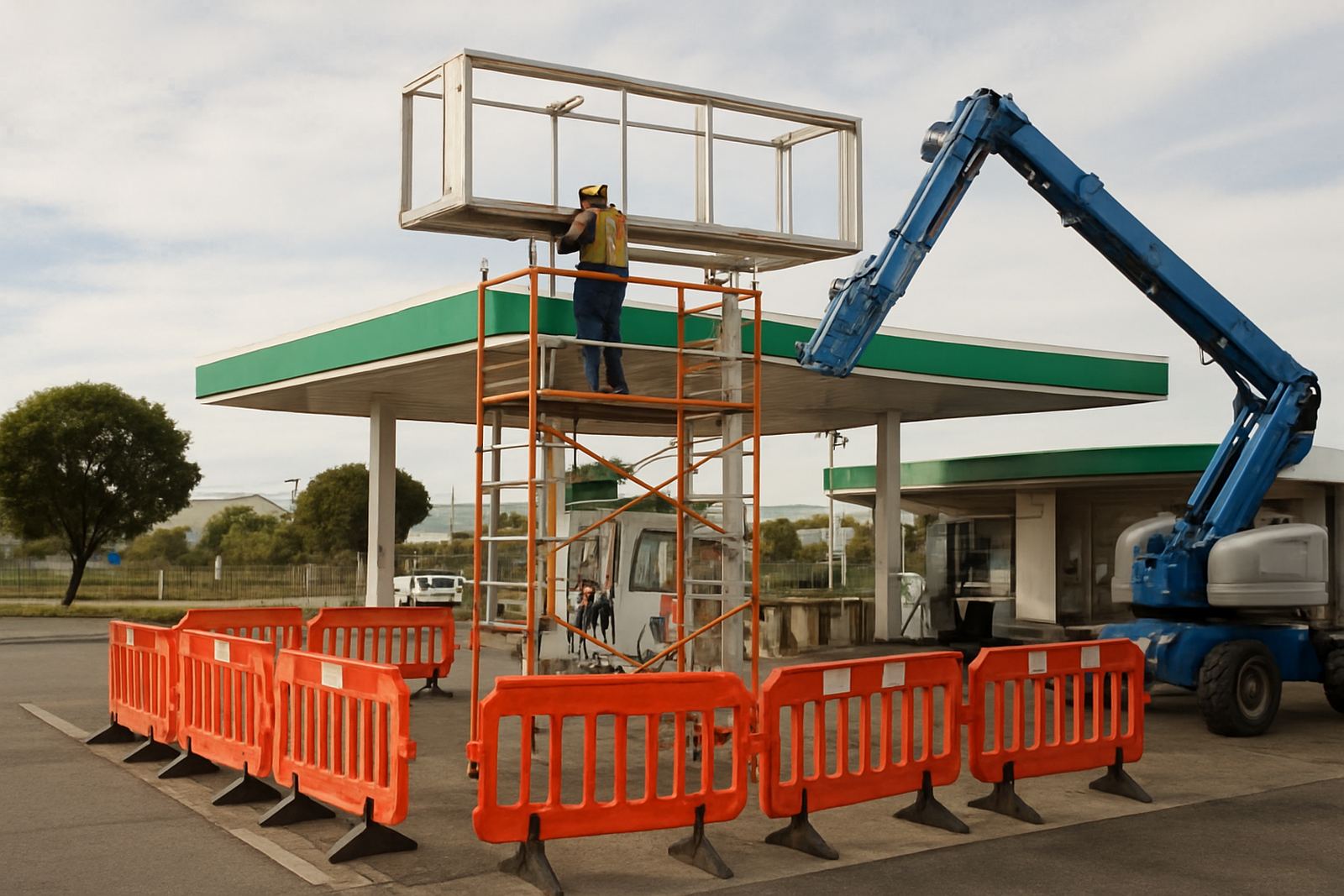
Before installation, we completed a site survey and lift plan so the team knew exactly where each sign would go and what access would be needed. The school is active all day, so we scheduled the heavier work for quieter periods and kept vehicle movement controlled. Where a ladder would not have been safe or practical, we used proper access gear and a grounded setup rather than trying to save time.
Our crew coordinated with the school representative on entry points, safe routes and the sequence of work. That kept the job moving without closing off major paths. It also meant the signage could be installed in a logical order, starting at the entrance and working inward to the sports and direction boards.
- Site survey and measured marking before delivery to position points
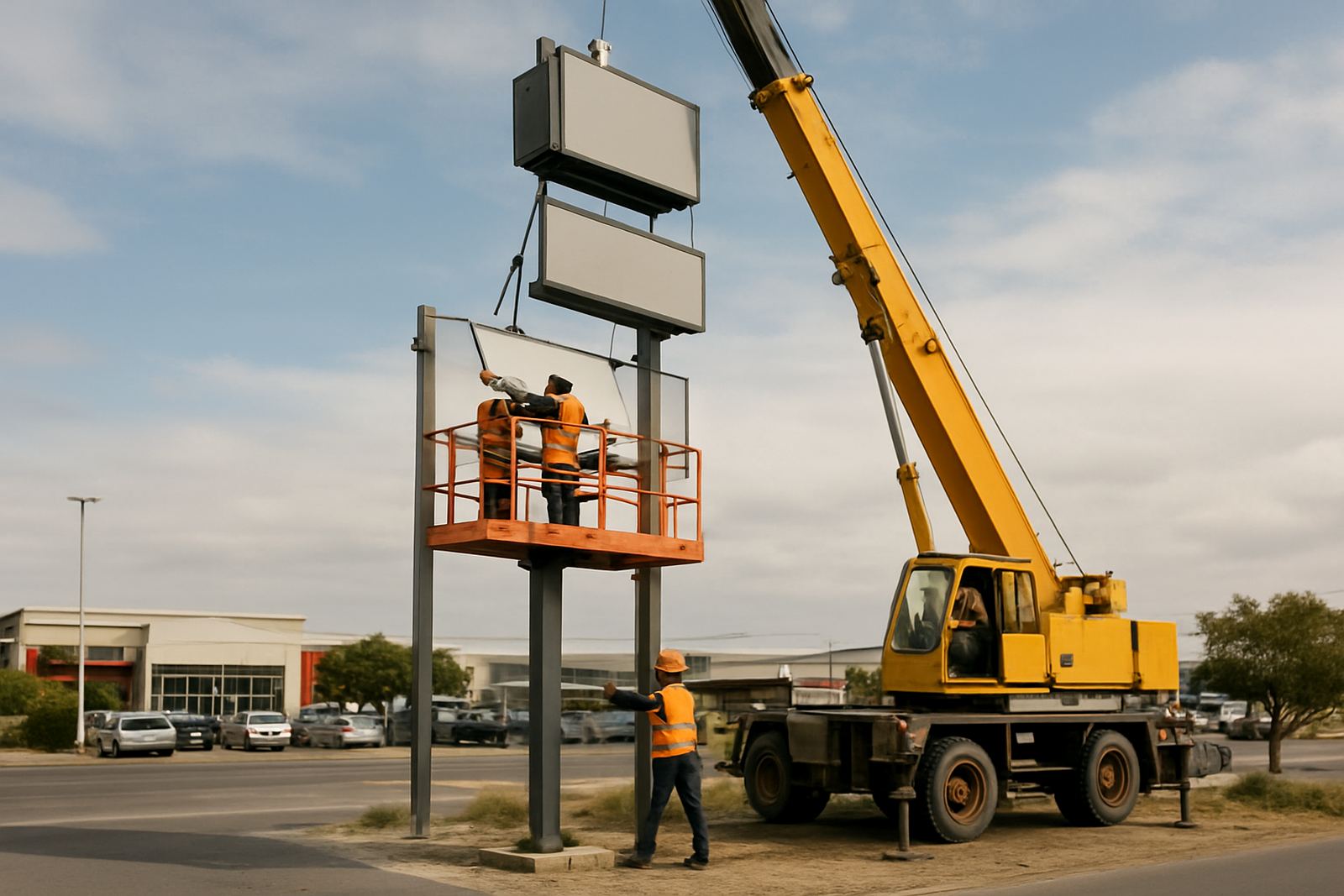
- Lift planning for the gateway install and higher fixing points
- Access control at pedestrian paths during active school periods
- Safety checks for fixings, wall conditions and clearances
Installation details and sign types
The gateway signage was fixed for clear roadside presence and better campus identification. The sports field boards were installed to face the main viewing angles and to stay readable in bright sunlight. Internal direction signs were mounted at decision points such as intersections, entrances and admin routes, so people could find their way without having to ask around.
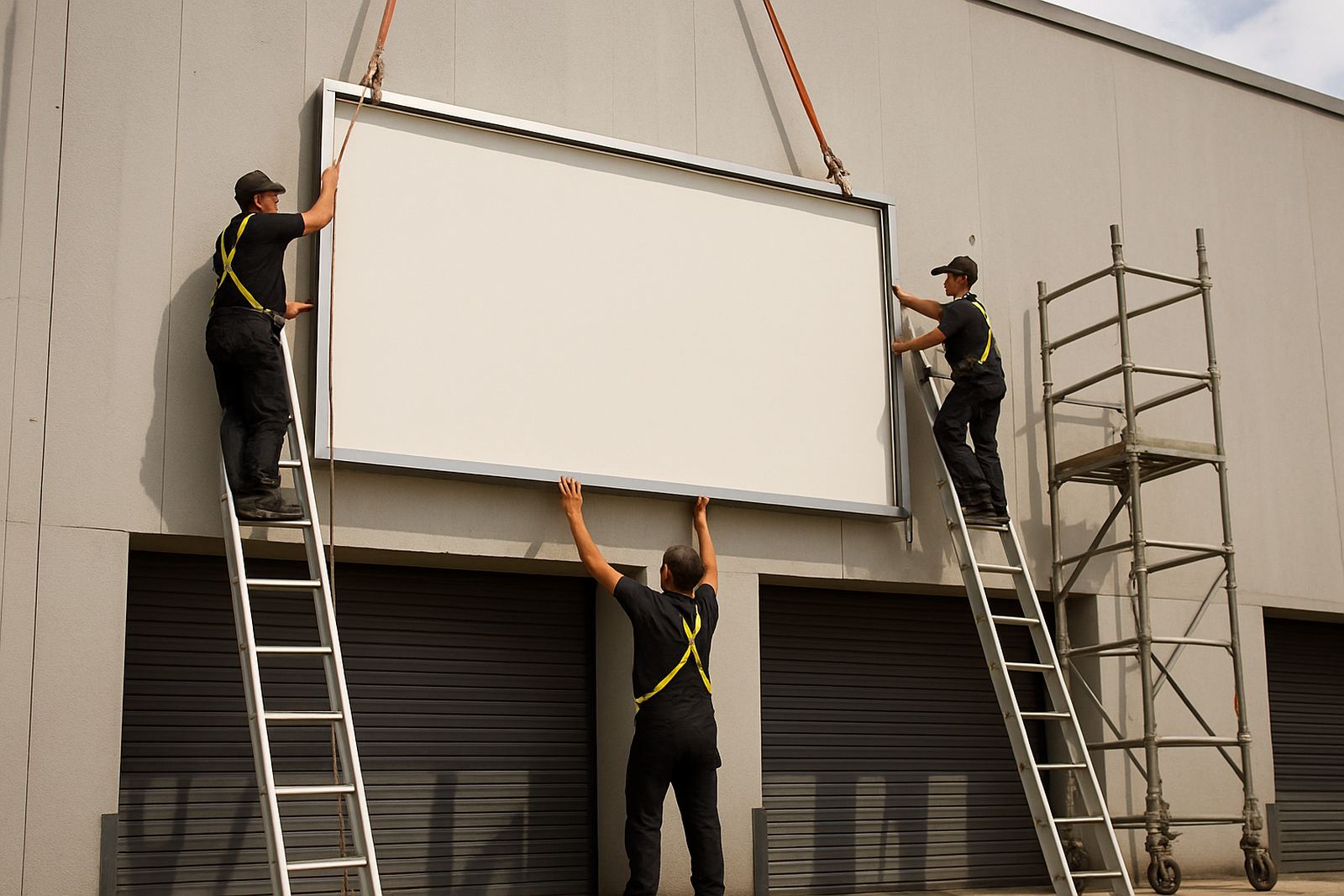
We also checked each panel for level, alignment and anchor strength before handing over. The result was neat, practical and easy to maintain. The school wanted signage that would not become a future headache, so we used methods that allow for servicing or replacement without disturbing the surrounding structure too much.
Because schools get busy at unexpected times, we made sure the final layout was clear enough for visitors but not overdone. The internal signs were kept consistent in size and mounting height, which helps staff and contractors follow the same routeing every time, even during event days.
Timing, access and safety on a live campus
The project ran over two weeks from survey to final handover. Week one covered the site walk, lift planning and fixing point checks. Week two covered installation, final adjustments and cleanup. That timeframe worked because the signs were ready in sequence and the school was able to give us controlled access windows.
Safety was central to the job. The team worked with trained rigging procedures, first-aid readiness and controlled access around the work zone. We kept the area tidy, we marked off active spaces and we avoided unnecessary noise or disruption near classrooms. On a school site, that matters just as much as the final look.
- Two-week delivery from survey to completion
- Work staged around school traffic and activities
- Controlled access near learners, staff and visitors
- Final tidy-up and sign position checks before sign-off
What changed after the new signs went up
Once the installation was complete, the school had a clearer front entrance and a better way to direct people around the campus. Sports visitors could find the fields without confusion, and internal movement became more straightforward for parents, suppliers and event teams. The signs did their job quietly, which is usually the best outcome on a school site.
If we were asked to do the same type of job again, we would use the same approach: survey first, plan the access properly and install in stages so the site keeps functioning. For schools in Randburg and elsewhere in Gauteng, that method keeps risk down and avoids rushed work that can lead to repairs later on. It is a practical way to get the signage in place and keep it there.
Key facts
| Client type | Private school |
|---|---|
| Town | Randburg, Gauteng |
| Project scope | Gateway signage, sports field boards and internal direction signs |
| Timeline | 2 weeks |
| Access method | Site survey, lift planning and controlled rigging access |
| Outcome | Clearer visitor flow, better sports field visibility and tidy campus wayfinding |