

When platform work is the right access method
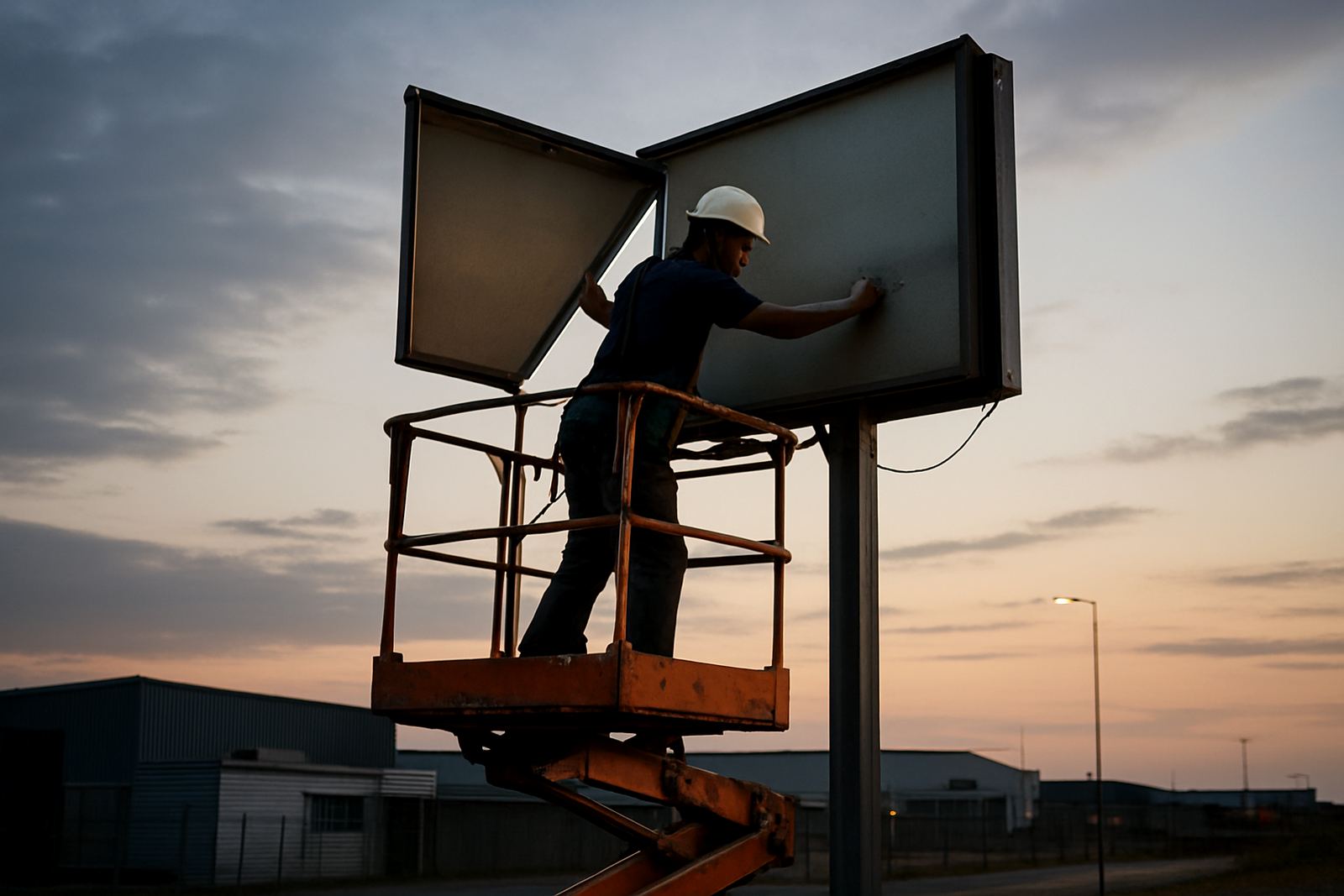
Platform work is used when the sign sits above normal reach, when the ground is uneven, or when the site rules make ladder work impractical. It is a common choice for shopfront fascias, warehouse entrances, mall edges, forecourt pylons and interior signs in warehouses, showrooms and reception areas. In the Cape, coastal wind and salt air can make access planning more important. In Gauteng, height, traffic and tight access often matter more.
We use platform access for sign makers who need a crew to get in, work quickly, and leave the site tidy for the client. This is rigging only, so we focus on the lift, the sign and the safe handover. No competing retail work, no distraction from the sign shop relationship.
What is included in a platform work callout
Each job is planned around the sign size, mounting height, ground conditions and the time window allowed by the site. We bring the access equipment, a trained crew, and the gear needed to complete the task safely. Where required, we also coordinate with site managers, building control, security and mall operations.
- Boom lift or compact platform selection for the site height and access width
- Pre-start check of surface, overhead obstructions and loading limits
- Sign installation, removal or servicing from a raised working position
- Lighting access for lamps, drivers, cables and fixings
- Short-duration maintenance visits for inspections, tightening and cleaning
- Basic lift planning for narrow driveways, courtyards and loading bays
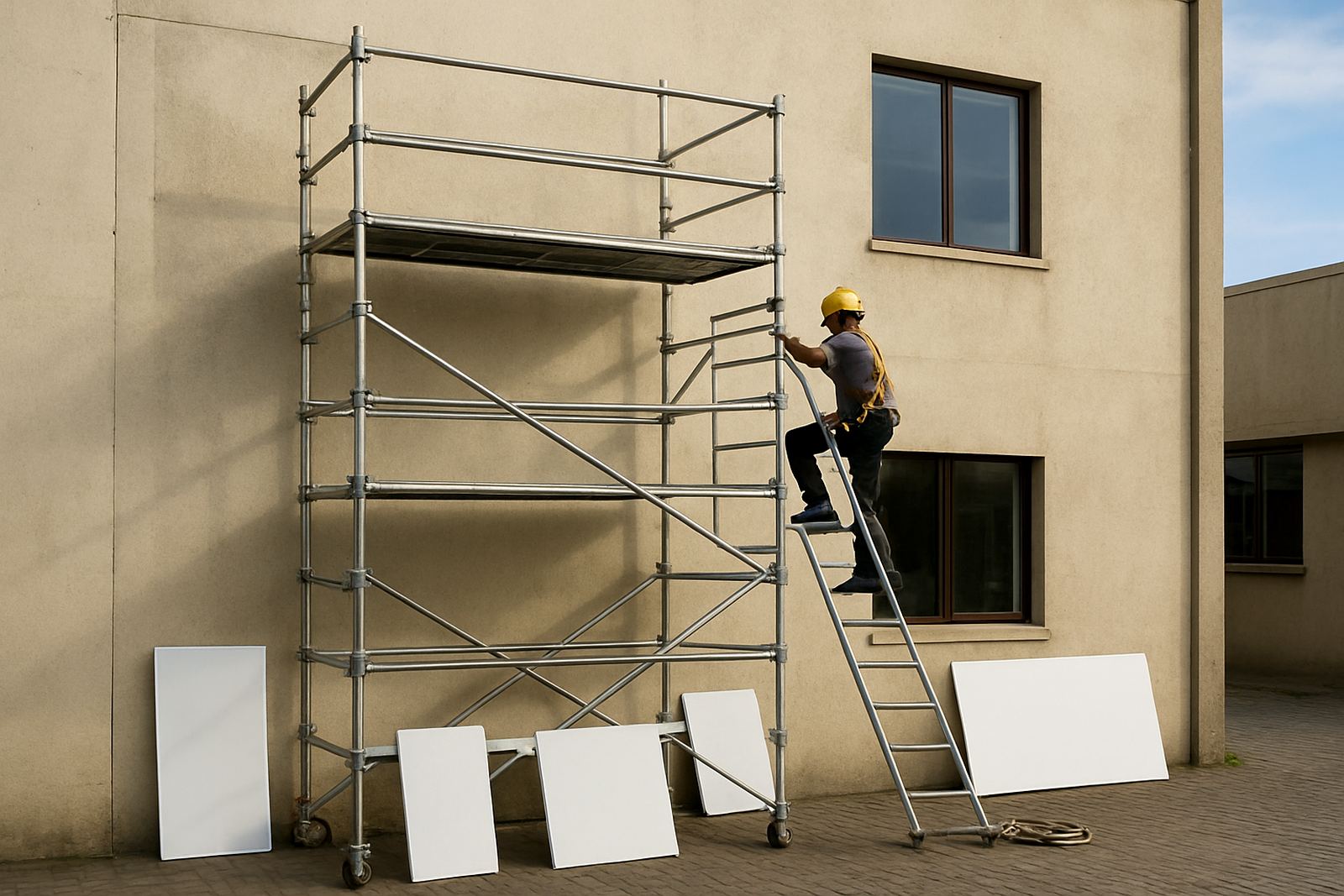
If the job needs scaffold instead of a powered platform, or a mix of both, we will advise on the safest option before work starts.
How we plan the lift and site access
Good platform work starts before the machine arrives. We measure the working height, check the reach needed from the parking point and confirm the route in and out of the site. That includes width restrictions, slab edges, canopies, service lanes, trees, parked vehicles and any overhead cables. On busy sites in Sandton, Midrand or the CBD, timing can matter as much as the lift itself.
Our process is simple and practical:
- Receive the job details and photographs from the sign shop or client
- Check access, ground bearing and the working height needed
- Select the right machine for indoor or outdoor use
- Plan the crew, timing and safety controls
- Carry out the work and hand over once the sign is secure
Where load-shedding affects lighting tests or access to powered gates, we plan around it so the crew is not left waiting on site.
Equipment types and working specs
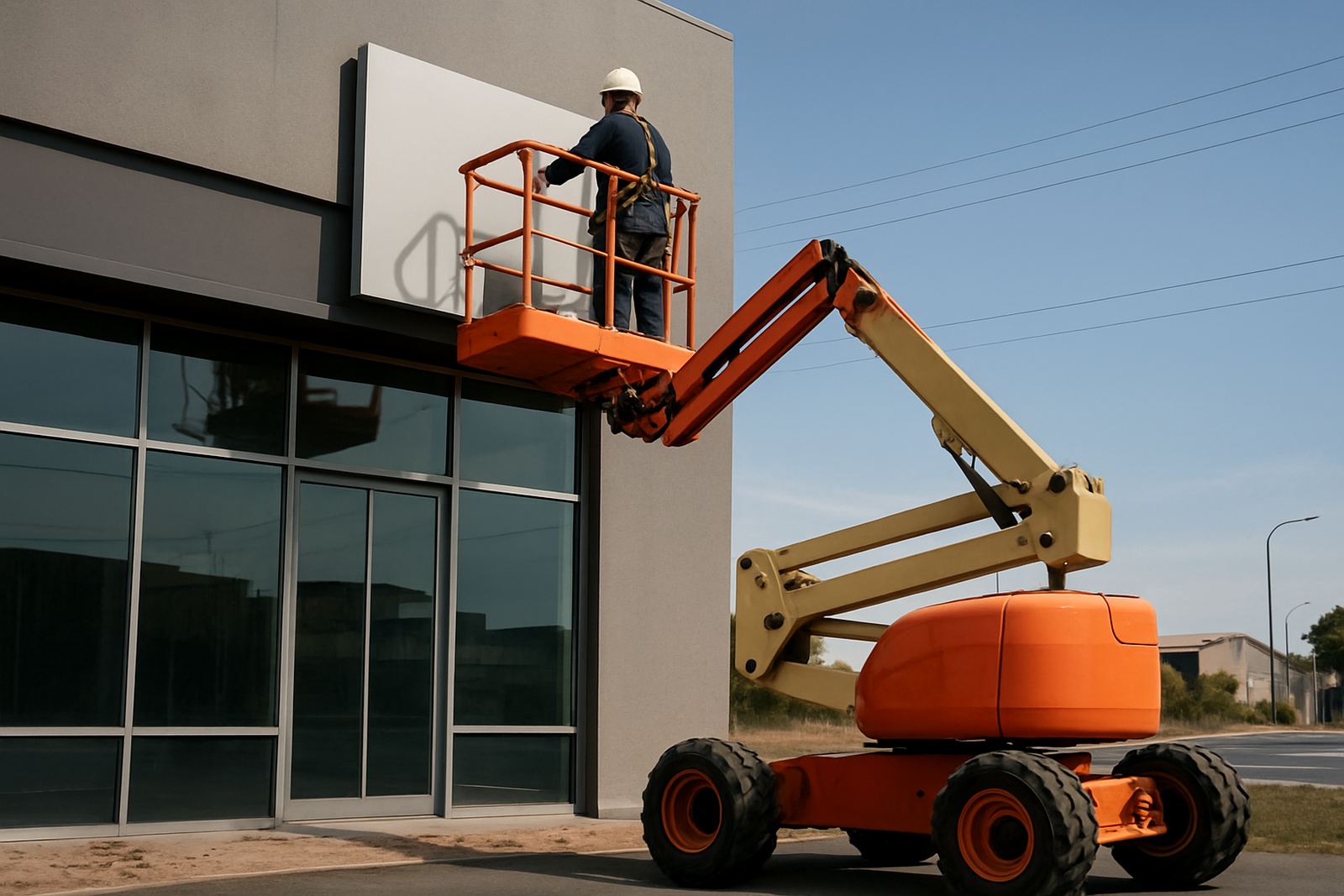
We use a mix of boom lifts and compact platforms depending on the site. A compact machine is useful in narrow aisles or internal spaces where floor loading and turning radius matter. A boom lift is better for reaching over awnings, parapets, forecourts and planted areas. We choose the machine based on the job, not on what happens to be available that day.
Typical working ranges include access heights from around 6 metres up to 20 metres, with outreach selected to suit the facade or canopy. Narrow access units can pass through standard service routes and fit into tighter courtyards. Electric units are often preferred indoors because they are quieter and cleaner, while outdoor machines are chosen for rougher ground and longer reach.
We also keep an eye on floor conditions, especially in older buildings, shopping centres and parking decks. If the surface or slope is not suitable, we will say so rather than force a lift into a poor position.
Turnaround times for sign makers and site managers
Most platform work can be scheduled within a practical lead time once the site details are clear. Simple installs or removals may be set up in a short booking window, while larger jobs, night work, mall access or traffic-sensitive locations need more notice. Emergency callouts are available when a sign is unsafe, damaged or partially detached.
For planned work, we normally aim to confirm the lift plan, access requirements and crew timing before the job date. This keeps the sign maker informed and helps avoid delays on the day. If another trade is still working in the area, we will sequence the platform time so the site does not pay for waiting hours.
Pricing approach and maintenance intervals
Pricing is based on the machine required, the height and reach, the time on site, and whether the job is planned or urgent. We also take into account travel, after-hours work, access delays and any special permit or site control requirements. For sign shops, the goal is fair pricing that keeps the client competitive without cutting corners.
For maintenance work, regular intervals help keep signs safe and presentable. In coastal areas, we usually recommend a check every 3 to 6 months for fixings, corrosion and lighting access. In busy commercial areas or where the sign carries weather exposure, a 6 month interval is often sensible. If the sign is on a high facade or a hard-to-reach canopy, a planned visit can prevent bigger repair costs later.
- New installations: priced on machine type, height and duration
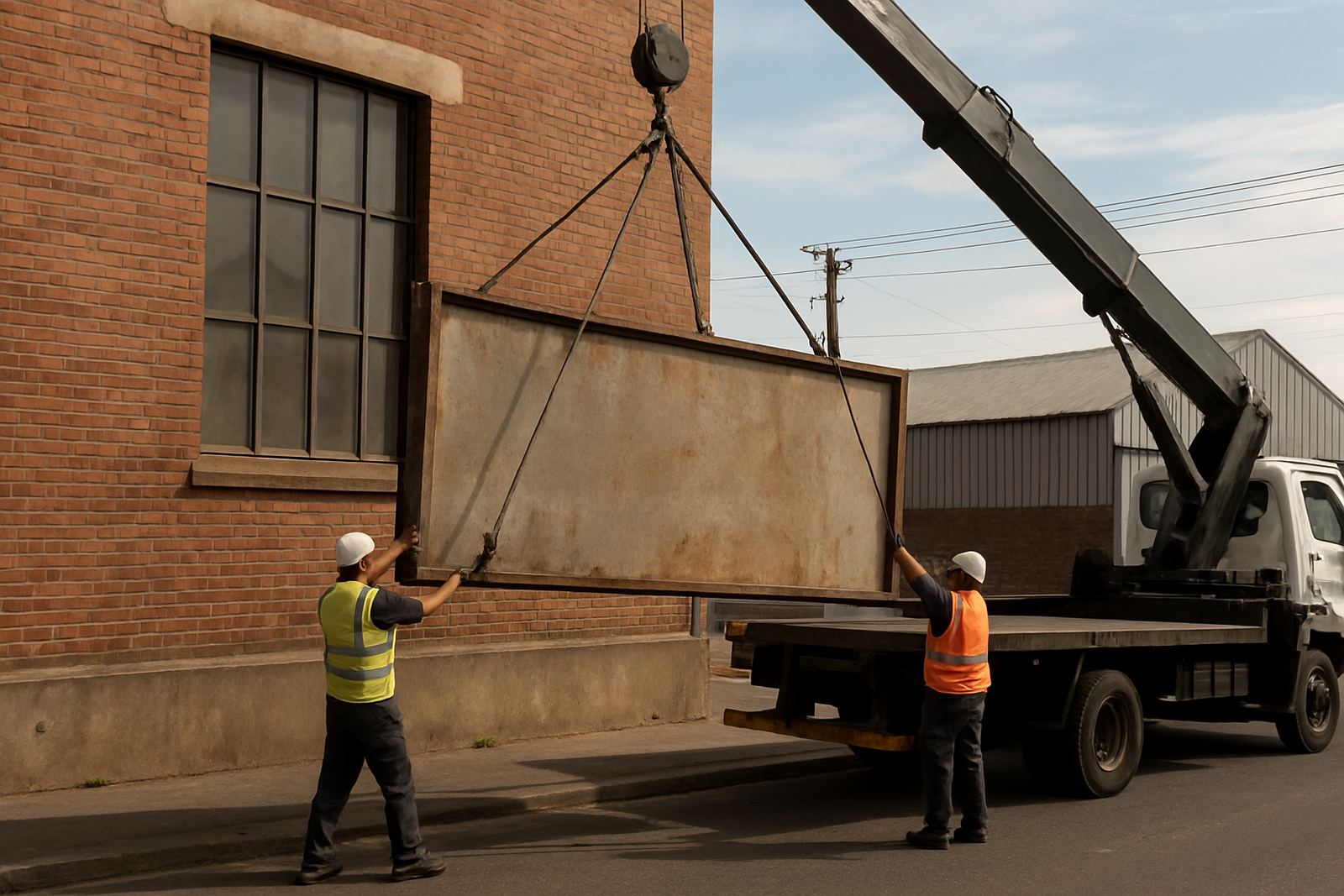
- Removals and relocations: priced on access difficulty and fixings
- Servicing and lighting access: priced on inspection time and parts handling
- Urgent callouts: priced on response time and after-hours needs
We keep the pricing method straightforward so the sign shop can quote its own client with confidence.
Key facts
| Access methods | Boom lifts and compact platforms |
|---|---|
| Typical working height | Approx. 6 m to 20 m |
| Best for | Facades, canopies, atriums and internal high points |
| Service areas | Paarden Eiland, Bellville, Somerset West, Paarl, Johannesburg CBD, Sandton, Midrand, East Rand |
| Work type | Installation, removal, servicing, lighting access and maintenance |
| Planning | Site survey, lift selection, safety controls and turnaround scheduling |