

When scaffold access is the right call
Some signs sit above canopy lines, over busy walkways or across awkward facades where a quick reach is not enough. In those cases we arrange scaffold access so the rigging crew can work with proper footing, a stable platform and room for tools, fixings and lighting components. It suits sign makers who need installation or maintenance done on live commercial sites where public safety matters, especially in Paarden Eiland, Bellville, Somerset West, Paarl, Johannesburg CBD, Sandton, Midrand and the East Rand.
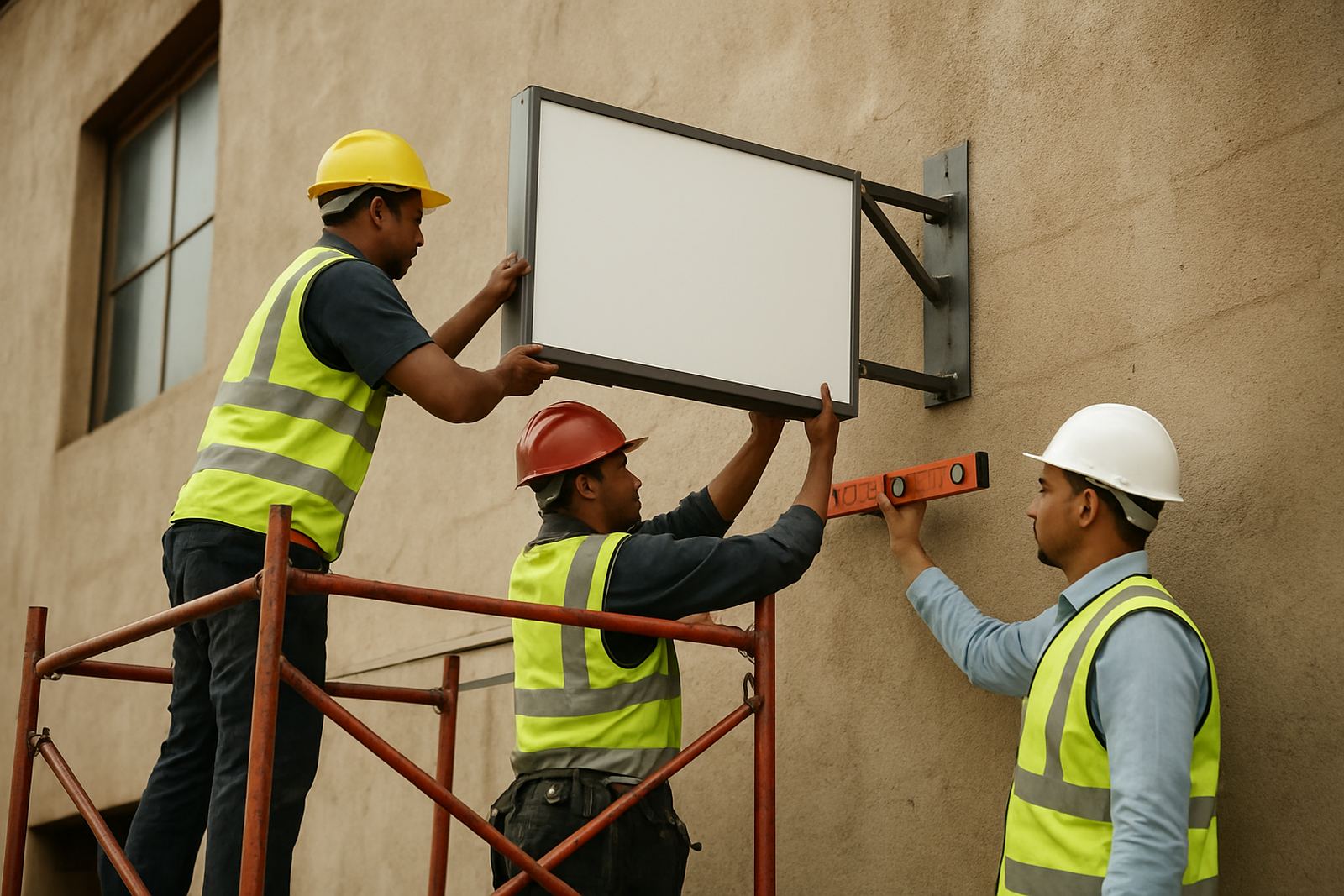
Scaffold access is often used for fascia signs, projecting signs, illuminated panels, directional signs and larger elements that need careful handling. It is also useful when a sign must be removed in sections, or when access is tight because of parked vehicles, loading bays, service roads or pedestrian flow. On coastal sites around Cape Town, we also consider wind exposure and salt air, while inland sites in Gauteng often need planning around heat, traffic and after-hours access.
What is included in scaffold access support
We do not supply sign design or fabrication. Our role is to coordinate the access method and carry out the rigging work needed to install, remove or service the sign safely. The scaffold arrangement is matched to the job size and the site conditions, with enough working height and width for the team to complete the task properly.
- Site survey and access review before work starts
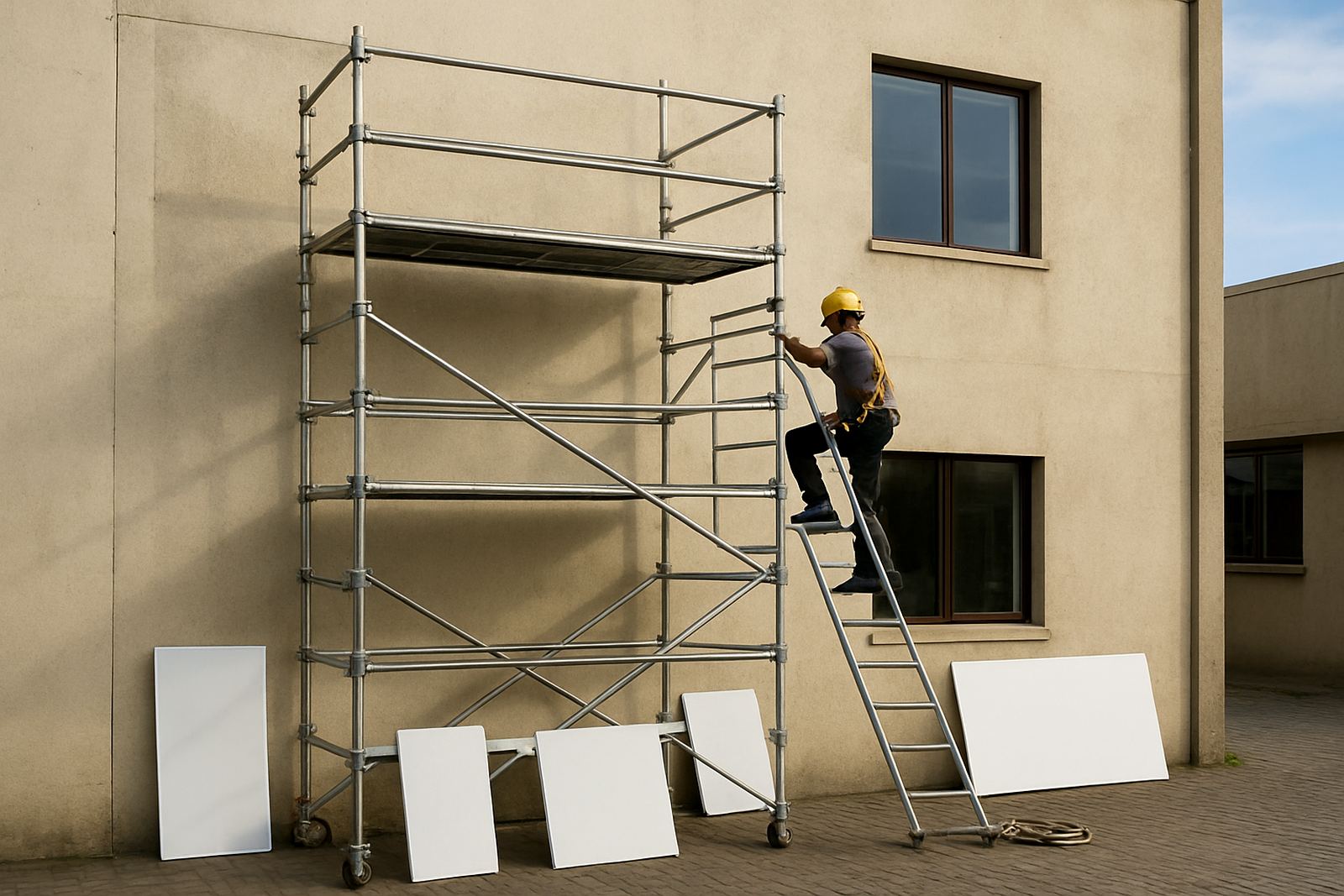
- Scaffold coordination for low, mid and higher level sign work
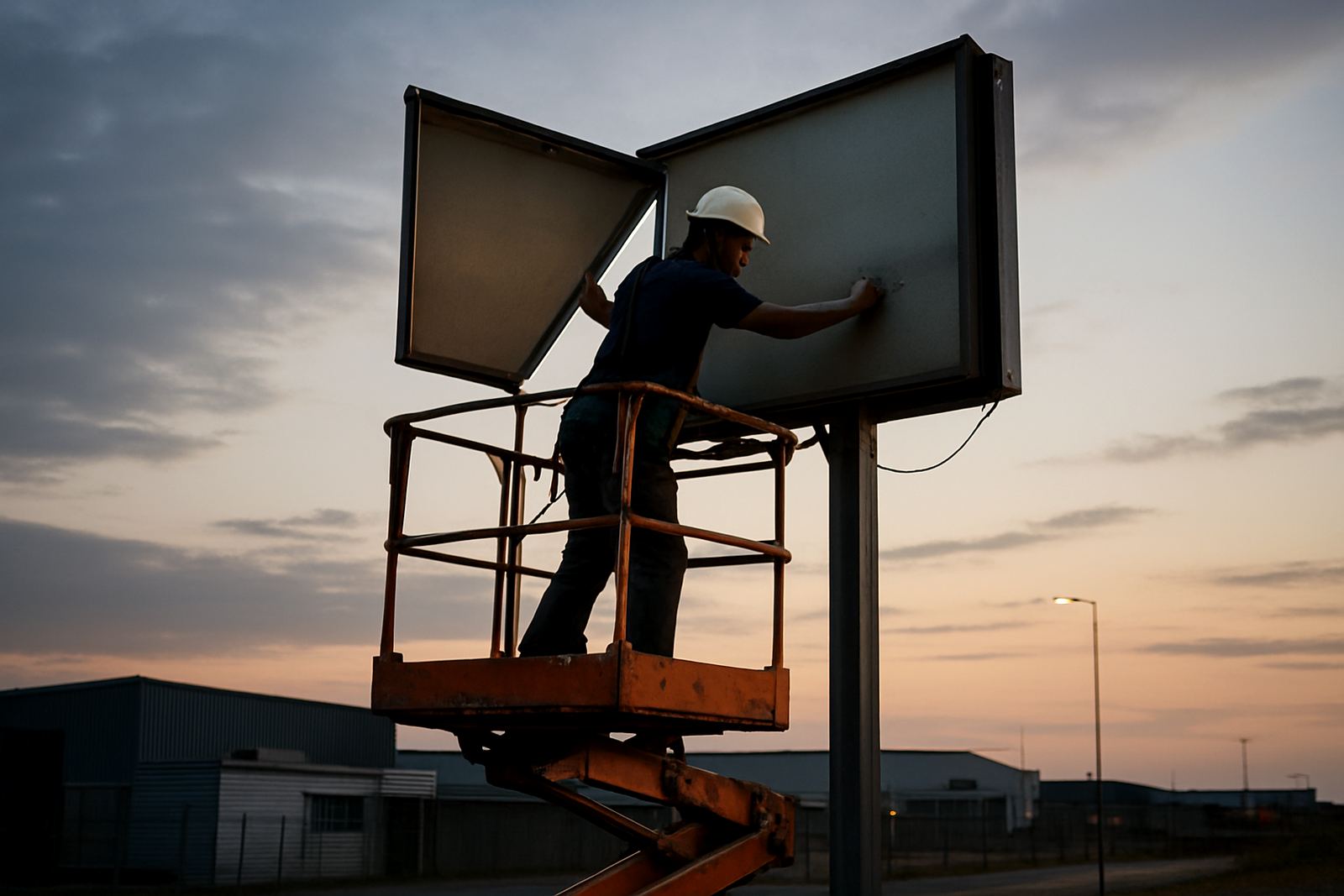
- Safe access for face changes, repairs and lighting maintenance
- Working platforms sized for tools, fixings and sign panels
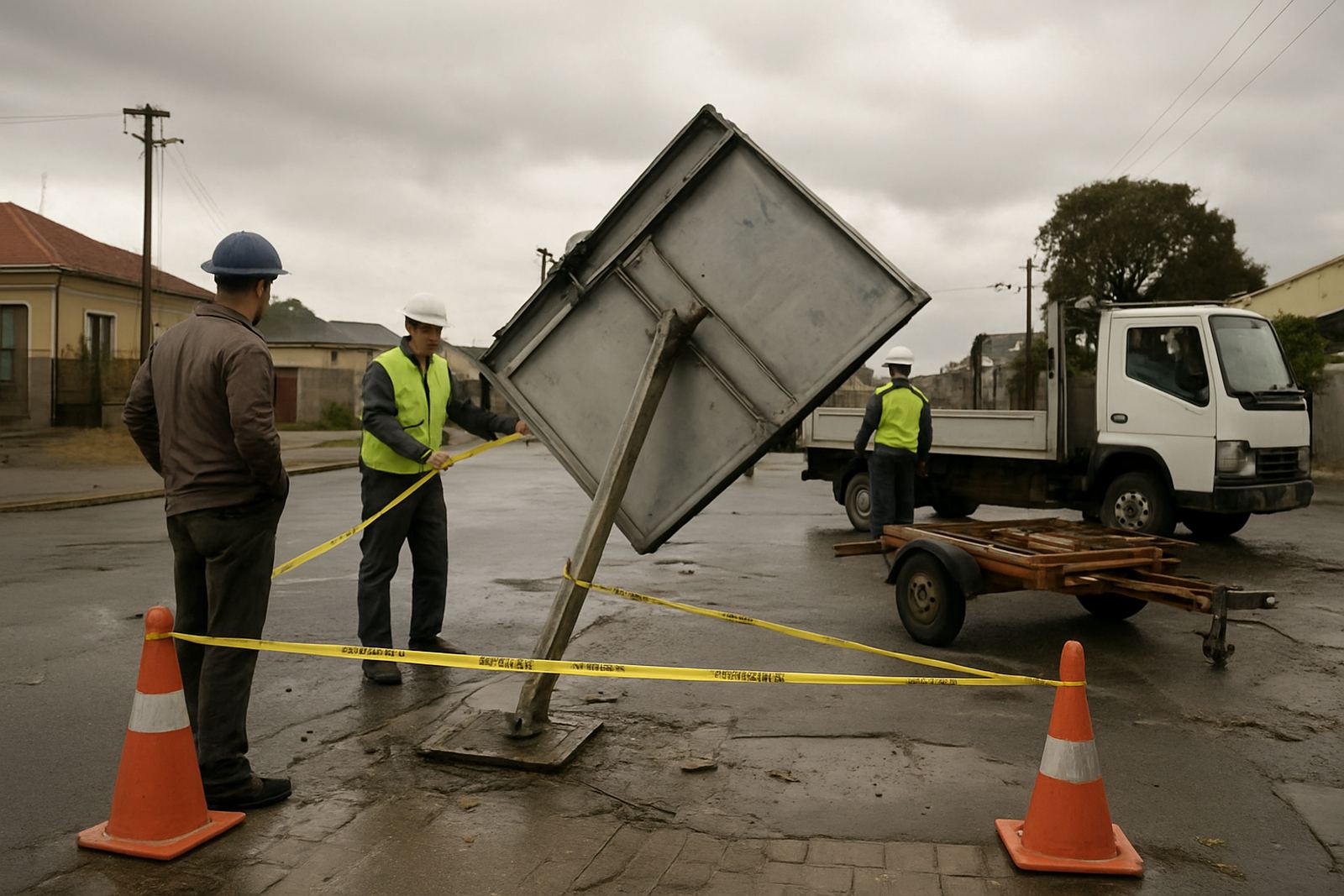
- Edge protection, barrier planning and site protection where needed
- Lift planning for heavier sections, frames or awkward components
- Removal and reinstatement of signs during maintenance visits
Depending on the site, we may also coordinate platform work or combine scaffold access with other lifting methods. Where the job needs it, the crew works around municipal rules, landlord conditions and centre management requirements so the site can stay operational with minimal disruption.
How we plan the scaffold job
Every scaffold-access job starts with a site check. We look at the sign height, the surface the scaffold will stand on, access for delivery and the safest way to get the team to the workface. That includes checking for uneven paving, overhead cables, loading dock traffic, glass fronts and any public areas that need barriers or clear walkways.
Once the route and height are confirmed, we plan the sequence so the sign work happens efficiently. For example, if a face change is needed on a large illuminated sign, we will set the scaffold to give stable access to the outer fixings first, then move through the panel or section changes in order. That keeps the job tidy and avoids unnecessary repeat movement of equipment.
- Survey the site and measure access points
- Confirm scaffold footprint, height and working clearance
- Plan materials handling and load points
- Schedule the rigging crew and any after-hours work
- Carry out installation, removal or servicing
- Do a final check, test and site tidy-up
Safety, training and site control
Our crews are scaffold aware, first-aid trained and used to working in live commercial environments. Safety is built into the method from the start, not added at the end. We use controlled access, clear exclusion zones and practical housekeeping so the work area stays organised while the job is in progress.
For retail centres, offices, factories and roadside sites, we pay close attention to pedestrians, delivery trucks and the weather. In Cape Town, strong wind can affect lifting and panel handling, so scaffold work may be paused if conditions change. In Johannesburg, we often work around security access points, tenant trading hours and municipal site rules. If a sign is above a service lane or near a public entrance, we make sure the area is properly managed before any tools come up the scaffold.
Turnaround times and maintenance intervals
Turnaround depends on height, access, the type of sign and whether the site is open, but scaffold access is often planned within a few working days once measurements and approvals are in place. Urgent service work can sometimes be handled sooner if the site is ready and the access route is clear. For larger buildings or multi-sign jobs, lead time is longer because the scaffold needs proper coordination and the sign maker may need to sequence multiple units.
For ongoing maintenance, we recommend regular checks at six to twelve month intervals for signs that are exposed to wind, vibration, dust or salt air. Coastal sites often need closer attention because fasteners, seals and electrics can wear faster near the ocean. On busy roads or shopping centres, vibration and foot traffic can loosen fixings over time. A scheduled maintenance visit helps catch faults before they become a bigger repair.
Pricing approach for scaffold-based sign work
Pricing is based on the actual scope, not a standard one-size-fits-all rate. We consider scaffold height, duration, site restrictions, crew size, materials handling and whether the work is installation, removal or servicing. If the site needs after-hours access, traffic control or special lifting arrangements, that is built into the quote from the start.
Sign makers appreciate a clear breakdown because it keeps their own pricing accurate for their clients. We quote for the rigging and access portion only, so there is no overlap with fabrication or graphic supply. Where possible, we group work on the same site to reduce repeated access costs, especially for centres and buildings with more than one sign position.
- Quoted per job, based on site conditions and access height
- No hidden callout surprises on agreed scopes
- Separate pricing for emergency callouts or night work
- Optional maintenance visits on a scheduled cycle
Where we use scaffold access across our service area
Scaffold access is used across Paarden Eiland, Bellville, Somerset West and Paarl in the Western Cape, as well as Johannesburg CBD, Sandton, Midrand and the East Rand in Gauteng. In industrial areas, it is often the best way to reach signs on warehouses and trade yards. In commercial districts, it helps us work neatly where public access and tenant trading have to continue during the job.
Whether the task is a sign installation, a removal before a refurb, or a servicing visit on a hard-to-reach face, we keep the approach practical and the site controlled. Sign Riggers works for sign makers only, so the relationship stays clean: you supply the sign, we handle the access and rigging. That means your client sees one professional result and your own team keeps full ownership of the sign supply side.
Key facts
| Service type | Scaffold-based access for sign installation, removal and servicing |
|---|---|
| Operating areas | Paarden Eiland, Bellville, Somerset West, Paarl, Johannesburg CBD, Sandton, Midrand and East Rand |
| Typical use cases | Fascia signs, illuminated signs, face changes, removals and maintenance work |
| Crew profile | Rigging crews trained for scaffold access, safety and first aid |
| Planning method | Site survey, access review, lift planning and controlled work sequencing |
| Maintenance interval | Recommended every 6 to 12 months, depending on exposure and site use |