What a projecting sign is and where it works best
A projecting sign, also called a blade sign, is a sign that sits at right angles to a wall so people can see it from the side as they walk or drive past. It works well where front-on viewing is limited, such as narrow streets, side lanes, arcades, shopping centres and shopfronts with heavy foot traffic. In Cape Town and Johannesburg, these signs are common on corner buildings, restaurants, salons, pharmacies and professional offices that need clear visibility without taking up pavement space.
We work for sign makers only, so the face graphics, fabrication and branding stay with your own team. Our job is the rigging, safe fixing and later servicing of the sign on site. That means bracket placement, access, public protection and controlled removal when the sign needs to be changed or repaired.
Sizes, brackets and mounting options
Projecting signs come in a wide range of sizes and the right choice depends on street width, viewing distance and wind exposure. Smaller signs around 600 x 600 mm are often used for shops and small offices, while larger double-sided units may run to 1200 x 1800 mm or more for retail centres and roadside visibility. On exposed sites, especially in the coastal air around Paarden Eiland, Table View and Somerset West, fixing points and bracket depth need to be set properly so the sign does not shake or twist over time.
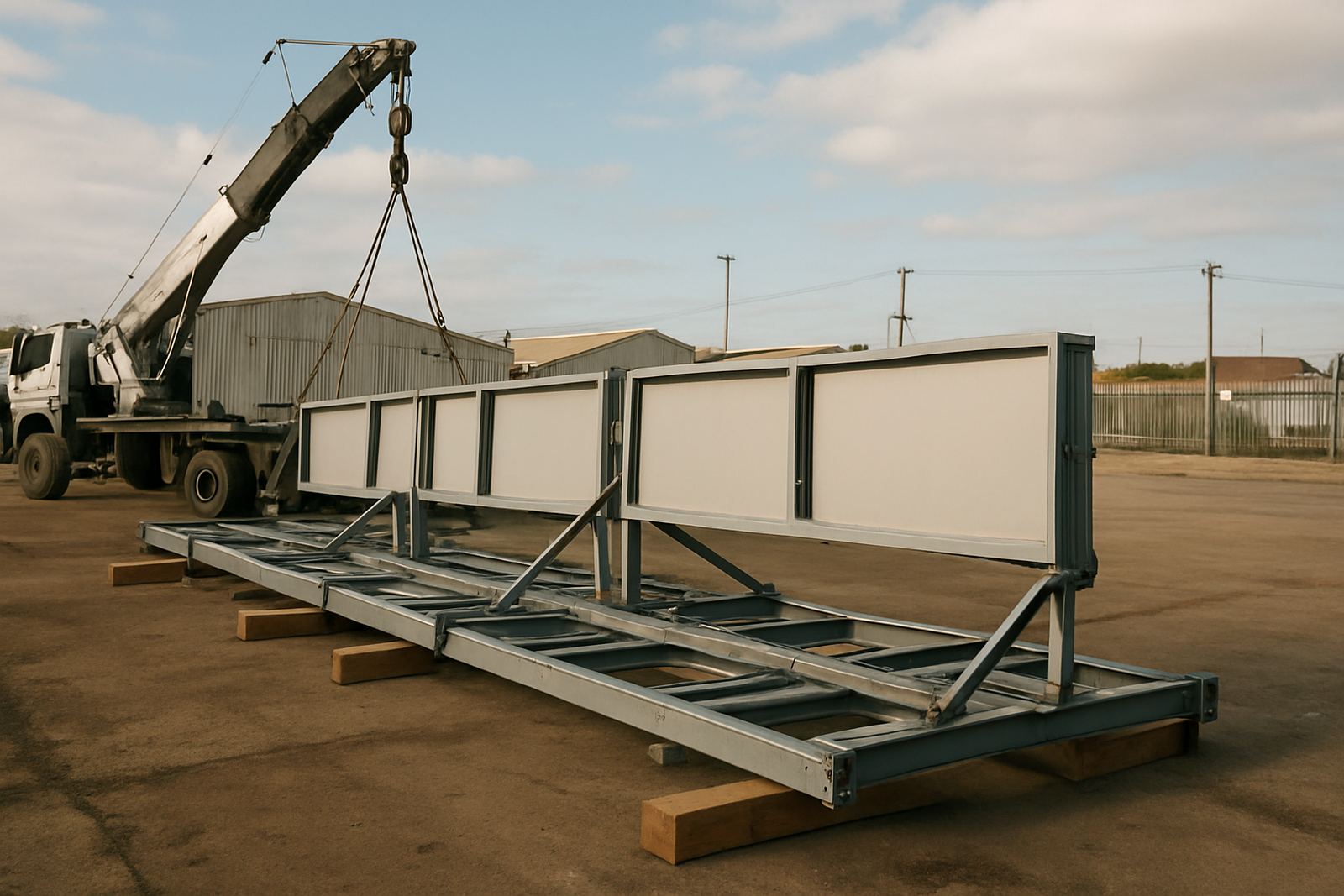
Common options include single arm brackets, twin arm brackets, top and bottom wall brackets, stand-off frames and folded box sections. We can rig lightweight aluminium signs, heavier steel frames and internally illuminated cabinets where access and cable entry are already planned by the sign shop. If the wall is uneven or the substrate is suspect, we will flag it before the lift or scaffold goes up.
- Typical face sizes: 600 x 600 mm, 900 x 900 mm, 1200 x 1200 mm and custom larger formats
- Common shapes: square, rectangular, round, oval and custom cut profiles
- Fixing methods: chemical anchors, through-bolts, coach screws and fabricated standoff arms
- Finish options: powder-coated frames, painted mild steel, galvanised steel and aluminium mounting plates
Safe installation on busy sites
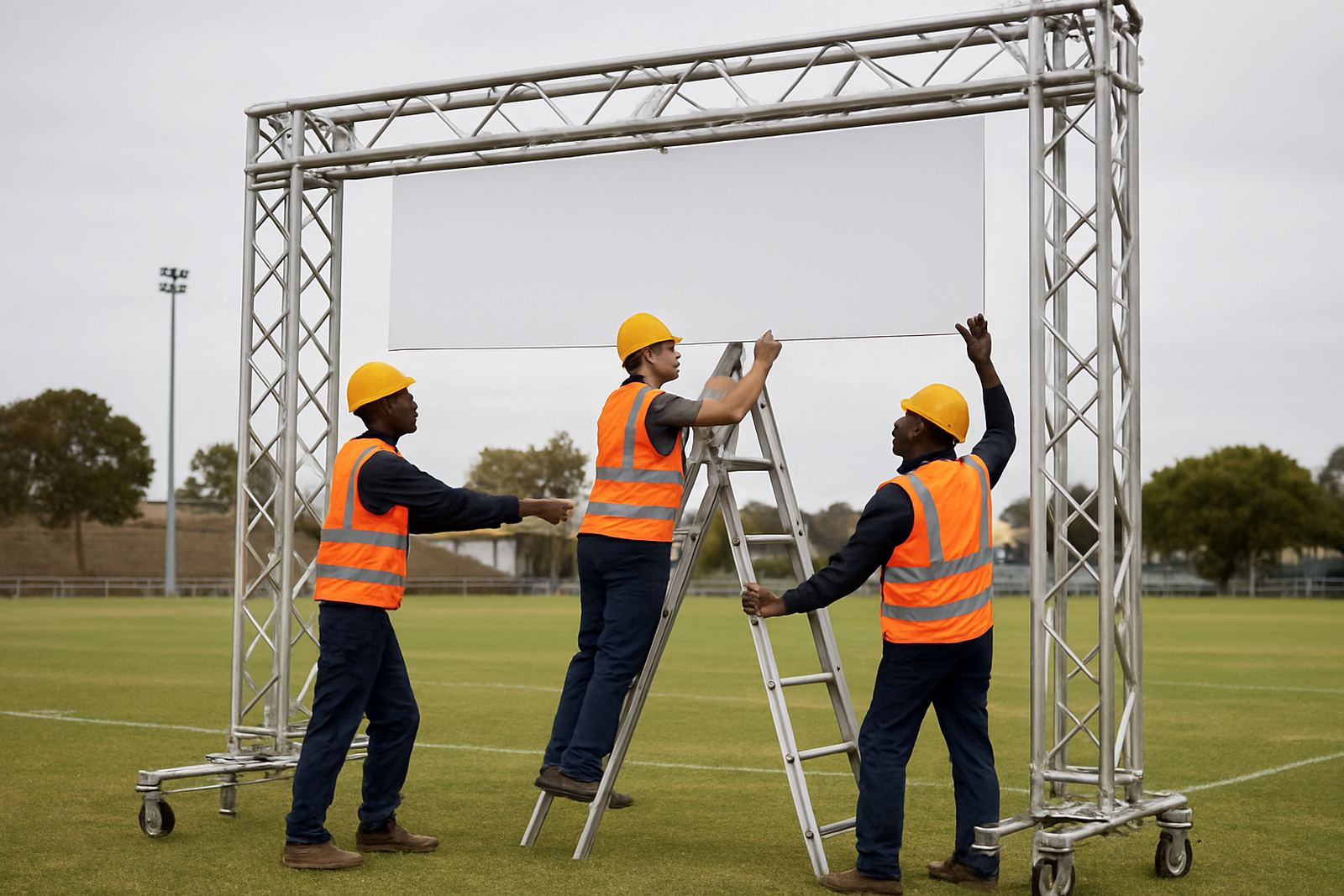
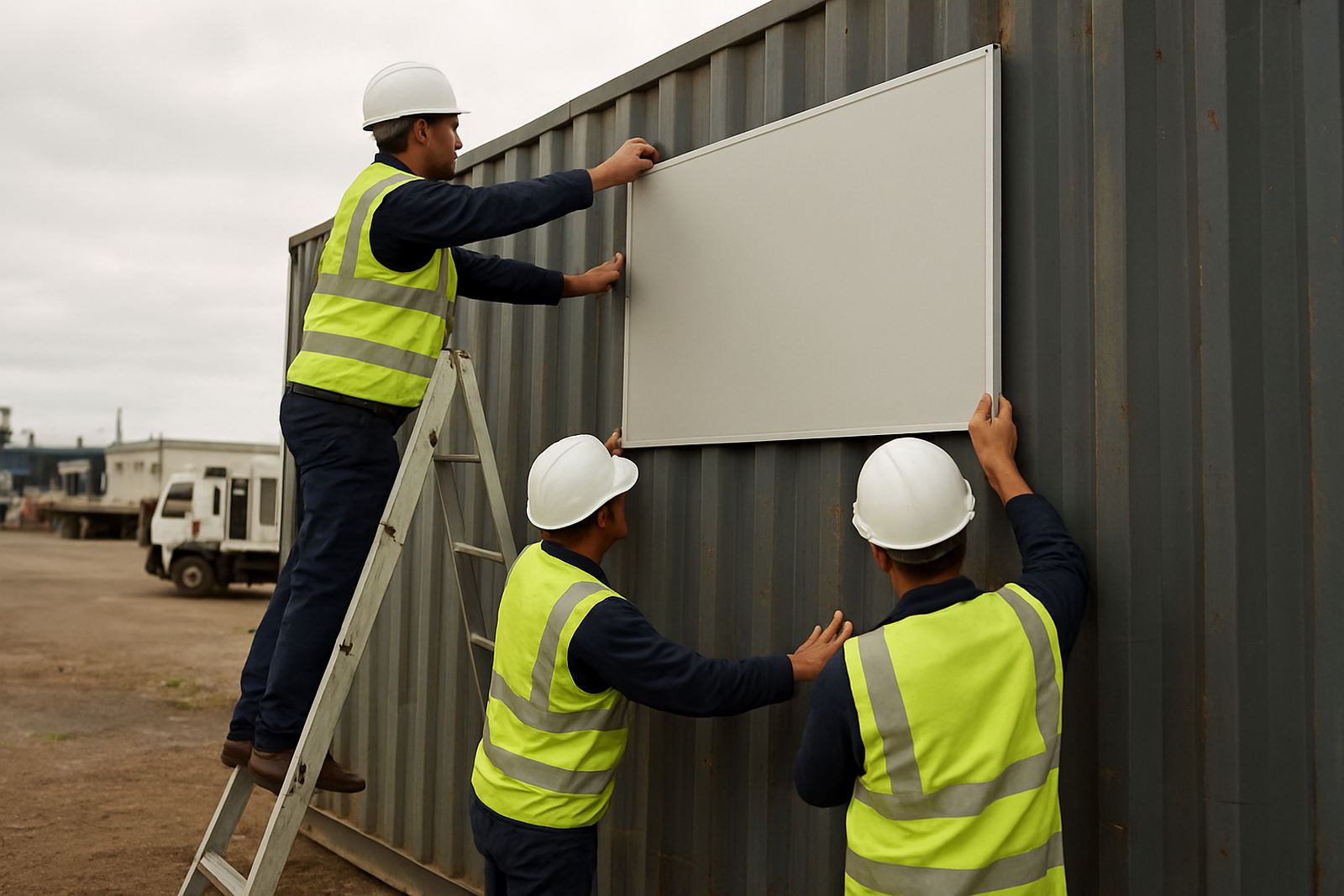
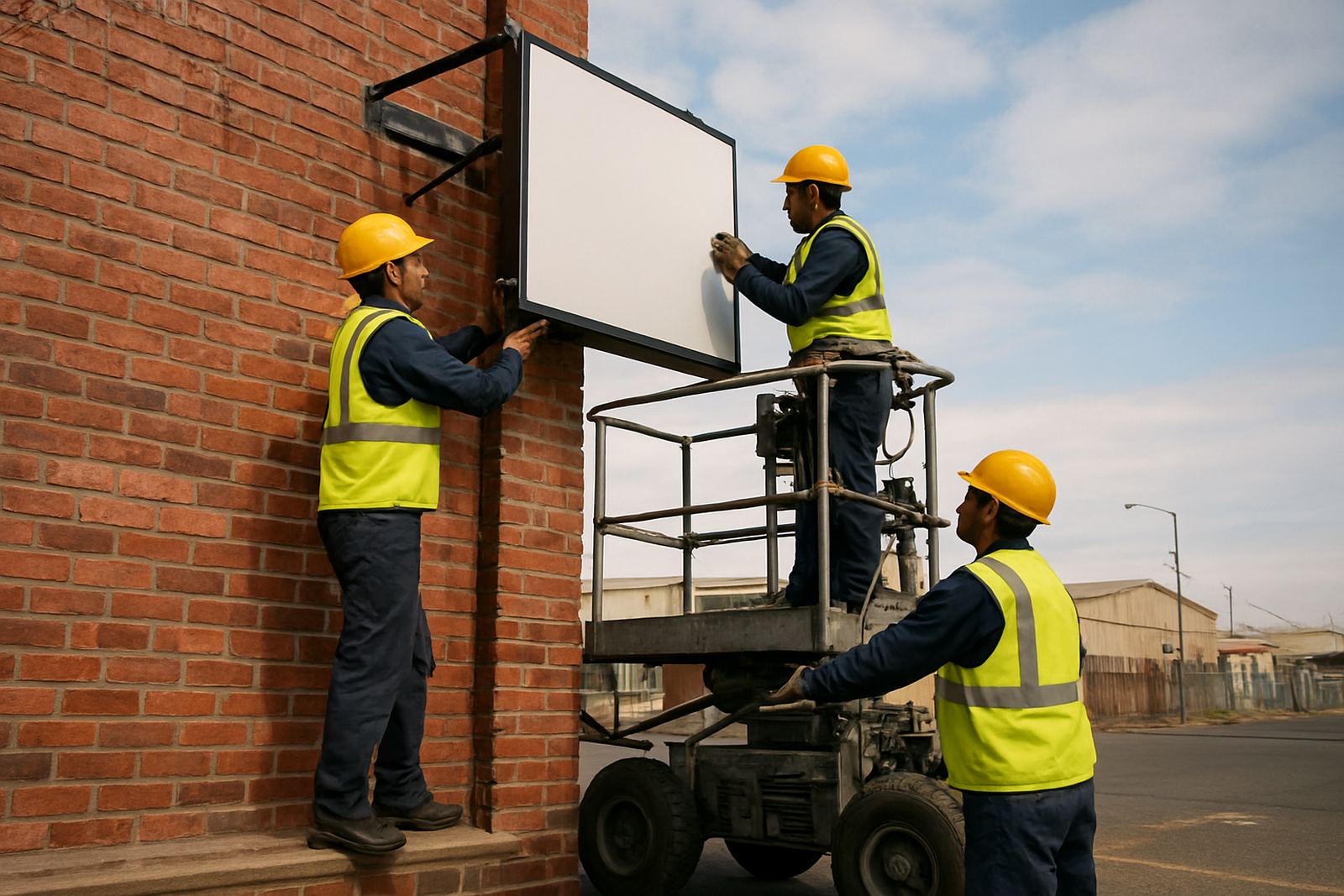
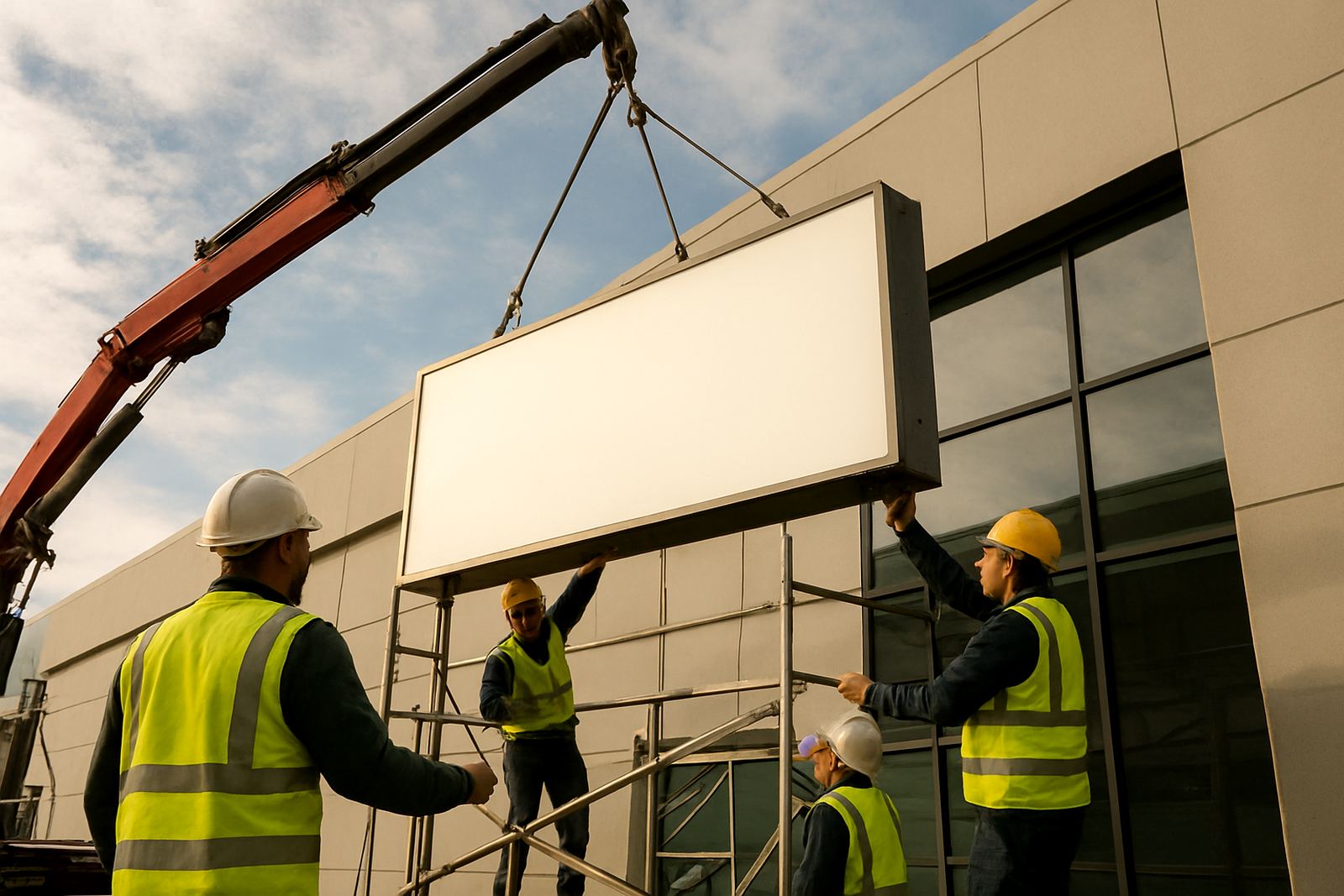
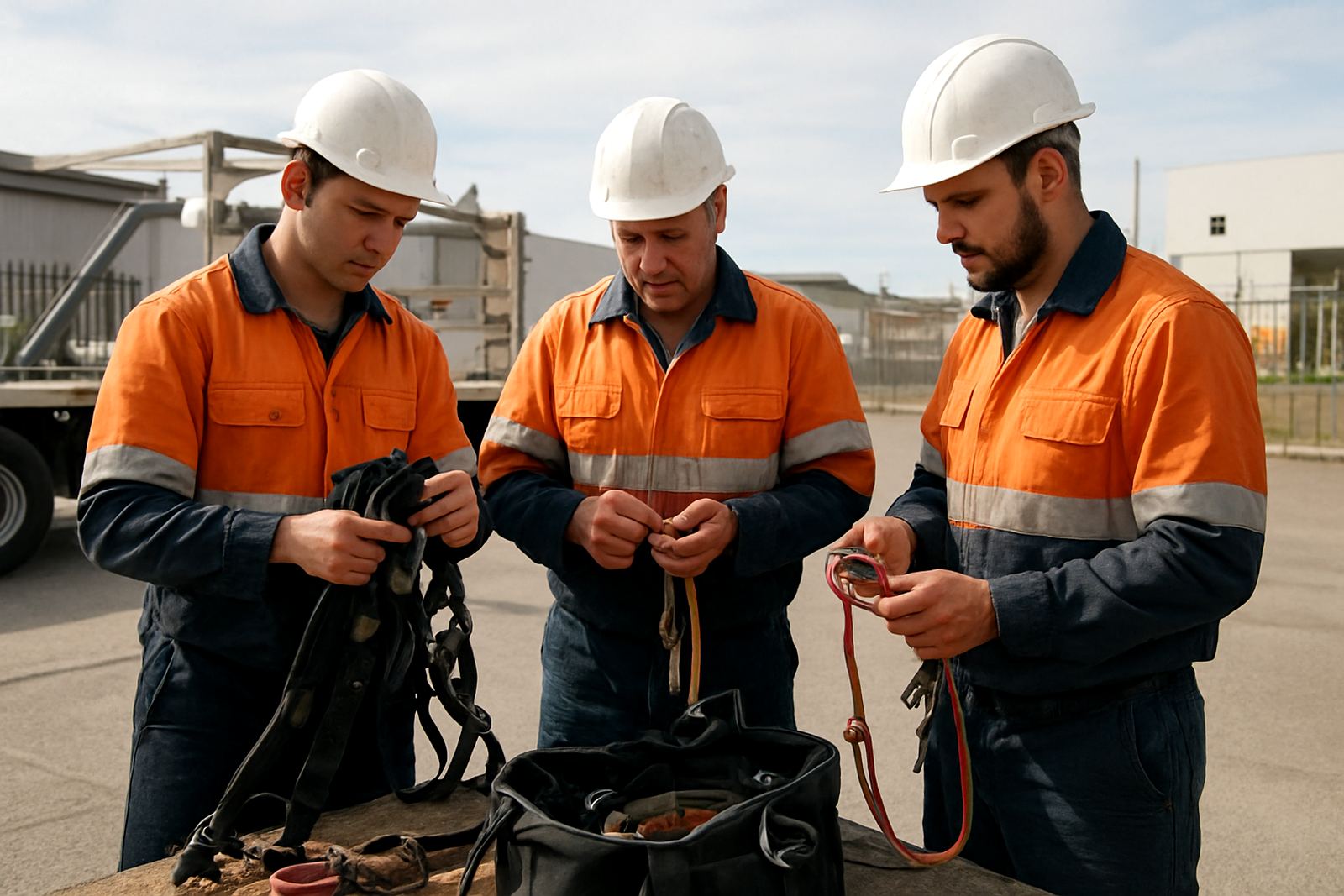
Projecting signs often need work above public walkways, parked cars or active trading areas, so safety comes first. Our crews are scaffold trained, first-aid trained and used to working around loading bays, traffic and weekend trading. We do site surveys, lift planning and access checks before the day of installation so the sign can go up with the right gear and the right controls in place.
Where the job allows, we use mobile platforms, scaffold access or other controlled access methods rather than rushing from a ladder. That keeps the sign shop protected and helps avoid damage to the facade, glass or finished branding. In windy weather or when load-shedding affects neighbouring businesses, we plan the work so the site stays safe and the installation window is realistic.
- Public protection controls around the work area
- Tool tethering and controlled exclusion zones below the sign
- Clear lift path checks for pavements, overhangs and traffic
- Coordination with building management, tenants and security teams
Power, lighting and access needs
Not every projecting sign needs power, but many do if the face is lit or if there are internal components that need connection. If your sign includes lighting, the sign maker usually supplies the electrical design and we handle the rigging side with access to the mounting points and cable entry only. For illuminated signs we check where the isolator sits, how the cabling reaches the sign and whether the route is safe from weather and tampering.
On some sites, especially older buildings in Johannesburg CBD or mixed-use properties in Bellville and Sandton, power access can be awkward. We can work with your team on timing, access to the ceiling void or facade, and temporary shutdowns if the sign has to be disconnected for removal or replacement. If the sign has a gas-filled feature or special internal unit, we treat it with the same care and make sure the relevant specialist is brought in where needed.
Servicing, cleaning and what wears out first
Projecting signs live in wind, sun and rain, so they need regular checks. The most common issues are loose fixings, corrosion at the brackets, faded faces, cracked seals, damaged lighting and movement caused by vibration. On the coast, salt air can shorten the life of mild steel parts if they are not properly protected, and inland sites can still suffer from dust, heat and building movement.
We offer maintenance visits, emergency callouts and sign servicing for signs we have installed and for existing signs that need attention. A proper service is not just a quick wipe down. It includes checking the structural fixing points, bracket alignment, face condition, cable entry and any visible wear on the wall side. If a sign is damaged after a storm or a vehicle strike, we can remove it safely, store it and put it back once the repair is done.
- Inspect fixings after high winds or heavy rain
- Check for rust, cracked welds and movement at the wall plate
- Replace damaged seals or loose fascia panels early
- Plan maintenance before peak trading periods where possible
What to confirm before you order
Before we mobilise a crew, it helps to have a few details ready from your sign shop. We need the sign size, overall weight if known, mounting height, wall material, site address and whether the sign is single or double sided. Photos of the facade and the exact fixing point save time, especially on sites with tiled walls, cladding, glass canopies or awkward access over footpaths.
It also helps to know whether the sign is replacing an existing one, whether there is power on site and whether the building manager has rules for working hours, noise or access. In some areas municipal bylaws, landlord conditions or centre management rules can affect when we can lift, drill or close off space below the work area. The more detail you give us upfront, the smoother the install and the less chance of a delay on the day.
- Confirm final dimensions and estimated weight
- Send photos of the wall, street side and access route
- Note if the sign is lit, and whether power is live at the site
- Tell us about parking, lift access, security and trading hours
Key facts
| Service area | Cape Town, Paarden Eiland, Bellville, Somerset West, Paarl, Johannesburg CBD, Sandton, Midrand and the East Rand |
|---|---|
| Typical sign sizes | From 600 x 600 mm to custom large-format projecting signs |
| Mounting methods | Chemical anchors, through-bolts, coach screws, standoff arms and fabricated wall plates |
| Access methods | Scaffold, mobile platform and controlled lift planning |
| Crew safety | First-aid trained, scaffold trained and public safety focused |
| Work scope | Installation, removal, servicing, relocations and emergency callouts |