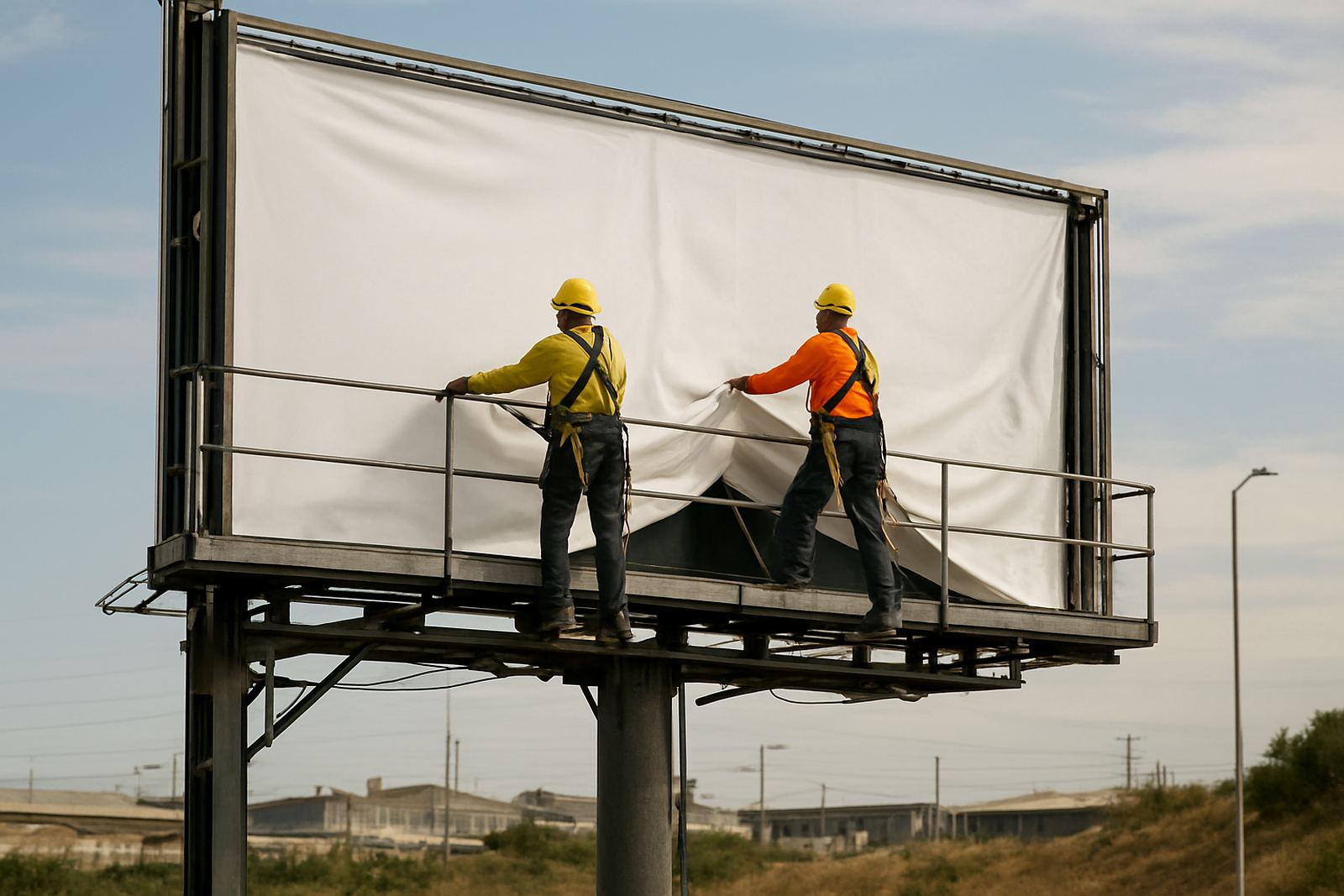


Forecourt signage built for traffic, height and public access
Fuel site signs are not one-size-fits-all. Canopy blades, price boards, directional signs and forecourt identification all need to be positioned for clear visibility from the road, while still allowing safe access for vehicles, staff and the public. Our rigging crews work on active sites, so we plan the lift around trading hours, tanker movements, pedestrian routes and any restricted areas around pumps or underground services.
We carry out rigging only for sign makers and fabrication shops, which means we handle the access, lifting and fixing while your team stays focused on the sign manufacture and client relationship. That keeps roles clear on site and avoids overlap with the sign shop’s own scope.
- Forecourt canopy sign installation and removal
- Price board fitting, replacement and face changes
- Directional signage on poles, walls and gantries
- Sign relocation for forecourt upgrades or rebranding
- Emergency callouts for damaged or loose signs
Sizes, formats and mounting options we commonly rig
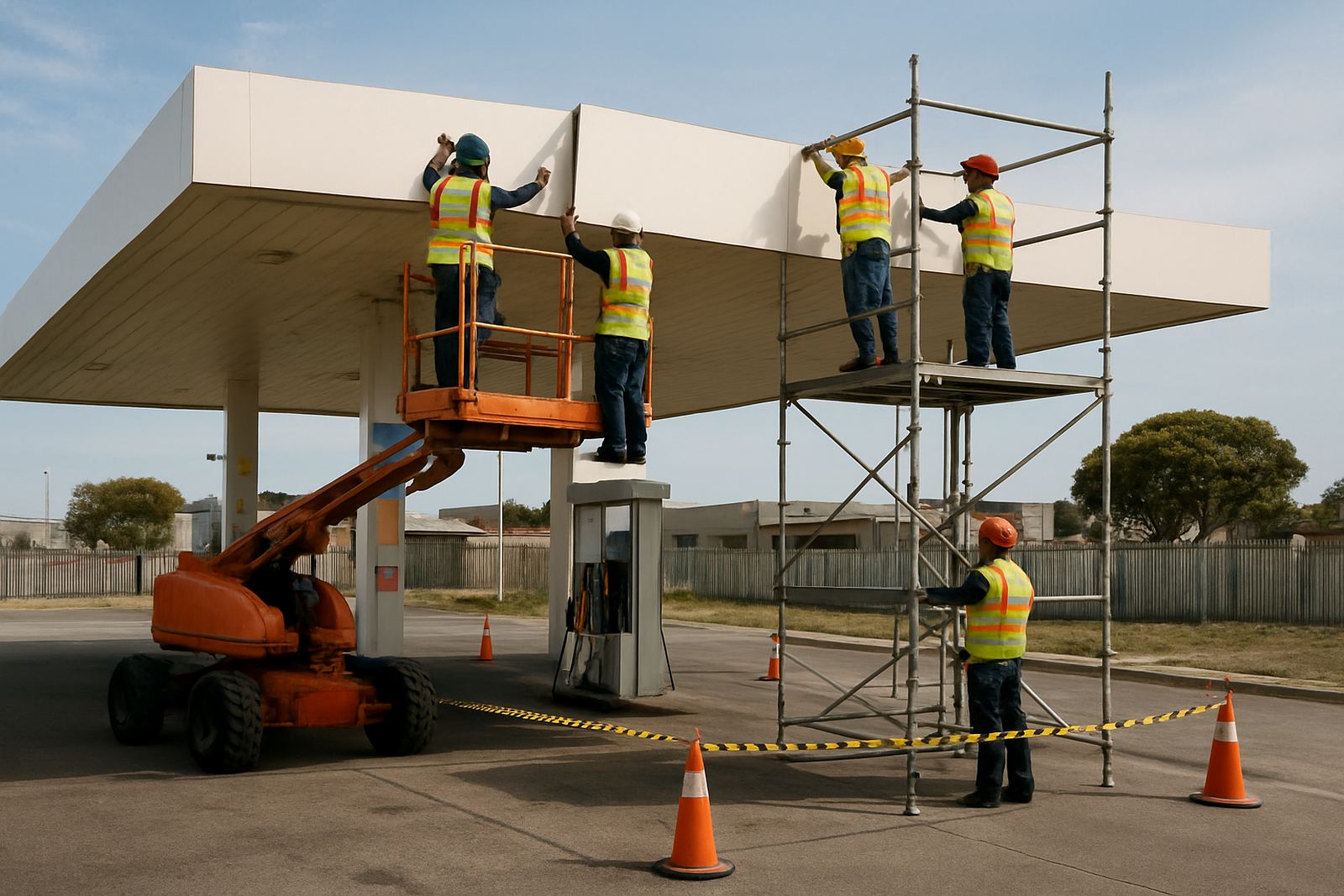
Fuel sites use a wide range of sign sizes, from compact price panels to long canopy fascias and tall directional markers. We assess the site access, height and fixing points first, then plan the lift and support method to suit the sign weight and the ground conditions. On busy sites, even a medium-sized sign can need platform work or scaffold access if the mounting points are awkward or traffic cones alone will not give enough working room.
Typical formats include single-face boards, double-face price boards, aluminium box sections, printed face panels, acrylic inserts and illuminated canopy lettering. For exposed sites in coastal areas like Paarden Eiland, Table View or the False Bay side, we also consider corrosion, wind load and fastener choice. Inland in Johannesburg and Midrand, dust and heat can affect fittings and seals, so we check those points during the survey.
- Small directional signs from about 600 x 400 mm
- Price boards from 1.2 m to 3 m wide
- Canopy fascias and blade signs from 3 m to 10 m or more
- Pole-mounted signs and tall roadside markers
- Illuminated sign housings and access panels
Where fuel site signs suit best across the Western Cape and Gauteng
We work on forecourts in Paarden Eiland, Bellville, Somerset West, Paarl, Johannesburg CBD, Sandton, Midrand and the East Rand, as well as regional sites where a local crew is needed for a tight turnaround. Fuel site signs suit service stations, truck stops, roadside convenience sites, depots and mixed-use forecourts where a clean sign layout helps motorists find the entrance, the pumps and the exit without hesitation.
These sites often operate under municipal, landlord or franchise rules, so we check access times, road opening requirements and any site-specific safety instructions before work starts. If a sign sits over an active forecourt or near a public pavement, the method statement matters as much as the lift itself.
Installation planning, power checks and gas-related precautions
Many fuel site signs need more than a ladder and a set of fixings. We plan the installation around power availability, lighting access and any live equipment on the forecourt. If the sign includes illumination, we confirm the supply point, isolation method and cabling route before the crew arrives. For sites with canopy lighting or existing electrical services, access needs to be arranged with care so we do not disturb operational equipment.
Where a sign is close to fuel vapour areas, pump islands or vent points, we apply extra controls and keep the work area clear. This includes isolating the task zone, managing hot work restrictions if any drilling or cutting is required, and coordinating with the site manager so forecourt activity can continue safely. A short delay at the start is better than a rushed setup that creates risk later on.
- Site survey before any lift or removal
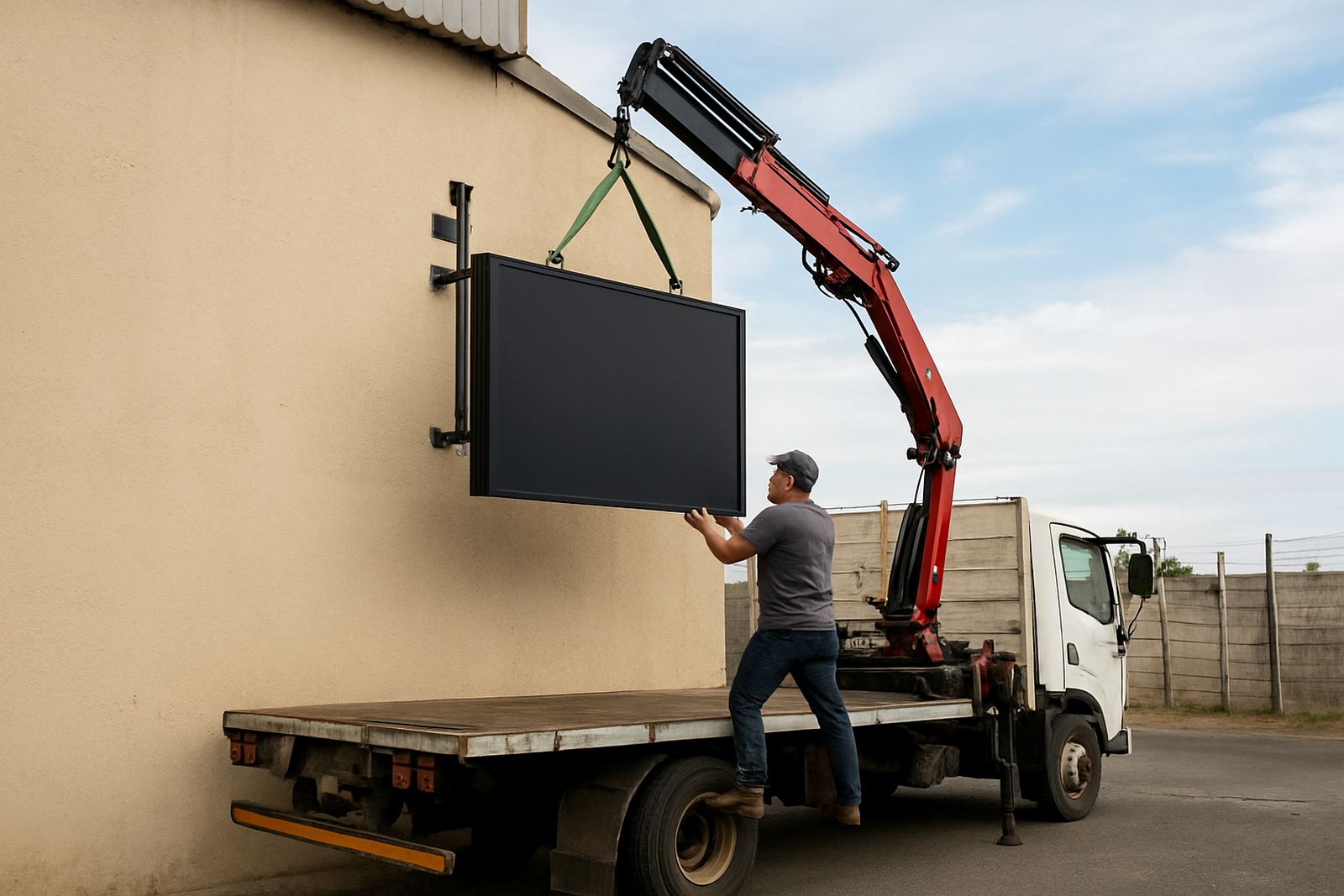
- Lift planning for height, reach and exclusion zones
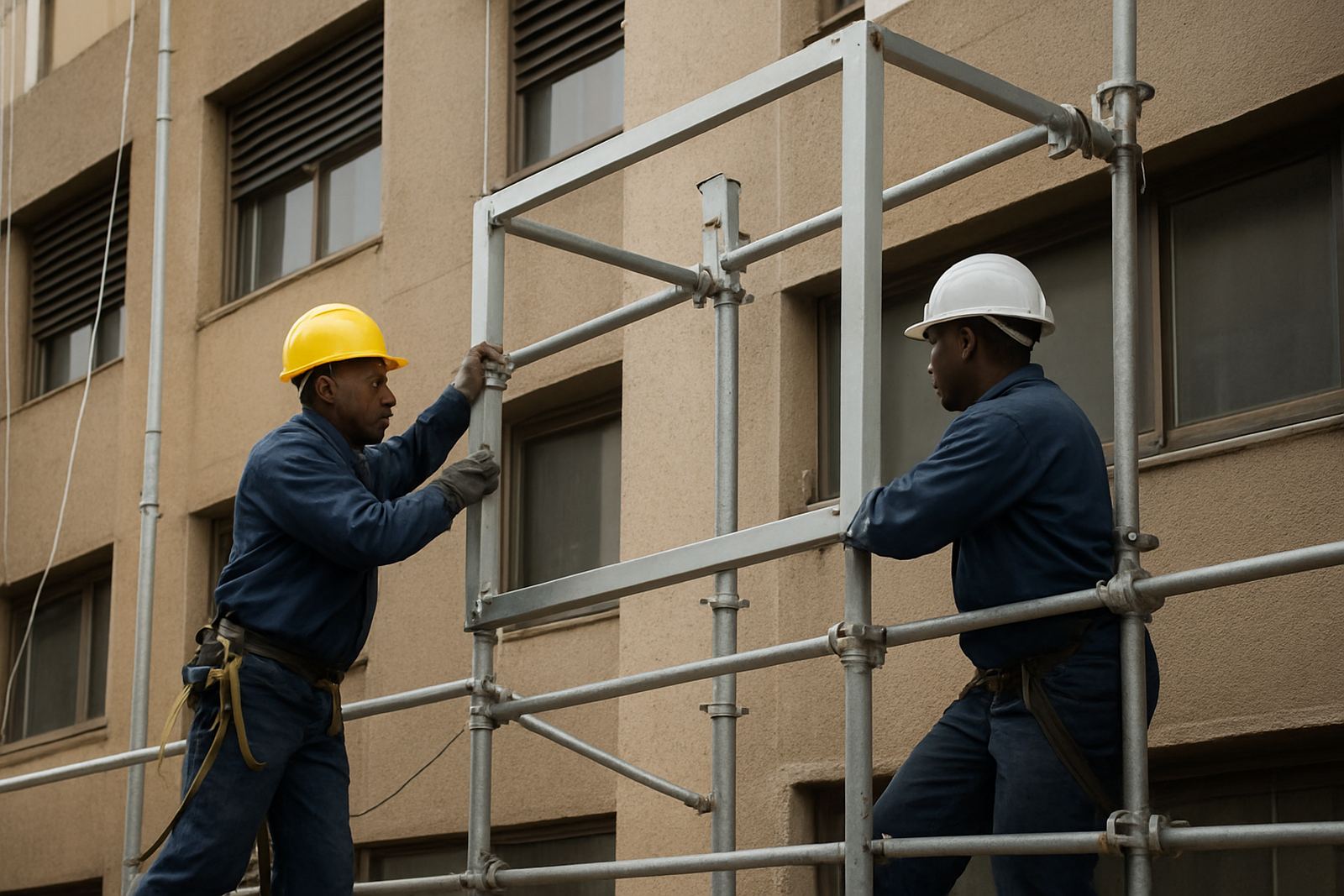
- Scaffold access or platform work where required
- Traffic control and public separation on live sites
- Electrical isolation checks for illuminated signs
Care, servicing and making the signs last longer
Fuel site signs take daily weather, spray, dust and vehicle movement, so servicing is part of the job. We carry out maintenance visits for loose panels, failed fixings, faded faces, cracked housings and water ingress around lighting compartments. On coastal sites, stainless fasteners and corrosion checks are important. In Gauteng, vibration and heat can loosen fittings over time, especially on taller signs or boards facing heavy road traffic.
Regular servicing also helps with brand presentation. A crooked price board or a flickering canopy light is easy to miss at first, but motorists notice it. We can schedule maintenance alongside other access work, which keeps callouts down and reduces the chance of a bigger repair later on.
- Check fixings, brackets and anchor points every few months
- Inspect seals and drainage paths after heavy rain or wind
- Test illumination and access doors after load-shedding events
- Clean visible faces and replace damaged graphics promptly
What to check before you place the order
Before you send a fuel site sign job through, it helps to have the basics ready. The more complete the brief, the easier it is to plan the lift, choose the right access equipment and keep the site running. If anything is missing, we can still work from a site visit and a proper measure-up, but it does slow the schedule.
Useful details include the sign type, the finished size, the mounting height, whether the sign is lit, and whether the work is installation, removal, servicing or relocation. If the site has a canopy, a busy forecourt or restricted after-hours windows, mention that early. We will then match the crew and access method to the actual conditions, not just the drawing.
- Confirm exact dimensions and finished weight
- State if the sign is illuminated or non-illuminated
- Note mounting height and fixing surface
- Advise on site access hours and traffic flow
- Share any power, scaffold or lift requirements
For sign shops, this makes the handover cleaner and avoids back-and-forth on site. You get the forecourt sign fitted, checked and left in order, while we keep the rigging side of the job on track.
Key facts
| Service type | Rigging only for sign makers and fabrication shops |
|---|---|
| Common sign sizes | 600 x 400 mm up to 10 m plus, depending on site |
| Access methods | Ladders, scaffold access, platform work and lift planning |
| Site environments | Live fuel forecourts, canopies, roadside entrances and truck stops |
| Regions covered | Cape Town, the Western Cape, Johannesburg and Gauteng |
| Typical work | Installation, removal, servicing, relocation and emergency callouts |