What a light box is, and where it works best
A light box is a illuminated sign cabinet with a translucent face, internal lighting, and a frame that holds the face square so the graphic reads clearly day and night. We work on wall-mounted units, projecting units, and double-sided cabinets fixed to shopfronts, forecourts, forecourt canopies, office parks, warehouses, and roadside sites where visibility matters after dark.
They suit retail tenants, service stations, clinics, quick service outlets, motor dealers, industrial parks, and buildings where the sign must be seen from traffic or from an angle. In Cape Town, coastal humidity and wind can work on fittings over time, so the fixing method and seal points matter as much as the sign face itself. In Johannesburg, dust and summer storms can put extra strain on brackets and cable entries.
- Wall-mounted light boxes for façades and entrance walls
- Projecting light boxes for side-on visibility from walkways and roads
- Single-sided and double-sided cabinets
- Internal LED-lit or fluorescent-lit units, depending on the build
Sizes, formats, and build options
Light boxes are usually made to fit the site, the artwork size, and the fixing points available. Common small sizes start around 600 x 600 mm for directional or tenant identification signs, while larger shopfront units can run to 1200 x 2400 mm or more. Projecting boxes are often kept narrower so they do not catch excessive wind, while larger wall boxes need careful bracket spacing and level setting.
We check the actual face size, overall cabinet depth, and how the sign is held to the wall or frame. Some units are shallow and neat for indoor foyers or covered entrances. Others need a deeper body for lighting gear, access panels, and service room. If the site is a windy corner or high facade, the fixing plan should allow for movement without twisting the cabinet. That part is often where poor installs fail, not the sign face itself.
- Typical depths: 100 mm to 250 mm, depending on lighting and access
- Face materials: translucent acrylic, polycarbonate, or similar sign face materials
- Frame options: aluminium sections, steel support frames, or boxed housings
- Access methods: front-opening, rear-access, or side-access where the site allows
How we install light boxes safely
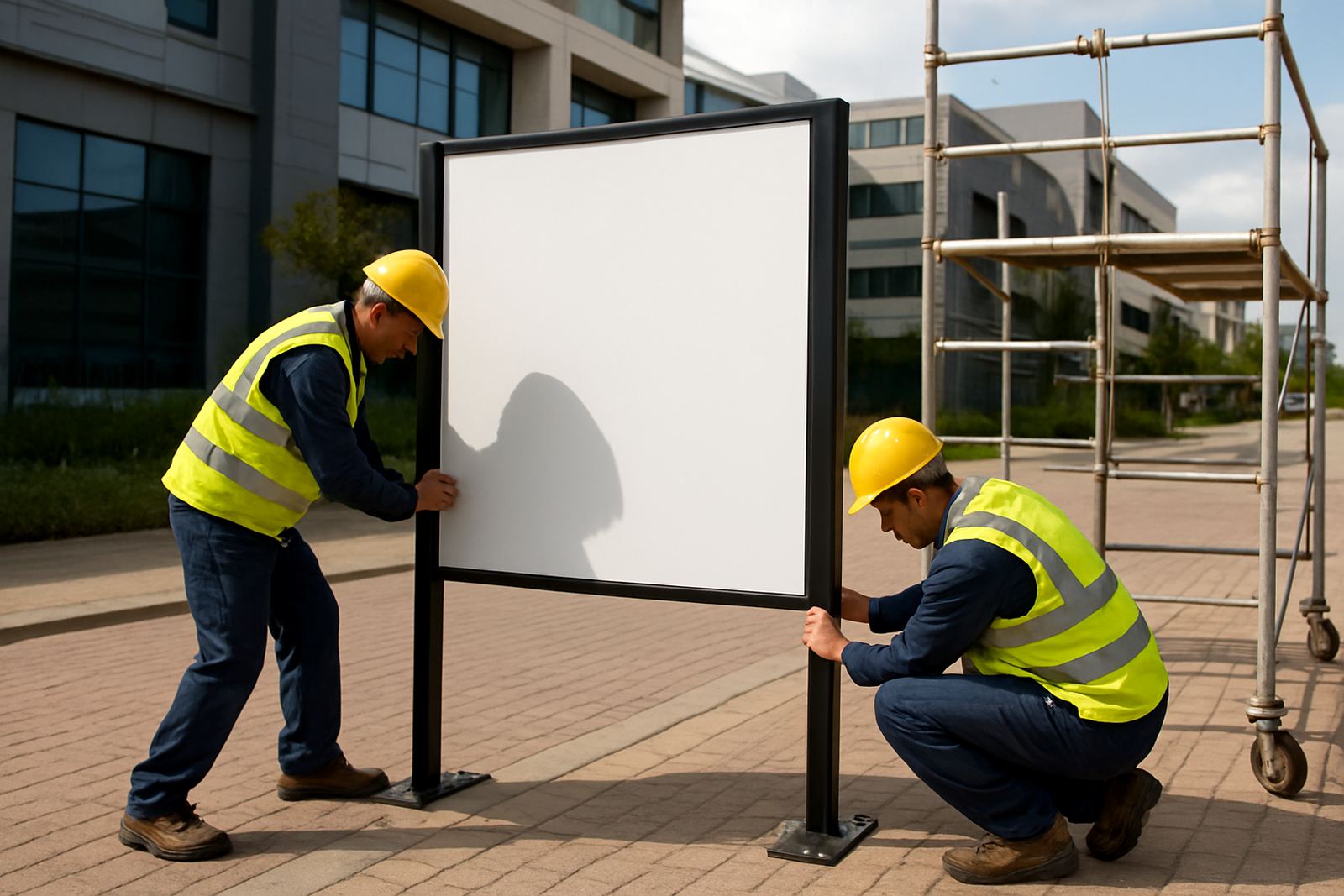
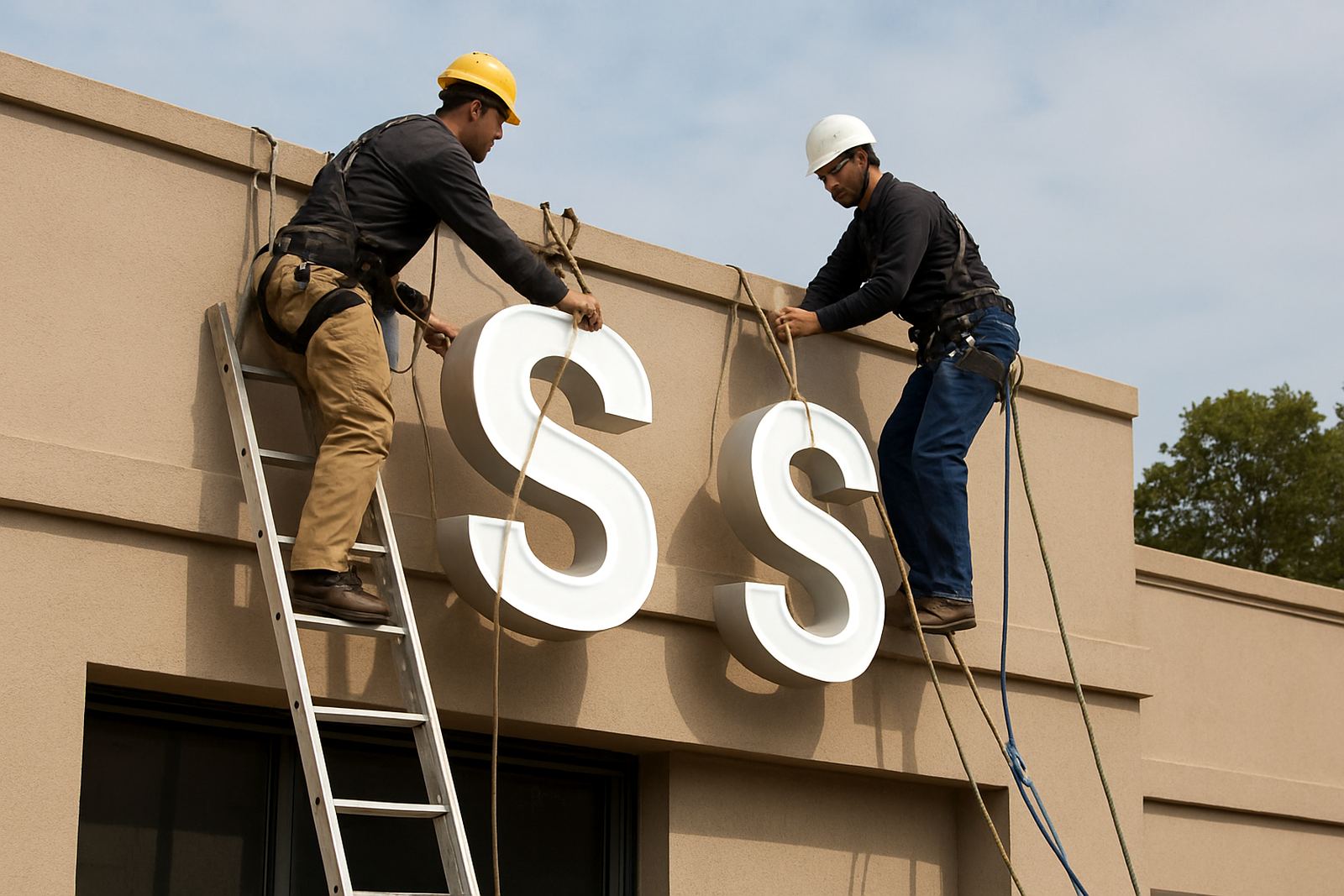
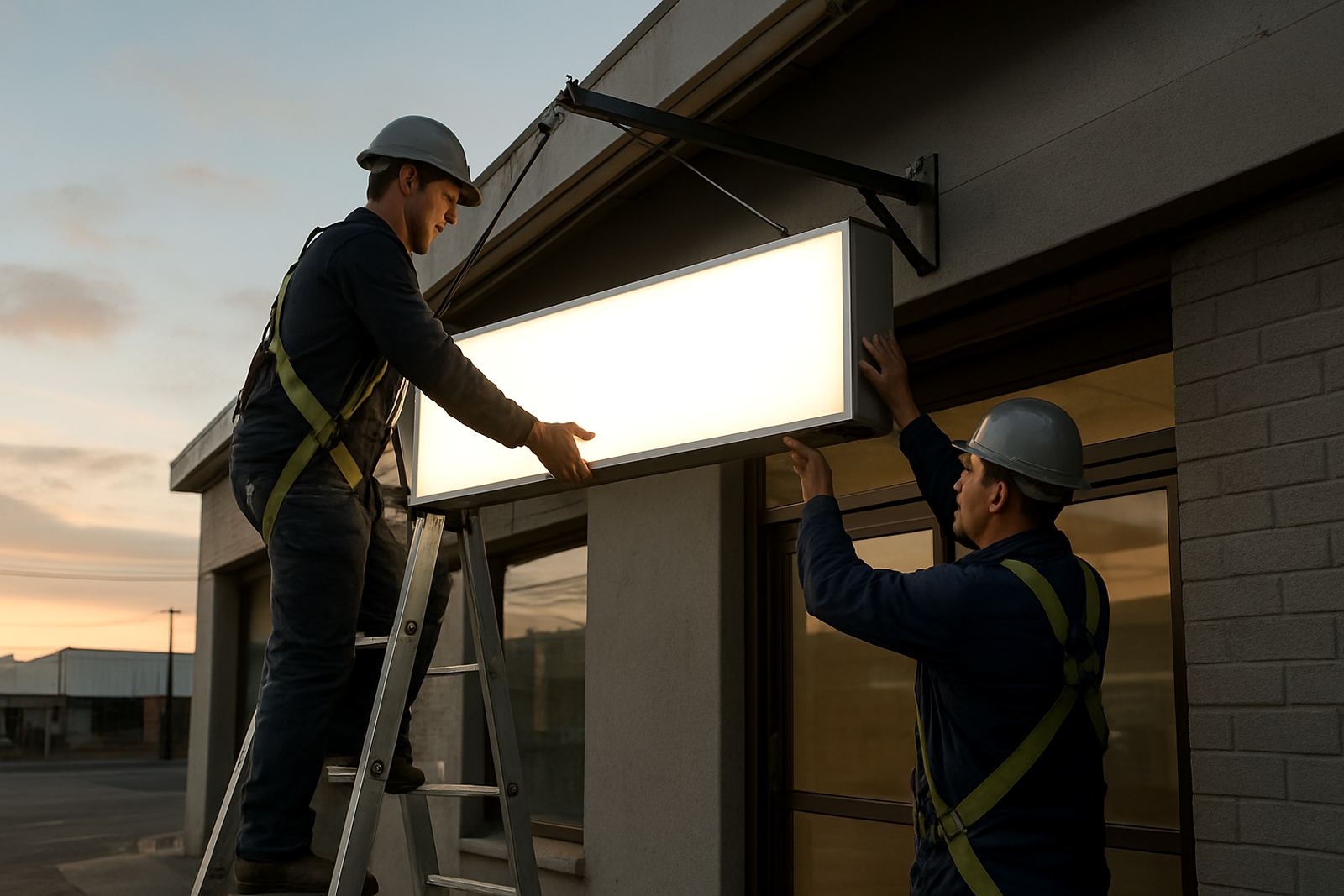
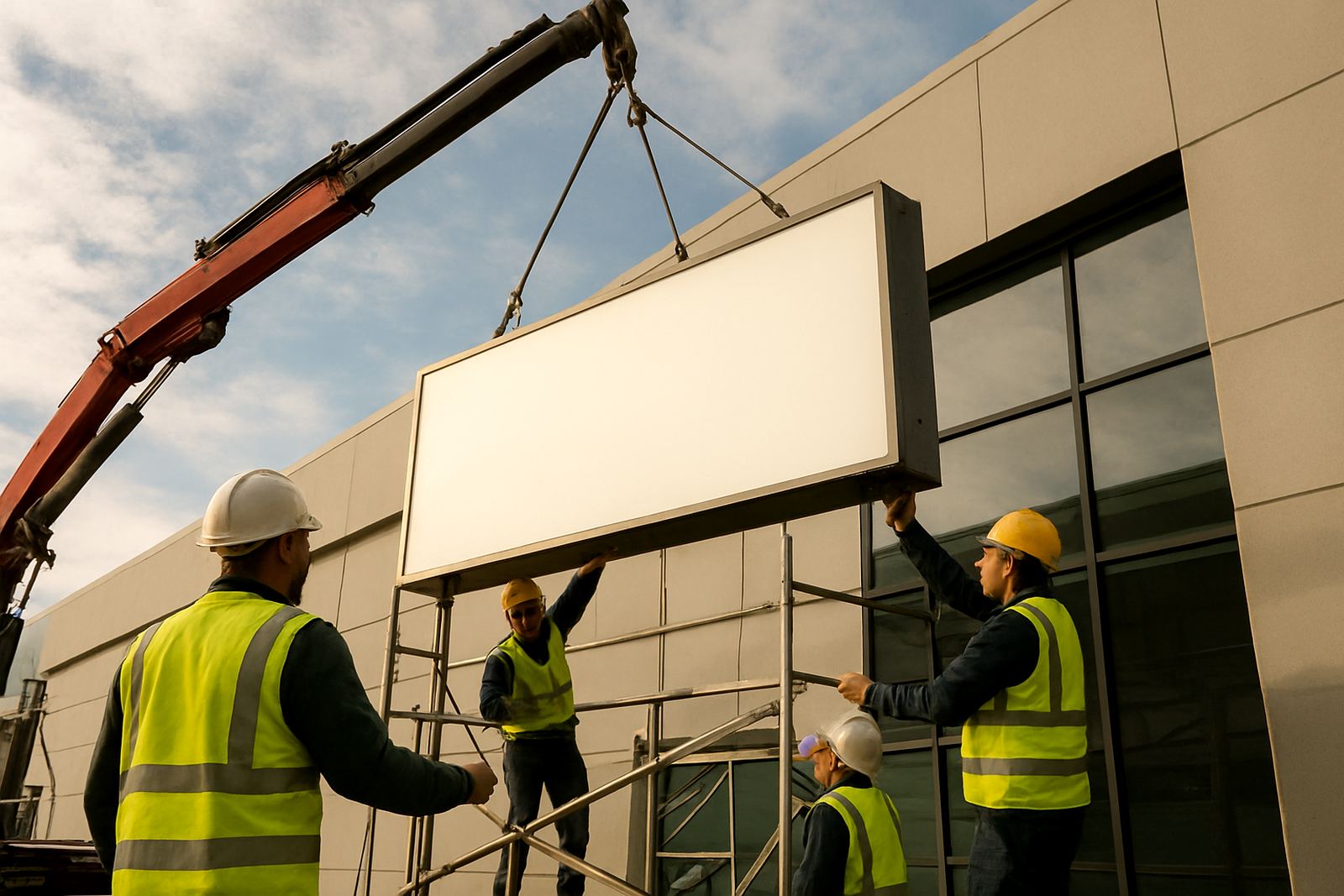
Our crews install, remove and service light boxes for sign makers who need a rigging team that will not undercut the supply side of the job. We plan the lift, confirm the substrate, and choose the access method before a ladder or scaffold goes up. That matters on second-storey shopfronts, high lintels, and sites with tight parking or public walkways.
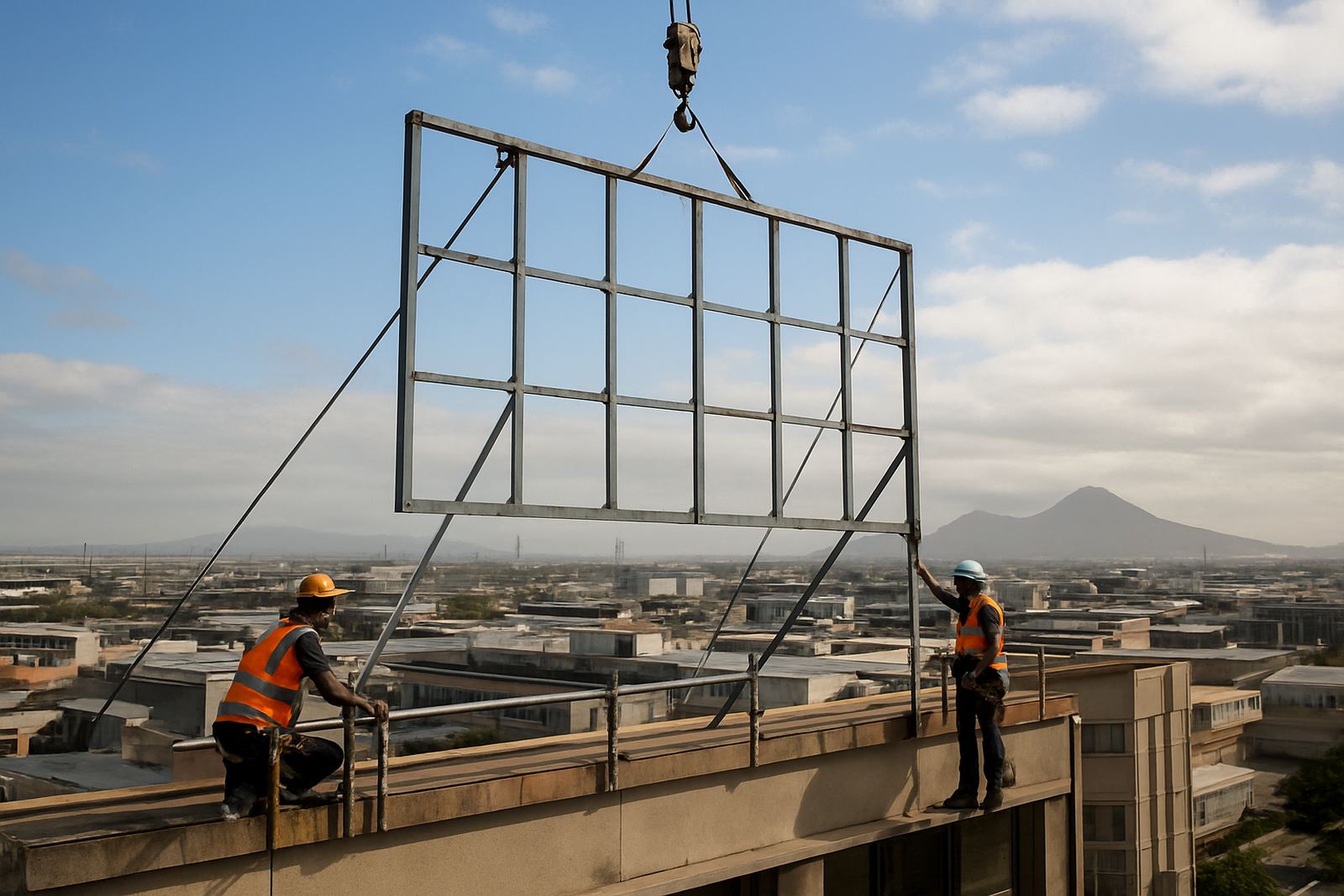
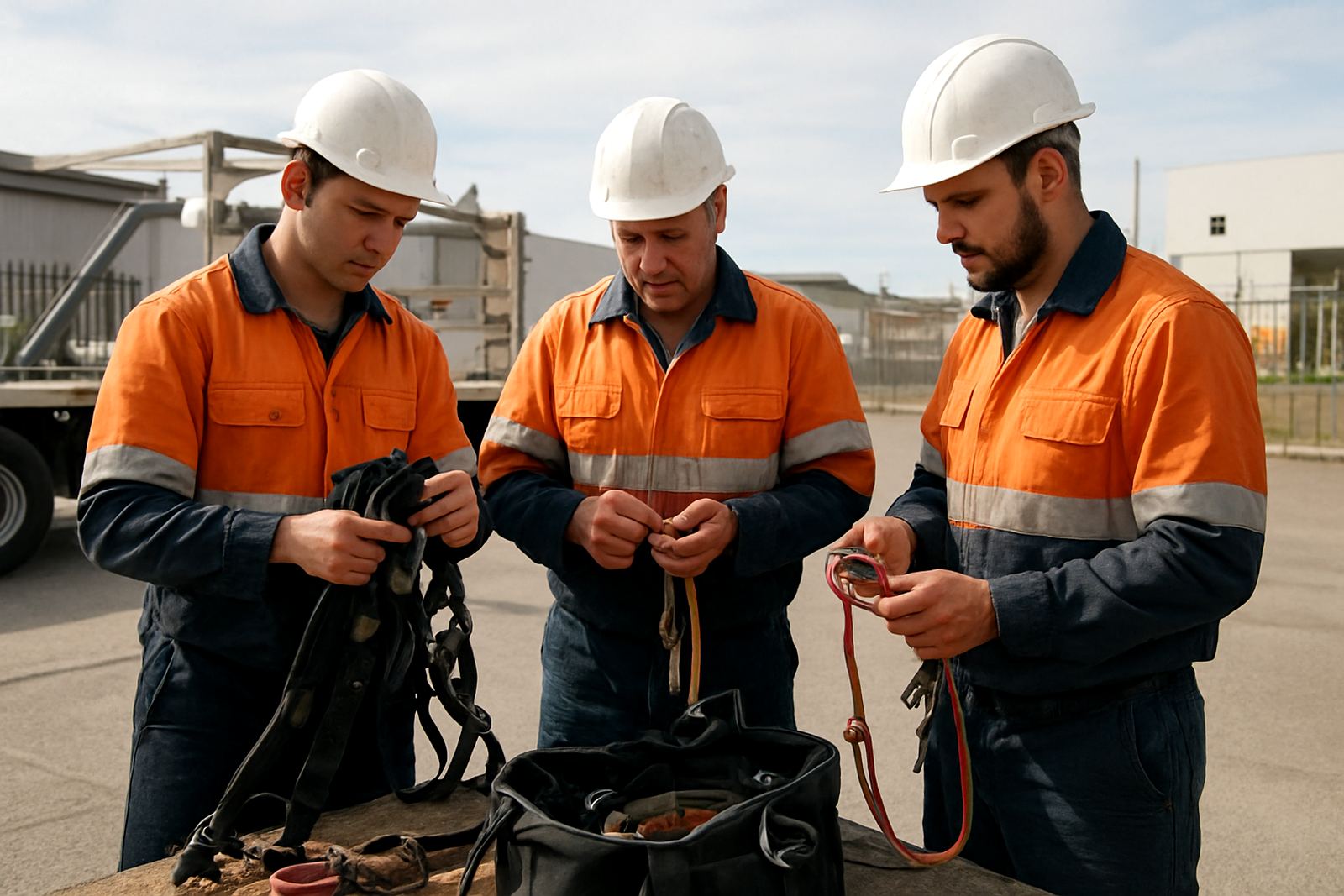
Depending on height and access, we use scaffold access, platform work, or lift planning with the correct exclusion zone below. If the site needs road edge control, shopping centre permission, or a municipal touchpoint for hoarding or oversail space, that is flagged early. Our safety officer checks harness use, tool control, load limits, and the fixings required for the weight of the cabinet and the wind load at the site. A light box that is level on day one should still be level after a summer storm.
- Site survey before installation where access or substrate is uncertain
- Safe drilling, anchoring, and bracket setting to the approved layout
- Level alignment so the face reads straight from the viewing angle
- Testing of lighting, seals, and cable entry after mounting
Power, lighting, and site preparation
Most light boxes need a planned electrical supply close to the mounting point, with enough allowance for a neat cable run and future servicing. Where the box is being replaced, we check whether the old feed is still suitable, whether there is a junction point behind the sign, and whether the existing isolator is in good order. For new installs, the electrician or site team should confirm the supply point before the rigging crew arrives, so the job does not stall on the wall.
Lighting type depends on the sign build. Many units now use LED modules because they are lower draw and easier to maintain, but some older sites still use tube fittings or mixed gear inside older cabinets. We do not do the electrical supply ourselves unless it is part of the agreed scope through the sign maker and the site team. If gas or a generator is used on a remote or temporary site, that should be planned separately and safely, because access and power need to line up before the face is closed.
- Check supply voltage and isolator location before booking the crew
- Confirm if the unit is hard-wired, plug-connected, or fed from an adjacent sign
- Allow space for a service loop and cable entry gland
- Make sure the lighting gear can be reached without removing half the cabinet
Servicing, cleaning, and when to replace parts
Light boxes need routine servicing because weather, dust, and vibration all work against them. We inspect fixings, seals, face condition, lighting uniformity, and any movement at the bracket points. On coastal sites in the Western Cape, fasteners can corrode faster than expected. In Gauteng, high dust loads can dull the face and add strain to fans or vents if the cabinet has them.
Servicing may include re-sealing a face, tightening loose support points, replacing failed lighting components, or re-leveling a cabinet after settlement or impact. If the sign was removed for a tenant change, we can lift it down, store it safely, and refit it later if the structure and face are still sound. If the cabinet is bent, water-damaged, or repeatedly failing at the same point, a replacement may be the safer call. That is not upselling, it is avoiding a repeat callout next month.
- Look for uneven light, water marks, flicker, or a face that has lifted at the edge
- Check for rust, cracked seals, or loose brackets after wind or impact
- Book a maintenance visit before a busy trading period or site audit
- Replace worn fixings and seals before they become a safety issue
What to check before you order or hand over the job
If you are a sign maker handing over a light box for installation, the more detail you give us, the smoother the job goes. We need the final dimensions, weight if known, mounting surface, site address, access restrictions, and whether the unit is new, a relocation, or a changeout. A small difference in face size or bracket position can affect the whole lift plan, especially on narrow pavements or busy forecourts.
It also helps to know if the site has after-hours rules, security sign-in, lift gate limits, or municipal or landlord approvals already in place. If the sign is to be removed first, tell us whether it will be re-used, disposed of, or stored on site. For Johannesburg CBD and Sandton sites, building rules can be stricter than expected. In Paarden Eiland or Bellville, access and parking are often the main issue, not the sign itself. Give us the facts upfront and we can plan the crew, equipment, and timing properly. It saves time and a bit of back and forth too.
- Overall size, face size, and cabinet depth
- Mounting height, surface type, and fixing points
- Access notes, parking limits, and any site permits needed
- Power source, lighting type, and whether the sign is new or being moved
Key facts
| Typical sizes | 600 x 600 mm up to 1200 x 2400 mm and larger to order |
|---|---|
| Common depths | 100 mm to 250 mm depending on lighting and access |
| Mounting types | Wall-mounted, projecting, single-sided and double-sided |
| Lighting options | LED modules or older tube-based internal lighting |
| Service areas | Cape Town, Johannesburg, Western Cape and Gauteng |
| Crew capability | Installation, removal, servicing, lift planning and access work |