

Directional signs that guide people without confusion
Wayfinding signs are the boards, panels and markers that help people move through a site with confidence. They point visitors to parking, reception, wards, loading bays, lifts, gates, blocks, units and exits. On a busy campus or hospital, the right sign at the right height can save staff time and cut down on missed turns and repeat enquiries.
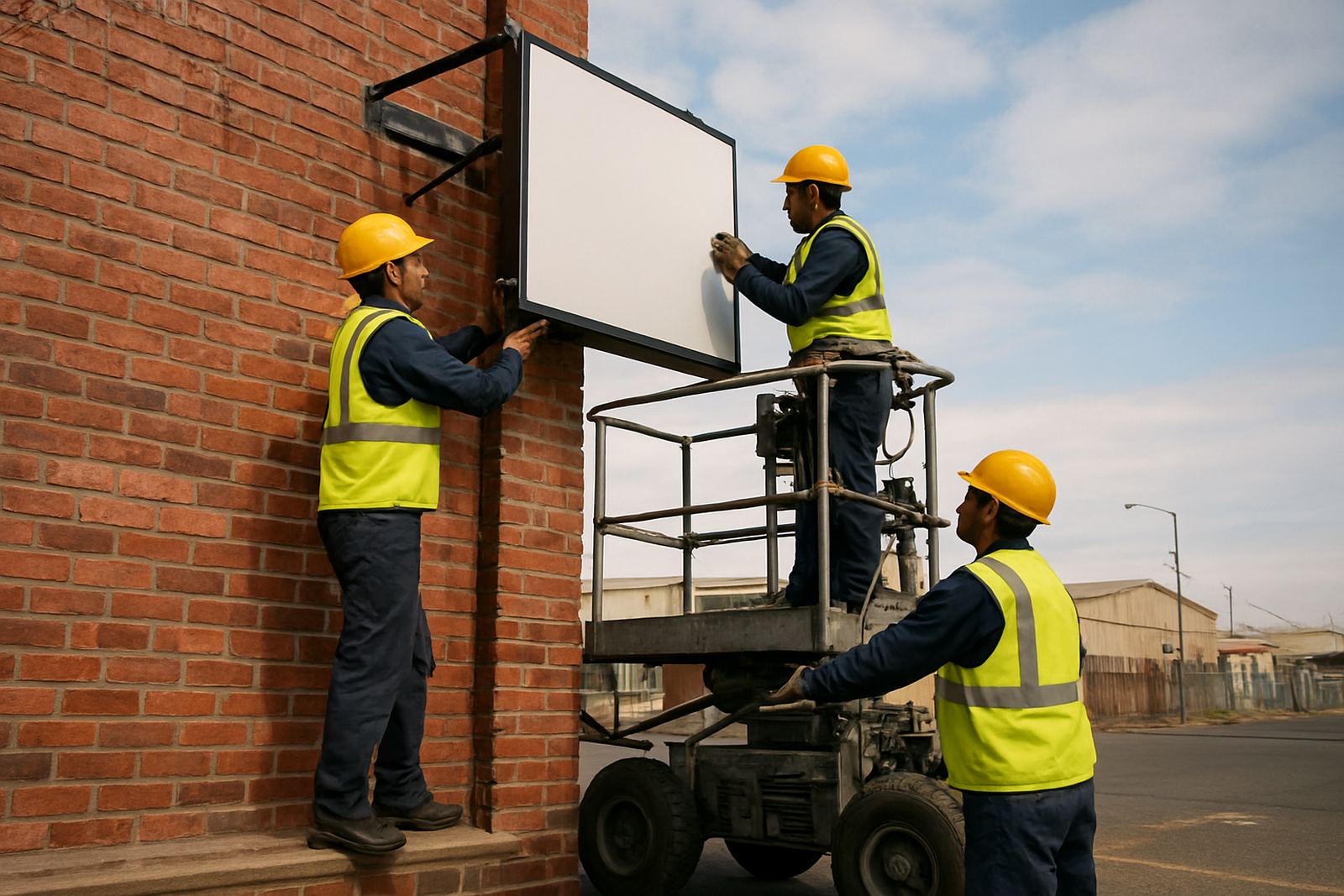
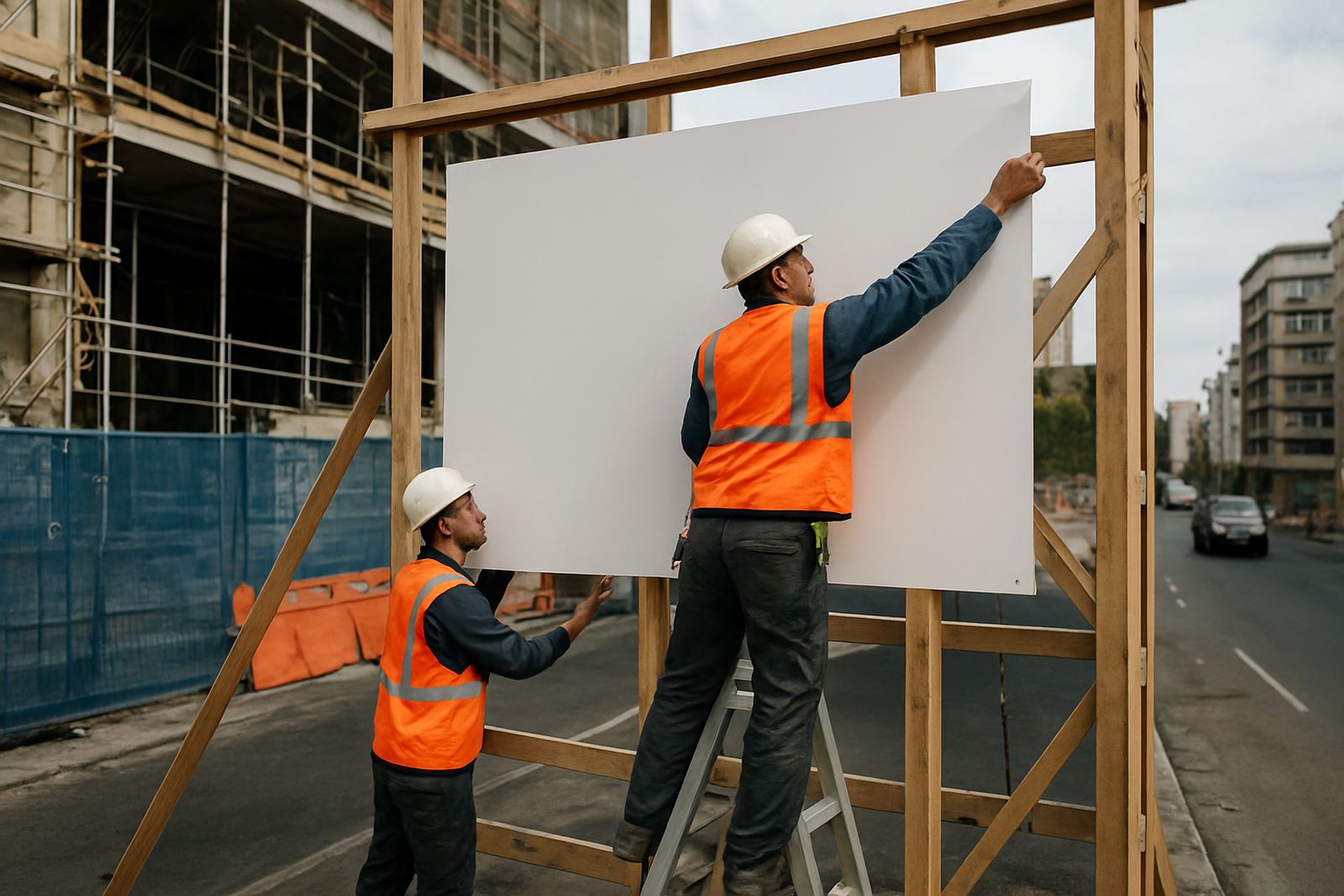
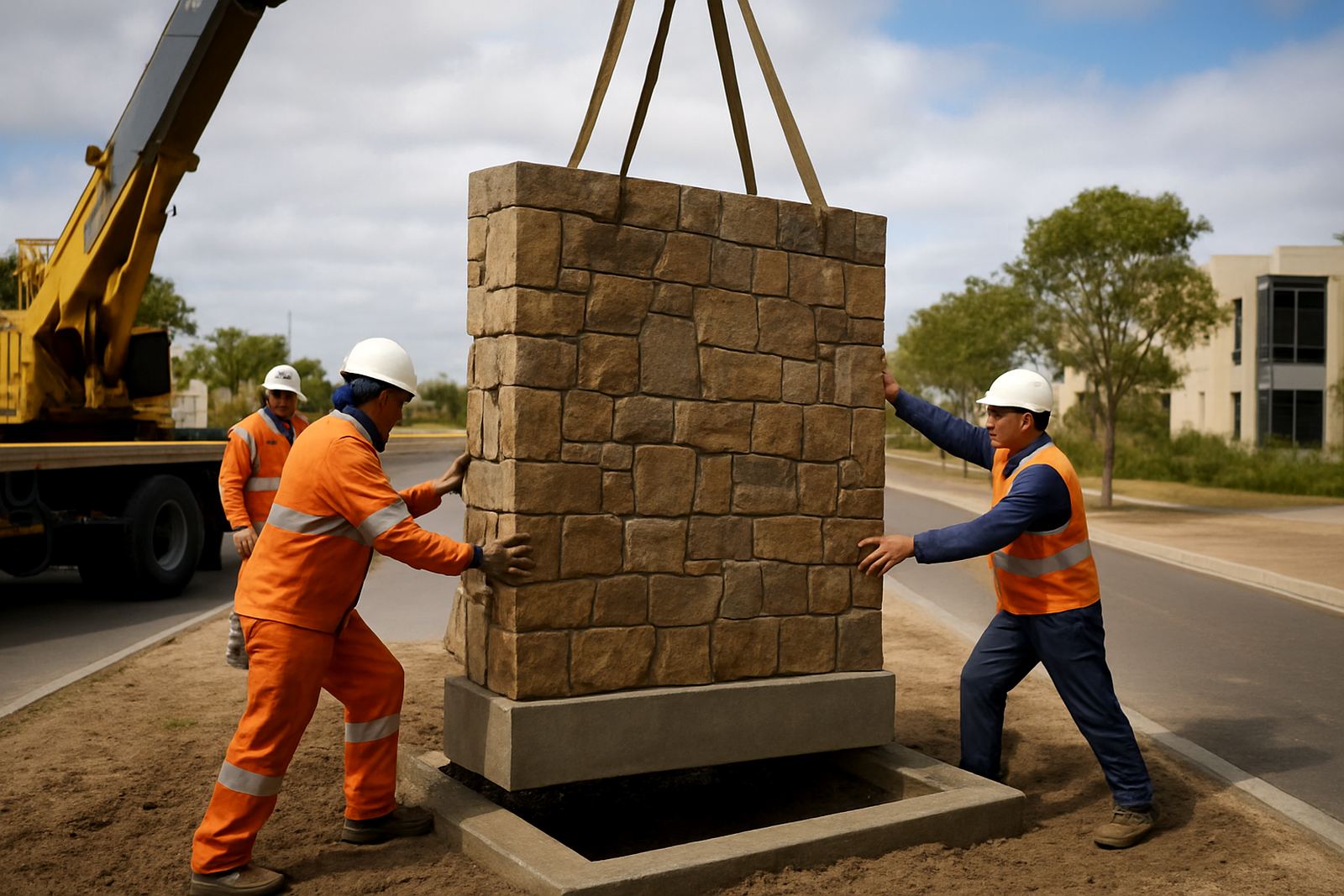
We handle the rigging side only. That means installation, removal, servicing and access work for sign makers who need a crew that knows how to work around live sites, pedestrian traffic, tight service yards and operating hours. We do not compete with the sign shops we serve. Our role is to get the finished product up safely, leave it aligned and make sure it stays serviceable in local conditions.
Sizes, formats and fixing options that suit the site
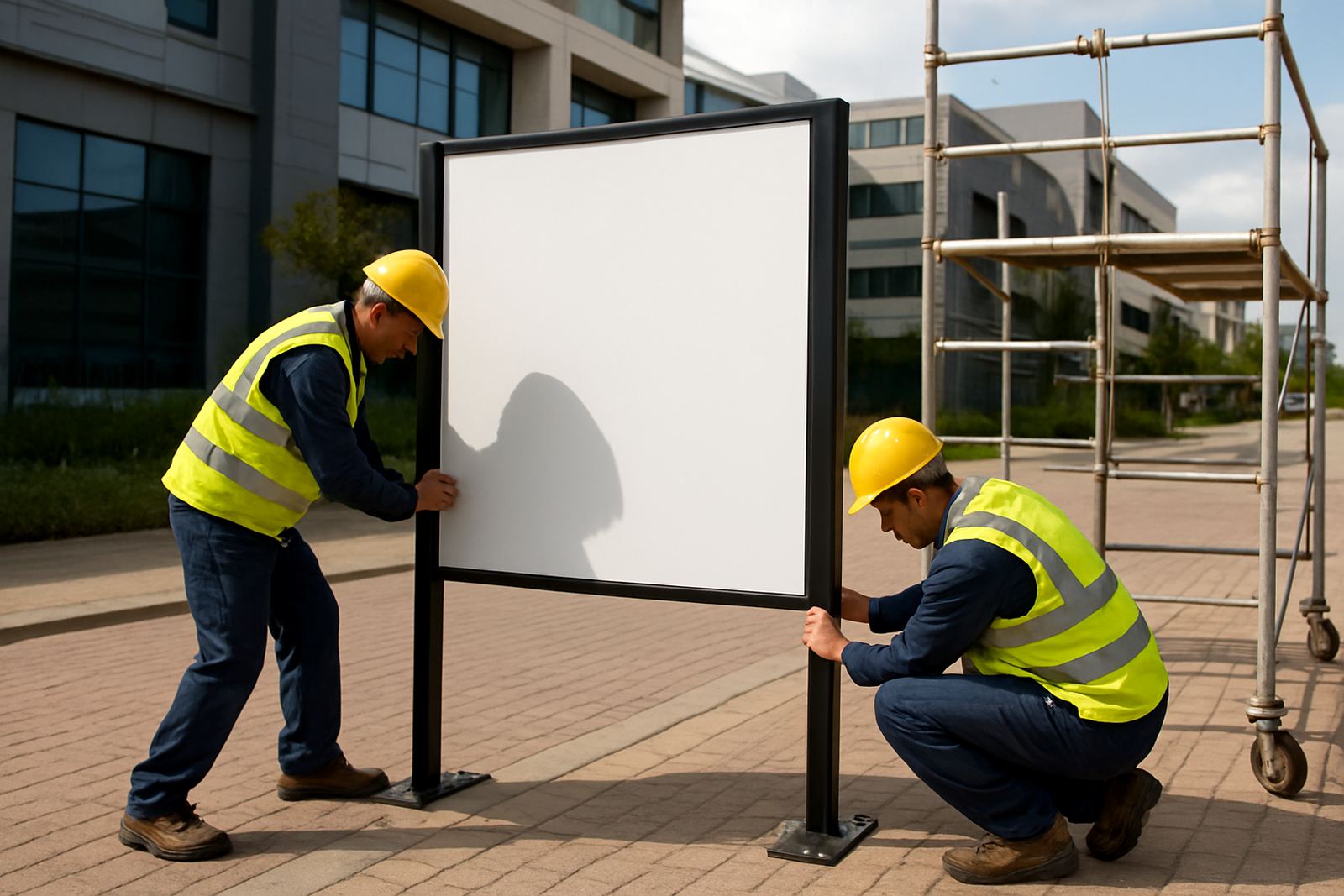
Wayfinding systems are rarely one size fits all. Some sites need small wall plates near doorways, while others need large freestanding directionals that can be seen from a vehicle or across a forecourt. We install single panels and multi-panel assemblies, overhead blade signs, post mounted directionals, wall mounted plaques and directory boards. Internal signs may be light enough for simple wall fixings, but outdoor signs often need heavier frames, more anchors and careful wind loading checks.
- Typical panel sizes: 300 x 100 mm, 600 x 150 mm, 900 x 300 mm and custom larger formats
- Common materials: aluminium composite, folded aluminium, mild steel frames, powder coated posts, acrylic faces and vinyl applied panels
- Mounting styles: wall fixed, pole mounted, ceiling hung, bracketed, standoff mounted and base plate fixed
- Finish options: matte, satin, gloss, reflective film or colour matched faces for branded sites
Where people need to see a sign from a distance, we also check line of sight, mounting height and whether the sign sits clear of trees, parked vehicles or security fencing. A sign can be the right size on paper, but if it is hidden by a boom gate or the wrong angle, it fails the brief.
Where wayfinding signs work best
These signs are used across campuses, estates, hospitals, schools, industrial parks, business parks, retail centres and gated residential sites. They are also common at warehouses, public buildings, clinics, churches and municipal facilities where visitors may arrive once or twice a year and need help fast.
On healthcare sites, direction must be clear for patients, suppliers and emergency vehicles. On estates and business parks, the sign must also fit the access control layout and not block sight lines at entrances. In coastal areas like Paarden Eiland, Bellville and Somerset West, we watch for salt air, fast corrosion and loose fixings caused by wind. In Johannesburg, dust and heat can fade face materials and weaken old adhesives over time.
- Hospitals and clinics: wards, casualty, parking, pharmacy, admin and service entrances
- Campuses and schools: block numbers, department markers, drop off zones and visitor routes
- Industrial and commercial sites: loading bays, receiving, dispatch, security and fire exits
- Estates and mixed-use sites: entry gates, unit numbers, visitor bays and pedestrian paths
Installation access, power points and site conditions
Most wayfinding signs are installed with standard rigging tools, ladders, scaffold access or a platform, depending on height and reach. If a sign needs to be mounted above a canopy or in a hard to reach foyer, we plan the access method first and keep the work area controlled. For overhead or illuminated wayfinding, we also check whether power is live, isolated or still to be connected by the client electrician. If a sign uses internal lighting or backlighting, a suitable supply point and safe cable route are needed before we lift it into place.
Some sites also have gas lines, fire systems or restricted roof spaces near the mounting area. We work around those conditions carefully and will flag anything that affects the fixings or the lift plan. Our crews are safety trained, scaffold trained and first aid trained, so the installation can be handled with proper control even when the site is busy or weather changes quickly. Load shedding can also affect timing on illuminated signs, so it helps to confirm access and testing windows before the crew arrives.
Care, servicing and what keeps the signs readable
Wayfinding signs need regular checks if they are outside or in high traffic areas. Fasteners loosen, faces fade, brackets move and dirt builds up on edge returns and posts. A sign that looked fine last year can start to tilt or lose clarity after one rainy season or one strong wind event. We offer sign servicing, maintenance visits and emergency callouts where a panel has been damaged, knocked or made unsafe.
Routine care usually includes checking fixings, cleaning faces, testing lighting where fitted, resecuring loose brackets and replacing worn vinyl or cracked panels. On coastal sites, stainless hardware and sealed edges matter more because humidity and salt air will creep in. On inland sites, UV and dust are the main issue. If a sign has to be taken down for repairs, we can remove it and return it once the sign maker has refurbished the face.
- Monthly or quarterly checks for high traffic sites
- After storm inspections for roof mounted or freestanding signs
- Lighting checks for illuminated directionals and directories
- Relevelling and refixing where posts or brackets have shifted
What to check before you order wayfinding signs
Before a sign goes into production, it helps to confirm the destination list, arrow directions, mounting height and whether the sign is for pedestrians, vehicles or both. It also helps to know if the site has heritage rules, body corporate approvals, municipal restrictions or landlord sign-off requirements. A simple approval delay can hold up the whole job, so the more complete the brief is at the start, the better.
Check the following before ordering: the exact wording, the number of panels, the size of each message, the intended viewing distance, whether the sign is inside or outside, and whether it needs lighting. Also confirm the surface where it will be fixed, because brick, cladding, concrete and steel each need different anchors. If the site is in a windy area, or on a roofline, the fixings and frame may need to be upgraded. We can also advise on access points and lift planning so the installation day is straight forward and not held up by surprises.
Our crews work from Paarden Eiland and Johannesburg, serving Bellville, Somerset West, Paarl, Johannesburg CBD, Sandton, Midrand and the East Rand. Whether it is one directory board or a full directional set across a large property, we fit the signs safely and keep the job moving.
Key facts
| Product type | Wayfinding and directional signs for indoor and outdoor sites |
|---|---|
| Typical sizes | 300 x 100 mm up to custom large format panels and directories |
| Mounting methods | Wall fixed, pole mounted, ceiling hung, bracketed or base plate fixed |
| Best suited to | Campuses, estates, hospitals, schools, commercial sites and industrial parks |
| Installation needs | Access planning, safe lifting, and power checks for illuminated signs |
| Servicing | Cleaning, refixing, alignment checks, lighting checks and replacement panels |