What a shopfront sign does on the street
A shopfront sign sits on the face of a building, usually above the entrance or across the main frontage, and carries the name, logo or service message a customer sees from the pavement, parking area or passing traffic. It can be a flat fascia panel, raised lettering, lightbox, cabinet sign, halo-lit name or a mixed system with multiple panels across one front. For retail parks, roadside sites and busy CBD streets, the sign has to read clearly from the right distance and suit the building line, shopfront width and landlord rules.
These signs are common on new fit-outs, tenant changes, rebrands and refresh work. In Cape Town, we often see them on retail strips in Paarden Eiland, Bellville, Somerset West and Paarl. In Gauteng, the same work comes up in Johannesburg CBD, Sandton, Midrand and the East Rand, where access, traffic control and working hours can change from site to site. Our crews only handle the rigging, installation, removal and servicing side. We do not compete with the sign makers who design and manufacture the signage.
Sizes, formats and mounting options
Shopfront signs are usually built to fit the opening above the store, the parapet line or a tenant panel supplied by the landlord. Common widths range from 1.2 metres for small units up to 8 metres or more on larger frontages. Heights are often between 300 mm and 1 200 mm for fascia applications, though some sites take taller statement signs or stacked panel layouts. The right format depends on viewing distance, the available fixing points and the weight of the sign face.
- Flat fascia panels for clean, direct branding on a shopfront face.
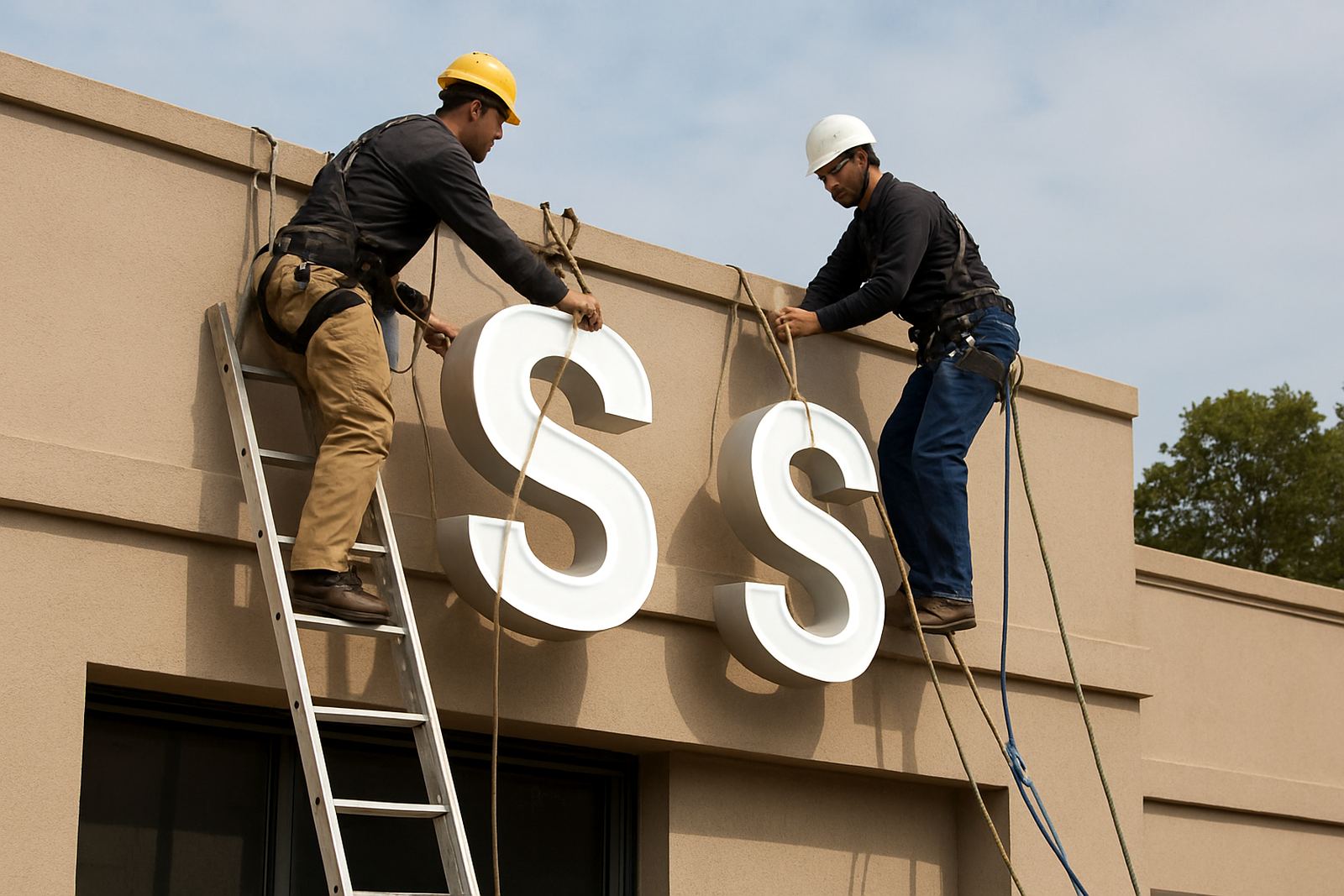
- Built-up letters for a layered finish and better visibility in low light.
- Lightbox cabinets for internal illumination and evening trading.
- Panel and tray systems for a tidy edge on uneven walls or old facades.
- Removable face systems for seasonal changes, tenancy swaps or maintenance access.
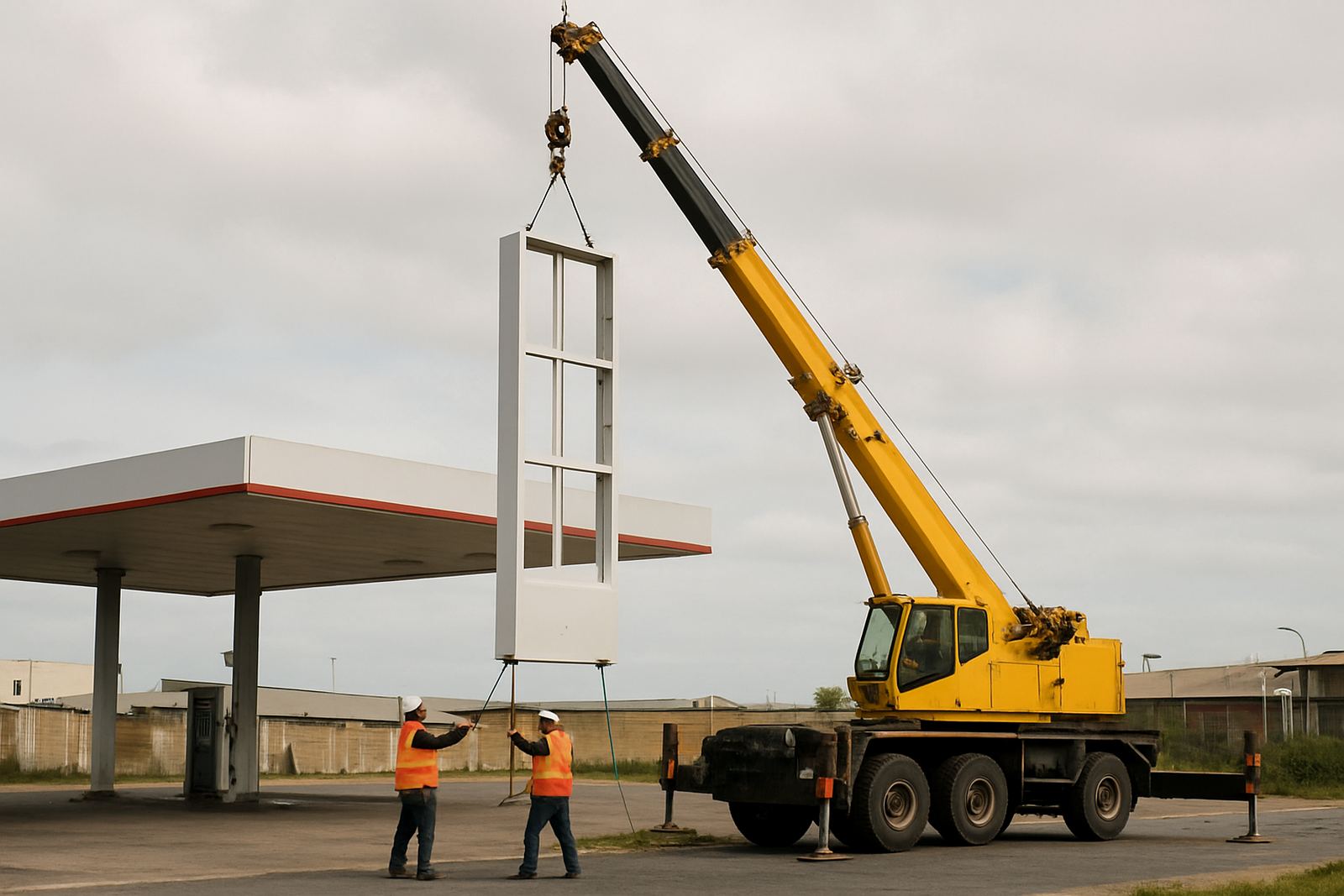
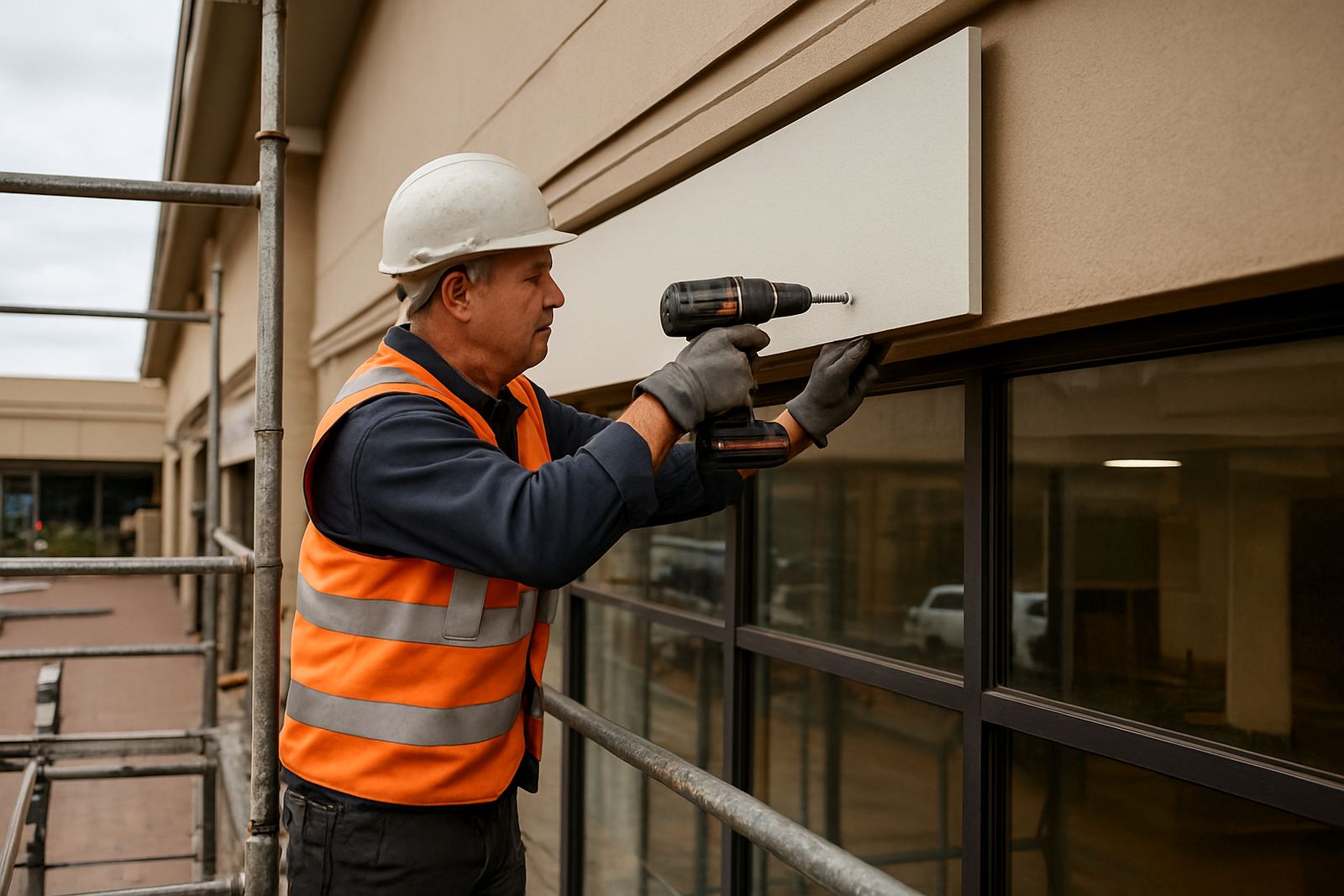
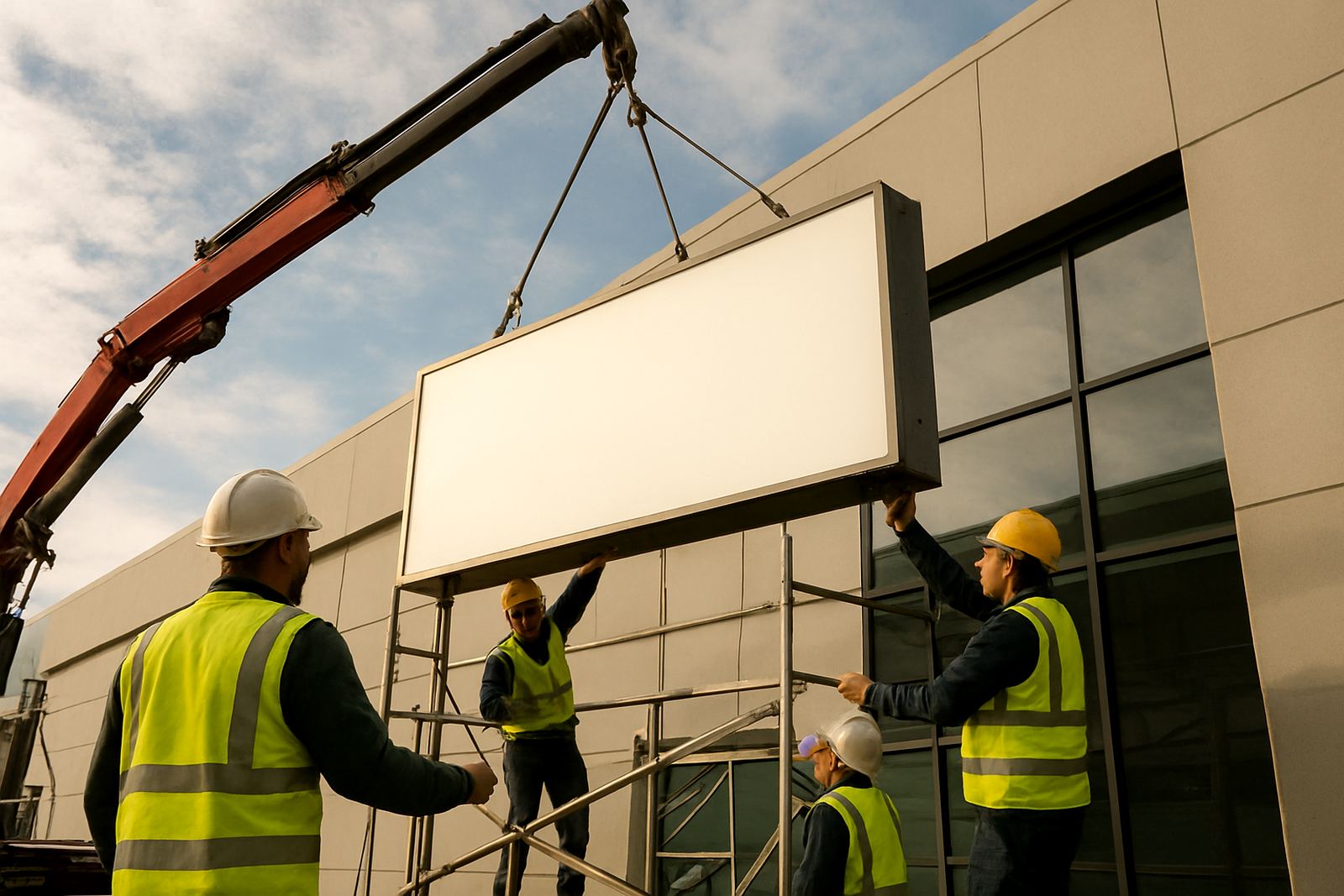
We work with a range of access methods, from ladders and scaffold to platform work and lift equipment, depending on the height, site conditions and municipal or landlord restrictions. Where the frontage is narrow or the pavement is busy, we plan the lift and fixings so the installation can be done with as little disruption as possible.
Where shopfront signs suit best
Shopfront signs are suited to almost any business that needs a clear entrance marker and street presence. They are used on retail stores, takeaway counters, medical rooms, showrooms, service centres, restaurants, offices and small industrial units. A good fascia sign can help a tenant stand out in a row of similar frontages, while still meeting the building owner’s rules for size, colour and fixing method.
These signs are especially useful where customers need to find a front door quickly or where the building sits back from the road. They work well in centres with shared parking, in buildings with strict uniform signage standards and in older properties where the front wall needs careful checking before any drilling starts. On coastal sites, salt air can shorten the life of fixings and electrical parts, so we pay close attention to materials, seal points and the condition of the wall before installation.
- Retail stores in shopping centres and street-front strips.
- Business parks, commercial buildings and professional suites.
- Roadside outlets that need good visibility from passing traffic.
- Tenant changes where the old sign must come down first.
- Refurbishment projects where the frontage is being repainted or repaired.
Installation, access and power planning
Before a shopfront sign goes up, we check the wall type, fixing points, measured size, weight and access route. Some jobs are straightforward, but many need a site survey first so the sign maker and client know what can be mounted safely. If the building has brick, concrete, cladding or a weathered plaster face, the fixing method changes. We also look at whether the frontage needs traffic cones, pedestrian management, scaffold, a cherry picker or after-hours work.
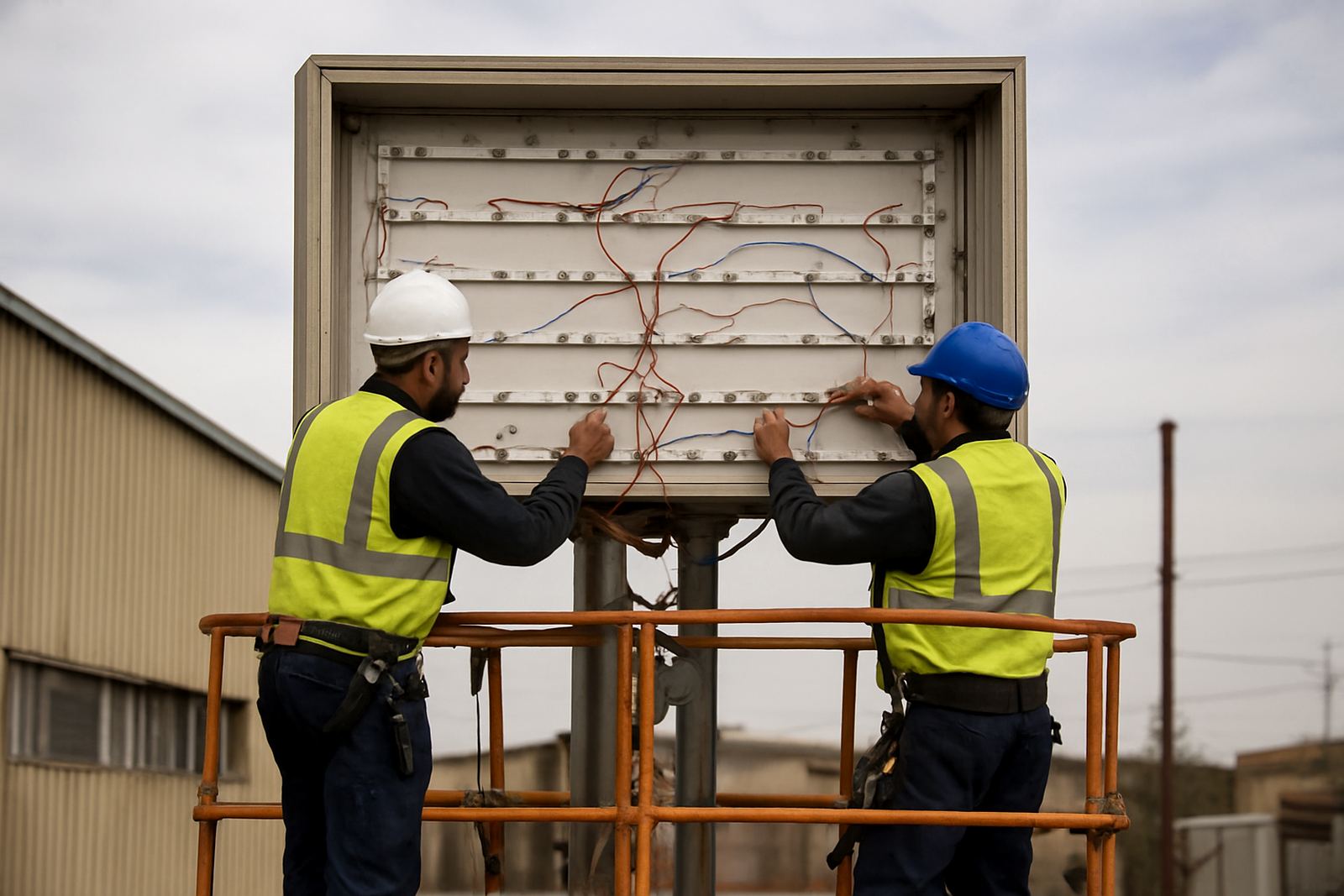
For illuminated signs, the installer must allow for electrical supply, switching and safe cable runs. Some units need a nearby power point, while others require a dedicated feed from inside the premises. A licensed electrical contractor may be needed for the final connection and testing, depending on the sign type and site rules. If the sign includes internal LEDs, transformers or external lighting, we confirm access for servicing later too, so maintenance is not a problem when a component fails.
Gas-filled or illuminated elements are not used on every project, but where the sign includes specialist lighting or other powered parts, the mounting and supply plan must be agreed before work starts. In a load-shedding area or on a site with backup power, it helps to know exactly how the sign behaves during outages and what needs to be isolated before maintenance.
Removal, servicing and maintenance visits
Shopfront signs do not only need installing, they also need to come down safely when a tenant changes, a frontage is repainted or the sign face is damaged. Our removal crews strip signs carefully, label reusable parts and leave the wall ready for the next phase. If the unit is being replaced, we can remove the old sign and prepare the access plan for the new one, which saves time on busy sites.
Servicing matters when a sign starts to flicker, lean, rust or leak. Coastal humidity in Cape Town can affect fixings and paintwork, while dust, vibration and weather in Gauteng can loosen fasteners over time. Routine maintenance visits help catch these issues before the sign becomes unsafe or looks neglected.
- Check brackets, anchors and wall fixings for movement.
- Inspect electrical parts, seals and illumination where fitted.
- Remove debris, bird nesting material and water buildup.
- Touch up damaged areas and report any corrosion or cracking.
- Plan replacement parts before a full failure stops trading visibility.
What to check before you place the order
When you order a shopfront sign, the best result comes from clear measurements and a proper handover. Confirm the exact frontage width, the height available above the entrance and any landlord or centre management rules. You should also check whether the sign will be visible from the road or only from close range, because that affects letter size, contrast and lighting. If the building has an old sign still on site, say whether it must be removed first or if it can stay in place during the changeover.
It also helps to know if the frontage is being painted, repaired or cladded at the same time. A sign should not be mounted on a wall that is still being patched or waterproofed. If the job is in a high-traffic area, ask about access times, delivery windows and whether the pavement or parking bay can be closed off for the lift. For multi-site rollouts, send the same measurements and photo set for each branch so the signs are consistent from Paarden Eiland to Sandton.
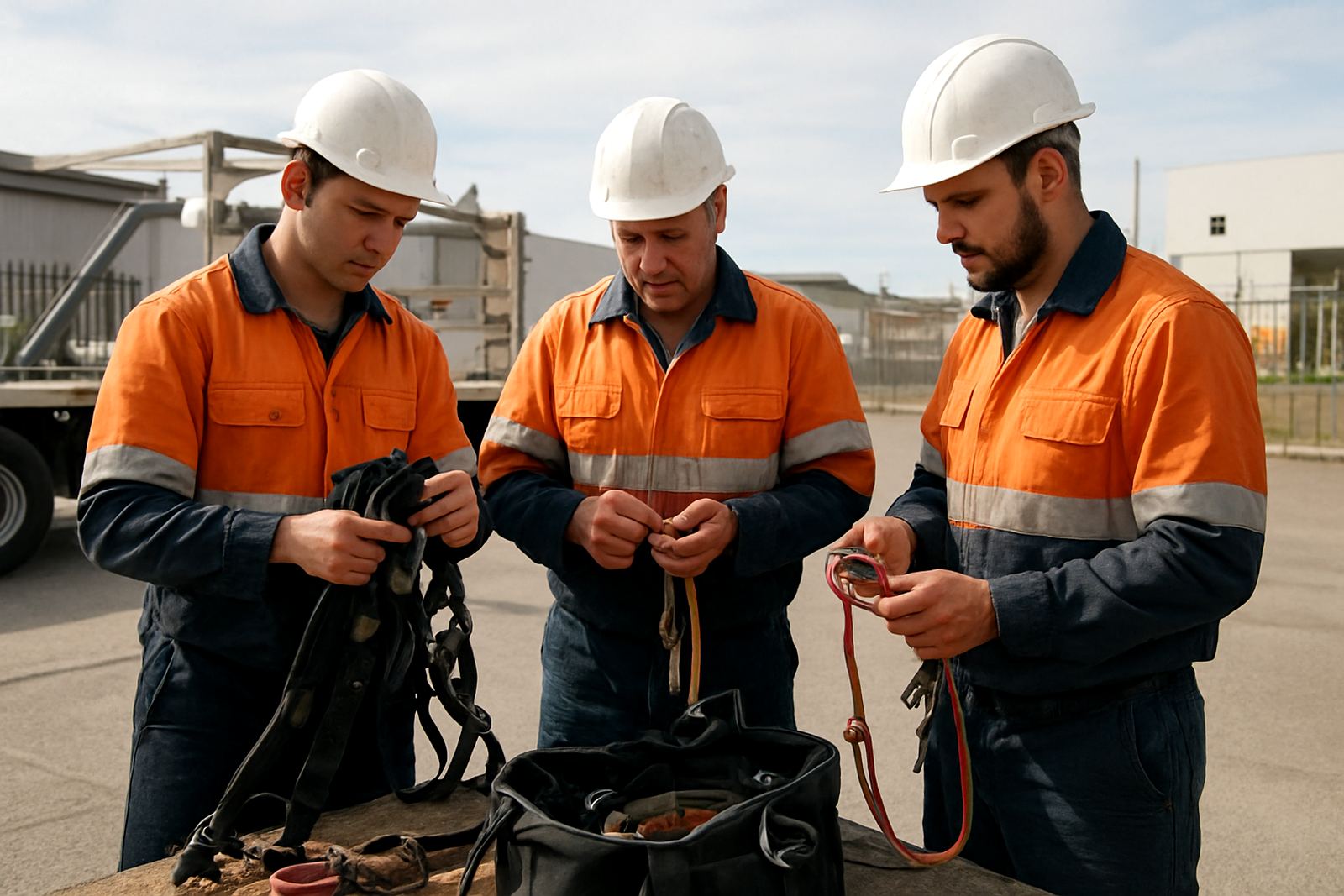
Finally, check who is responsible for the sign manufacture, who handles the power connection and who is doing the final fit. That keeps the job clean and avoids delays when the crew arrives on site with the rigging plan already in place.
Key facts
| Common widths | 1.2 m to 8 m plus, depending on frontage and visibility needs |
|---|---|
| Typical height | 300 mm to 1.2 m for fascia work, with larger custom formats available |
| Mounting types | Direct fix, bracket mounted, tray mounted or removable face systems |
| Access methods | Ladder, scaffold, platform work or lift equipment, site dependent |
| Power needs | May require nearby supply, dedicated feed or electrical contractor connection |
| Service areas | Cape Town, Western Cape, Johannesburg and Gauteng, including Paarden Eiland, Bellville, Somerset West, Paarl, Johannesburg CBD, Sandton, Midrand and the East Rand |