

Pylon signs built for roadfront visibility
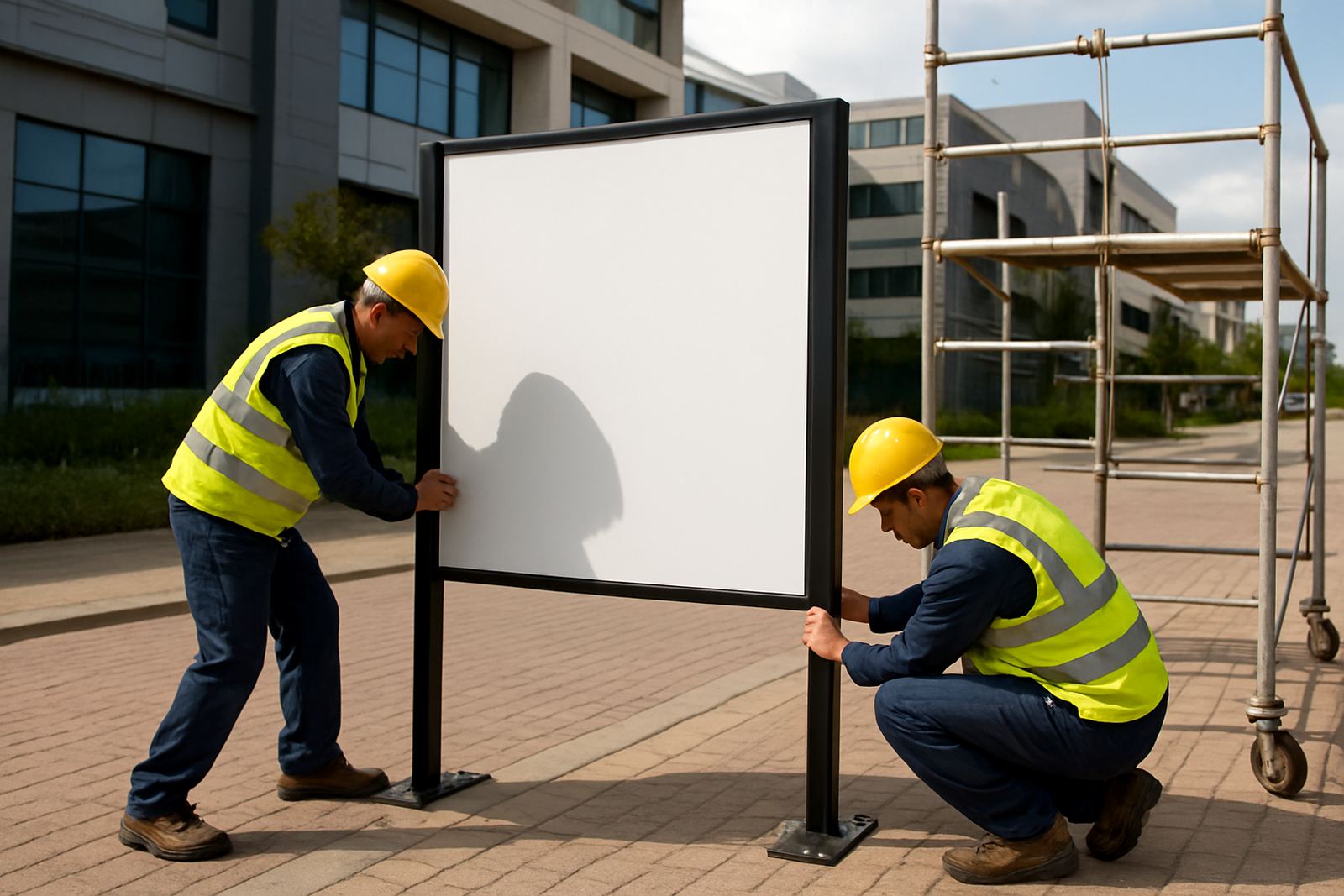
Pylon signs are freestanding signs mounted on a single structural column or frame, usually placed where passing traffic needs clear branding from a distance. They are common at shopping centres, fuel sites, business parks, motor dealerships, logistics yards and industrial entrances. Depending on the brief, the face may be a single panel, a double-sided sign or a multi-panel structure with internal lighting and service access.
For sign makers, the challenge is not the artwork or fabrication, it is getting the finished structure into place without damage and without slowing the site down. Our crews work on pylon signs as rigging-only contractors, so we install, remove and service the structure while you stay in control of the sign supply, branding and client relationship.
Pylon signs are often selected when a client wants stronger street presence than a wall sign can provide. They need proper foundation, lifting points and site planning before the first panel goes up. On coastal sites in Paarden Eiland, Somerset West or along the N2 corridor, corrosion and wind exposure also need to be considered from day one.
Sizes, formats and common build options
There is no single pylon size that fits every site. We regularly handle compact entrance pylons for smaller commercial plots, medium roadside units for retail parks, and larger multi-panel structures for high-traffic properties. The final size depends on viewing distance, council or landlord rules, wind load, footing size and the available access for lifting gear.
Typical options include:
- Single-face or double-face pylon signs
- Multi-panel pylons with separate tenant panels
- Internally lit sign boxes and illuminated face changes
- Plain steel frames with cladding or fascia panels
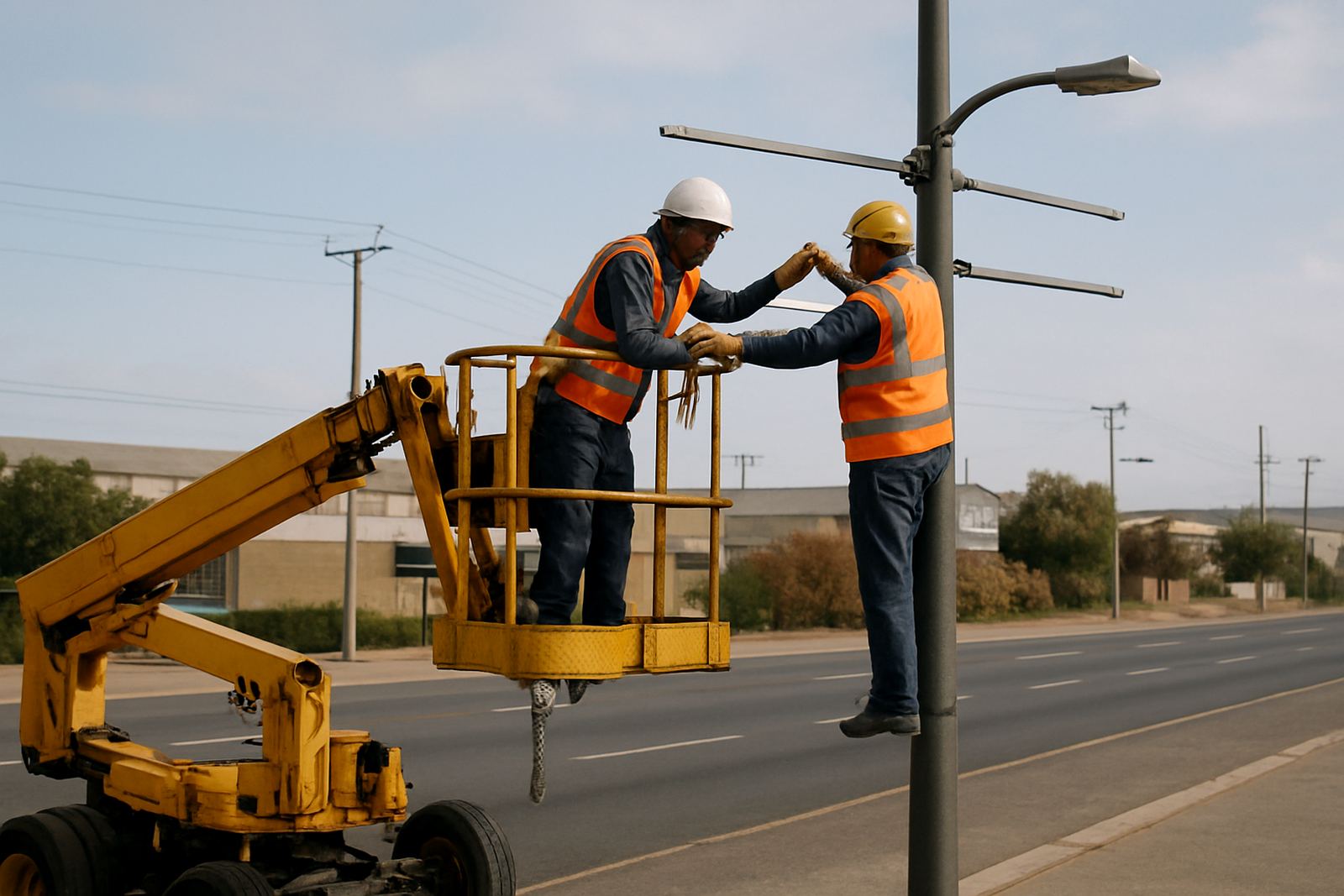
- High-rise versions that need boom lift or scaffold access
- Freestanding signs with service hatches for maintenance
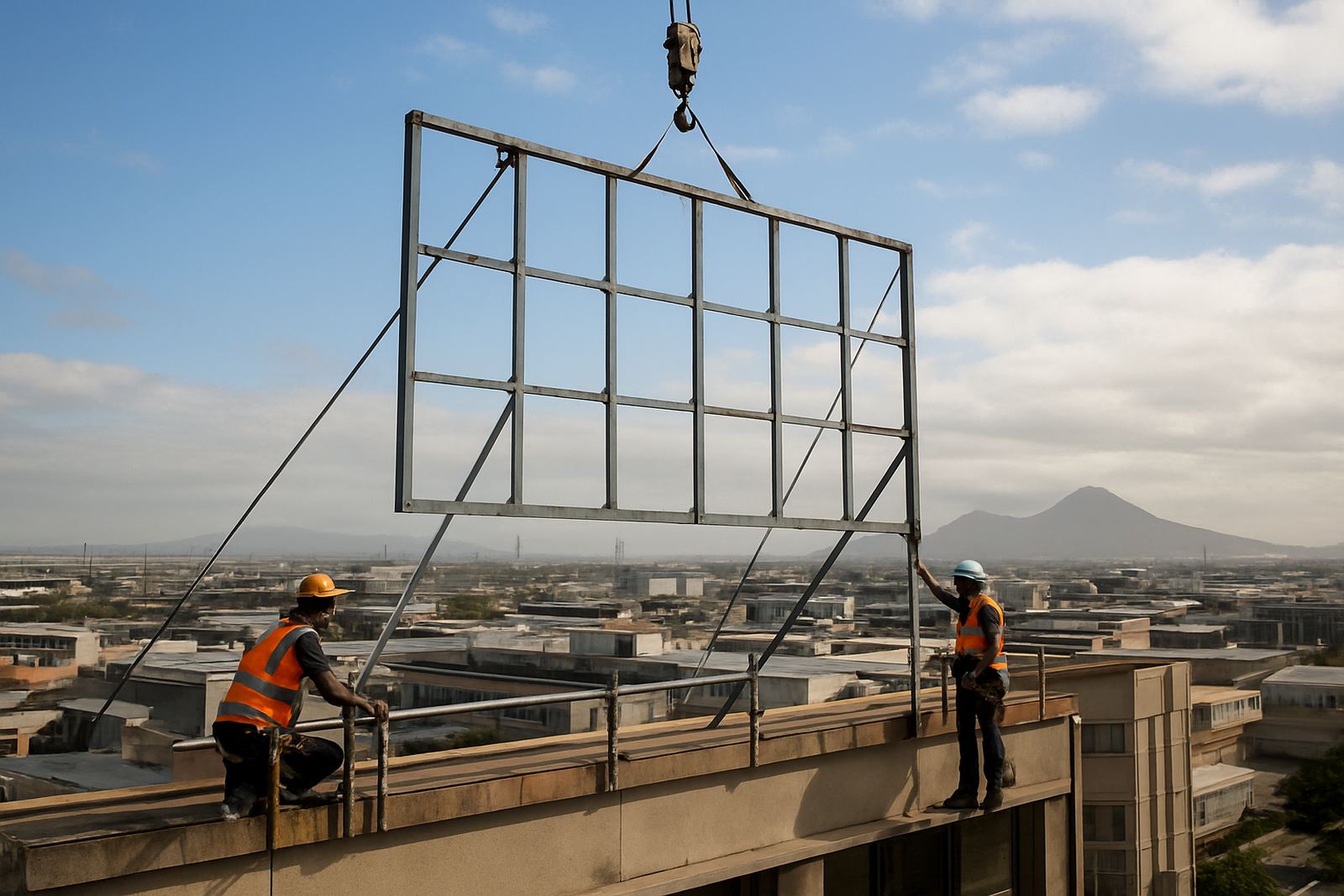
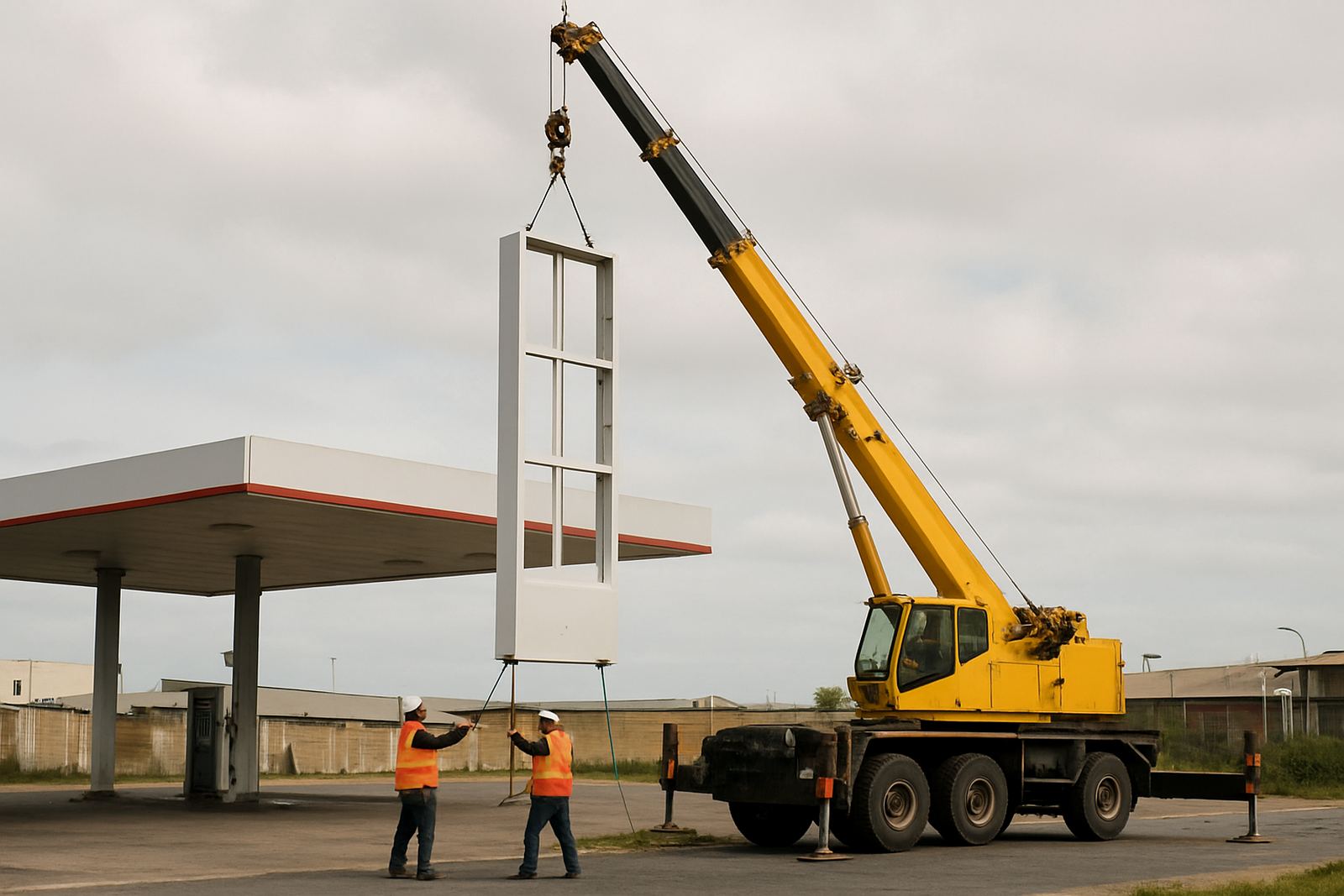
We also work on signs that need to be broken into sections for transport, then assembled on site. That helps with narrow access roads, gate restrictions and sites where a full crane setup is not practical. On some jobs the sign face is light enough for a platform lift, on others the full structure needs a planned crane lift with banksman control and exclusion zones.
Where pylon signs suit best
Pylon signs suit sites where visibility from the road matters more than wall space. They are common at corner sites, large stands, entrance roads and properties set back from the main route. In Gauteng they work well at business parks in Sandton, Midrand and the East Rand where traffic moves quickly and signs need height to be seen above parked vehicles and boundary walls.
In the Western Cape, they are useful in Paarden Eiland, Bellville, Paarl and Somerset West where industrial and retail traffic shares the same roads. They also suit sites exposed to wind off the coast because a properly planned pylon can be designed for local conditions and serviced before loose fixings become a problem.
- Roadfront sites with high passing traffic
- Retail centres with multiple tenants
- Fuel stations and quick-stop sites
- Industrial parks and warehouse entrances
- Corporate campuses and visitor entrances
For sign makers, pylon work often comes with timing pressure. Tenants want their panels up before opening, landlords want controlled access and site managers want the area cleared quickly. We plan around those constraints, including load-shedding windows, traffic flow and after-hours access where needed.
Installation, lift planning and site control
Pylon installation starts with a site survey and lift plan. We check access, ground conditions, overhead obstacles, service lines, parking flow and any municipal or landlord requirements. If the job needs scaffold access, platform work or a crane, we plan the sequence so the sign is installed once and secured properly. That saves time and reduces risk to the panels, the frame and the site itself.
Our teams are safety trained, scaffold trained and first-aid trained. Sibusiso Dlamini oversees safety on site, while Liam Jacobs manages rigging supervision and lift sequencing. Gareth van der Merwe heads the business, and the crew works with Ayesha Daniels on client communication so sign makers get clear updates before, during and after the job.
We are used to jobs where the site is live and there are vehicles, pedestrians or ongoing trade activity around us. Controlled barriers, spotters and clear exclusion zones are part of the process. If a sign needs repositioning, we can handle sign relocations as well, but only once the structure and base conditions have been checked. On busy roads the timing is everything, and sometimes a short delay for weather is better than pushing on in gusty conditions.
Power, lighting and service access requirements
Many pylon signs are illuminated, so power needs to be planned before installation day. We do not do electrical manufacturing, but we work with the access requirements for lighting, cabling and internal service points. If a pylon has lit faces or internal components, the electrician or sign shop needs enough space to connect, test and seal the system safely.
Some signs need backup planning for load-shedding because the client wants the sign to stay visible at trading hours. Others need safe isolation during servicing so the crew can work on panels and lighting without risk. In coastal areas, cable entries and access hatches need to be sealed correctly to reduce water ingress and salt damage.
- Confirm where power will be brought into the structure
- Check whether lighting access hatches are reachable from the ground or a platform
- Ask if the sign needs emergency shut-off access
- Allow for weatherproofing on exposed sites
- Plan testing after installation and again after servicing
If a pylon has gas-related fittings on an adjacent site, we stay clear of those zones and follow the site rules. The main point is that access and safety have to be sorted before the first lift, not after the sign is already halfway in place.
Care, servicing and what to check before ordering
Pylon signs need regular servicing because they sit in the weather and often face wind, dust and vibration from traffic. We handle maintenance visits, lighting access, face changes, bolt checks and removal when a sign is being replaced or upgraded. On older pylons, service work often starts with a basic inspection of the frame, fixings, access panels and any signs of movement at the base.
When ordering a pylon sign, check the following:
- Overall height and face size
- Whether the sign is single-sided or double-sided
- How many tenant panels or message zones are needed
- Whether the site allows crane, scaffold or platform access
- What the local wind exposure and soil conditions are
- Whether power is available and when it will be connected
- Any landlord, municipal or road access restrictions
If you are a sign maker, it helps to send drawings, site photos and the proposed install date early. That lets us plan the rigging properly, quote the right access equipment and avoid last-minute surprises. We work from Paarden Eiland and Johannesburg, with crews moving across Bellville, Somerset West, Paarl, Johannesburg CBD, Sandton, Midrand and the East Rand. The work stays in our lane: rigging, access and site control, so you can focus on the sign itself.
Key facts
| Service type | Pylon sign installation, removal and servicing |
|---|---|
| Typical height range | Approx. 3 m to 15 m, depending on site and access |
| Common formats | Single-face, double-face and multi-panel pylons |
| Access methods | Crane, scaffold, platform work and controlled rigging |
| Coverage | Cape Town, Western Cape, Johannesburg and Gauteng |
| Support | Site surveys, lift planning, emergency callouts and maintenance visits |