

What a suspended sign is and where it works best
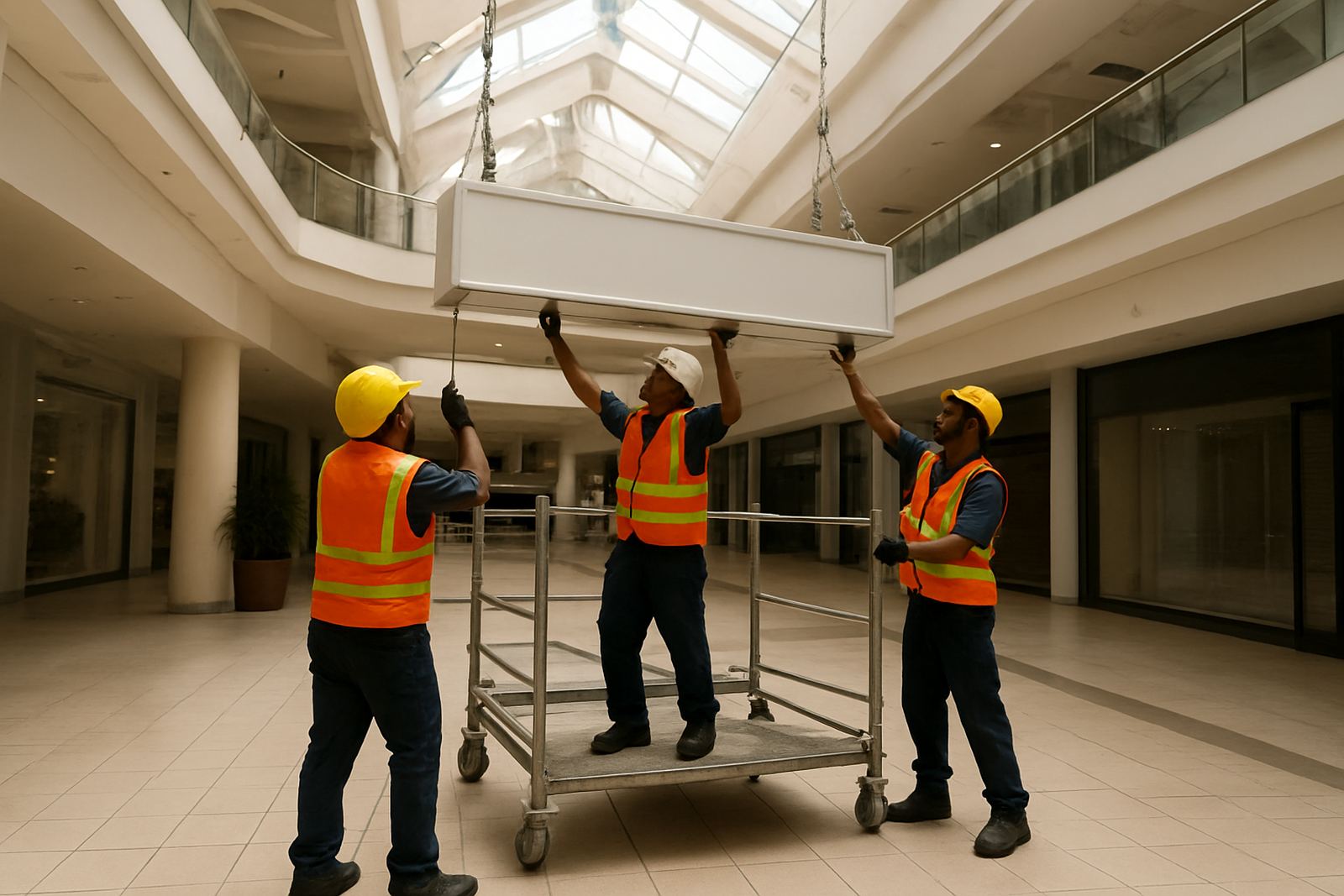
A suspended sign is any sign fixed from the ceiling, roof structure or overhead steel so it hangs clear of the floor and sightlines. These signs are common in retail centres, airports, showrooms, exhibition halls, office foyers and commercial interiors where wall space is limited or the sign must be seen from both sides.
We handle the rigging side only. That means the sign maker supplies the sign face, frame or hanger details, and our crews deal with the access, lifting, fixing and final position. It keeps your installer out of trouble and keeps our work in its lane. For shopping centres in Cape Town, Sandton office parks, Midrand showrooms or exhibition venues in Johannesburg CBD, suspended signs are often the cleanest option when you want visibility without blocking walkways.
They suit light boxes, foam built-up signs, directional blades, retail brands, tenant identification panels and event graphics. In coastal areas like Paarden Eiland, Bellville and Somerset West, we also check for salt air corrosion on fixings and exposed chain or cable, because that small detail can shorten a sign's life if it is ignored.
Sizes, materials and hanging options we work with
Suspended signs come in many sizes, from small 600 mm directional panels to larger double-sided signs around 2.4 m wide or more, depending on the roof structure and the venue rules. Height is just as important as width. In many retail centres, the bottom edge needs to stay high enough for clear pedestrian movement, while still landing in the right viewing line.
We work with a range of hanging methods depending on the sign design and the engineering notes supplied by the sign maker:
- galvanised chain for heavier signs and simple hanging points
- stainless steel cable for a cleaner finish and finer adjustment
- threaded rod for fixed drops where movement must be reduced
- ceiling brackets and eyelets where structure allows direct fixing
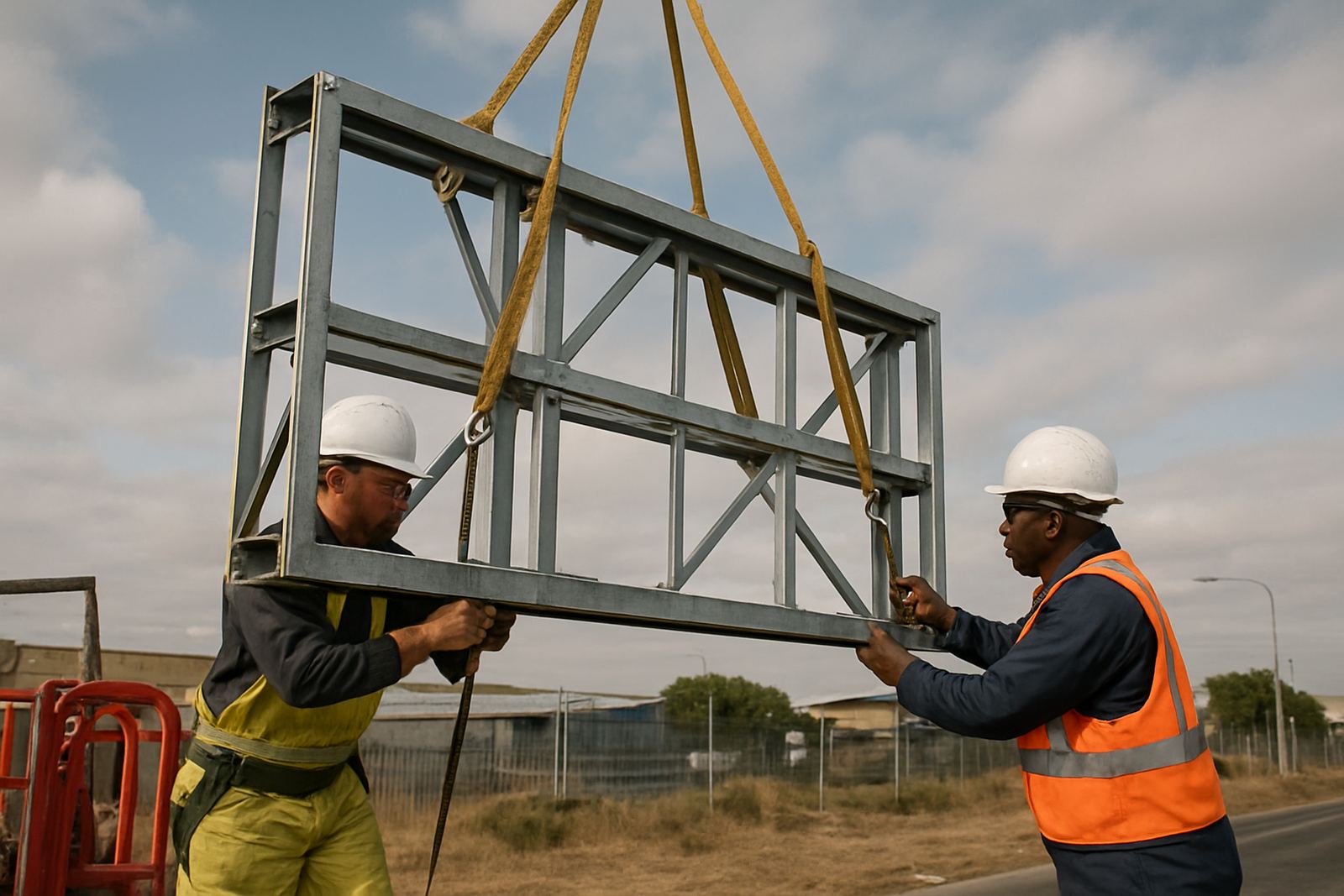
- spreaders or frame supports for wider panels that need stability
For exposed coastal sites we prefer corrosion-resistant hardware where possible, and in indoor centres we still check the finish because air conditioning, cleaning chemicals and humidity can all affect fittings over time. If your sign is double sided or illuminated, weight and balance become even more important and we plan for that before the first lift.
How we install suspended signs safely
Every suspended sign starts with a site survey or a lift plan if the venue already has access rules in place. We look at ceiling height, fixing points, roof structure, live services, sprinkler heads, smoke detectors and any shopper or staff traffic below the work area. If the sign has to be installed over a trading floor, we plan the work for quiet hours or after closing where possible.
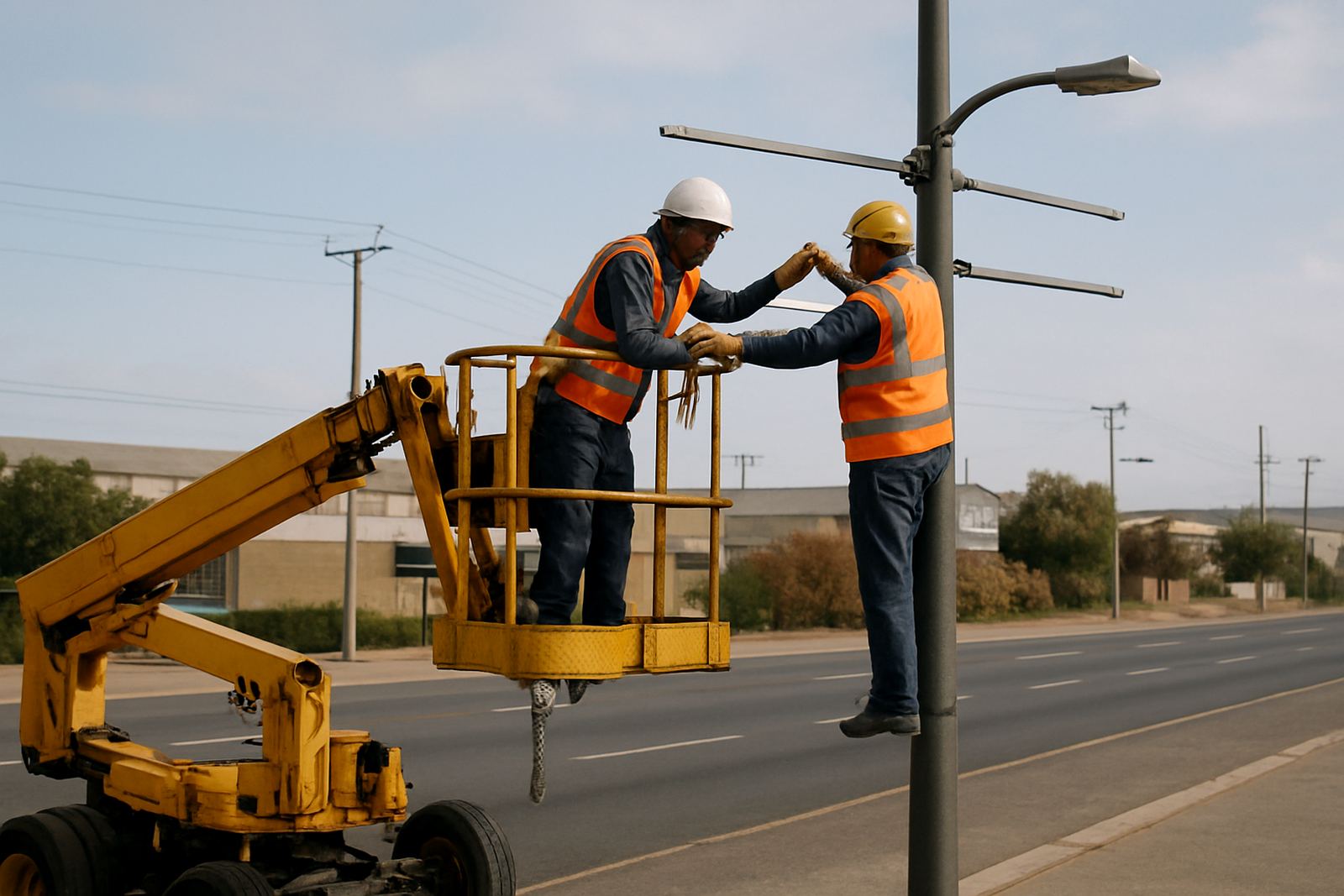
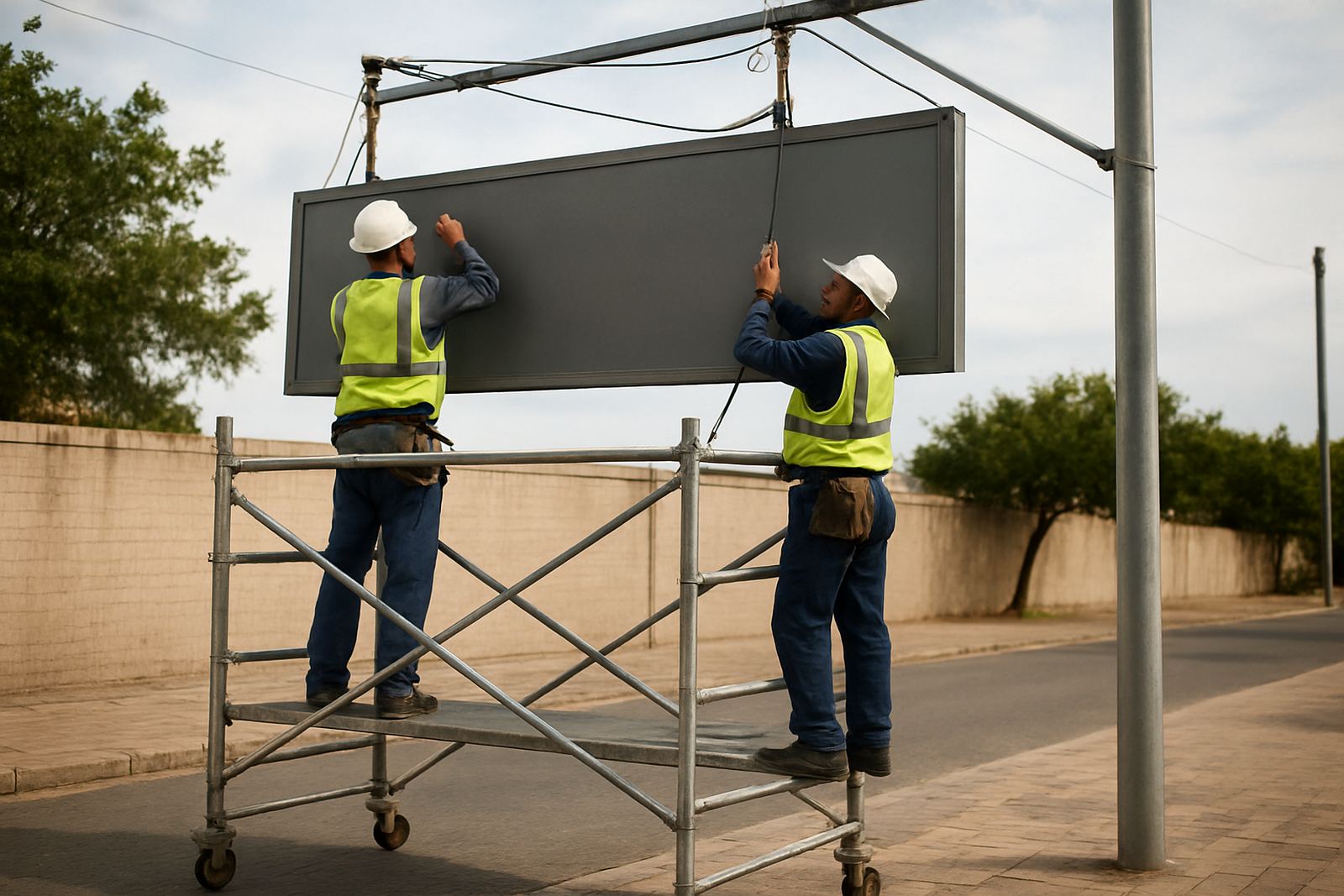
Our team is scaffold trained, first-aid trained and used to working with platform access, ladders and controlled lifts. We do not guess on height or reach. If the job needs a cherry picker, scaffold tower or other access method, we plan for that before we arrive. In some buildings in Johannesburg and Cape Town, body corporate rules or centre management require written method statements and permit control. We work to those requirements and keep the process practical.
- Confirm the fixing points and load capacity before lifting
- Protect floors, stock and glass with proper drop control
- Set the sign level and allow for final adjustment after the first hang
- Check the sign from the normal viewing distance, not just from below
- Leave the installation neat, with no loose ends or exposed sharp edges
We also keep an eye on the weather when the work is at an open loading bay or semi-exposed entrance. Wind can make a suspended panel swing badly, so timing and control matter. A rushed install is the quickest way to create a problem later.
Power, lighting and other site requirements
Not every suspended sign needs power, but many illuminated signs do. If the sign includes LEDs, internal lighting or external light fittings, the power point must be planned before the rigging starts. We do not do electrical sign manufacturing, but we coordinate the access and physical installation so the electrician or sign maker can complete the connection safely.
For illuminated units, check whether the sign needs a nearby switched supply, concealed wiring path or maintenance access for future lamp or driver changes. Some venues prefer the power feed to be routed above the ceiling with a neat service loop, while others only allow approved routes through ceiling voids. Gas is rarely relevant for suspended signs, but if a venue has heat-sensitive materials, fire rules or special tenant restrictions, those details should be shared early.
If the sign is in a mall, airport or medical building, the centre may require after-hours work, noise control and proof of training. We are used to that. The key is to avoid surprises on the day, because a sign hung in the wrong place or without access for servicing becomes a much more expensive problem later on.
Servicing, cleaning and planned maintenance
Suspended signs live in busy spaces, so they pick up dust, fingerprints and the occasional knock from trolleys, ladders or moving stock. Over time, chain can stretch slightly, fixings can loosen and alignment can shift, especially in buildings with vibration or air movement from large doors and HVAC systems. That is why we offer servicing visits and maintenance calls for sign makers who need a reliable rigging team on standby.
We can return to inspect the hang points, re-level the sign, replace worn hardware and assist with removals or relocations when tenants move. In coastal air, a small rust patch can become a bigger issue quicker than people expect, so it pays to check the hardware before it stains the sign or ceiling.
- inspect chain, cable and brackets at set intervals
- check for movement after store refits or ceiling work
- clean the sign face with materials suitable for the finish
- tighten or replace hardware before visible sagging appears
- book a pre-winter or pre-peak-season inspection in busy sites
For exhibition work, temporary suspended signs should be checked after every set-up and again before opening. Floors can settle, rigging points can shift and a small adjustment can stop a bigger issue on show day.
What to check before you order a suspended sign
Before the sign maker manufactures a suspended sign, confirm the details that affect rigging, access and compliance. These checks save time and reduce call-backs once the sign arrives on site. The more exact the brief, the smoother the installation.
- overall size, weight and number of hanging points
- single-sided or double-sided construction
- ceiling height and the required drop below the structure
- whether the sign is illuminated and needs power nearby
- site access hours, permit rules and trading restrictions
- any sprinkler, fire or ceiling service clearance needed above the sign
It also helps to know whether the site is in Paarden Eiland, Bellville, Somerset West, Paarl, Johannesburg CBD, Sandton, Midrand or the East Rand, because access rules and ceiling types vary from one area to the next. If the sign is being moved from one tenant to another, measure the old hang points and the new position separately. A small difference in ceiling grid layout can change the whole job.
When you need the rigging done properly, our crews handle the hanging, removal, servicing and re-hanging without stepping on the sign maker's work. That keeps responsibilities clear and the finished sign where it should be, level and safe.
Key facts
| Service type | Rigging only for suspended signs, with no sign manufacturing |
|---|---|
| Typical use | Retail centres, exhibitions, commercial interiors, foyers and showrooms |
| Common sizes | From about 600 mm panels to 2.4 m and larger, depending on structure |
| Hanging methods | Chain, cable, threaded rod, brackets and frame supports |
| Access options | Platform work, scaffold access, lift planning and site surveys |
| Coverage | Cape Town, Johannesburg, Western Cape and Gauteng including Paarden Eiland, Sandton and Midrand |