

Directory signs that fit busy mall traffic
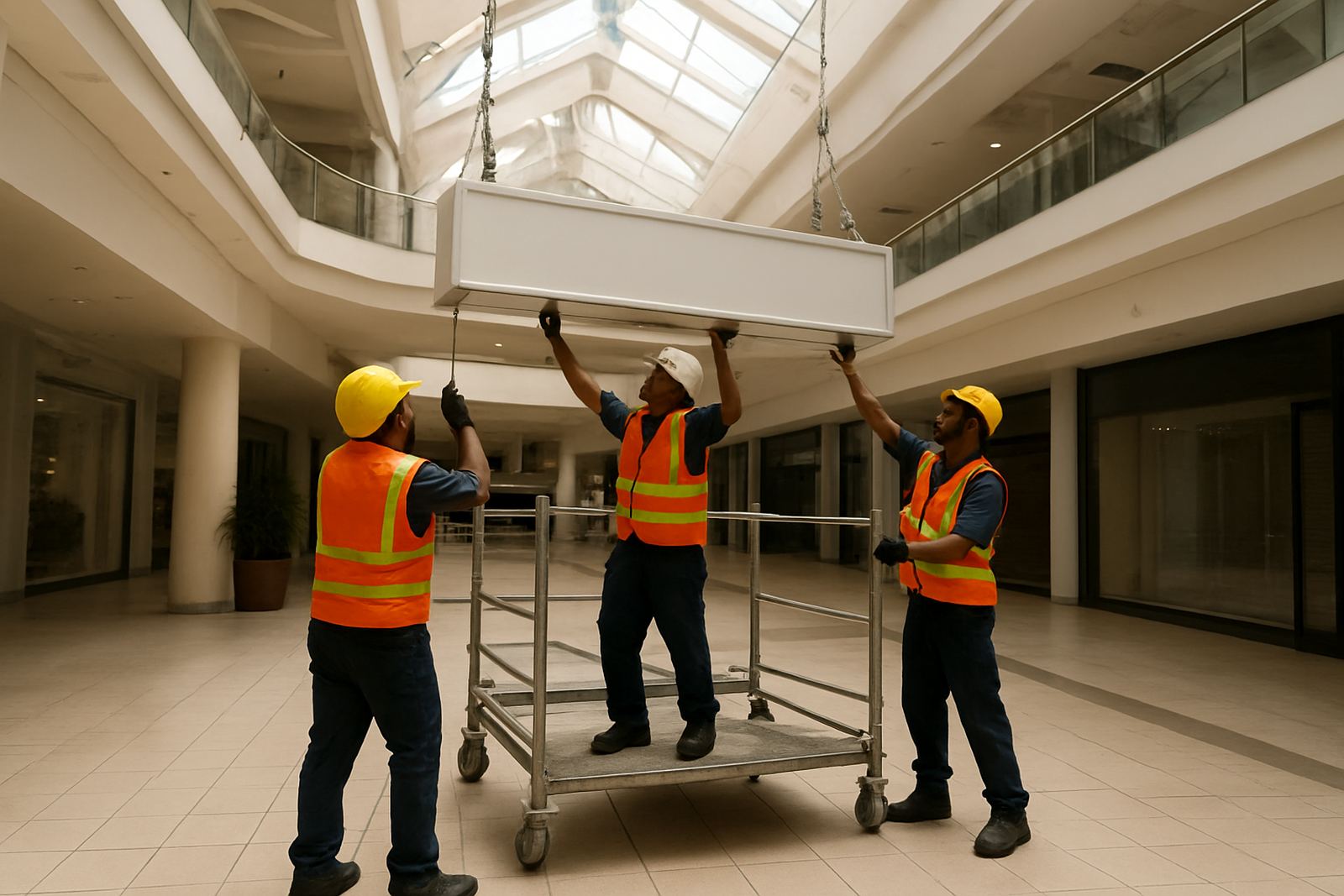
Mall directory signs need to be easy to read, fixed safely and placed where foot traffic will not block them. We handle suspended signs above passageways, freestanding wayfinding panels near entrances, and directory boards for anchor tenants, levels and parking links. The job is to get the sign in the right spot first time, with enough clearance for shoppers, trolleys and cleaning equipment.
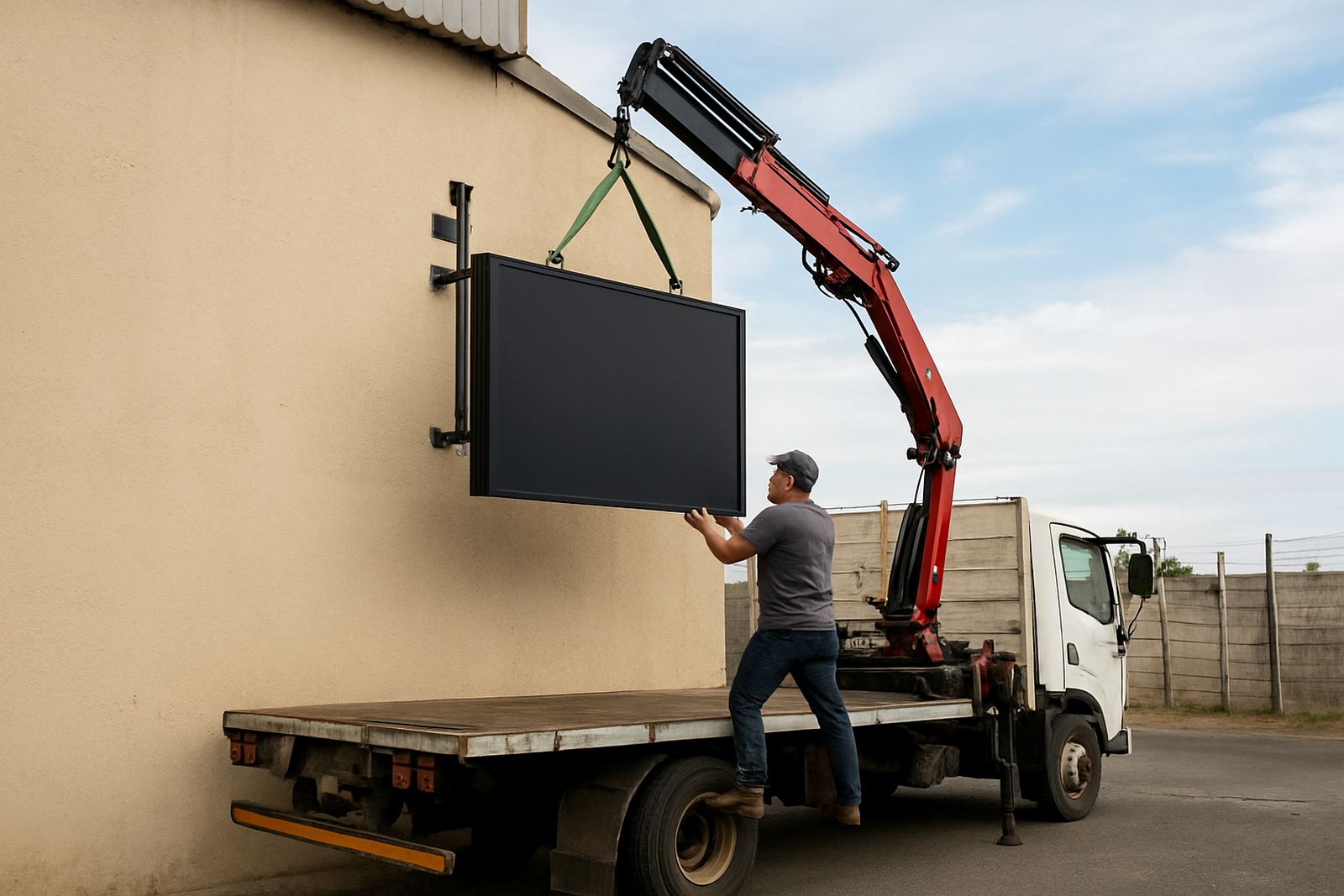
These signs are usually supplied by a sign maker and then installed by our rigging team. We do not compete with sign shops, we support them. That means your client keeps the relationship and we handle the access, lifting, fixing and final positioning on site.
Common sizes, formats and fixing options
Mall directory signs come in a range of sizes depending on viewing distance and where they sit in the centre. Smaller wall or pedestal directories may be around 600 x 900 mm, while larger suspended panels can run to 1200 x 2400 mm or more. For wide passages, multi-panel directory systems are often used so tenant changes can be made without replacing the full unit.
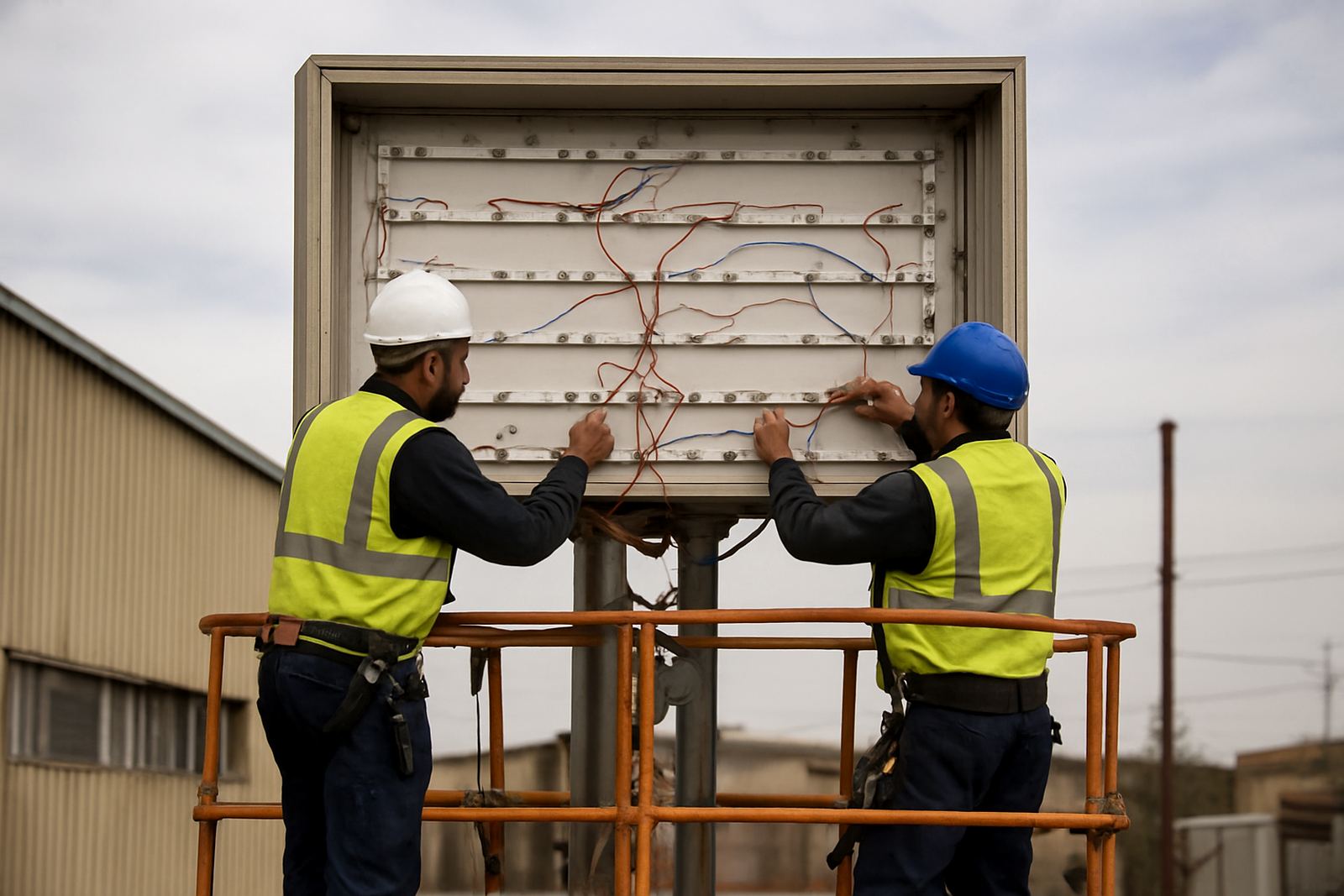
Fixing methods depend on the structure and the sign weight. We work with ceiling rods, brackets, cable systems, floor bases, wall frames and concealed fixings where the centre allows it. If the sign has internal lighting or digital panels, the weight and access points must be checked before anything is lifted into place.
- Suspended single panel directories for passages and nodes
- Freestanding directories for entrances, foyers and parking links
- Multi-panel boards for tenant lists, maps and level guides
- Illuminated options for low light areas and night trading
- Temporary coverings for tenant updates during changeovers
Where mall directory signs work best
These signs are used in shopping centres, lifestyle centres and enclosed retail passages where people need quick direction. They suit main entrances, lifts, escalator landings, food court approaches, parking exits and transition points between trading areas. In centres with several levels, a clear directory can reduce confusion at the exact spot where shoppers decide where to go next.
In Cape Town and Johannesburg we often work in centres where access needs to be planned around trading hours, deliveries and cleaning windows. Coastal humidity in places like Paarden Eiland and Somerset West can affect fixings and metal parts over time, while Gauteng malls may need extra care for dust and high daily footfall. A directory sign in the wrong place can be ignored, or worse it can interfere with a fire route or line of sight.
- Shopping centre entrances and atriums
- Retail passages and lift lobbies
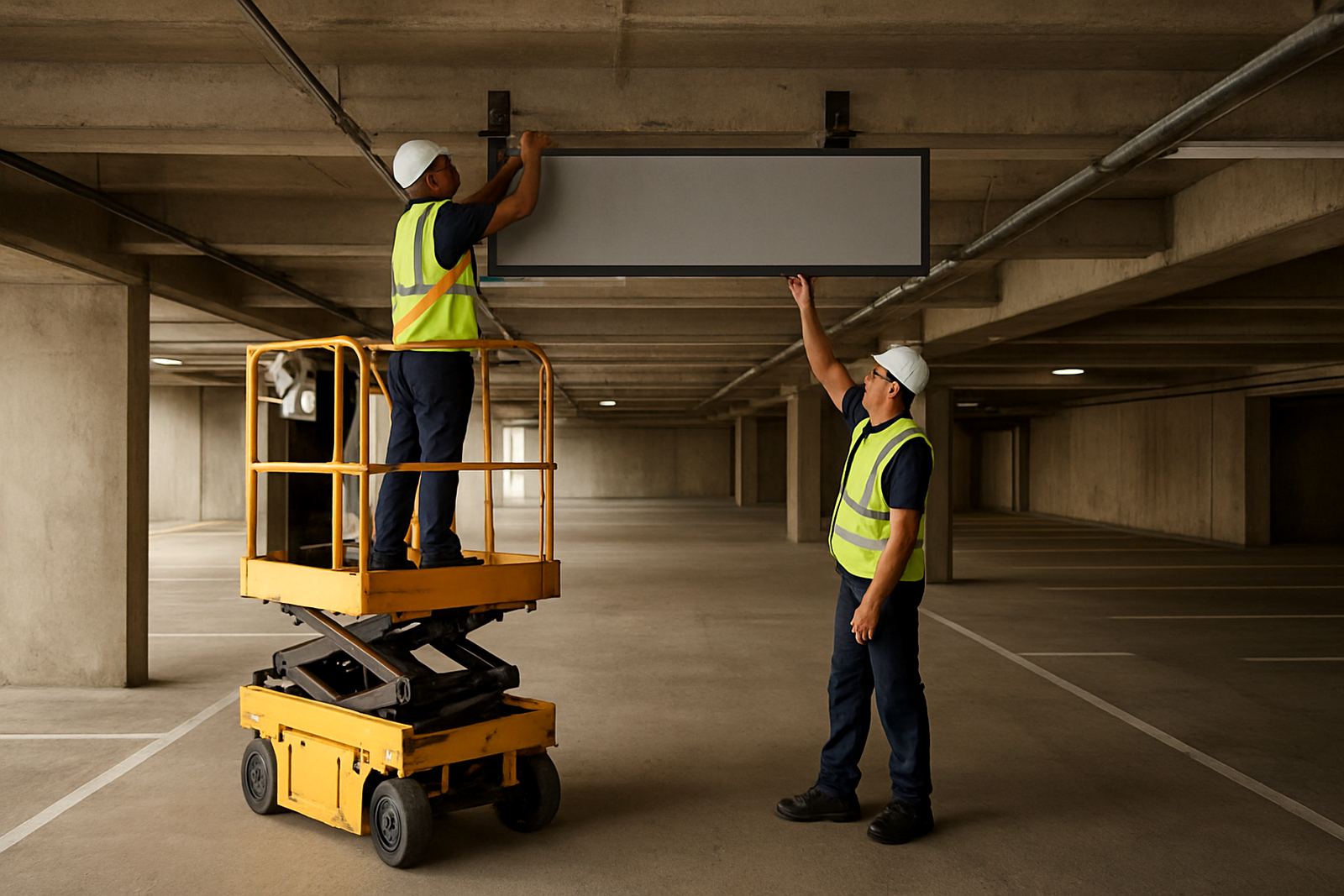
- Parking levels and pedestrian bridges
- Food courts and cinema approaches
- Service corridors with public access points
Installation planning, access and power checks
Before installation we check the site for access, lift points, ceiling strength and any restrictions from the centre management. If scaffold, platform work or lift equipment is needed, we plan for that up front so the job is not stopped halfway through. Our crews are scaffold and first-aid trained, and we take safety seriously because mall work often happens above public walkways.
For illuminated directory signs, power availability must be confirmed before the sign is fixed in place. We check whether a nearby supply is ready, whether the circuit is suitable, and whether the sign maker has provided the right driver, transformer or control gear. Gas is not normally required for directory signs, but if the sign includes any special display feature or temporary fabrication works on site, we confirm the centre rules before work starts.
Good installation also means thinking about removal later. We position fixings so the unit can be serviced or replaced without damage to the structure, and without leaving an ugly trail of old holes. In a busy mall that saves time, money and a lot of repair work.
Care, servicing and changeovers after install
Once a mall directory sign is in place, it still needs regular checking. Panels loosen, lights fail, graphics fade and tenant names change more often than people think. We carry out servicing visits for sign makers and mall contractors who need a crew to inspect, adjust or remove a directory sign without disrupting trading.
Routine care usually includes cleaning accessible faces, checking fasteners, testing illumination, inspecting cables and confirming that the sign remains level. If the directory has changeable tenant inserts, we can assist with scheduled updates during quiet hours. Emergency callouts are also available when a sign has been knocked, starts hanging unevenly or becomes unsafe after maintenance work in the centre.
- Check fixings every 6 to 12 months
- Clean faces with non-abrasive materials only
- Inspect cables, brackets and suspension points
- Test lighting after outages or electrical work
- Replace damaged panels before they crack further
What to confirm before you place the order
When ordering a mall directory sign, the key details should be clear before the crew arrives. We need the sign dimensions, total weight, fixing type, exact position on the plan and whether the centre requires permits or method statements. If the sign is suspended, the ceiling height and clearance above the floor matter just as much as the face size.
It also helps to know whether the sign will be single-sided or double-sided, illuminated or non-illuminated, and whether there are tenant panels that may change later. For signage in public areas, the centre may ask for proof of safety training, access equipment details and a lift plan. Having those documents ready saves time and avoids delays at the loading bay.
We work across Paarden Eiland, Bellville, Somerset West, Paarl, Johannesburg CBD, Sandton, Midrand and the East Rand, so we are used to different centre rules and access limits. If your sign maker needs a rigging crew that understands mall timing, public safety and neat handover, we can handle the install without stepping on their toes.
Key facts
| Typical sizes | 600 x 900 mm up to 1200 x 2400 mm, with custom larger formats available |
|---|---|
| Mounting types | Suspended rods, cable systems, wall brackets, floor bases and concealed fixings |
| Materials handled | Aluminium frames, acrylic faces, steel supports, vinyl panels and mixed media boards |
| Access methods | Scaffold, mobile platform, lift equipment and planned manual handling |
| Power needs | Only for illuminated signs, with supply and control gear checked before install |
| Service areas | Cape Town, Paarden Eiland, Western Cape, Johannesburg, Gauteng and nearby mall sites |