

What dealer sites usually need from a rigging crew
Dealer yards are busy places, with display cars, delivery trucks, customer traffic and security controls all working at once. That means every sign job has to be planned around trading hours, access gates, power shut-offs and the exact height of each sign face. We work for sign makers who need a crew that can install, remove or service the sign without stepping on the sign shop's toes.
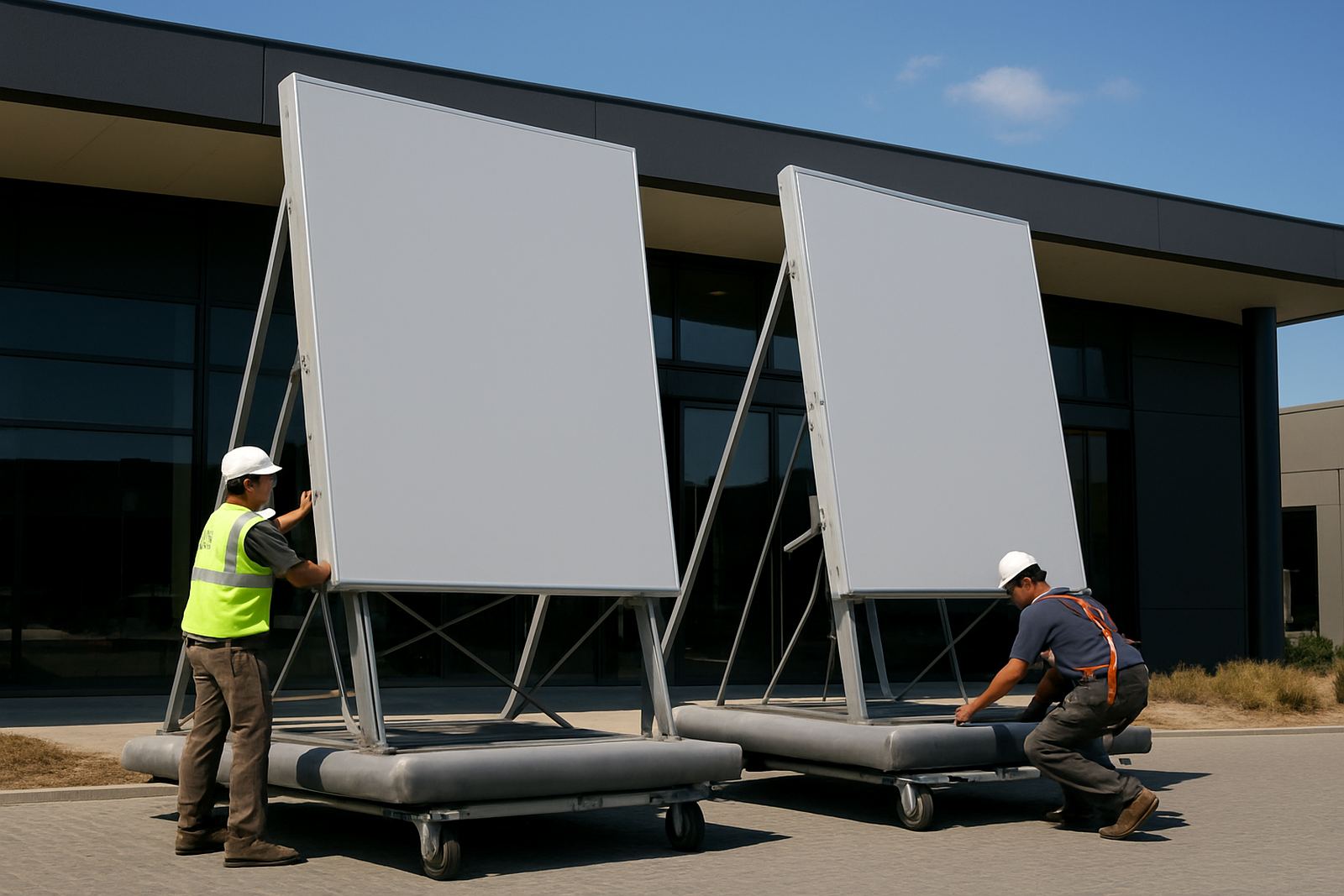
Common dealer-site work includes tall pylon signs at the roadside, illuminated fascia logos above showrooms, wayfinding signs for service bays and sales entrances, and directional blades at parking turns. We also handle sign relocations when a site is reconfigured or when a brand changes and the old hardware needs to come down cleanly.
- Pylon signs for road visibility and site identification
- Facade logos, lightboxes and feature lettering
- Directional signs for entrances, exits and service areas
- Removal of old signage before new panels go up
The access equipment most dealer sites call for
Not every dealer site needs a crane or a big lift, but many need some form of height access. We choose the setup based on the sign weight, mounting points, ground condition and the room available between parked vehicles, kerbs and boundary walls. In Paarden Eiland, Bellville, Sandton or Midrand, a cramped forecourt can be just as tricky as a windy open corner site.
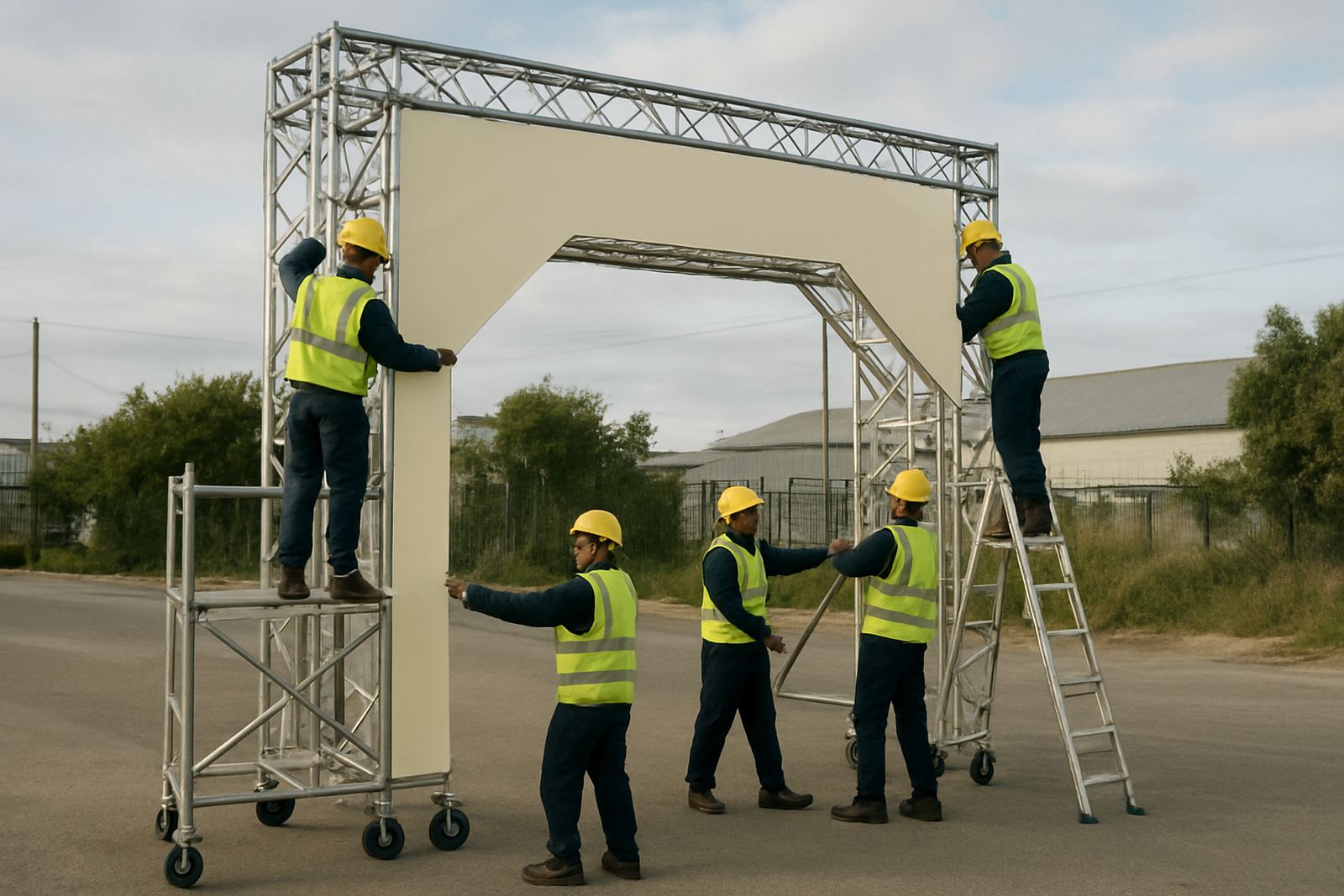
Our crews use scaffold access, platform work, ladder access where safe, and lift planning for higher work. We also sort lighting access for signs that need lamp changes, driver replacement or fault tracing. On exposed coastal sites in Somerset West or along the Cape Town side, fixing details and seals matter more because salt air will work on brackets and hardware over time.
- Cherry pickers or platform work for higher fascia and pylon tasks
- Scaffold for longer service visits or multi-point repairs
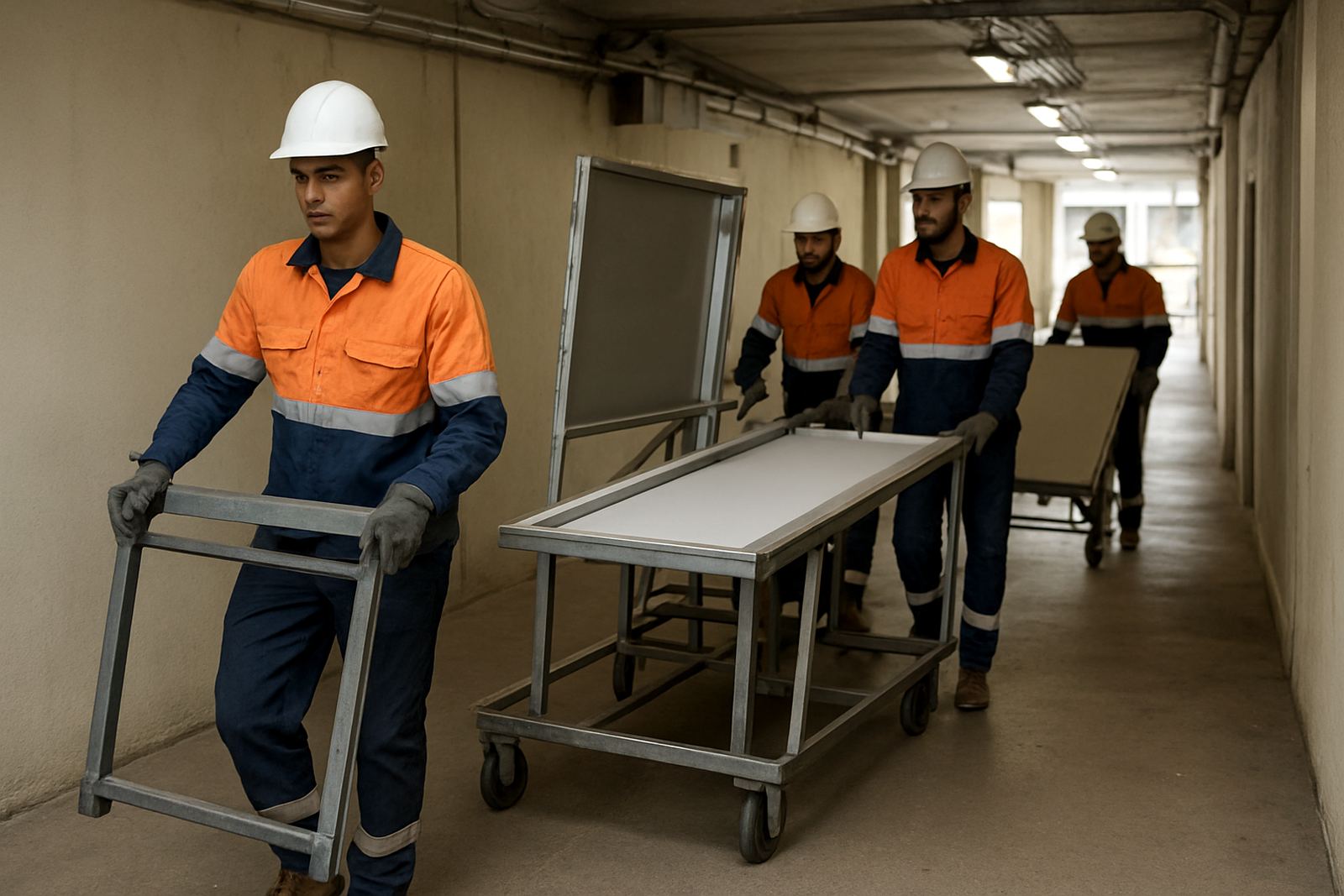
- Manual handling gear for panels, trims and sign faces
- Traffic control and exclusion zones where the public passes close by
Planning a dealer site so the job runs cleanly
Good planning saves time and money. Before we arrive, we want clear site info: sign dimensions, mounting height, access restrictions, power isolation points and whether the site stays open during the work. On a live dealer site, one missed detail can mean moving vehicles twice or bringing in extra access gear at short notice.
We advise sign makers to check for underground services, roof condition where fascia signs are fixed, and whether any old brackets must be left in place for later use. If a pylon needs a new face, the panel size must be measured properly because even a small mismatch can leave gaps or twist the frame. That sort of thing causes headaches later and usually costs more to sort out.
- Confirm all dimensions from site, not just from drawings
- Plan delivery times around sales traffic and vehicle handovers
- Decide in advance who shuts off power and who signs off access
- Allow for wind hold periods on exposed roadside sites
Typical mistakes that cause delays or extra cost
Dealer signage jobs often run late because the site was treated like a simple shopfront job. A pylon can look straightforward from the road, but if the base bolts are corroded, the ground is uneven, or the face is larger than expected, the crew needs more time and different kit. We also see problems when the sign maker has not checked the true fixing method on site.
Another common issue is leaving servicing too long. Lamps fail, acrylic turns brittle and water gets in, especially on coastal routes and in older business parks. On high sites near Johannesburg CBD or Sandton, access can be the biggest cost driver, while in the Western Cape wind and corrosion often matter more. A missed maintenance visit can turn a small repair into a full removal and rebuild.
We are often brought in after a site owner has asked for work outside normal hours. That can be fine, but emergency callouts, night work and weekend access usually cost more because of transport, team size and the safety controls needed. Nobody wants a rushed job with a sign hanging wrong over a forecourt.
Budget ranges for dealer site sign work in Rand
Costs depend on height, access, location and whether the work is an install, removal or service visit. For a simple low-level fascia sign at a local dealer site, sign makers may budget from about R3 500 to R8 000 for rigging labour and basic access, excluding the sign itself and electrical work. A roadside pylon or higher facade job can move into the R12 000 to R35 000 range when lift equipment, extra labour and traffic control are needed.
Larger or more complicated dealer sites, especially where the work involves multiple signs, night shifts, scaffold builds or face changes on tall pylons, can run from R35 000 upward. Emergency callouts are priced separately because they pull a crew out on short notice and often need after-hours access. We always recommend getting the site surveyed first, then pricing the actual job rather than guessing from pictures alone.
For sign shops, this keeps quoting cleaner and helps protect your margin. You can hand over the rigging to a crew that does only rigging, and keep the client relationship where it belongs.
How we support sign makers without competing with them
We work as an extension of the sign maker's team. That means we install, remove and service the sign, but we do not compete for the sign contract or try to take over the client's branding work. Our crews are scaffold and first-aid trained, with safety checks built into the job from site survey to handover.
For dealer sites across Paarden Eiland, Bellville, Somerset West, Paarl, Johannesburg CBD, Sandton, Midrand and the East Rand, this approach keeps the job practical. We coordinate with the sign maker's drawings, the site manager's access rules and the timing needed to keep the dealership open. Gareth van der Merwe leads the business from our Cape Town and Johannesburg bases, with Thandi Mokoena coordinating operations, Liam Jacobs handling senior rigging supervision, Sibusiso Dlamini on safety, Ayesha Daniels on client liaison and Pieter Coetzee on fleet and access. It is a proper working setup, not a call centre with no site experience.
If your next dealer site needs a pylon face change, a facade logo install or a clean removal before handover, we can handle the rigging side and keep the process tidy.