

When retail sign shops need extra rigging hands
Retail work is often time-sensitive. Shopfronts change after a tenant fit-out, a rebrand lands late, or a centre manager gives a narrow night shift window for fascia changes. That is where our crews step in. We work for sign makers only, so your client stays yours and the install still gets proper attention on site.
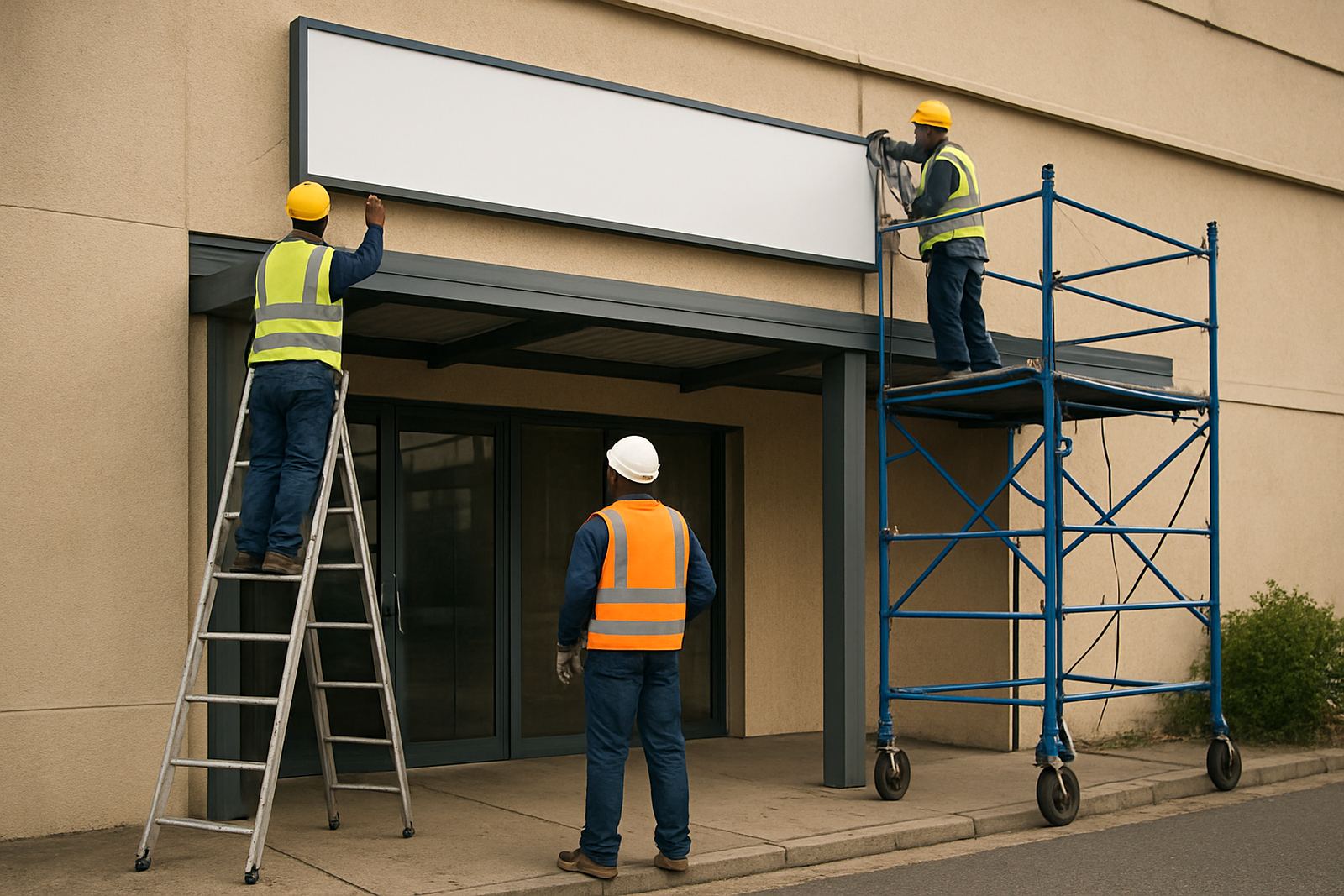
Typical retail jobs include illuminated fascia signs, built-up letters, light boxes, blade signs and vinyl-backed shopfront branding. We also handle removals when a tenant leaves, or when a store is being divided into smaller units. In busy centres around Sandton, Midrand, Bellville and the Cape Town CBD, parking, access and loading rules can slow a team down if the planning is poor.
Equipment that suits shopfronts, malls and forecourts
Retail signage usually needs a mixed access set, not just a ladder and hope. The right choice depends on height, ground conditions, the finish on the building and whether you are working before trading hours or after close. We plan for safe access from the start so the sign can go up once, without rework.
- Scaffold towers for short fascia runs and repeat service work
- Mobile platforms for indoor centres and smooth yard areas
- Lift planning for high-level installs and awkward corners
- Lighting access for failed lamps, drivers and weather-damaged units
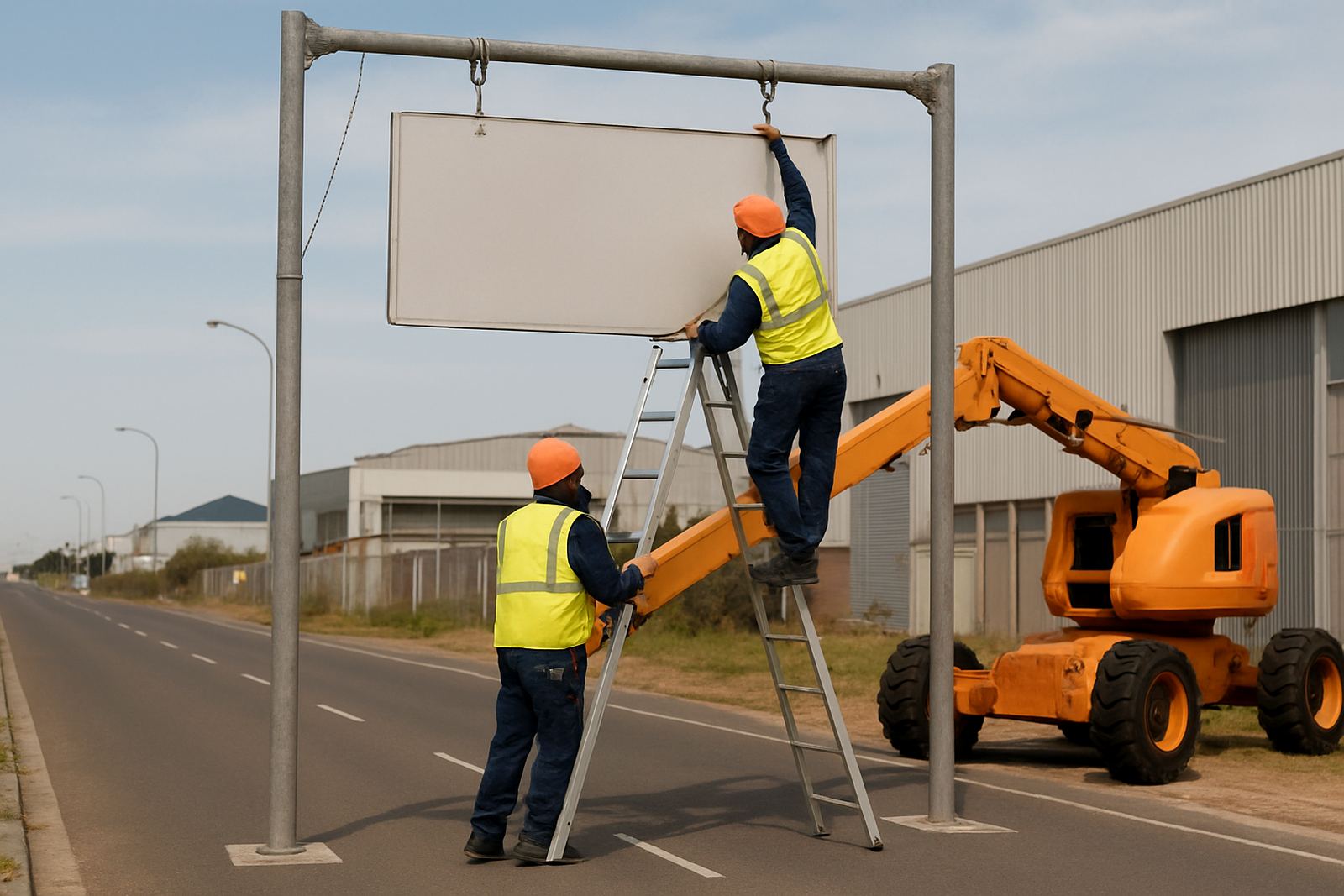
- Rigging gear for sign removal, relocations and heavy face changes
On coastal sites in Paarden Eiland, Somerset West or the Atlantic corridor, corrosion and wind exposure matter. Inland in Johannesburg and the East Rand, dust and traffic access are bigger issues. We factor both into the method, because a sign that is fine in the workshop can become troublesome at 6 metres above a busy entrance.
Layout and planning advice before the crew arrives
Good retail installs start with a site survey. We check mounting points, wall substrate, power routes, access height and the safe landing area for equipment. That helps the sign maker quote accurately and avoid changes on the day. It also keeps the client from getting surprised by extra steel, extra lifts or an after-hours callout.
A clean install usually depends on a few basics:
- Confirm final sign size and fixing centres before fabrication leaves the workshop
- Check for canopies, glass, fire escapes and existing services that affect placement
- Allow room for a platform, scaffold or lifting equipment at the front of house
- Plan for municipal or centre approvals where required, especially for illuminated signs
- Schedule around trading hours, deliveries and load-shedding if lighting testing is needed
For retail centres, a small detail can save hours. If the face change is happening at night, make sure the replacement panel, fixings and tools are packed in one run, not split across multiple trips. That sounds simple, but it is where many jobs lose time and money.
Common mistakes we see on retail sign jobs
The most common problem is under-planning access. A sign shop may have the right sign but the wrong equipment for the site, or no allowance for a second visit if the client wants a lighting check after trading starts. Another issue is assuming the wall is ready when it is not. Loose cladding, old anchor holes and water damage can all slow the job down.
We also see jobs where the sign is commissioned before the final position is confirmed. That can lead to face changes being shifted 150 mm, or a light box landing too close to a canopy. In retail, those small errors are visible and expensive.
Other common misses include:
- Not checking if the centre requires after-hours work permits
- Forgetting to test illumination before the crew leaves site
- Using the wrong access method for tiled floors or wet paving
- Skipping a proper removal plan for old signs and fixings
What retail sign makers usually budget for
Every site is different, but retail clients do need realistic numbers. A straightforward fascia install may start from around R3,500 to R8,500 depending on access, sign size and timing. Simple removals can be lower, while higher or harder-to-reach work often moves into the R9,000 to R18,000 range once lift planning or scaffold access is included.
For illuminated signs, allowance is often needed for testing, lighting access and return visits if wiring or fittings are being corrected. A single emergency callout can cost more than a planned maintenance visit, especially after hours or over a weekend. Where a shopfront has multiple signs or a long strip of fascia, it is often more cost-effective to bundle installation and servicing into one site visit.
We keep pricing practical and matched to the job, because retail sign work should not be padded with fluff. If the brief is clear, the quote is easier to compare and the install is easier to plan.
How we support sign shops without competing with them
Our role is simple. We are the rigging crew behind the sign maker, not a replacement for the sign shop. That means we focus on safe access, installation, removal, servicing and site coordination while you handle the design, client relationship and the sign manufacture itself.
Our team in Cape Town and Johannesburg includes Gareth van der Merwe, Thandi Mokoena, Liam Jacobs, Sibusiso Dlamini, Ayesha Daniels and Pieter Coetzee, with each person covering the parts of the job that keep retail sites moving. From Paarden Eiland to Johannesburg CBD, we are set up for recurring retail work, store rollouts and maintenance visits where timing matters.
For retail sign makers, that means fewer delays, cleaner handovers and a crew that knows how to work around trading centres, loading bays and safety rules without making things harder than they need to be.