Guest-facing work needs a quieter plan
Hospitality sites do not get the luxury of shutting down for a full day just to mount a sign. A hotel entrance, restaurant frontage or conference venue has deliveries, check-ins, dinner service and cleaners moving through the same space, so the sign work has to fit around the site rather than the other way round. We plan each job with access, noise, public movement and after-hours timing in mind, especially where guests are checking in and out through the same door.
Our crews work only on rigging, installation and maintenance for sign makers and venue operators. That means we do not compete with the shop supplying the signage, and we can slot in when the fabrication is ready. For hospitality clients, that usually means a clean handover, a clear method statement, and a team that knows how to work around polished flooring, glass façades, valet lanes and live trading. On coastal sites in Cape Town, we also account for salt air and moisture that can affect fixings and electrical housings over time.
- After-hours or early morning installs to avoid guest traffic
- Careful protection for paving, glass, paint and entrance mats
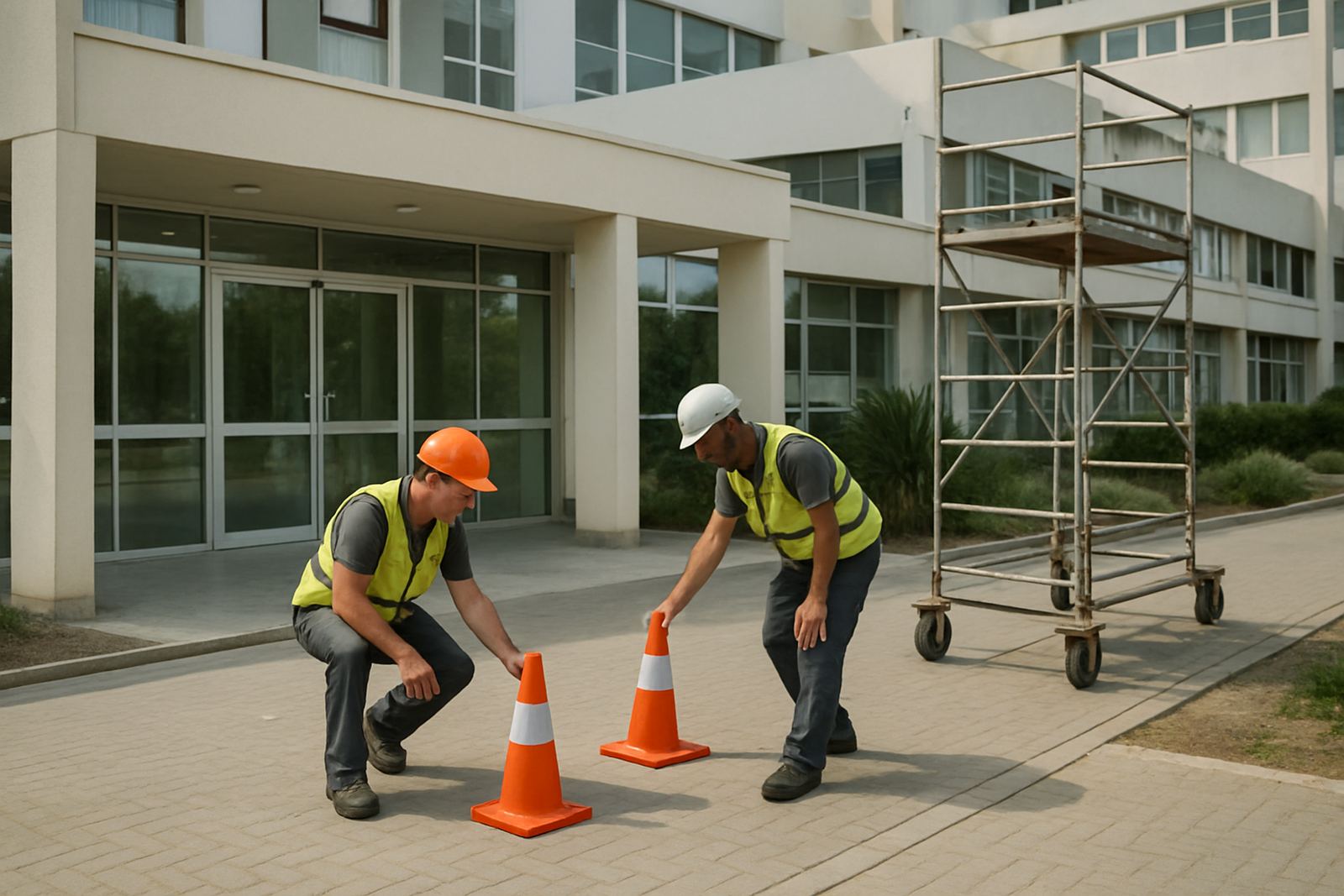
- Clear site control so staff and visitors know where to walk
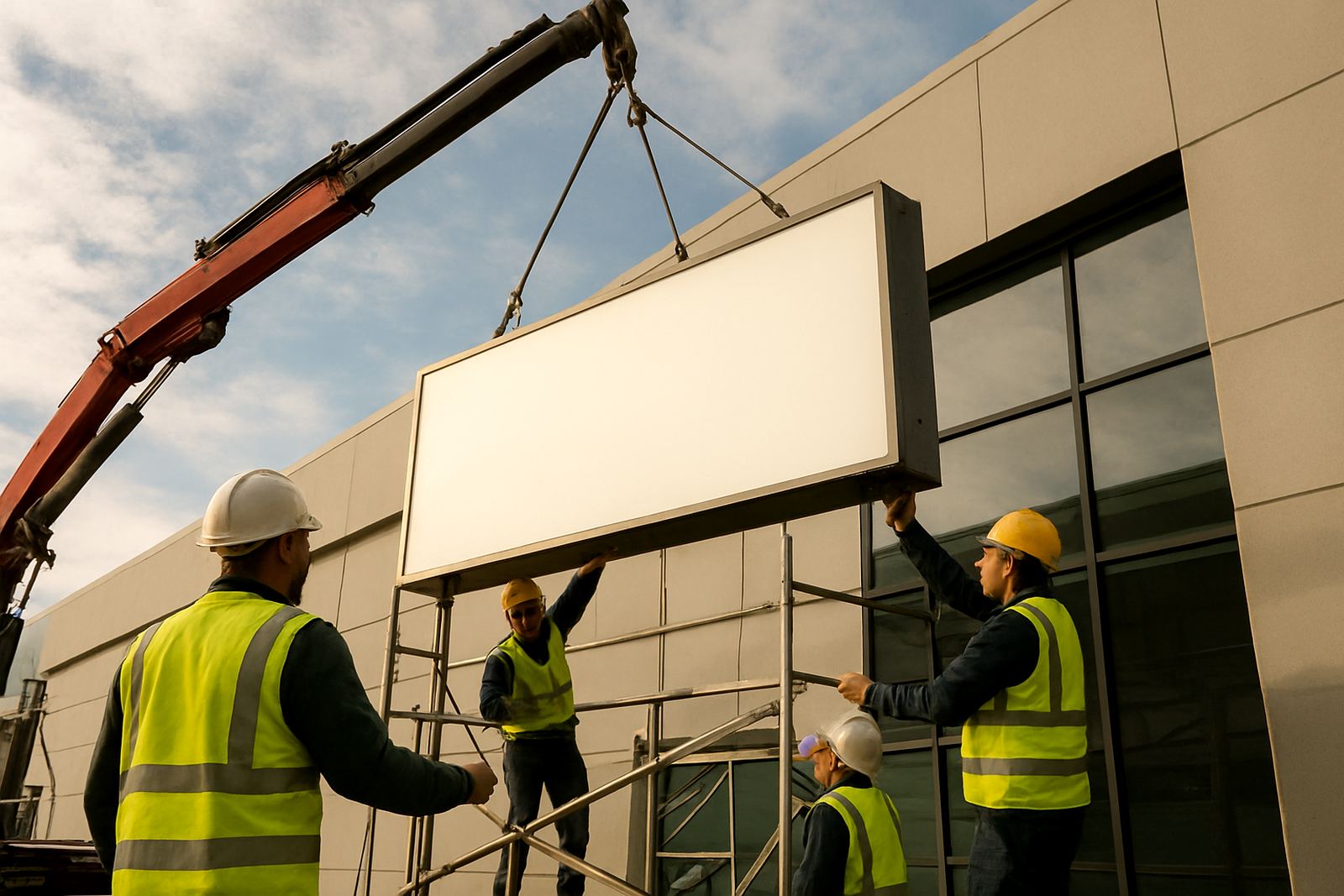
- Lift planning for upper-storey signs and canopy work
Typical equipment for hotels, restaurants and venues
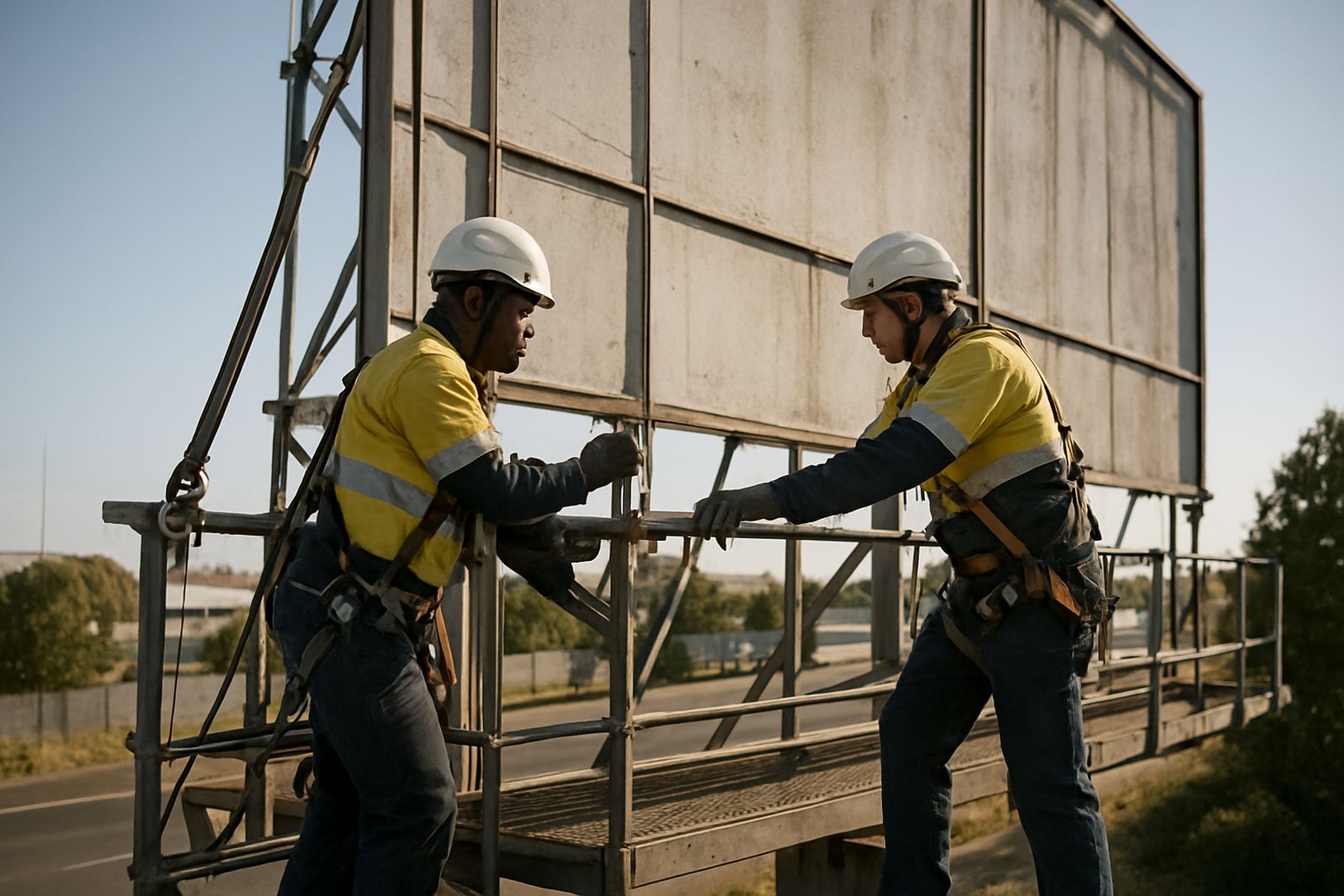
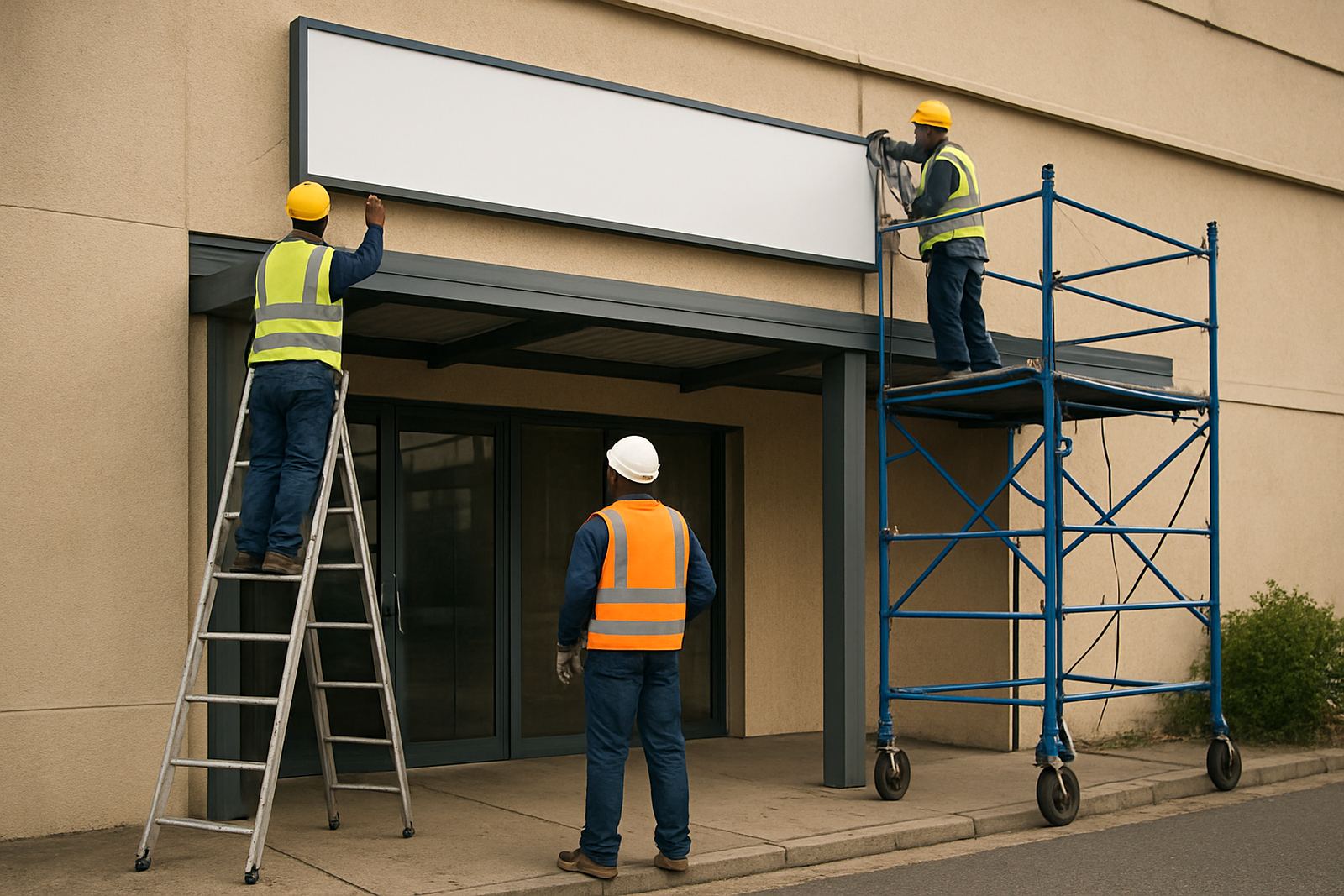
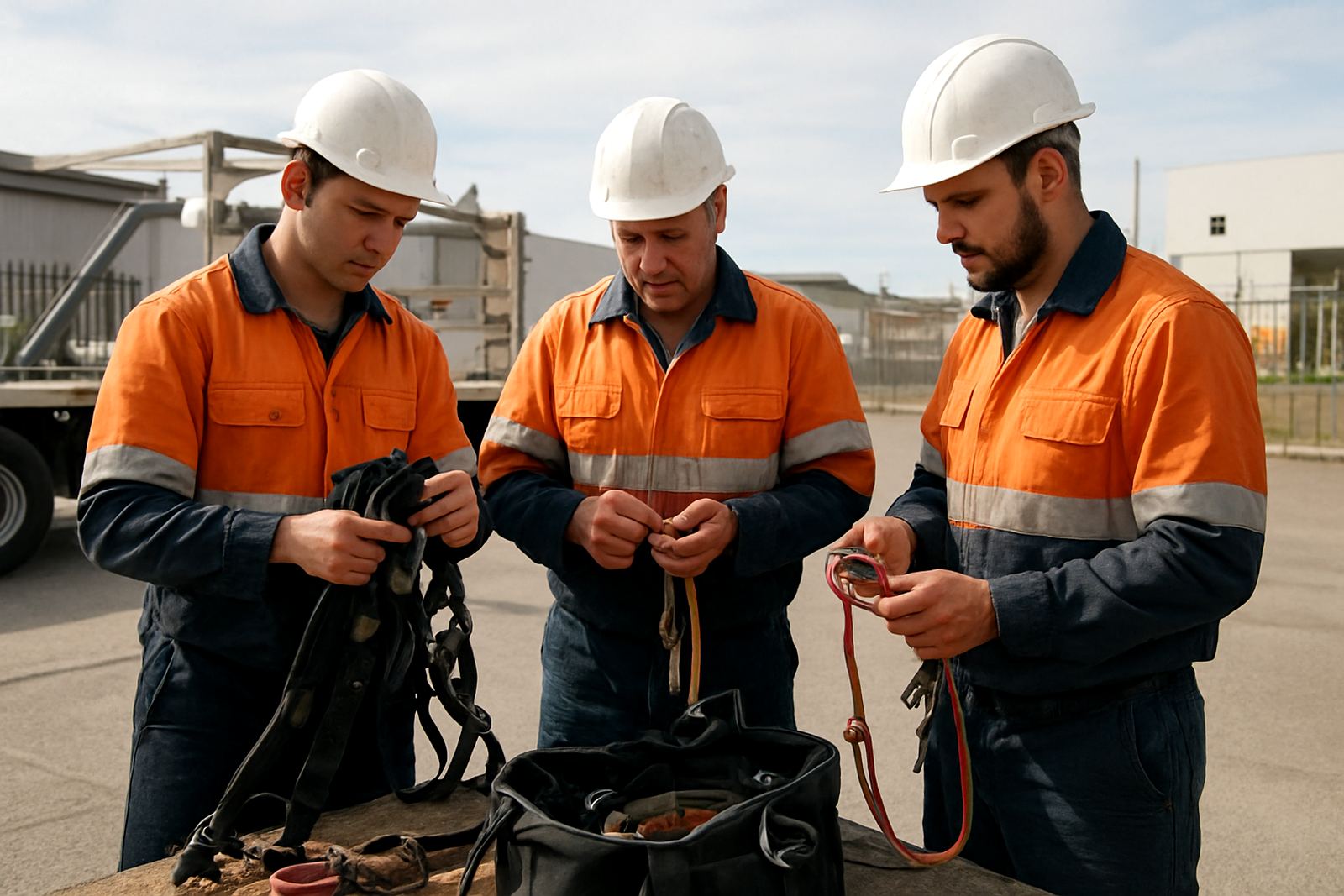
Hospitality signage jobs often need more than a ladder and a drill. Depending on height, access and the weight of the sign, we may bring scaffold sections, mobile platforms, harnesses, fall protection, lifting tackle and spotters. Where the sign is above a porte cochere, on a parapet wall or over a busy service yard, access needs to be set before the crew arrives. That keeps the work moving and reduces the chance of delays, and it helps the venue manager keep staff informed.
Common equipment for this type of work includes:
- Mobile access platform or scaffold for higher façades
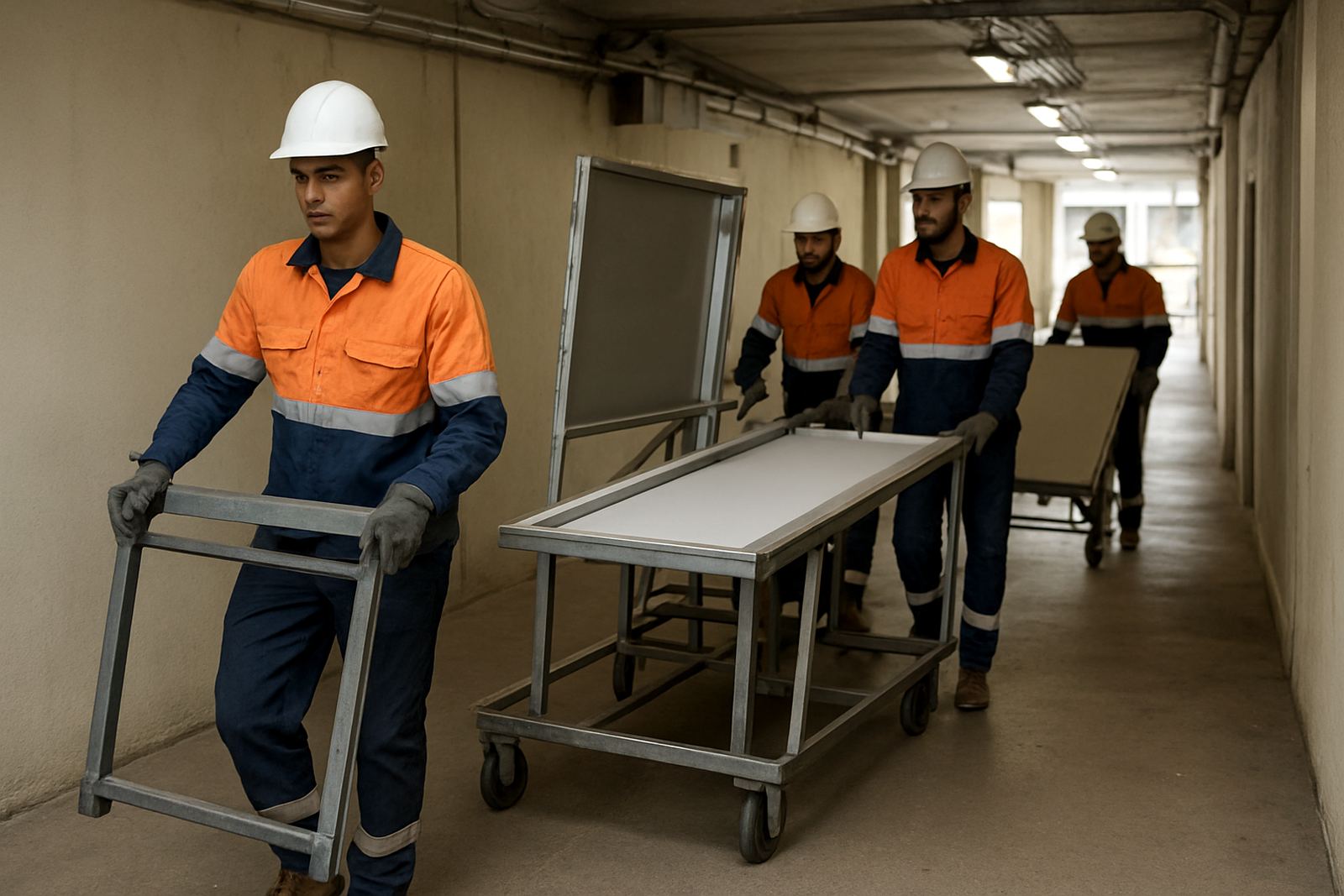
- Manual handling gear for heavy fabricated letters and panels
- Battery and mains tools suited to quiet working windows
- First-aid kit, PPE and lock-off equipment
- Lighting access kit for illuminated signs and fascia boxes
For illuminated features, we also plan around safe access to drivers, transformers and cable routes. In some cases, the sign face may be changed while the structure stays in place, which is faster and cheaper than a full removal and reinstall. If the venue is in Johannesburg CBD or Sandton, parking, loading bays and security access can shape the method just as much as the sign itself. For tight urban sites, good pre-planning saves both time and Rand.
Layout and access advice before the crew arrives
A successful hospitality install starts with measurements and a proper look at the site. Sign positions should be checked against visibility from the road, approach angle, pedestrian flow and any canopy or awning details that could block the view. If the venue has a polished entrance or high foot traffic, we recommend a short site survey so the installer and the sign maker know exactly what needs to happen. It is better to sort out access early than to discover a problem when guests are already on site.
Good planning usually covers:
- Exact mounting height and centre line
- Wall construction, cladding type and fixing points
- Power supply location for illuminated signs
- Loading bay access, parking limits and delivery timing
- Weather exposure, especially wind on exposed façades
We work across Paarden Eiland, Bellville, Somerset West, Paarl, Johannesburg CBD, Sandton, Midrand and the East Rand, so we are used to different municipal rules, body corporate approvals and site security procedures. On a venue with trading hours from breakfast to late evening, we may suggest a split shift or a night install rather than trying to squeeze everything into one busy day. That usually keeps the hotel or restaurant open and avoids complaints from guests.
Common mistakes that cost time and money
Most delays on hospitality sign jobs come from rushed planning, not from the actual fixing of the sign. A venue may approve the look of a sign but forget to confirm access to the wall, or a contractor may arrive without knowing there is no easy parking for a cherry picker. Another common issue is asking for installation while cleaners, decorators or event staff are still working nearby. That slows everything down and creates avoidable safety risks.
We also see problems where illuminated signs are fitted without enough thought to maintenance access. If a light fails later, somebody still needs to reach it safely without disturbing guests or damaging finishes. In coastal areas, fastener choice matters too because salt and moisture can shorten the life of ordinary fixings. A proper maintenance plan saves repeat callouts.
- Choosing a sign size that looks fine on paper but gets lost on a large façade
- Ignoring wind load on rooftop or parapet mounted signs
- Not allowing time for scaffold assembly or lift set-up
- Skipping a condition check before removal or relocation
- Leaving service access too tight for future bulb or panel changes
Budget ranges for hospitality sign work
Costs vary by height, access, material weight, electrical work and whether the job is a new install, a removal, or a service visit. For a small hospitality sign at ground level, you may be looking at a straightforward callout in the lower thousands of Rand. Larger fascias, illuminated signage or jobs that need scaffold access can move into the middle thousands, and complex rooftop or multi-day installations can run higher. If a sign face change is needed on an existing frame, that is usually cheaper than a full replacement.
As a rough guide, venue managers should budget for:
- Site survey and planning: from about R850 to R2,500
- Simple ground-level install or removal: from about R1,500 to R4,500
- Scaffold or platform work: from about R4,000 upward depending on duration
- Illuminated sign servicing or access work: from about R2,500 to R8,000
- Emergency callouts and after-hours work: priced higher because of timing and access
When a sign maker sends us a job, we can help keep the budget sensible by advising on access, timing and the least disruptive method. Sometimes a small change to the schedule removes the need for overtime or extra equipment. That is often where the real saving sits.
How sign makers use us on active hospitality sites
We are set up to support sign makers who have the fabrication side covered but need a reliable rigging crew on site. That is useful when a hotel group has several branches, or when a restaurant chain needs the same sign fitted in different towns over a short period. Our team can handle sign installation, sign removal, sign servicing, lighting access, billboard face changes, sign relocations and maintenance visits, all while working under the direction of the sign shop supplying the product.
For hospitality work, clients usually want three things: low disruption, safe access and a tidy finish. Gareth van der Merwe leads the business, with Thandi Mokoena coordinating operations, Liam Jacobs supervising rigging, Sibusiso Dlamini overseeing safety, Ayesha Daniels handling client liaison, and Pieter Coetzee managing fleet and access. If your venue needs a practical install plan, send the enquiry through the contact page and we will take it from there. No fuss, no unnecessary downtime, just a proper job done safely.