

Working Around Patients, Staff and Visitors
Healthcare sites are busy from early morning and often keep moving after hours too. That means sign installation or removal has to fit around admissions, deliveries, ward access, visitor parking and cleaning windows, with as little interruption as possible. We plan every job with the site manager, the sign maker and where needed security or facilities staff so the work happens in the right sequence and the right area.
For clinics and smaller practices, that may mean a short after-closing visit and a quick return for final checks. At hospitals and care homes, we often work in stages, especially when access routes are shared with ambulances, trolleys or wheelchairs. In coastal areas like Cape Town, salt air can affect fixings and lighting enclosures, while in Gauteng we often see dust and heat taking a toll on sign faces and wiring. A carefull plan saves time later.
Typical Equipment for Medical Site Sign Work
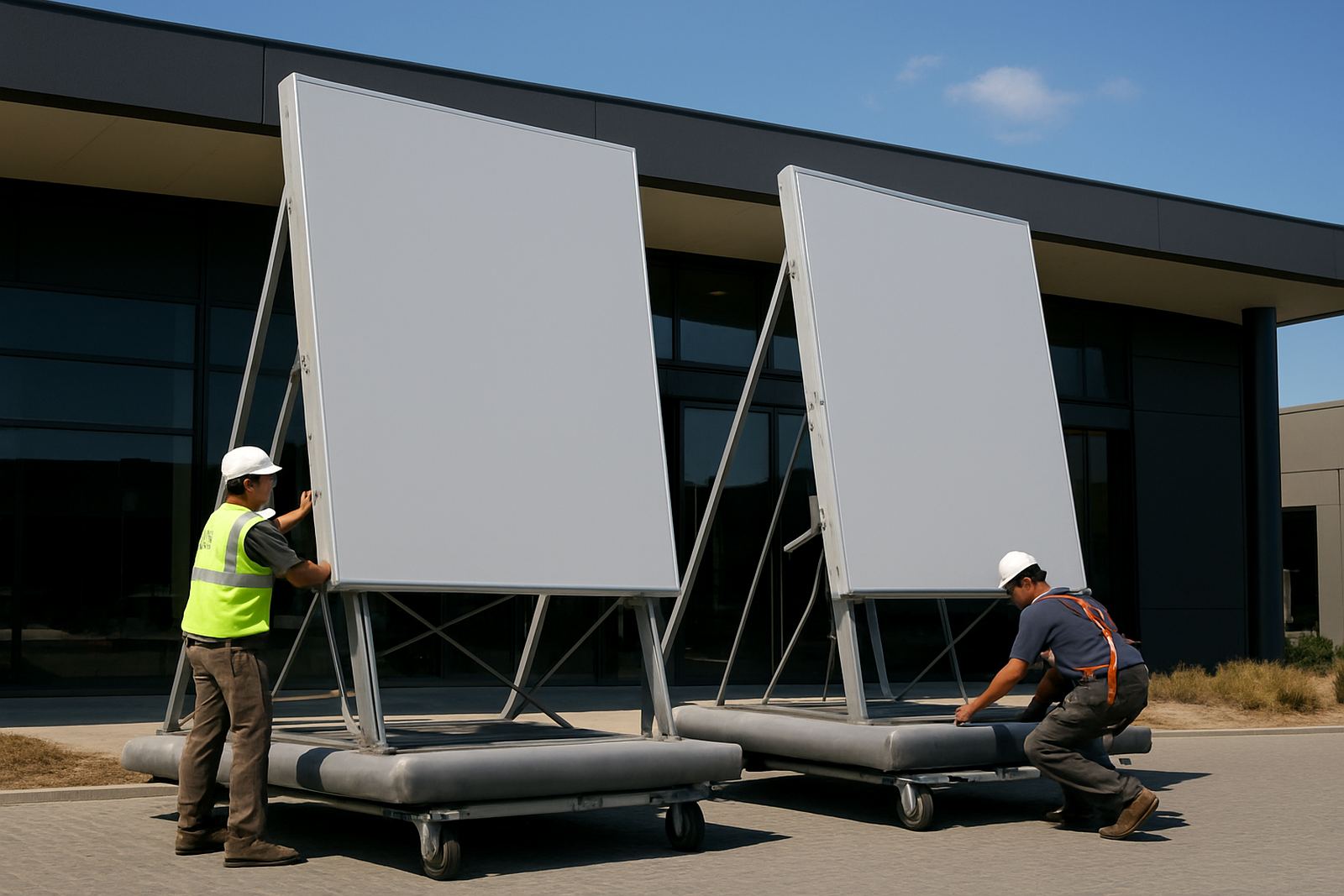
Most healthcare sign jobs need a mix of access gear, lifting support and safety controls rather than heavy machinery. We match the equipment to the height, the ground conditions and the building layout. A single-storey surgery in Bellville needs a different setup from a multi-wing private hospital in Sandton or a care facility in Paarl with limited parking.
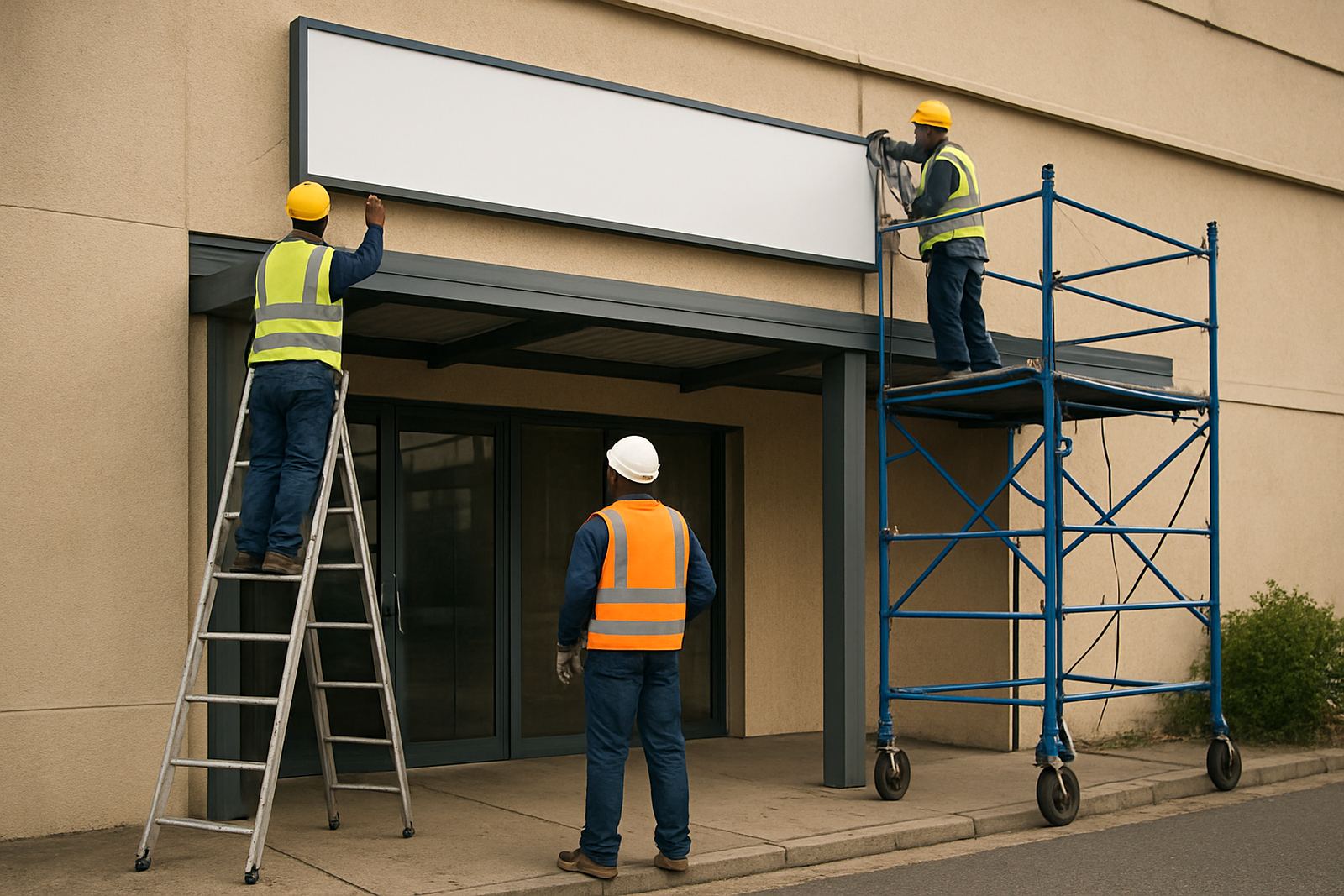
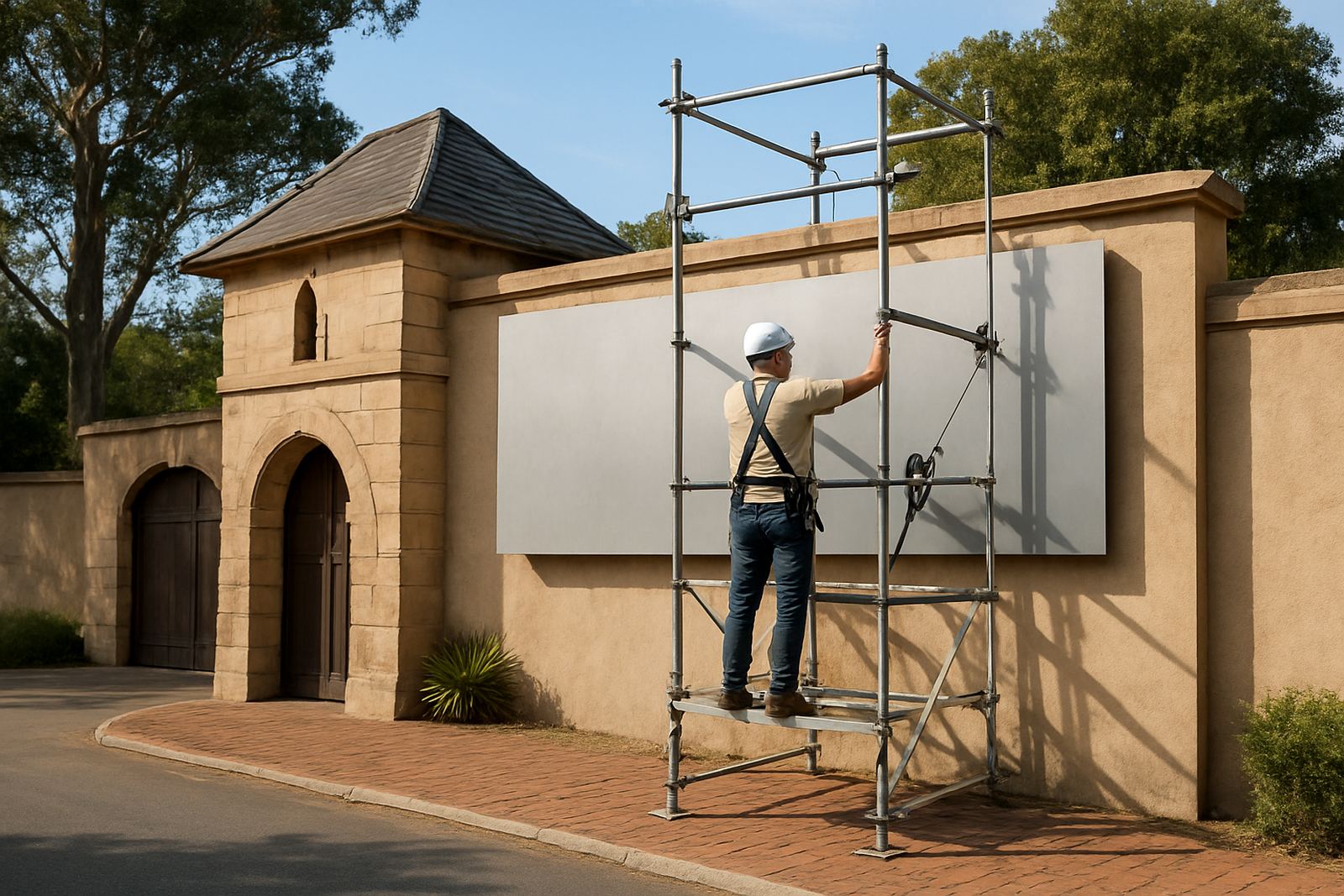
- Light and medium scaffold for reception signs, wayfinding panels and canopy branding
- Platform work for higher signs, façade lettering and illuminated boxes
- Access lifts for atrium areas, upper levels and difficult outdoor positions
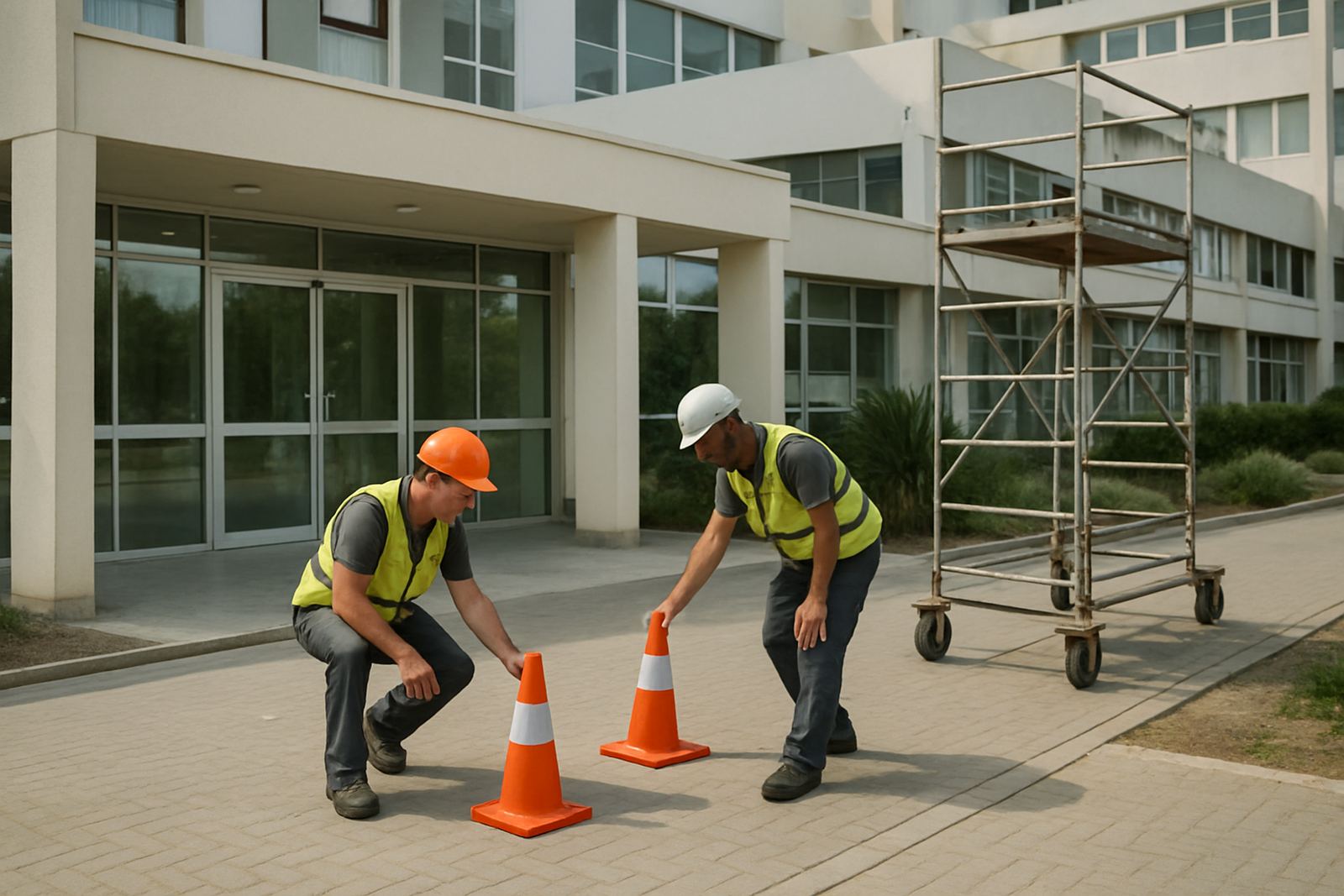
- Harnesses, barriers and signage to keep walkways clear
- Basic rigging tools, fixings and test gear for secure mounting and servicing
We also handle lighting access where a sign needs lamp checks, transformer access or cable inspection. For hospitals that operate 24 hours, we keep noise and movement low and use the smallest practical setup for the job.
Planning Signs for Clear Wayfinding
Healthcare signs must be easy to find and easy to read. Directional boards, entrance identification, parking notices and department markers all need sensible placement so visitors do not wander through staff-only zones or miss the correct entrance. Before any installation we look at sight lines from the road, drop-off points, pedestrian routes and where people naturally stop to check directions.
Good planning also means thinking about maintenance. If a sign is placed too close to a roof edge, above a narrow garden strip or behind fixed planting, every future service becomes harder. We advise sign makers on access points, fixing heights and how to leave enough room for cleaning or lamp replacement. On older buildings, that advice can avoid costly changes later and keeps the site compliant with local building control and safety rules.
Common Mistakes at Clinics and Hospitals
Some sign jobs go wrong because the installation was rushed or the site was not properly checked first. Healthcare sites are not the place for guesswork. One missed access note can delay an entire ward entrance or block a disabled bay. Another common issue is using fixings that are not suited to coastal moisture, which leads to rust, movement or early failure.
- Mounting signs without checking ceiling height, roof access or overhead services
- Placing signs where ambulance traffic, deliveries or fire exits are affected
- Using poor lighting access planning, making future servicing expensive
- Ignoring wind exposure on corner sites and upper façades
- Failing to schedule removals around cleaning, admissions or visiting hours
We also see cases where sign faces are fitted without enough allowance for future replacement. At a care facility, that can mean a small repair turns into a bigger disruption than it should be.
Removal, Relocation and Emergency Callouts
Healthcare businesses do not always need new signs only. Sometimes a department closes, a tenant moves, a ward gets renamed or an external board has to come down after storm damage. We remove old signs cleanly, make the area safe and leave the fixings ready for the next round of work if needed. For relocations, we strip, store and refit where the sign maker wants it placed again.
Emergency callouts are common after wind, failed lighting or loose panels. In Johannesburg, high winds and sudden rain can push a damaged sign into a dangerous position fast. On the coast, corrosion can loosen brackets over time. Our crews handle urgent site checks, temporary make-safe work and planned return visits once the sign shop has confirmed the next step.
Budget Ranges for Healthcare Sign Rigging
Budget depends on height, access, hours on site and whether the job includes installation, removal, servicing or lift planning. A straightforward low-level sign fitting at a clinic may start from about R2,500 to R6,000. A medium-height job with scaffold or platform work often sits between R6,500 and R18,000. Larger hospital or care facility projects with multiple signs, after-hours access and strict site controls can range from R18,000 to R45,000 plus, especially if there is lighting access or phased work.
It helps to budget separately for planning, access and callout time. That keeps the quote clear for the sign maker and avoids surprises if the site has tight loading access, shared parking or limited working windows. We are often asked to price both the first install and the future maintenance visit at the same time, which is usually the best way to keep things practical.
How Sign Makers Brief Us for Medical Sites
Sign makers usually give us the best start when they share the site plan, sign sizes, fixing details and any access restrictions upfront. If there is a hospital gate procedure, no-work hours or a requirement for induction, we need that before the crew leaves base. It saves time and helps us arrive with the right access gear and the right number of hands on site.
For healthcare work, the brief should also include whether the sign is on brick, cladding, glass, concrete or a canopy, plus any nearby utilities or protected areas. When the information is clear, the job is smoother for everyone. We stay in our lane, the sign maker keeps the client relationship, and the site gets the sign work handled properly.
- Send dimensions, photos and exact mounting positions
- Flag patient access areas, no-go zones and delivery times
- Confirm whether the job needs scaffold, lift or platform work
- Ask for a maintenance plan if the sign is hard to reach later