

Why industrial parks need specialist rigging crews
Industrial parks are not like a retail frontage or a neat office block. You get high roof lines, steel canopies, busy yards, vehicle traffic, and signs mounted where there is little room for error. A sign may need to go above roller doors, on a parapet, at the entrance boom, or on a pylon beside a truck route. That means the job is as much about access and control as it is about the sign itself.
Our crews work only on the rigging side for sign makers and brand owners. That keeps the relationship clear. We install, remove, service and relocate signs, while the sign shop keeps control of the graphics and fabrication. In Paarden Eiland, Bellville, Somerset West, Paarl, Johannesburg CBD, Sandton, Midrand and the East Rand, the common requirement is the same: get the sign up safely, keep the site moving, and leave no loose ends.
Typical equipment for industrial park jobs
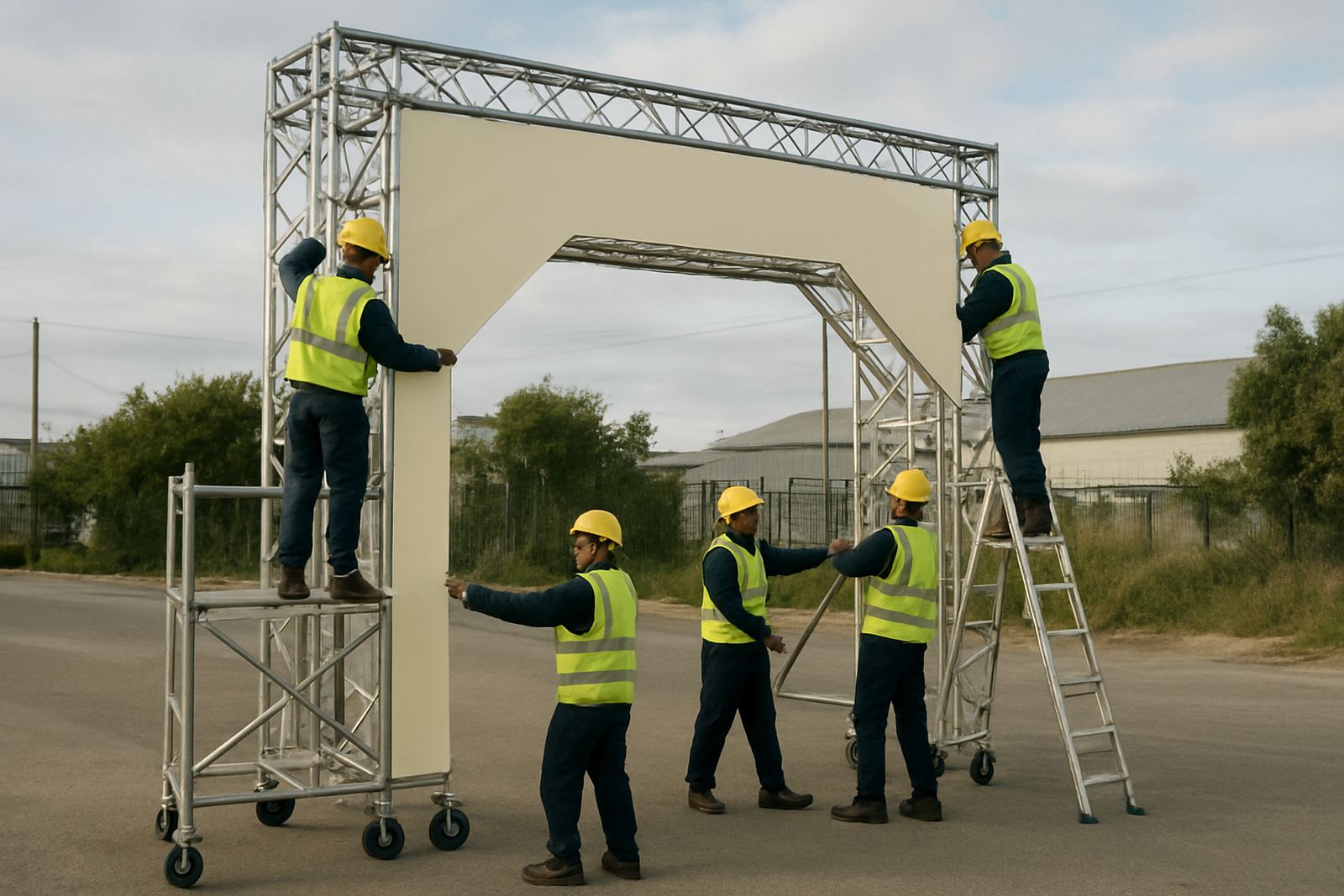
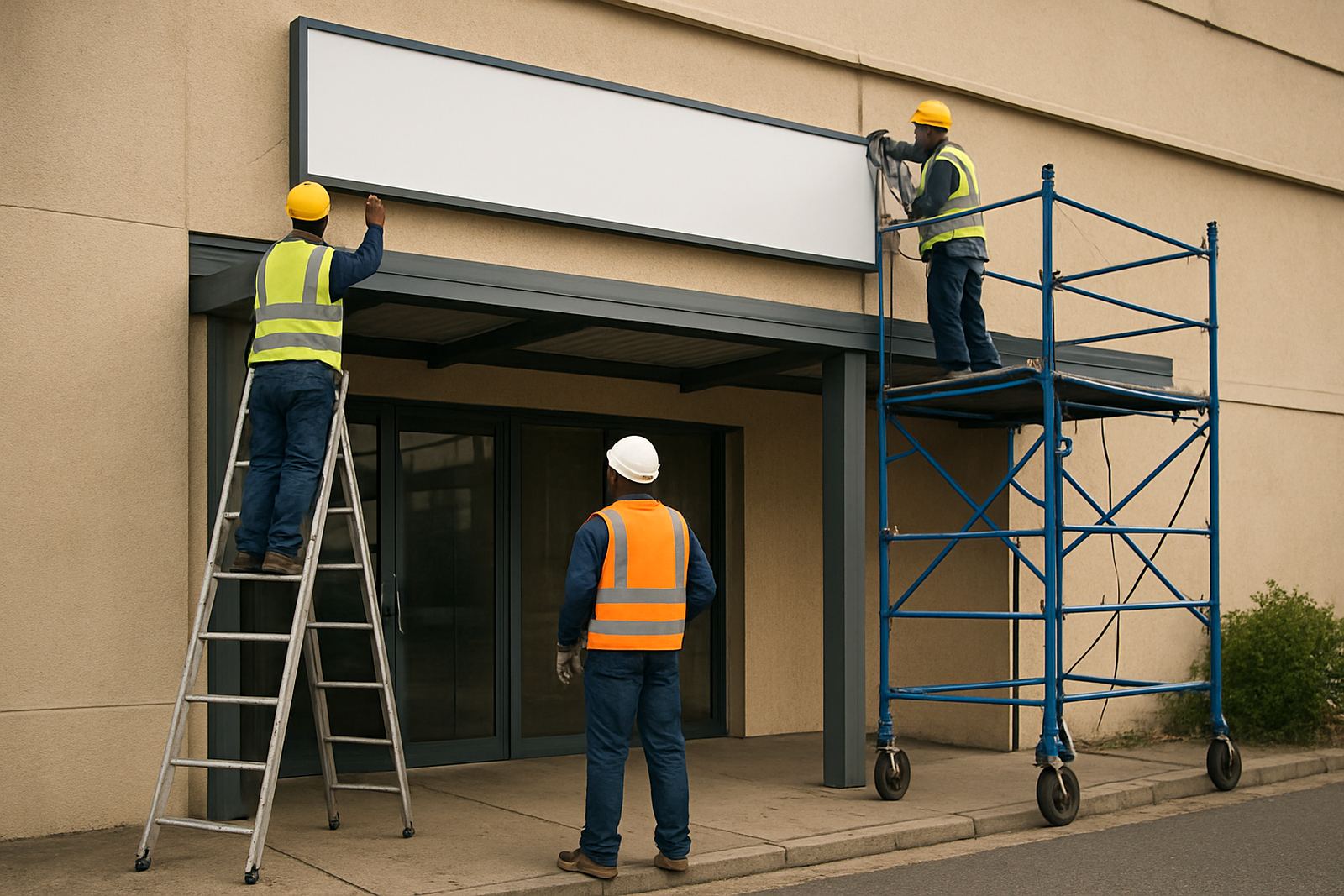
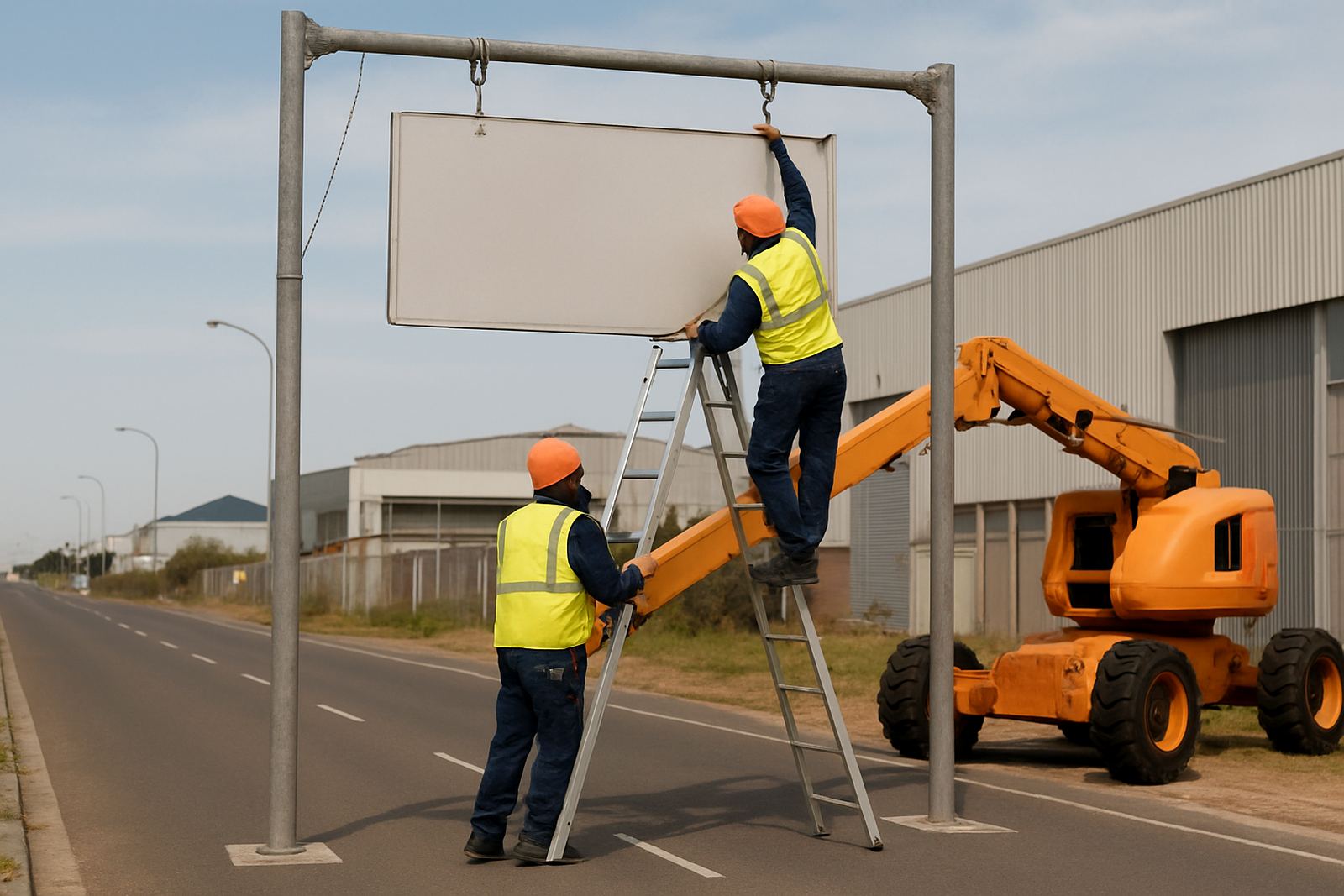
The equipment set depends on height, access and the condition of the ground. A small fascia sign near a warehouse office might only need ladder access and a two person team. A larger pylon or roof sign may need scaffold, a platform, lifting gear and a lift plan signed off before work starts. On coastal sites in Cape Town, corrosion and wind exposure also affect fixing choices and maintenance intervals.
- Scaffold access for longer installations and panel changes
- Platform work for high level fixing where ground conditions allow
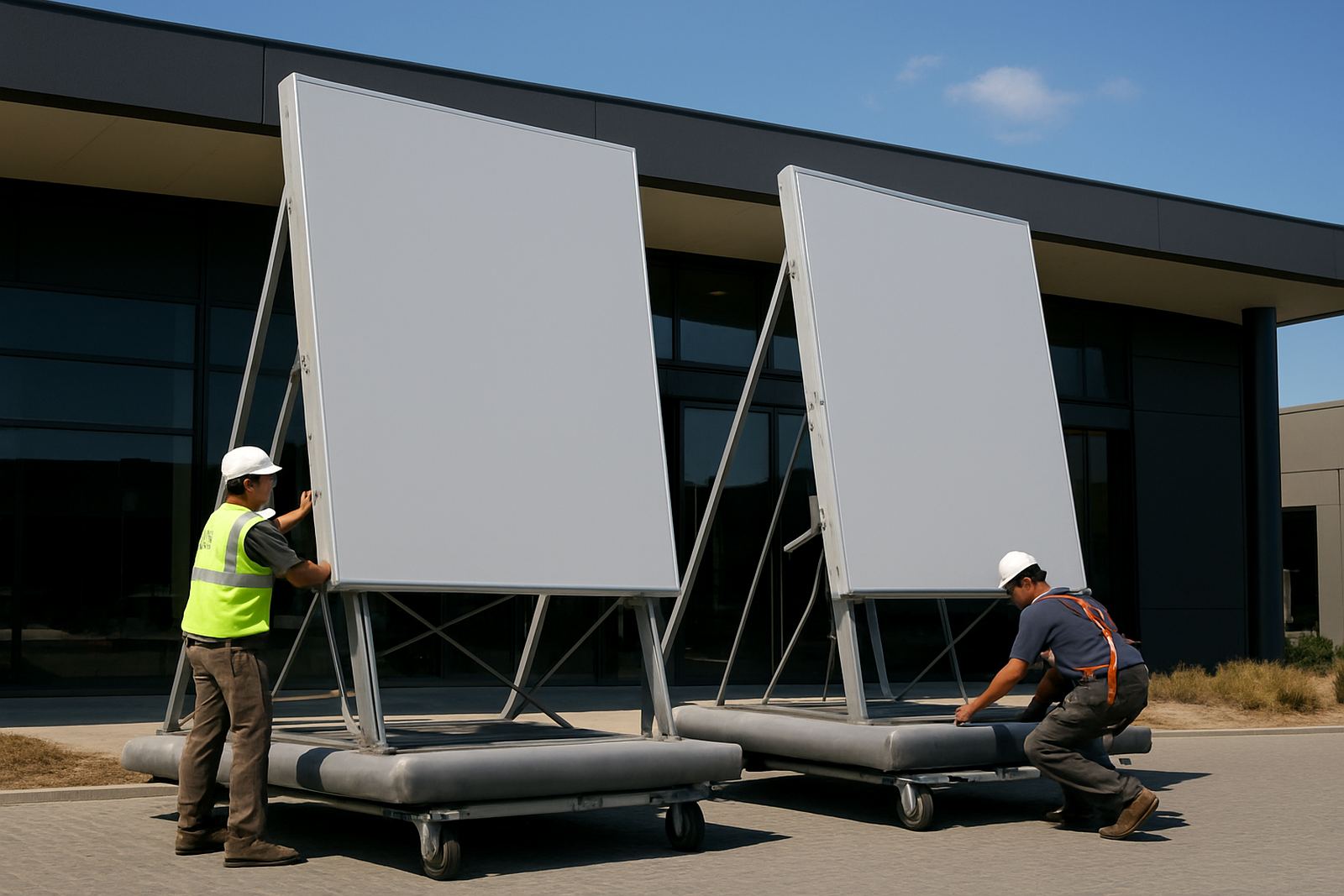
- Lift planning for heavier sign bodies, frames and face changes
- Edge protection and fall arrest equipment for roofline work
- Lighting access for sign repairs, ballasts, cabling and lamp changes
- Removal gear for old sign frames, damaged faces and redundant branding
Our fleet and access lead plans the practical side of the job with the site contact and the sign maker. That includes where the vehicle parks, how the crew reaches the work area, and whether the job needs early morning access before trucks start moving. In some parks a simple timing adjustment saves hours and cuts risk.
Layout and planning advice before the crew arrives
Good planning starts with a site survey. We look at the mounting height, the surface condition, the route to the fixing point, and any overhead hazards such as power lines, pipe racks, gantries or sprinkler pipes. If the sign is near a loading bay, we also plan how forklifts and delivery vehicles will be kept out of the drop zone. This is where many industrial park jobs go wrong if the survey is rushed.
For sign makers, the best result usually comes from early coordination. Share the sign size, weight, fixing method and target position before the crew arrives. That allows us to set the right access method and avoid delays. It also helps with municipal or park rule compliance where permits, induction, access cards or work windows are required.
- Confirm the exact mounting height and set-back from the wall or column
- Check whether the site allows scaffold, platform or only ground-based lifting
- Confirm if power isolation is needed for illuminated signs
- Identify storage space for removed faces, frames or old branding
- Plan around shift changes, courier arrivals and peak yard traffic
Industrial parks with narrow roads and tight turning circles often need more time for setup than for the actual fixing. A few extra minutes on planning can save a return visit and keep the job within budget.
Common mistakes on industrial park sign jobs
The most common mistake is treating an industrial park like a quick suburban install. These sites often have uneven surfaces, vibration from heavy vehicles and more exposure to dust, wind and coastal humidity. A sign that looks fine on day one can loosen early if the fixings are wrong or the frame is not properly aligned.
Another issue is poor coordination with the tenant or park manager. If access is not cleared, the crew may lose time waiting at the gate or working around active loading docks. We also see signs placed where maintenance is later impossible. If no one can reach the lighting, the owner pays for a second access job, which is avoidable and costly.
Safety shortcuts are another problem. A ladder may be fine for a low fascia, but not for a taller installation with wind exposure and edge risk. On some sites there is also pressure to rush because production cannot stop. Our supervisor and safety officer keep the job within safe limits, even when the schedule is tight. That saves more money than it costs.
What the budget usually looks like in Rand
Industrial park work varies a lot, so budgets are normally quoted after the site survey. A straightforward low-level sign installation can start from about R3 500 to R8 000, depending on access and fixing detail. Mid-level work that needs scaffold, platform access or a larger crew often falls in the R8 000 to R25 000 range. High-level or heavily controlled jobs can sit above that if there is lift planning, after-hours access or multiple visits.
Sign removal is usually less expensive than a new installation, but it can rise if the existing sign is corroded, badly fixed or placed above active machinery. Servicing visits are often the best value when a site has regular lighting faults, loose panels or weathered faces. For industrial parks with many tenants, scheduled maintenance is cheaper than repeated callouts.
- Small removal or servicing visit: from about R2 500
- Standard fascia install with basic access: R3 500 to R8 000
- Scaffold or platform job: R8 000 to R25 000
- Complex high-level or out-of-hours work: quoted individually
We keep quotes practical. If there is a cheaper safe method, we will say so. If the job needs a bigger access setup, we explain why before work starts.
How Sign Riggers supports sign makers in Cape Town and Johannesburg
Sign Riggers was founded in 2008 and is run by Gareth van der Merwe with a team built around operations, safety and access control. Thandi Mokoena manages scheduling, Liam Jacobs leads rigging crews, Sibusiso Dlamini looks after safety, Ayesha Daniels handles client liaison, and Pieter Coetzee manages fleet and access planning. That structure matters on industrial park sites because every job needs clear roles and clean handover.
Our work is strictly rigging only. We do not compete with the sign shops we serve. If you are a sign maker in Paarden Eiland, Bellville, Somerset West, Paarl, Johannesburg CBD, Sandton, Midrand or the East Rand, you can send the job through the enquiry form on our contact page and we will work from there. For industrial parks, that usually means a site survey, a planned access method, and a crew ready for safe installation or removal.
When the site is busy, the weather is rough, or the sign is hard to reach, the job still needs to finish cleanly. That is the part we are built for, and we keep it practical.