

When landlords need sign work done without disruption
Property groups usually come to us when a tenant is changing over, a fascias sign needs replacing, or a directory and wayfinding package has to be updated across several buildings. The sign maker is focused on fabrication and client approval, while we deal with the physical job on site, including access, lifting, fixing points and safe removal of old material.
That matters on occupied sites. In Paarden Eiland, Bellville, Sandton or the Johannesburg CBD, there may be loading bays, security gates, public walkways, building rules and trading tenants all in the same space. We plan the work so the sign maker can hand over a proper schedule and we can get the job done with as little fuss as possible.
- Tenant changeovers and rebranding
- Directory boards and landlord signage
- Façade repairs before new signs go up
- Night or early morning work where access is tight
The equipment property sites usually need
Most property jobs need more than a ladder and a drill. Depending on the height, fixing method and the site rules, we arrive with scaffold access, platform work arrangements, lifting gear, rigging hardware and the right safety kit for the crew. For coastal sites in Somerset West or along the Cape Town side, we also take into account corrosion and weather exposure when removing old fittings and checking brackets.
A typical setup can include a small access platform for lower fascia work, scaffold for longer runs, and lift planning for heavier signs or billboard face changes. On larger sites in Midrand or the East Rand, we may also need traffic control planning and a clear method for moving materials through service yards or basement access points.
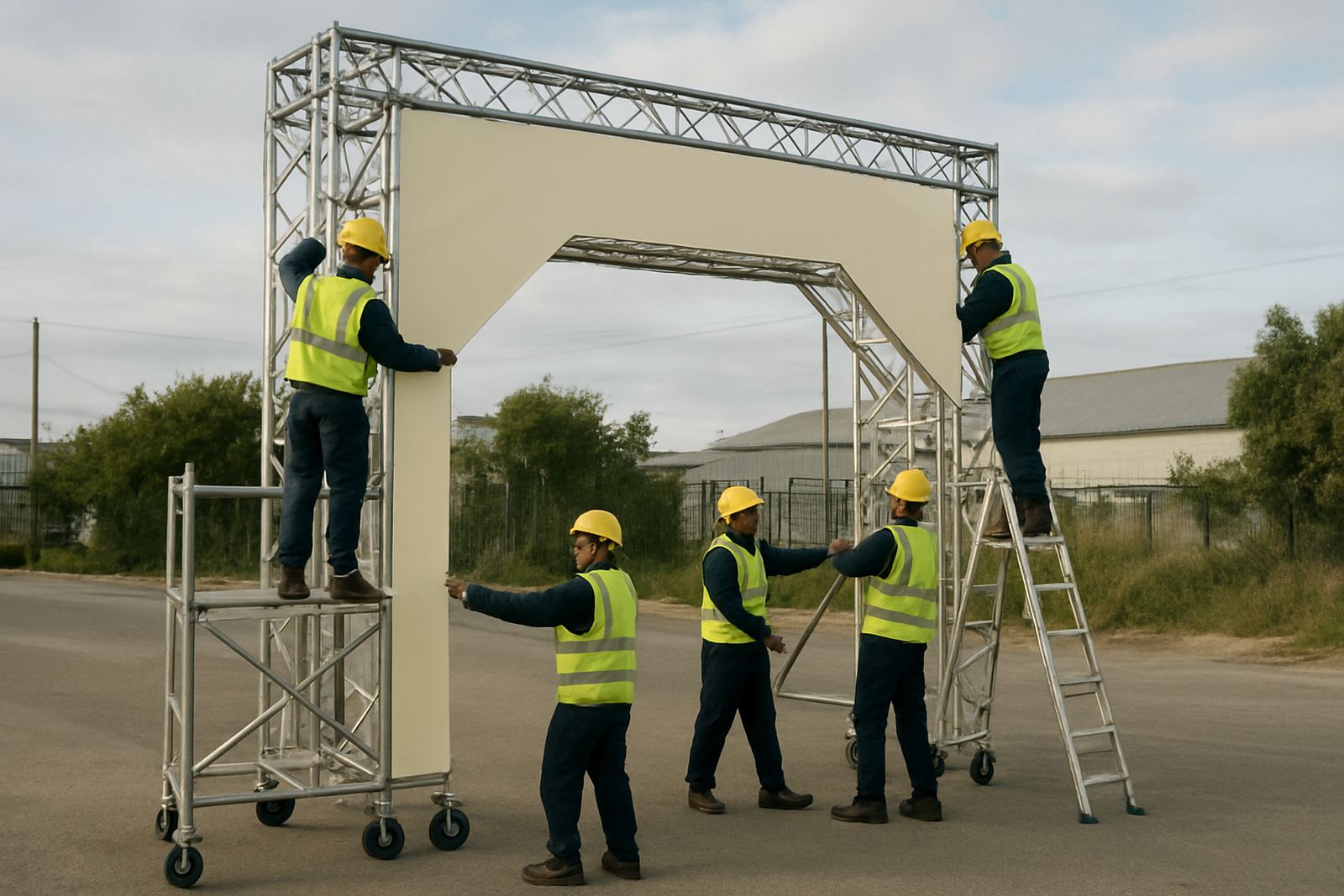
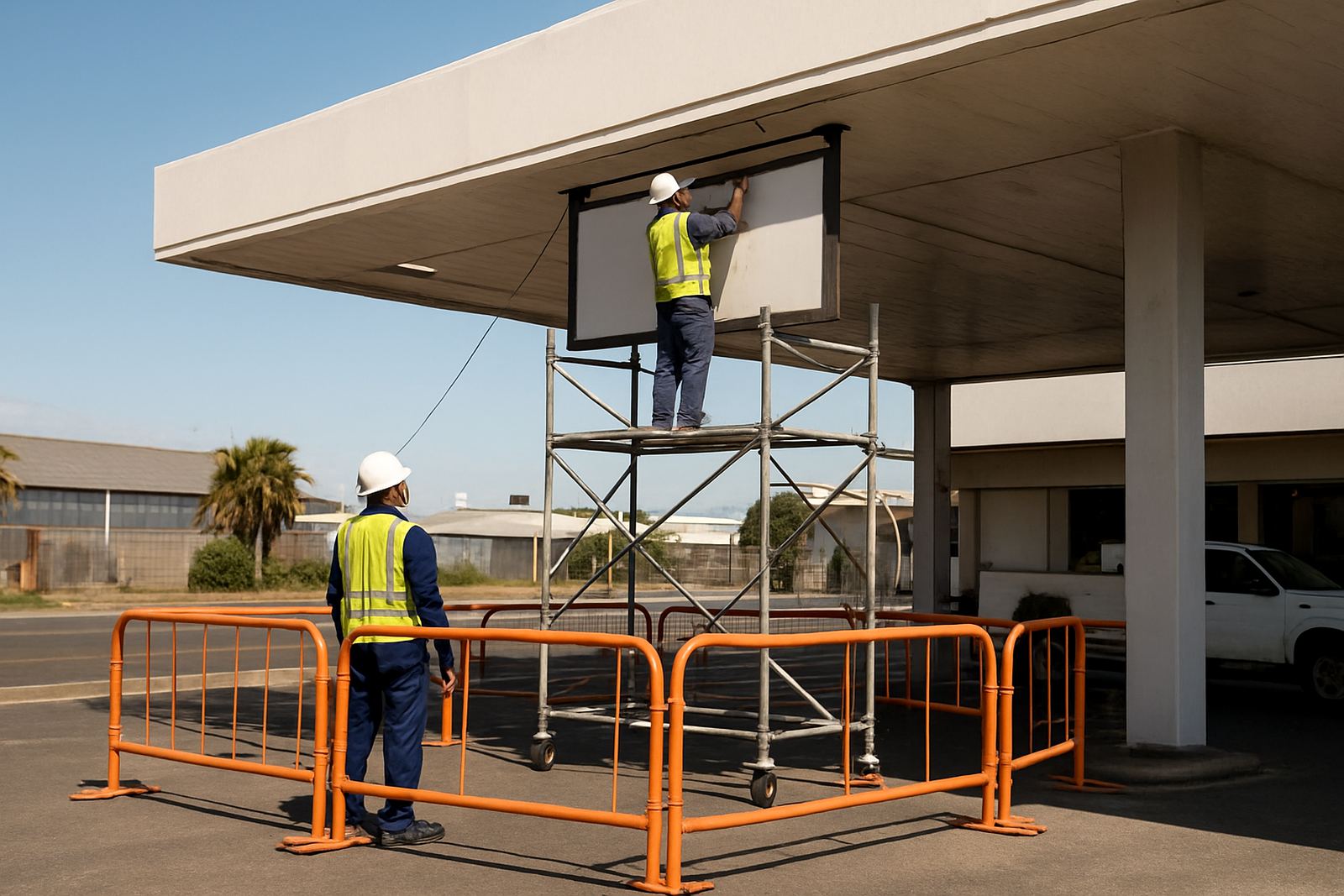
- Scaffold access for mid height work and long sign runs
- Platform work for quick installs and servicing
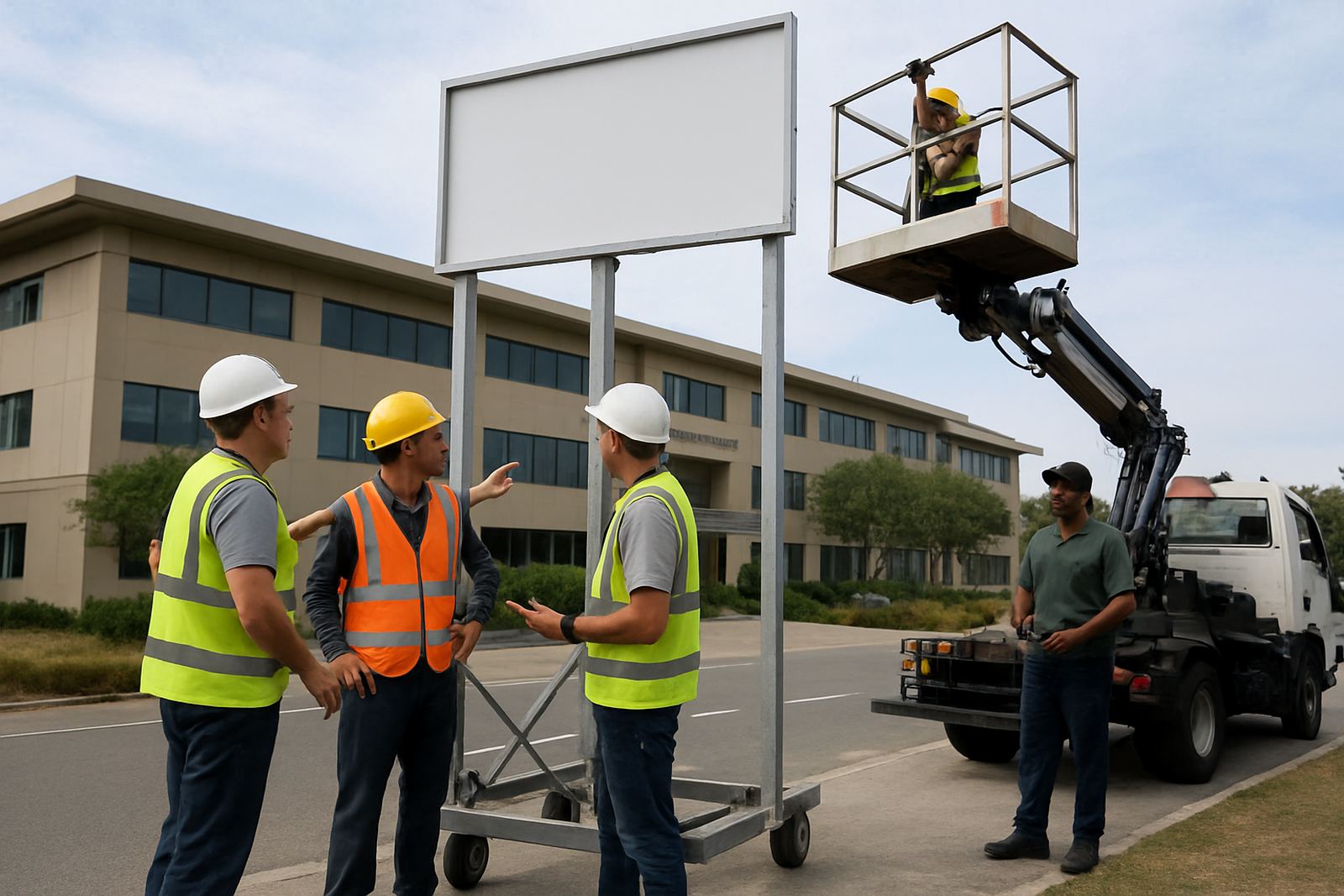
- Lift planning for heavier panels and awkward reaches
- Lighting access for sign repairs after hours or before opening
How to plan a site so the job goes right first time
Good planning saves landlords money. Before any crew is booked, the sign maker should confirm the sign dimensions, weight, fixing method, power points, access height and whether the old sign is being removed or reworked. We then look at the site itself, because a clean drawing is not always the same as a practical building face.
We often advise property groups to send us the site photos, a copy of any building rules, and the preferred working window. If there are loading restrictions, security sign-in delays or noisy plant rooms nearby, it helps to know that early. A short site survey can prevent a second call out and reduce the risk of damaged cladding, broken glass or wasted hire time.
- Confirm access height and fixing points before fabrication is finalised
- Check whether power isolation is needed for illuminated signs
- Book work outside trading hours where tenants are sensitive to noise
- Allow for weather delays on exposed or coastal facades
Common mistakes landlords and managers make
The biggest mistake is leaving sign removal or replacement until the last minute. When a tenant moves out, the old sign may still need to be made safe, the power isolated and the face removed before the new branding can go up. If that gets delayed, the building can sit with exposed brackets or dead lighting, which reflects badly on the property.
Another common issue is treating all signs as if they are light enough for any installer. Channel letters, large fascia panels and billboard faces can need proper rigging and a crew that knows how to work at height. We also see property groups underestimating access rules, especially in multi-let centres where one manager assumes another has approved the job. That usually costs time and sometimes a second call-out fee.
- Leaving old sign removal until after the handover date
- Booking work without checking site access or security procedures
- Forgetting electrical isolation for illuminated signage
- Using general maintenance teams for specialist sign work
Budget ranges in Rand for typical property group work
Costs depend on access, height, weight, weather exposure and whether the work is routine or urgent. As a guide, small sign servicing visits for landlord sites may start from around R1 500 to R3 500 for straightforward callouts. Sign removal and safe disposal on a lower facade can sit between R3 500 and R8 000, while a more involved install with scaffold or platform access can run from R8 000 to R25 000 or more.
Emergency callouts, after-hours work, and large billboard face changes are priced higher because they need extra labour, travel and planning. A proper site survey usually costs less than a failed first visit, so if a property group is managing several buildings across Cape Town or Gauteng, it is worth grouping jobs together. That often brings the per-site cost down and makes scheduling easier.
We are careful about quote scope because property work can turn expensive when access is guessed at instead of checked. If the sign maker shares accurate sizes and the building manager confirms the site conditions, the budget is usually much easier to hold.
Why sign makers bring us in on managed properties
Sign makers want a crew that will represent them properly on site. We work as the execution arm, not as a competitor, and that keeps the client relationship clean. The landlord or property manager gets one set of practical updates, the sign maker keeps control of the design and supply side, and we handle the physical work with trained crews.
Our team includes Gareth van der Merwe, Thandi Mokoena, Liam Jacobs, Sibusiso Dlamini, Ayesha Daniels and Pieter Coetzee, so there is a clear handover from enquiry through to access and completion. From Paarden Eiland to Johannesburg CBD, we work on the sort of jobs where timing, safety and neat finish matter just as much as the sign itself.
For property groups, the real value is predictable site execution. That means fewer delays, fewer complaints from tenants, and a better result when the new sign goes up or the old one comes down.