

Forecourt work needs a different kind of rigging crew
Fuel sites are busy, exposed and unforgiving on timing. There is no room for loose access planning when a canopy sign sits over live traffic, the forecourt is open to the public, and the client wants the site back in use before the morning rush. Our crews work for sign makers who need rigging only, so the sign shop keeps the client relationship while we handle the access, lifting and fixing on site.
We are set up for forecourts in Paarden Eiland, Bellville, Somerset West, Paarl, Johannesburg CBD, Sandton, Midrand and the East Rand. That includes coastal conditions in Cape Town where salt air works hard on fixings, and Gauteng sites where wind, dust and high traffic create their own issues. Since 2008, we have been doing installation, removal and servicing with safety paperwork, first-aid trained crews and proper site discipline.
Typical fuel site equipment and where it is used
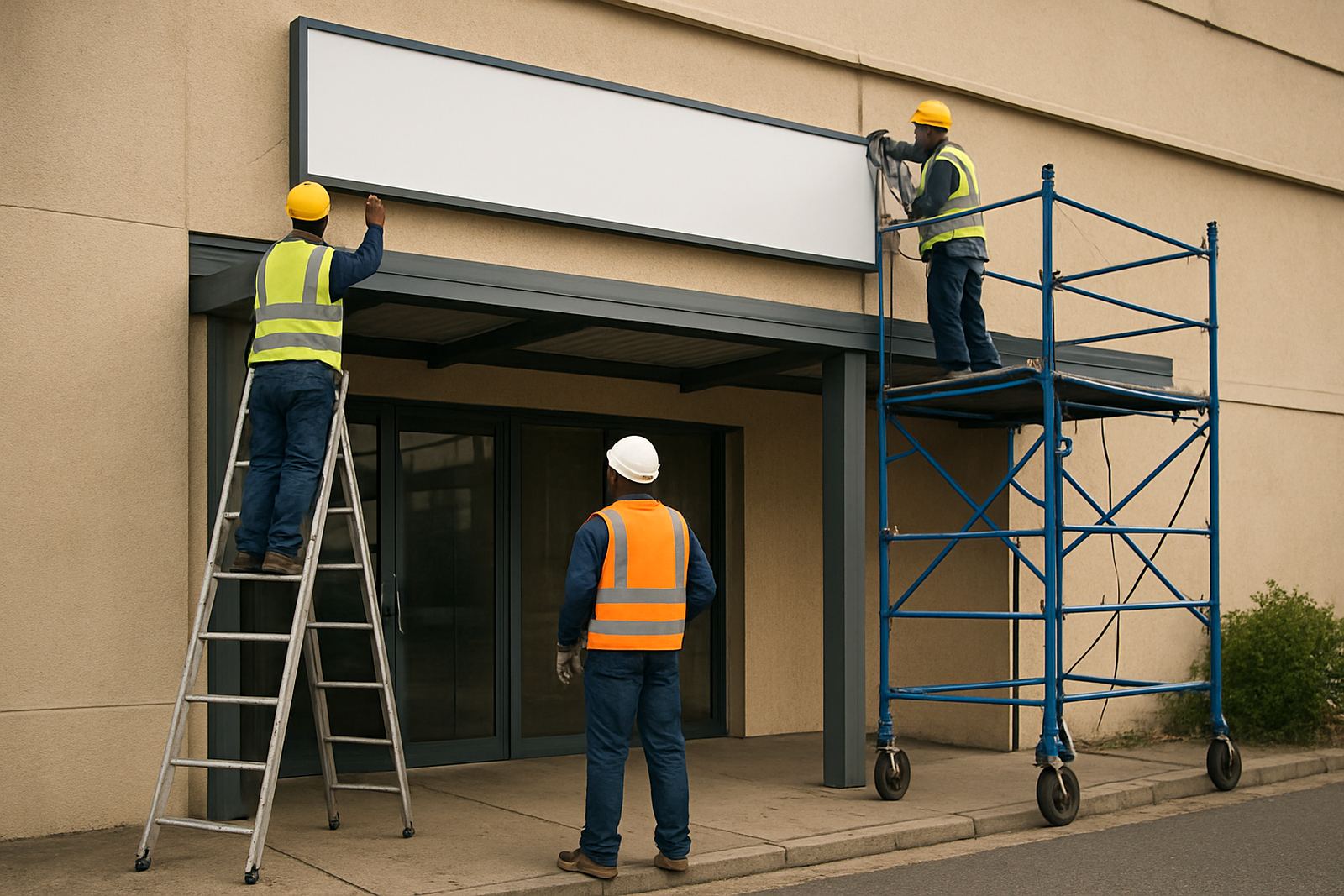
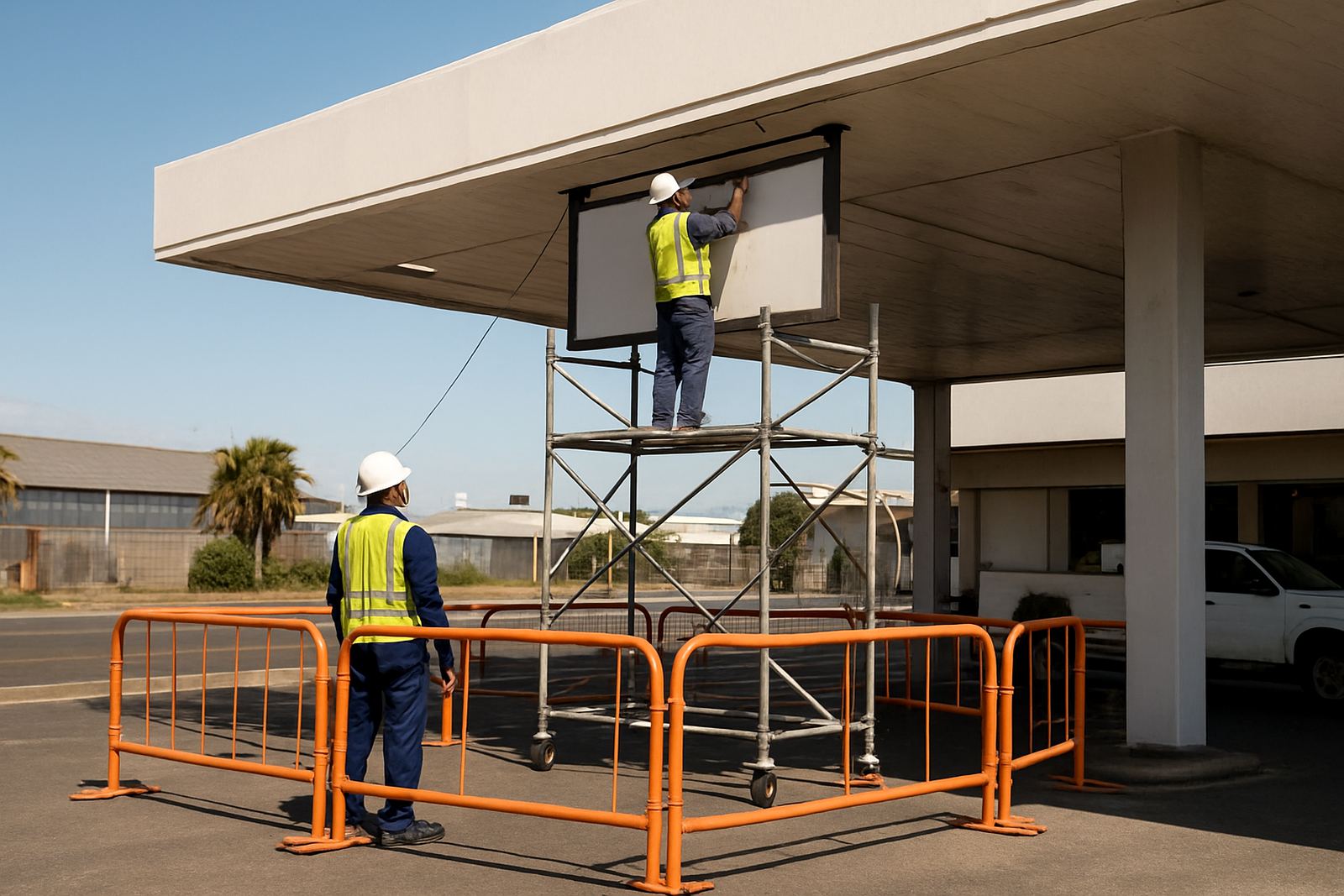
Most forecourt jobs involve a mix of height access, controlled lifting and careful sign handling. A canopy sign may need a platform or scaffold access, while a roadside pylon or high-level structure often needs lift planning and traffic control. Some jobs are simple face changes, others require full removal and re-installation after repair or repainting. Lighting access is often part of the callout too, especially where lamps or driver modules sit above the pumps or on a high mast.
- Canopy fascia signs and illuminated panels
- Pylon signs and roadside direction boards
- High mast and entrance signage
- Face changes for tenant swaps and brand updates
- Lighting access for failed tubes, lamps or control gear
- Sign relocations after forecourt reconfiguration
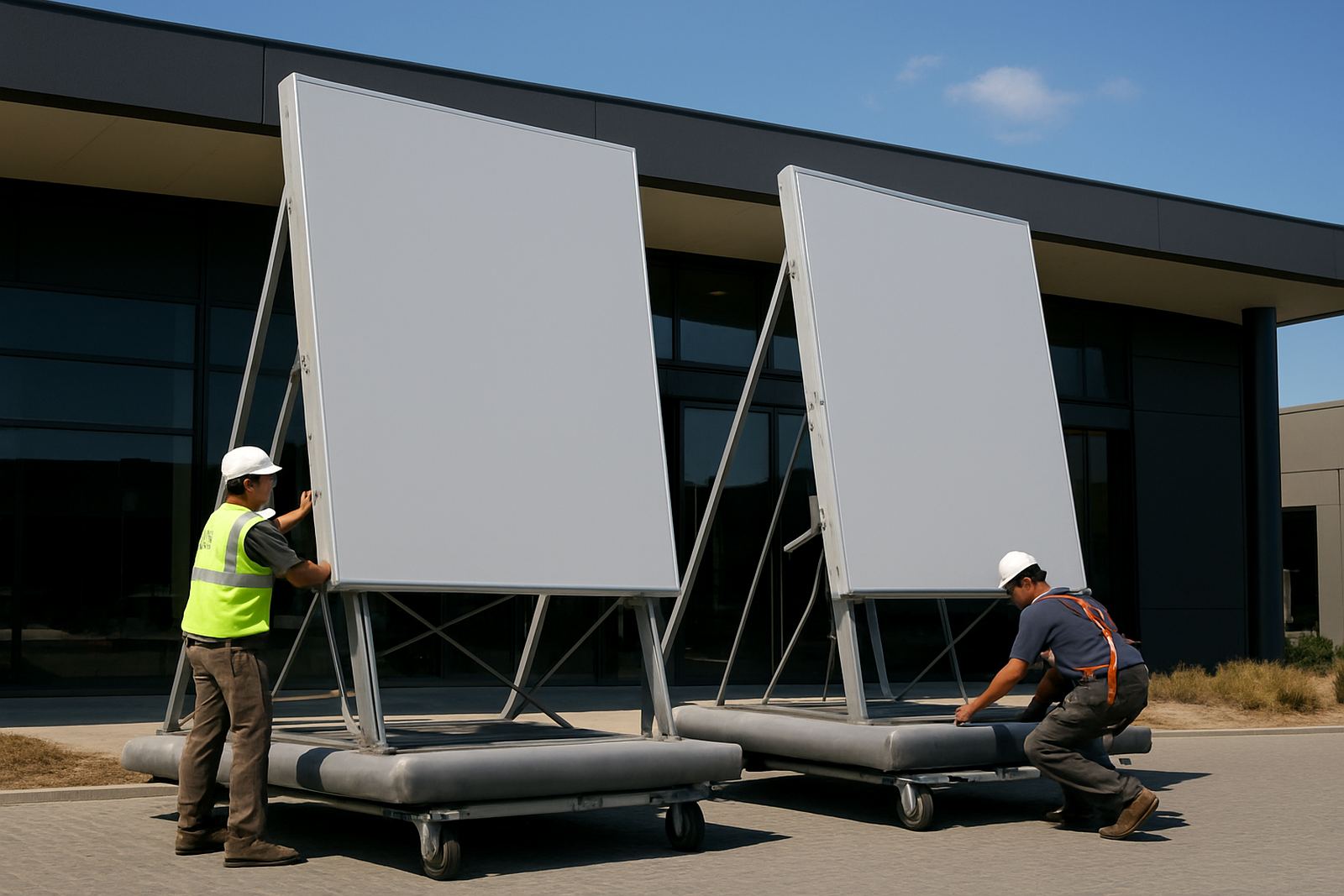
We also support billboard-style face changes where a fuel site has a roadside advertising structure next to the entrance. If the site needs emergency attention after storm damage or a failed bracket, we can attend with the right access equipment and a practical plan, not guesswork.
Planning the job before the pumps are touched
Good forecourt planning starts with the layout. We look at where vehicles queue, where tankers reverse, where pedestrians cross, and where the sign sits in relation to pumps, canopies and overhead obstructions. On many fuel sites, the biggest mistake is assuming the sign can be reached from one side only. In reality, the safest route may be from a rear service yard, a side access lane, or a planned closure of one lane for a short window.
We advise sign makers to share drawings, site photos and any municipal or landlord rules before the team is booked. If there is live trading, we need to know opening hours, tanker delivery times, and whether the site has height restrictions, soft paving, underground services or limited turning room. A site survey can save a lot of trouble later, and it is often cheaper than sending a crew twice.
- Check if the forecourt must stay open during the work
- Confirm clearance around canopy edges and pump islands
- Identify live electrical feeds before any sign removal
- Plan for weather, especially wind on elevated structures
- Allow time for traffic marshaling if the road edge is tight
What usually goes wrong on forecourt sign jobs
The common mistakes are predictable. A sign shop orders the new face but the existing frame has corrosion around the fixings. A canopy panel is heavier than expected and the access equipment booked is too small. A pylon sign is close to the road and the job needs more setback space than the site can offer. On some jobs, the electrical isolations are not clearly marked and the crew arrives to find the wrong feed has been switched off. That wastes time and can become dangerous very quickly.
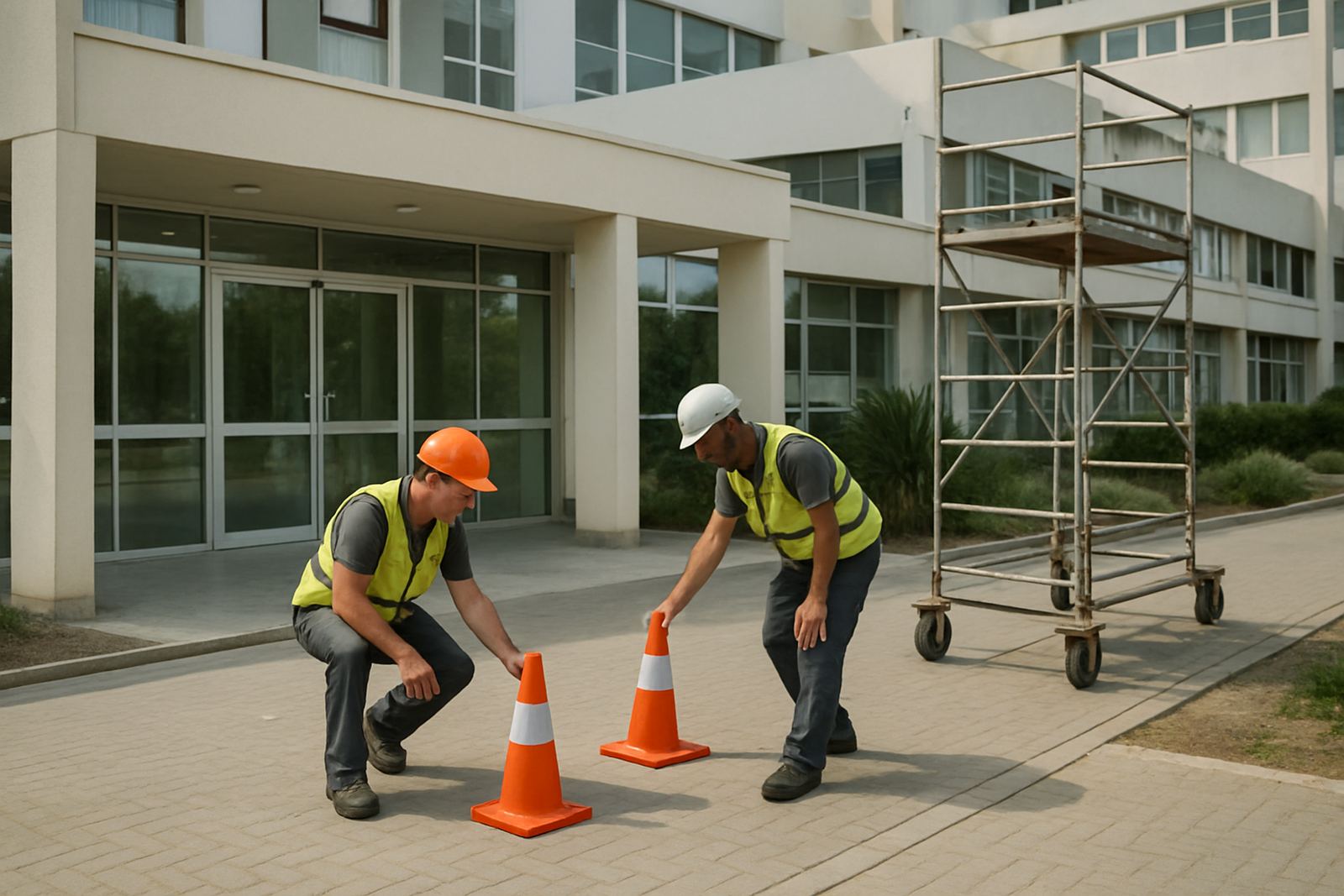
We also see poor weather planning. Fuel sites in the Cape get strong wind and salty air, so exposed panels and brackets may need extra caution, and sometimes a return visit if conditions change. In Gauteng, summer storms can bring sudden rain and lightning risk. If the job is near busy traffic, the crew needs clear barriers and a tidy working area. Loose cones and half-finished cordons are not enough.
Budget ranges for fuel forecourt sign rigging
Every site is different, but most sign makers want a realistic budget before they quote the client. For simple fuel site work, a small face change or low-level service visit might start from around R3 500 to R7 500, depending on travel, access and the amount of labour needed. A canopy sign installation or removal with planned access equipment often falls in the R8 000 to R18 000 range. Larger pylon work, roadside structures or jobs needing extended lift planning can move into the R18 000 to R45 000 bracket.
If the site needs emergency callouts, night work, traffic control, or a second visit because of weather or supplier delays, the cost rises accordingly. We are upfront about that before the team is dispatched. Sign makers usually save money when they share the full scope early, because the right crew size and access plan avoids unnecessary standby time and extra transport. It is better to spend once than to patch the job later.
How sign makers use us without losing the client
Our role is clear. We do not compete with sign shops, and we do not try to take over their client relationship. The sign maker remains the main contractor, and we come in as the rigging crew that gets the work done on site. That means one point of contact for the sign shop, proper feedback after the visit, and no confusion when a fuel company asks who handled the install.
For repeat forecourt work, this arrangement keeps maintenance simple. The client gets a consistent crew that understands canopy signs, lighting access and roadside structures, while the sign maker keeps control of design, fabrication and billing. It also helps when the same site needs follow-up visits after a branding change or a pump layout update. We can handle the removal, relocation and servicing without turning the job into a full rebuild.
- One crew brief, one site plan, clear handover
- Safety trained teams with scaffold and first-aid knowledge
- Local crews in Cape Town and Johannesburg for quicker response
- Practical scheduling around trading hours and fuel deliveries
When the forecourt needs a quick return visit
Fuel sites do not always behave neatly. A sign may need final adjustment after a brand rollout, a lamp may fail after the first night, or a panel may loosen once the wind picks up. When that happens, a maintenance visit is often the smartest fix. We can return for tightening, servicing, lighting access or a small relocation rather than forcing the sign maker to rebook a full install team.
For urgent situations, our emergency callouts help when a panel is damaged, hanging loose or affecting trading safety. The aim is simple: make the site safe, protect the equipment and get the forecourt back to normal without drama. On busy fuel sites, that kind of response matters more than fancy talk. It is just careful work, done properly.