

Why campuses need a rigging crew, not just installers
Educational sites are busy from the first bell to the last pickup. There are learners, staff, visitors, delivery trucks, residence traffic and often tight windows for work after hours or during school holidays. That is where a rigging crew adds value. We handle the access, lifting and safety side of the job so the sign maker can focus on fabrication and finish.
At schools and colleges we commonly work on entrance pylons, reception signs, directional boards, residence markers, lecture block signage, sports field signs and large wall faces. Many sites have mixed access too, with older brick buildings, new steel structures and internal courtyards. It means the method changes from one job to the next, and the plan has to be right before any lifting starts.
- After hours or holiday work to reduce disruption
- Controlled access around learners, vehicles and pedestrians
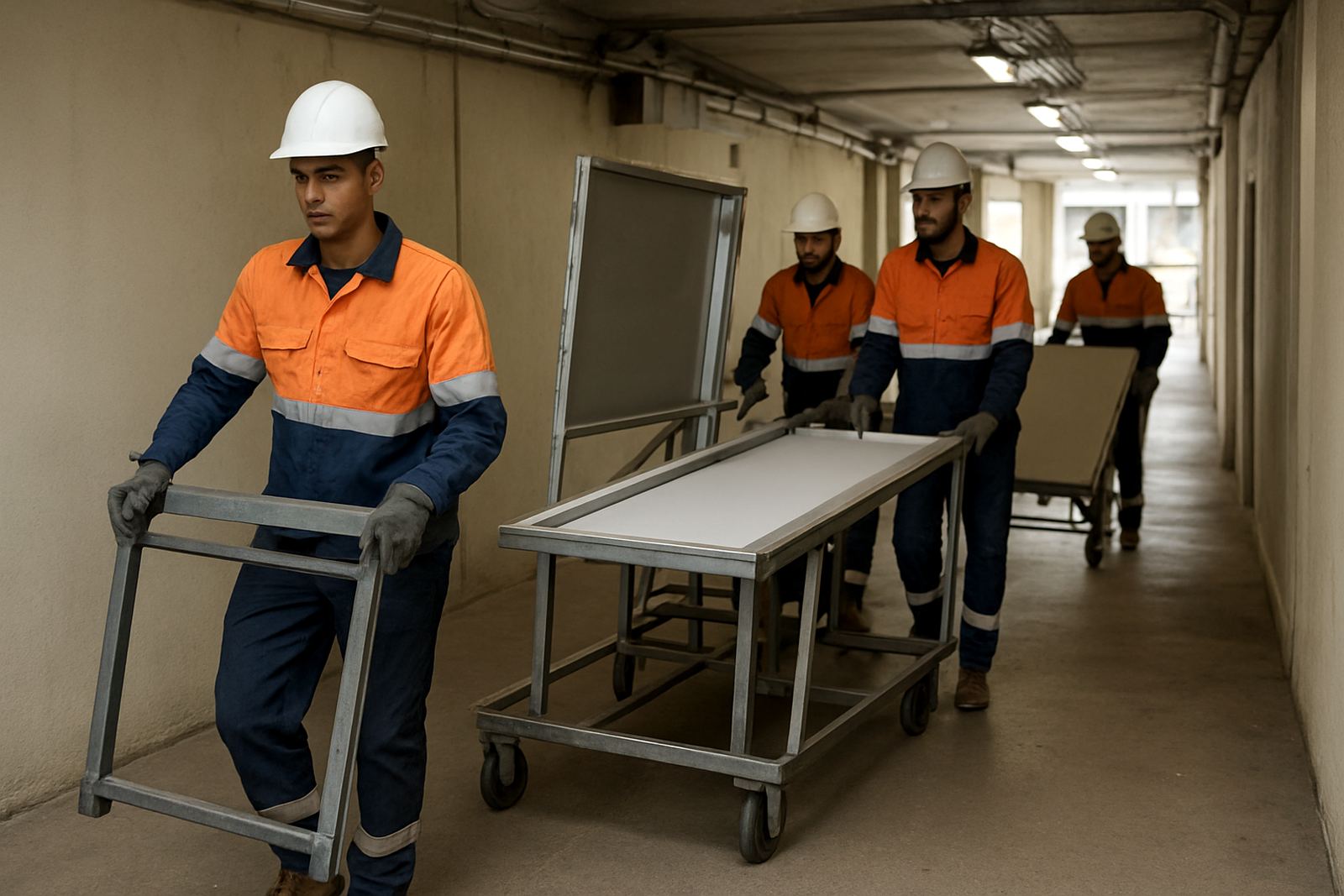
- Safe handling for large and awkward sign panels
- Removal of damaged or outdated signs before replacements go up
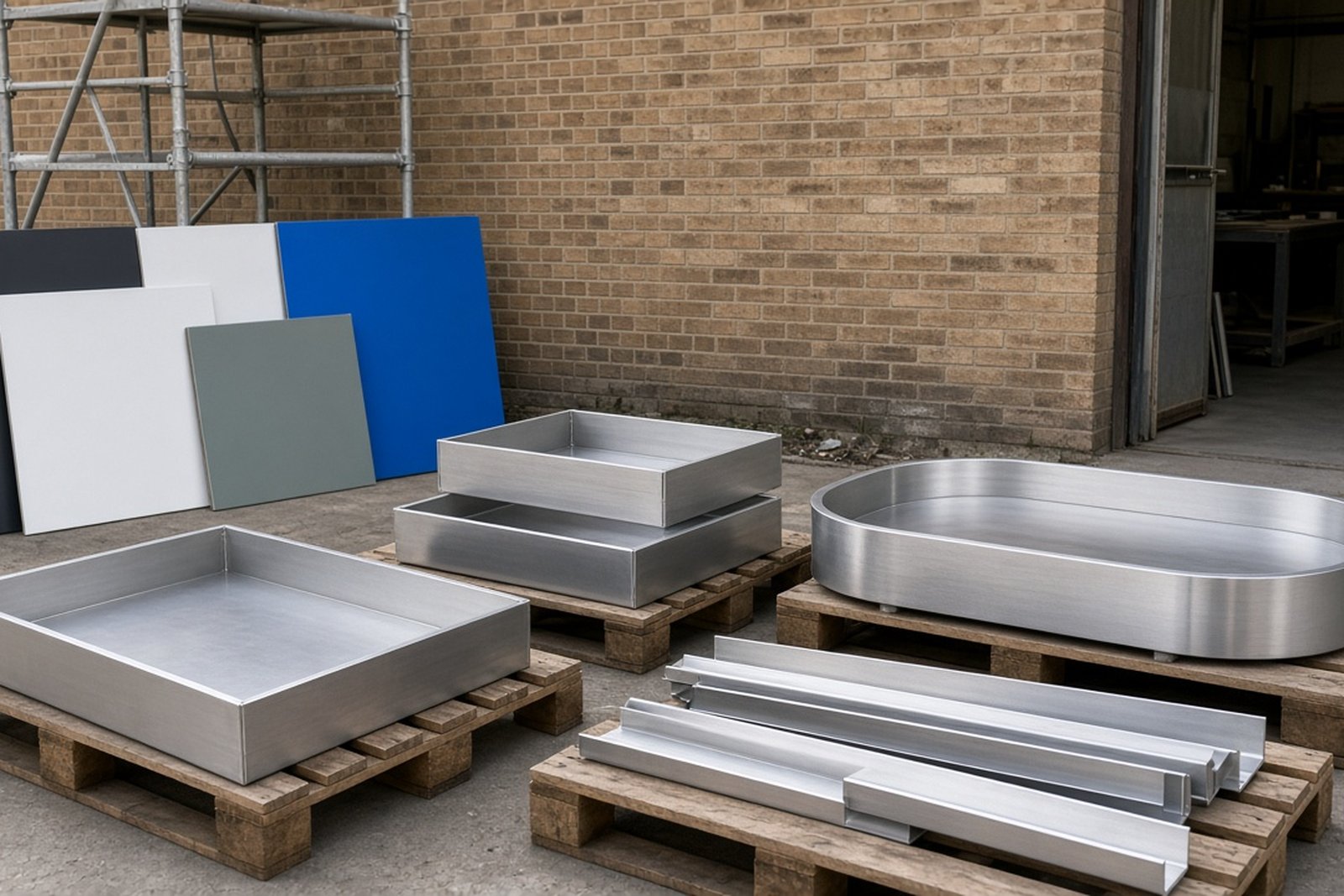
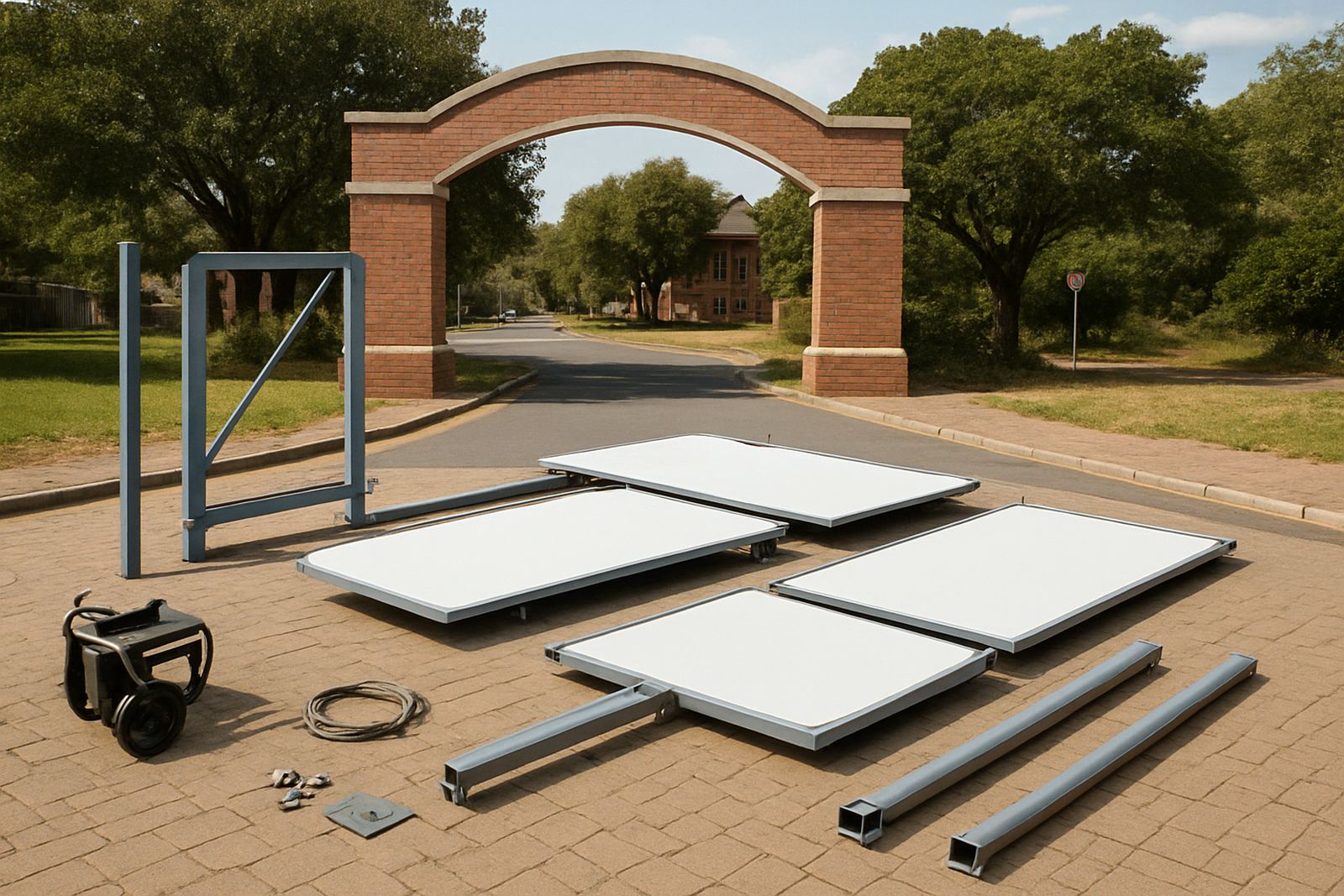
Typical equipment set for campus sign work
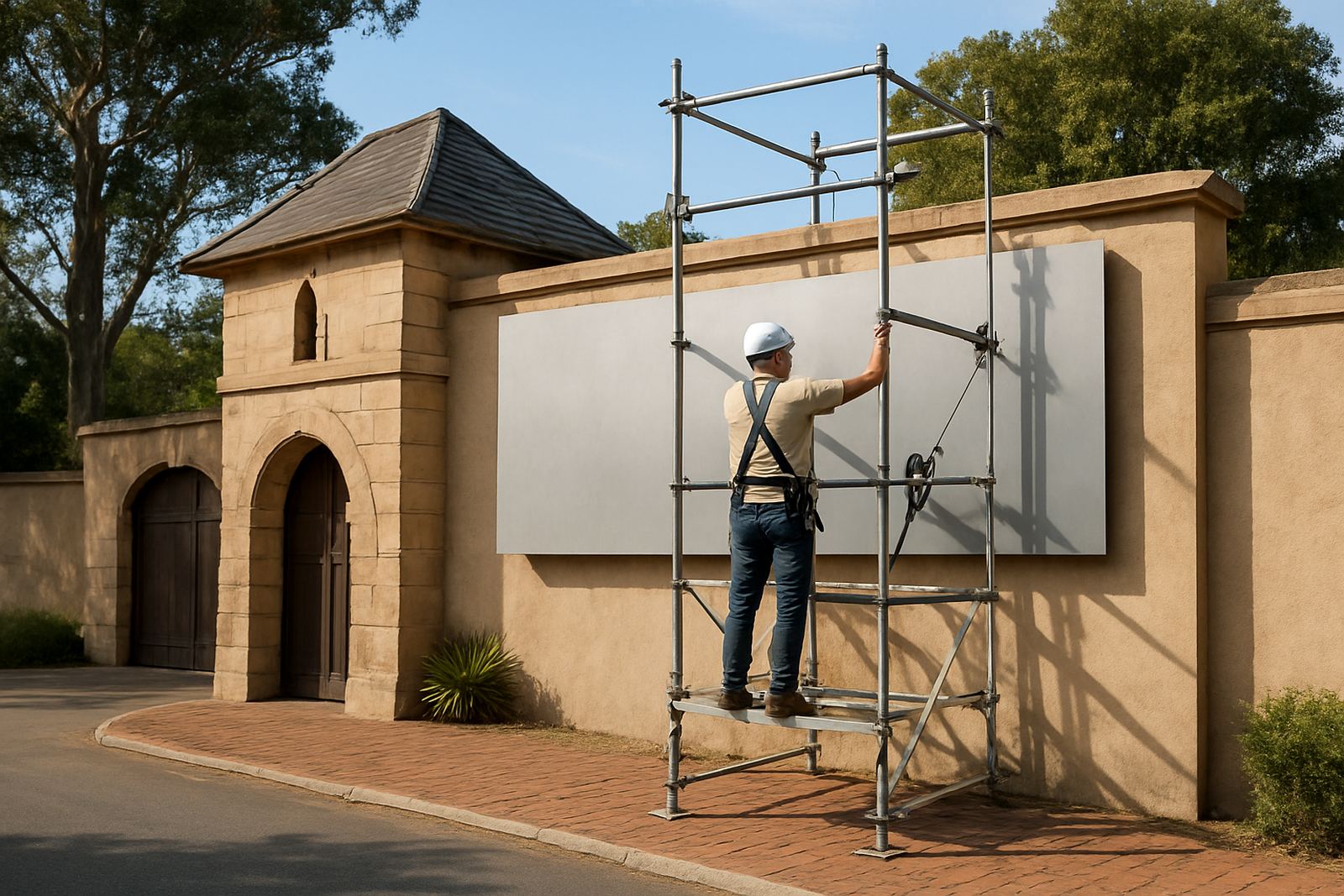
Most school and college jobs need more than a ladder. We assess the fixing points, height, ground conditions and the space available for lifting gear. On some campuses a simple platform setup is enough. On others we need scaffold access or a planned lift to reach a high facade, roof edge or roadside sign safely.
Our crews regularly use platform work, scaffold access, lift planning and lighting access for signs mounted above entrances or near floodlit courtyards. Where the ground is uneven or there is limited parking, we plan the vehicle position and access route before arrival. Coastal humidity in Cape Town can affect fixings and surfaces, while in Gauteng we often see sun exposure and dust build up on exposed panels, so servicing matters as much as installation.
- Platform work for medium height signs and tight courtyards
- Scaffold access for longer duration installs or multiple faces
- Access control and spotters for busy pedestrian areas
- First aid trained crews and site-specific safety checks
Layout and planning advice for schools and colleges
Good planning saves time and keeps the campus open. We advise sign makers to map the site early, confirm where vehicles can load, and check whether work needs approval from facilities management, security or the municipality. On busy roads in Bellville, Sandton or the Johannesburg CBD, a lane edge or pavement position can also affect permits and timing.
For campuses with multiple buildings, the best approach is often to split the work into zones. That allows entrance signs, wayfinding and residence markers to be installed in a controlled order. It also helps if the job must be done in stages around exams, open days or sports events. A clear site survey avoids last minute changes and keeps the budget under control.
For large campuses, we recommend these checks before any booking:
- Measure all fixing points and confirm the sign weight
- Check wall condition, roof edges and existing brackets
- Confirm access times, security procedures and parking
- Identify any overhead power, lighting or tree cover
- Agree who is responsible for permits and final sign-off
Common mistakes on campus sign jobs
The most common issue is underestimating access. A sign may look straightforward on paper, but once you factor in gates, trees, glass canopies, student movement and uneven paving, the job changes fast. Another mistake is leaving removal until the last minute, which can delay the new install and create double handling costs. It happens more than people think.
We also see sign jobs where the fixing method is not suited to the building material. Old plaster, lightweight cladding and weathered brick need careful assessment. If the rigging crew is brought in late, the sign maker may already have built a panel that is heavier than the available access can handle. That leads to extra labour, extra equipment and avoidable risk.
- Booking without a site survey or lift plan
- Ignoring holiday calendars and campus peak times
- Using standard fixings on weak or weathered surfaces
- Leaving electrical isolation or lighting access unresolved
Budget ranges for school and college sign rigging
Budgets depend on height, access, removals, whether scaffold or platform work is needed and how many signs are being handled. Small internal or low level jobs may start from about R2 500 to R6 000 for straightforward removal and refit work. Medium campus installs with access equipment often fall in the R8 000 to R18 000 range. Larger projects, especially where lift planning, scaffold access or multiple building zones are involved, can run from R20 000 upwards.
If there is emergency callout work, damaged signage after wind or theft, or a tight holiday window, the cost can move up because the crew and equipment need to be booked at short notice. A proper site survey usually keeps surprises down and helps the sign maker quote accurately to the school or college from the start. That is where careful planning really pays off.
We work across Paarden Eiland, Bellville, Somerset West, Paarl, Johannesburg CBD, Sandton, Midrand and the East Rand, so local scheduling matters too. Cape Town jobs often need weather awareness, while Gauteng sites may need traffic timing and security coordination.
How sign makers use us on campus projects
Our clients are sign makers who need a rigging team that will not step on their supply or sales. We install, remove and service signs only. That keeps the relationship clean. The sign maker keeps the client relationship, we handle the physical work on site, and the campus gets a safe result with less back and forth.
For schools and colleges, the most effective workflow is usually simple: survey the site, confirm the access method, schedule the work for a quiet window, then complete installation or removal with minimal interruption. When signs need later servicing, we can return for maintenance visits, lighting access, sign relocations or face changes. It keeps the campus looking organised through the year, not just on opening day.
Gareth van der Merwe leads the business with Thandi Mokoena, Liam Jacobs, Sibusiso Dlamini, Ayesha Daniels and Pieter Coetzee, and the crew has been working this way since 2008. For educational campuses, that experience shows in the planning, the paperwork and the way the job runs on site.