Why billboard face changes need proper rigging
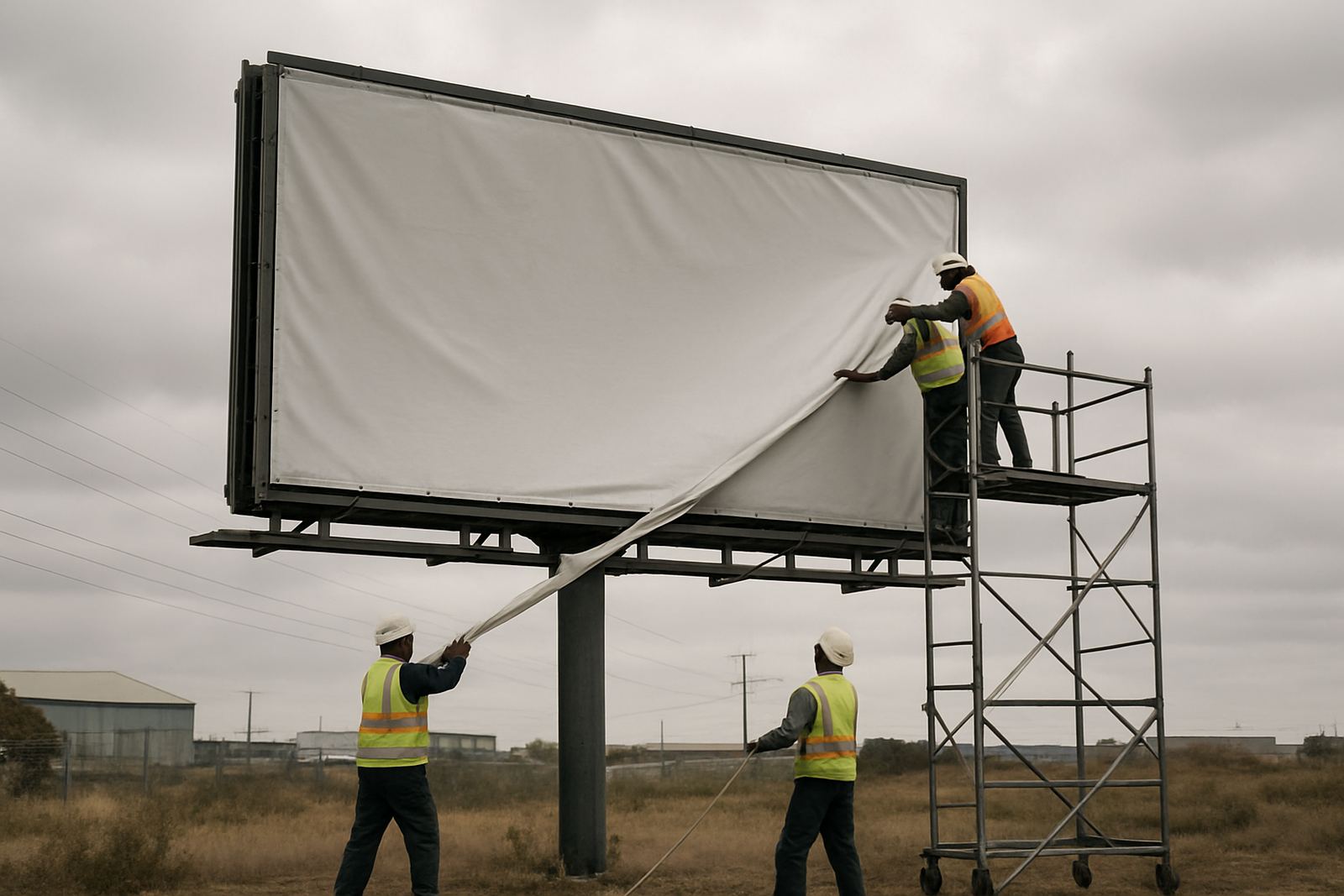
A billboard face change is not just a matter of taking one skin off and putting another on. The work starts with access, edge control, and checking that the structure can handle the swap without the panel flapping or tearing in the wind. On a busy road, a loose corner can become a hazard fast, especially when gusts hit open sites in Cape Town or high exposure zones in Johannesburg.
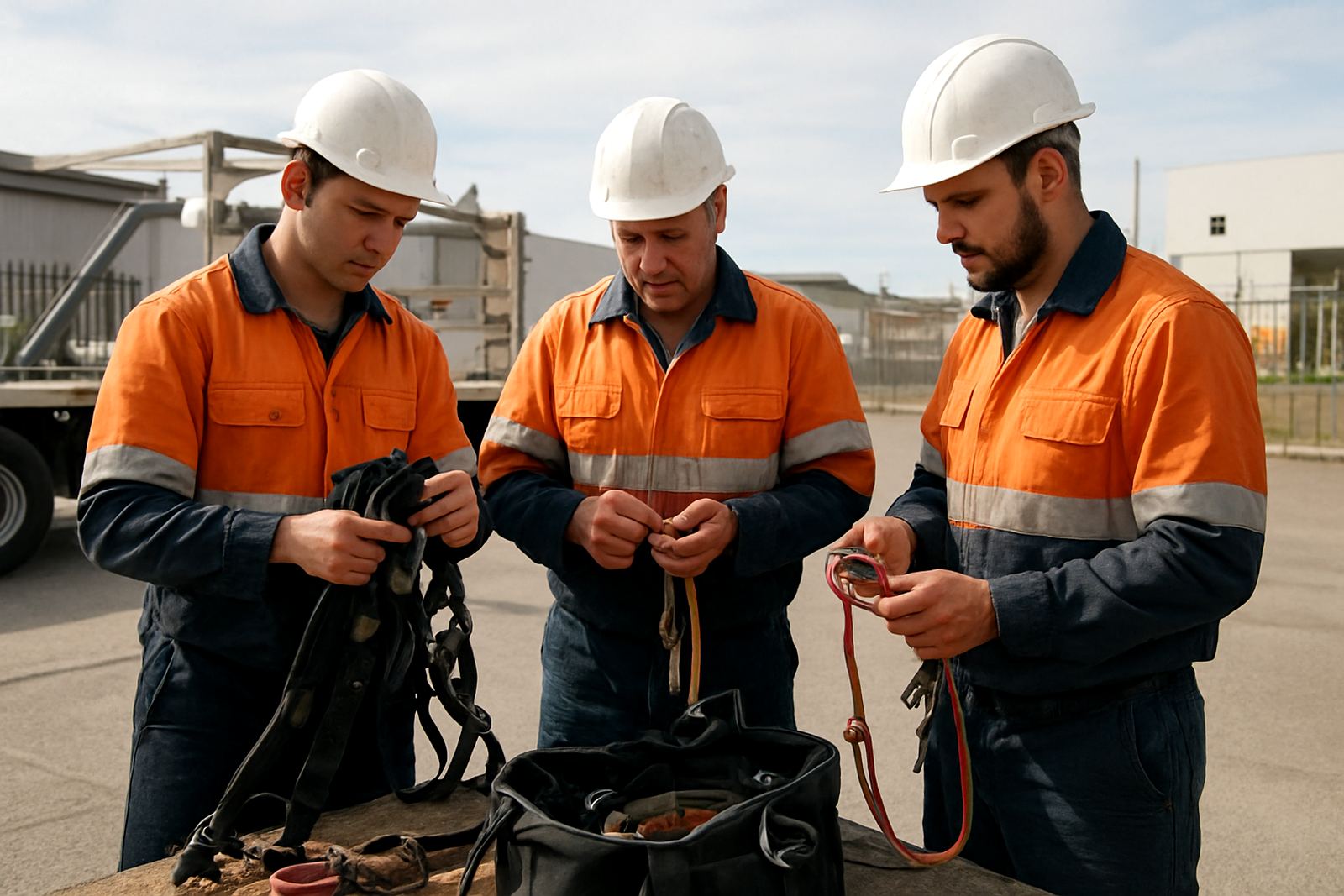
At Sign Riggers, we handle rigging only. That means we work for sign makers and print suppliers who need a crew for removal, installation and the practical side of getting the face secured properly. We do not compete with the shops that design or print the graphics. Our job is to arrive with the right access plan, the right kit, and a crew that knows how to work around height, traffic and weather.
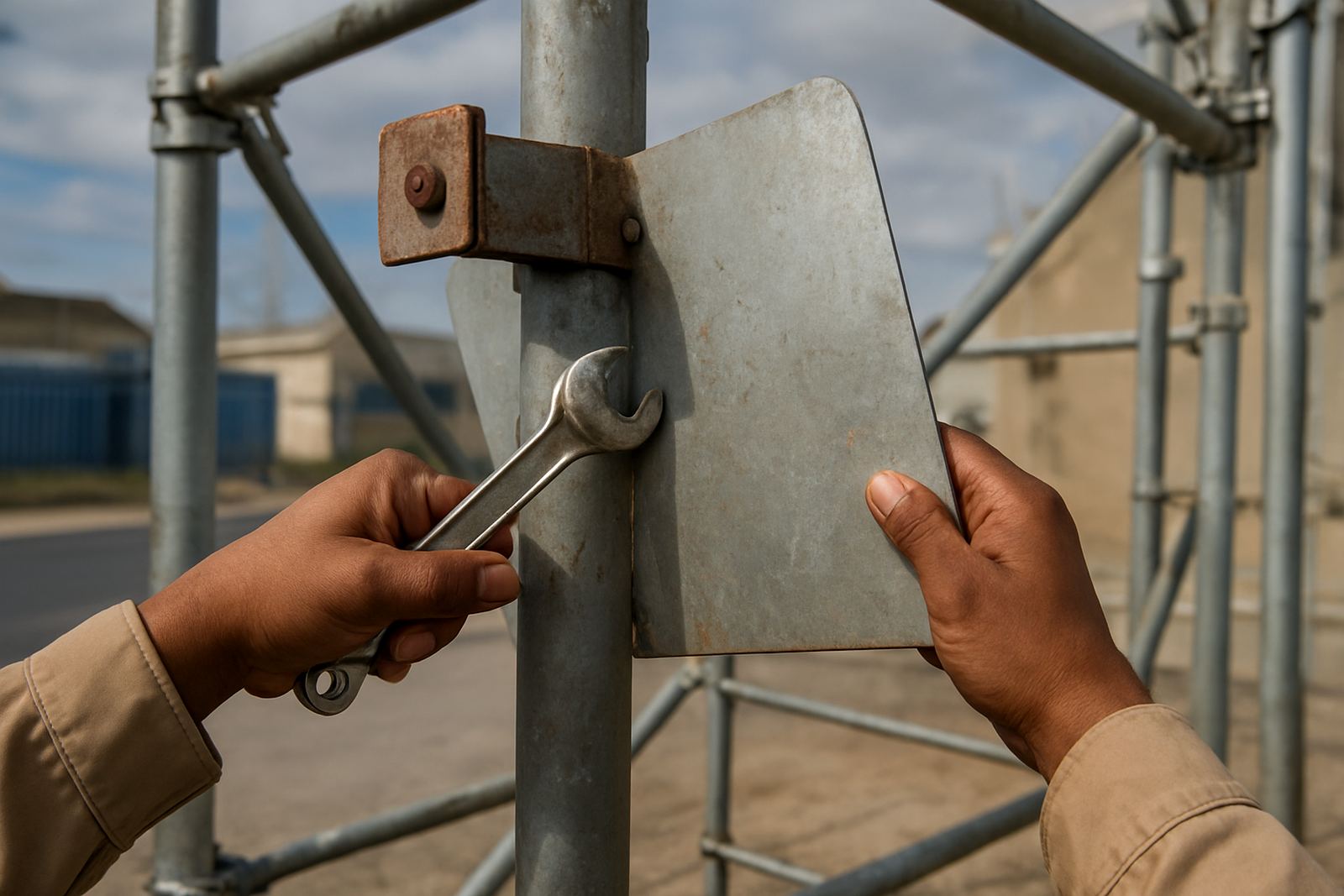
For billboard skin changes, the small details matter: how the old face is loosened, where the tension is released, and how the new skin is drawn across the frame. A rushed swap can leave ripples, damaged eyelets or a face that starts lifting after the first windy afternoon.
What catwalk safety changes on a billboard swap
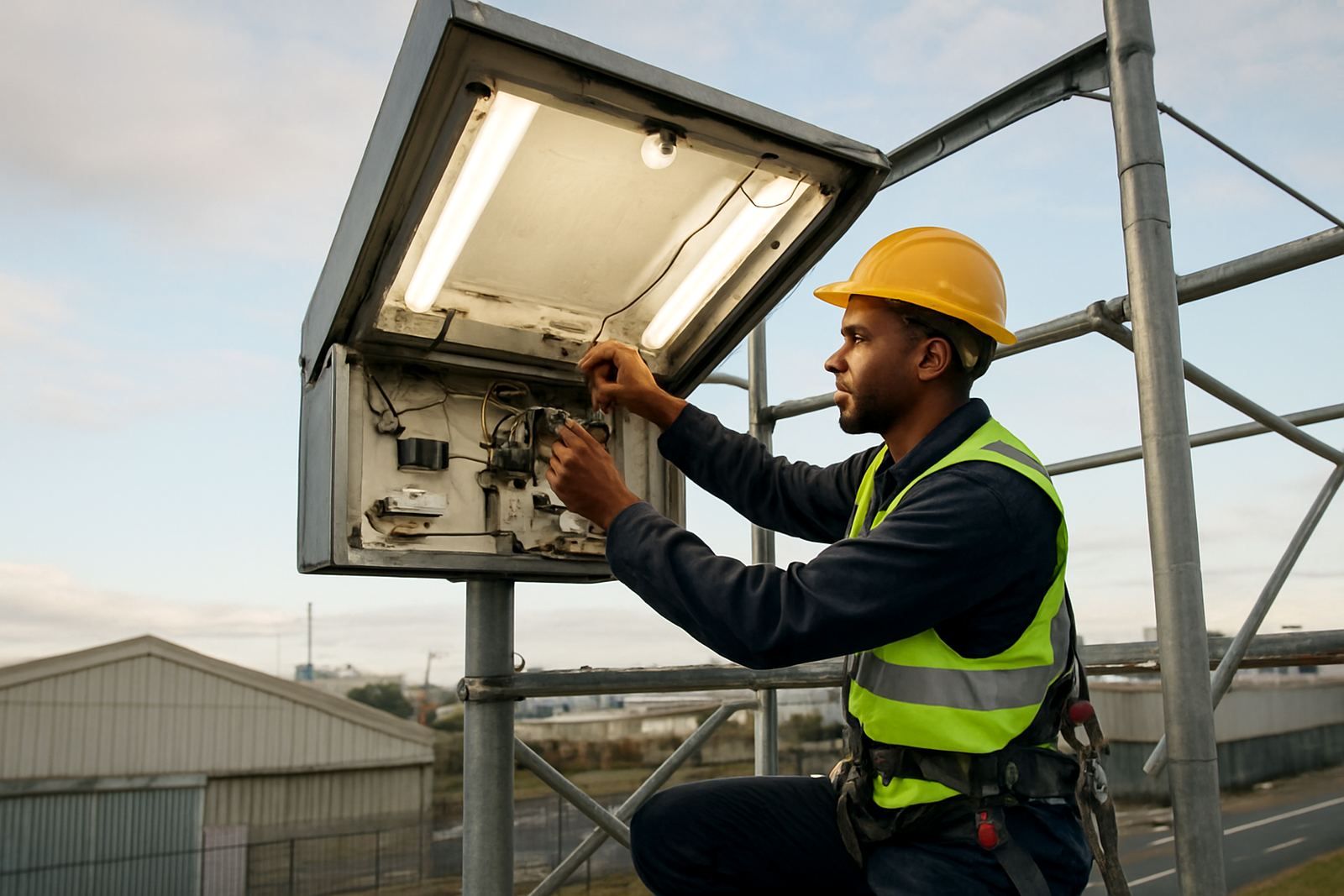
Most billboard face changes need catwalk access or another safe working platform. Once you are above ground level, the crew has to move with purpose. Tools must be secured, the work zone must be clear, and everyone on the structure needs to know where the next handhold is before they step.
Our teams are safety trained, scaffold trained and first-aid trained. That matters when a sheet shifts unexpectedly or a gust catches a partially released skin. We also plan the work around access points, rescue readiness and the condition of the structure. If a billboard has tight access or awkward edges, the crew can adjust the sequence instead of forcing the job.
- Check harness points and access routes before any old face is removed.
- Keep cutting tools, fasteners and tension gear secured at all times.
- Assign one person to call movements so the team works in step.
- Stop the swap if wind picks up or the skin starts behaving badly.
That last point sounds simple, but it saves money and time. In practice, a pause at the right moment is better than replacing a damaged face or calling for extra labour after an avoidable snag.
Tension control is what keeps the face neat
The best-looking billboard face changes are the ones where the final panel sits flat and even from side to side. That depends on tension control. If the skin is too loose, it will ripple. If it is pulled unevenly, the corners take strain and the print can distort near the edges. On large faces, even a small mistake shows from the road.
We check the frame before starting, then work the tension gradually across the face rather than pulling hard on one side. The order of fastening matters. So does the condition of the face itself, especially if it has been stored in heat or damp conditions before the install. Coastal humidity in Cape Town can make handling different to a dry inland site, and that needs to be factored in. In Gauteng, the midday heat can change how the material settles too.
There is no shortcut here. A neat finish comes from experienced hands and a crew that knows when to stop and recheck. If something feels off, we measure again rather than push on and hope for the best.
Weather windows matter more than most clients expect
Weather awareness is part of face change planning, not an afterthought. A billboard might be reachable in the morning and risky by lunch if the wind builds or rain starts to move across the site. In the Western Cape, winter fronts can make a calm start misleading. In Gauteng, sudden storm cells can turn a safe lift into a poor decision in a short space of time.
For sign makers, the best approach is to plan a weather window and keep backup dates ready. That is especially important for roadside boards, elevated sites, and boards exposed to open land. The crew should also know the local site conditions: coastal rust, older fixings, or a frame that has seen years of sun and movement.
- Do not start a skin change if wind gusts will affect handling.
- Allow extra time for rain delays and drying of contact areas.
- Inspect fixings on older frames before the new face goes up.
- Keep a second date available for critical campaign changes.
On a site in Paarden Eiland, for example, a face swap can be affected by afternoon wind coming off Table Bay. The same job in Sandton may be more about access control, timing around traffic and keeping the road lift organised. Same job, different site logic.
How Sign Riggers supports sign makers on the ground
Our crews work from Paarden Eiland in Cape Town and from Johannesburg, covering the Western Cape and Gauteng. That gives sign makers a practical team for planned installations, removals, servicing and billboard face changes. We also handle emergency callouts when a face is loose, damaged or needs to come down quickly.
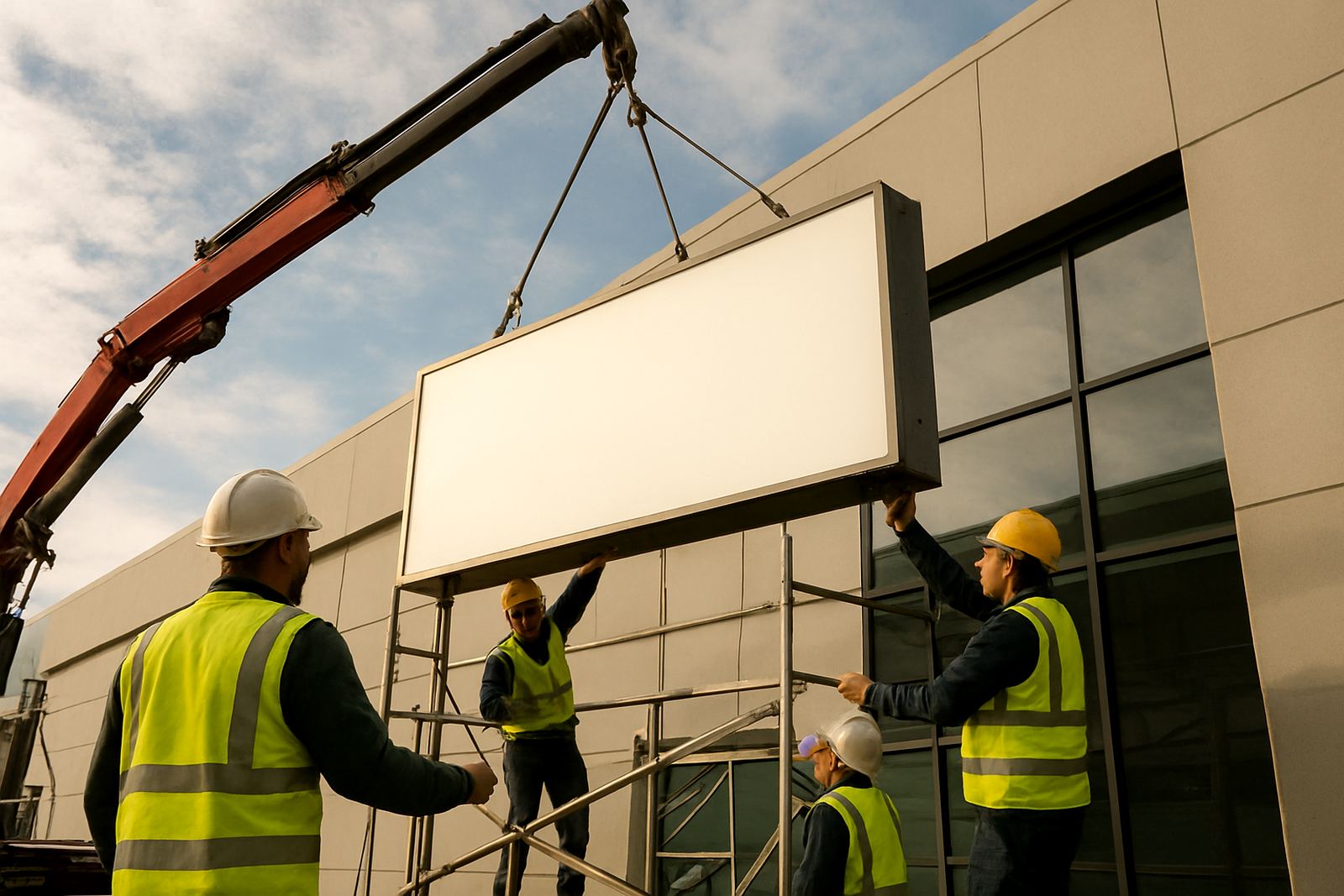
For a face change, we can help with site surveys, lift planning, scaffold access, platform work and the removal or replacement of the billboard skin. If the job needs lighting access or a maintenance visit at the same time, that can be planned into the same visit where possible. The aim is to keep the site moving without wasting a day on repeat callouts.
Our team includes Gareth van der Merwe, Thandi Mokoena, Liam Jacobs, Sibusiso Dlamini, Ayesha Daniels and Pieter Coetzee. They keep the work organised from first enquiry through to the last fastening. For sign makers across Bellville, Somerset West, Paarl, Johannesburg CBD, Midrand, East Rand and Sandton, that means one practical crew that understands the rhythm of billboard work and the need to stay in its lane.
A practical checklist before the crew arrives
Good preparation makes billboard skin changes faster and safer. A sign maker does not need to overcomplicate it, but a few checks before the crew arrives can save time on site and cut the chance of delays. If the print is ready, the access is clear and the site contact knows the plan, the job usually moves well.
- Confirm the billboard size, position and exact access points.
- Make sure the new face is labelled for the correct board and direction.
- Share any site rules, municipal restrictions or access permits needed.
- Check whether the area needs traffic control or after-hours work.
- Tell the crew about old fixings, lighting, or any damage on the frame.
If the board is close to a harbour area, a coastal industrial zone, or a busy CBD street, the access plan becomes even more important. A clear job brief helps the rigging crew get in, do the work, and move out without holding up the client or the road users.