

Why illuminated signs need proper servicing, not just a visual check
An illuminated sign can look fine from street level and still have failed ballasts, damaged wiring, loose fixings or water ingress inside the body. On coastal sites in Paarden Eiland, Bellville and Somerset West, salt air and wind push moisture into joints faster than many clients expect. Inland, dust and heat can do the same kind of harm over time. Servicing is about opening the sign correctly, checking the inside, then closing it up so it stays secure and easy to maintain later.
For sign makers, the value is simple. A serviced sign lasts longer, faults are found early, and the client is less likely to call for an urgent removal after a panel falls out or a fitting overheats. It also helps with warranty claims and maintenance records, especially on retail centres, forecourts and office parks where site rules are strict.
Access planning is the part most people underestimate
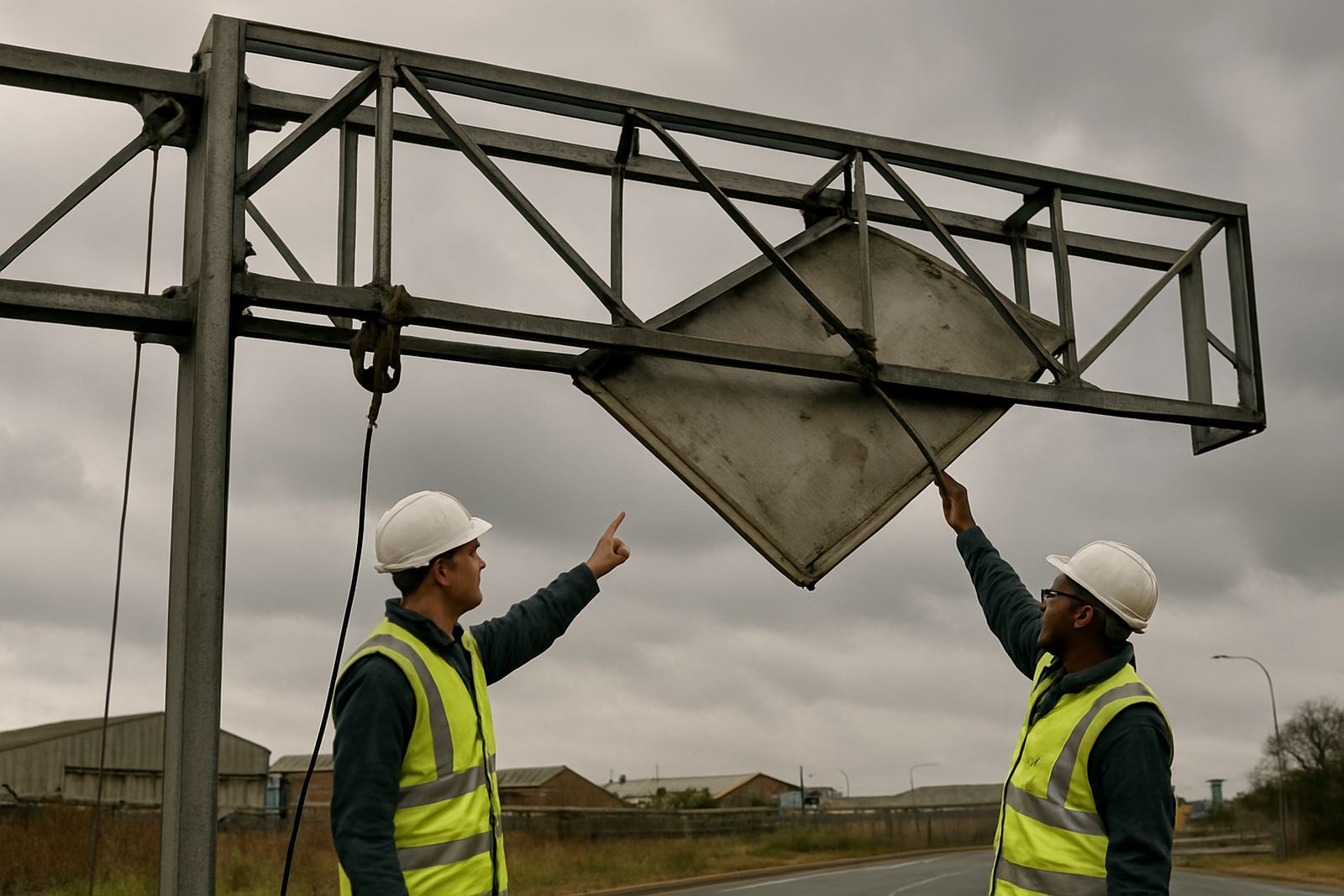
If a sign body has to be opened at height, the crew needs to know how they will reach it, hold it steady and work without damaging the face or surround. That might mean scaffold access, a platform, ladder access where allowed, or a lift plan that fits the site lay out and traffic flow. In Johannesburg CBD or Sandton, the challenge is often pedestrian movement and tight loading zones. In the Western Cape, it may be wind exposure and limited place to stage equipment.
- Confirm the sign height, fixing points and safe access route before the crew arrives
- Check for live power, locked access panels, seals and weathered fasteners
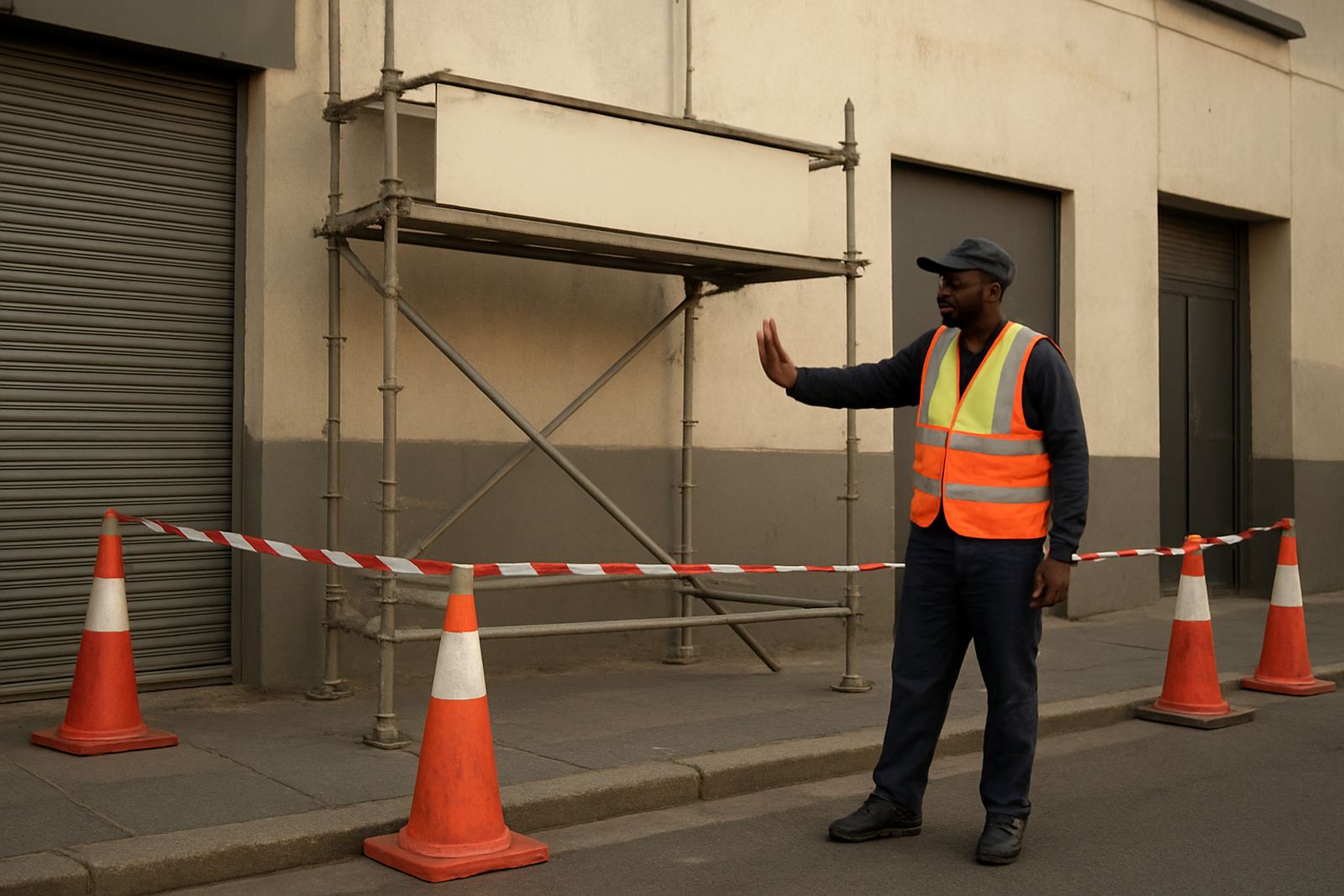
- Plan for cordoned ground space, traffic cones and a spotter if vehicles or pedestrians pass close by
- Allow time for re-securing and a final test, not just opening the unit
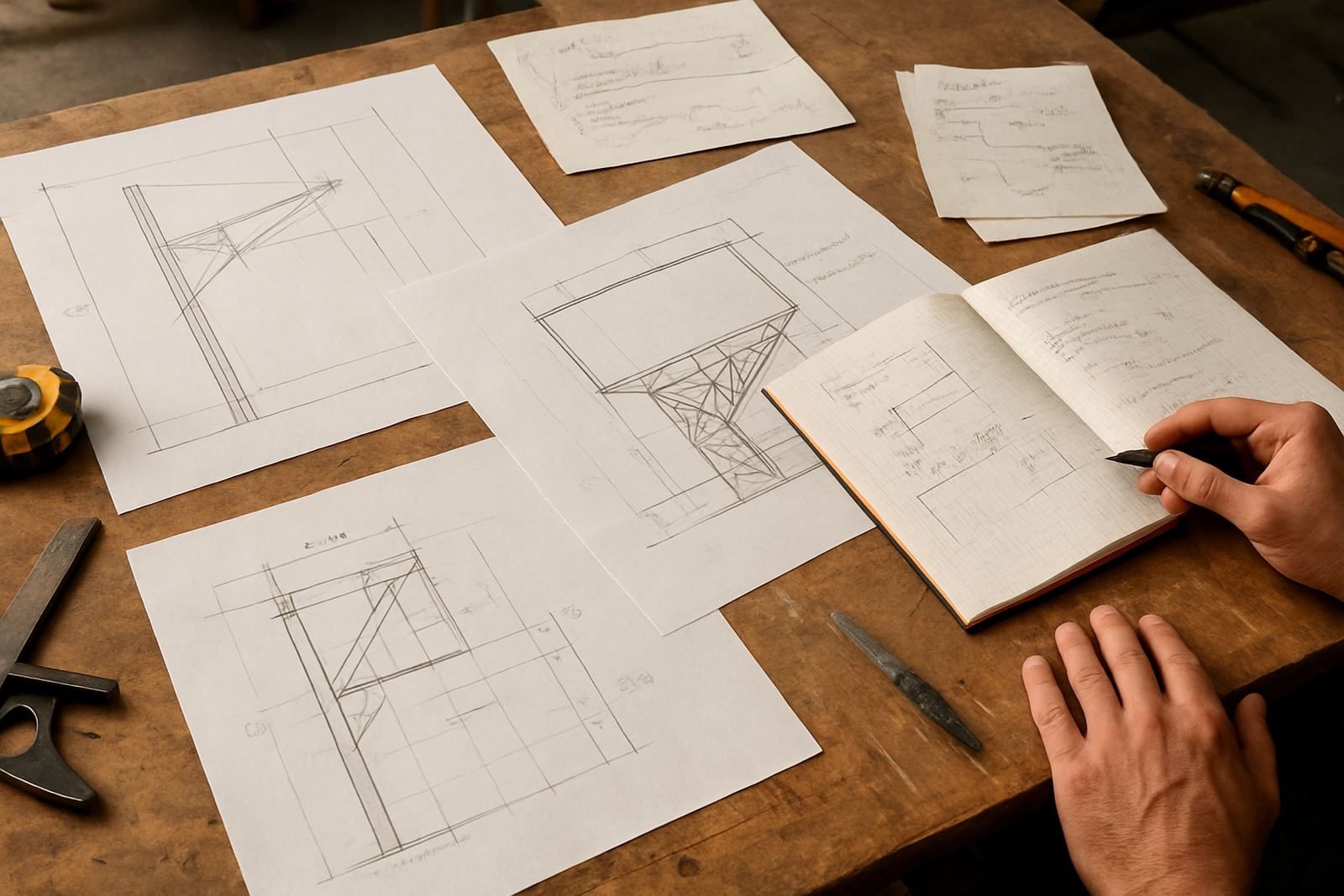
A rushed access plan usually costs more in the end. If the team has to stop midway to fetch extra reach equipment, the site stays open longer and the client is paying for a second setup. Good planning avoids that and keeps the sign maker in control of the job.
What a proper illuminated sign service should include
Servicing is not only about changing lamps or checking whether the sign lights up. A proper visit should cover the body, the supports, the electrics and the condition of the face or diffuser. On older signs, the crew may also find corroded brackets, cracked seals or water marks that point to a larger problem. That is why a servicing crew must work as an extension of the sign maker, not as a replacement for it.
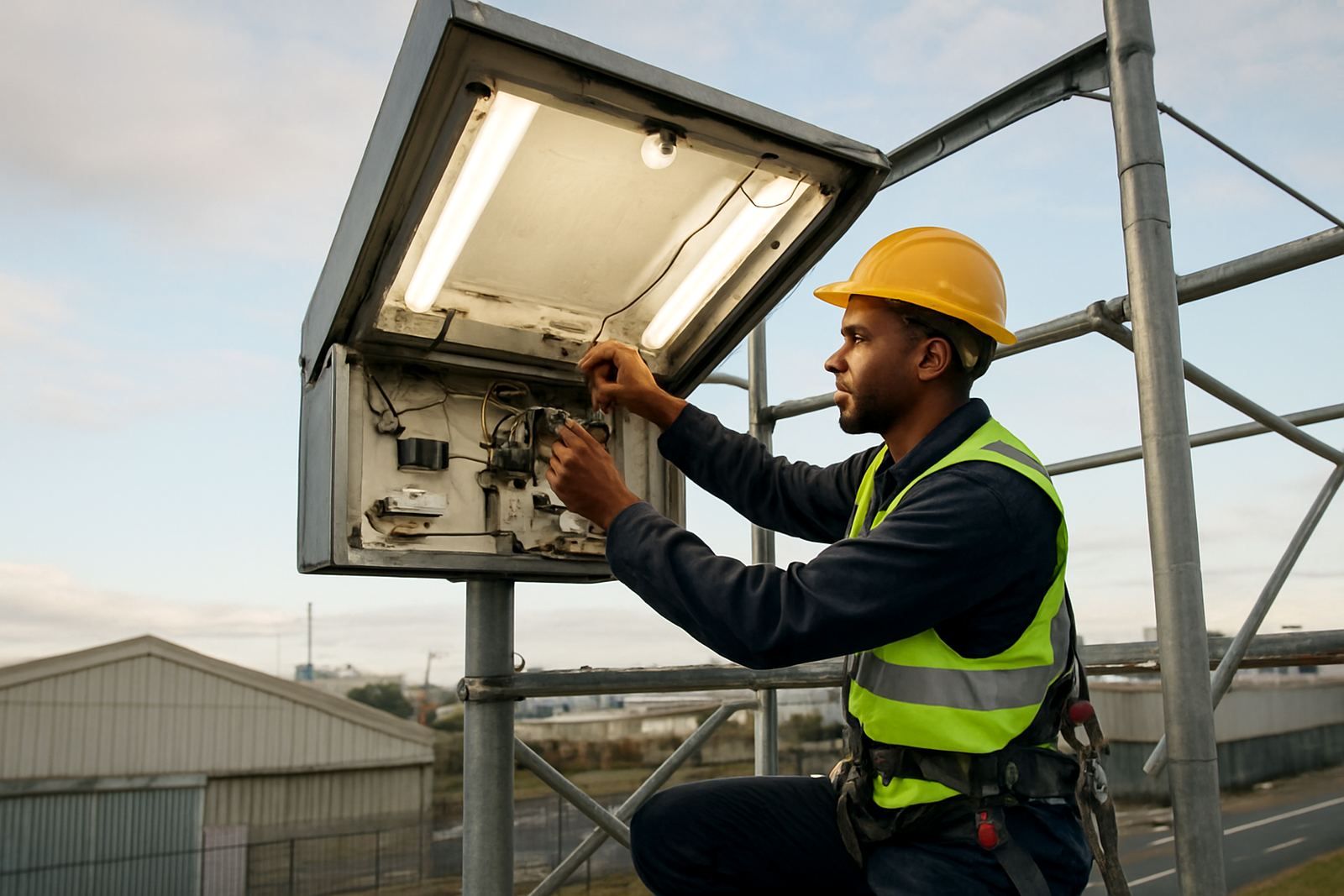
- Open the sign body safely and inspect the inside for dust, moisture and damage
- Check fixings, hinges, gaskets and locking points
- Test lighting components, transformers or drivers, and wiring connections where accessible
- Clean out debris and make sure nothing is left loose inside the casing
- Re-seal and re-secure the sign so it is ready for the next inspection
Where required, the team can also assist with sign relocations, lighting access and emergency callouts. For sign shops, this gives them one practical crew to call when a panel needs attention and the job must be handled without interfering with their own production or install work.
A Cape Town example: servicing a roadside fascia in Paarden Eiland
A typical job in Paarden Eiland might involve a roadside fascia with internal lighting that starts flickering after heavy wind and rain. The sign maker wants the issue checked without taking the whole sign down. The crew first confirms access, then sets up scaffold or platform work depending on the frontage and the available loading area. Once the body is opened, the inside is inspected for moisture, loose wiring and any damaged clips that could let the face move in stronger gusts.
If the issue is only a failed fitting or a loose connection, the team can often resolve it on site and re-secure the sign the same visit. If the sign needs a larger repair, the crew can close it properly and report back with clear notes so the sign maker can decide on the next step. That saves time, avoids guesswork, and keeps the client informed without sending multiple tradespeople to the same location.
Safety is not a side note on servicing work
Opening a sign body at height brings real risks. Panels can be heavier than they look, fittings can seize, and old electrics can be awkward to isolate. Our crews work with safety, scaffold and first-aid training, which matters on live sites where a small mistake can turn into a fall, a shock or damage to the sign itself. In Johannesburg, where access often happens close to busy roads or active retail centres, that preparation counts.
Good safety practice also means respecting municipal and site rules. Some locations need permits, some need after-hours work, and some need proper barricading before a lift can go up. If the sign sits on a building with tenant traffic, the plan must include the people below not just the crew above. That kind of detail is what keeps a servicing visit orderly rather than disruptive.
Why sign makers outsource servicing to a rigging crew
Sign makers are usually focused on fabrication, print, finishes and client handover. When a sign needs to be opened on site, they need a rigging crew that will protect their work and represent them well in front of the end client. That is the point of a rigging-only service. It avoids overlap, keeps roles clear and lets the sign maker stay in charge of the job from the first quote to final sign-off.
- Less downtime for the sign maker’s own installation teams
- Cleaner communication on site because one crew handles access and servicing
- Reduced risk of damage to the sign face, frame or building finish
- Support across the Western Cape and Gauteng, including Bellville, Somerset West, Paarl, Johannesburg CBD, Sandton, Midrand and the East Rand
For illuminated sign servicing, that separation matters. The sign shop keeps the client relationship and product knowledge, while the rigging crew handles the reach, the opening and the close-out. It is practical, tidy and much easier to manage when the sign has to be opened again next year.