

Why multi-sign sites need a different rigging plan
A single fascia sign can often be handled in one visit. A shopping centre, office park, filling station network or industrial estate with many signs is a different matter. There are working windows to fit around, tenants to brief, vehicles to move, lifts to book and safety controls to keep in sequence. If the order is wrong, a crew can end up lifting the same panel twice or blocking another trade from reaching the next point.
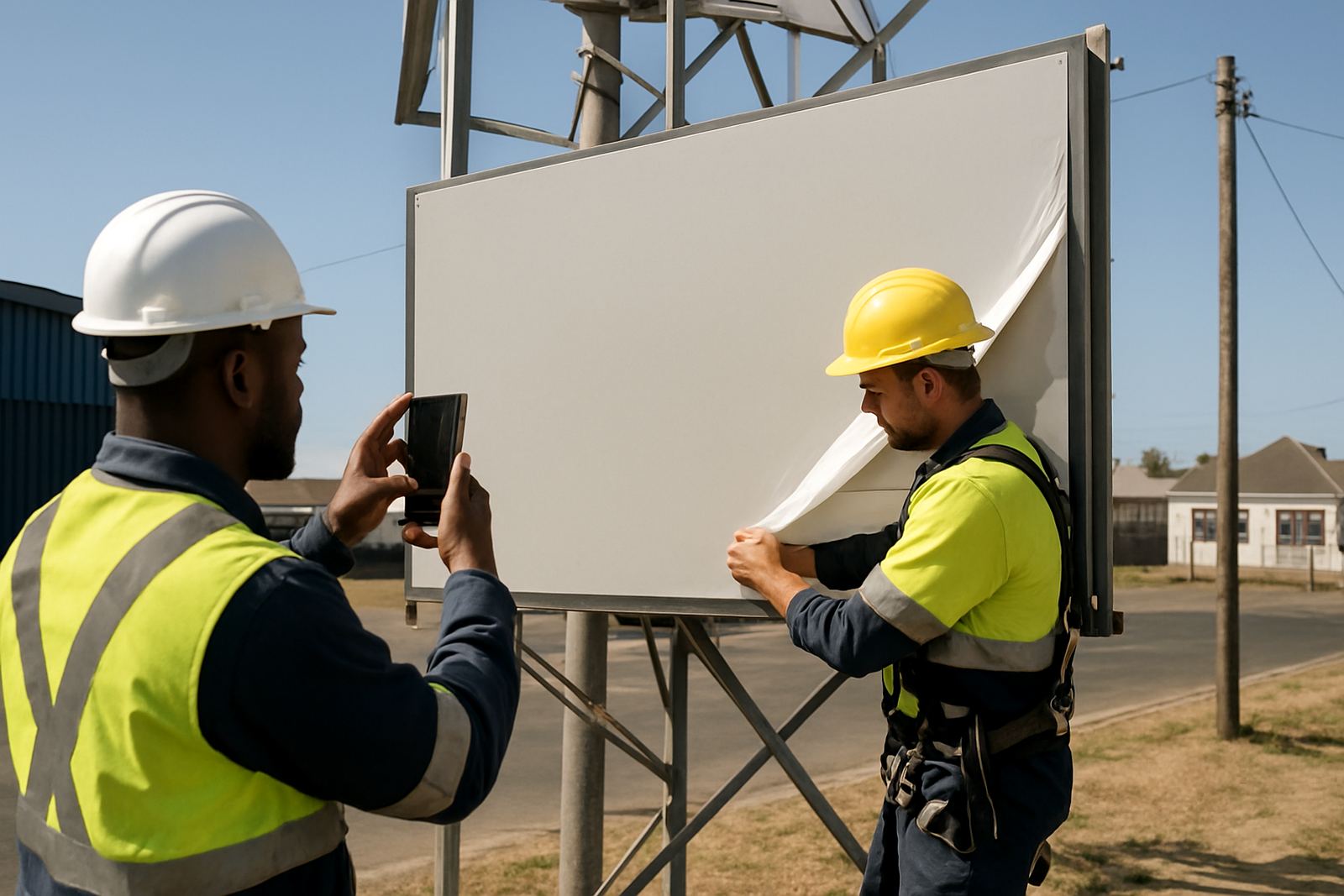
For sign makers, the pressure is usually on time and presentation. A site may need old signs removed, backing boards checked, new illuminated faces installed and then a second pass for final testing after the electricians have finished. That is where a rigging-only crew helps. We work as the access and installation partner, not as a competitor to the sign shop, so the handover stays clean and the client gets one chain of responsibility for the physical work.
On large rollouts the small details matter: where the crane or cherry picker can park, how the wind changes on upper elevations, whether the site allows work after hours, and which signs must be signed off first so the property can reopen sections of the site. In Cape Town coastal humidity can affect fixings and housings, while in Johannesburg you often work around tighter commercial access and heavy vehicle traffic.
The sequence that saves time on a rollout
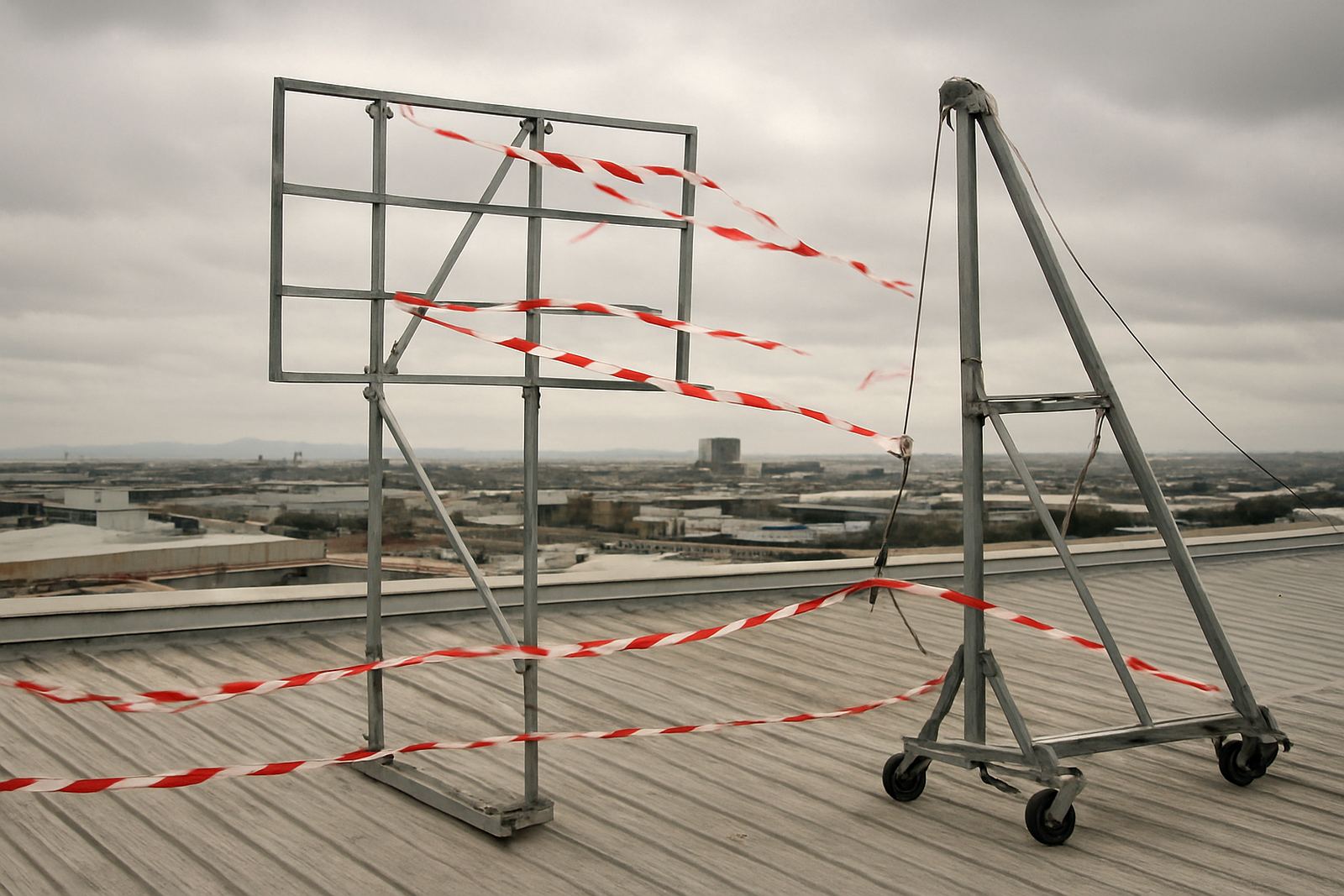
The best results come from breaking the project into zones. That might mean a forecourt, a main road face, a parking level and a rooftop set of signs all being treated as separate work fronts. Each zone gets its own access plan, removal step, install step and closeout check. This keeps the crew focused and lets the sign maker update the client as each part is completed.
- Confirm every sign location against the latest site drawing or marking-up schedule.
- Check access routes, overhead restrictions and ground conditions before the first lift.
- Remove old signs in the order that frees the next work area.
- Install new signs where power, fixings and backing surfaces are ready.
- Test lighting, alignment and fixings before moving the access equipment.
- Capture signoff per area so the client can release sections without waiting for the entire site.
This approach reduces downtime and keeps the site tidy. It also helps when weather turns or load-shedding changes the timing of lighting tests. If one zone has to pause, the other zones can still progress instead of the whole project stalling.
What a proper site survey should cover
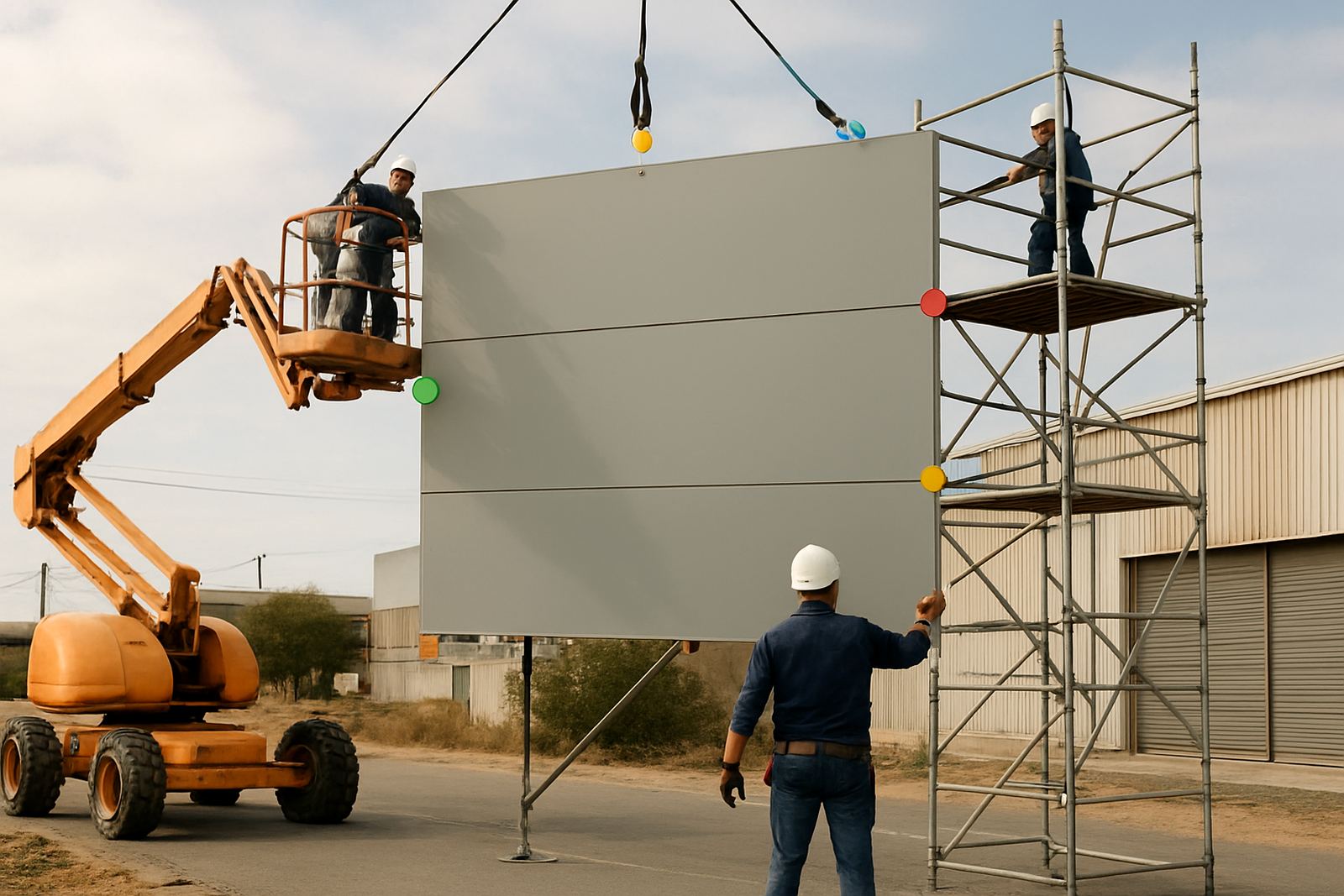
Before any big multi-sign job, a site survey should answer more than just height and width. It should confirm the number of signs, the condition of the mounting surfaces, the access method, the likely lift positions, and any municipal or property rules that affect working hours, road space or pavement use. For taller buildings, lift planning is important because a good setup avoids wasted repositioning and reduces risk to pedestrians and traffic.
We look at the practical questions first. Can a platform vehicle reach the rear elevation? Is scaffold required for a narrow internal courtyard? Are there power isolation points for illuminated signs? Will the team need to work around tenants, shoppers or security gates? If the site is in Sandton or Johannesburg CBD, parking and traffic control may need more lead time. In Paarden Eiland or Bellville, the challenge can be tight industrial access and loading bays that fill up early.
A careful survey also helps the sign maker quote properly. Knowing that a face change sits 10 metres up on a wind-prone corner is not the same as quoting for a ground-floor panel on a sheltered wall. Small differences in access change labour, equipment and timing, so the survey protects everyone from surprise costs later.
Safety on busy sites is a sequence, not a box to tick
When there are many signs in play, safety cannot be left to chance or handled at the end of the day. Our crews are scaffold trained, first-aid trained and used to working with access equipment in public and live commercial spaces. That matters when a site has delivery trucks, staff parking, shoppers or contractors moving around the same area.
Safe multi-sign work depends on a few basics being done well:
- Clear exclusion zones under each working face.
- Controlled movement of ladders, tools and panels between zones.
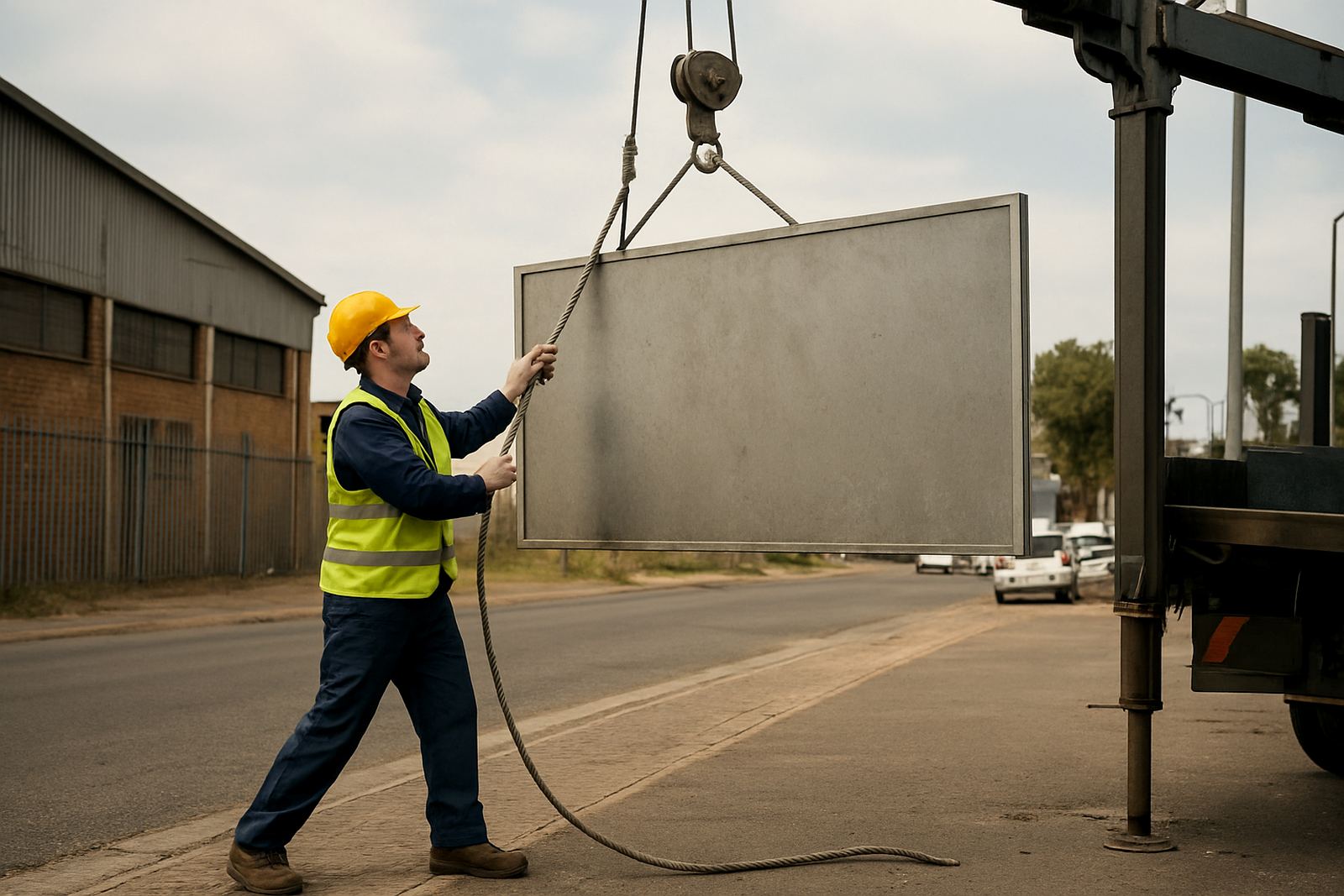
- Proper lifting plans for large or awkward sign bodies.
- Checks on wind, surface condition and lighting before each lift.
- Good communication with the sign shop, site manager and security team.
We also plan for the less obvious issues. A sign that looks light from the ground can catch the wind badly once it is free of the wall. A face change that should take an hour can take longer if the fixings are corroded or hidden behind an old bracket. Safety planning gives the crew room to handle those realities without rushing.
A local example: phased signoff at a retail and office mixed site
Consider a mixed-use property in Midrand with a retail section, shared parking and an office block. The sign maker may need old logos removed from the retail façade, new illuminated signs installed on the office side, and several smaller directional signs changed at ground level. If all of that is tackled at once, access becomes messy and the site can lose half a day just moving equipment around.
With a phased plan, the job starts with the upper elevation while the parking bay nearest the building is closed off for access. Once that area is complete, the crew moves to the retail frontage and then finishes with the lower directional signs near pedestrian routes. The sign maker can confirm each completed area with the client as it is done, instead of waiting for the whole site to be handed back at once.
This style of working is especially useful when a business wants one section trading while another is still under maintenance. It cuts disruption, keeps tenants informed and helps avoid the awkward situation where a finished area has to be revisited because another trade was still active nearby.
How sign makers and rigging crews should work together
The best multi-sign projects are the ones where each party knows its lane. The sign shop handles design, manufacture and client relationships around the signage scope. We handle the access, removal, installation and servicing work on the ground. That keeps the chain simple and avoids mixed instructions on site.
Good coordination usually means three things: a clear scope sheet, a confirmed access date, and a contact person who can make decisions if the site changes on the day. Ayesha on client liaison, Liam on rigging supervision and Pieter on fleet and access planning all play a part in keeping the schedule realistic. If the job shifts because of weather or another contractor, the crew needs to know which signs are priority and which can wait a day or two.
For recurring estates, retail groups and industrial parks, maintenance visits can be built into the same system. That way a failed light, loose face or damaged bracket can be dealt with before it turns into a bigger repair. It is a practical way to keep multiple signs looking consistent across the site.
What to send when you need a quote for several signs
If you are a sign maker pricing a multi-sign site, the more detail you send, the better the plan and the tighter the cost. A simple list of addresses is not always enough. We need the site layout, the number of signs, approximate sizes, access concerns and the work order if there is one. Photos help, especially if there are upper elevations, roof edges or signs hidden behind landscaping or awnings.
- Site name and suburb or town.
- Count of signs by location and type.
- Approximate dimensions and mounting heights.
- Whether it is removal, installation, servicing or a mix.
- Any access limits, working hours or security rules.
- Target dates and whether area-by-area signoff is needed.
For multi-sign sites across the Western Cape and Gauteng, that information lets us assign the right crew and equipment from the start. If the roll-out is in Somerset West one day and Sandton the next, planning early keeps the job moving and the client informed.