

Why tag lines matter on sign lifts
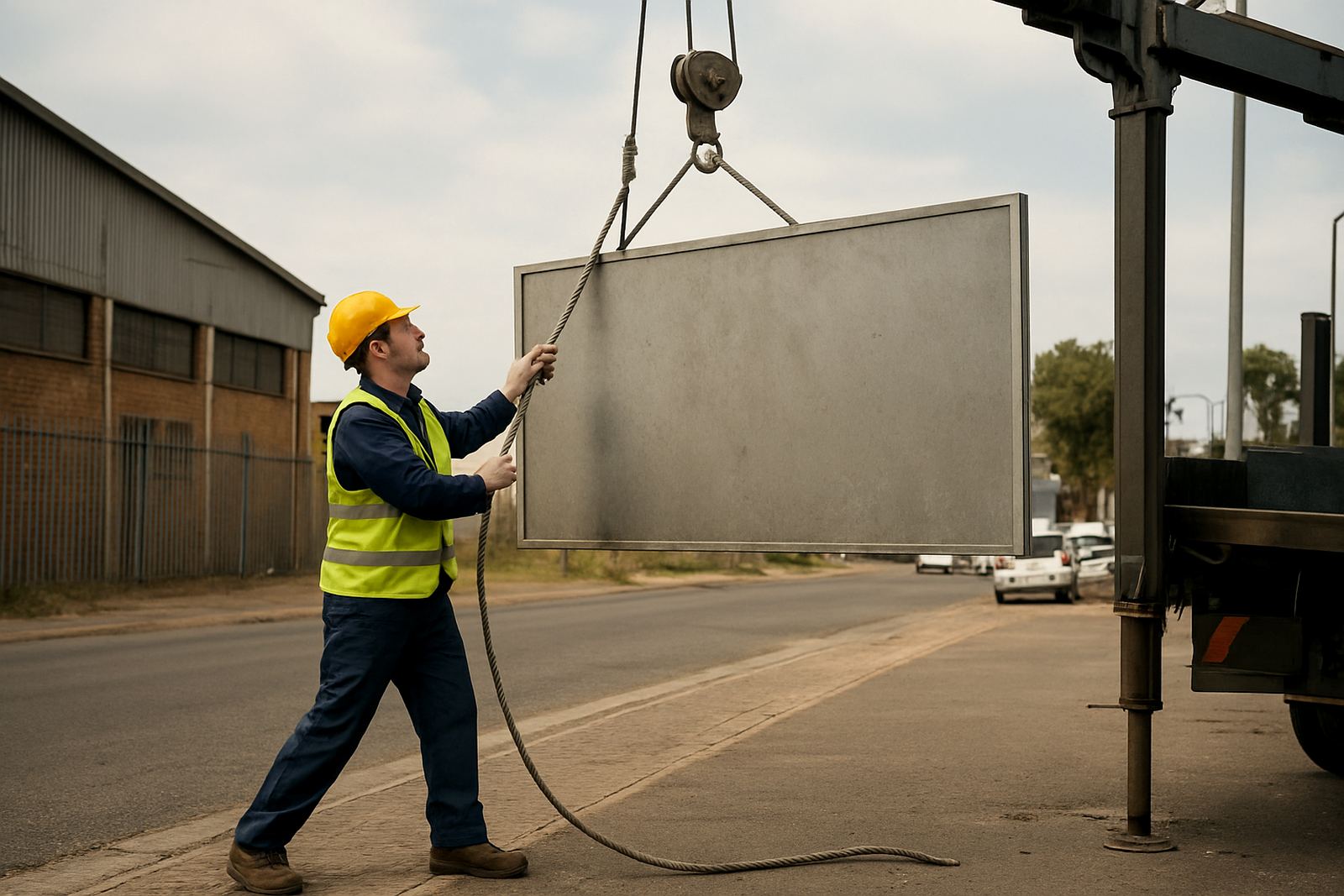
When a sign panel, bracket or box sign is lifted, it does not always stay still. Wind catches it, the load can twist, and even a short hoist can send the item swinging toward a wall, a glass frontage or a passing vehicle. A tag line gives the crew a direct way to guide that movement from the ground without standing under the load.
For sign work this is especially useful because many installations happen in narrow laneways, on busy pavement edges, in loading bays or close to traffic. In those spaces the person on the hook or in the access equipment needs the load kept steady while the ground team controls the angle. That matters whether the job is a new installation, a replacement face, or a removal before refurbishment. A clean lift is safer, quicker and usually causes less damage to the sign and the property.
How tag lines are used in practical sign work
A tag line is normally fixed to a lower corner or secure point on the sign, then held by trained crew members on the ground. The line is not used to lift the load, only to control rotation and drift. Good crews keep the rope clear of sharp edges, keep tension light, and make sure nobody wraps it around a hand or waist. On a windy day in Paarden Eiland or near an open road in Bellville, the line may need a second control point to keep the sign from turning sideways.
Before the lift starts, the supervisor should check the route, the landing point and the spaces where the crew will stand. If the load needs to move over a parapet, past a scaffold or around a tree, the line plan should match that path. The aim is simple, the sign should arrive where it is meant to go with no sudden swing and no last-minute corrections.
- Choose a line long enough to keep people out of the drop zone.
- Use a clean line with no knots, cuts or fraying.
- Keep clear hand signals between the lift team and the ground crew.
- Stop the lift if the wind or traffic makes control difficult.
What makes a tag line job safer on busy sites
The safest tag line work starts before the first hook goes up. A proper site survey should show where the load will travel, where the obstacles are and who controls the lift. For sign makers, this is important because the crew doing the rigging must work alongside the client’s own installation plan without stepping into the sign shop’s role. Good coordination avoids delays and cuts down on rushed lifting.
In roadside jobs the crew also has to think about pedestrians, parked cars and moving traffic. A sign on a service road near Sandton or on a shopfront in Johannesburg CBD can change behaviour very quickly if a driver or pedestrian steps into the wrong place. That is why trained crew members keep an eye on the surroundings while one person focuses on the line. It is not just about holding rope, it is about reading the whole site.
- Check wind direction before the lift, especially on tall façades and coastal streets.
- Mark off the working area so the public cannot walk under the load.
- Use scaffold, platform work or lift access where the sign position demands it.
- Keep first-aid trained staff on site for every scheduled rigging job.
Typical sign jobs where tag lines help most
Tag lines are not only for large billboard parts. They are useful on many ordinary sign jobs where control matters more than size. A small illuminated sign can still spin in a gust, and a heavier panel can catch on a ledge if the angle is wrong. That is why tag lines are part of day-to-day rigging for installation, removal and servicing work.
Common jobs include face changes, sign relocations, maintenance visits and emergency callouts after storm damage or vehicle impact. In places like Somerset West and the East Rand, where access can vary from neat retail centres to older industrial buildings, the crew may need different line lengths or different access methods on the same day. The right setup depends on the site not on a standard routine.
- Billboard face changes where the panel must be kept flat during handling.
- Sign removals from roadside poles and shopfront brackets.
- Lighting access jobs where the sign must be stabilised while the crew reaches fittings.
- Relocations where the sign is moved from one wall or yard to another.
A local example from a tight Cape Town street
Picture a sign replacement in Paarden Eiland on a windy afternoon. There is a narrow verge, delivery trucks nearby and a sign panel that must come off the wall before a new face goes in. Without a tag line, the panel can twist as soon as it clears the bracket and knock against the façade or swing toward the road. With the line in place, the ground crew can guide the load away from the wall and keep it aligned while the supervisor signals the next move.
The same idea applies in Johannesburg CBD where the problem is often not wind alone but space. A truck bay may be full, the pavement is busy and the lift path is limited by street furniture. In that setting a tag line is one of the simplest ways to keep the load predictable. It may look like a small detail, but on a real site it often decides whether the job runs smoothly or turns into a delay.
What sign makers should ask before the rigging crew arrives
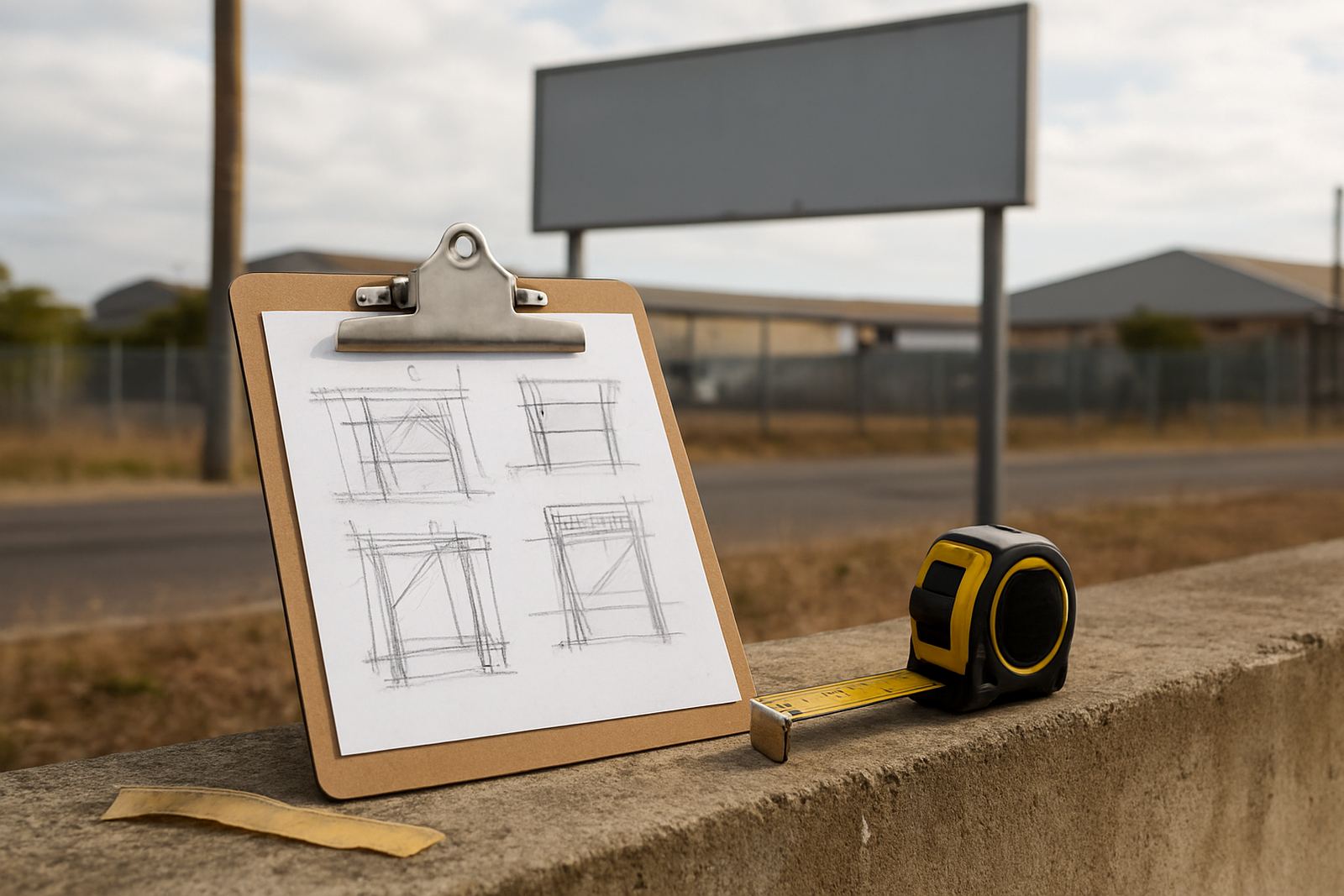
If you are planning a sign job, the best time to think about tag lines is before the crew gets to site. Share clear dimensions, weight estimates and photographs of the mounting area. Mention any overhead cables, low awnings, restricted access or time limits from the landlord or municipality. The more accurate the brief, the better the rigging plan.
It also helps to confirm whether scaffold access, platform work or lift planning will be needed. Some sites need more than one control point, especially where the sign has to pass over cars or work is being done after business hours. At Sign Riggers, the goal is always to support sign makers with safe rigging only, not to step into their fabrication or sales work. That keeps the arrangement simple and practical for everyone involved.
- Send exact sign sizes and estimated weight.
- Share photos of the wall, pole or roofline.
- Flag any traffic, power or access restrictions early.
- Tell the crew if the job needs emergency timing or after-hours work.
Control the load before it starts to move
Tag lines are not complicated, but they do require discipline. The crew needs the right spacing, the right communication and a clear understanding of when to stop the lift. In sign rigging, that small bit of control can protect a façade, a vehicle and a worker at the same time. It is one of the most practical habits a crew can bring to site.
For sign makers working across Cape Town and Gauteng, it pays to use riggers who treat tag line control as part of the full lifting plan. That means proper access planning, trained staff and a crew that knows how to handle signs in tight urban spaces, roadside positions and exposed coastal conditions. If the line is managed well, the whole job is easier to finish cleanly.