

Why many sites choose the night shift
Night install coordination is not just about working in the dark. It is about getting a site ready when the public has gone home, delivery trucks have cleared out and security can control who comes in. That suits shopping centres in Bellville, office parks in Sandton, roadside pylons along busy routes, and any property where daytime access would block tenants or slow traffic.
For sign makers, the main benefit is simple: less disruption. A lift parked across a loading bay at 7am can upset a whole day’s operations. After-hours work gives the rigging crew room to set up scaffold, position a platform, complete the fixings and test lighting without rushed interruptions. It also helps when a sign change has to happen before the next trading morning, or when a failed light needs attention before peak footfall starts.
We have been doing rigging work since 2008, so the pattern is familiar. The jobs that go best at night are the ones where access is tight, the site is busy, or the sign sits above an entrance that must stay open in the day. That includes fascia signs, pylon faces, directional signs and maintenance visits where the work area needs to stay clear of customers and staff.
How the coordination is planned before sunset
Good night work starts well before the crew arrives. A proper plan checks site rules, lifting access, parking, security procedures, power isolation and the timing of any municipal or body corporate approvals. On a coastal site in Paarden Eiland, that also means allowing for wind and salt exposure. Inland, the main concern may be tighter security access or limited room for access equipment in a basement parking court.
We usually build the sequence around these practical steps:
- Confirm site access times and who will open and close the area
- Check the exact sign position, height and fixing points
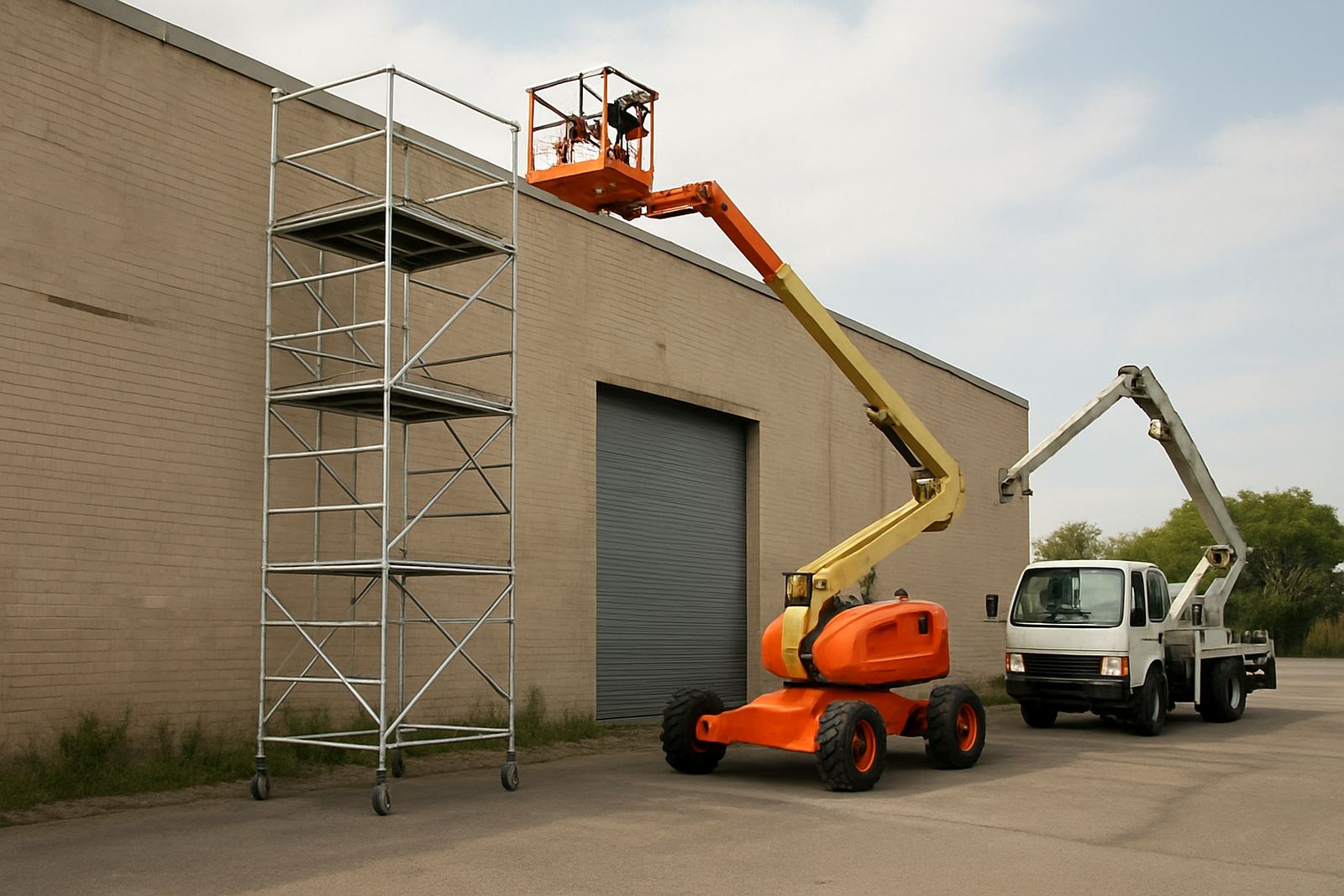
- Plan scaffold, platform or lift access before the crew arrives
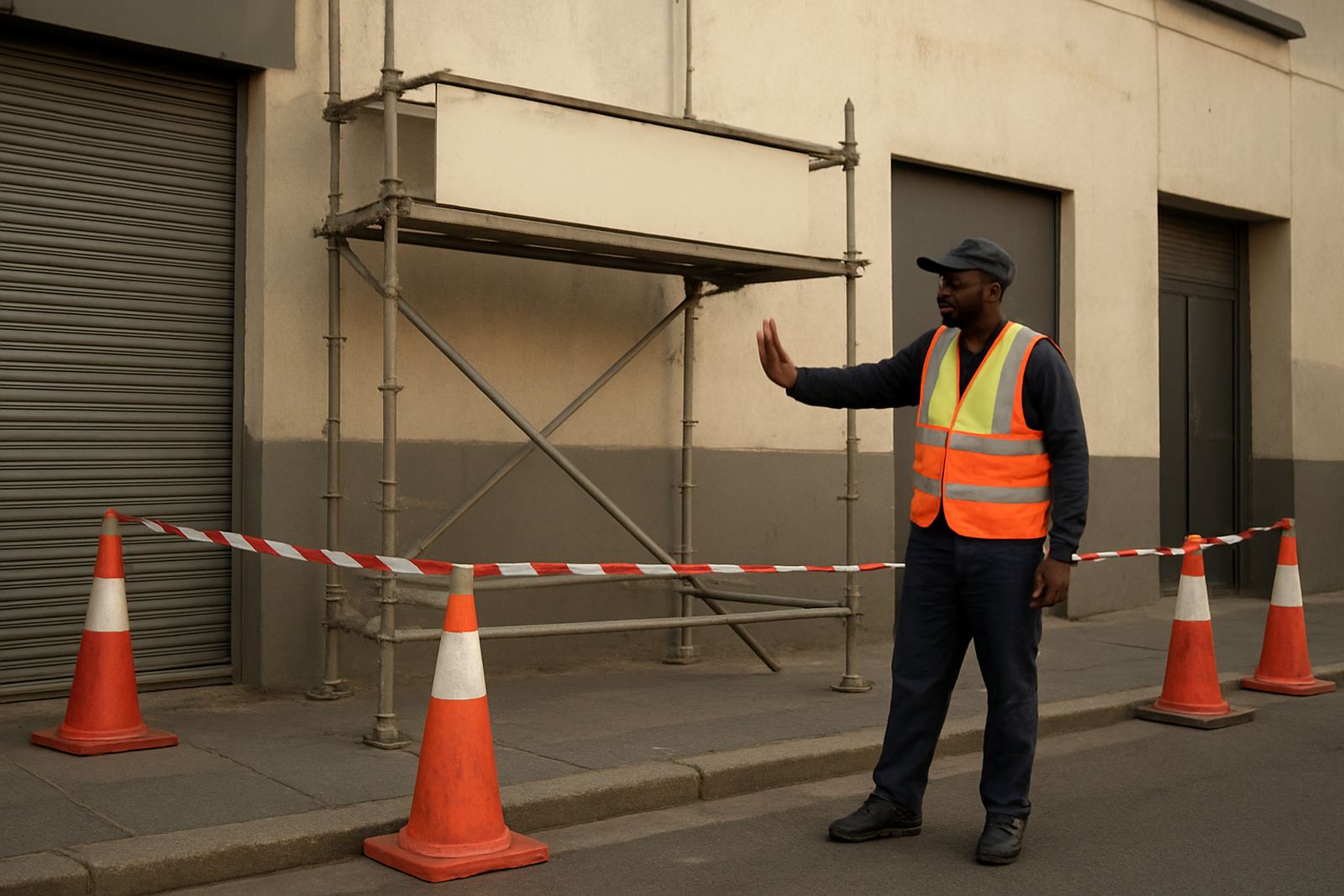
- Arrange traffic control where loading or road edge work is involved
- Confirm lighting isolation and restart checks
- Set out the handover time so the site is ready before first trade the next day
That planning matters because one small delay can push a job past midnight and into extra cost. Clear lift planning also reduces the chance of double handling, which is where night jobs can become expensive very quickly.
Safety does not change after dark
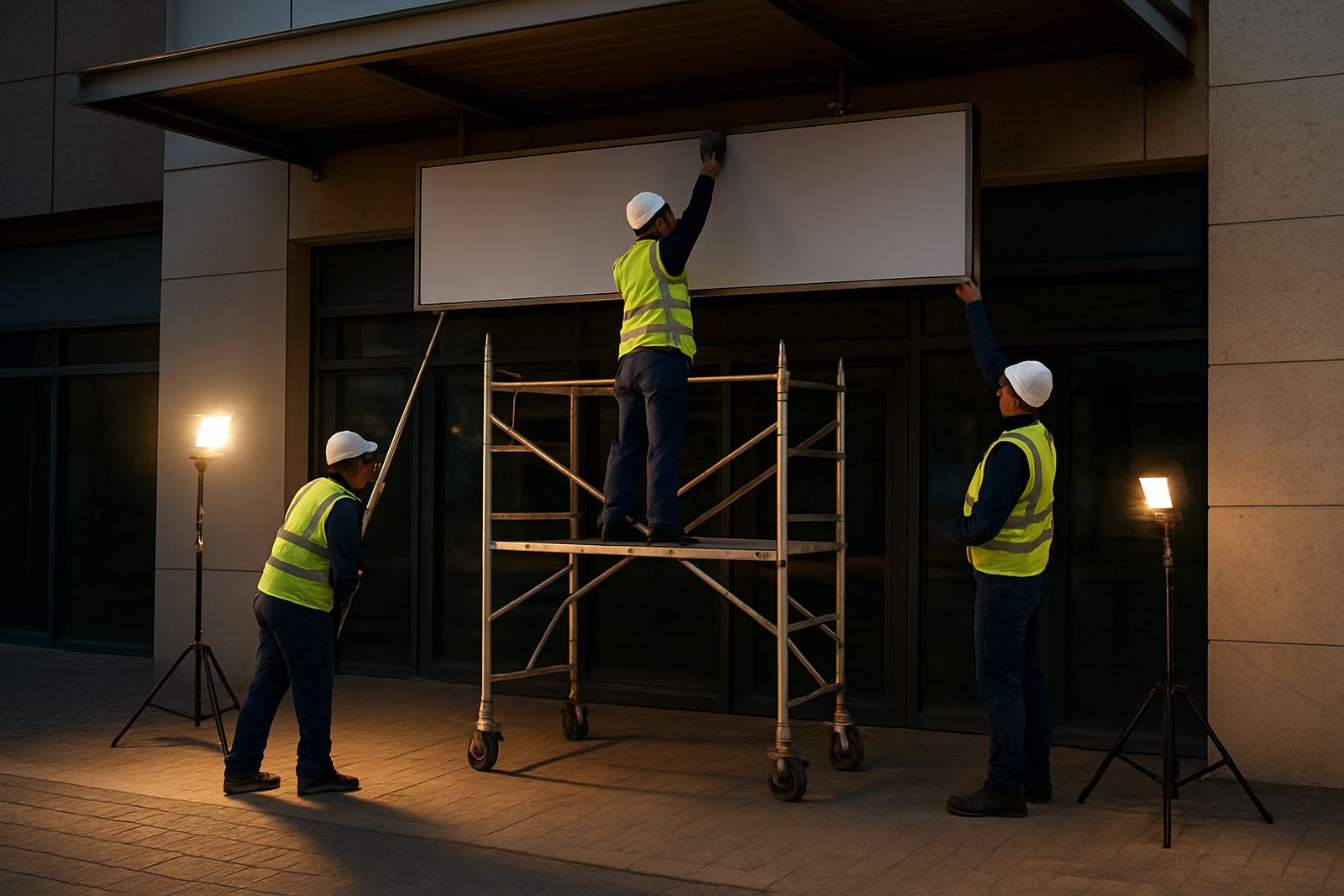
Some clients think a night shift is easier because fewer people are around. In practice, it needs more discipline, not less. Visibility drops, fatigue can set in and a quiet site can still have hazards like open service pits, wet paving, low kerbs or loose cables. Our crews are scaffold trained, first-aid trained and used to working under stricter lighting conditions, with the right controls in place from start to finish.
For a sign maker, that means the rigging team should arrive with the right access gear, clear lifting methods and a proper plan for weather changes. In Gauteng, sudden evening storms can turn a clean installation into a slippery job within minutes. In Cape Town, coastal humidity and wind can make fixings and panels harder to handle if the timing slips. Night work needs more than a torch and a good attitude, it needs method.
- High-visibility controls and site lighting where needed
- Signed-off access routes for crew and equipment
- Trained handling of panels, frames and electrical components
- Emergency callout readiness if a sign fails during trading hours
- Clear communication with security, cleaners and site managers
A calm site at night is still a work site, so every step must be treated that way.
Where night installs make the most sense
Some locations practically ask for after-hours work. Shopping centres often need sign changes after close so customers are not walking under lifts or scaffold. Office buildings may allow night access only, especially where reception, parking and tenant movement are tightly controlled. Roadside signs and billboards can also be easier to work on after traffic drops, although the planning for cones, permits and safe loading areas has to be tighter.
There are also times when a sign must come down first before anything else can happen. A damaged blade sign, a failed illuminated face, or a weather-worn panel may need removal at night so the replacement can go back up before opening time. This is common in busy areas such as Johannesburg CBD, Midrand and the East Rand where daytime access is limited and security rules are strict.
When the work is scheduled properly, night coordination helps with service visits too. A lighting fault or loose bracket can be checked after hours without interrupting tenants, and a quick repair can prevent a larger issue the next day.
A local example from a busy centre in Somerset West
One useful example is a retail centre in Somerset West where a sign replacement had to happen without affecting the evening trade. The client wanted the new fascia in place before the next morning, but the loading area was busy during the day and the frontage stayed active until late. The crew carried out the survey in daylight, then returned after close with the correct access gear, fixings and lighting checks already prepared.
Because the plan was tight, the old sign came down first, the new sign went up in the same shift and the area was handed back clean before the first security sweep of the morning. No trading bays were blocked during the busy part of the day, and the sign maker could keep the customer informed without promising an unrealistic turnaround. That is the point of night coordination: it protects the site while still getting the job finished on time.
Jobs like that are less about drama and more about timing, proper sequence and a crew that knows how to work quietly and safely around other people’s property. It sounds simple but in practice it saves a lot of trouble.
What sign makers should ask before booking night work
If you are quoting a client for after-hours sign work, it helps to ask a few direct questions before the crew is booked. The answers decide whether the job needs scaffold, a platform, traffic control or a second visit. They also show whether the site is truly suitable for a night install, or whether a daytime survey first would save time later.
- What time can the crew enter and what time must the site be cleared
- Is there secure parking for the truck and access equipment
- Will power need to be isolated and restarted after the work
- Are there height, weight or loading restrictions at the site
- Does the landlord, body corporate or centre manager need notice
- Is there any roadside exposure that affects traffic or pedestrian movement
Those questions are especially important where the job spans more than one area, such as a head office in Sandton and a branch sign in Bellville. Good coordination keeps the same standard across both sites, even if the access conditions are very different.
The value of a rigging crew that works with the trade, not against it
Sign Riggers only handles the rigging side of the work. That matters because sign shops need a crew that can install, remove and service signs without stepping into their client relationship. After-hours coordination fits that model well. The sign maker keeps control of the project, and the rigging team does the access, lifting and fixing work around it.
For malls, offices and roadside locations, that approach keeps everyone focused on the same result: a safe site, a properly fitted sign and no unnecessary interruption to trading. When the job needs night work, it also helps to have a team that knows Cape Town and Johannesburg conditions, from Paarden Eiland wind to Gauteng security rules. The detail changes from site to site, but the principle stays the same: plan it properly, work safely and hand it back ready for morning.
If the timing is right, night install coordination can make a difficult site much easier. If the timing is wrong, it can become an expensive mess. That is why the best jobs are the ones planned with care from the start.