Why public safety zones matter on live sites
A sign project is never just about the sign itself. In Paarden Eiland, Bellville, Sandton or the Johannesburg CBD, there are always people nearby: shoppers pushing trolleys, tenants coming in and out, delivery drivers reversing, and motorists looking for parking. A public safety zone is the controlled space that separates them from ladders, lifting gear, tools and overhead work.
For sign makers, this matters because the job does not stop at fixing a face or hanging a lightbox. The crew has to protect the public from falling objects, moving plant, electrical risks and trip hazards. On a live site, one loose cone or one open cable tray can cause an incident very quickly, especially when the area is busy and people are distracted.
At Sign Riggers, the aim is simple: keep rigging work contained, visible and orderly, without taking over the site any more than needed. That is how you keep centre management, tenants and road users calm while the job moves along properly.
How a safety zone is set up before the first lift
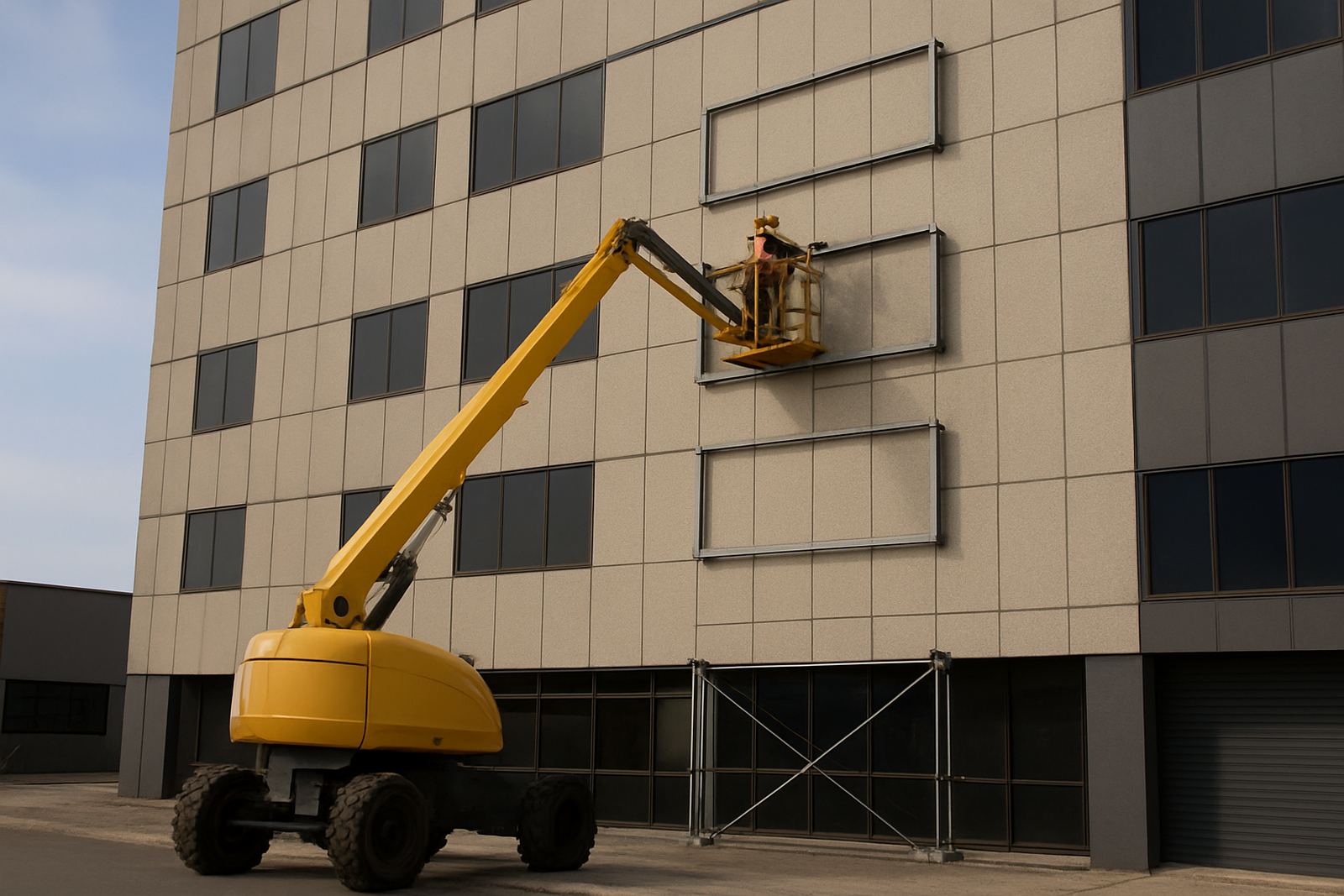
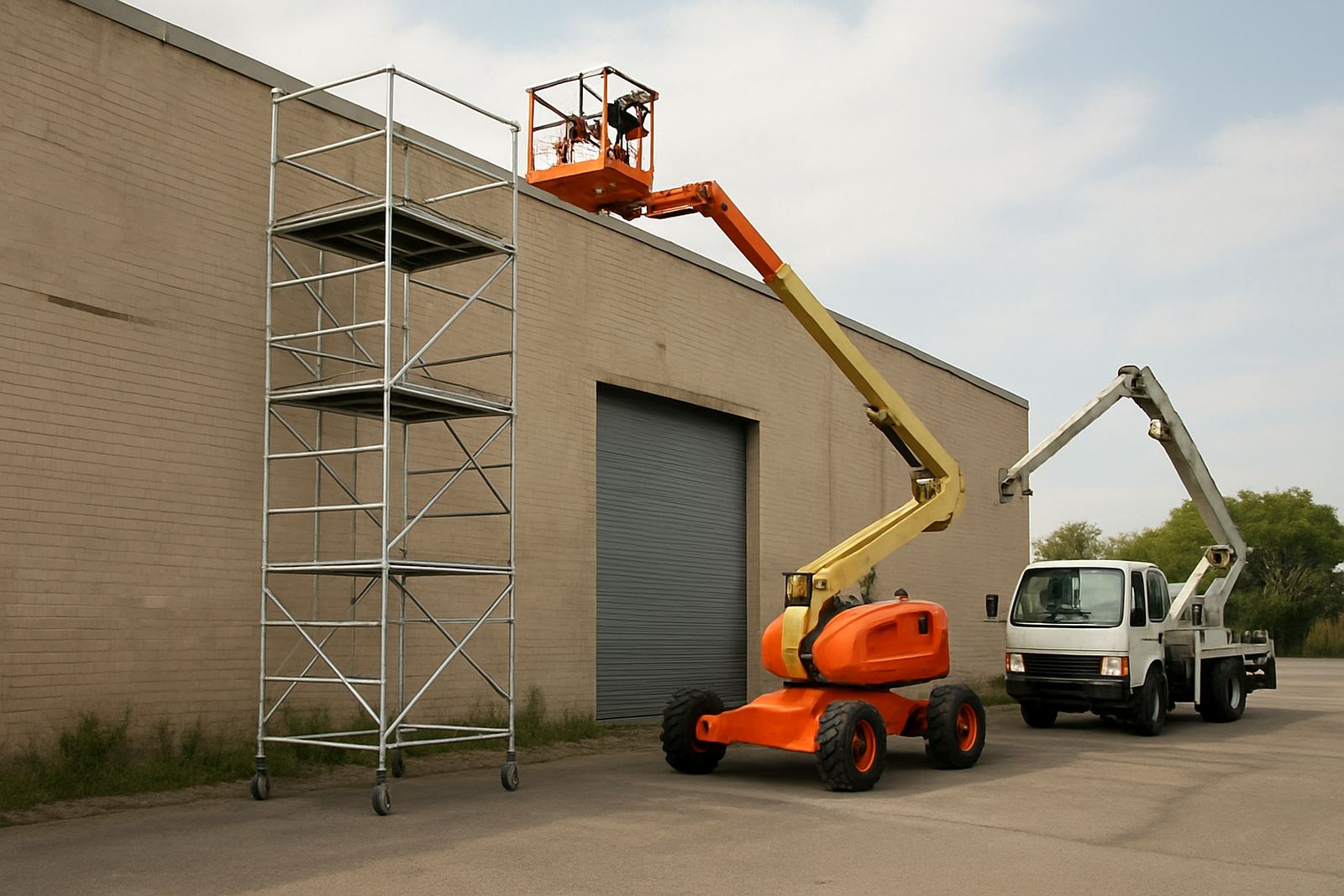
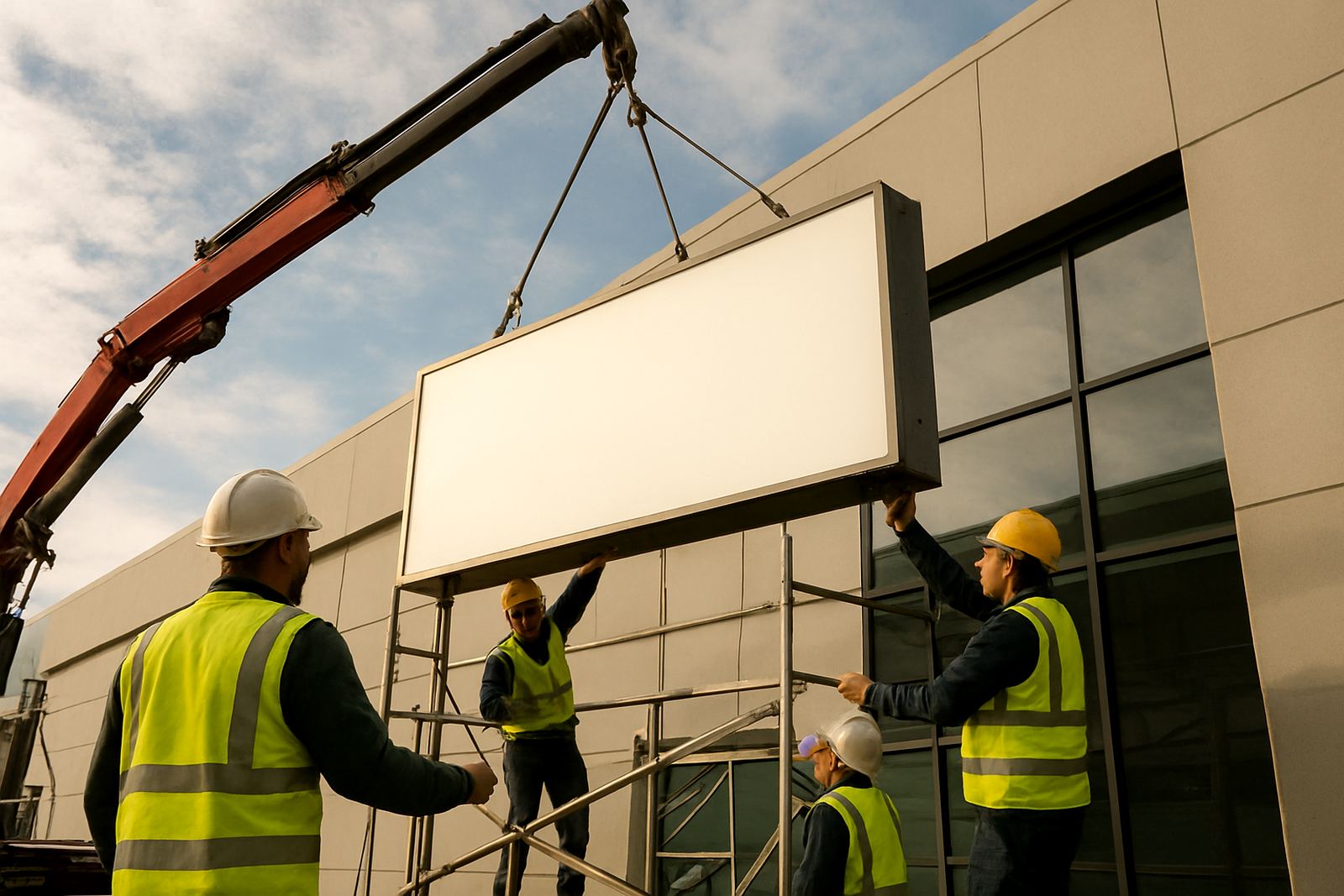
Before any sign is removed or installed, the crew should walk the site and decide where the public will pass, where vehicles turn, and where the work will actually take place. A proper site survey helps with this. So does lift planning, especially where a crane, scissor lift, boom lift or scaffold access is involved. The point is to plan the exclusion area before tools come out of the truck.
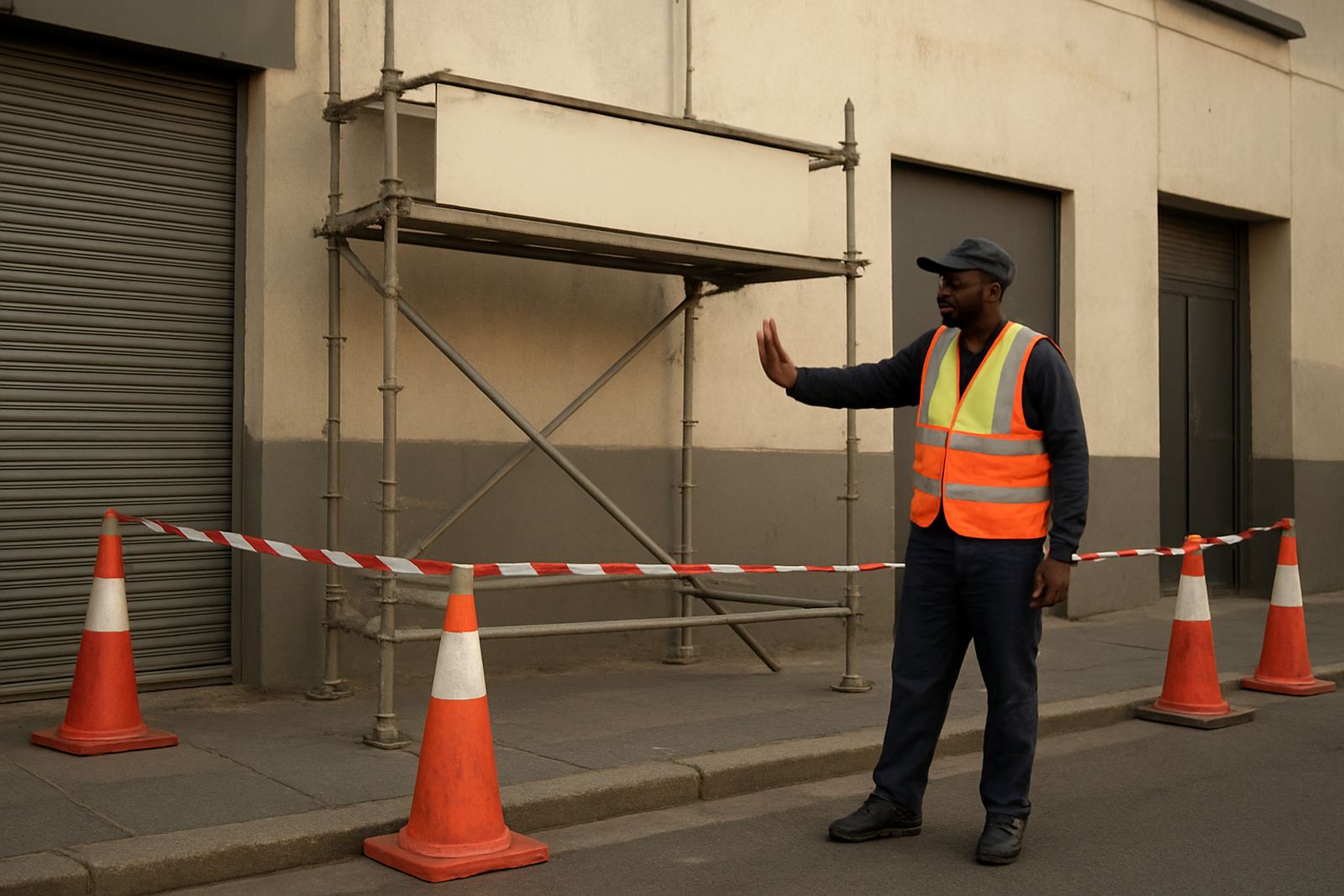
In practical terms, the zone may include cones, barrier tape, rigid barricades, warning signage, a spotter and a clear pedestrian route. On a retail centre in Somerset West, for example, the walkway may need to stay open for foot traffic while the team works from the parking side. In an industrial street in Midrand, the priority may be keeping forklifts and delivery trucks out of the lift path.
- Mark the work area clearly before unloading equipment
- Keep one controlled entry point for the crew only
- Move loose materials, offcuts and packaging out of the public path
- Check overhead cables, trees, awnings and glass fronts before starting
- Use a spotter where pedestrians or vehicles are moving close by
When the setup is done properly, the public can see where the work is happening and where they should not go. That visual control is often the difference between a smooth day and a complaint from a tenant or security guard.
What shoppers, tenants and motorists need to be protected from
Different sites bring different risks. A shopping centre in Paarl has a steady flow of parents, children and trolley traffic. A commercial tower in Johannesburg CBD has taxis, delivery bikes and people crossing from every direction. A forecourt in the East Rand can have moving vehicles only metres from the lift point. Each one needs its own safety plan.
The main hazards are usually easy to list, but they must be managed properly every time. Crews should look out for falling debris, tools dropped from height, unstable access gear, exposed electrical fittings, vehicle movement and sudden changes in weather. Coastal wind in Cape Town can turn a light panel into a sail, while summer storms in Gauteng can make lifting unsafe in minutes.
- Falling items from height during removal or installation
- Trip hazards from cables, hoists, ballast, brackets and packaging
- Vehicle impact where work happens close to parking or loading bays
- Electrical risk when servicing illuminated signs
- Wind, rain and lightning that affect access equipment and lifting
A good safety zone is not only about stopping people from walking under the work. It is also about controlling how they move around the site so nobody cuts through the lift path by mistake.
Working with property managers and sign makers without confusion
Sign rigging crews work for sign makers, not against them. That means there must be a clear line of responsibility before the crew arrives. The sign shop should confirm the scope of work, the fixing method, the height, the access equipment and any special site rules. The property manager or centre management should confirm parking, gate access, after-hours requirements and public circulation points.
When everyone knows the plan, the public safety zone can be set up faster and with less disruption. It also helps avoid common mistakes like arriving without enough ballast, blocking a fire route, or placing barriers where they interfere with tenant deliveries. On busy sites, a short delay at the start is better than shutting down half the walkway after the job has begun.
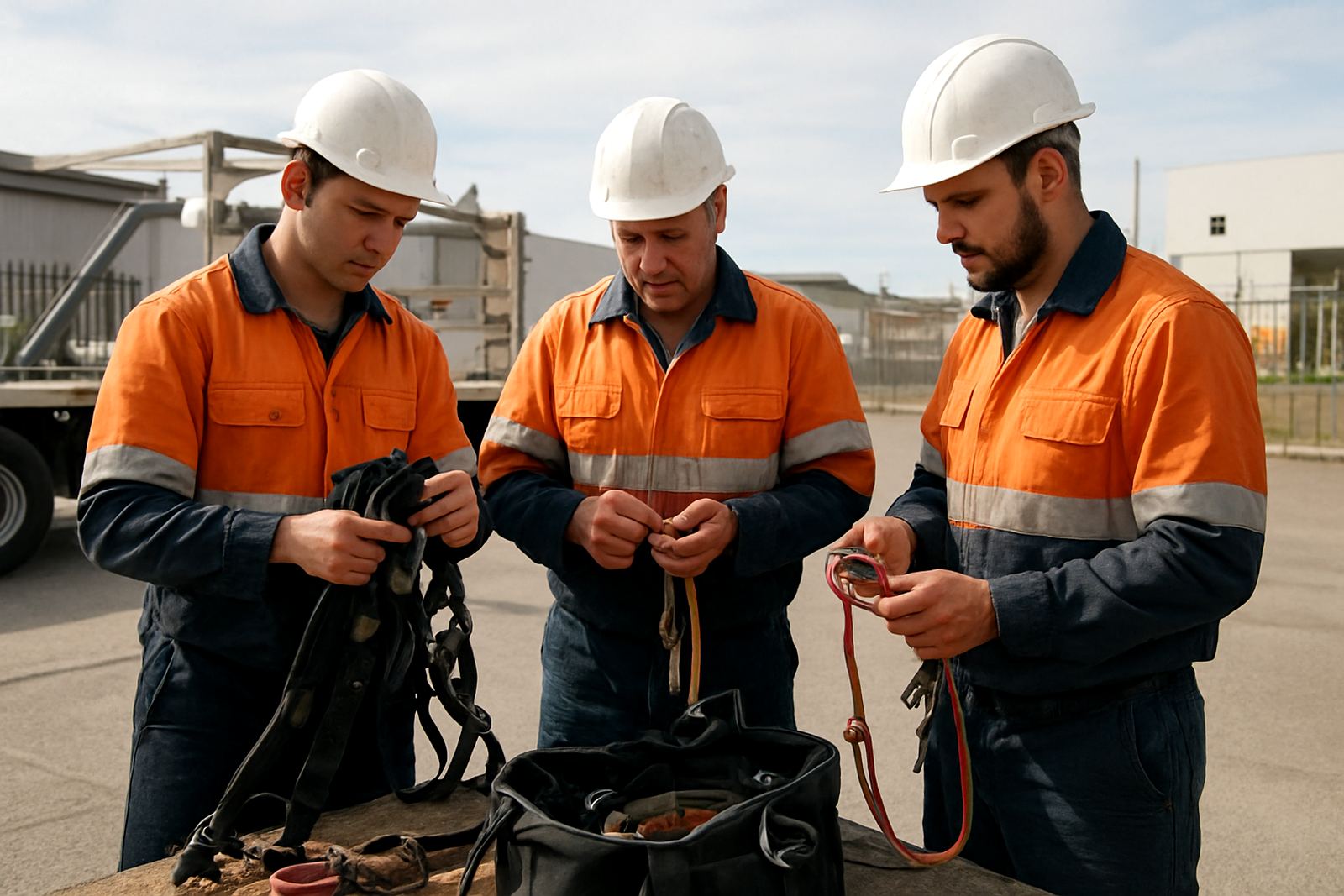
At Sign Riggers, the crew structure supports this kind of coordination. Gareth van der Merwe oversees the operation, Thandi Mokoena handles coordination, Liam Jacobs supervises rigging, Sibusiso Dlamini keeps safety controls in place, Ayesha Daniels manages client communication, and Pieter Coetzee looks after fleet and access planning. That makes it easier to keep the site orderly and the public protected.
Local example: a billboard face change near a busy road
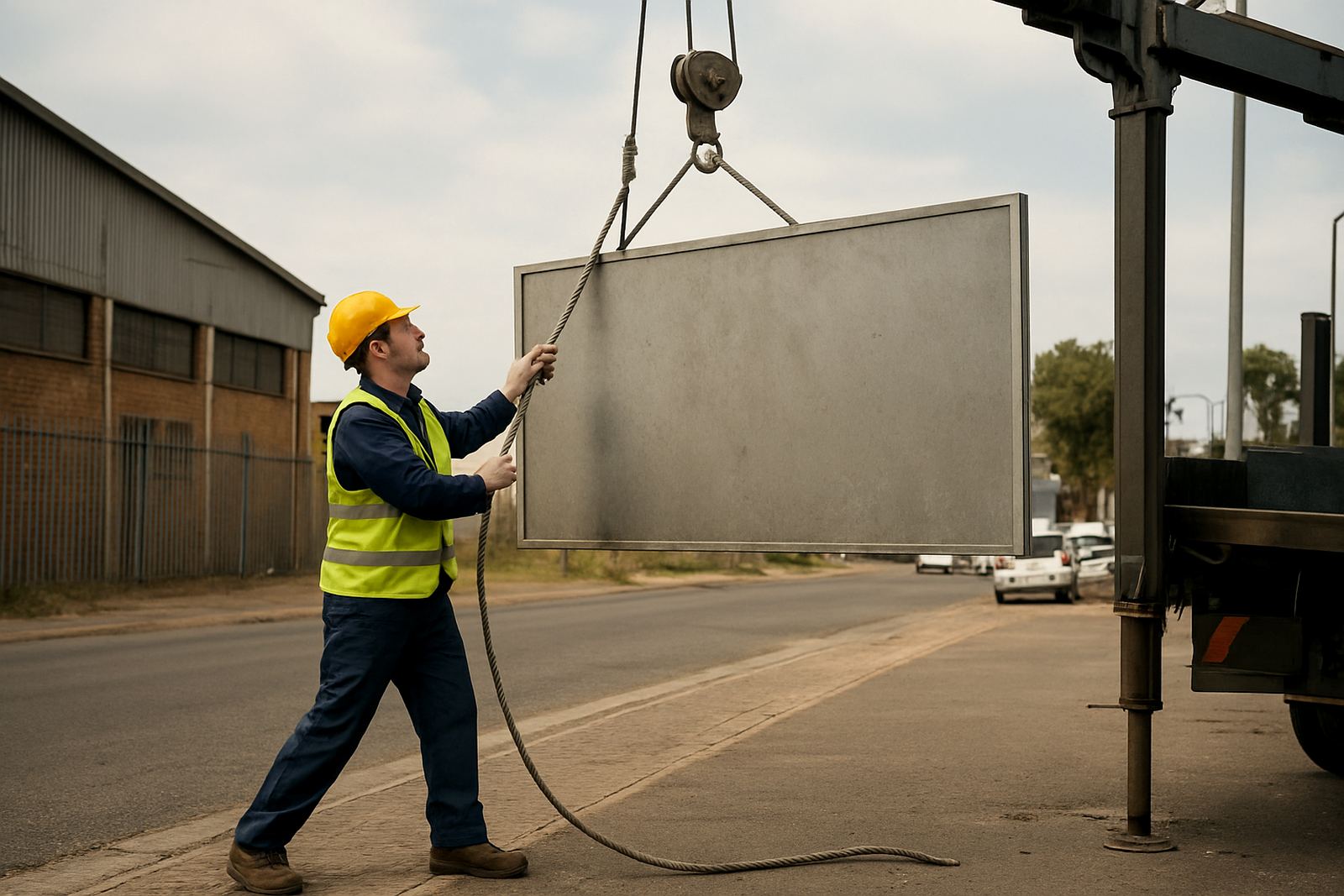
Take a billboard face change near a main route in the Western Cape. The site may sit close to traffic, pedestrians and a service road with limited space. The crew first checks the access point, the wind exposure and the edge protection needed for the structure. Then the public safety zone is set out so no one can drift into the working area while the old face comes down and the new one goes up.
In that situation, the crew may need early morning access, a spotter on the ground, and temporary control of the pavement or shoulder. If there is a roadside taxi stop nearby, the exclusion area has to be extended and clearly visible. If the job runs long, the team may need a maintenance visit later to check fixings, lighting access or minor alignment after the first load of traffic and wind has passed.
That is the kind of practical thinking that matters on public sites. The safest plan is the one that fits the real space, not just the drawing.
- Check wind and weather before lifting large panels
- Protect the public route with barriers, not just tape where possible
- Schedule work around trading hours when needed
- Keep emergency callout procedures ready for unexpected issues
- Inspect the finished sign and the area before reopening it to the public
What a safe rigging crew leaves behind
Once the sign is up or removed, the safety zone should not be left as an afterthought. The crew should clear waste, remove barriers in the correct order, tidy any marks or debris, and hand the area back in a clean state. On retail sites and office parks, that final clean-up matters as much as the installation itself because it affects how the public reads the whole job.
A proper handover also includes checking that the sign is secure, lighting access is safe, and no loose parts have been left behind. If the job was done near a public entrance, the pavement or parking lane should be opened only when the area is fully safe. That is especially important in places like Bellville or Sandton where traffic builds quickly and people do not always notice a half-finished work zone.
Public safety zones are not complicated. They just need discipline, planning and crews who respect the site. Done properly, the work looks calm from the outside even when the rigging behind it is demanding.