Why a fixing point is only as good as the surface behind it
Sign makers often focus on the sign face, illumination and finish, but the real risk sits behind the sign. A clean panel or brick wall can look sound and still hide weak mortar, corroded fasteners, hollow cladding or water damage from years of coastal weather. In Cape Town, salt air around Paarden Eiland and the Atlantic seaboard can work into fixings fast, while in Gauteng the issue is often heat movement, dust and older facades with patch repairs.
When a sign is loaded onto a poor substrate, the failure usually starts small. A bracket loosens, a chemical anchor bites into friable material, or a load gets carried unevenly and the sign starts to shift. That is why we always treat substrate checks as part of the job, not as an optional extra.
What we look for before any load goes up
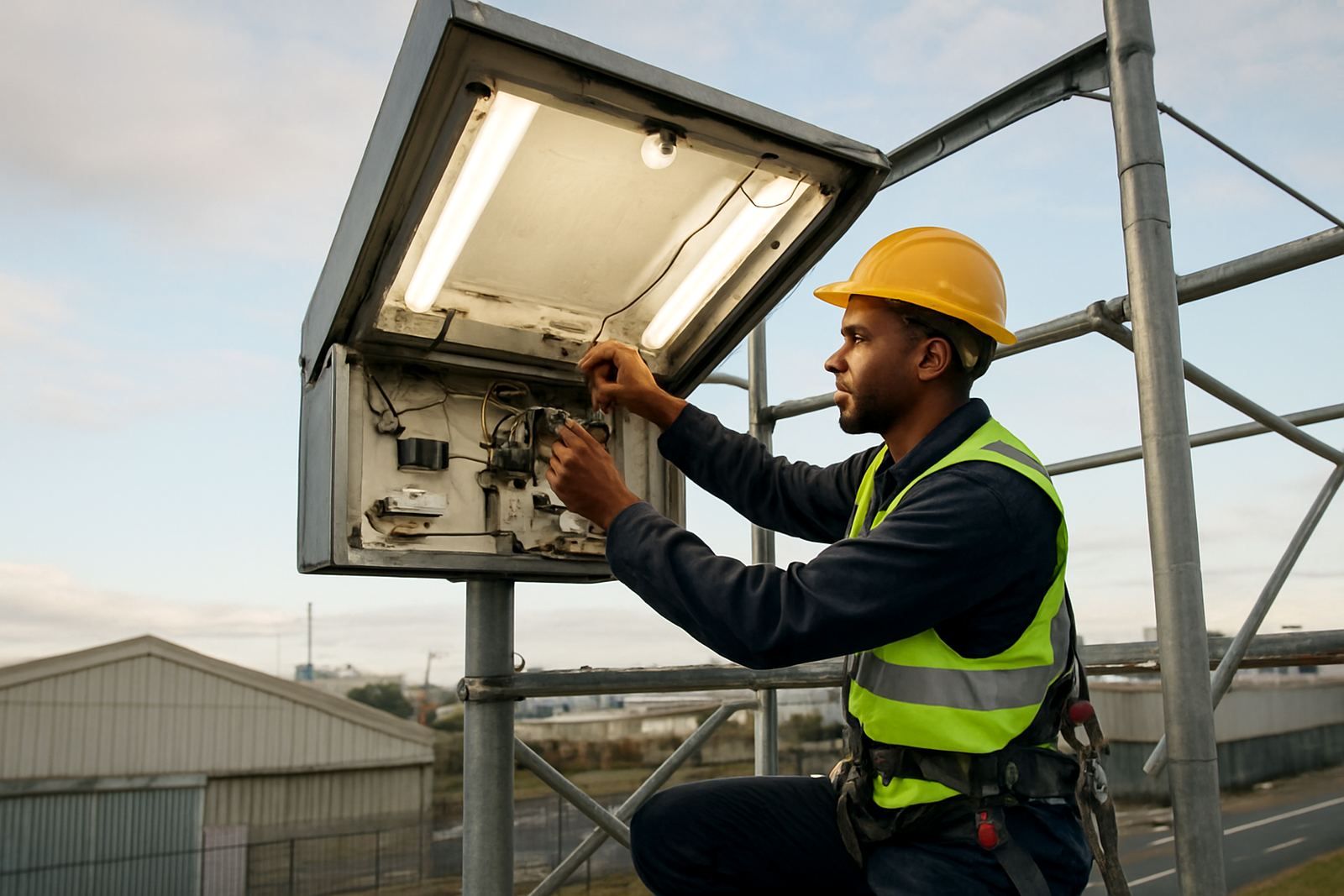
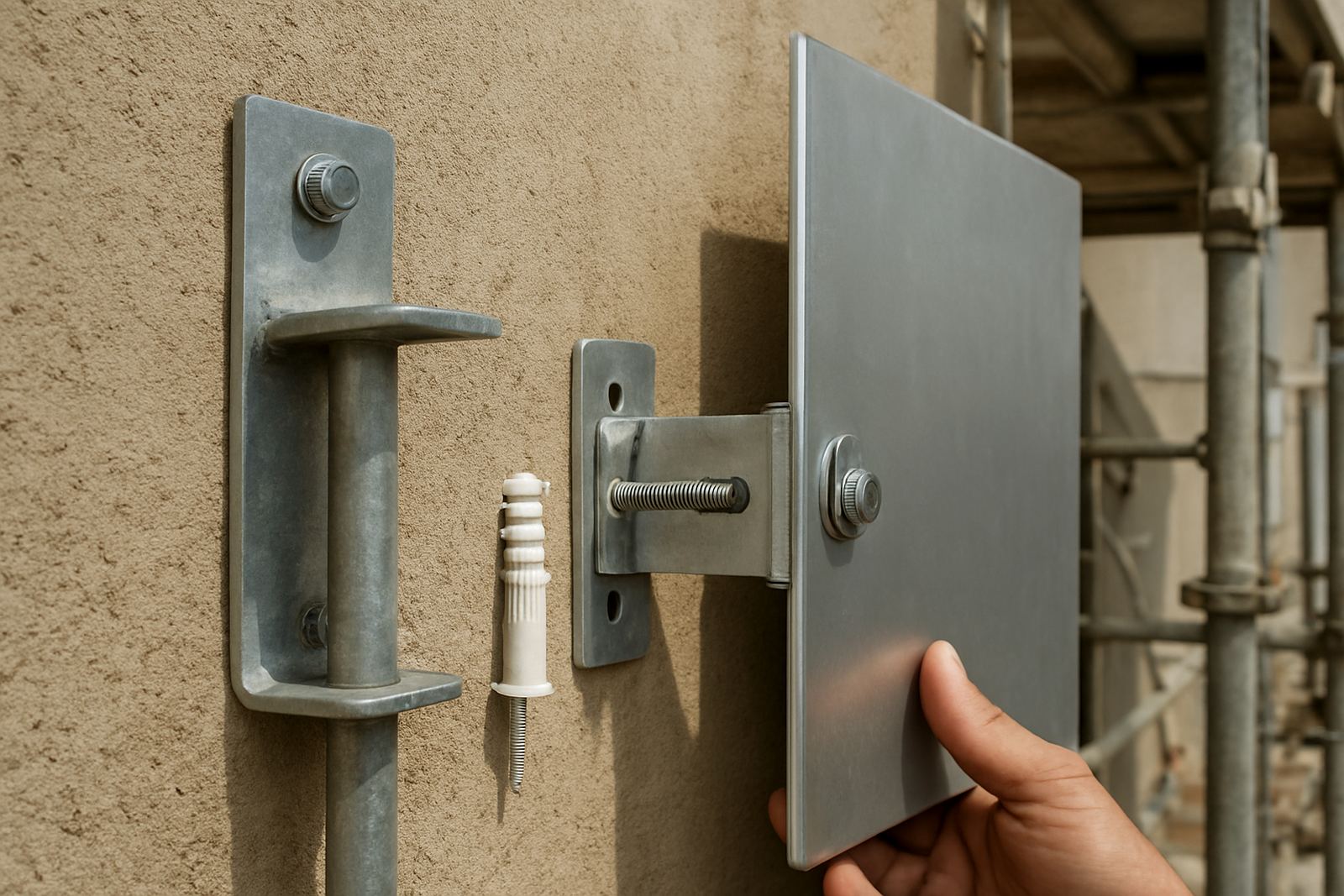
Every facade is different, so the inspection has to be practical. We look for the type of wall, the condition of the fixing area, access for safe drilling, and anything that could affect the long-term hold of the installation. A good sign can still fail if the base is not right, even when the lifting plan is correct.
- Wall material and thickness, including brick, concrete, steel frame or cladding
- Signs of water ingress, rust staining, cracking or soft patches
- Existing holes, old anchors and hidden repairs
- Clearance for brackets, cable runs and lighting access
- Wind exposure, height and the likely movement of the building face
For sign shops, this matters because the first site visit often decides the mounting method. A light panel on a secure concrete face may need a simple bracket set, while a larger channel-letter sign on composite cladding might call for distributed fixing points or a secondary support frame.
Common substrate problems we find on Western Cape and Gauteng sites
On suburban retail sites and industrial parks, the problems are often not dramatic. They are small weaknesses that add up. We regularly find cladding that has been fitted over soft backing, masonry that has weathered badly, and old penetrations that were sealed once then forgotten. In some cases the original contractor used a fixing pattern that suited the first sign but not the replacement sign with a different weight or size.
Local conditions matter too. Near the coast, fixings can seize or lose grip faster if the wrong material was used. In busy parts of Johannesburg CBD and Sandton, older buildings may have hidden alterations from previous tenants, so the surface you see is not always the surface carrying the load. That is why a quick visual check is not enough, even if the site looks neat.
- Salt-related corrosion on exposed steelwork in coastal areas
- Cracked render hiding poor bond to the base wall
- Hollow sounding panels that do not take point loads well
- Loose parapet edges and unstable access zones
- Past fixings that were oversized, under-sized or simply not sealed properly
How substrate checks protect the sign maker's reputation
Sign makers rely on the final result looking right and staying put. If a sign sags, tilts or comes loose, the complaint often lands with the company whose name is on the fascia, even if the issue started in the wall behind it. This is why our crews work as rigging only support for sign shops, not as competitors. We fit, service and remove signs, but the design and supply side stays with the sign maker.
A proper substrate check gives the maker clear information before fabrication or installation. It can show whether the sign needs a revised fixing layout, a lighter construction, extra spreader plates or a different lift sequence. That saves call-backs, reduces site risk and keeps the client from paying twice for the same job.
Practical fixes when the facade is not ideal
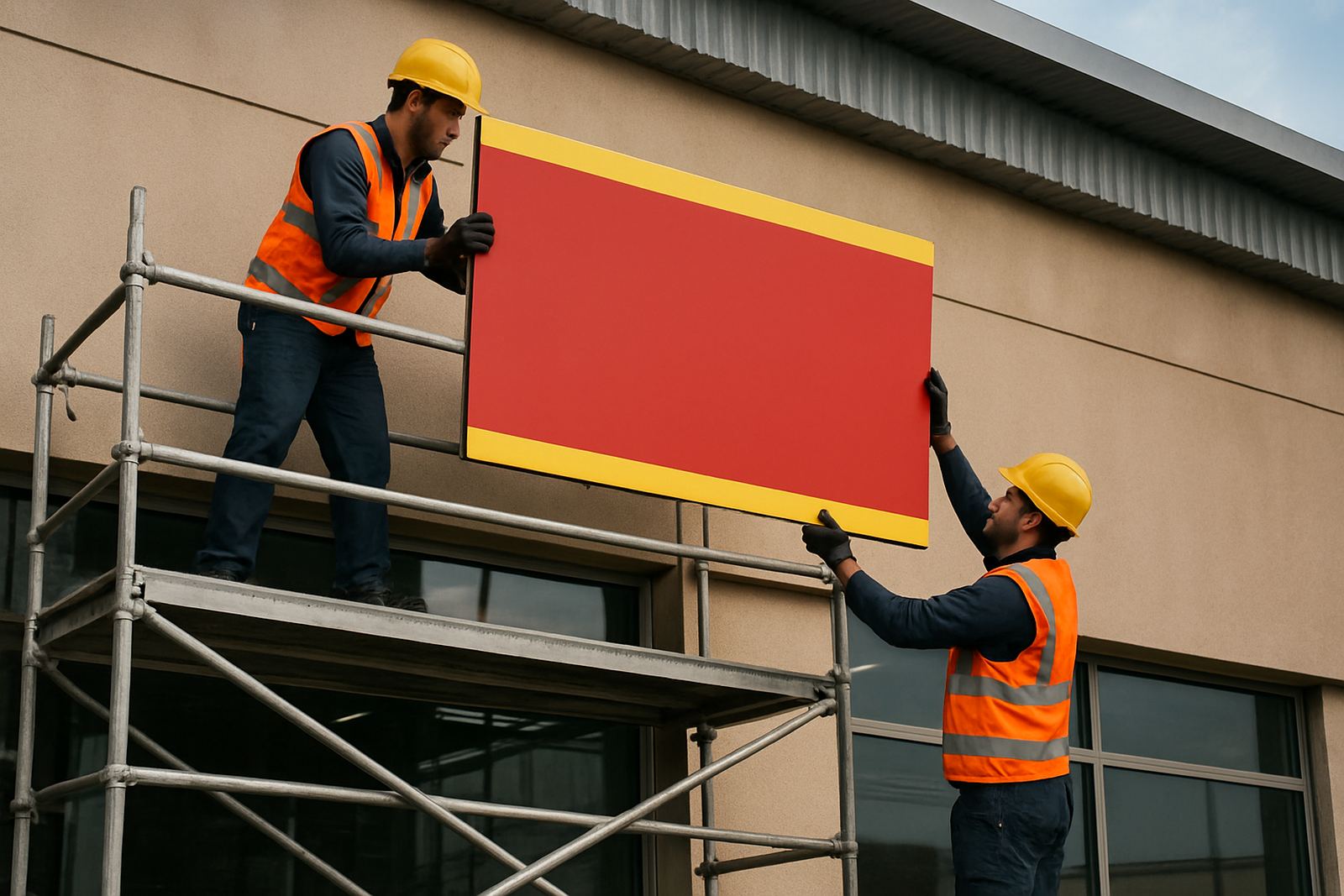
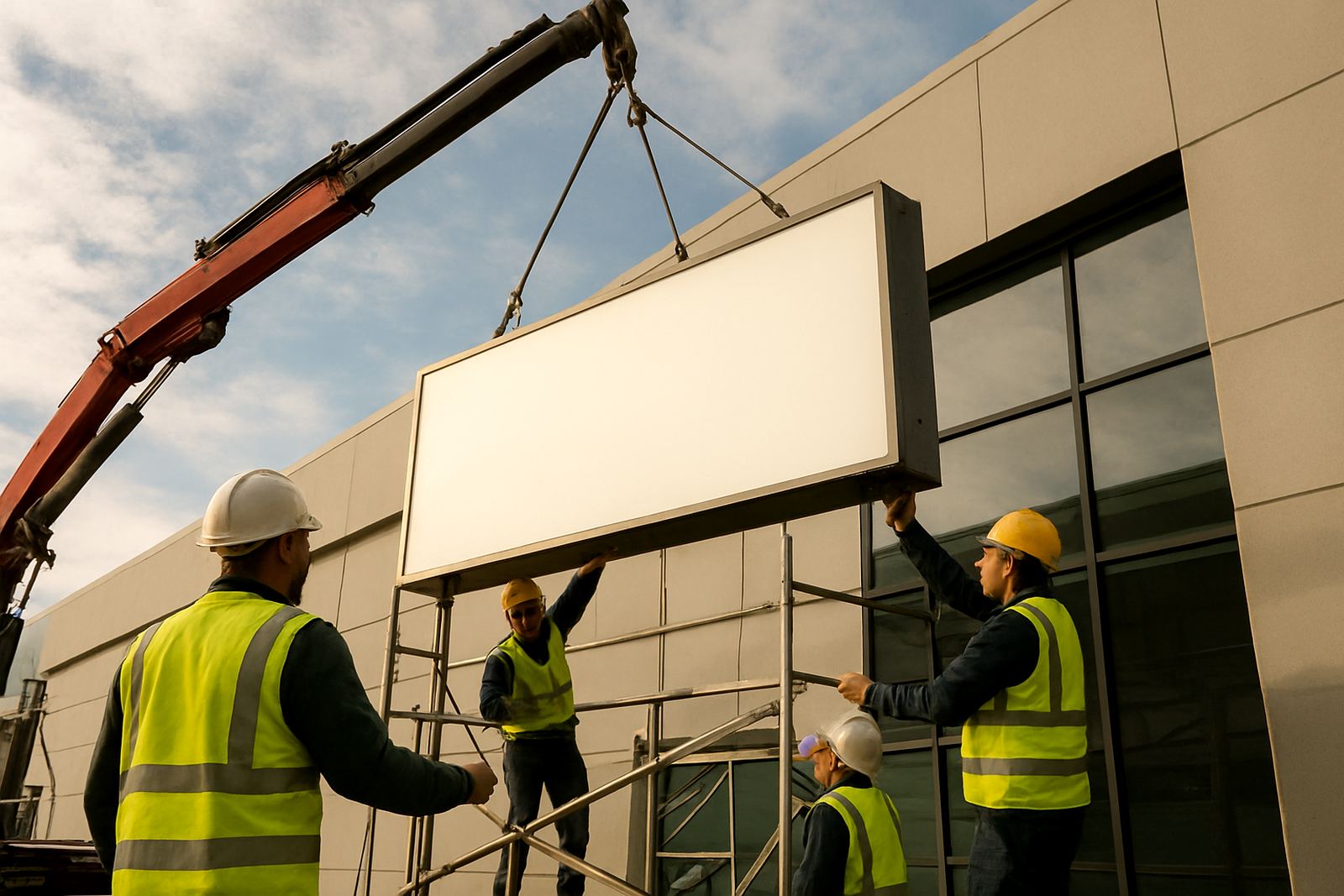
Not every site starts perfect. The answer is not to force a standard fix into a weak wall, but to match the mounting method to the conditions. On some jobs we recommend a site survey first, then lift planning and access decisions before any tools come off the truck. That is especially useful for billboard face changes, sign relocations and maintenance visits where the existing support may be tired already.
Depending on the wall and the load, we may suggest alternative fixing positions, scaffold access, platform work or a smaller lift window during business hours. In some cases, the safest route is to repair the substrate before the sign goes back. It may take longer, but it avoids hidden strain on the structure and keeps the work compliant with local site rules and building controls.
- Use more fixing points to spread the load
- Shift the sign to a stronger part of the facade
- Add a secondary support frame where needed
- Re-seal penetrations to protect against moisture ingress
- Schedule work around wind, traffic and tenant access
A Paarden Eiland example: when the wall said no
At a light industrial property in Paarden Eiland, a replacement sign looked straightforward from ground level. The face was clean, the old bracket holes were still visible and the client wanted a quick turnaround before a Friday trading rush. Once our team inspected the substrate properly, we found that the cladding was thinner than expected and the previous fixings had been pulling against a weakened section near the edge. One strong gust would have turned a neat job into a callout.
We paused the installation, adjusted the fixing layout and set up a safer access method for the crew. The sign went back on with a more suitable support pattern and the client avoided a future maintenance issue. That is the value of checking the structure before the load arrives. It is not about slowing the job down for the sake of it, it is about making sure the sign stays where it should.
What sign shops should ask before they book the rigging crew
Good coordination makes the whole job smoother. If a sign maker gives us the size, weight, height, site location and the type of facade, we can plan the right access and lifting method from the start. That helps with staffing, scaffold delivery, traffic control and timing around load shedding or tenant access restrictions.
Before booking, it helps to know:
- What the sign is made from and how heavy it is
- Whether the facade is brick, concrete, steel or cladding
- How high the fixing points are from ground level
- Whether there is safe access for ladders, scaffold or a platform
- If the site needs after-hours work, or an emergency callout
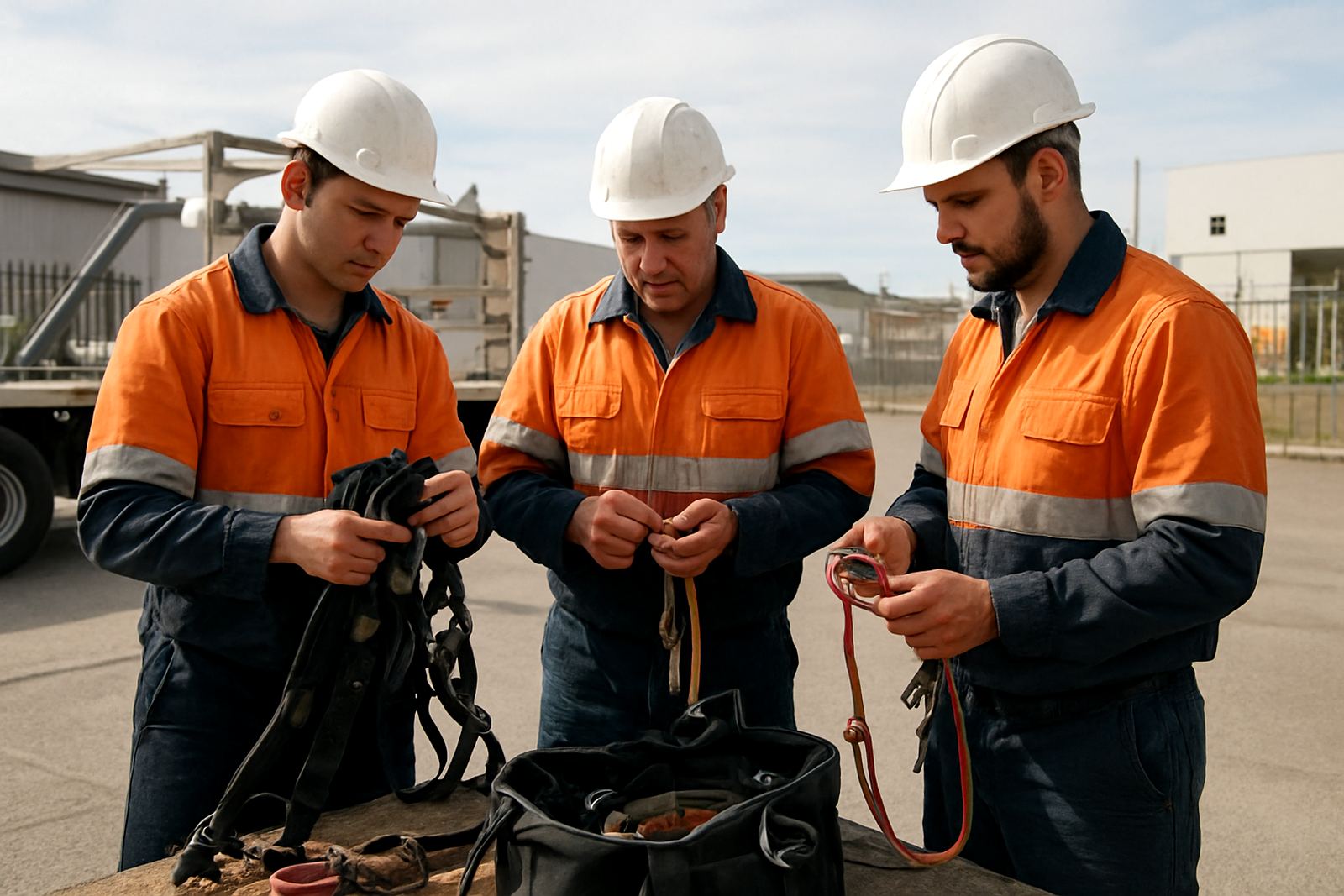
That information gives us the best chance of arriving with the right crew, the right access plan and the right safety controls. It also keeps the job tidy for the sign maker, the tenant and the building owner.