

Why a crane lift needs more than a hook and a harness
Large signs are not just heavy, they can be awkward in the wind and unforgiving if they swing. That is why a proper lift starts with a rigging plan, not with the crane arriving and everyone hoping for the best.
For sign makers, the key issue is that the sign itself must be treated like a load with known behaviour. Weight, centre of gravity, fixing points, access height and the route up to the final position all matter. On a tight site in Paarden Eiland or a busy forecourt in Sandton, there is very little room for guessing. We often see delays caused by poor site prep, blocked access or fixing points that were not checked before the vehicle arrived.
In practice, a lift is about control. The crew on the ground must know who is calling the shots, who is watching the load and what to do if the wind picks up or a bollard blocks the path. That clarity saves time and keeps the sign, the building and the crew safe.
Rigging points: where the load should actually be taken
One of the first jobs is to confirm that the sign has proper rigging points. These are the places where slings, shackles or lifting gear can connect without bending panels, cracking frames or pulling on weak fixings. If the sign was not designed with lifting in mind, the team has to work out a safe method before any crane work starts.
A common mistake is lifting from points that are convenient rather than suitable. A fascia box or illuminated blade sign may look solid, but the outer skin can flex under load. For heavier work, the load should be distributed properly and the lift angle checked. A sign that is picked up unevenly can twist fast, and once it starts moving the job gets harder for everyone.
- Check the frame and connection points before lift day
- Confirm the weight and approximate centre of gravity
- Use gear rated for the load, not whatever is closest to hand
- Protect finished surfaces from marks and crushed edges
- Allow space for the sign to clear parapets, cables and awnings
Tag lines keep the sign steady when the wind gets involved
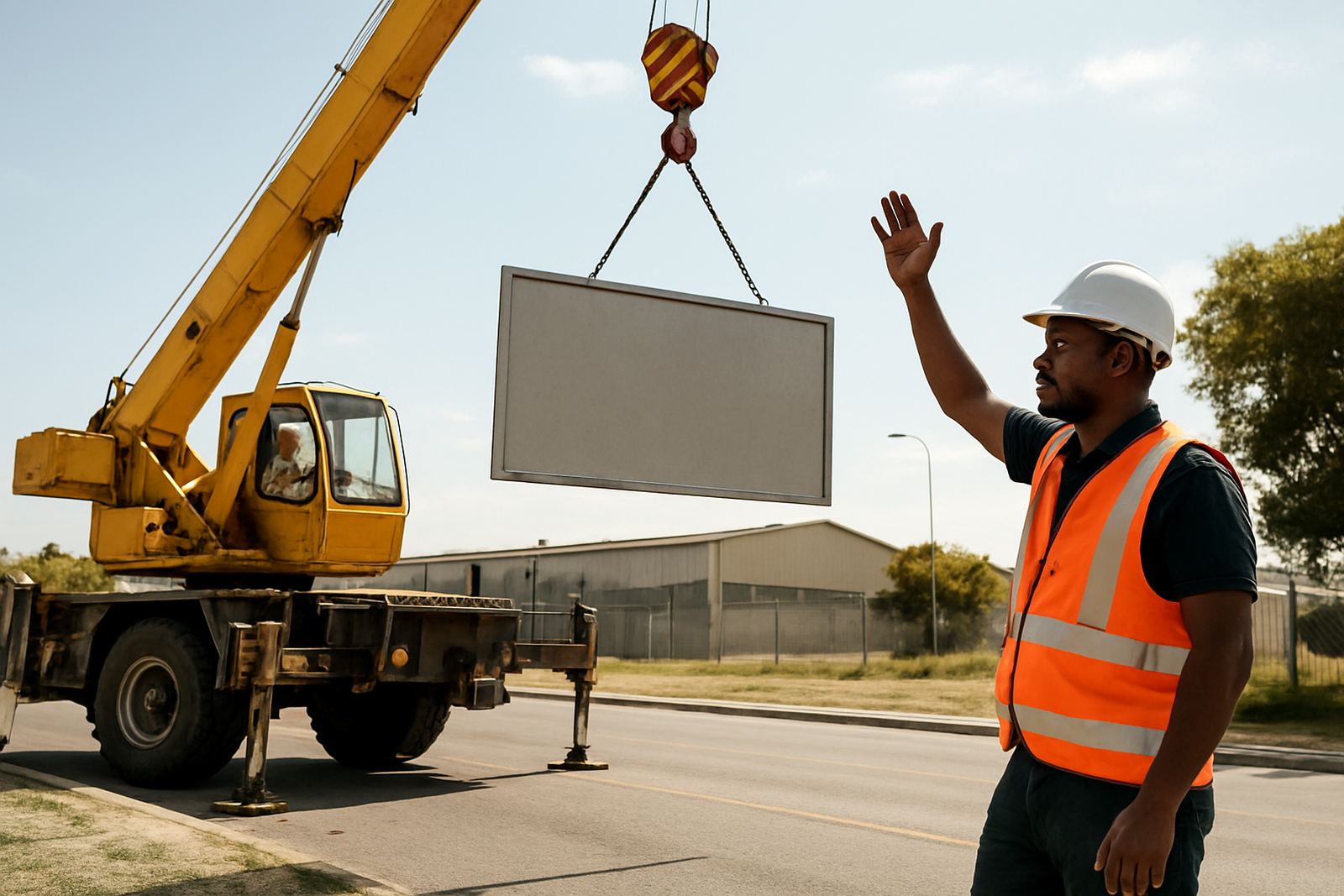
Tag lines are simple ropes, but they make a big difference. They let the ground crew control swing and rotation while the crane operator keeps the load moving. Without tag lines, a sign can spin or drift into a façade, light pole or glass frontage, especially near open areas along the coast where wind comes through quickly.
In Cape Town, coastal humidity and gusts can change the feel of a lift in minutes. On one job near Bellville, a face change on a high roadside sign had to wait because the wind was pushing the panel sideways before it cleared the scaffold. That pause was the right call. It is better to lose twenty minutes than to chip a panel or put a crew member in a bad position.
Tag line handlers need room to move and a clear path away from traffic, edges and overhead obstacles. They should not wrap rope around a wrist or stand where they could be pulled off balance. A tag line is there to guide the load, not to force it.
Communication on the ground is what keeps the lift coordinated
Good communication is simple and direct. The crane operator, the rigger, the spotter and the site contact must know who is giving instructions. Mixed signals can cause delays or sudden movements, and that is where accidents happen.
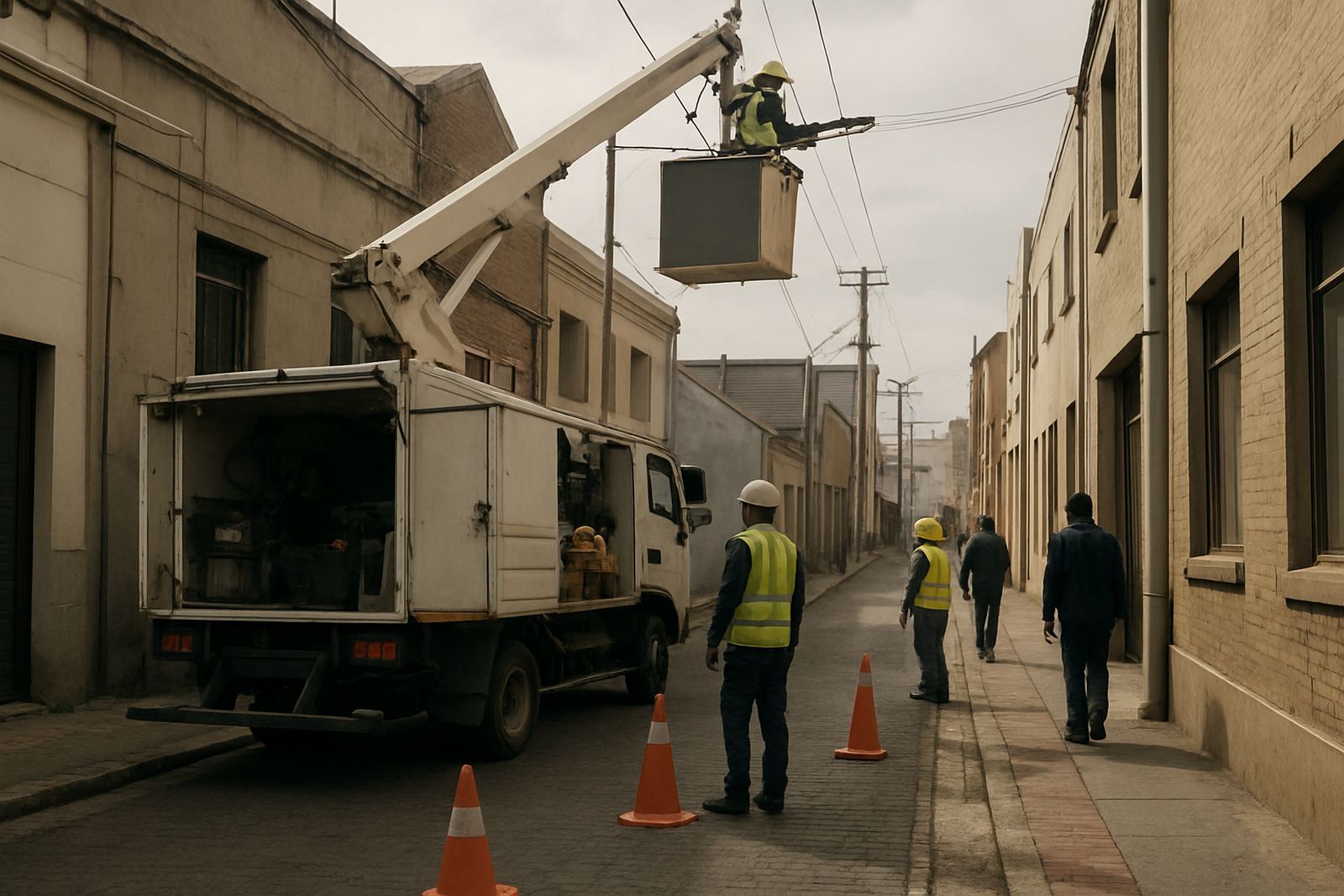
On busy sites we keep it plain: one person speaks for the lift, hand signals are agreed before the lift begins, and everyone else stays alert but out of the decision loop. If the sign is being installed at a shopping centre in Midrand or near a loading bay in Johannesburg CBD, there may be trucks, pedestrians and security staff all moving around. The crew has to stay focussed even when the site is noisy.
Useful communication checks include:
- Confirming the lift sequence before the crane moves
- Agreeing who stops the job if conditions change
- Keeping the area clear of non essential staff
- Using radios or hand signals, but not both unless planned
- Doing a final visual check before the load is released
Planning for access, ground conditions and local rules
A crane lift is not only about the sign and the crane. The ground must take the load, the outriggers need proper support and the access route has to be clear. On some sites, especially in older parts of the city or in industrial areas, the paving, kerbs or underground services can affect where the crane can stand.
We also look at municipal and site rules, delivery times, road access and whether the job needs traffic control or after-hours work. For a sign removal in Somerset West, that might mean working early to avoid customer traffic. For a billboard face change on the East Rand, it may mean coordinating with site security and making sure the platform or lift access is booked well in advance.
Load-shedding adds another layer on many jobs. If the sign is illuminated, the crew needs to know when the power is isolated and who is responsible for testing before the sign goes back into service. Good planning avoids standing around while someone goes hunting for a switch board key or a missing permit.
A local example: moving a large sign in Paarden Eiland
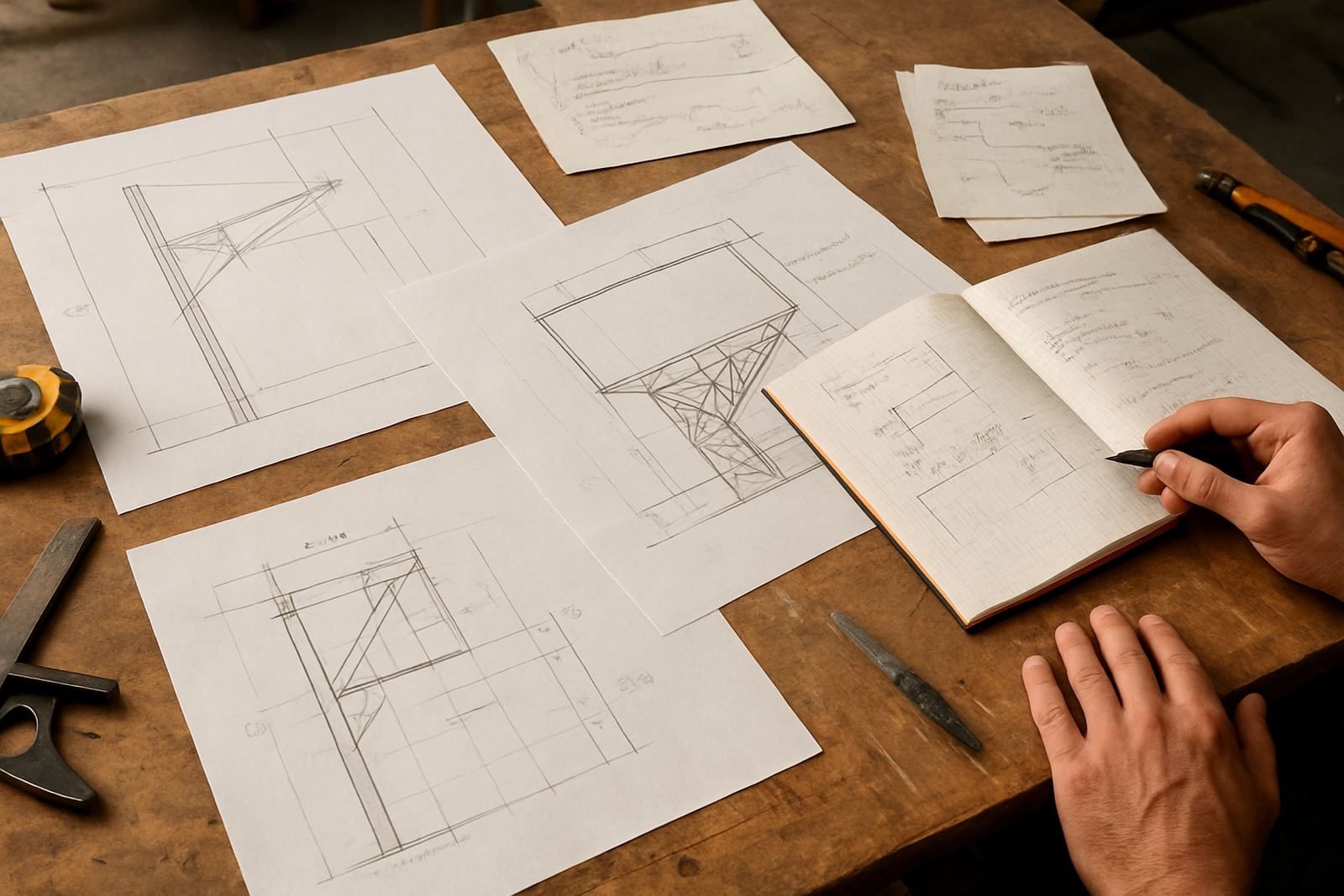
A typical Cape Town job starts with a site visit. Say a sign maker has a large aluminium and acrylic sign that needs to come off a building in Paarden Eiland and be reinstalled at another premises in Bellville. Before the crane arrives, the team measures access, checks the fixing details and confirms the best pickup points. If the sign is awkwardly balanced, extra slings or spreaders may be needed.
On the day, the crew isolates the area, sets the ground control positions and checks the weather. The sign is lifted slowly, tag lines are held ready and the ground team watches for any twist or snag. Once the load is clear, it is guided to the truck or final position with care. The job looks straightforward from the outside, but every stage depends on the one before it. Miss the planning and the whole lift slows down.
That is why sign makers call in rigging crews for this kind of work. They need installation, removal and servicing handled properly, without competing with their own client relationships. A clean lift reflects well on everyone involved.
What sign makers should ask before booking a crane lift
Before any crane work is confirmed, ask the practical questions. A proper lift is built on detail and the answers should be clear before the site team arrives.
- What is the estimated weight and size of the sign?
- Are there proper rigging points already in place?
- Will tag lines be needed and who will manage them?
- Is ground bearing pressure or access an issue?
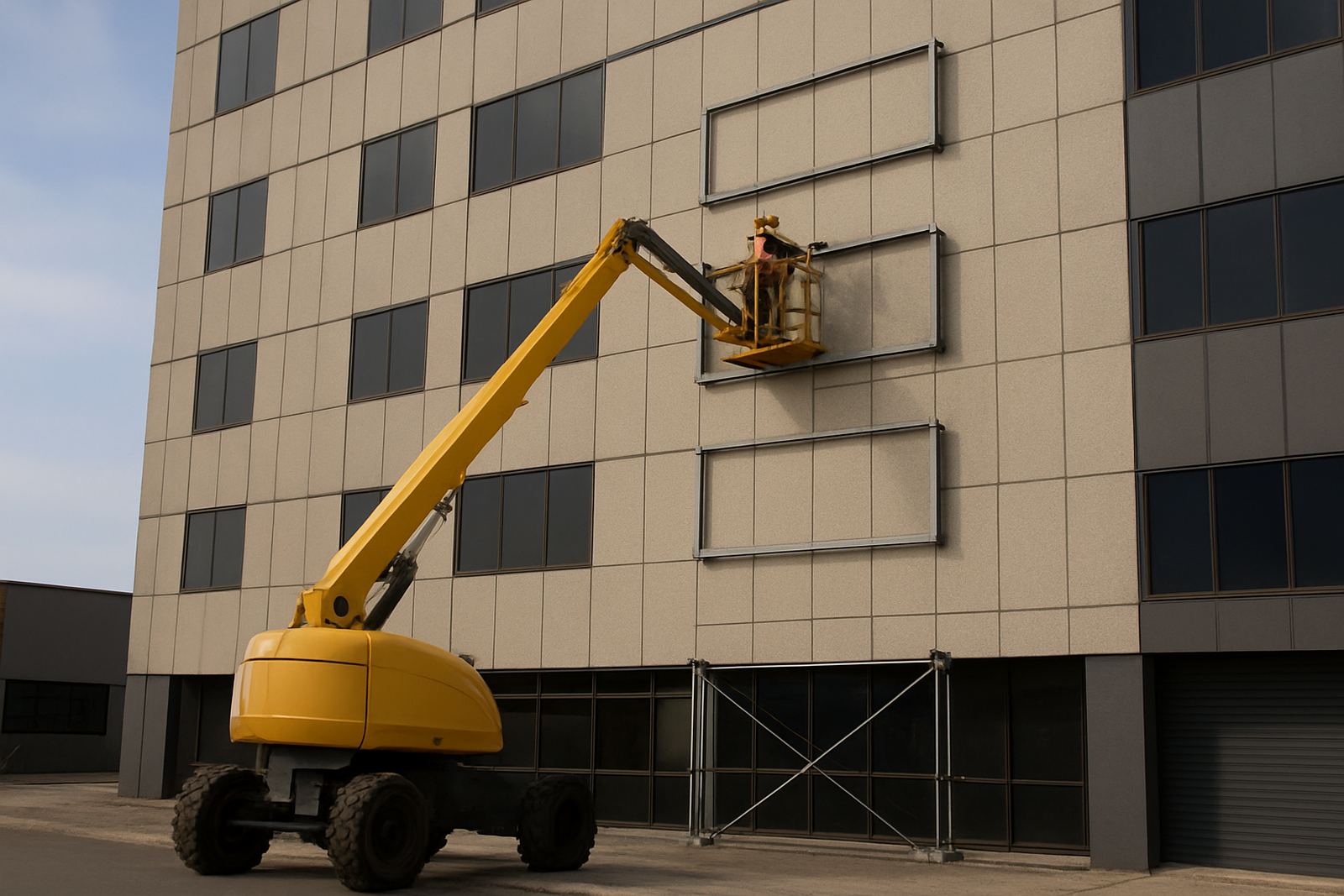
- Will the lift need scaffold, platform work or a second access method?
- Are there wind, power or traffic factors that could affect timing?
If those basics are covered, the lift is usually far smoother. If they are not, the job can become expensive and slow very quickly. A careful site survey and lift plan are worth more than hoping the crew can sort it out on the fly.