Why bracket position matters before the sign is even made
When a projecting sign is mounted off a wall, the bracket position does more than hold the weight. It changes how much wind the face catches, how far the sign projects into the public realm, and whether a technician can reach it later without a costly access setup. A bracket set too high can leave the sign hidden behind tree lines or awnings. Too low, and it can sit in the path of pedestrians, delivery vehicles or service hatches.
We see this often in older commercial streets and mixed-use centres in Cape Town and Johannesburg. The building may look simple from the street, but the wall structure, pavement width and nearby power lines all affect where the bracket should sit. Planning that early saves time when the sign goes up, and again when it needs cleaning, lamp changes or a full face swap.
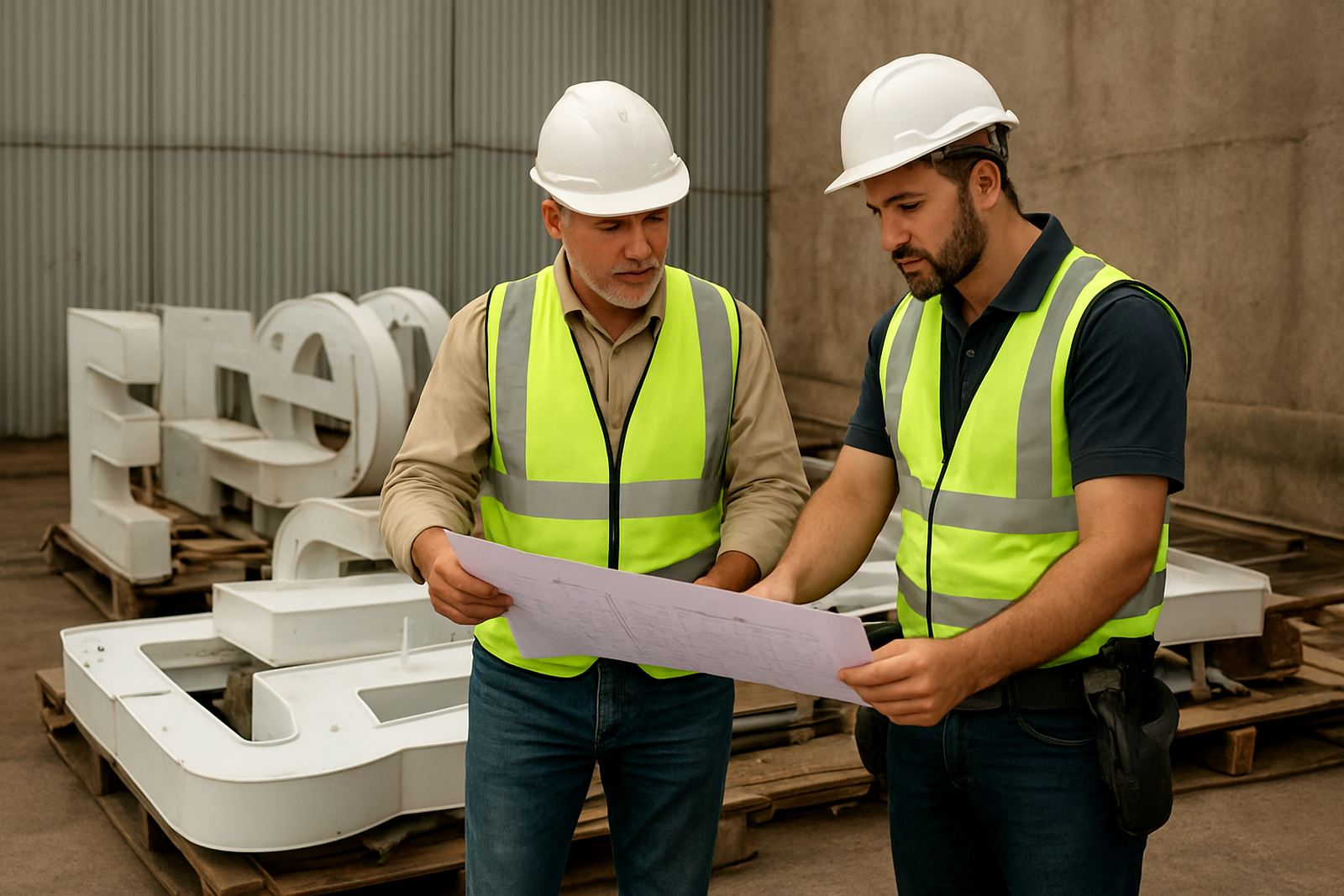
For sign makers, this is why a proper site check matters. A bracket that looks fine on paper can become awkward once the actual brickwork, cladding joints and wall heights are measured on site.
Wind load, coastal weather and the pressure on the fixing points
In coastal areas like Paarden Eiland, Bellville and Somerset West, wind and salt air will test every fixing. A projecting sign behaves like a lever, so the longer the arm, the more force is carried back into the wall. That force does not stay the same through the year either. Summer wind, winter storms and passing truck turbulence can all add movement.
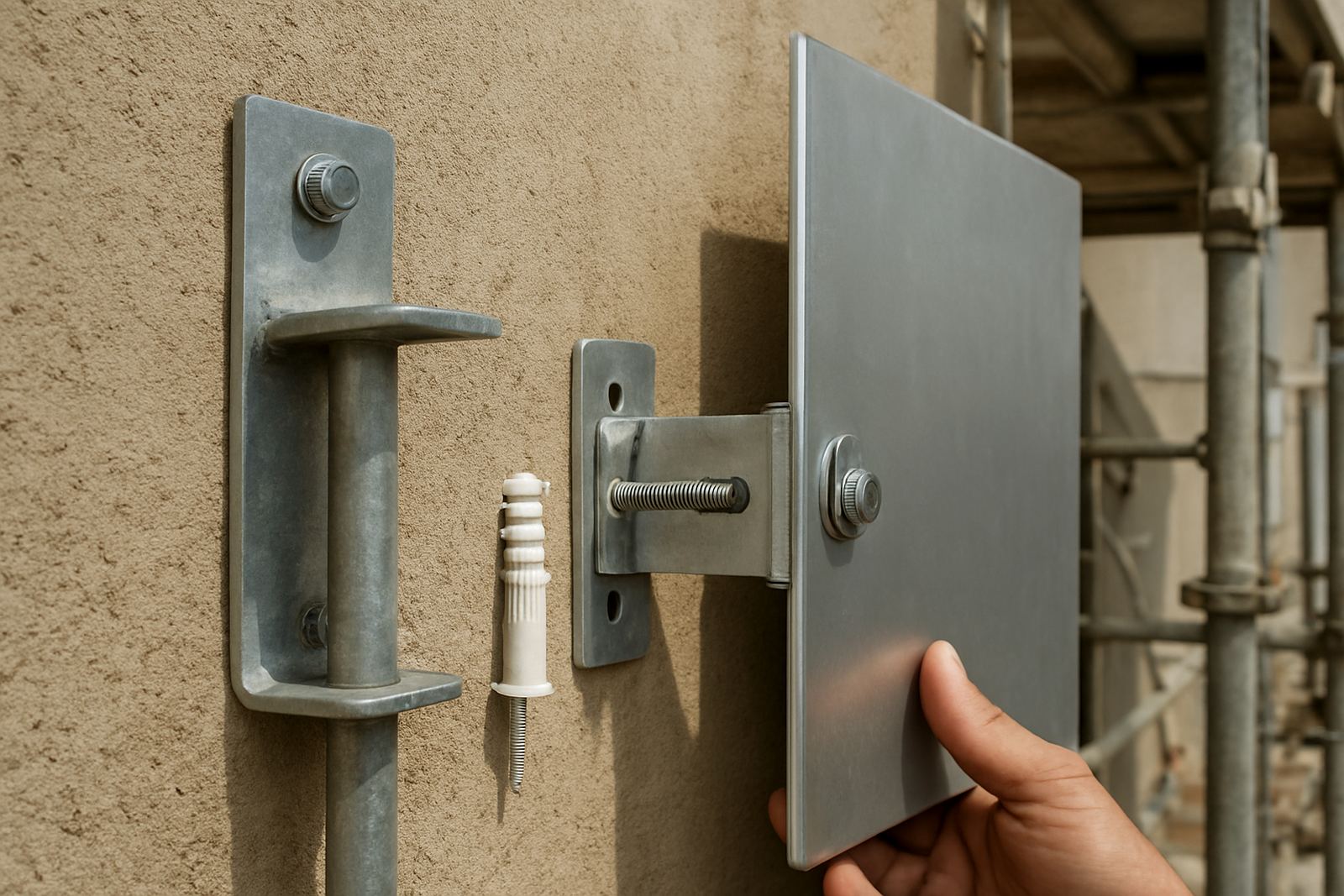
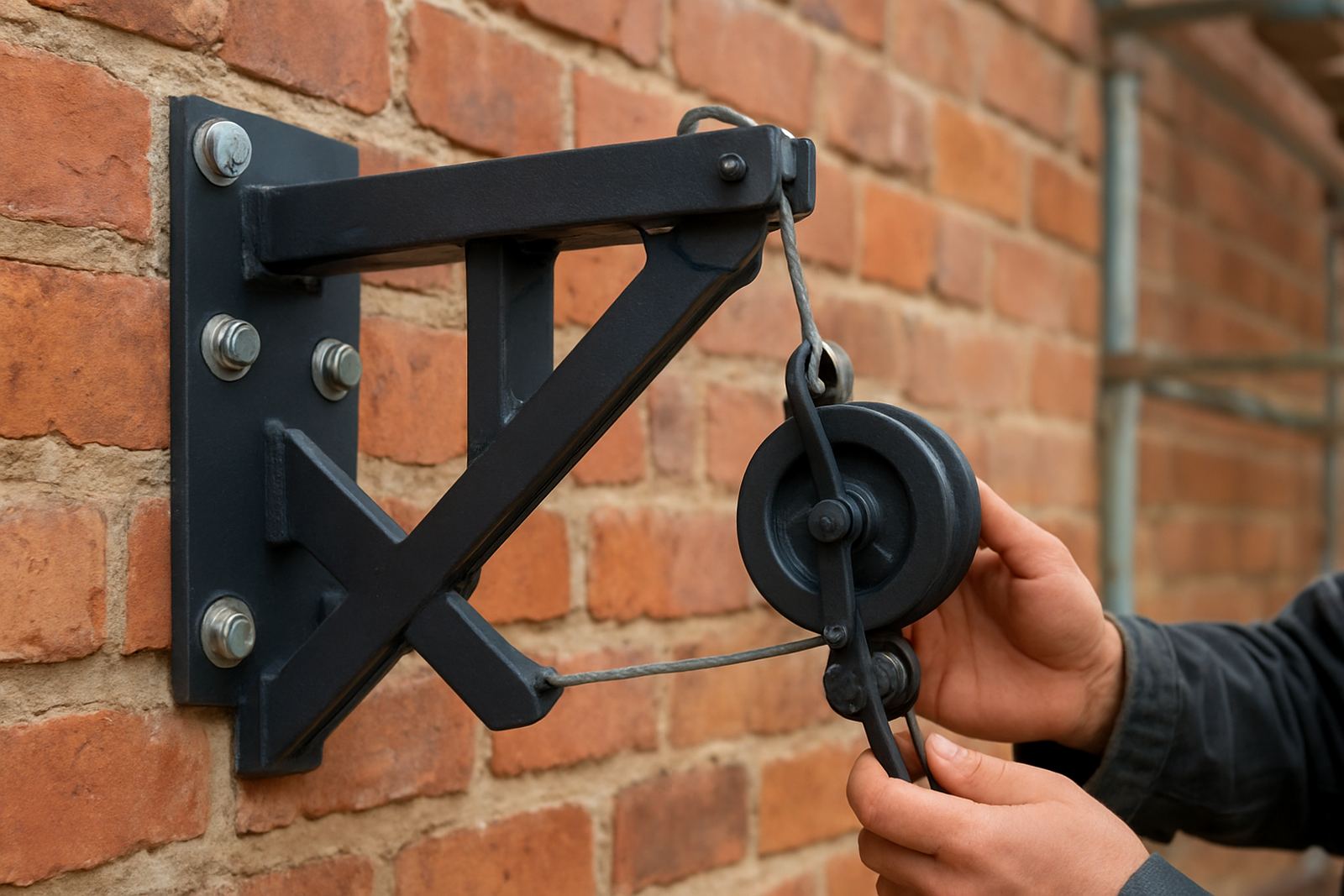
Bracket placement must work with the face size, bracket arm length and the structure behind the wall. If the fixing points are too close together, or the wall surface is weak, the bracket can flex. Over time that movement can loosen anchors, crack masonry or cause the sign to sit out of level. In coastal humidity, rust protection also matters because even a tidy install can start to stain the wall and hardware within months.
Good practice is simple:
- match the bracket size to the actual sign face and not just the drawing
- allow for local wind exposure, especially on corners and open roads
- use fixings that suit the wall material, whether brick, concrete or steel framing
- keep enough clearance so the sign does not strike the wall in gusty conditions
On the Johannesburg side, wind load still matters, but the bigger issue is often vibration from traffic and the height of multi-storey sites. Both require firm placement and careful checking of the fixing line.
Clearance for people, vehicles and municipal expectations
Bracket placement has to respect the space around the building. A sign that projects into a narrow pavement may need more height or a shorter arm. A sign over a driveway has to clear delivery trucks and loading bay doors. In CBD areas, the local authority may also look at sightlines, pedestrian flow and how far the sign extends over public space.
That is why we measure three things on every projecting bracket job: the wall, the ground and the route under the sign. In practice that means checking head height, vehicle clearance and visibility from the street. If there are shade ports, canopies or shopfront fins, the bracket may need a slight offset to avoid fouling them.
- Do not assume the same bracket position works on every branch of a chain store
- Check whether the sign can be seen from both driving directions
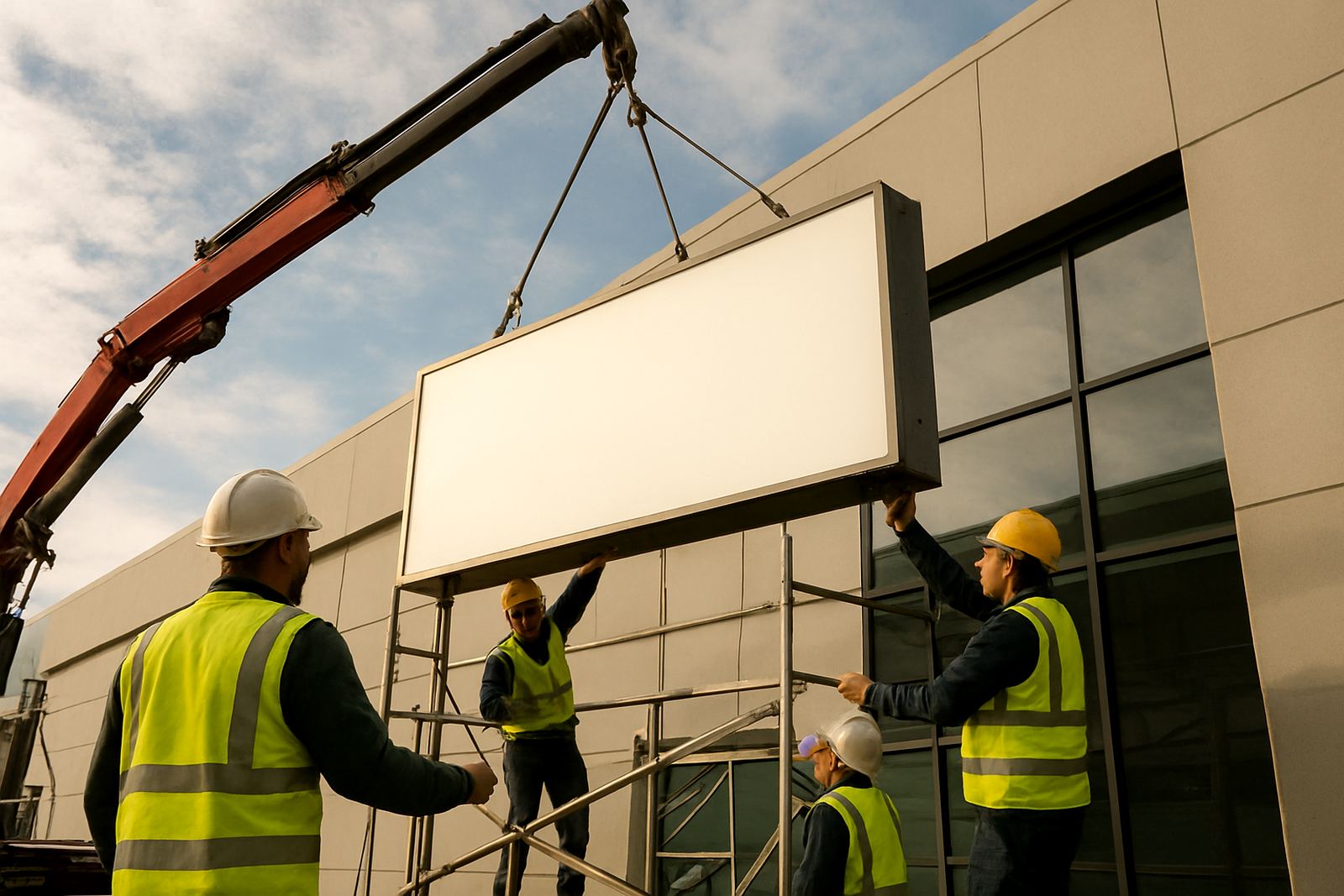
- Leave room for maintenance ladders, scaffold or a mobile platform
- Make sure the sign does not block windows, vents or fire exits
In places like Johannesburg CBD and Midrand, where buildings often share tight frontages, a few centimetres can make the difference between a sign that works and one that creates complaints.
Maintenance access is part of the bracket design
A projecting sign is never a once-off installation. It will need cleaning, electrical checks, lamp replacement or a full servicing visit. If the bracket sits too close to an adjacent wall, under a deep overhang or above a live driveway, later access becomes harder and more expensive. That is where a sign that looked neat on day one can become a problem by year two.
We always look at how the crew will return to the sign, not only how it will go up. If a platform is needed later, the ground must allow it. If scaffold is the safer option, there must be room to stand it properly and follow site rules. On some sites, a simple repositioning of the bracket by even 150 mm can make future maintenance far easier.
For sign makers, this is a practical advantage. A well-placed bracket reduces callouts, shortens service time and makes it easier to keep the client happy without sending a large team back for a small job.
Local example: a shopfront in Paarden Eiland with a tight pavement line
A recent shopfront in Paarden Eiland had a projecting sign that needed to face passing traffic on a busy arterial road. The first drawing placed the bracket low enough for easy viewing, but the pavement edge was tight and service vehicles used the kerb frequently. That meant the sign would have sat too close to moving loads and too low for comfortable access later.
After the site survey, the bracket was moved higher and brought in slightly closer to the wall. That small change improved clearance for delivery vehicles, gave the sign better wind behaviour and still kept it visible from both approach directions. It also allowed the maintenance team to reach the unit later with scaffold access if needed, rather than working awkwardly from a lift over a live pavement.
That is the kind of adjustment that does not look dramatic on a drawing, but it matters every day after the sign is up.
What sign makers should confirm before the bracket goes out
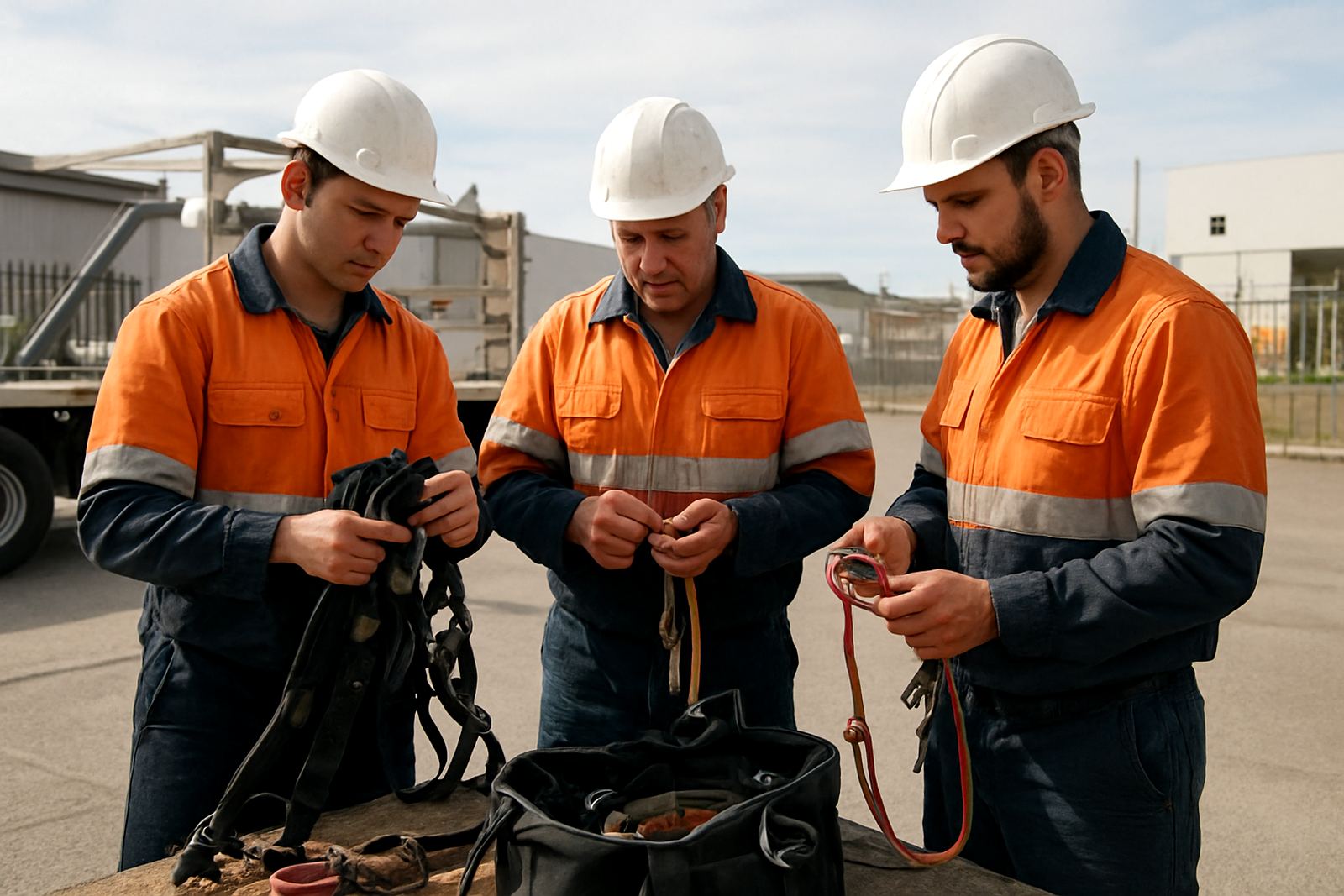
The cleanest installs usually come from a short checklist before fabrication or dispatch. We use the same practical checks whether the job is in Sandton, the East Rand or along the Cape side. It keeps the install team safe and helps the sign maker avoid rework.
- measure the wall type and check where the fixing points can take load
- confirm the sign size, arm length and total projection from the wall
- check for nearby pipes, conduits, vents and glazing
- confirm access for ladder, scaffold or platform work
- allow for wind, salt air, traffic vibration and future servicing
At Sign Riggers, we work only on rigging, installation, removal and servicing for sign makers, so the bracket position is always handled with that long view in mind. A well-set bracket is not just about holding the sign today, it is about keeping the site safe and manageable next season, and next year too.