

When scaffold makes the most sense for signage work
Scaffold is worth considering when access is limited, the sign sits over busy pedestrian routes, or the wall face leaves very little room for ladders and mobile platforms. It is also a practical choice where work needs to happen over more than one level, or where the fixing points are spread wide and the crew needs both hands free for alignment, drilling and sealing.
For sign makers, the main benefit is control. A scaffold structure gives the team a stable working level, room for tools and fixings, and a better line of sight when setting out large letters, light boxes or fascia panels. On sites with uneven paving, sloped forecourts or tight service yards, that extra stability can make a real difference to the finish and to safety.
In Cape Town and Johannesburg, we often see scaffold used on older buildings, shopping centres, warehouses and exposed coastal sites where access is not simple. In those cases, scaffold is sometimes the cleanest solution because it can be built to suit the exact face, height and working width needed.
What a proper scaffold setup should include
A sign job should never start with guesswork. Before scaffold goes up, the crew should check the wall condition, ground bearing, overhead lines, vehicle movement, wind exposure and the lift points for the sign itself. The aim is not just to reach the sign, but to do it without creating a new risk below or around the work area.
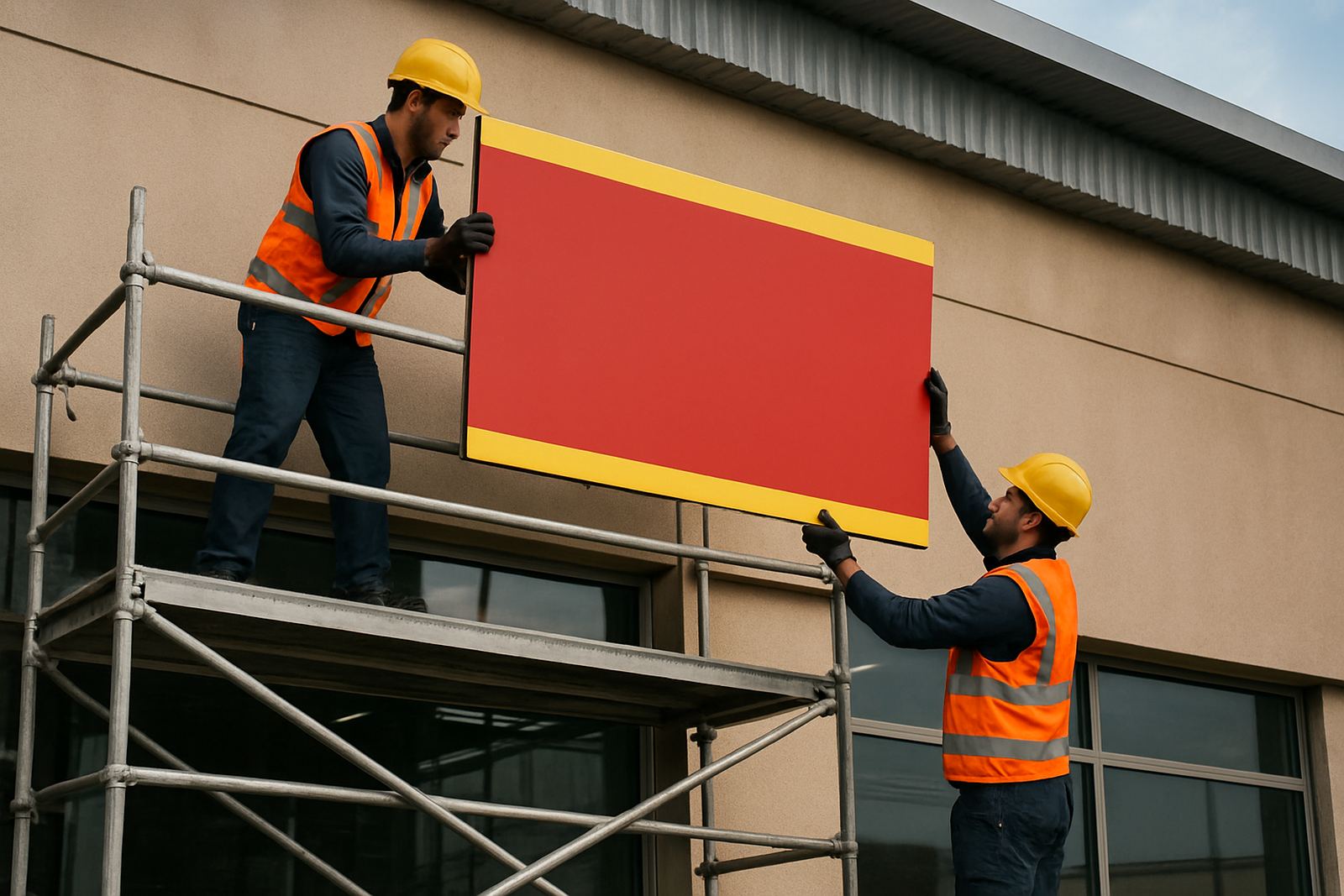
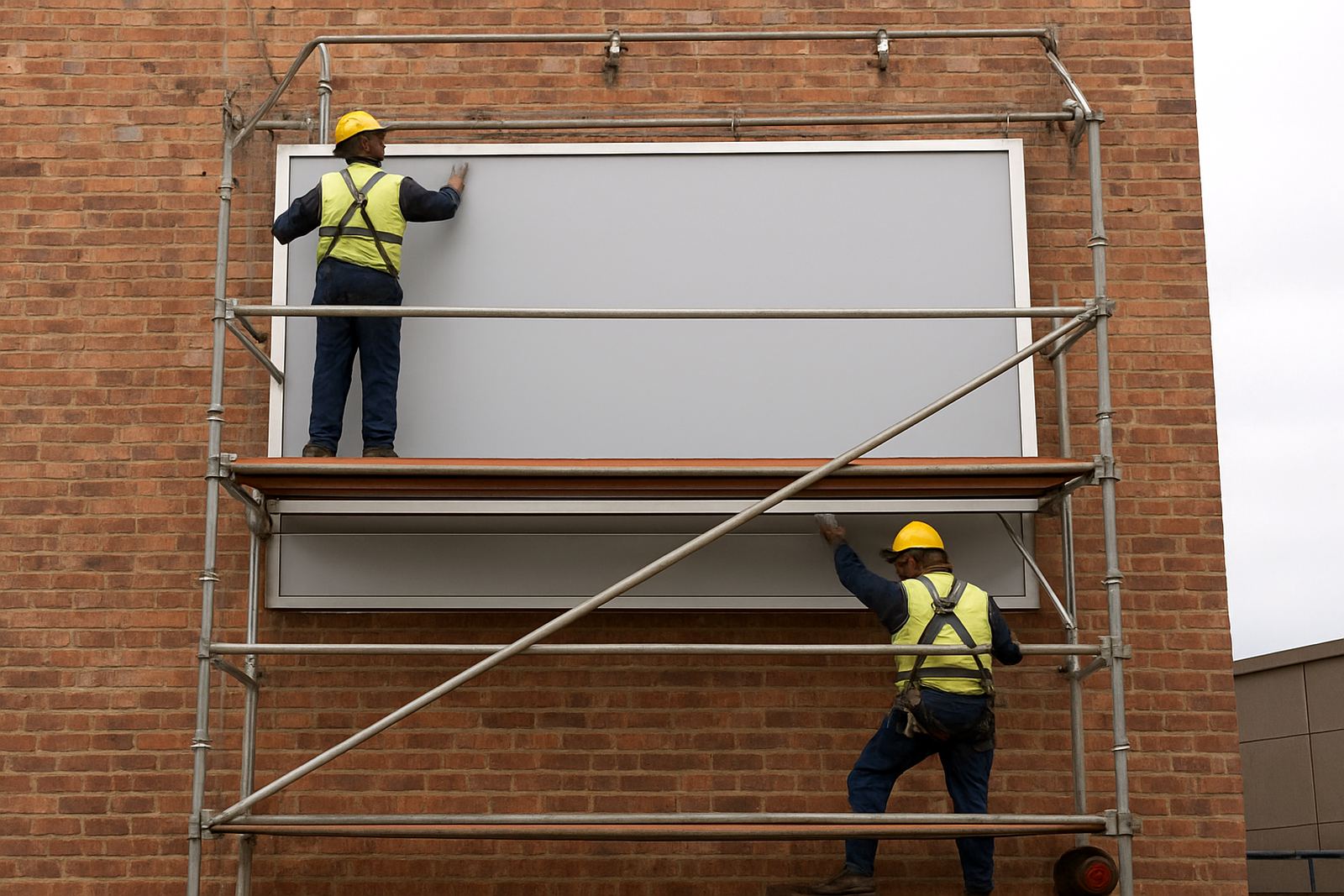
At minimum, a scaffold setup for signage should be planned around safe access, fall protection and clear loading. The structure must suit the task, not the other way round. That means enough working width for the team, proper ties where needed, secure boards, controlled access and clear exclusion below. If the sign is being removed, the scaffold also needs to allow for safe lowering and staging of panels or frames.
- Measured working height and width for the sign face
- Ground check for soft, uneven or sloped surfaces
- Clear access for loading, unloading and tool handling
- Fall protection and edge control suitable to the site
- Exclusion below the scaffold for public and staff safety
Why sign makers call in a rigging crew instead of handling scaffold themselves
Most sign shops know their product very well, but scaffold work needs a separate level of planning and site control. A rigging crew understands how to move, hold and position signs while keeping the structure stable and the site orderly. That matters when a sign is large, awkward or being installed in sections.
There is also the issue of compliance. Municipal environments, retail centres and industrial parks each have their own rules about access times, noise, loading zones and public protection. A crew that works only on signage can plan around those requirements and keep the job moving without stepping into the sign maker’s customer relationship. That point matters to us. We do rigging only, and we stay in our lane.
For sign makers, this means one less thing to manage on a busy install day. The scaffold, lift plan and access approach are handled by people who do this work every week, with first-aid trained teams and practical site discipline.
A local example: sign servicing on a windy Cape Town façade
On a recent servicing job in Paarden Eiland, a face had to be cleaned, re-sealed and re-lit on a building close to the harbour air. The wall was exposed, the pavement below was active, and the mounting points were too high for simple ladder work. Scaffold gave the crew a steadier base than a short-term lift would have done, especially with gusts coming off the bay.
The team built access to suit the frontage, kept the work zone neat and completed the service with the sign off the ground for the minimum time needed. The result was less disruption for the tenant, safer handling for the crew and a cleaner finish for the sign maker. Jobs like that are common in coastal areas where humidity, wind and salt can wear down fixings faster than people expect.
In places like Bellville, Somerset West and Paarl, we also see scaffold used where building access is awkward or where the sign sits above a canopy or entrance line. The method is simple, but it needs planning. A good scaffold job gives you time to work properly, not just quickly.
The practical checks before scaffold is approved for a sign job
Before any scaffold is used, the site should be checked carefully. That includes the condition of the structure, the clearance for public movement, the weather forecast and whether the sign can be isolated safely during work. In Johannesburg, afternoon rain and open commercial sites can change conditions fast. In Cape Town, wind can be the issue. Either way, the scaffold plan should answer the conditions on that specific day.
We also look at how the sign will be handled once it is reached. If it is a billboard face change, the crew may need to remove fixings in sequence and support the face as it comes away. If it is a relocation or removal, the route down from the scaffold must be clear. Small details matter here, like where the tools sit, how the boards are tied and whether the ground crew has room to stage parts without blocking access.
- Site survey and measurement before mobilisation
- Lift plan for large panels, frames or faces
- Weather check for wind and rain exposure
- Clear responsibility for access, exclusion and handover
How scaffold fits into sign installation, removal and servicing
Scaffold is not only for new installs. It is just as useful for removals, maintenance visits, emergency callouts and lighting access. If a fitting has failed, a module has gone dark, or a fascia needs sealing before water ingress spreads, scaffold can give safe access without forcing the team to improvise.
For sign makers working across Gauteng and the Western Cape, the value is in consistency. The same access method can support a new install in Sandton, a maintenance call in the Johannesburg CBD, or a replacement on a retail building in Midrand. The job changes, but the principles stay the same: stable access, controlled movement and careful handling. That is what keeps the work tidy and the site safe.
When scaffold is the right option, it should be treated as part of the sign work, not an extra afterthought. If the access is right, the rest of the job usually goes better too.
Working with a rigging team that understands sign shop priorities
Sign makers need crews that arrive on time, work to the brief and leave the site ready for the next trade. That means clear communication, sensible sequencing and respect for the client relationship. We keep our focus on rigging, scaffold access and safe handling so sign shops can keep their own customer relationships intact.
Our team works from Paarden Eiland and Johannesburg, with support across the Western Cape and Gauteng. That includes Bellville, Somerset West, Paarl, Johannesburg CBD, Sandton, Midrand and the East Rand. Whether the job is a planned installation or a callout that comes in after hours, the aim is the same: get safe access, complete the sign work properly and avoid unnecessary delay.
If scaffold is the best way to reach the sign, then the plan should reflect that from the start. Good access is not about making the job look complicated. It is about making it safe, efficient and fit for the site.