Why estate signs need a different rigging approach
Entrance features, wayfinding boards and internal signposts in estates are exposed to more movement than people think. Vehicles swing close to kerbs, gardeners trim around bases, and security staff need clear sightlines at access points. On top of that, many estates in Cape Town and Gauteng have controlled access windows, so the work has to be planned around traffic peaks and resident rules.
Estate sign rigging is not just about putting a sign in the ground or on a wall. It is about positioning it so it can be seen from the right angle, fixing it safely and making sure it still looks straight after months of weather and daily use. A sign that is too low, too close to a driveway or mounted with the wrong hardware becomes a problem for the estate and the sign maker.
The practical parts of a clean estate installation
Good estate work starts with a site survey. We check the entrance width, the type of surface, underground services, wall condition, wind exposure and the best access route for our crew. In Paarden Eiland or Johannesburg CBD, that might mean planning around tight loading bays. In Somerset West or Sandton, it often means working within estate access rules and keeping disruption down to a minimum.
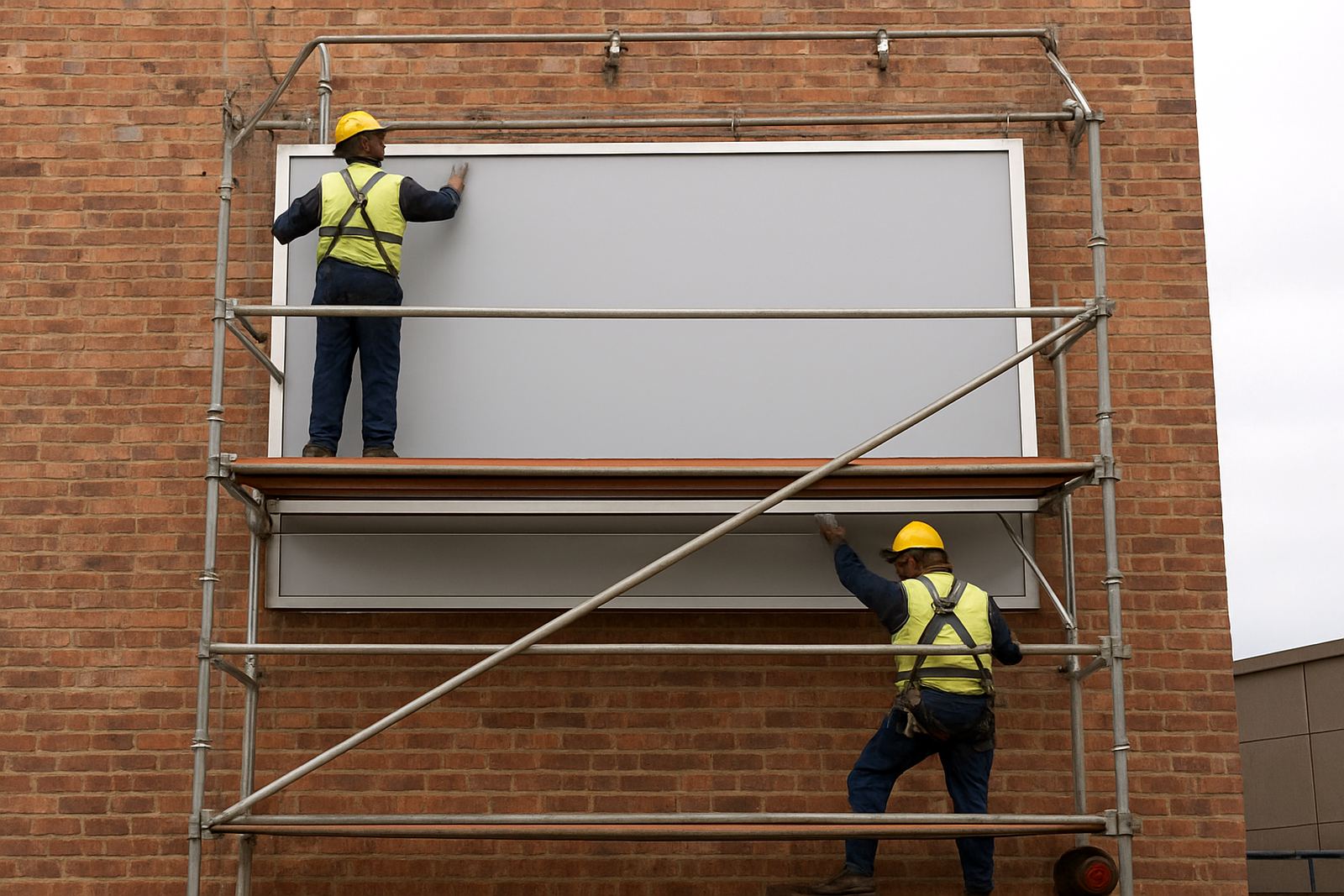
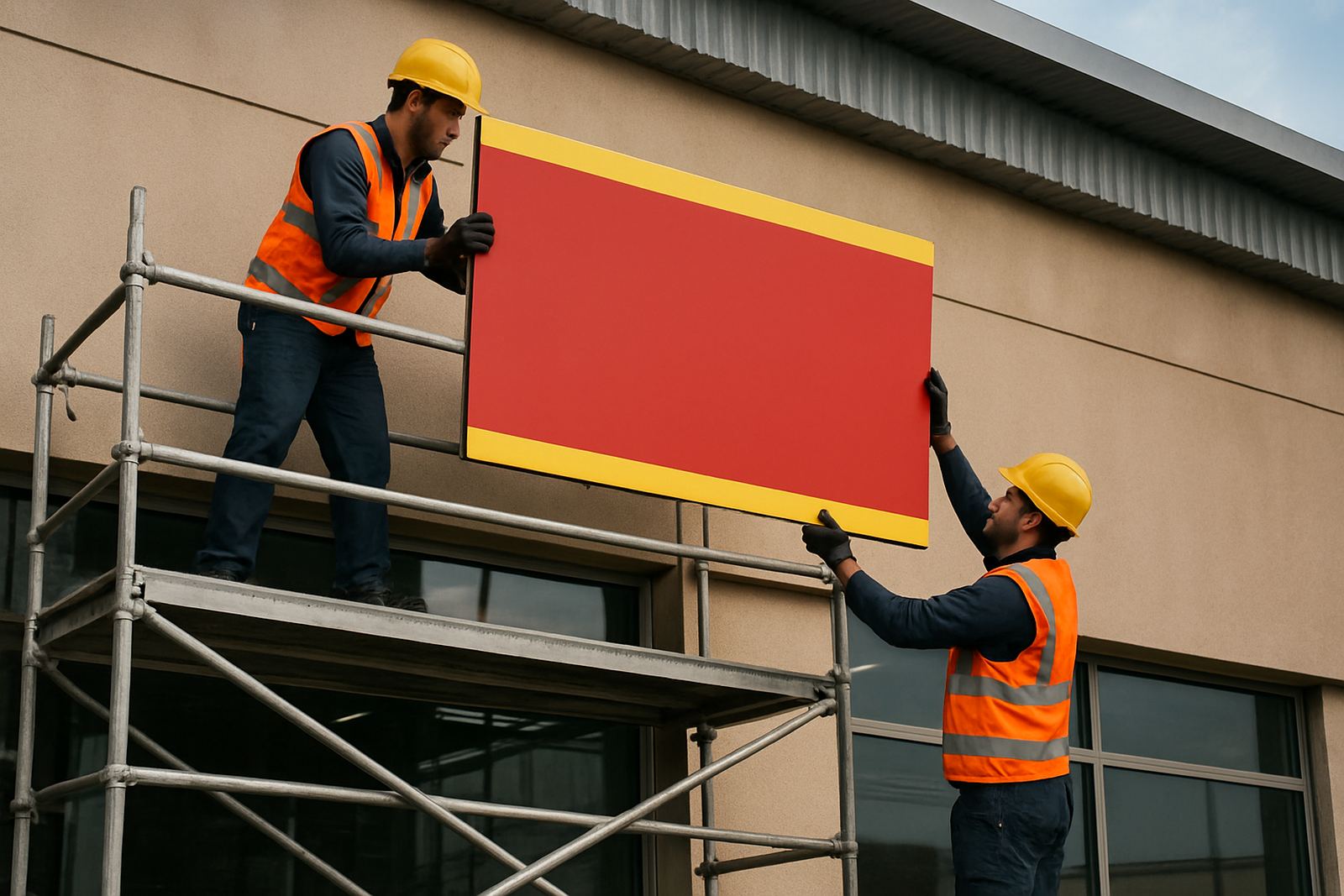
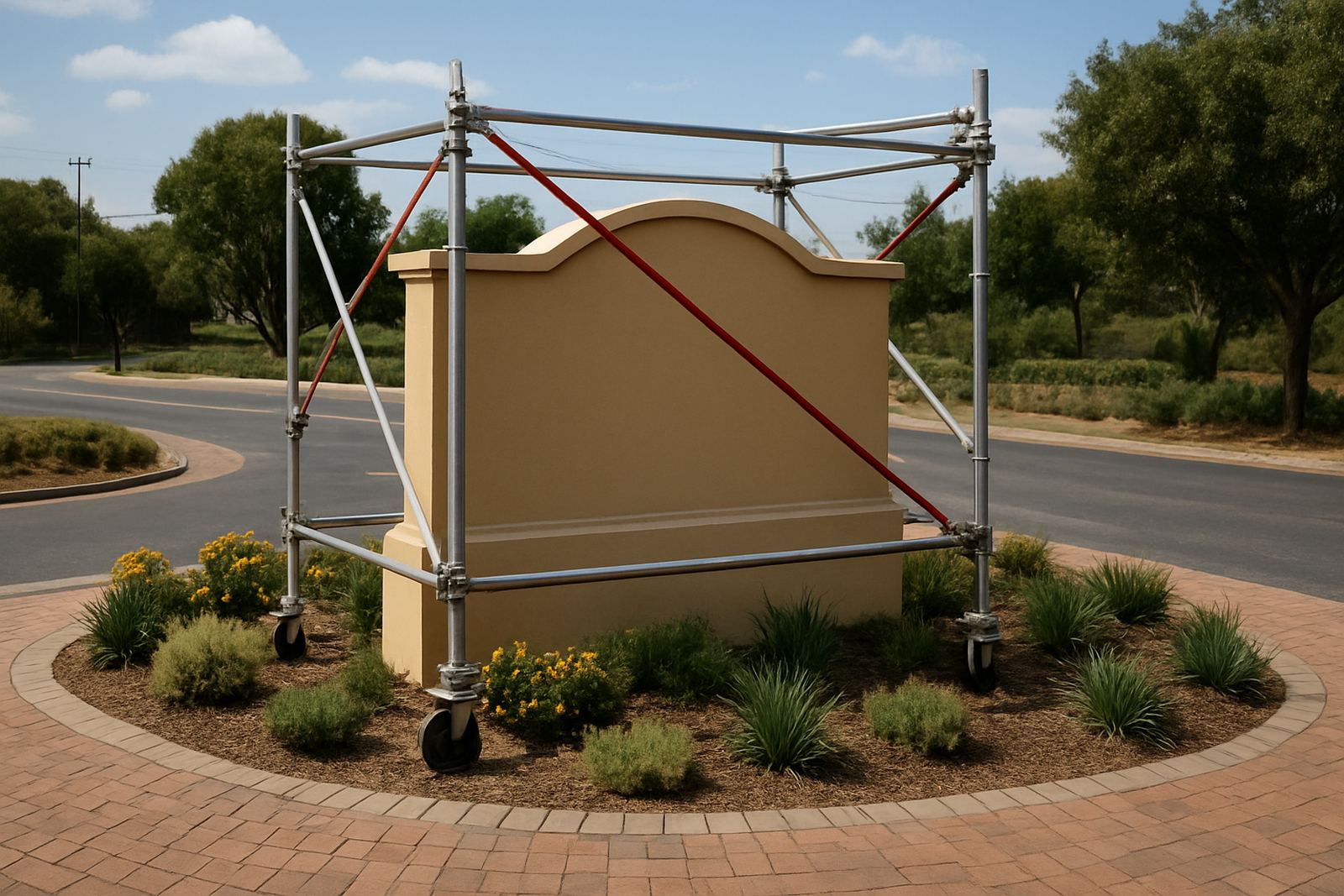
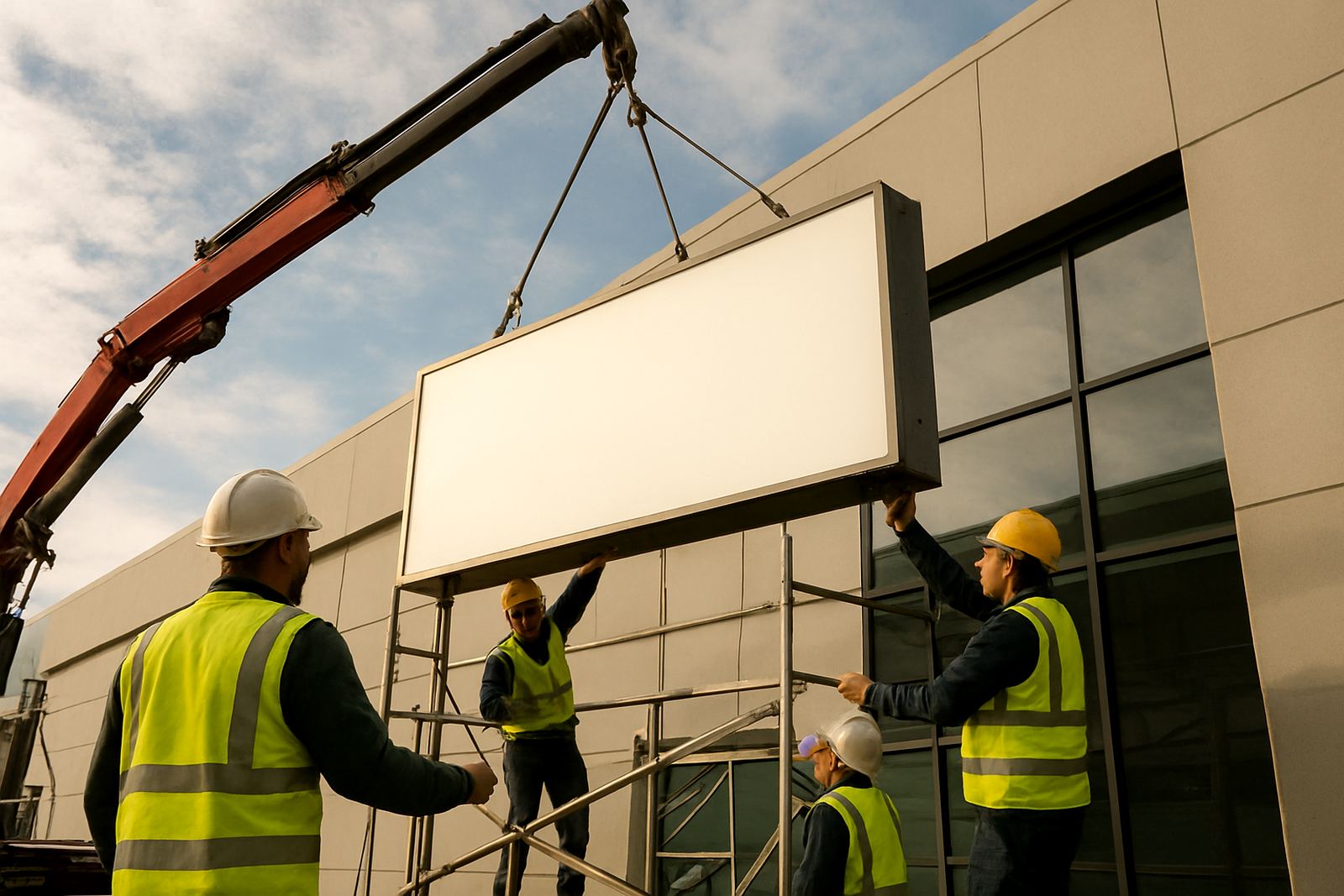
We handle the rigging side only, which keeps the roles clear for sign makers and estate managers. That means installation, removal, servicing and relocation of signs, plus lift planning, scaffold access and platform work where needed. When lighting is involved, we make sure access is safe for the electrician or maintenance team as well.
- Entrance signs mounted level and aligned with the gate line
- Directional signs placed where visitors can read them before turning
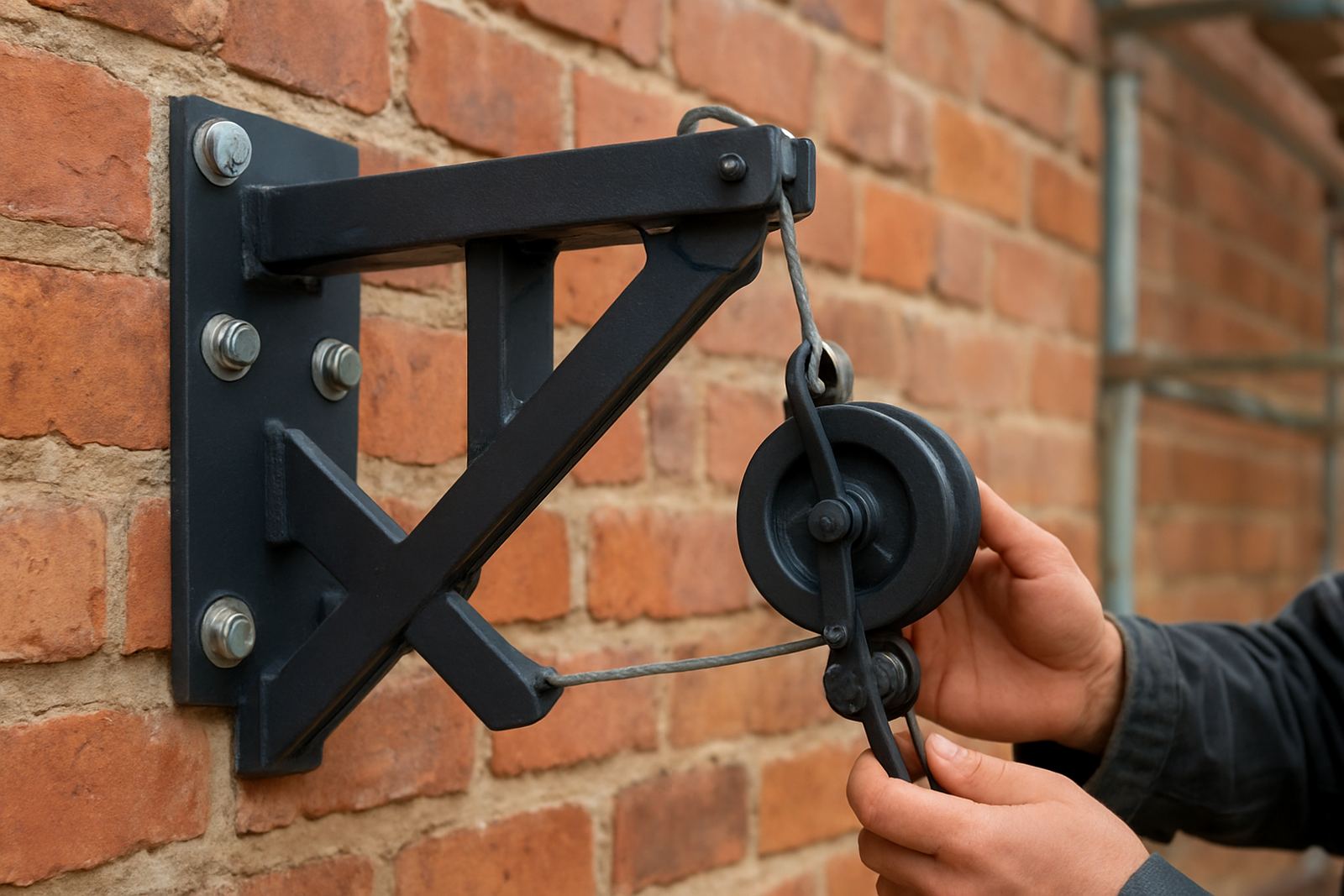
- Wall signs fixed with the right anchors for brick, concrete or cladding
- Freestanding signs checked for footing depth and wind load
- Surface finishes protected during handling and lift-off
Materials and fixing methods that last
In coastal areas like Bellville, Somerset West and Paarl, salt air and damp mornings can shorten the life of the wrong fixings. In Gauteng, summer storms and dust can be just as hard on exposed signs. That is why we match the method to the location instead of using the same approach everywhere.
For estate entrances, we often work with stainless fixings, coated brackets, chemical anchors, galavanised frames and weather-resistant fasteners where suitable. If a sign needs to be removed for repainting, estate upgrades or a new tenant handover, we take care not to damage paving, walls or landscaped beds. The aim is simple: make the sign easy to service later, not a fight every time it needs attention.
- Corrosion-resistant hardware for coastal installs
- Proper anchor choice for concrete, masonry or steel
- Access planning for high or awkward mounting points
- Protection for paving, planting and irrigation lines
Wayfinding that helps residents and visitors move easily
Estate wayfinding is often overlooked until the first delivery driver misses the correct street or a visitor stops at the wrong entrance. Clear directional signs, block markers and parking indicators reduce confusion and keep security interactions shorter. That matters in larger estates where one bad turn can back up the whole gate queue.
We install and service signs that support daily movement, not only the main entrance feature. If the estate has phases, separate sections or shared facilities, the signage should guide people without crowding the space. Clean installation makes a good sign shop's design work easier to read, which is why careful rigging counts so much.
- Main gate identification
- Visitor and delivery directions
- Clubhouse, office and amenity markers
- Parking and access control signs
- Internal directional arrows and block names
Maintenance visits keep signs presentable and safe
Estate signs age in small ways before they fail. Fasteners loosen, lighting dims, panels shift in strong wind and dirt builds up around edges. A sign that looks fine from a distance can already be unsafe up close, especially if it is over a driveway or walkway.
Regular maintenance visits help estates avoid sudden callouts. We can inspect fixings, check access points, replace damaged parts and arrange safe removal if a sign needs repair off-site. For estates with strict access control or limited after-hours work, planned maintenance is usually easier on everyone. It also saves money, because a small repair now is better than an emergency call in the rain or during a load-shedding window.
A local example from Cape Town and Gauteng estates
In a Paarden Eiland project, a sign maker needed an entrance feature installed at a busy estate gate before a weekend handover. The site had a narrow verge, active security traffic and nearby landscaping that could not be disturbed. We completed the site survey, set the lift plan and installed the sign in a short access window so the estate could carry on with normal movement the same afternoon.
We see the same sort of pressure in Johannesburg estates, especially where visitors, contractors and residents all use the same entrance. The job is not only to get the sign up. It is to keep the gate area safe, legible and tidy while the work happens. That is where proper rigging makes a clear difference.
For sign makers, that means a reliable crew who understands the site and respects the client relationship. For estates, it means the signage does its job without becoming a maintenance headache.
What sign makers should ask before booking rigging
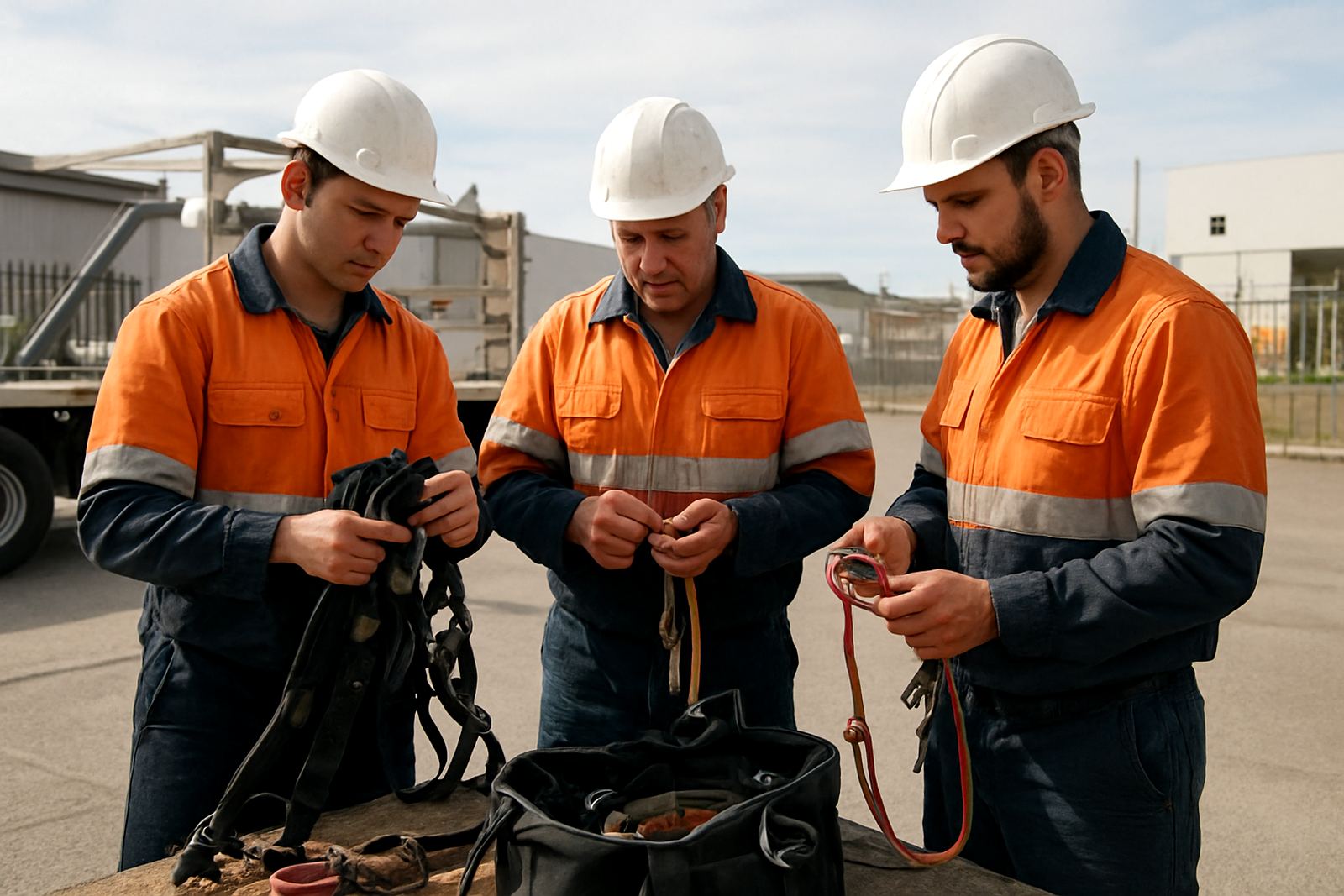
If you supply estate signage, the rigging brief should be specific. The more detail you have at the start, the easier it is to quote correctly and plan access. It also helps avoid delays when the estate manager asks for method statements or proof of safety training.
Before the visit, confirm the sign size, finish, mounting surface, access times and whether any lighting or scaffold access is needed. If there are height restrictions, shared driveways or tree cover, mention those too. It sounds small, but these details can change the whole method on site.
- Exact sign dimensions and weight
- Wall, pole or freestanding mounting point
- Estate access rules and working hours
- Whether removal or relocation is part of the job
- Any lighting, lift or scaffold requirements
When the brief is clear, the installation goes smoother and the finished sign looks right from day one. That is the standard estate managers expect and the one sign makers need when their name is on the work.