
Why estate wayfinding cannot be left to chance
Estate signs do more than point people in the right direction. They shape how visitors move through an estate, how quickly deliveries reach the right address, and how easily residents find entrances, clubhouses, parking bays and service areas. When the directionals are inconsistent, people slow down, turn at the wrong point, or stop in unsafe places to check a map on their phone.
That becomes a practical issue for security teams too. In estates with multiple phases, long internal roads or mixed-use areas, the wrong sign style or poor placement creates extra calls at the gate and more vehicle movement than necessary. We see this often in gated developments, estates with contractor access points, and residential complexes with visitor parking tucked behind the main blocks.
A good wayfinding plan keeps the wording simple, uses the same size and fixing detail across the site, and gives every sign a clear purpose. If one panel points to the clubhouse and another uses a different format for the same route, people lose confidence in the whole system.
Sign families need to match the estate layout
Before anyone starts drilling holes or ordering brackets, the estate layout has to be understood properly. A small estate in Somerset West may only need a few entrance signs and internal directional blades. A large estate in Midrand or the East Rand may need a layered system with pedestrian signs, vehicle signs, block markers and maintenance access notices.
The best results come from a sign family that is planned as one set, not pieced together over time. That usually means keeping the wording, colours, arrows and mounting heights consistent from the first entrance all the way to the furthest residence. If the estate has future phases, the layout should allow for extra signs later without making the first stage look incomplete.
- Entrance identity signs for gates and visitor arrival points
- Directional signs for roads, blocks and facilities
- Pedestrian signs for walkways and short cuts
- Service and contractor signs for restricted zones
- Parking and loading signs where vehicles need exact guidance
It also helps to think about the speed of movement. A sign for pedestrians can be smaller and placed lower, while a road sign needs to be readable from a moving vehicle at an appropriate distance. That difference matters on estates with bends, speed humps and limited sight lines.
Visibility in coastal weather and bright inland sun
In the Western Cape, coastal humidity and salt in the air can shorten the life of poor fixings. In Johannesburg and Gauteng, the main challenge is often dust, UV exposure and hard summer rain that tests every bracket and edge. Estate signs need to be readable in both conditions and built with materials that hold up over time.
For directional signs, visibility is not only about size. It is also about contrast, reflectivity where needed, and the angle at which the sign meets the viewer. A sign mounted too high can be missed by a driver entering at the wrong angle. A sign placed behind landscaping can disappear completely once shrubs grow in.
- Check for glare at morning and late afternoon light
- Keep signs clear of trees, hedges and decorative screens
- Allow enough head height for maintenance vehicles and pedestrians
- Use fixings suitable for coastal or high-wear environments
- Plan for cleaning access so dirt does not build up on the face
We often advise estates to review visibility after the first season of growth. What looked open during handover can become crowded once planting settles in, and then a sign needs moving a metre or two to remain effective.
Installation detail decides how long the sign lasts
Even a well-designed wayfinding sign can fail early if it is not installed properly. Loose posts, uneven brackets, poor anchors and rushed fixing work all show up later as movement, rattling, corrosion or tilt. On estates, that is not only untidy, it can become a safety concern when vehicles or pedestrians pass close by.
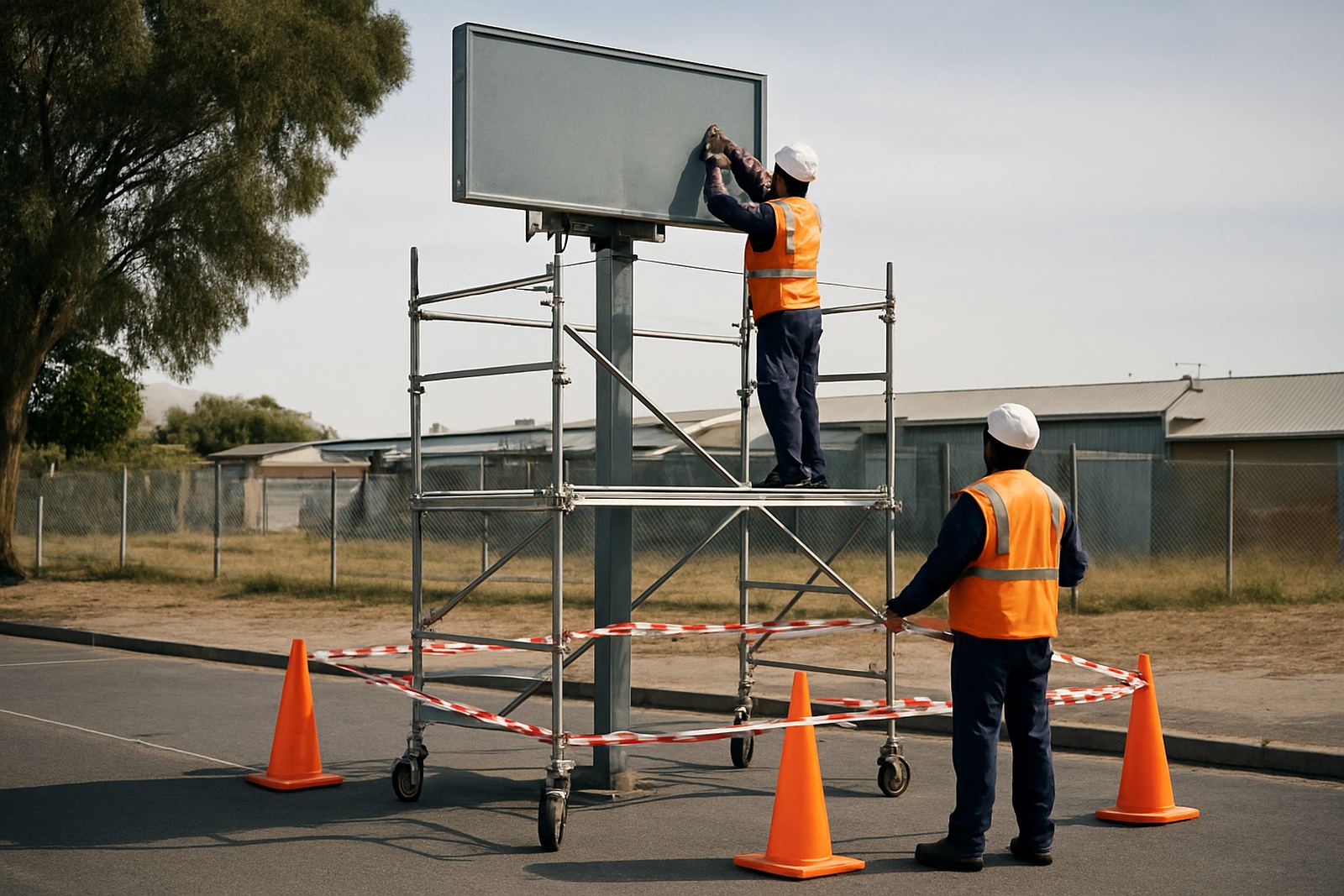
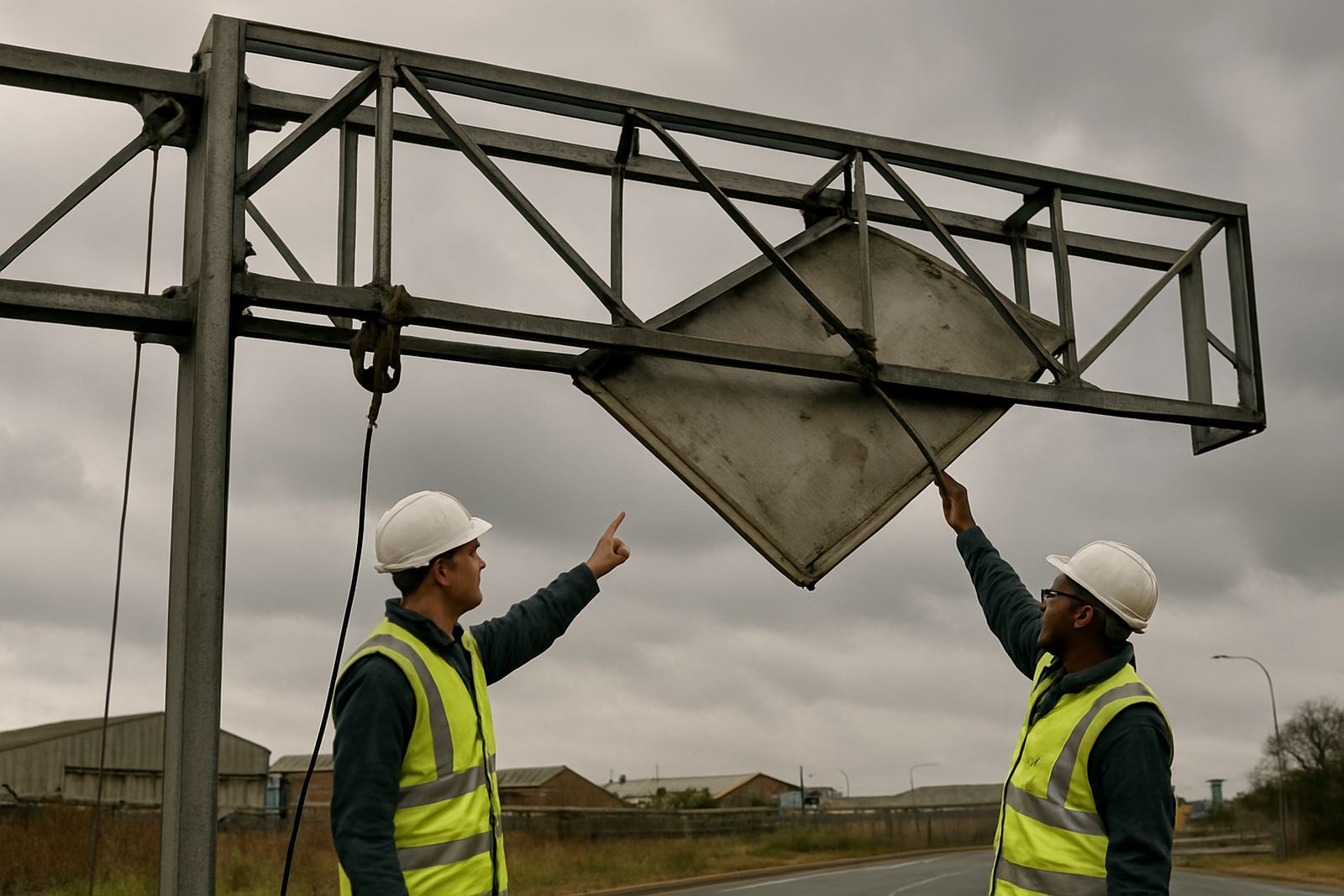
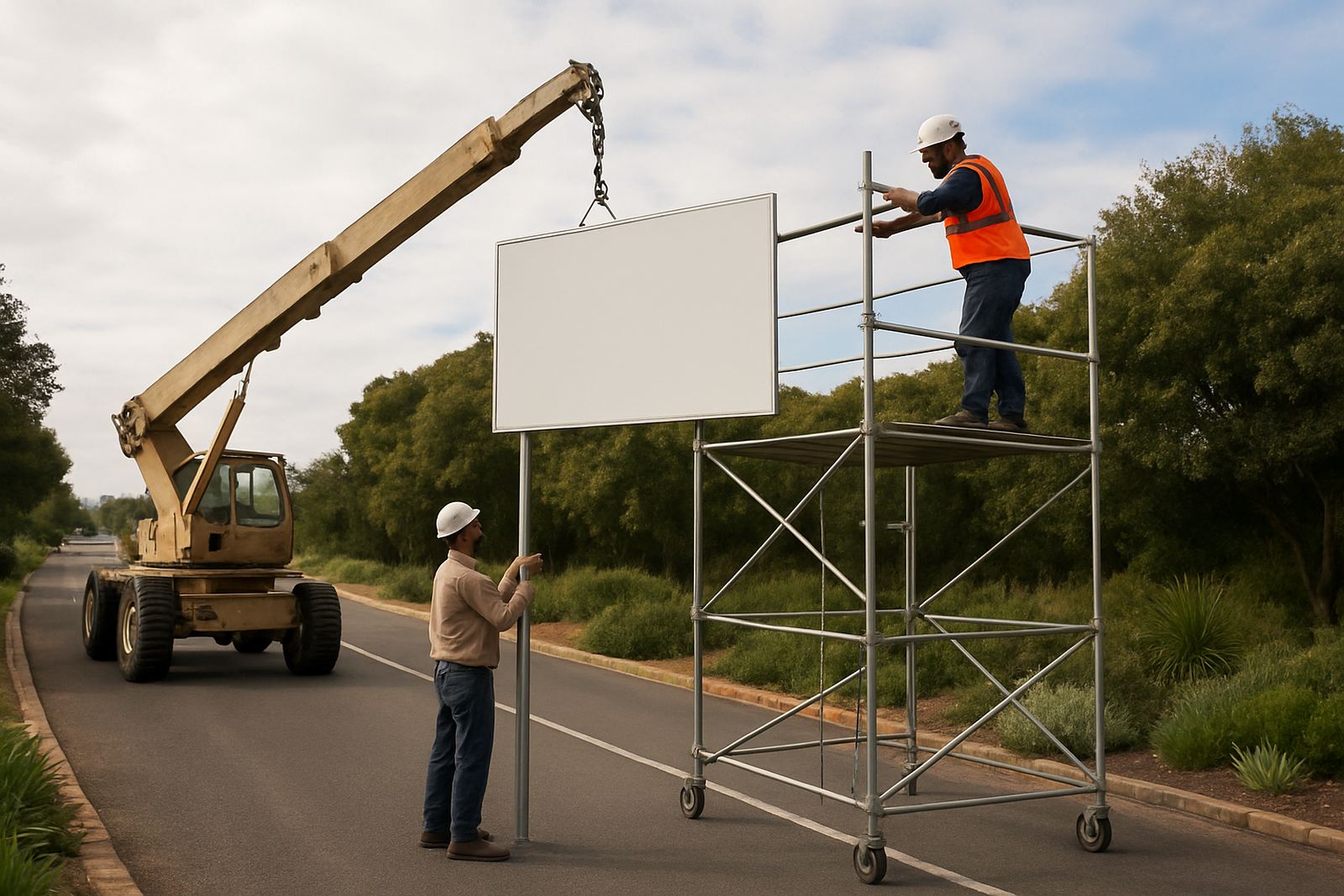
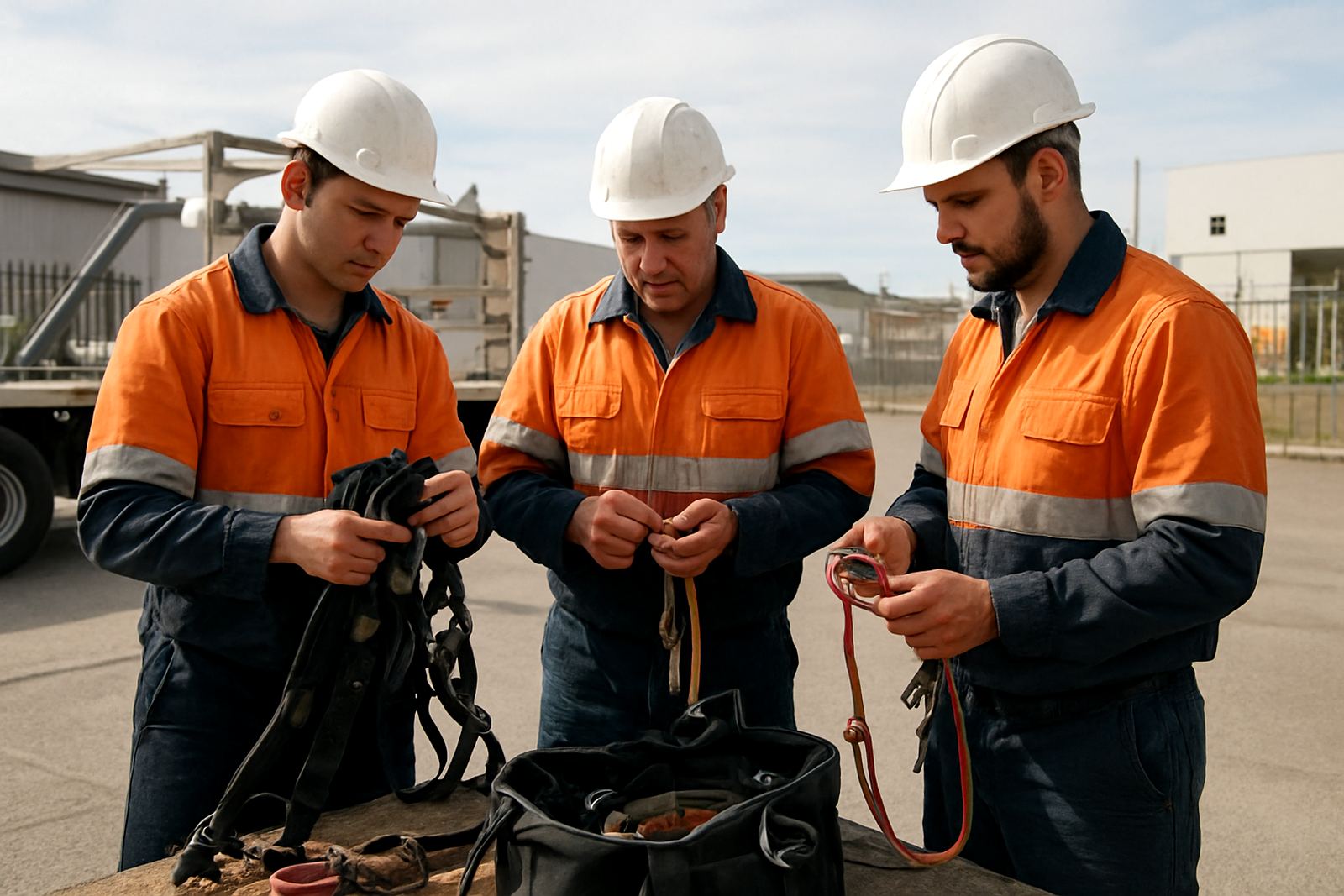
Our crews handle sign installation with the same care used for more exposed work, because estate signage still needs lift planning, access control and safe working methods. When a sign is going onto a wall, fence, pole, boom arm or stand-alone frame, the support structure has to match the weight and wind load of the panel. That is true for a small internal arrow just as much as for a larger entrance sign.
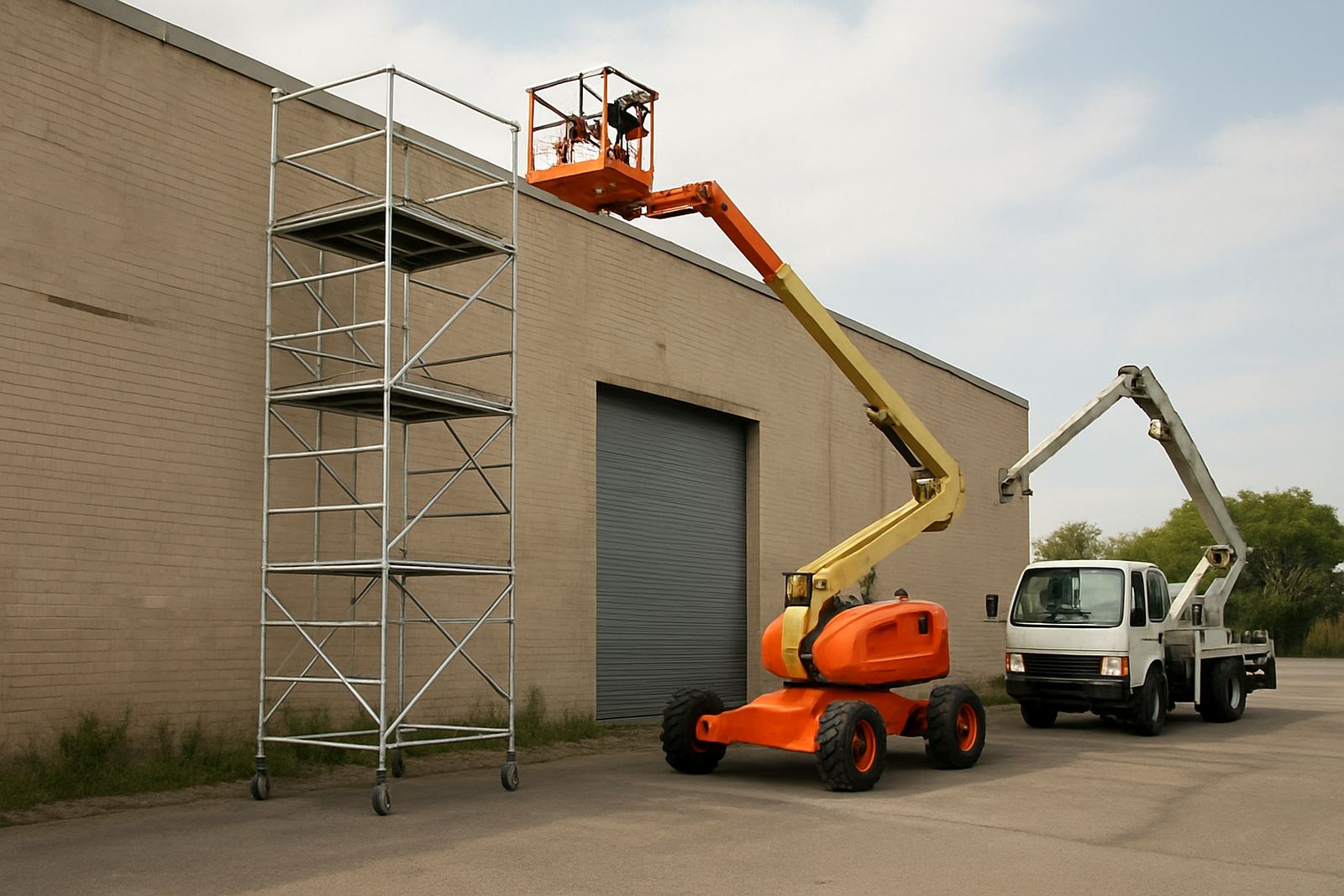
Where access is tight, we plan scaffold or platform work so the site stays orderly and the install is done without unnecessary disruption. That matters in active estates where residents are moving through the area, security is on duty and deliveries still need to happen.
Maintenance keeps the route clear after handover
Wayfinding is not a once-off job. Estates change. A block name may be updated, parking may be reallocated, or a road name may be added after the next phase opens. If those changes are not reflected on the signs, the estate starts carrying two systems at once and confusion follows.
Regular maintenance visits are useful because they catch small issues before they become complaints. A faded arrow, a cracked post, a loose panel or a light fitting that has failed after load-shedding can be corrected quickly if the signs are checked on a schedule. In some estates, a monthly walk-through is enough. In busier sites, quarterly checks may be better.
- Replace damaged or faded directional panels promptly
- Check fixings after storms or strong wind
- Confirm that updated unit numbers match the site plan
- Test illuminated signs and nearby lighting access points
- Record any relocations so the estate map stays current
For estates that host events or seasonal traffic, temporary signs may also be needed for overflow parking, contractor access or one-way traffic changes. Those should be handled in a way that does not clutter the permanent system.
A practical example from a mixed-use estate
At a mixed-use estate near Somerset West, the biggest issue was not the entrance sign itself but the route from the gate to the visitor bays, then on to the clubhouse and two separate residential clusters. Visitors kept turning into the wrong internal road, and delivery vehicles were reversing where they should not have been. The estate had good sign content, but the placement was inconsistent and some panels were hidden by planted beds.
We worked through the site with the estate team, checked sight lines from the gatehouse and reviewed where drivers actually made decisions. A few signs were moved, some were raised slightly, and the wording was standardised so every directional panel matched the same format. The result was simple enough to understand at a glance, which is what estate wayfinding should be.
This kind of job also shows why rigging crews should stay in their lane. Sign makers design and produce the system, while a rigging team handles the installation, removal or servicing with proper access and safety planning. That separation keeps the work clear and gives the client one point of responsibility for the physical side of the job.
What to check before approving an estate wayfinding job
Before a wayfinding package goes up, the estate should confirm the route logic, the final wording and the installation method. That includes checking unit numbers, road names, arrow directions and any rules about fixtures on walls, poles or common property. If the estate has a managing agent, security provider or body corporate committee involved, everyone should sign off on the same version.
It also helps to ask practical questions early. Can the signs be serviced later without closing a lane? Will the fixings cope with wind exposure? Is there safe access for a maintenance crew if a sign sits above a planted verge or near a boundary wall? These are the details that prevent repeat callouts.
When estate wayfinding is done properly, people do not think about the signs much because they simply work. That is usually the sign of a good system: clear, durable and installed with enough care to last through daily use, weather and changing site conditions.