

Start with the sign, then work back to the access method
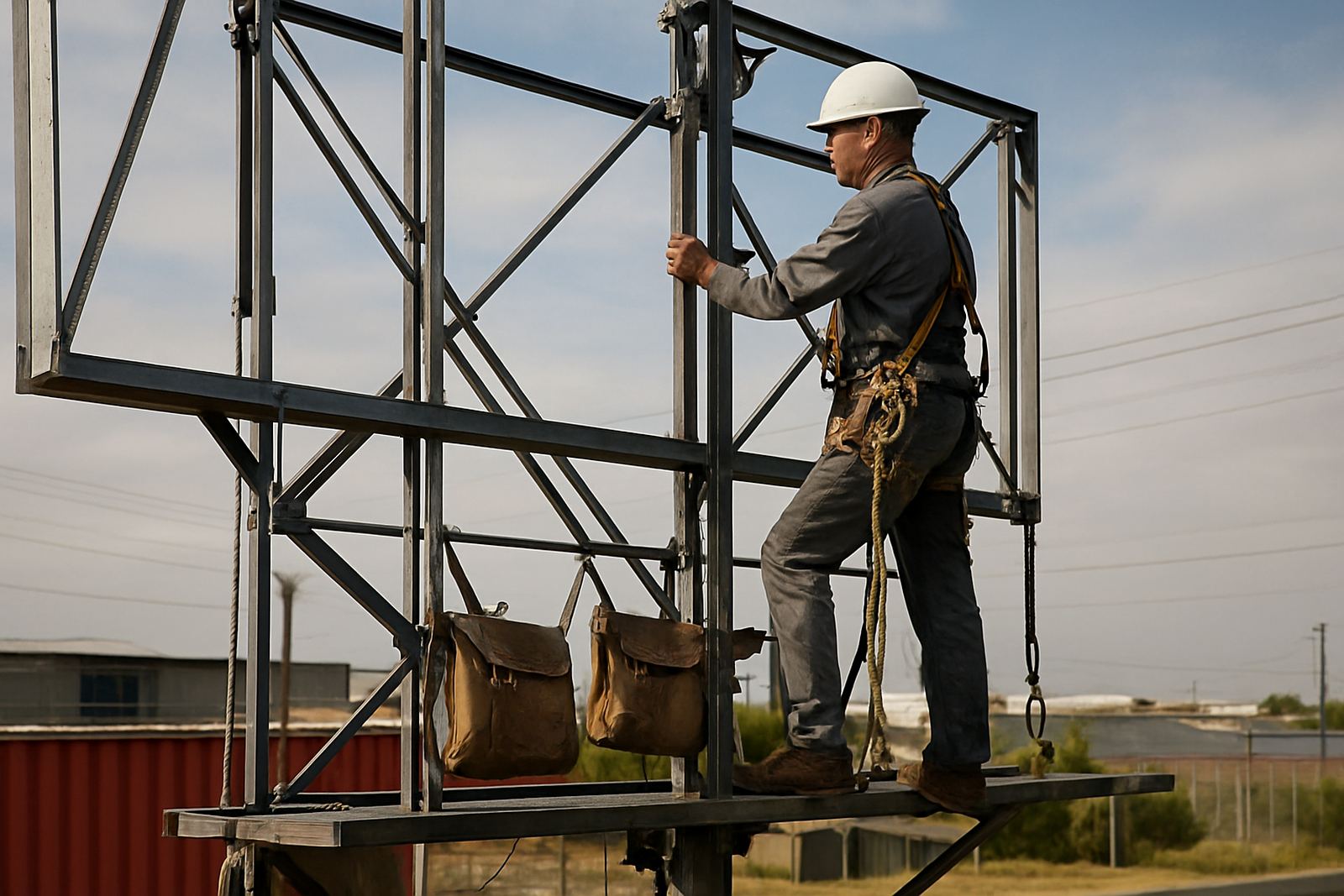
Before anyone books equipment, the crew should look at the job itself. Is it a small fascia sign at 3 metres, a billboard face change at 12 metres, or a light repair above a shopfront canopy? The height, fixing points and time on site all affect whether a ladder, scaffold or mobile platform makes sense.
In Paarden Eiland, Bellville and Somerset West, many jobs are on busy retail fronts with tight loading areas. In Johannesburg CBD, Sandton and Midrand, access often depends on parking control, pedestrian flow and building management. A short visit and a proper site survey saves a lot of time later.
- Measure the highest working point, not just the bottom edge of the sign.
- Check if the crew needs both hands free for drilling, wiring or lifting.
- Look for uneven paving, soft soil, traffic lanes and overhead cables.
- Ask how long the crew will be on site, not just how high they need to reach.
When a ladder is enough, and when it is not
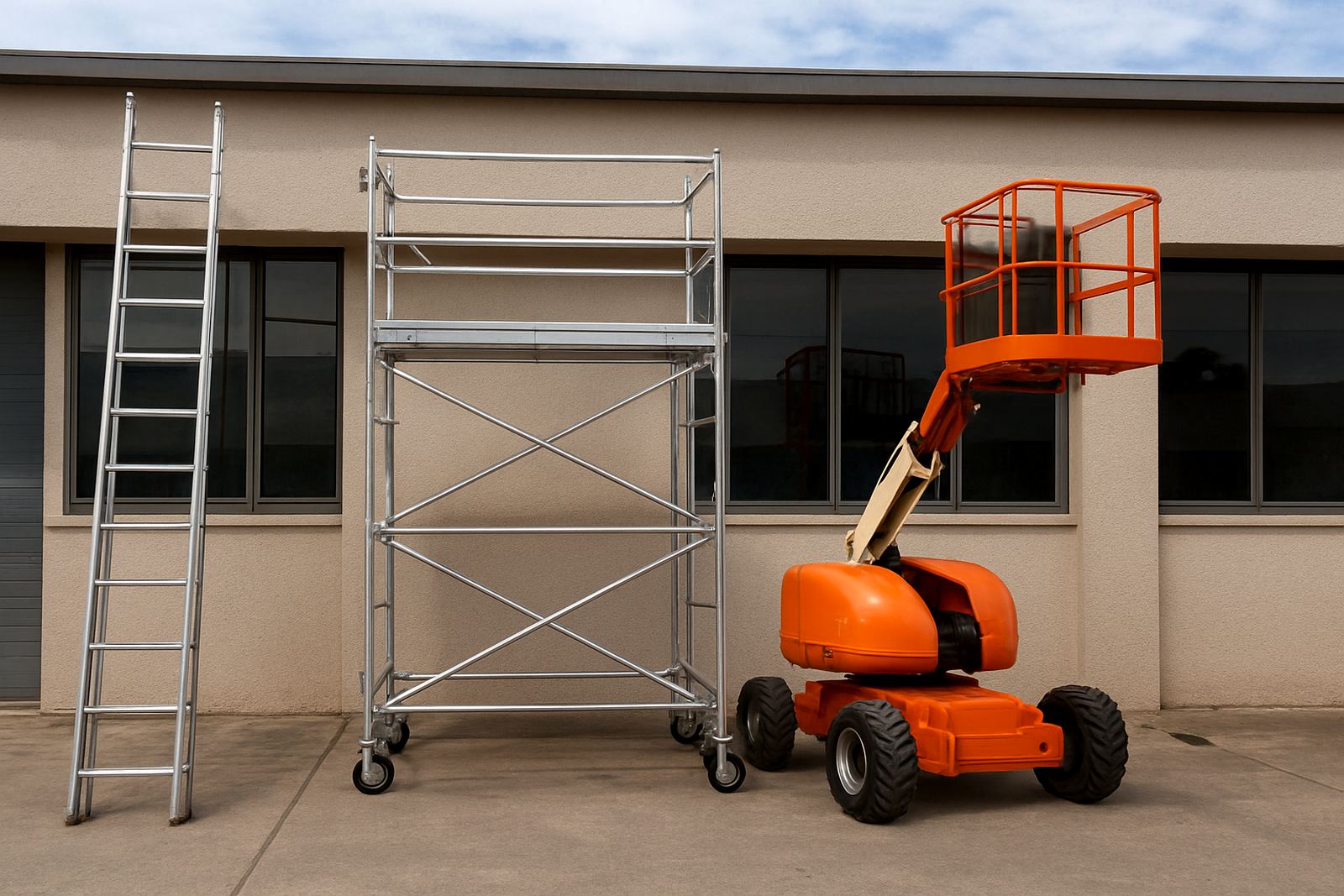
Ladders work best for light duty tasks where the crew can keep three points of contact and reach the job safely without overextending. They are useful for quick sign servicing, lamp changes, small bracket checks and minor adjustments at low level.
They are not the right choice for heavy sign panels, long fixings or jobs where tools, parts and a second worker need space. A ladder also becomes a poor option when the ground is sloped, the weather is windy, or the work area is exposed to vehicles and foot traffic. Coastal humidity in Cape Town can make surfaces slick, so the team has to check footing carefully.
- Use a ladder only for short duration access and light work.
- Never use one where the crew must lean far sideways to reach a fixing.
- Avoid ladder work near moving vehicles, busy entrances or unsecured ground.
- Stop if wind, rain or load-shedding related darkness reduces visibility.
Scaffold access for longer jobs and controlled working height
Scaffold access is usually the better option when a signmaker needs a stable working platform for installation or removal over a longer period. It gives the crew room to handle larger sign faces, drill accurately and keep tools and hardware within reach.
It is especially useful for repeated tasks at one location, such as maintenance visits, fascia repairs or sign servicing where several components need attention. Scaffold work does take planning. The base must be level, the footprint must fit the site, and the structure must stay clear of doors, sprinklers and public walkways. On municipal sites or in shopping centres, access rules often need approval before work starts.
- Check that the ground can carry the load without sinking or shifting.
- Allow space for a safe build, work zone and removal route.
- Confirm whether the scaffold must stay inside a cordoned area.
- Use scaffold where the task needs repeated access at the same height.
For sign makers across the Western Cape and Gauteng, scaffold access is often the best call when the job is less about speed and more about control.
Mobile platforms for height, reach and faster turnaround
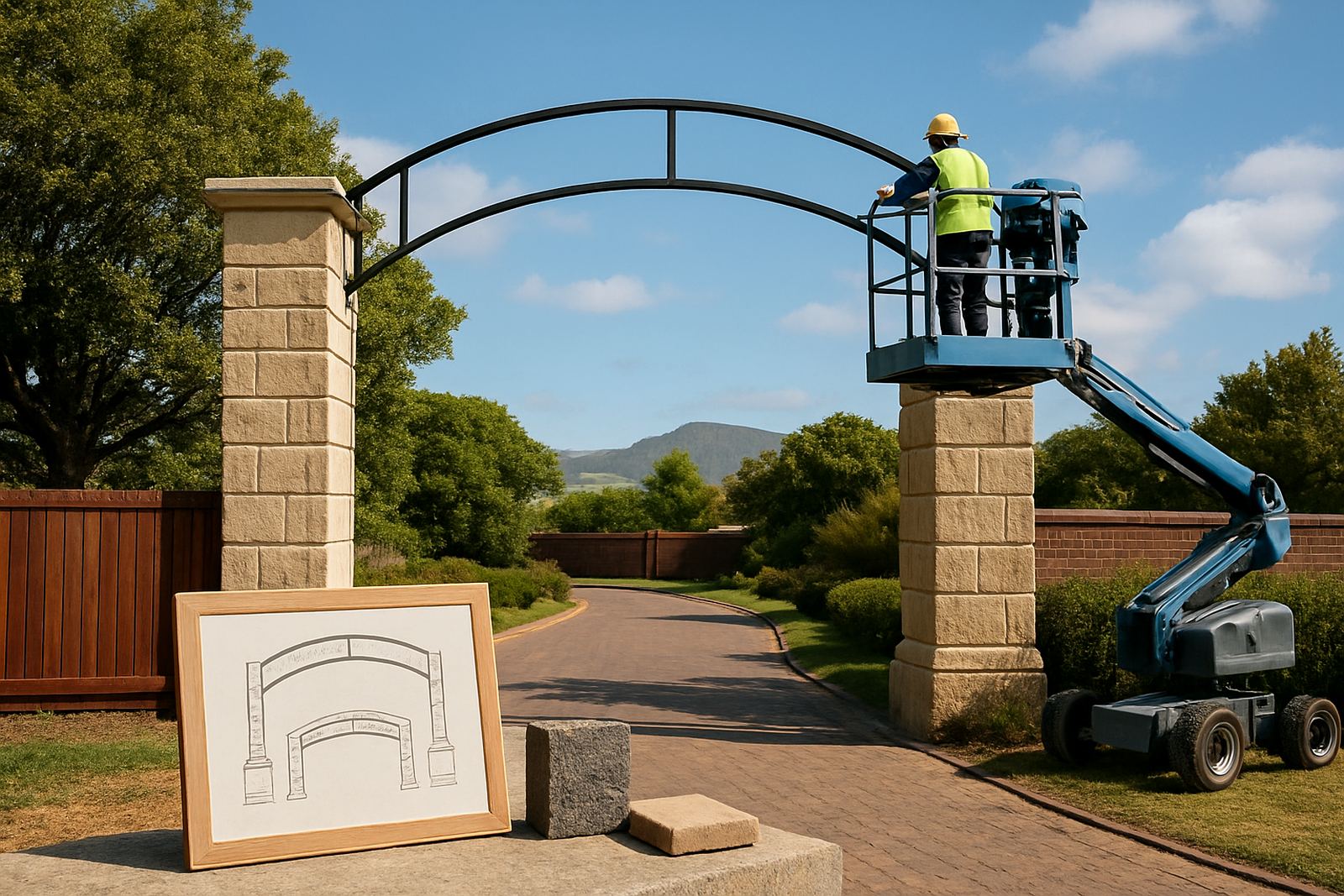
Mobile platforms are useful where the work area changes, the sign is high, or the site needs quicker set-up than scaffold can offer. They are often chosen for lighting access, billboard face changes, sign relocations and taller commercial installations where the ground is suitable and the route is clear.
The key advantage is reach with movement. The crew can position the platform, complete the task, then move on without rebuilding a structure. That said, not every site allows it. Narrow lanes, tight basements, sloping yards and soft surfaces can stop a platform from being the right answer. In Johannesburg, access may also be affected by security gates, boom control and floor loading restrictions in parking decks.
- Confirm the floor or yard can support the machine weight.
- Check turning space, overhead clearance and access gates before arrival.
- Plan for battery charging or fuel requirements if the job runs long.
- Consider a platform when the crew needs to move along a façade or face line.
A simple site checklist before the crew arrives
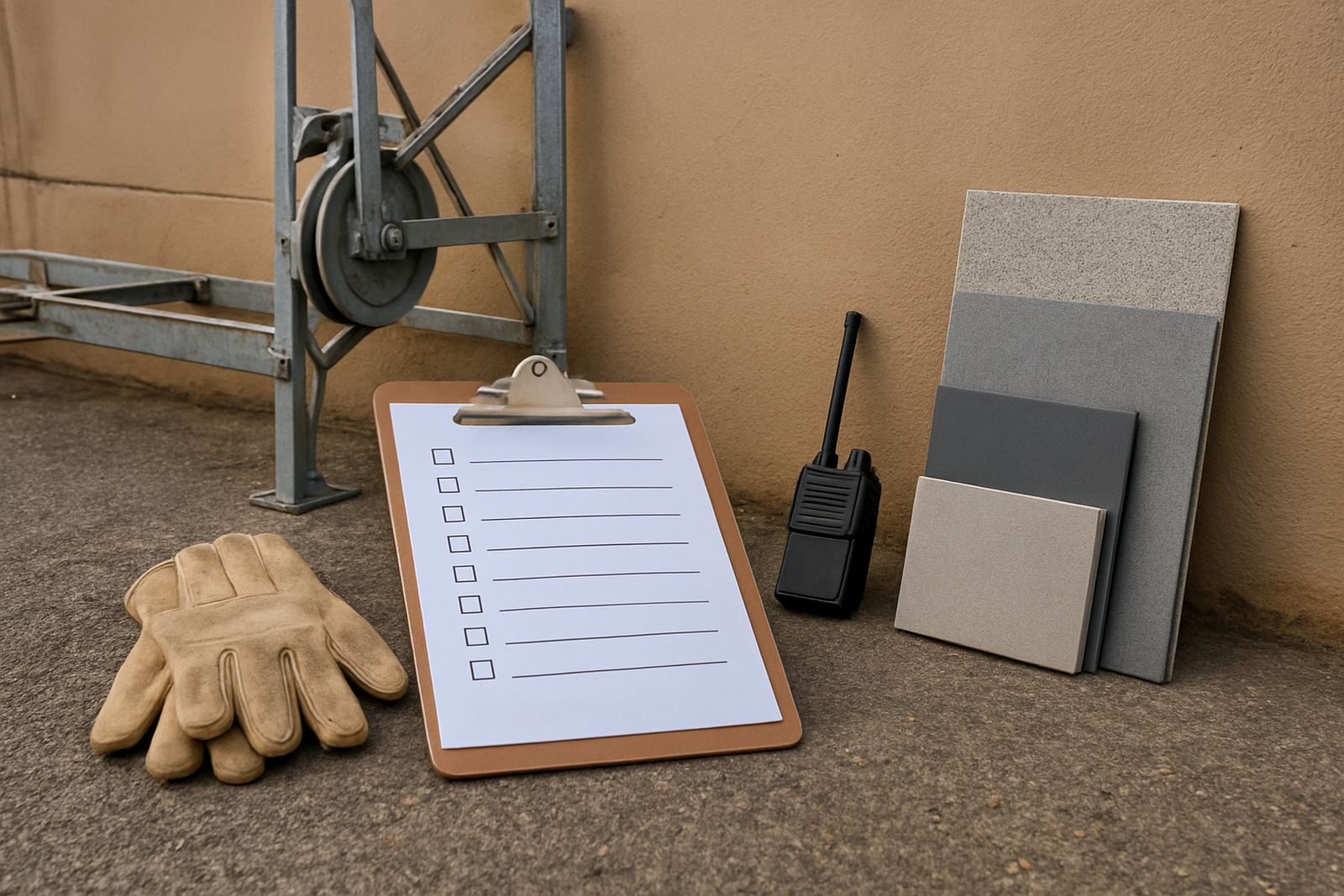
A good checklist cuts down on delays and keeps the job safe. It also helps the signmaker know what to expect on the day. Our crews often work for other sign shops, so clear instructions from the start matter, especially when the client needs removal one day and reinstallation the next.
If the site has any of the issues below, the access plan may need changing before the truck leaves the yard. That is especially true during load-shedding, when extra lighting may be needed for early morning or late afternoon work, and when coastal wind picks up in exposed areas like Paarden Eiland or near the open coast.
- Exact address, contact person and site opening hours.
- Height of the sign and any obstacles below it.
- Parking, loading bay access and traffic control requirements.
- Nearby power lines, glass, awnings, sprinklers and trees.
- Whether the work is install, removal, servicing or a face change.
- Any municipal permit, building manager approval or escort requirement.
How Sign Riggers plans access for sign makers
We keep to rigging only, which means the sign maker stays the client and we handle the access work around it. That includes site surveys, lift planning, scaffold access, platform work, billboard face changes and emergency callouts when a sign needs attention fast.
Every job starts with a practical review: what needs to be done, where the crew can stand, what equipment fits the site, and what safety measures are required. Our teams are scaffold and first-aid trained, and we plan around real conditions on the ground rather than guesswork. If a ladder is enough, we say so. If scaffold or a mobile platform will save time and reduce risk, we say that too. The aim is a clean handover and a sign that can be worked on properly, without complications for the shop that sold it.
From Bellville and Paarl to Sandton, Midrand and the East Rand, the right access choice usually comes down to one question: how do we reach the sign safely, with the least disruption to the site and the best result for the signmaker? That is the decision that drives every job.