

1. Confirm the job details before the crew is booked
Before any sign rigging team arrives, make sure the scope is clear and signed off. Our crews work only on installation, removal, servicing and access for sign makers, so the install brief needs to match the drawing, the final sign size and the site conditions on the day. A small change in lettering, bracket position or panel weight can affect access, fixings and lift planning.
Send through the final location, preferred date, site contact, and any municipal or landlord requirements early. If the job is in Paarden Eiland, Bellville, Somerset West, Paarl, Johannesburg CBD, Sandton, Midrand or the East Rand, tell us about delivery bays, security rules and any loading restrictions. In busy areas, a missed detail can cost an hour or more and thats often avoidable.
- Final sign dimensions and approximate weight
- Wall, pole, roof, fascia or freestanding location
- Exact site address and access instructions
- Client contact on the ground for the day
- Any after-hours or weekend constraints
2. Check access for trucks, ladders, lifts and scaffold
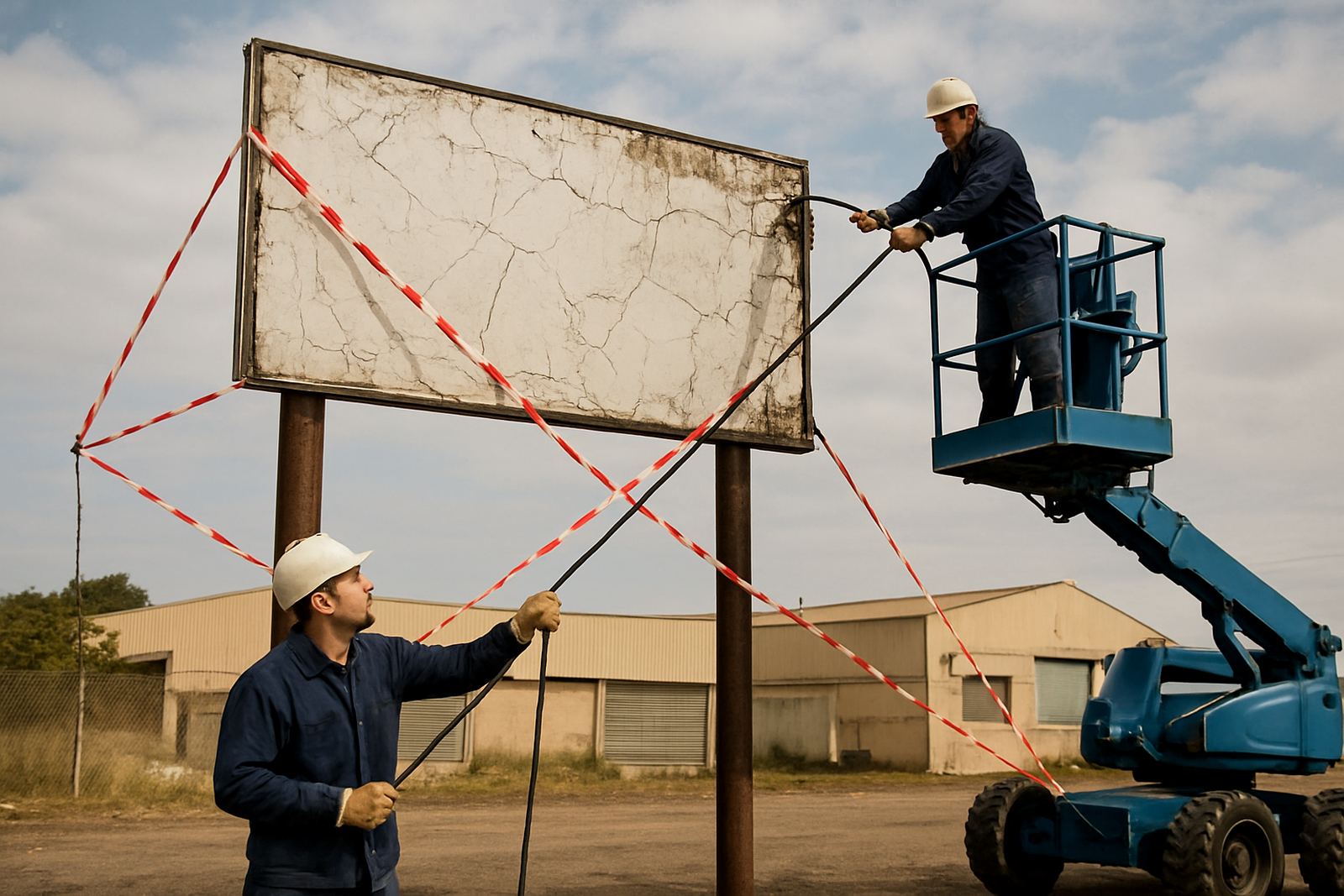
Access is one of the biggest causes of delay. Before the rigging crew leaves Cape Town or Johannesburg, check whether a truck can get close enough to the work area and whether there is space to set up ladders, scaffold or a mobile platform. Narrow lanes, low branches, tight parking and overhead cables all change the method.
If the sign is above a shopfront, on a warehouse wall or across a busy forecourt, make sure the area can be cordoned off safely. The crew may need a lift plan, traffic control, or a temporary shutdown of the work zone. On coastal sites around the Western Cape, wind and salt air can also affect the timing of the lift and the condition of fixings.
- Reserve parking for the rigging vehicle close to the site
- Keep loading bays and access lanes clear
- Identify overhead services, cables and low obstructions
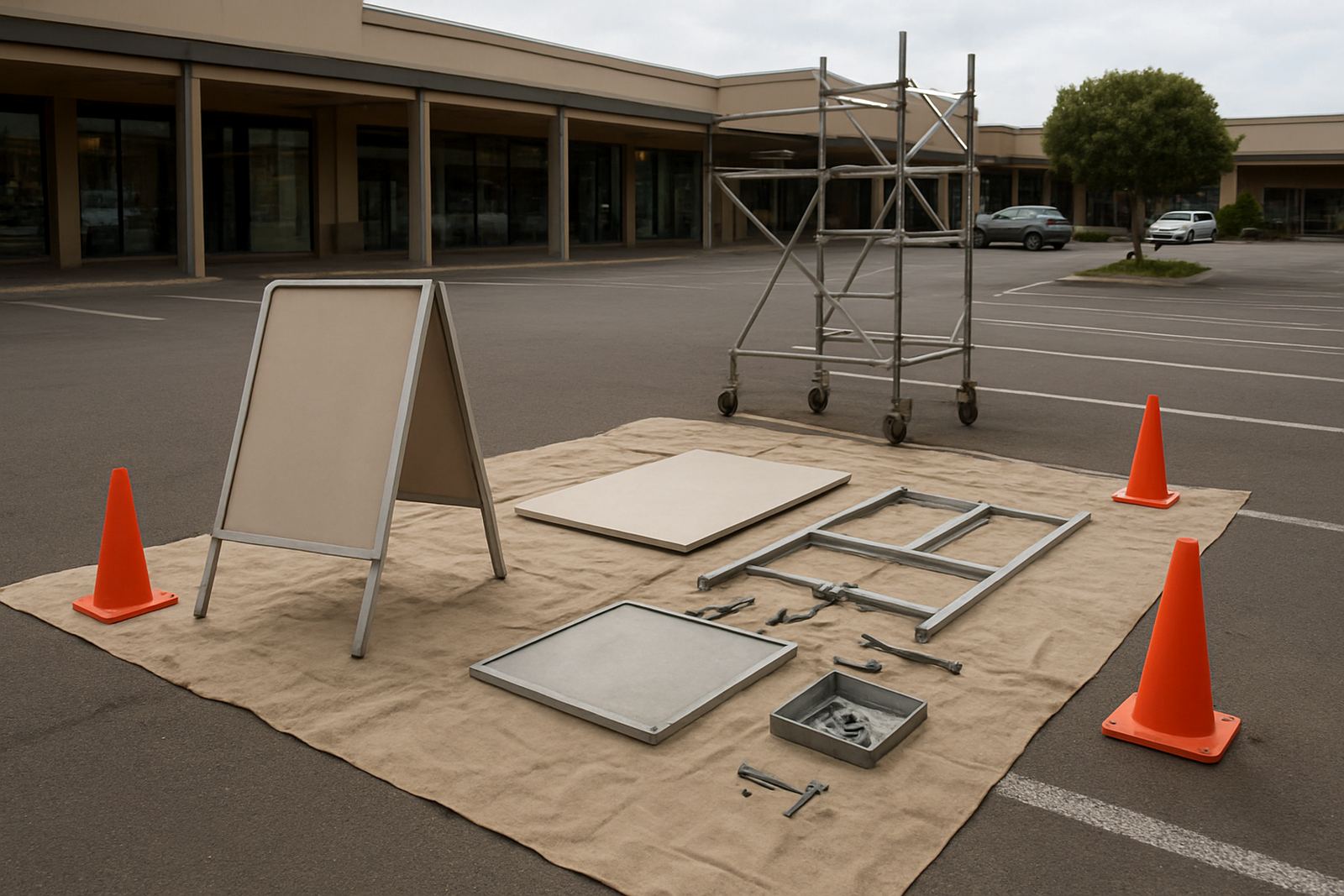
- Arrange cones, barriers or a secure cordon if needed
- Confirm where scaffold or access equipment can be positioned
3. Make the sign and the fixing surface ready
The crew can only work as fast as the site allows, so the sign face, frame and fixing points should be ready before arrival. Check that the substrate is sound, the wall is dry, and any old brackets or damaged anchors have been removed or marked. If the job involves a replacement sign, the old unit should be off the wall or made safe first.
For servicing jobs, confirm whether the issue is electrical, mechanical or structural. A flickering light may be a ballasts issue, a failed fitting, or water ingress from a cracked seal. On older sites, rusted steel, damaged masonry and loose cladding need to be noted before the lift begins. If the sign has to be relocated, measure the new mounting position carefully so there is no guesswork on site.
- Confirm the sign face, frame and fixings are complete
- Check the mounting surface for cracks, corrosion or water damage
- Remove loose items, old bolts and broken brackets
- Have replacement fasteners, sealant and touch-up materials ready
- Keep the replacement sign or parts near the work area
4. Sort power, lighting access and shutdowns in advance
If the sign includes illumination, the power supply must be identified before the crew arrives. Crews should not be tracing unknown circuits while working at height. Make sure someone on site knows which breaker feeds the sign, where the isolator is and whether there are backup power systems that affect the circuit. In offices and retail parks, this is often the difference between a quick service visit and a delayed one.
For lighting access, tell us if the sign sits above a roof edge, inside a canopy or behind a parapet where extra access gear is needed. If the job is in an area affected by load-shedding, plan for any testing or commissioning to happen when power is available. Where municipal rules apply, allow time for permits, traffic control or working hour restrictions. It is better to pause a job for a permit than to rush and re-do it later.
- Identify the correct breaker, isolator or lock-off point
- Confirm whether power must be isolated before work starts
- Arrange access to electrical rooms or roof spaces
- Check if testing must happen during a specific time window
- Note any permit or municipal requirements for the site
5. Prepare the ground team, documents and safety basics
Every site needs a person who can make decisions quickly. The client liaison, facilities manager or store supervisor should be available when the crew arrives. They should also have the latest drawings, site contacts and any induction paperwork ready. If a security office needs to sign the team in, arrange that before the truck gets there.
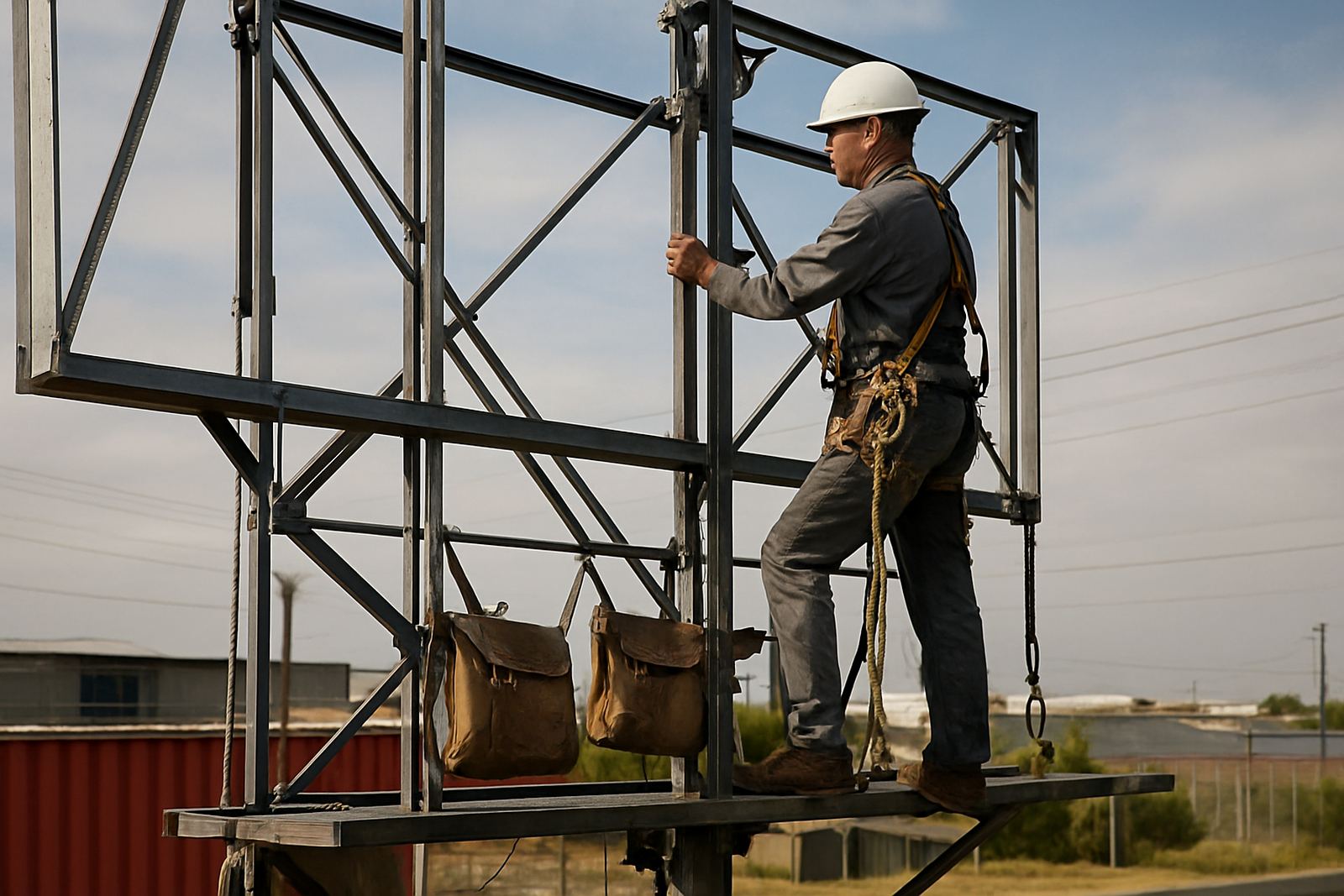
Good safety prep keeps the job moving. The site should have clear walkways, no open hazards near the work zone, and no one standing under a suspended load. If there are public areas nearby, plan for signage and barriers. Our teams are safety and first aid trained, but the site still needs to be controlled properly. A clean setup helps everyone move faster and safer.
- Nominate one on site contact with authority to sign off the work
- Have site inductions and access cards ready
- Clear the work zone of stock, vehicles and loose materials
- Keep the public away from the lift or installation area
- Share emergency contact details for the site manager and security
6. Use this final pre-install checklist the day before
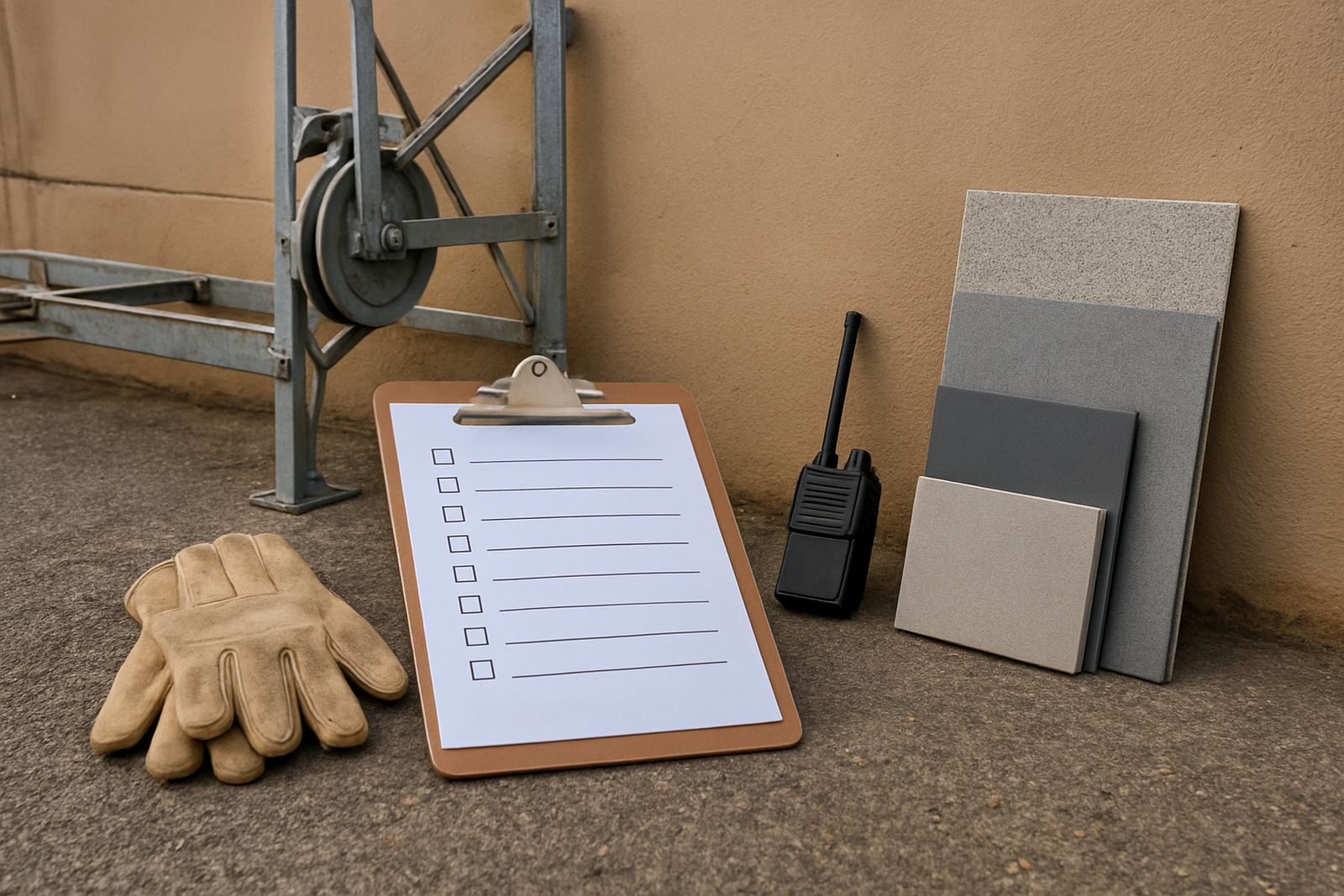
The day before the booking, run through a final check so nothing gets missed. This last step is especially useful for repeat maintenance visits, billboard face changes and emergency callouts where time on site is tight. If anything has changed since the booking was confirmed, let the rigging coordinator know straight away so the method can be adjusted.
For jobs in Paarden Eiland or the Johannesburg business districts, traffic, weather and security can all change fast. A short call or message before the shift helps avoid a wasted trip. If the site is not ready, it is better to reschedule than to rush into an unsafe setup.
- Site access confirmed for the correct date and time
- Truck parking and loading space still available
- Power and isolators located
- Scaffold, platform or lift requirements confirmed
- Weather and wind conditions checked for outdoor work
- Client contact available on arrival
If you are not sure whether the site is ready, ask before the crew is sent out. A quick check is cheaper than a second visit and it keeps the job on track.
7. What to do if the job changes on the morning
Sometimes the site changes at the last minute. A delivery vehicle parks in the access lane, a wall is found to be damaged, or the sign turns out to be heavier than expected. Tell the crew immediately if anything has changed. That allows the supervisor to adjust the lift plan, choose different access equipment, or pause the job until the site is safe.
Do not ask the crew to improvise around a hazard. If the sign is damaged, the fixings are failing, or the weather is too strong, the job may need to be delayed. Good rigging is planned work, not guesswork. A short delay is better than a damaged sign or an unsafe lift.