


Start with the estate rules and the site plan
Before any sign is made or lifted, check the estate rules, architectural controls and municipal requirements that may affect height, illumination, reflections, wall fixing and vehicle access. Many estates in Somerset West, Paarl, Sandton and Midrand have their own approval process, and a sign that looks fine on paper can fail if it blocks sightlines at an entrance or sits too close to a road reserve.
For entrance monuments, wayfinding panels and directional blades, the first step is a proper site survey. Measure the verge, boundary wall, kerb line, planting beds and gate clearance. Note where service ducts, irrigation pipes and electric lines run. On coastal sites around Paarden Eiland, Bellville or the Atlantic side, salt air can shorten the life of fixings if the wrong material is used, so the survey should include exposure to wind and moisture too.
- Confirm estate approval and any municipal conditions
- Measure clear widths, heights and turning space for access equipment
- Check for underground services, sprinkler lines and drainage runs
- Record wind exposure, shade and water splash zones
Choose the right sign type for the job
Estate signage usually falls into three groups: entrance features, internal wayfinding and compliance signs. Entrance features need presence and durability. Wayfinding needs legibility from a vehicle at low speed. Compliance signs must stay clear and uncluttered, especially at boom gates, visitor parking and service areas.
For larger estates, think in terms of sequence rather than one sign only. The gate sign, guardhouse sign, street blades, parking markers and pedestrian directions should work together. If one panel is too small or too busy, visitors will still ask for help at reception. For multi-phase estates, it often makes sense to plan spare spaces for later tenant names or phase numbers so the sign system can grow without a full replacement.
- Entrance monument or wall sign for first impression and identity
- Directional signs for roads, parking, offices and amenity areas
- Safety and information signs for access control, speed limits and no entry areas
- Changeable panels for phases, tenants or short-term notices
Plan the installation around access and safety
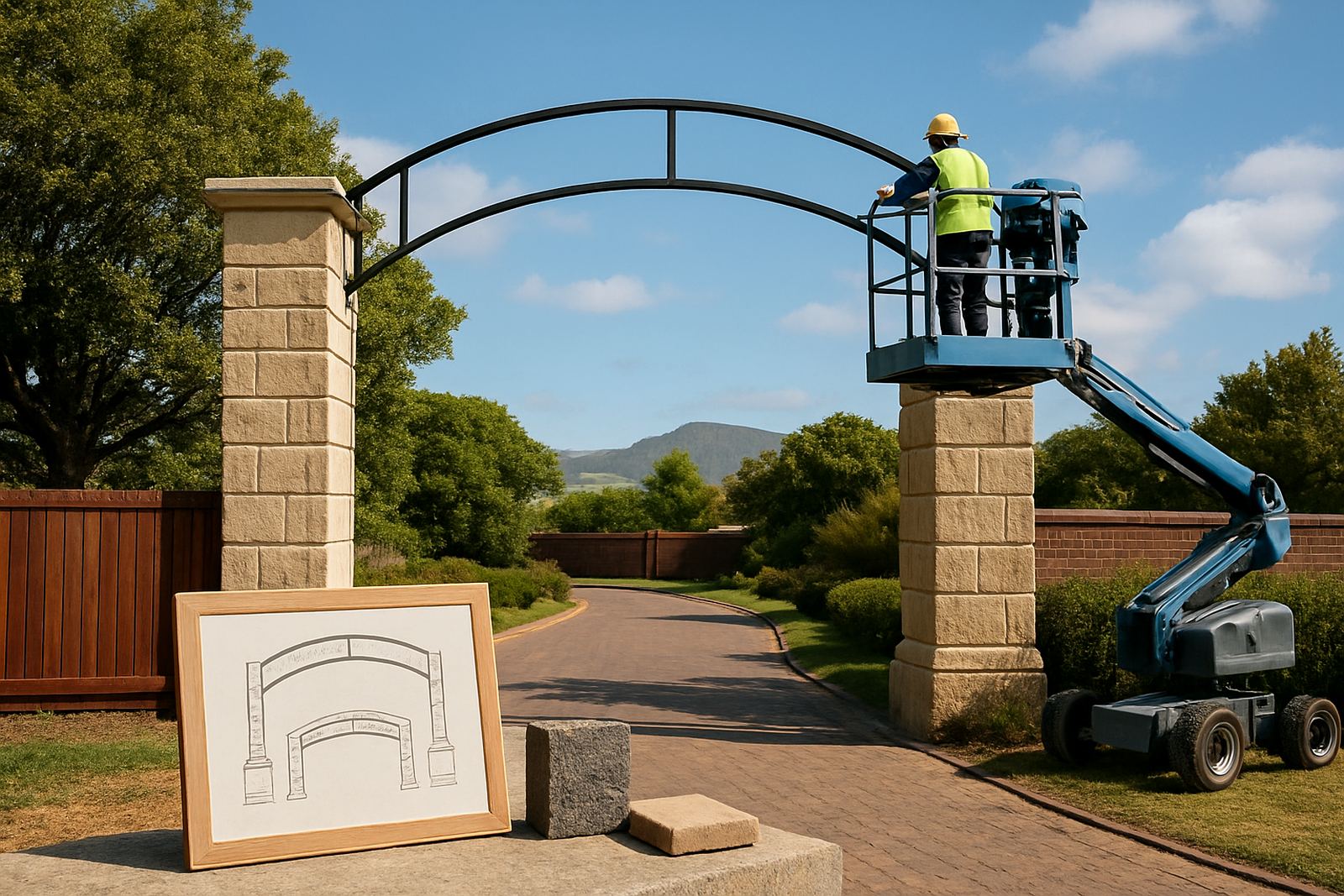
Estate sites can be tricky for access because roads are narrow, gardens are finished and traffic keeps moving. That is where lift planning and scaffold access matter. A small sign at a gate may only need a quick reach, but a high entrance feature, pylon or wall mounted panel can require platform work, traffic control and a separate off-loading area. Good planning keeps the job tidy and reduces the chance of damage to paving or planted areas.
Our crews work on sign installation, sign removal and sign servicing for sign makers who want the rigging handled properly. That means safety gear, trained first-aid cover and the correct access method for the site. If the estate is live while work takes place, the sequence should be agreed in advance so residents and delivery vehicles are not caught out.
- Set a date that avoids peak move-in or event traffic
- Arrange cones, barriers and a clear pedestrian route
- Confirm where the truck, lift or scaffold will stand
- Check weather, especially wind on exposed coastal or high open sites
Install for visibility, not just looks
A good estate sign should be easy to read from the correct distance and angle. That means the size of the lettering, the contrast of the colours and the height of the sign all need to work together. On curved driveways or sloped entrances, the viewing angle can change quickly, so the panel may need to be set out a little differently than the drawing suggests. Small adjustments at install stage make a big difference.
Lighting also needs thought. If a sign is lit, the fittings should be positioned so they do not glare into drivers eyes or shine into nearby homes. On estates with strict bylaws, illuminated signs may need timed operation or reduced brightness after hours. A clean installation also means hidden cabling where possible, neat sealing at fixings and no visible damage to stone, plaster or timber finishes.
After the first fix, we always recommend a full walk around with the estate representative or sign maker. Check sightlines from both directions, look for shadows from trees or posts, and confirm the sign can be read at night if it is lit. A sign that is perfect at 10 metres may be hard to read at 30 metres, so the final check matters.
Keep wayfinding clear as the estate grows
Once residents move in and tenants start using the site, signage becomes a working system not a one-off task. Roads change, phases open, parking rules shift and temporary notices creep in. If the estate does not set a standard for fonts, arrows, materials and mounting heights, the whole site can become inconsistent very fast.
Maintenance visits are the best way to keep control. A routine check can pick up loose fixings, faded panels, broken lights and water ingress before they become a complaint. In Gauteng, summer storms can shake fittings loose. In coastal Cape Town, corrosion can creep in on exposed brackets and fasteners. A simple service visit can save a much bigger replacement later on.
- Inspect fixings, brackets and sealant lines every 6 to 12 months
- Wash off dust, bird mess and salt build-up where needed
- Replace failed lamps, drivers or damaged face panels quickly
- Keep an updated map of every sign position on the estate
When to remove, relocate or replace an estate sign
Estate signs do not stay in the same place forever. Entrance walls get rebuilt, landscaping changes, road names are updated and tenant boards need a refresh. Removal should be planned with the same care as installation, especially when the sign is bonded into stone or fixed high above a driveway. A rushed removal can damage cladding, leave holes exposed or create a safety issue for staff and visitors.
If a sign is being relocated, check whether the old position leaves visible patching or old fixing points that need closing off. Sometimes a replacement is the better option if the current frame is tired, the finish has failed or the layout no longer suits the estate. For signs that are kept in service, a maintenance plan should cover cleaning, tightening, repainting and electrical checks where needed. That keeps the estate looking orderly and helps avoid unexpected callouts.
For sign makers serving estates in the Western Cape and Gauteng, having a rigging team that only does installation, removal and servicing is a practical advantage. It keeps the work in one lane, with the access, safety and site handling done by people who do this every day. That leaves the sign shop free to focus on design, manufacture and client relationships.