

1. Start with a clear site scope before anyone arrives
Fuel sites run on tight windows, traffic flow and safety controls, so the first step is making sure the job scope is confirmed in writing. We work only on the rigging side for sign makers, which means the site needs to be ready for access, lift planning and a clean work area. The more exact the brief, the less time is lost on site.
Before the crew is booked, confirm what is being done. Is it a canopy fascia sign, a pylon face change, a high-level service visit, or full removal for replacement? If the site has multiple branded elements, list each one separately with the exact position, approximate size, and whether there are existing fixings or new penetrations needed. A forecourt with several access points can eat up time fast if the team must guess which side is live and which side is shut down.
- Confirm the scope: install, remove, service, relocate or face change
- Send sign sizes, mounting heights and the number of faces
- Mark live forecourt lanes, customer entrances and tanker access
- State whether work is daytime, after-hours or during a shutdown window
2. Prepare access for canopy, pylon and forecourt work
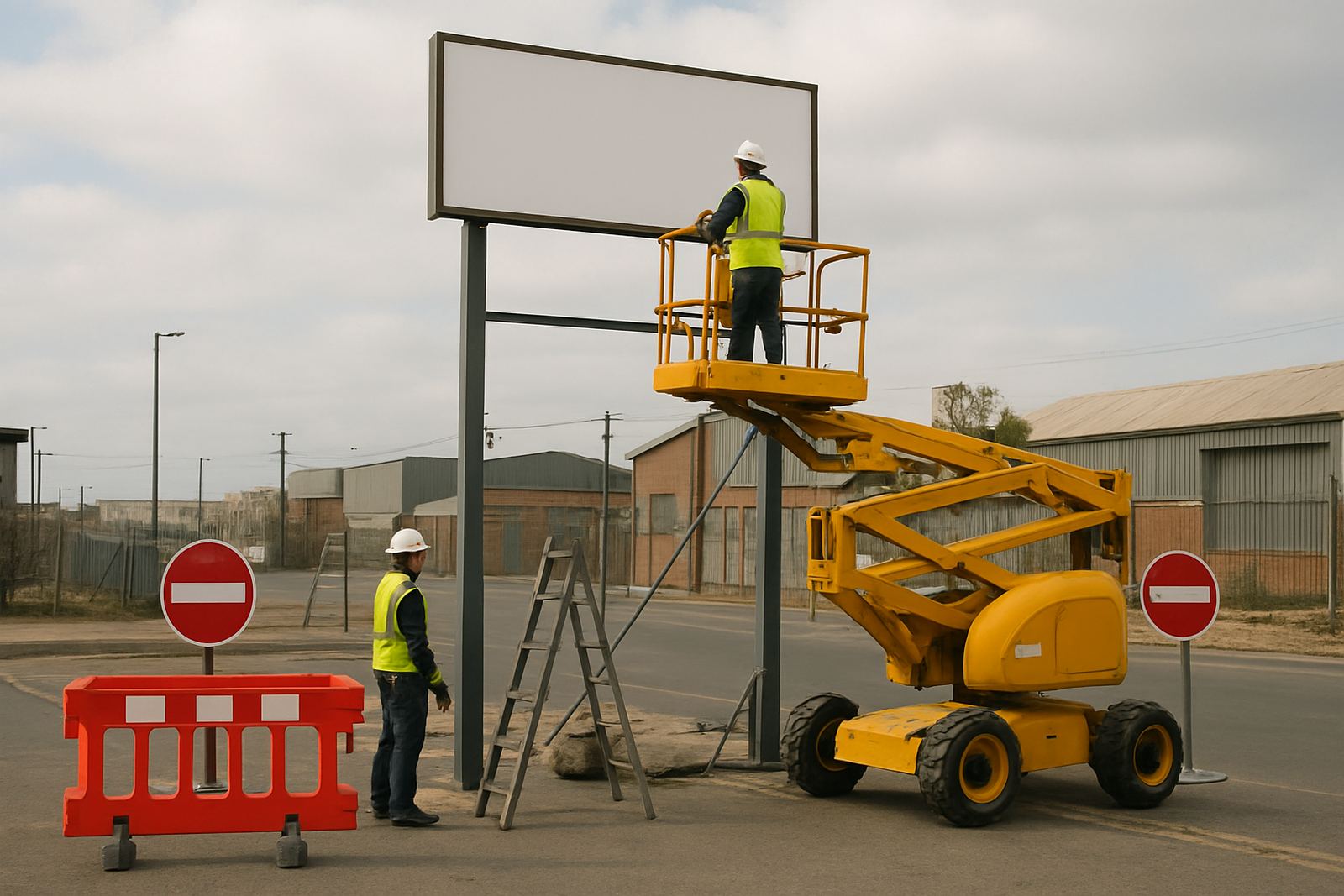
Access is where most delays happen on fuel sites. Canopies often need elevated work, pylons may sit close to kerbs or traffic islands, and forecourt branding can be blocked by parked vehicles or delivery activity. If a boom lift or scaffold access is needed, the site must have a path wide enough for the equipment and a surface that can carry the load without damage. Soft paving, fresh asphalt and tight turning circles need to be flagged early.
In Cape Town, wind can change the plan quickly, especially on open forecourts near the coast. In Johannesburg, tight city sites and active retail traffic can slow down setup if delivery bays are not cleared. Either way, the crew needs a safe route in and out, plus enough space to stage tools, barriers and replacement parts.
- Clear parked vehicles and delivery trailers from the work zone
- Reserve a level area for lift setup or scaffold placement
- Check overhead obstructions such as light poles, pipes and canopies
- Make sure the crew can reach the sign without crossing live customer traffic
3. Check power, lighting and isolation points
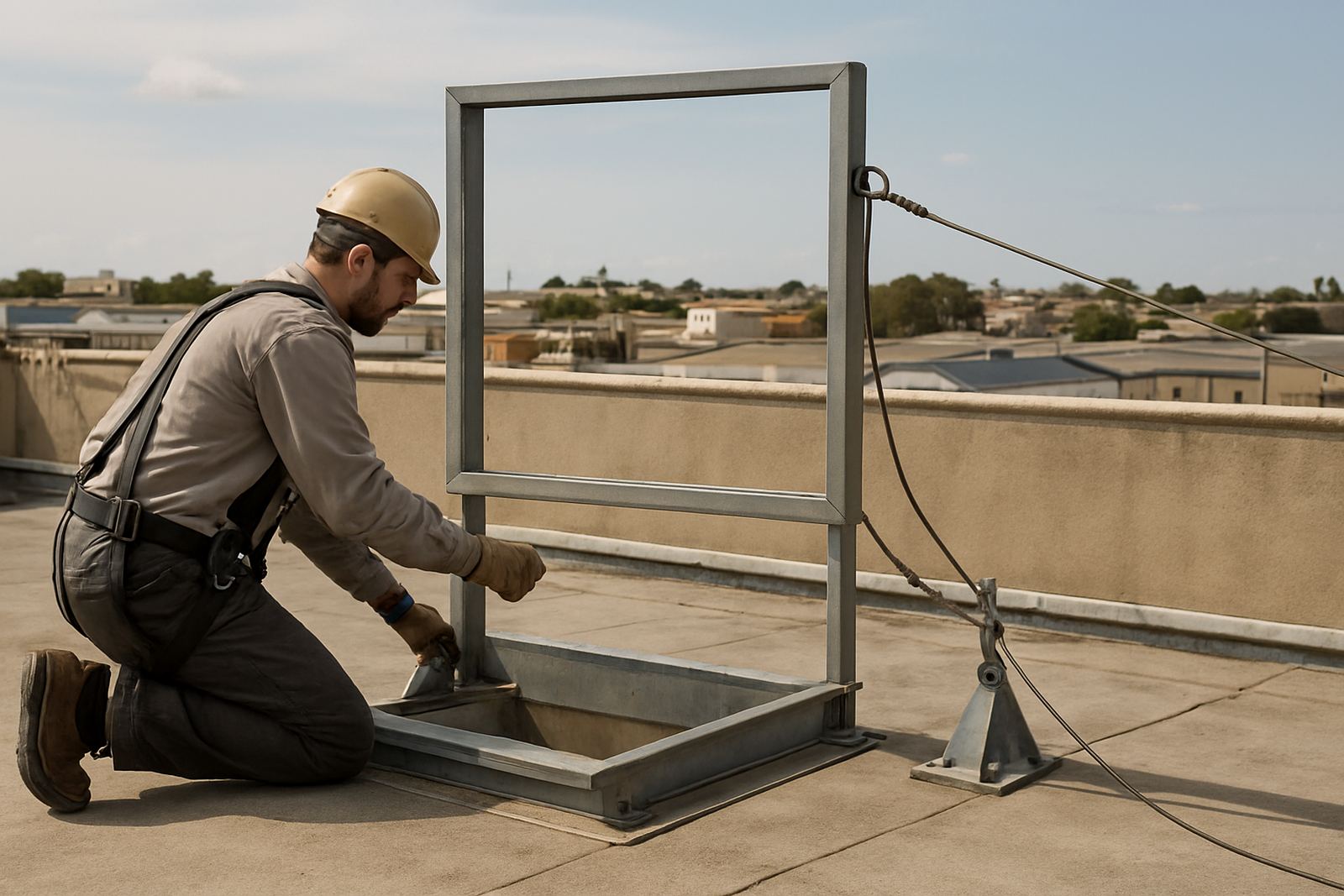
Many fuel site signs include internal lighting, edge illumination or external floodlights. If the job involves servicing rather than only a face change, the electrical side must be made safe before any rigging starts. A proper isolation point should be identified on site and the responsible person needs to know exactly what is being switched off, and what must stay live for trading.
For night work or early morning callouts, poor lighting around the work area can slow everything down. If the canopy lights are out or the pylon lighting is failing, that should be mentioned before the crew attends. It helps with the right access gear, the right testing order and the right time on site. Our teams are first-aid trained and safety focused, but safe access still depends on a clean handover from the site team.
- Identify isolation points for signs, lights and any associated equipment
- Confirm whether the forecourt can remain open during the job
- Report faulty lights, broken globes or water ingress before attendance
- Tell the crew if a generator or temporary lighting will be needed
4. Make the site safe for loading, lifting and public movement
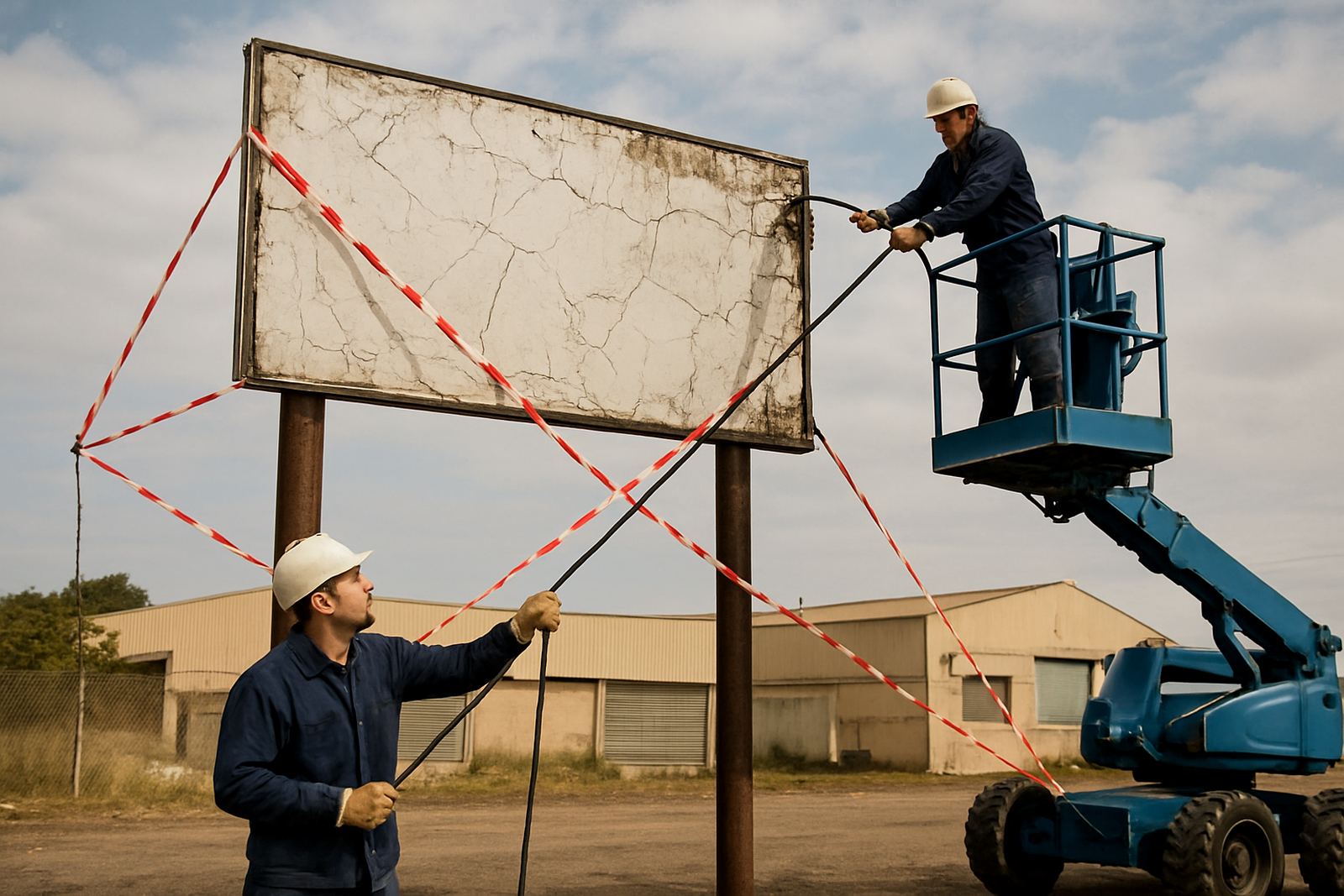
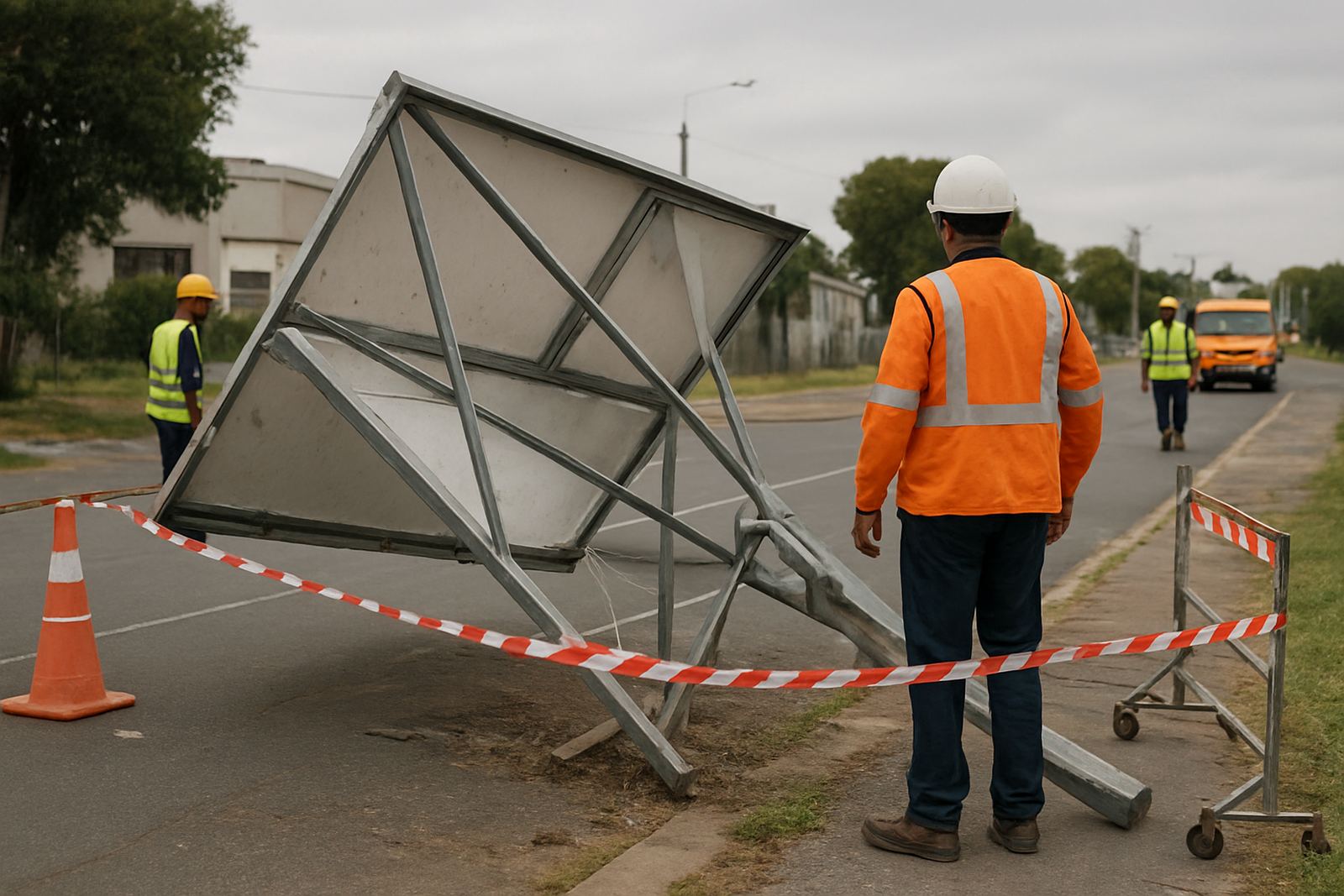
Fuel sites must stay controlled while work is in progress. Customers still arrive, tanker deliveries still happen, and staff still need to move through the forecourt. That means barriers, cones and clear no-go zones are not optional. If a pylon face change or canopy sign removal is taking place, the area underneath and around the work point must be kept clear the whole time.
We handle sign installation, removal, servicing and emergency callouts for sign makers across the Western Cape and Gauteng. The site owner or manager should still provide the local rules on pedestrian flow, smoking areas, emergency exits and any municipal or landlord requirements. If the job sits near a road reserve or municipal servitude, that should be noted early, because some sites need additional control measures or access timing.
- Set up cones, barriers and caution tape before the crew arrives
- Keep customers out of the lift or scaffold zone
- Brief staff on emergency exits and what to do if weather turns bad
- Tell the crew about any local rules, permits or landlord conditions
5. Collect the right site information before the truck rolls in
A good site pack saves time and reduces back-and-forth. The more detail the client sends, the easier it is to plan the crew, equipment and timing. For fuel sites, the most useful information is practical, not flashy. A simple sketch, photos from ground level and close-ups of fixings or damaged parts are often better than a long description.
If the site has a pylon, canopy fascia, forecourt blade sign or directional sign, please include the exact position and whether there are any known access issues. If the site is in Paarden Eiland, Bellville, Somerset West, Paarl, Johannesburg CBD, Sandton, Midrand or the East Rand, note any loading restrictions, security controls or peak traffic times. That helps us arrive ready for the work instead of spending the first hour sorting access.
- Send clear photos of the site from several angles
- Include sign measurements, heights and fixing points if available
- Note any weather sensitivity, especially coastal humidity or strong wind exposure
- Provide the name of the on-site contact for the day of work
6. Final pre-job checklist for a smooth sign crew visit
On the day before the crew arrives, do one final walk-through. Check that the work zone is still open, the access route is clear and the correct person is on site to sign off the job. If there has been a change to the brief, say so early. A small change to a canopy sign or pylon face can alter the lift plan, the number of crew members needed, or the time window required to finish safely.
This is also the right time to confirm weather, stock delivery and any after-hours requirements. In coastal areas, high wind may hold up face changes or elevated work. In summer heat or load-shedding conditions, lighting and trading hours may also affect the sequence. A site that is properly prepared usually means less downtime, fewer delays and a cleaner finish.
- Confirm the work order, site contact and access time
- Make sure barriers, cones and keys or gate access are ready
- Check weather and any trading restrictions for the day
- Keep the forecourt clear until the crew says the area can reopen