

1. Start with the roof edge and access check
Before any roof sign goes up, the site needs a proper walk-through. Check where the sign will sit, how close it is to the roof edge, and whether the structure can take the load at the fixing points. On many industrial and retail buildings in Paarden Eiland, Bellville and Johannesburg CBD, the biggest issue is not the sign itself but getting people and equipment safely to the work area.
A site survey should look at parapet height, edge protection, roof pitch, waterproofing, cable runs, and whether there is enough room for a lift or scaffold tower. In coastal areas like Somerset West and Paarden Eiland, salty air also means fixings and brackets need extra attention so they do not seize or rust up too quickly.
If the roof is cramped, uneven or busy with plant equipment, plan for staged access. That may mean a hoist, a mobile platform, or partial assembly on the ground before lifting sections into place. It saves time and cuts down on last minute changes on the day.
2. Choose the right lift, scaffold or platform
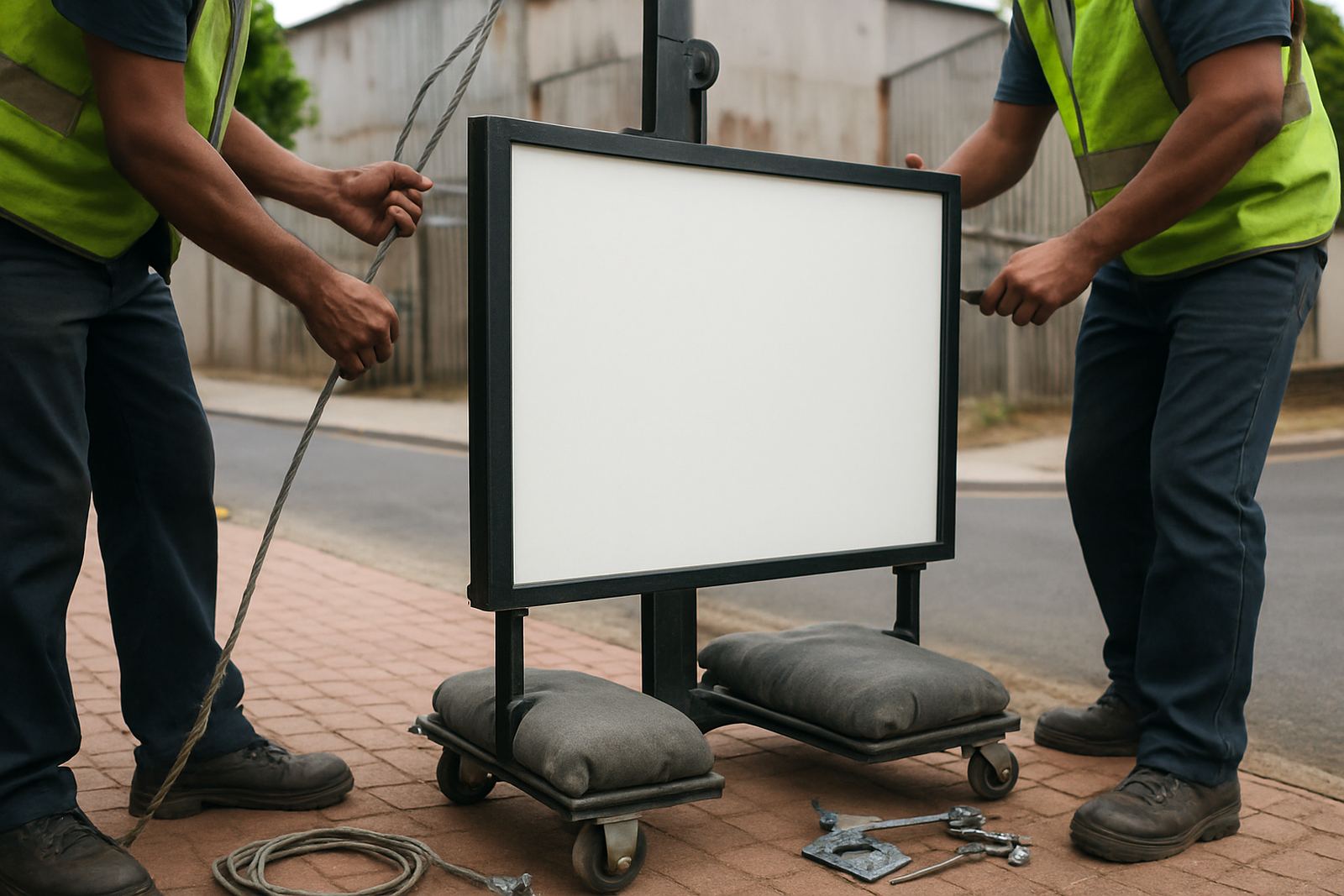
Different roof signs need different access methods. A light fascia blade may go up by manual handling and ladder access, while a larger illuminated frame can need a telehandler, crane or scaffold access. The choice should be based on weight, height, ground conditions and where the access gear can be set up without blocking tenants or traffic.
For busy sites in Sandton, Midrand or the East Rand, planning the lift around delivery times and pedestrian flow is often just as important as the equipment itself. If a road closure or parking bay permit is needed, get that sorted early. Municipal and landlord rules can slow a job down if they are left to the last minute, and that creates pressure nobody needs.
Good lift planning also includes the sequence of the job. For example, if a sign needs to be removed first, the old fixings may need cutting and the substrate made safe before the new unit can go up. That order matters when wind picks up, or when a lift window is only available for a short period.
3. Plan edge safety before the first tool comes out
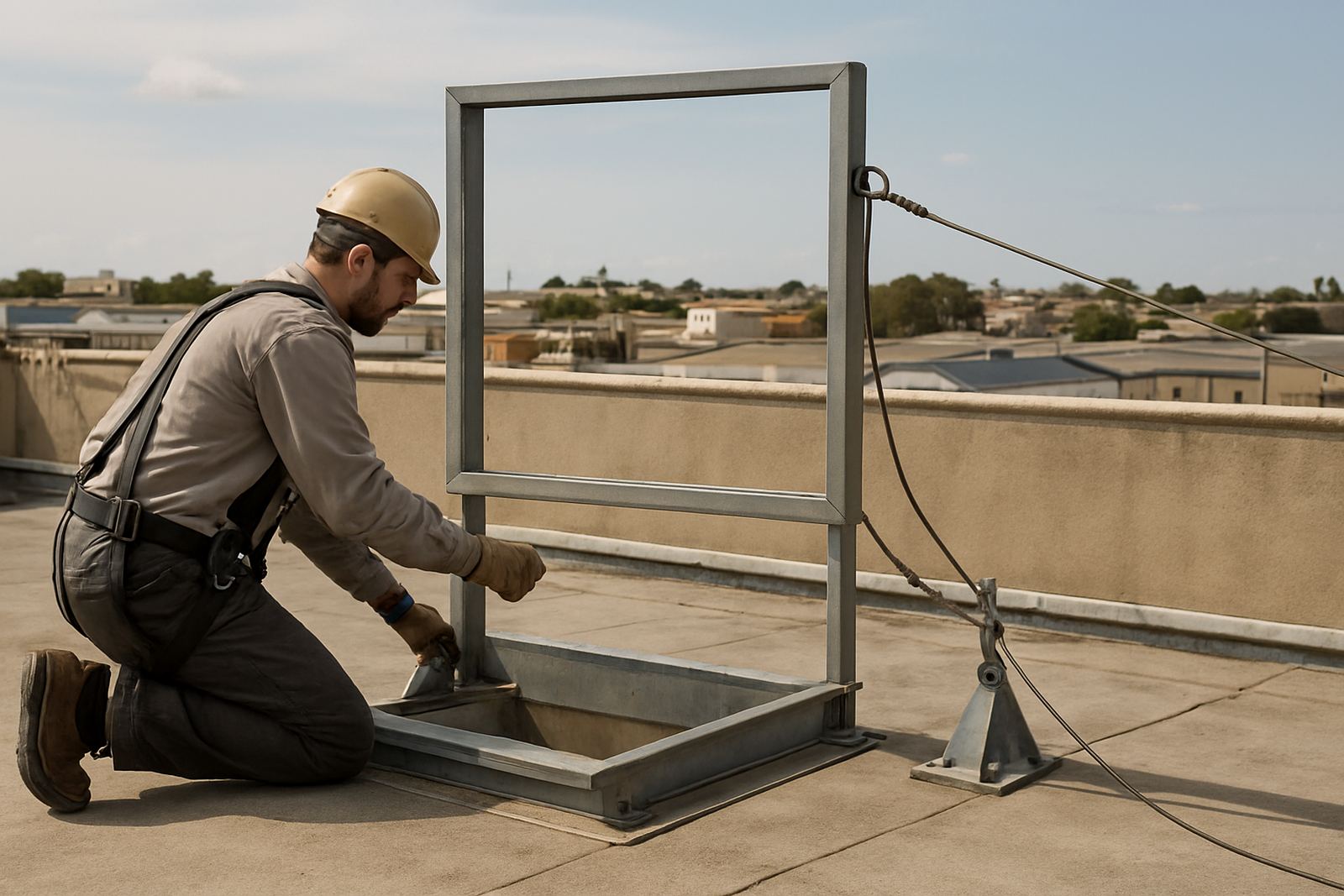
Roof edge safety is not a side note. It is part of the job plan from the start. Anyone working near an edge should have the correct training, and the site should have a clear method for stopping a slip, trip or dropped item from becoming an injury or a claim. That means barriers, exclusion zones, tethering where needed, and first-aid readiness on site.
On older buildings, edge protection may be uneven or missing, and access hatches can be narrow or awkward. In that case the crew should decide whether temporary protection, scaffold edge rails, or a different access method is safer. A quick setup is never worth a rushed fall plan.
Also think about the surface underfoot. Wet roofs, loose gravel, cracked waterproofing or dust from maintenance work all change the risk. If there is load shedding or a failed building light during an evening repair, portable lighting must be planned properly so the crew can still see edges, cables and lifting points without shadows or glare.
4. What sign makers should prepare before the crew arrives
The smoothest jobs are the ones where the sign maker has prepared the site file properly. The rigging crew still does the heavy work, but they need accurate information on size, weight, fixing method and access constraints. If the sign is being replaced, provide photos of the old unit and the surrounding roof area. If it is a new install, include drawings, dimensions and any service requirements for illumination.
It also helps to confirm whether the building owner requires a permit, induction or special work hours. Some malls and office parks in Gauteng only allow roof access during narrow windows. In Cape Town, high winds can also change the timing on the day, so the crew may need flexibility if the weather turns.
Have these details ready before the callout:
- Sign dimensions, estimated weight and fixing points.
- Roof type, access route and any known weak areas.
- Photos of the site from ground level and from the roof if available.
- Power requirements for illuminated signs.
- Any landlord, body corporate or municipal conditions.
5. Servicing, removal and relocation without damaging the roof
Roof signs do not only need installation. They also need removal, servicing and sometimes relocation when a tenant changes or branding is updated. The risk on these jobs is often the same as on install work, but the roof is already carrying old fixings, weather wear and patch repairs. That means the crew has to work carefully around waterproof membranes, cable entries and existing support steel.
When removing a sign, all fixings should be checked for corrosion before force is applied. A stuck bracket can tear roofing sheets or pull out a fixing if it is rushed. For relocation jobs, the old mounting points should be made safe and sealed once the sign is off. If a light fitting or power feed is left open, moisture can get in fast, especially in coastal humidity.
Service visits should include a basic condition check. Look for loosened panels, cracked lenses, failed lamps, damaged cable glands, worn seals and movement at the base plates. Small problems can turn into a full replacement if they are left too long, so it is better to catch them early and keep the site clean after every visit.
6. A simple roof sign checklist for buyers
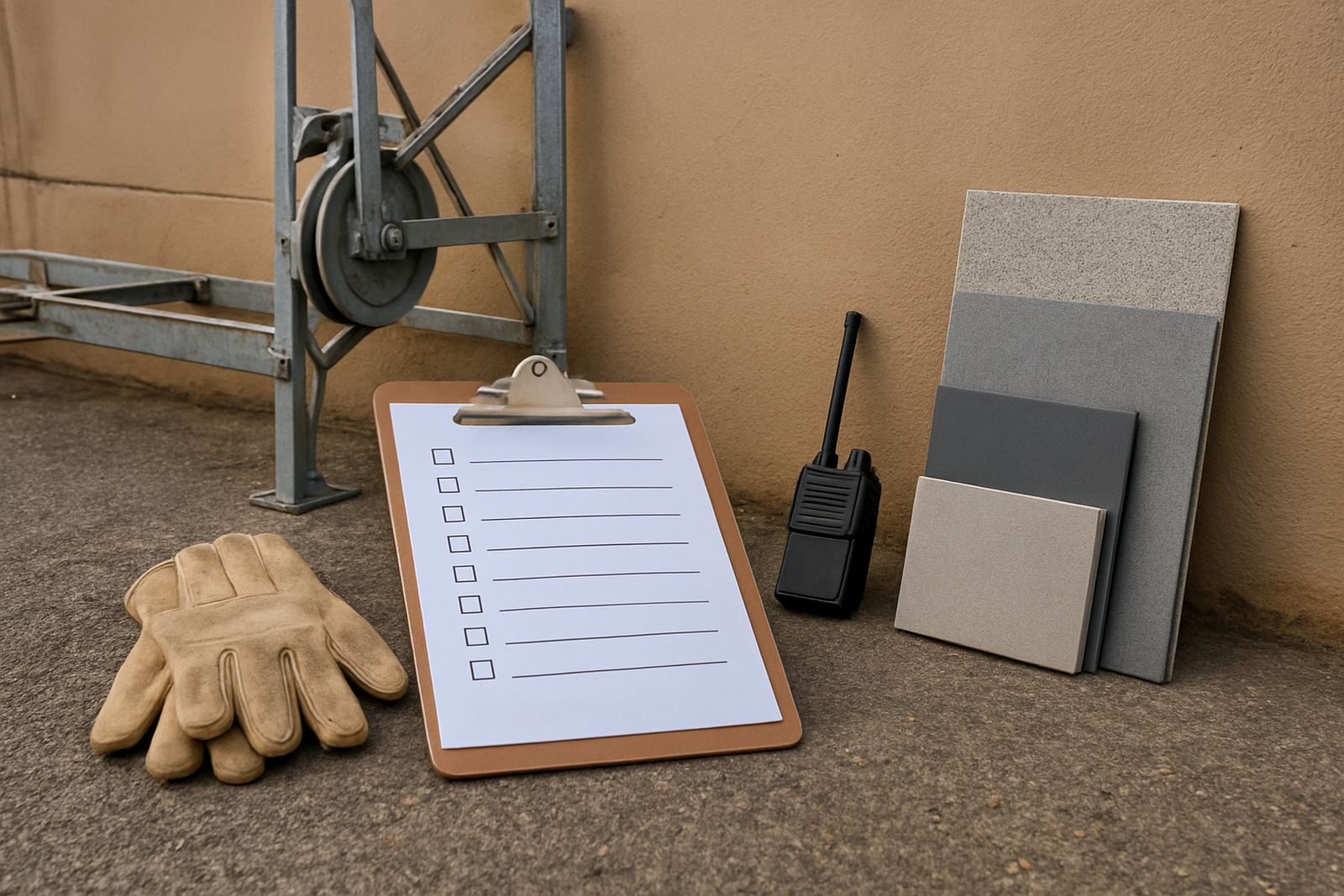
If you are buying roof sign work, a short checklist helps everyone stay on the same page. It is not about adding paperwork for the sake of it. It is about making sure the crew arrives with the right access plan, the right people, and no surprises when the lift starts. For sign shops serving Western Cape and Gauteng sites, that preparation saves time and reduces call-backs.
Use this checklist before the job starts:
- Have the final sign size, weight and fixing method confirmed.
- Confirm access dates, site contact and induction requirements.
- Check whether scaffold, platform work or a lift is needed.
- Make sure the roof area is clear and safe for the crew.
- Agree on removal, install, servicing or relocation scope.
- Set a plan for bad weather, wind delays or load shedding.
If the job is in Paarden Eiland, Bellville, Paarl, Johannesburg CBD, Sandton, Midrand or the East Rand, the details can change from site to site, even on the same day. A good rigging crew will work to the conditions in front of them, keep the edge controlled and leave the roof ready for the next visit.