

Start with the centre rules before any lift is booked
Every retail centre has its own access windows, loading bay rules, permit process and after-hours conditions. Before a team arrives, we check the centre handbook, the landlord's requirements and the sign maker's scope so the job can be planned around foot traffic, deliveries and tenant trading times.
For centres in Paarden Eiland, Bellville, Somerset West, Paarl, Johannesburg CBD, Sandton, Midrand and the East Rand, access can change from site to site. Some properties want contractor induction and proof of public liability cover, while others require lift details, method statements and a named supervisor on site. Getting this sorted early keeps the job moving and avoids wasted callouts.
- Confirm the site contact, loading bay access and approved work hours.
- Check whether a permit, induction or contractor register is needed.
- Identify any noisy tasks, road closures or mall trading restrictions.
- Share sign dimensions, fixing points and access height with the rigging crew.
Plan around shoppers, tenants and trading hours
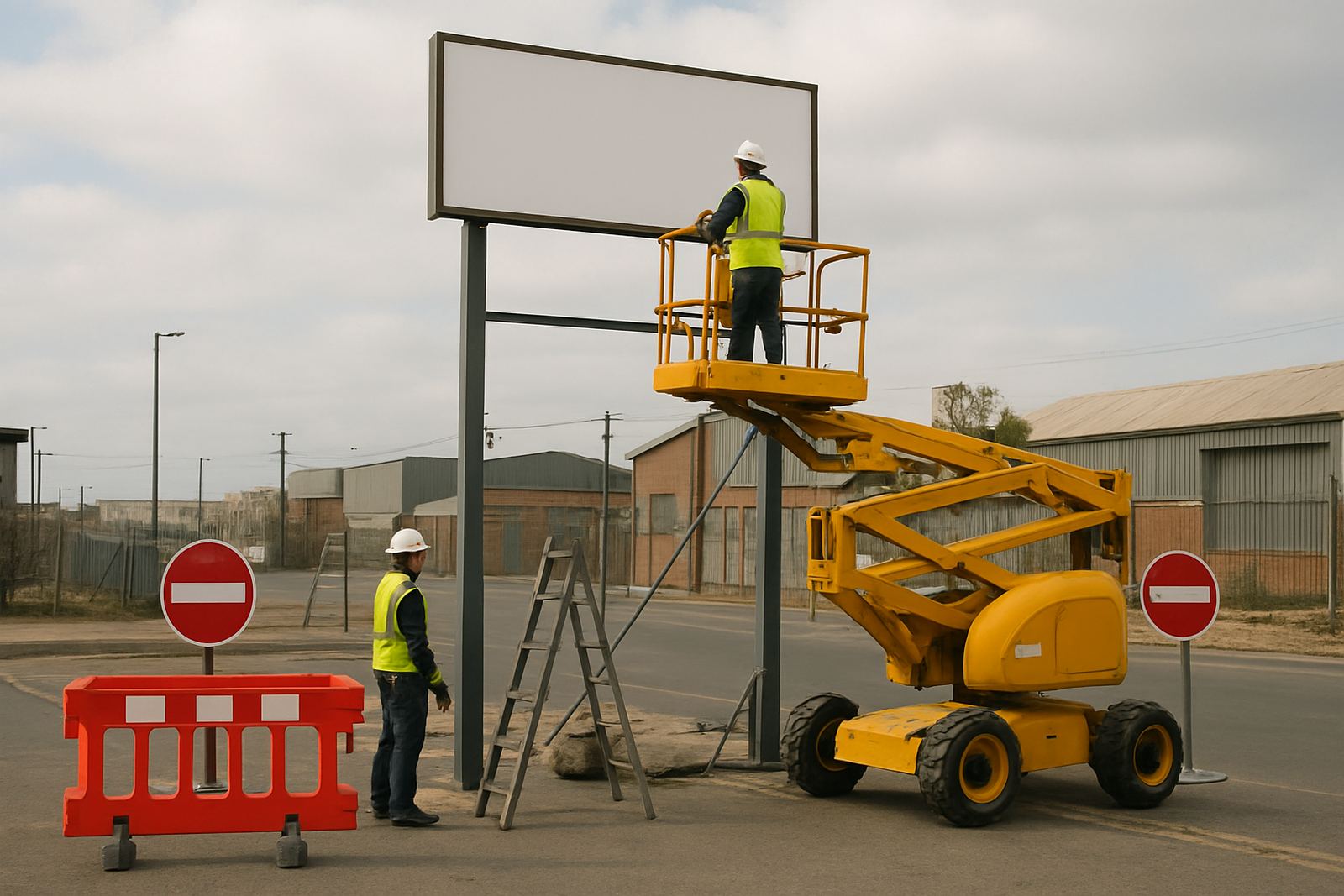
In a retail centre, the safest time for sign work is often before opening, after closing or during a controlled access window. The aim is to keep the public clear of the work zone and protect stock, glazing, canopies and finishes. Even a small sign change can affect a passageway or create a falling object risk if it is not set up properly.
We plan the sequence so the crew can isolate the area, position barriers and complete the work without blocking emergency routes. If a sign sits above a shopfront, we also consider the tenant below it, because dust, fixings and old sealant can drop onto displays or entrances. A clean handover matters just as much as the fitting itself.
- Agree on the quietest time for access.
- Warn nearby tenants if the work will affect their frontage or deliveries.
- Cover glass, displays and paving where needed.
- Keep emergency exits and fire routes open at all times.
What a proper site survey should cover
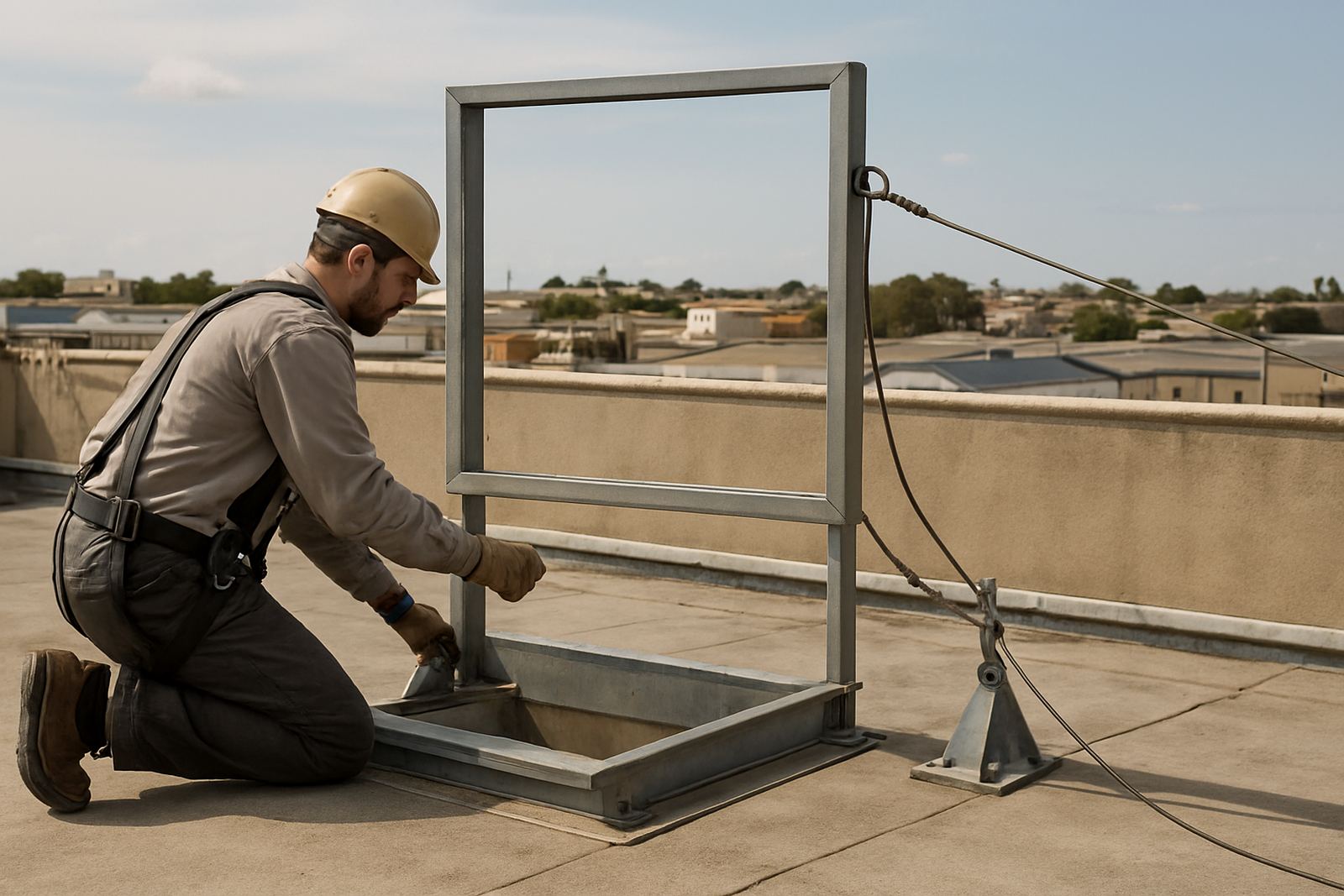
A site survey is not just a quick look from the ground. It tells us how the sign is built, what access is needed and whether the structure can be reached safely. In retail centres, we look at roof lines, parapets, fascia depth, existing brackets, power points and the condition of the fixing surfaces. If there is corrosion, water ingress or cracked sealant, that gets noted before anyone starts.
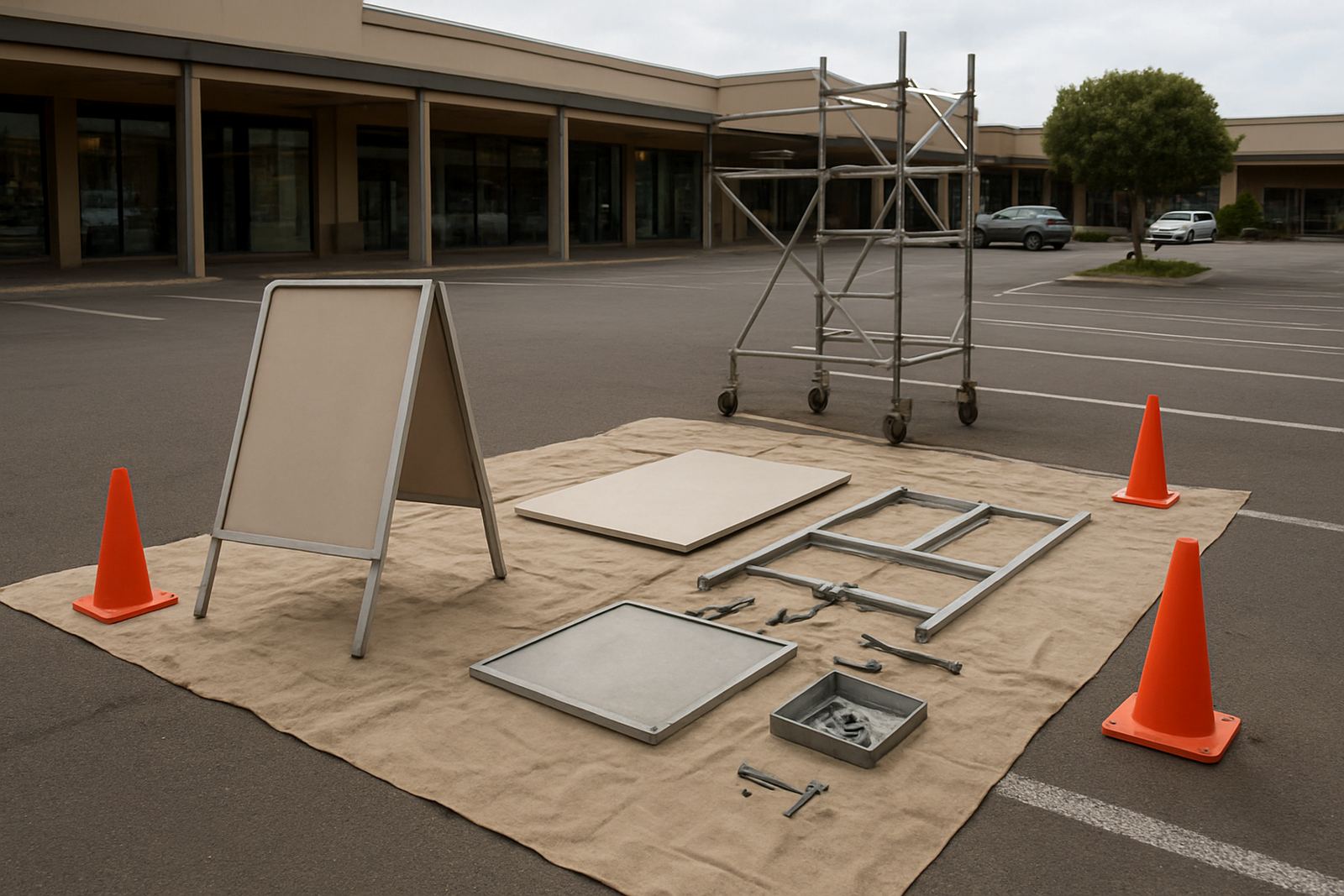
We also check if the sign needs platform work, scaffold access or a simple ladder set-up. On taller façades or awkward corners, a lifting plan may be needed so the crew can move equipment without damaging paving or tenant frontage. That survey helps the sign maker know exactly what is possible, and what will need a follow up visit.
- Measure the sign position and height above ground level.
- Check access from roof, ground or loading bay.
- Note any fragile cladding, loose trims or rusted brackets.
- Confirm if power must be isolated before servicing starts.
Safe removal and replacement without upsetting the centre
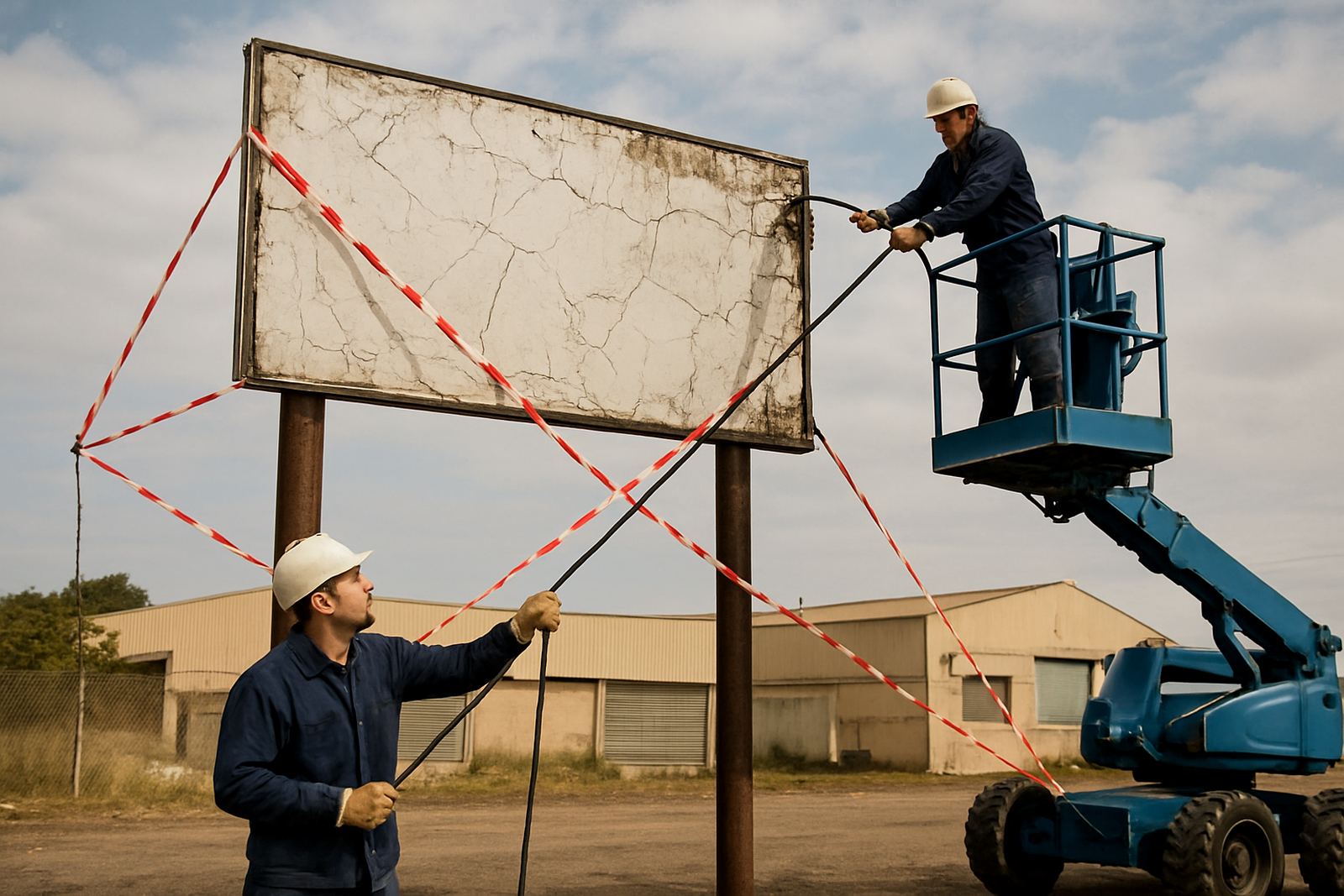
Removal work in a retail environment must be controlled from the first bolt to the last cable tie. Panels, light boxes and fabricated letters can be heavier than they look, and once fixings come free they need to be supported properly. Our crews remove signs in the right order so nothing swings, drops or marks the façade.
When a sign is being replaced, we keep the old unit safe for inspection if the sign maker needs it. If there has been water damage or internal failure, that information is useful for the next install. We also make sure any exposed wiring or open holes are made secure before leaving the site, even if the replacement sign is going back later the same day. No point in creating a second problem.
- Isolate power and confirm the circuit is safe.
- Remove loose trims, panels and fixings in a controlled sequence.
- Store recovered parts neatly for collection or disposal.
- Seal or protect any exposed openings before demobilising.
Servicing matters most in coastal and high traffic sites
Retail signs work hard. In Cape Town, sea air can corrode brackets and fasteners faster than people expect, especially near Paarden Eiland, the CBD and shopping centres close to the coast. In Gauteng, dust, heat and vibration from busy roads can loosen fittings and dull faces over time. Regular servicing helps catch small faults before they turn into a dark sign or a safety issue.
Servicing can include lamp changes, checking fixings, cleaning accessible faces, tightening brackets and inspecting for water entry. On older sites, we often find that one failed component has put extra strain on the rest of the unit. A routine maintenance visit is cheaper than an emergency callout and a closed frontage. It also helps the centre keep a tidy appearance for tenants and visitors.
- Inspect the sign face for fading, cracking or moisture.
- Check all visible fixings, brackets and cable entries.
- Test lighting where access allows.
- Record any faults that need the sign maker to quote for repair.
Emergency callouts and relacuons when the weather turns
Retail centres do not wait for a convenient time when a sign fails. Strong wind, a vehicle impact, a loose fascia or a dead-lit sign can create immediate problems for tenants and shoppers. Our crews handle emergency callouts, temporary securing and sign relocations when a centre needs a fast response. The key is to make the site safe first, then decide on repair or replacement.
For storm damage, we check whether the sign can be made safe without removing the whole unit. If a relocation is required, we plan the new position with the sign maker so the final result still suits the shopfront and the centre rules. Good communication saves time, especially when several tenants are affected by one frontage. A calm, practical approach keeps everyone moving.
For centre managers and sign makers, the best checklist is simple: know the access rules, book the right equipment, protect the public and keep a clear record of what was done. That way the sign job stays on schedule and the mall keeps trading with as little disruption as possible.