

What a billboard skin is and where it fits
A billboard skin is the printed face that wraps or covers a large outdoor billboard frame, usually on a flex face system or a framed board that needs regular message changes. The skin is made to the exact panel size and fixed under tension so it stays flat, keeps the print legible and holds up to wind across open sites, industrial areas and freeway verges.
We fit and replace billboard skins for sign makers who need a crew that understands access, timing and clean handover. Work is done in Cape Town and Johannesburg, with teams moving across the Western Cape and Gauteng from Paarden Eiland and Bellville to Sandton, Midrand and the East Rand. That includes single face changes, scheduled maintenance visits and urgent callouts when a skin has torn, lifted or been damaged by weather.
Sizes, materials and finish options
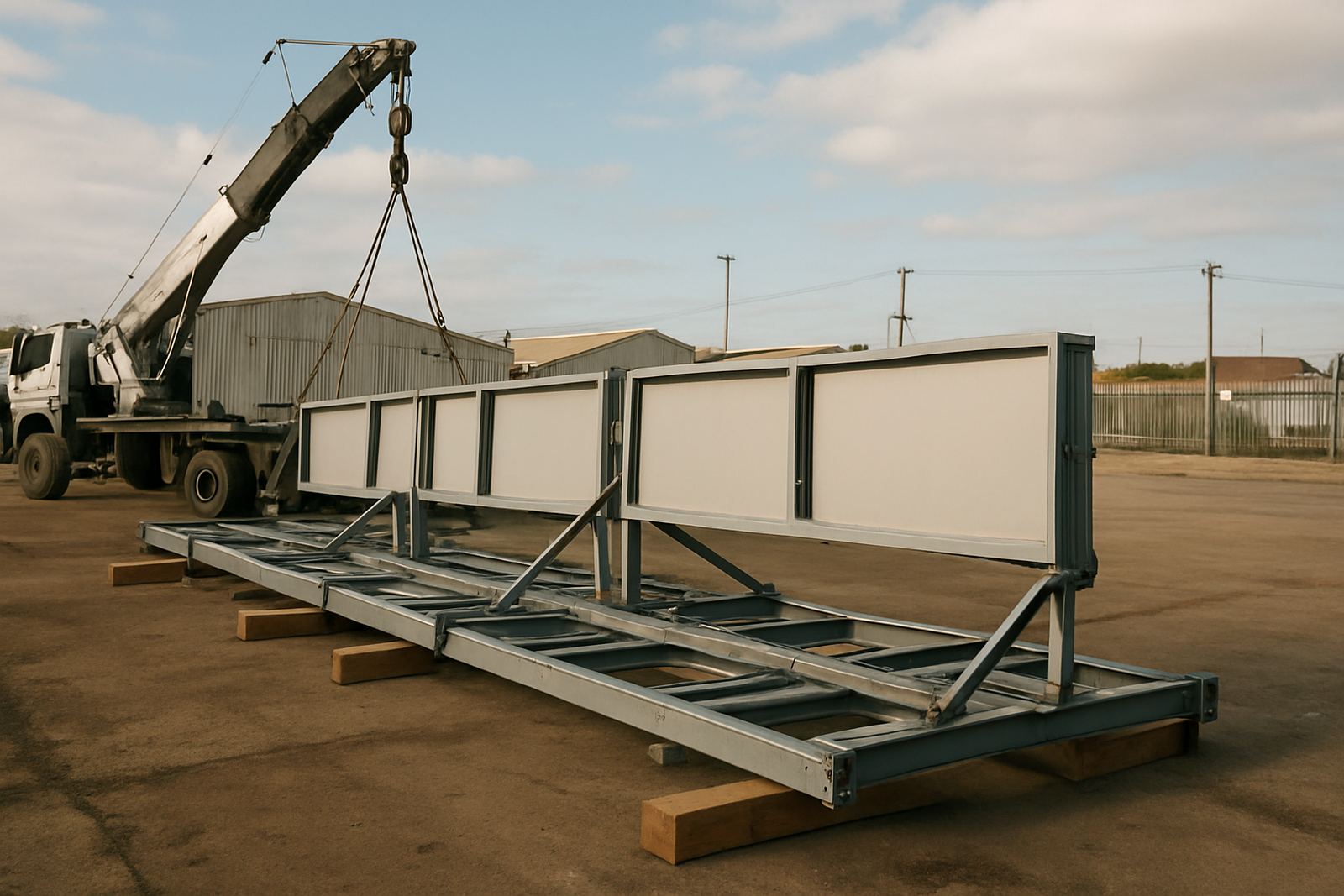
Billboard skins are usually ordered to match the exact frame opening, with allowance for hems, rope pockets, eyelets or clamping systems depending on the fixing method. Common sizes range from small roadside boards to large rooftop and gantry installations, and the final cut must suit the structure not just the print file. A few millimetres off on a big face becomes a problem once the wind gets under it.
- Small format faces for local roadside boards and shopping centre edges
- Standard billboard sizes for suburban arterials and main road promotions
- Oversize skins for freeway and industrial sites with high visibility
- Single sided and double sided faces where the frame allows it
- Temporary campaign skins and longer term promotional faces
Material choice depends on exposure. Coastal sites in Cape Town often need better edge treatment because moisture and salt air work on the fixing points. Inland Johannesburg sites may need extra attention to dust, sun and heat. Where the frame has uneven pulls or old fixings, we flag that before the skin goes up so the sign shop can adjust the spec if needed.
How we install and tension the skin
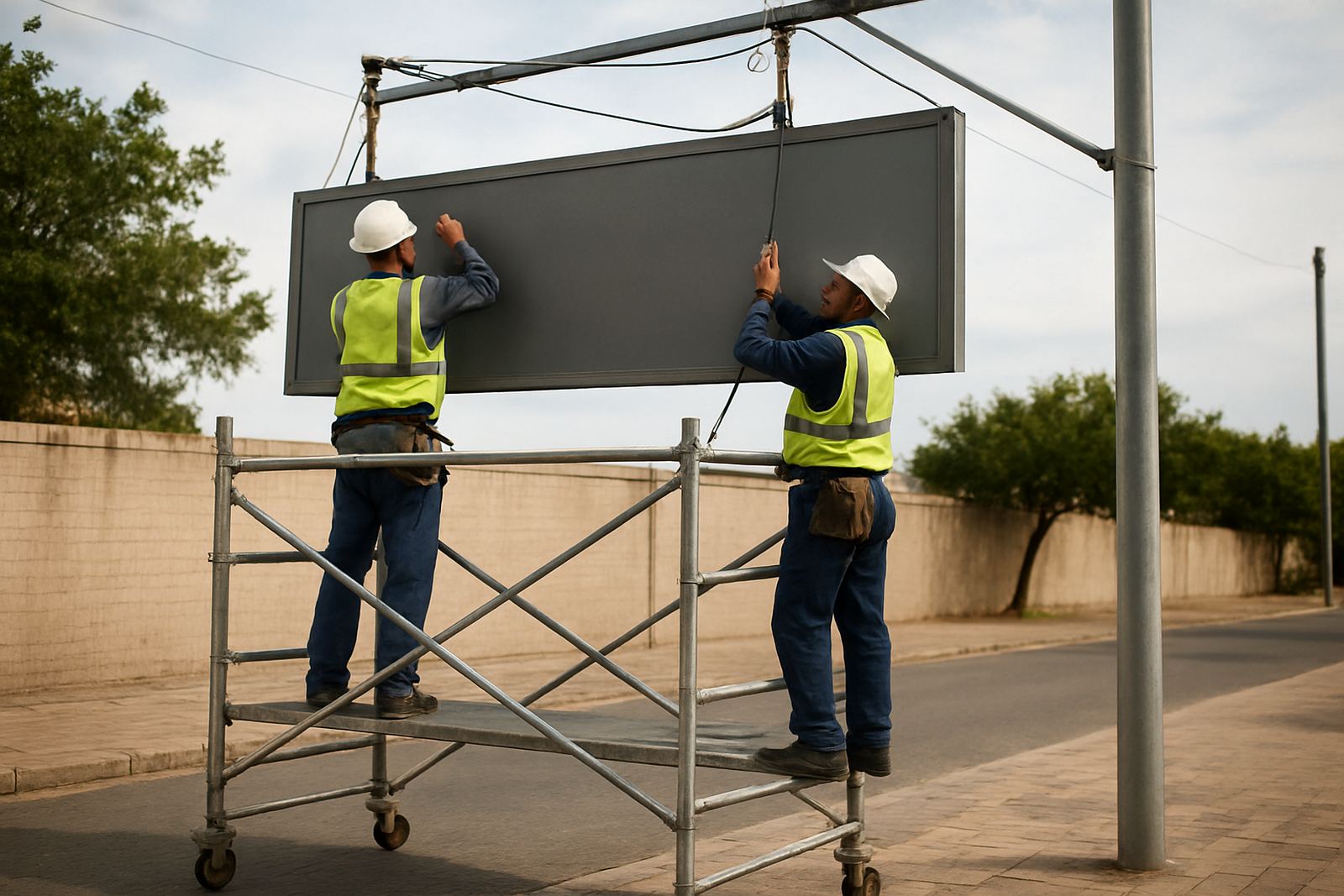
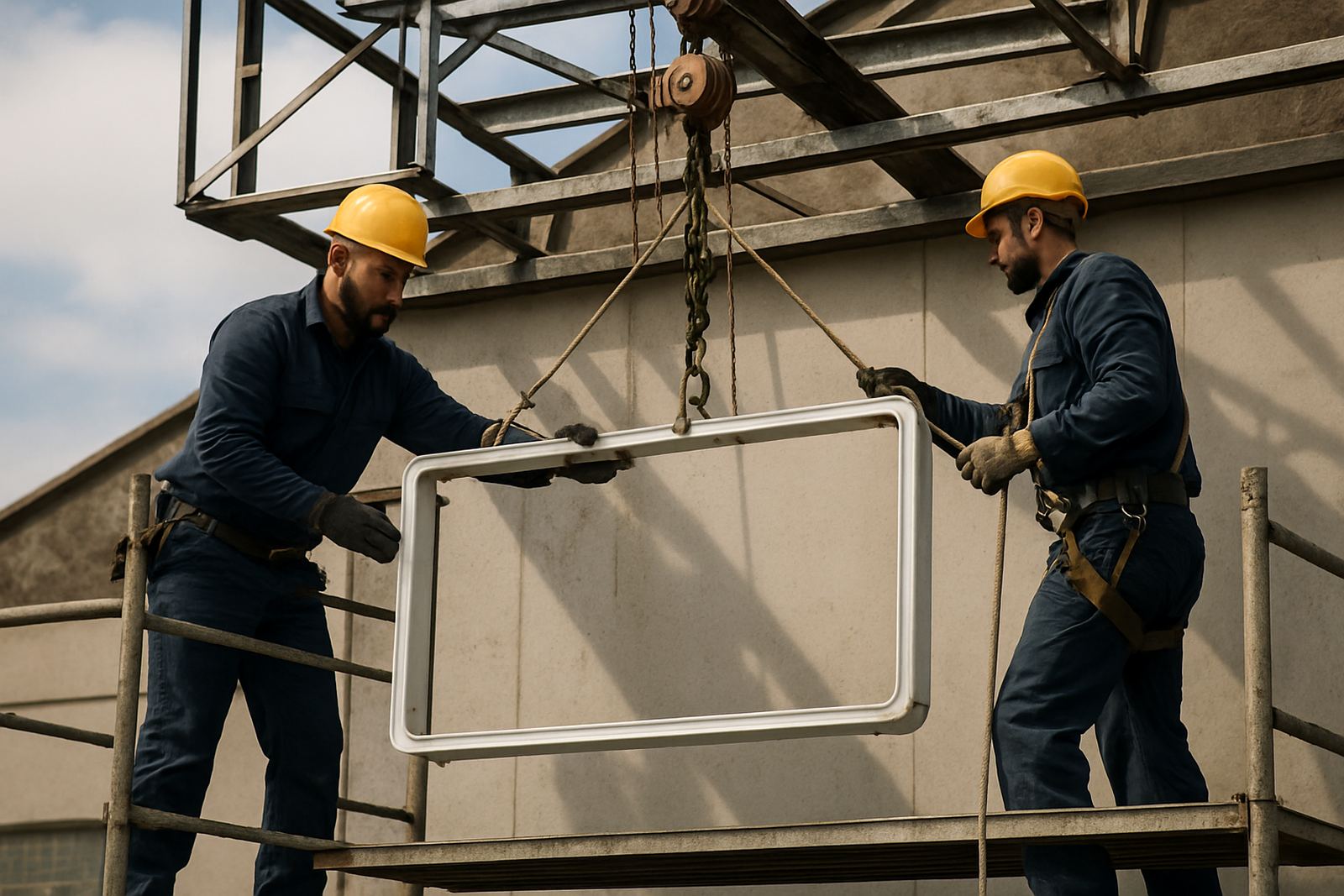
Our crews handle billboard skin installation as a rigging job, not a print job. That means pre-planning the lift, checking the structure, confirming access and using the right edge protection so the skin does not get scuffed, creased or pinched during fitting. On taller or awkward structures we use scaffold access, platform work or other approved reach methods depending on the site layout and municipal rules.
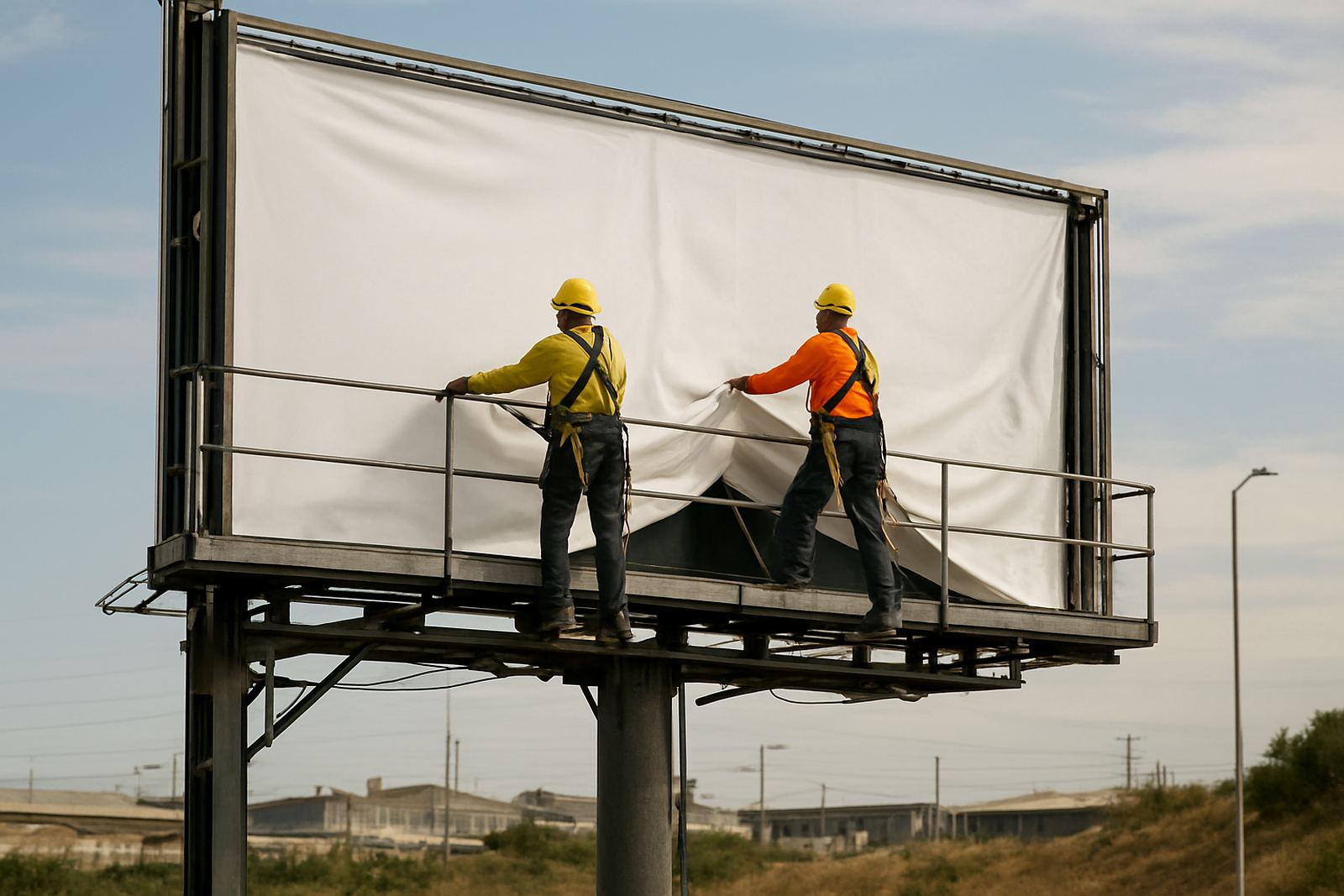
During installation we check the frame condition, fixings and wind exposure before the face goes on. The skin is positioned, tensioned evenly and secured so the print sits straight across the viewing line. If the site needs early morning work, after-hours access or a road-side lift plan, we build that into the job scope. Crews carry the right safety gear, first aid cover and the equipment needed for controlled work at height.
- Site survey and access planning before arrival
- Lift planning for large skins and awkward roof lines
- Edge protection during handling and positioning
- Even tensioning to reduce wrinkles and flap
- Final check from ground level and close up
Power, lighting and site conditions to allow for
Most billboard skin changes do not need power or gas, but the site may still need lighting access, safe isolation around illuminated units and enough working light for early starts or late finishes. If the board sits near existing sign lighting or building services, we confirm what must be isolated before the crew goes up. That matters in busy CBD areas and on industrial sites where other contractors may be working nearby.
We also look at the site condition itself. Load-shedding can affect timing where powered access equipment or lighting is needed and some jobs have to be slotted around site generator schedules. In windy conditions, especially on open coastal stretches, a skin may need to wait for a safer window. If the frame is on a high facade or near a live roadway, the method changes to suit the risk and the access available.
For sign makers, the main point is simple: tell us what the board looks like, how it is reached and whether there are any restrictions on hours, parking or shutdowns. The more accurate the site detail, the smoother the install and the less chance of a return trip.
Care, servicing and when a skin should be replaced
A billboard skin should be checked after installation and again after strong wind, heavy rain or any site disturbance. Look for lifted corners, loose tension, faded print, cracked eyelets, dirty hems and any rubbing where the skin meets the frame. On older boards, the fixing points can work loose before the printed face shows obvious damage.
We offer servicing visits for signs that need inspection, re-tensioning or a full face change. That includes emergency callouts when a skin tears, a fixing lets go or the board is left unsafe after weather or vandalism. If the frame itself is damaged, we will identify that for the sign maker so the correct repair can be arranged before a new skin is fitted.
- Check tension on all edges after the first 48 hours
- Inspect hems, pockets and eyelets for wear
- Wash off dust, soot and salt build-up where possible
- Look for frame corrosion, bent rails and loose fasteners
- Replace the skin when fading or tearing affects readability
What to check before ordering a billboard skin
Before you place an order, confirm the frame opening size, mounting method, site access and whether the face is for a one-off campaign or repeated use. If the board is on a rooftop, on a gantry or above a busy street, tell us the access conditions early so we can plan the rigging crew and equipment properly. This avoids delays and helps the sign shop keep to programme.
Useful details to send with the enquiry form include the board location, height, fixing type, preferred install date, and whether the skin will be installed on a live site or during an outage. If you have a site photo, that helps too. It lets us see the likely access route, any obstructions, and whether scaffold or platform work will be needed.
Sign Riggers works for sign makers only. We do the rigging, fitting, removal and servicing so your shop can keep control of the client relationship and the printed product. From Paarden Eiland and Somerset West to Johannesburg CBD and Midrand, we keep the job practical and on schedule, with crews who know how to work safely around large faces and changing weather.
Key facts
| Product type | Billboard skin installation and replacement service |
|---|---|
| Typical sizes | Small roadside boards up to large freeway and rooftop faces |
| Installation methods | Scaffold access, platform work, lift planning and rigging |
| Site conditions | Coastal wind, dust, heat, load-shedding and live roadway constraints |
| Service areas | Cape Town, Western Cape, Johannesburg and Gauteng |
| Use case | For sign makers needing safe face changes, servicing and removals |