

What a totem sign is and why it needs rigging crews
A totem sign is a freestanding sign structure, usually taller than a wall sign and built to stand on its own at an entrance, roadside position or forecourt. It can be a single panel, a double-sided unit or a framed structure with internal panels, lighting and service access. Because the sign stands upright and is exposed to wind, traffic vibration and coastal weather, it needs proper lifting, staging and fixings from the first set-out.
We rig totem signs for sign makers who need an installation team only. That means we handle the lifting, access, assembly and positioning, while the sign shop keeps control of the artwork, fabrication and client relationship. It is the cleanest way to get the job on site without overlap or confusion.
Typical sizes, finishes and mounting options
Totem signs come in many sizes, from compact entrance markers around 2 to 3 metres high through to large roadside units above 6 metres. Widths often range from 600 mm to 2 400 mm, although custom builds can go bigger depending on the base, ground conditions and council requirements. Panels may be aluminium, composite, acrylic, steel framing or mixed material construction, and some units use internal lighting or removable face panels for updates.
- Single-sided or double-sided formats
- Flush mounted panels or framed modular sections
- Powder coated steel, aluminium or mixed material builds
- Optional internal lighting, open channel details or service doors
- Base plates, anchor bolts or cast-in foundations depending on the site
On exposed sites near the coast, especially in places like Paarden Eiland, Somerset West or the False Bay side, we pay attention to corrosion, fixings and service access. In Johannesburg and the East Rand, dust, heat and site traffic are usually the bigger concern, so the fixings and access method need to suit the area.
Where totem signs suit best
These signs work well where you need strong visibility from a distance and a proper ground presence. Retail parks, fuel forecourts, office parks, light industrial yards, churches, schools, estates, factory entrances and medical sites all use totem signs because they are easy to spot from a car and can carry multiple tenant names. They also suit municipal and public-facing sites where clear wayfinding matters.
For sign makers, the value of a totem is that it can be manufactured to a neat spec and then installed without major site disruption. A well-planned install keeps traffic moving, protects the finish and avoids damage to the panels or surrounding paving. In busy areas like Bellville, Sandton or Johannesburg CBD, site work is tidy and safe, but it does take planning.
How we install a totem sign on site
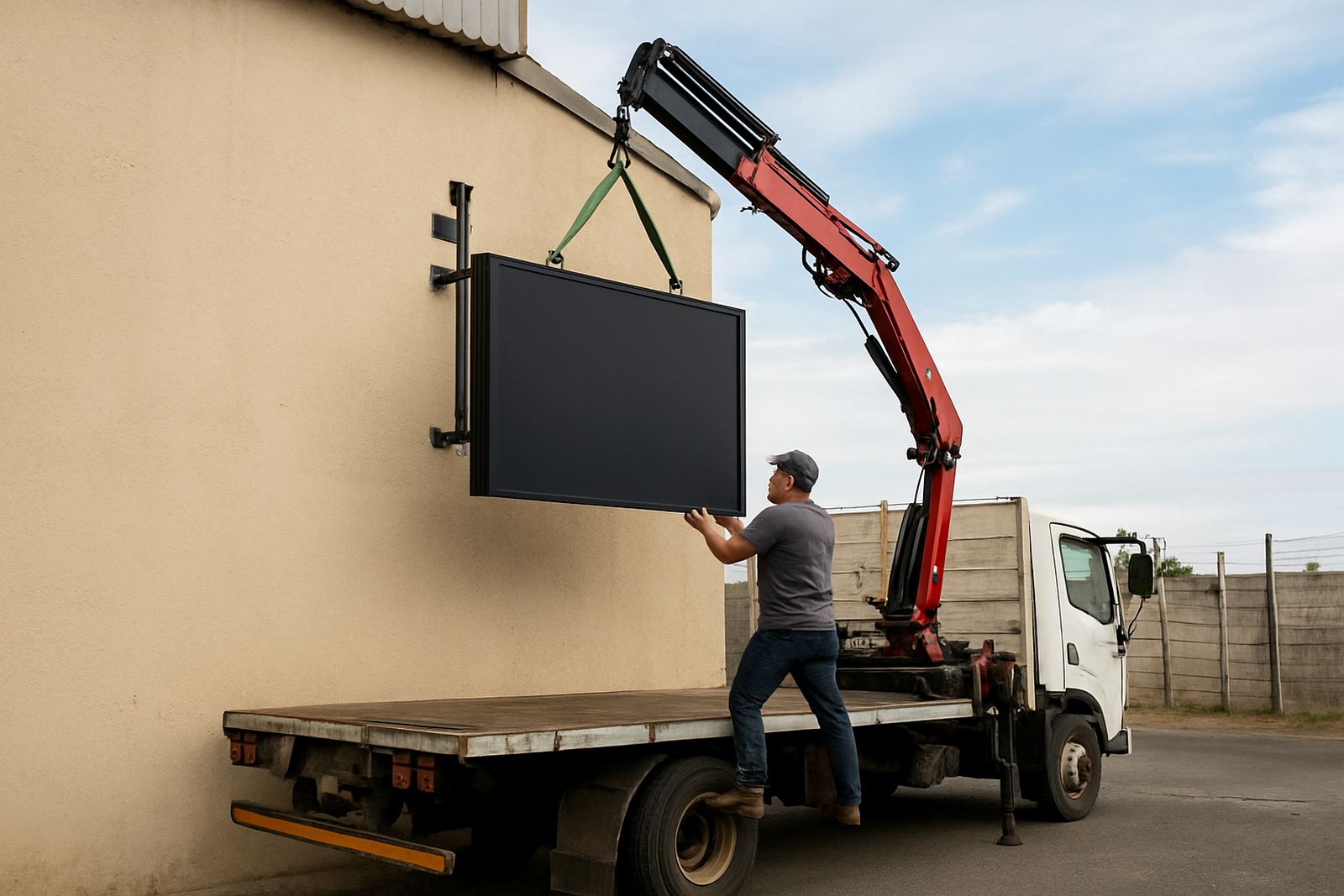
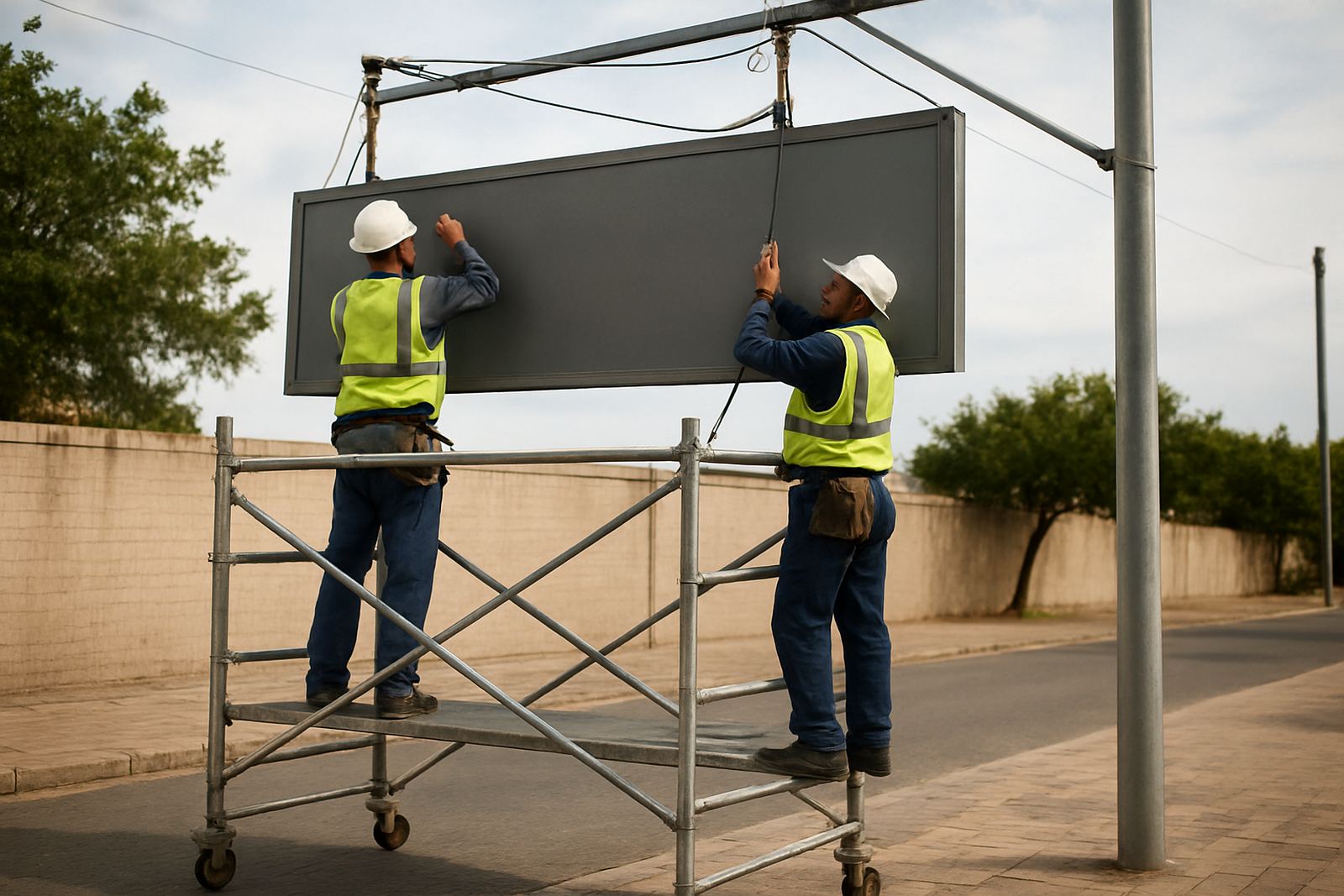
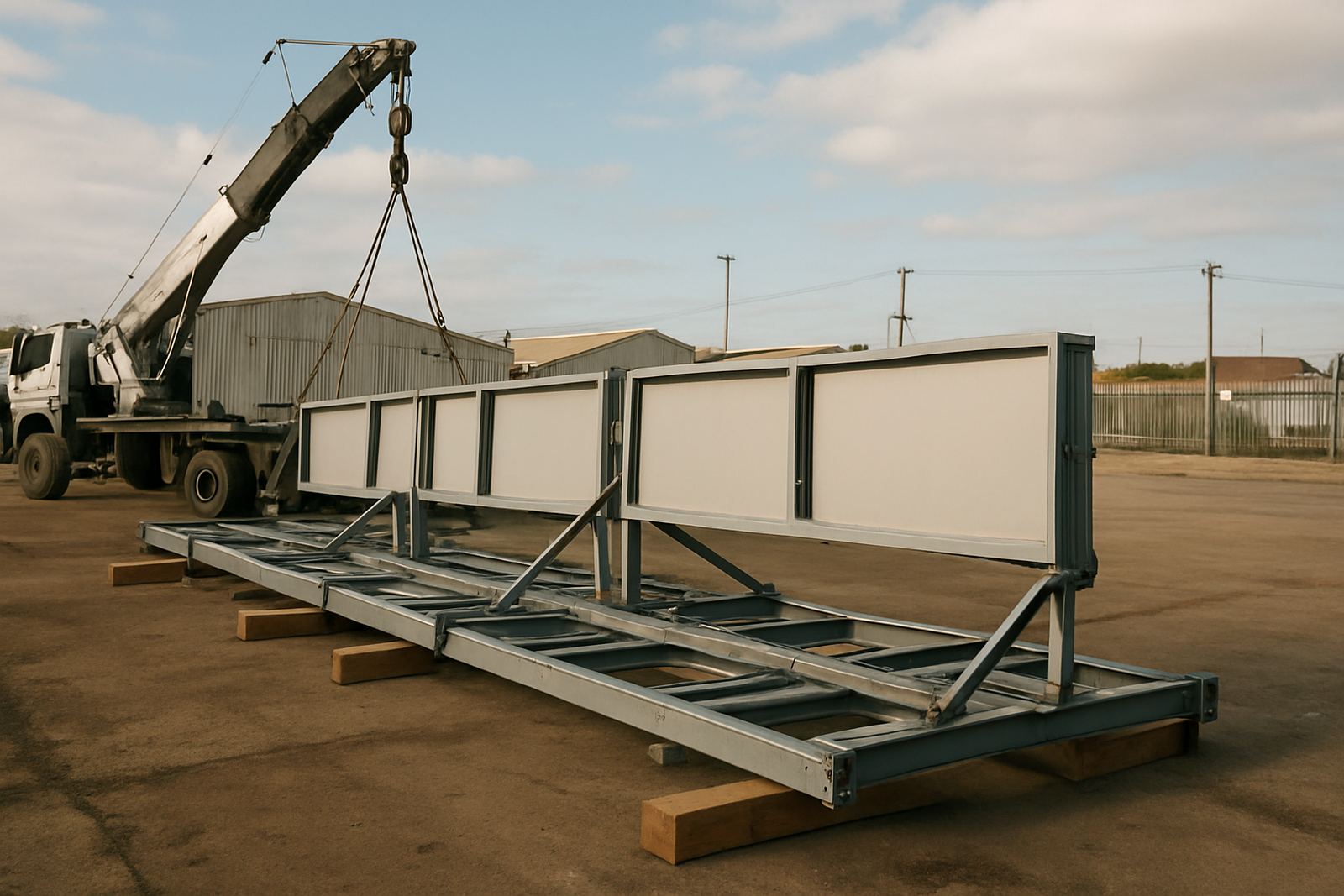
We start with a site survey or lift plan if the unit is large, awkward or close to pedestrians, vehicles or overhead services. Then we check the base, anchor points, access route and any need for scaffold, a mobile platform or controlled lifting. For taller units, the work is often staged so the frame is set first, then the panels and face elements are fitted afterwards. That approach reduces handling damage and keeps the sign square.
- Site survey and access check before the crew arrives
- Lift planning for larger units and awkward deliveries
- Staged assembly so each panel is handled safely
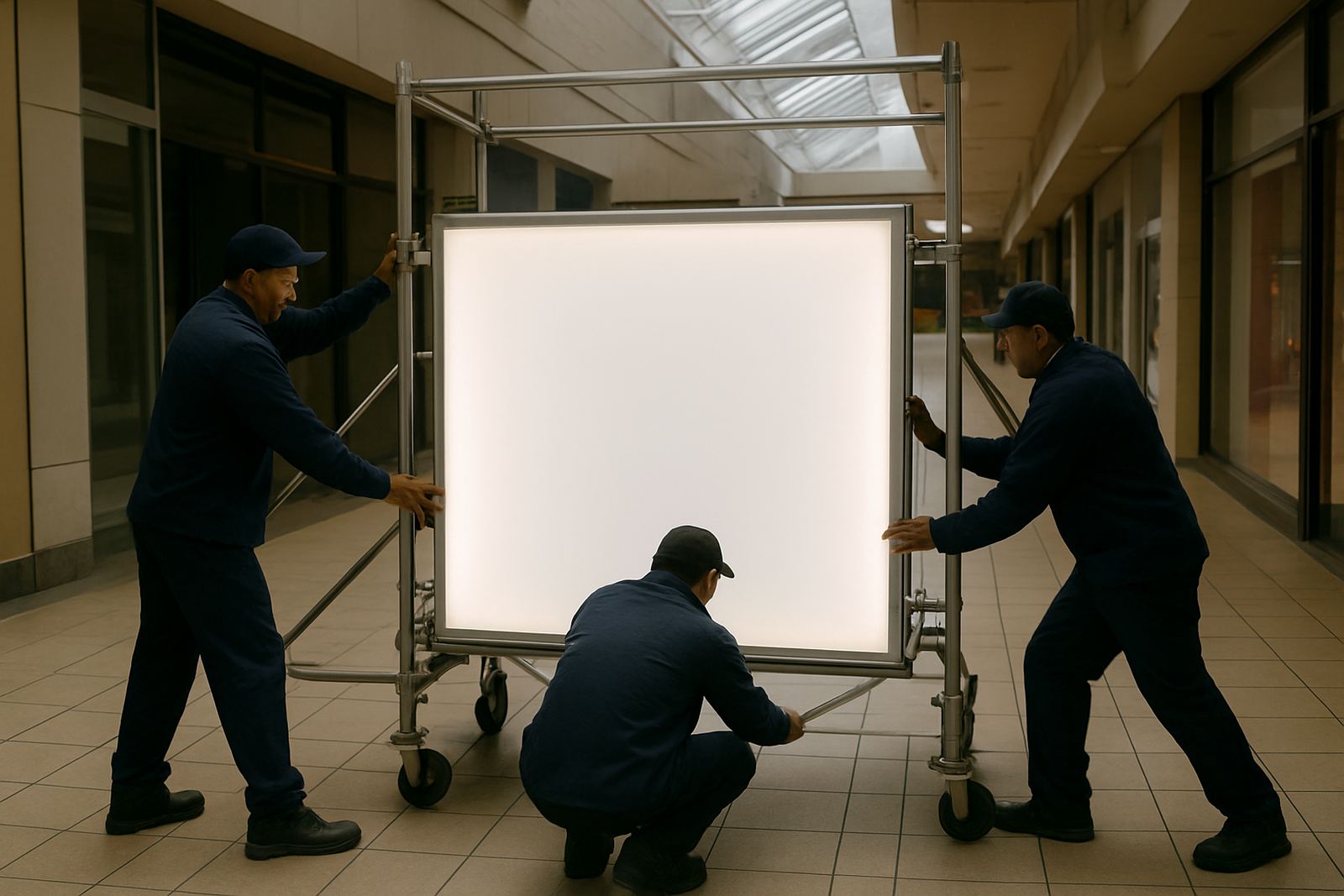
- Scaffold or platform access where required
- Final plumb, alignment and fixings inspection
Where a sign is installed over a busy entrance or along a live driveway, we coordinate the timing carefully with the client and the sign maker. If the work is near a mall, forecourt or service yard, we also look at pedestrian flow and vehicle movement so the job can be done without unnecessary stoppages.
Power, lighting and service access needs
Not every totem sign needs power, but many illuminated units do. If the sign has internal lighting, halo lighting or serviceable modules, we need a safe route to the electrical connection and enough access for maintenance later. The sign maker should confirm whether power is already on site, whether a sparky is needed, and where the isolator or supply point will sit. If the unit includes service doors, removable faces or concealed wiring, that needs to be part of the order from the start.
There is no gas requirement for a standard totem sign, although some sites have nearby gas infrastructure or other services that affect digging and placement. On new developments, we advise checking for underground services before any footing work. A few minutes of checking can prevent costly damage and delays.
Care, servicing and the checks to do before ordering
Totem signs need regular inspection because wind, rain and dust can loosen fixings over time. In coastal areas the metalwork can show wear sooner, and in Gauteng the dust can build up around service doors and lighting. We offer servicing visits, face changes, removals and emergency callouts when a sign is damaged after storm weather or impact. If a panel is loose, a light has failed or the base has shifted, it should be sorted before it becomes a safety issue.
- Confirm finished height and overall width
- Check single-sided or double-sided layout
- Confirm material thickness and panel weight
- Specify lighting, service doors and cable route
- Confirm footing type and anchor details
- Check access for crane, platform or scaffold
Before ordering, we also ask for the site address, install date, local authority limits if any, and whether the sign must be removed later for a tenant change. The more complete the brief, the smoother the job. It saves time on site and reduces the chance of a second visit.
Why sign makers use a rigging-only team
Sign makers do not need a competing installer on their books. They need a rigging team that arrives on time, follows the brief, protects the finished product and hands the job back cleanly. That is what we do. Since 2008, our crews have worked across Cape Town and Johannesburg with safety training, scaffold awareness and first-aid capability on site. Gareth van der Merwe leads the business, with Thandi Mokoena, Liam Jacobs, Sibusiso Dlamini, Ayesha Daniels and Pieter Coetzee supporting the day-to-day work from Paarden Eiland and Johannesburg.
Whether the job is a new totem sign in Midrand, a replacement face in Sandton or a relocation in Paarl, we keep the process practical. The sign shop gets a crew that understands the product, the client gets a proper install, and the site gets handled with care.
Key facts
| Product type | Freestanding totem signs for entrances, forecourts and roadside use |
|---|---|
| Typical height | 2 m to 6 m plus, with custom taller units possible |
| Typical width | 600 mm to 2 400 mm, depending on layout and faces |
| Common materials | Aluminium, steel framing, composite panels and acrylic faces |
| Access methods | Scaffold, platform work, controlled lifting or crane support |
| Service support | Installation, removal, servicing, face changes and emergency callouts |