

Temporary site hoarding that carries the message cleanly
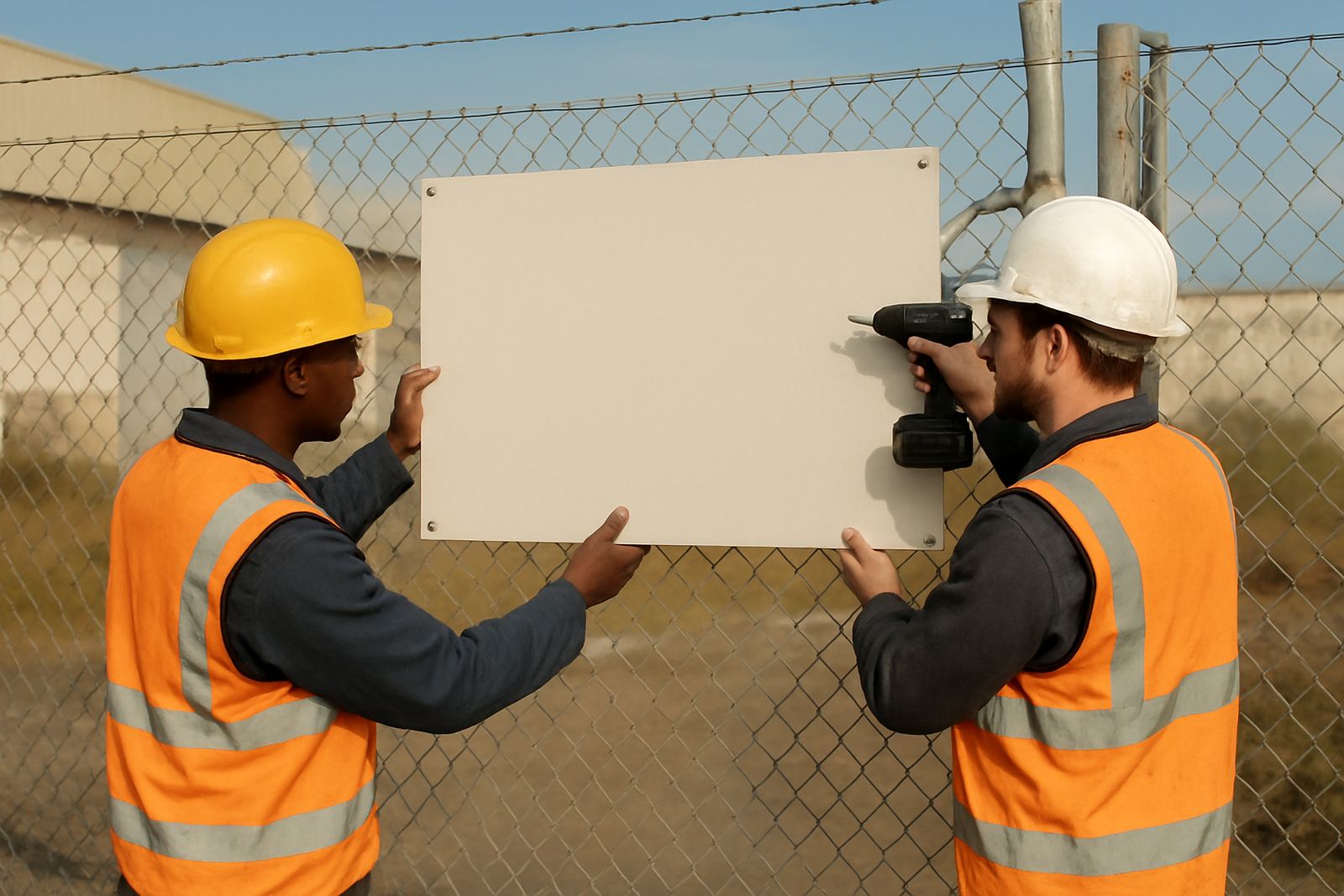
Hoarding signs are fitted to temporary perimeter walls, plywood barriers and modular fence systems around building and refurbishment sites. They carry project names, contractor details, safety notices, directional arrows and branded graphics while also helping to keep the site edge neat and compliant. Our crews work for sign makers, property developers and contractors who need the hoarding installed properly, aligned and secured for wind, dust and day to day wear.
We handle the rigging side only. That means we do not compete with the sign shops that supply the print or fabrication. If your client needs panels fitted to a hoarding run in Paarden Eiland, Bellville, Somerset West, Paarl, Johannesburg CBD, Sandton, Midrand or the East Rand, we can install, remove or service the work once the graphics are ready.
- Suitable for short term projects and longer site programmes
- Works with printed vinyl, ACM panels, polycarbonate sheets and framed inserts
- Can be installed on timber, steel or modular hoarding systems
- Useful for safety messaging, branding and site wayfinding
Sizes, panel types and fixing options
There is no single hoarding size that suits every site, so we work to the measured bay lengths and panel heights provided on the survey. Common hoarding heights are 1.8 metres, 2.1 metres and 2.4 metres, with panel widths often made up in 1.2 metre, 2.4 metre or custom lengths to match the frame layout. Larger sites may use repeated panels across 20 metres, 50 metres or more, especially along road frontages or mall refurbishments.
We can fit plain sign panels, full printed wraps, cut vinyl lettering, directional panels and warning strips. Where the site has corners, gates or staggered returns, we set out the fixing pattern so the joins stay tidy and the copy lines up from one bay to the next. If the surface is uneven or the hoarding is exposed to strong wind, we may recommend additional battens, brackets or edge restraint.
- Panel thickness can be matched to the substrate and wind load
- Fixings can include screws, rivets, clamps or bracket systems
- Suitable for single sided or double sided presentation
- Can include removable sections for access points and hoist openings
Where hoarding signs work best on local projects
Hoarding signs suit retail revamps, office refurbishments, residential estates, school upgrades, medical facilities, transport projects and mixed use developments. They are especially useful where the public walks close to the boundary and the developer wants the site edge to look orderly. In busy streets or narrow pavements, clear hoarding copy helps people see where to enter, where not to enter and who is on site.
In coastal areas such as Cape Town, we also take into account salt air and damp mornings. On inland sites in Gauteng, dust and afternoon wind can work loose on poorly fixed panels, so it is worth checking the fixings after heavy weather and before the handover stages. For sites that run over many months, a hoarding panel should be planned as part of the project, not added at the end as an after thought.
- Development sites with public foot traffic
- Shopping centre, commercial and industrial refurbishments
- Sites needing safety notices, branding and boundary dressing
- Projects with access gates, loading bays or pedestrian redirects
Installation, access and power considerations
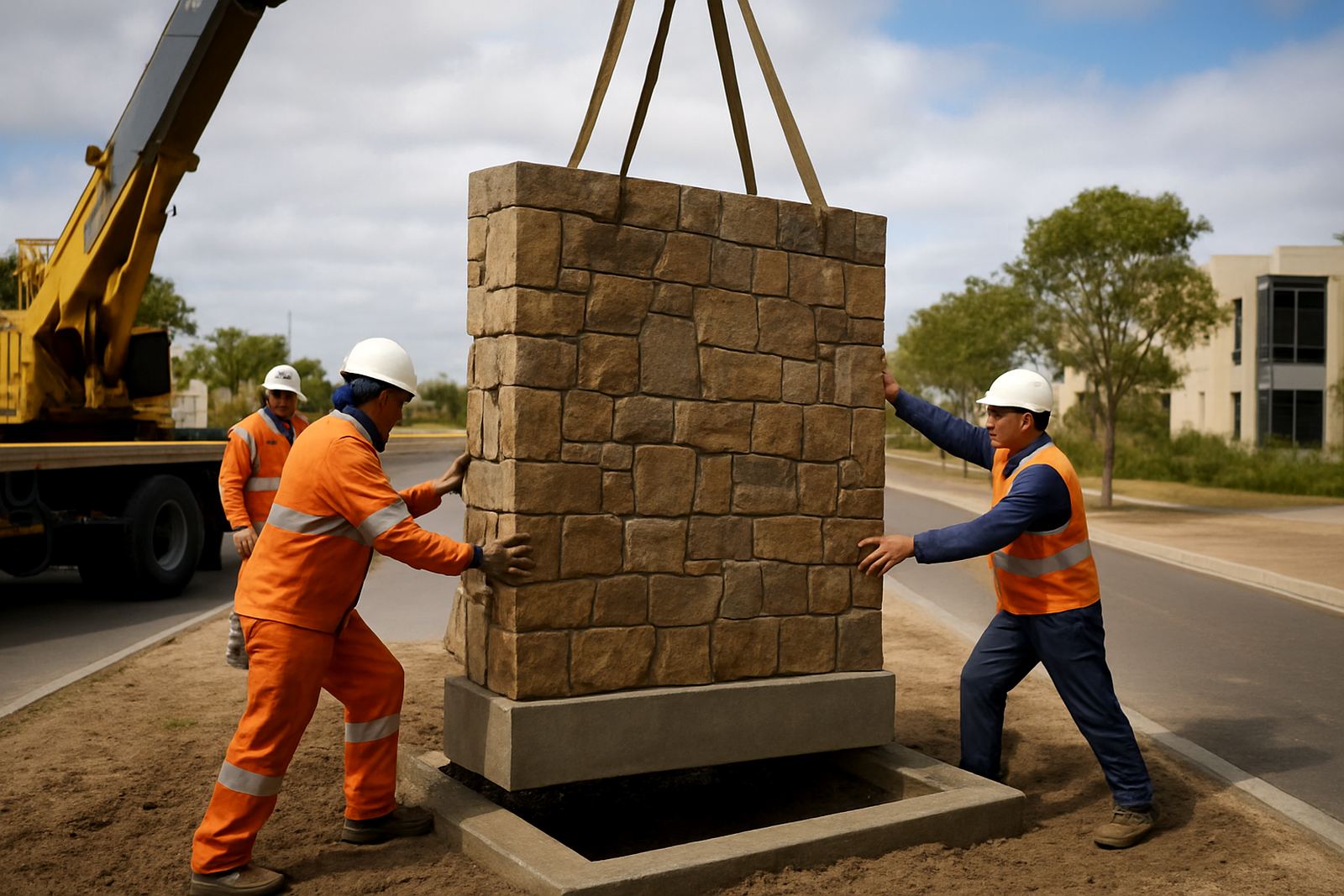
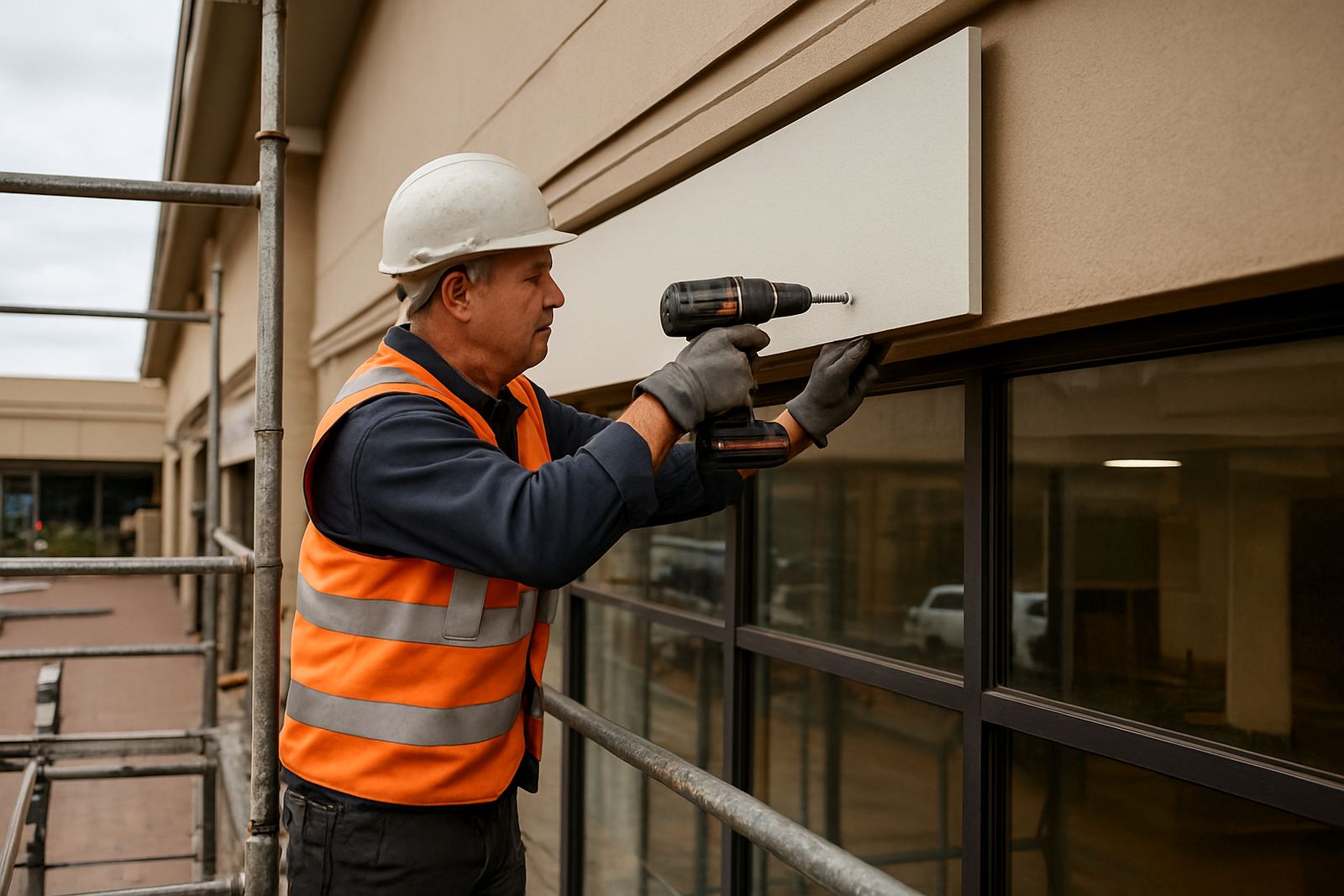
Our rigging teams assess the site access, hoarding height and fixing method before installation. Depending on the layout, we may use scaffold access, platform work or other approved access equipment to fit the panels safely. If the job is above shoulder height or involves working over uneven ground, we plan the lift and set out the safe working area first. For some sites, the sequence matters just as much as the panel itself.
Hoarding signs usually do not need power. Printed panels and flat signboards are fitted mechanically and can remain in place without electrical supply. If the design includes illuminated elements, timer devices or other powered features, the site must provide a suitable power point, safe routing and any required isolation. Gas is not normally part of hoarding sign installation, although adjacent site equipment may have separate requirements and should be planned independently.
- Site survey confirms access, fixings and working method
- Lift planning may be needed for larger or higher runs
- Electrical work is only included where the sign system specifically needs it
- We can programme work around live site activity, deliveries and municipal restrictions
Care, servicing and emergency replacements
Hoarding signs take a fair amount of punishment from wind, dust, sun and site traffic. Panels can loosen, buckle or fade over time, especially on exposed corners or along open roads. We offer servicing visits to check fixings, replace damaged sections and remove panels that are no longer required. On active sites this is often cheaper than leaving a damaged run in place and hoping it lasts through another month.
Where there has been vandalism, storm damage or a vehicle knock, we can attend for an emergency callout and make the area safe before the sign maker arranges a replacement panel. If the hoarding is being shortened or the access points change, we can also handle sign relocations and removals without disturbing the rest of the site setup.
- Fixing checks after strong wind or heavy rain
- Panel replacement for faded, torn or cracked sections
- Removal once the hoarding line is no longer needed
- Maintenance visits for longer projects and phased handovers
What to check before ordering hoarding signs
Before you place an order, it helps to confirm the exact hoarding length, height and substrate so the panels can be cut and fixed correctly. Ask whether the site will need single sided or double sided graphics, where the gates and pedestrian openings are, and whether there are corners, steps or changes in level. It also helps to know if the client wants the graphics to be temporary, semi permanent or used across several phases.
You should also check whether the site is in a windy corridor, near the coast or exposed to public interference, because that affects the fixing method and material choice. If the project has a tight programme, send the survey details early so the rigging crew can book access, lifting gear and enough labour. The more accurate the brief, the less likely you are to have panels sitting on site waiting for adjustments.
- Measured length, height and number of bays
- Surface type: timber, steel, modular fence or mixed hoarding
- Access points, corners, steps and traffic routes
- Whether panels need to come off and go back later for phased works
Key facts
| Typical hoarding heights | 1.8 m, 2.1 m, 2.4 m |
|---|---|
| Typical panel widths | 1.2 m, 2.4 m, custom to suit bay layout |
| Common materials | ACM panels, printed vinyl, polycarbonate, framed inserts |
| Fixing methods | Screws, rivets, clamps, brackets, battens |
| Service area | Western Cape and Gauteng, including Cape Town and Johannesburg |
| Power and gas | Usually not required, unless the sign system includes illumination or other powered features |