

Low-level monument signs built for entrances and roadside visibility
Monument signs are ground-mounted signs used at entrances, boundary lines, business parks, schools, estates and commercial sites where the client needs a strong presence at eye level or from passing traffic. They are usually made as low structures with a solid base, feature cladding and face panels, or as heavier fabricated units with internal steelwork. We work on these installations for sign makers who need a rigging crew that understands weight, access and the order of assembly.
Because these signs sit close to the ground, the job is not only about lifting. It is about placing the base correctly, setting out the line and height, checking for services below ground and making sure the finished sign is level and secure. In windy sites or open corners, a monument sign can take a fair amount of strain, so the fixing method matters from day one.
Sizes, formats and build options that we commonly handle
Monument signs vary a lot in size, from small entrance markers to large site identity features with lighting and layered panels. We handle single-face and double-face units, steel-framed structures, clad plinths, routed panels and heavier boxed sections that need controlled lifting. Some are freestanding on a concrete plinth, others are fixed to a prepared base with anchor bolts and service openings.
- Typical height range: 800 mm to 3 500 mm
- Typical length range: 1 200 mm to 8 000 mm
- Common face materials: aluminium composite, aluminium sheet, acrylic, steel and routed board
- Common structure: mild steel frame with powder coating or painted finish
- Access method: truck-mounted platform, scaffold access, or manual set-out for smaller units
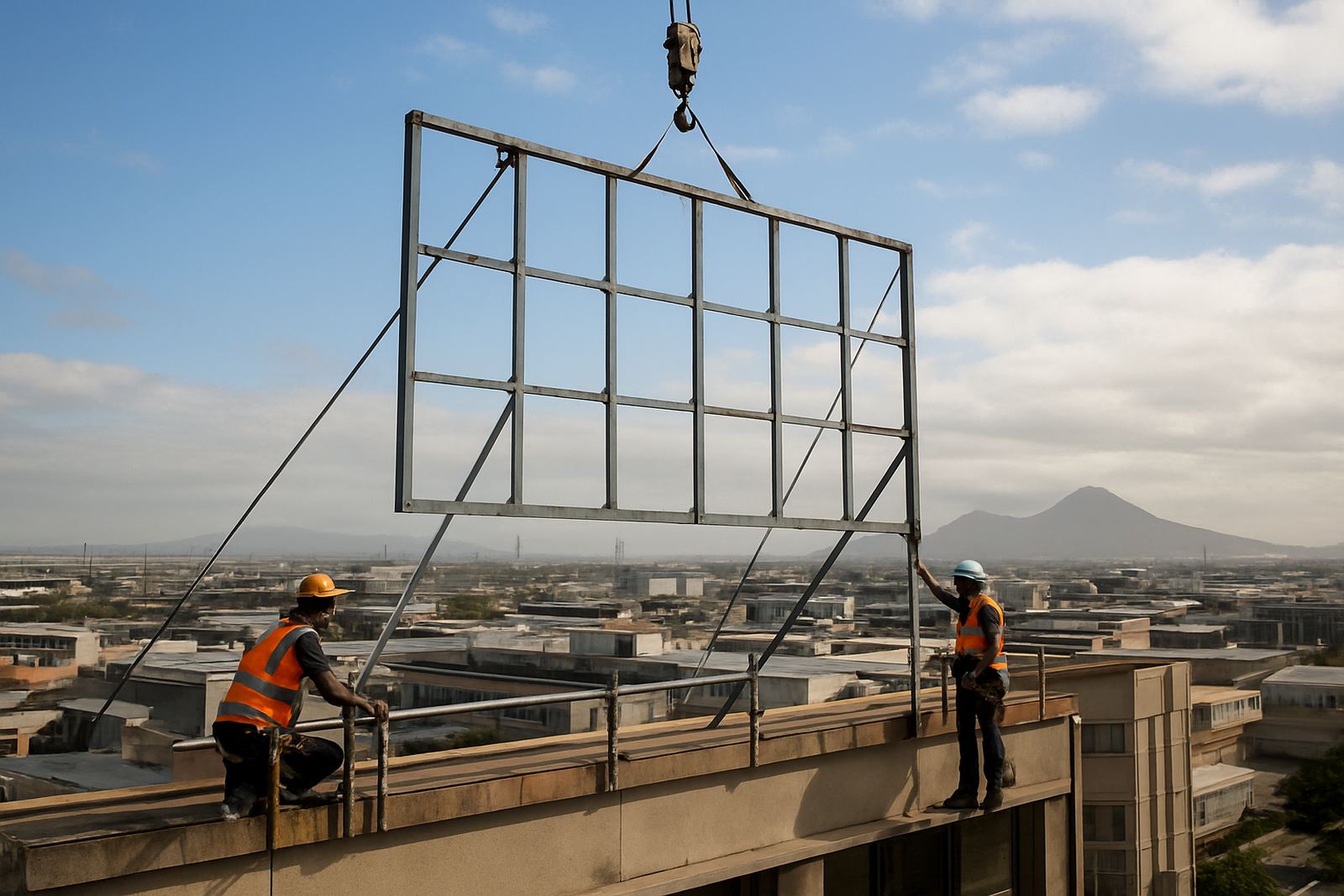
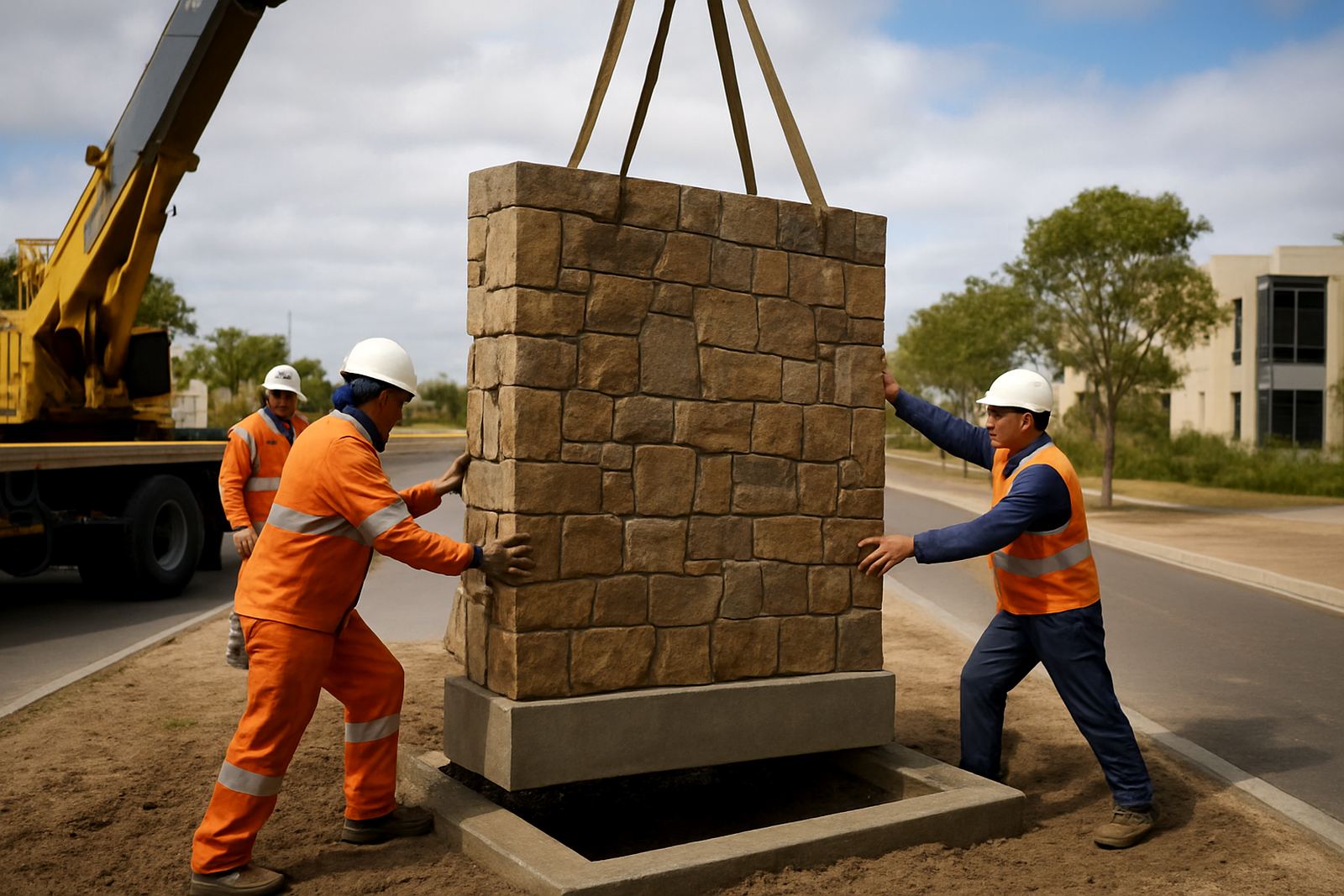
For larger pieces, especially those with stone-look panels or heavy fabricated skins, we plan the lift path and fixing sequence before the crew arrives. That avoids damage to finished surfaces and keeps the install moving on site.
Where monument signs suit best
These signs suit sites that need clear identification before a visitor reaches the building. They are common at estate entrances, retail parks, office parks, factories, logistics yards, schools and healthcare sites. In Cape Town, we see them often in Paarden Eiland, Bellville, Somerset West and Paarl. In Gauteng they are common in Johannesburg CBD, Sandton, Midrand and the East Rand.
They work well where the client wants something lower than a pylon sign but more substantial than a wall-mounted panel. On coastal sites, the structure and fixings need protection against humidity and salt air. Inland, the main concern is dust, heat and repeated service access. Either way the sign needs to be designed for practical upkeep, not just the first install.
- Business parks and gated estates
- Schools, churches and medical sites
- Industrial yards and warehouse entrances
- Retail forecourts and parking access points
- Municipal or private road frontage where low-height signage is allowed
Installation, access and lifting plans on site
Monument sign installation usually starts with a site survey and a check on base size, access, ground conditions and the position of underground services. If a concrete plinth or footing is already in place, we confirm the anchor layout and level. If the sign is arriving in sections, we plan the sequence so the heavier parts are placed first and the face panels are protected until final fix-up.
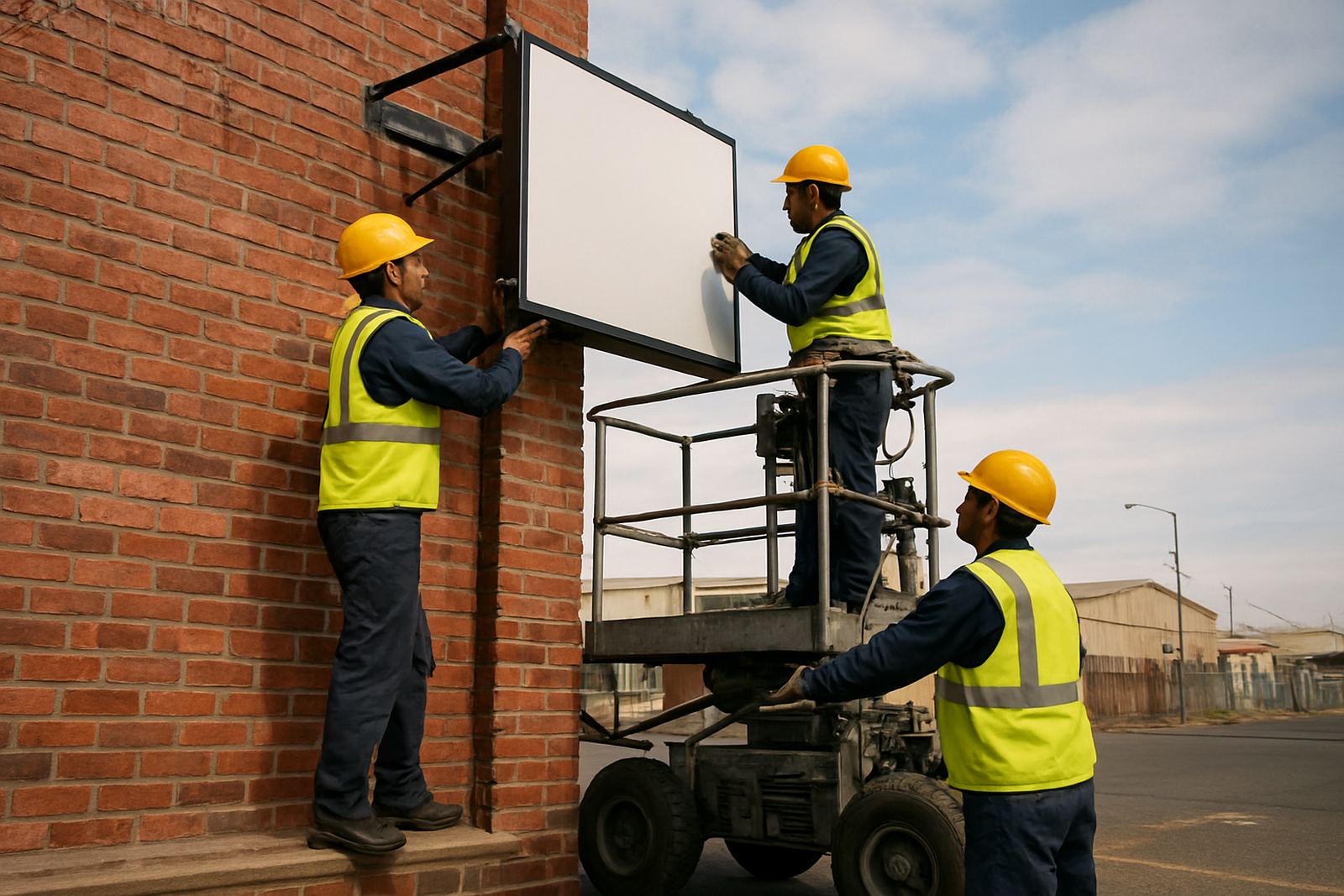
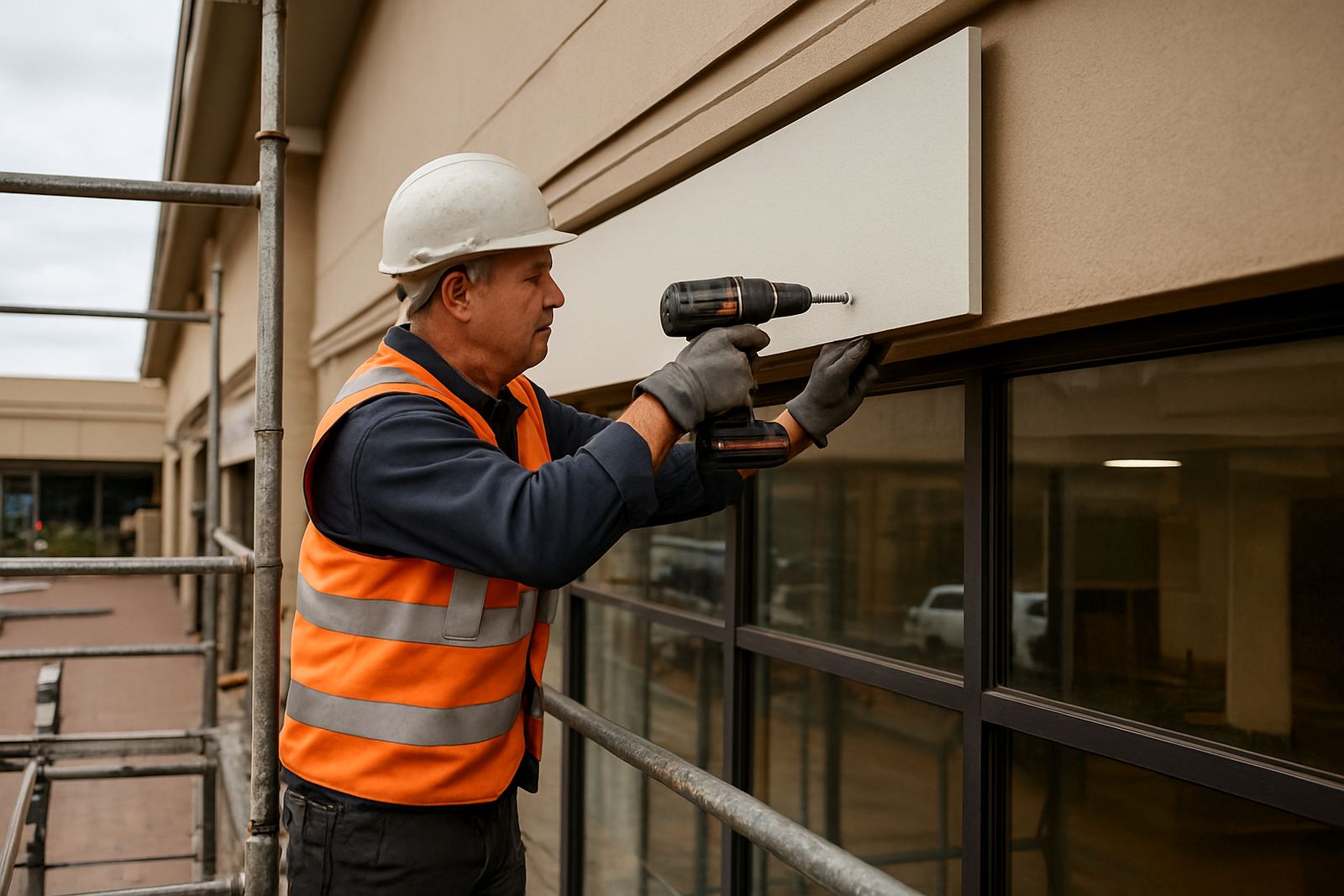
We use scaffold, platform work or controlled manual handling depending on the size of the sign and the site layout. For awkward corners or busy access roads, we plan delivery time around traffic and tenant movement. Our crews are safety trained, scaffold trained and first-aid trained, which is important when work has to happen next to live buildings, parked vehicles or foot traffic.
- Site survey before lifting
- Lift plan for heavier fabricated sections
- Level check and anchor check on arrival
- Protection for finished surfaces during assembly
- Final fixings and alignment before handover
Power, lighting and service access requirements
Some monument signs are plain and do not need power. Others include illuminated faces, internal LEDs, external uplighting or low-voltage feature lighting. If a sign includes lighting, we need a proper power point, safe cable route and enough access to reach the control gear later. A neat installation is no use if the maintenance team cannot get to the fittings when a lamp fails or water gets in.
For signs with electrical components, we check where the supply enters, how the conduit is routed and whether access panels are big enough for future servicing. If a site uses battery backup, solar support or timed controls, those parts must also be accessible. We do not supply the electrical design, but we make sure the rigging and access side supports the electrician's work and future servicing. On some jobs a small gap saved at install can make a big difference later, especially where load-shedding has already affected timing and testing.
Care, cleaning and planned servicing after installation
Monument signs sit low enough to collect dust, tyre spray and garden debris, so they need regular checks. We offer servicing for loose panels, damaged trim, faded faces, water ingress, failed lighting and corrosion around fixings. In coastal areas, fastener inspection matters because salt air can work on exposed metal sooner than expected. Inland, vibration and sun exposure are usually the main causes of wear.
Routine checks should include the base, anchor points, face fixings, sealant lines and any lighting access covers. If the sign was installed near irrigation, wash-down points or parking bays, water staining and impact damage can show up early. Small issues are easier to deal with before a panel lifts or a bracket starts to move.
- Check fixings every 6 to 12 months
- Inspect sealants after heavy rain or pressure washing
- Clean faces with non-abrasive products only
- Look for rust, cracking or movement at the base
- Book servicing before repainting or rebranding work starts
What to confirm before you order a monument sign
Before a sign maker sends a monument sign for installation, it helps to confirm the exact dimensions, weight, fixing method and site conditions. We also need to know whether the sign arrives in one piece or in sections, whether there is an existing plinth, and if the site allows scaffold or platform access. Clear information up front keeps the job on time and avoids a second visit for missing parts or incorrect anchors.
It is also important to check local rules if the sign sits near a road reserve, boundary wall or shared entrance. Some sites need permission for ground fixing, traffic control or after-hours work. If the sign includes lighting, make sure the power point, cable route and access panel positions are confirmed before delivery. That way the crew can get in, complete the work, and leave the site clean without chasing details on the day.
Key facts
| Sign type | Low-level monument signs, feature panels and heavy fabricated sections |
|---|---|
| Typical height | 800 mm to 3 500 mm |
| Typical length | 1 200 mm to 8 000 mm |
| Materials handled | Steel frames, aluminium, aluminium composite, acrylic and routed panels |
| Access methods | Truck platform, scaffold access, manual set-out and controlled lifting |
| Service areas | Cape Town, Paarden Eiland, Bellville, Somerset West, Paarl, Johannesburg CBD, Sandton, Midrand and East Rand |