Gateway signs that suit estates, parks and business parks
Estate entrance signs are usually the first thing visitors, tenants and delivery drivers see, so the finish needs to be neat and the fixing needs to last. We handle sign installation only, working for sign makers who need a crew to mount gateway pylons, freestanding panels, wall signs, illuminated logos and feature lettering at entrances, guardhouses and boundary walls.
These signs are common at residential estates, industrial parks, mixed-use sites, office parks and private developments where access control and clear wayfinding matter. In Cape Town we often work in Paarden Eiland, Bellville, Somerset West and Paarl, and in Gauteng around Johannesburg CBD, Sandton, Midrand and the East Rand. Coastal humidity near the sea, strong wind corridors and dust on inland sites all affect fixing methods and maintenance intervals.
Sizes, finishes and fixing options that work on site
Entrance signs can be small feature plates or large structures that sit above a driveway and need proper access planning. We install a wide range of formats, from compact 600 x 400 mm directional panels to multi-panel gateway signs and fabricated lettering over 6 m wide. Common options include aluminium composite, powder-coated steel frames, acrylic face panels, stainless steel stand-offs, routed lettering and internally lit sign cabinets.
- Single-sided or double-sided signs for one-way and two-way traffic flow
- Flat wall-mounted panels for guardhouse walls and gate pillars
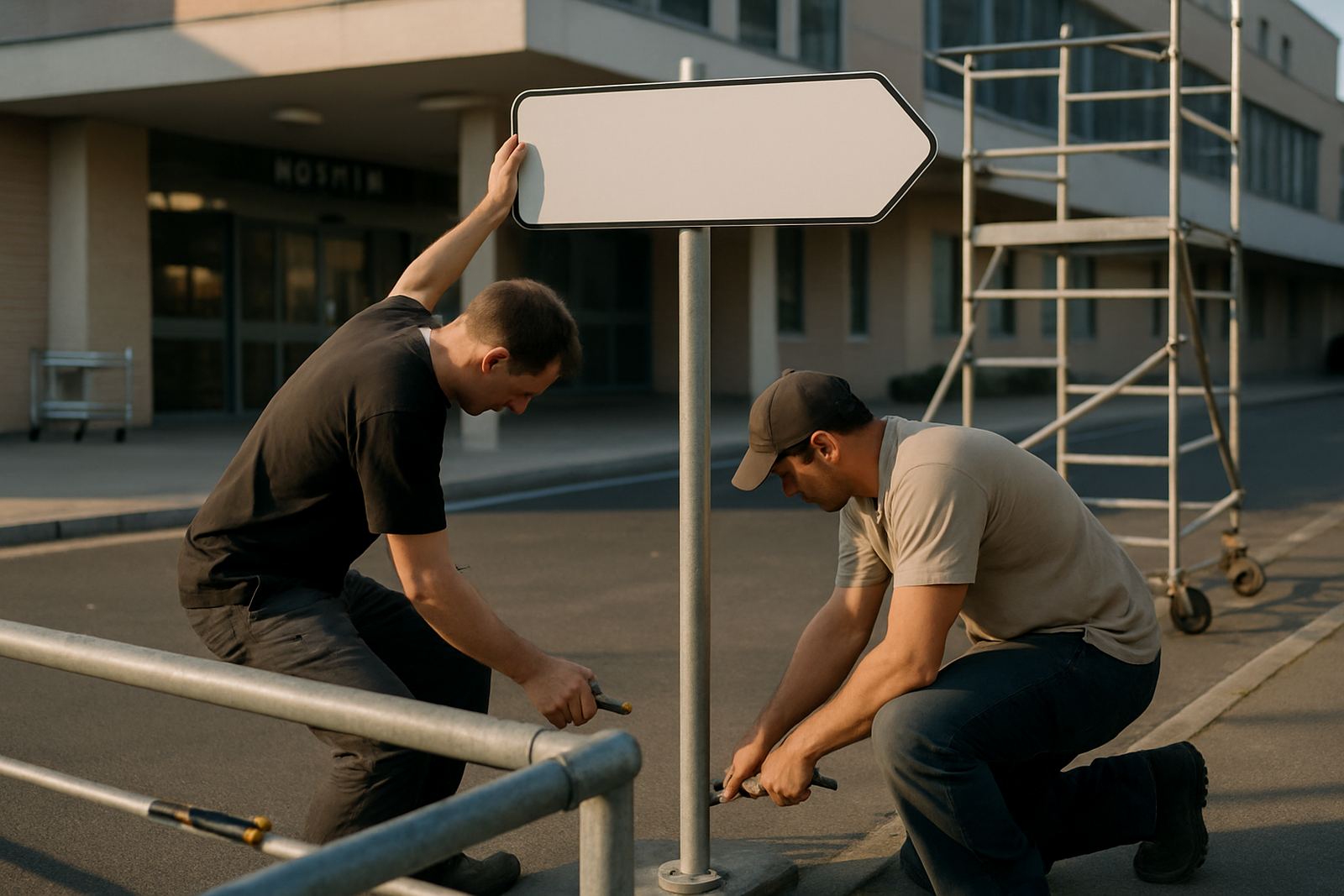
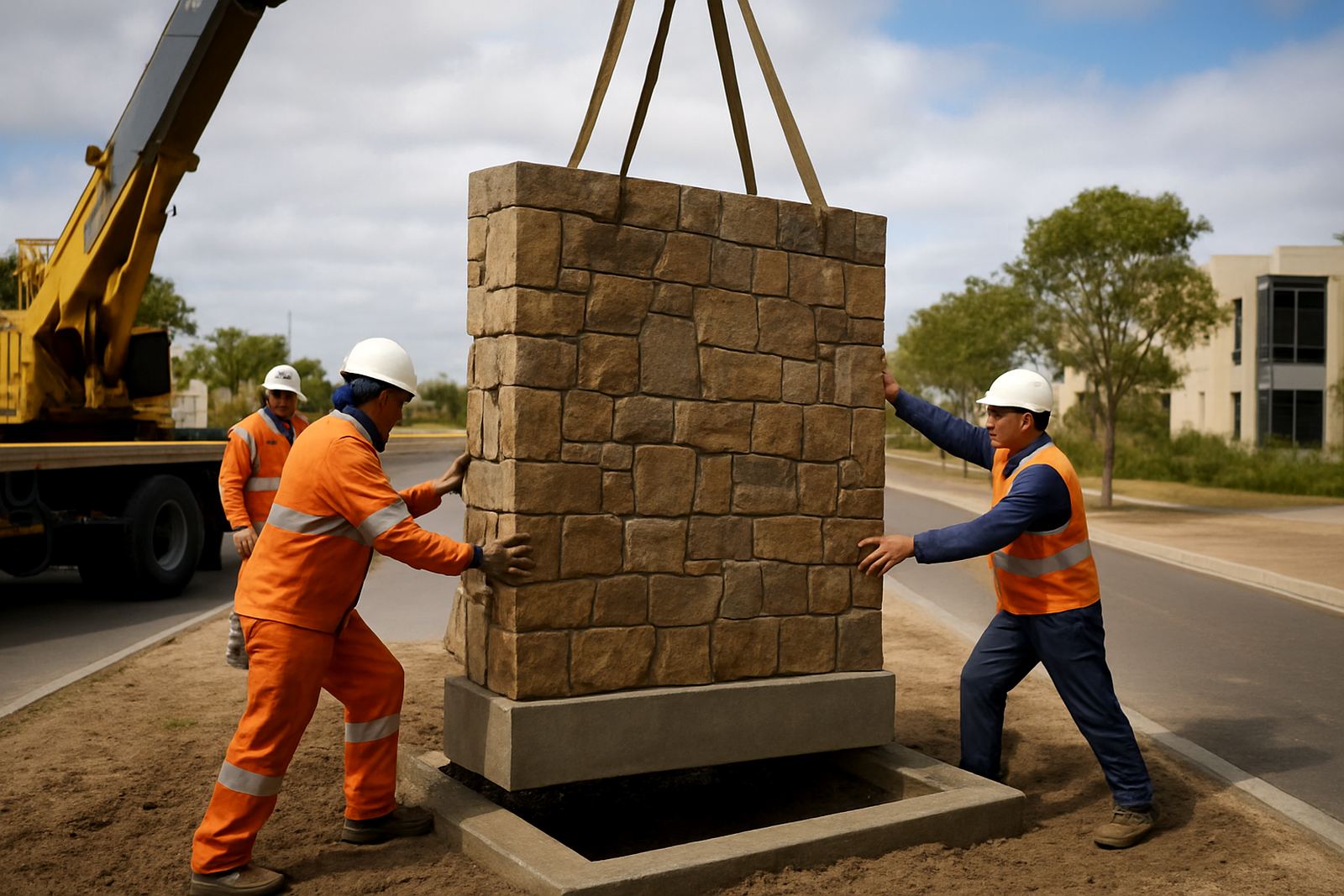
- Freestanding signs on posts, base plates or concrete plinths
- Illuminated faces where a night presence is needed
- Raised letters and logos for a more permanent entrance finish
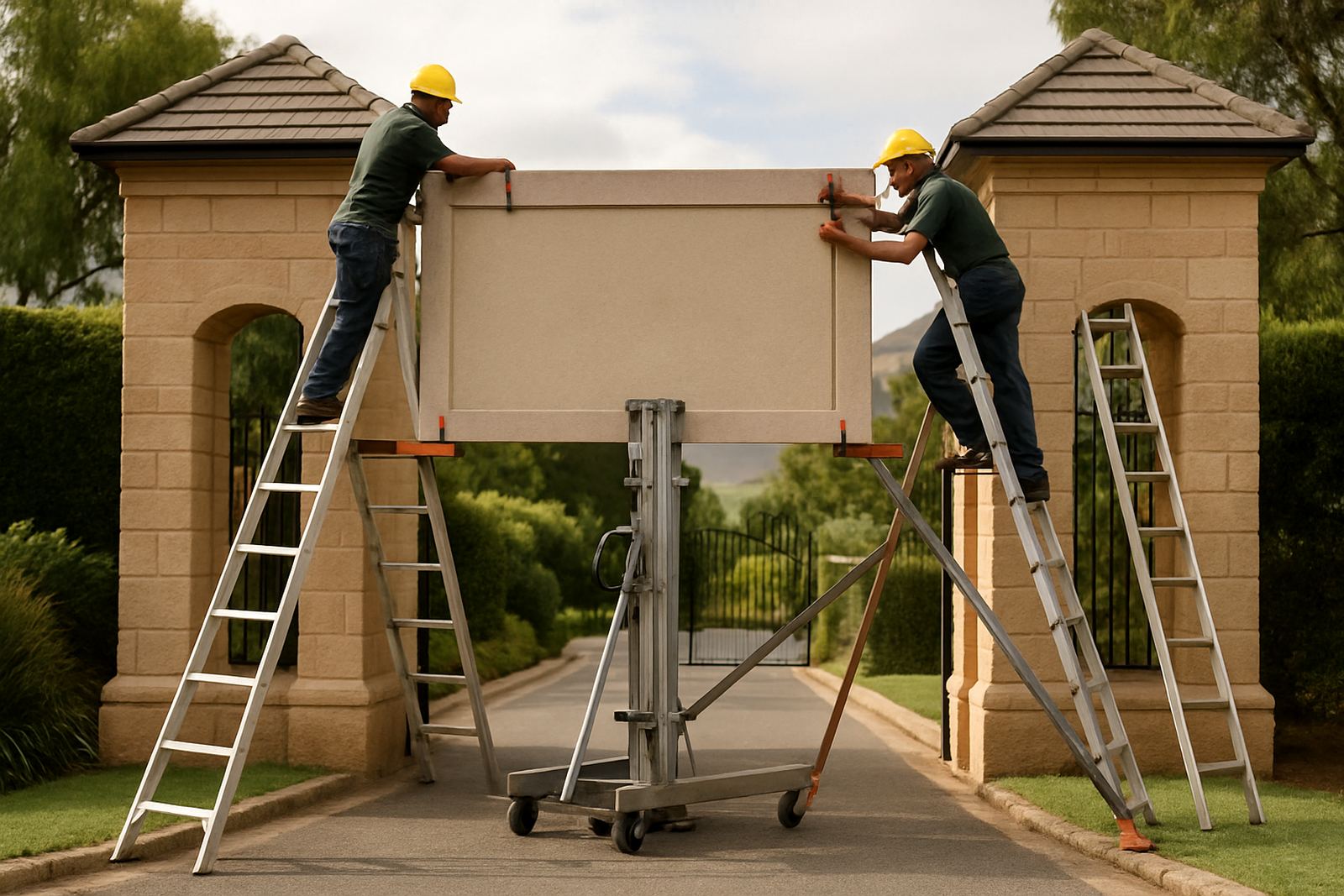
We also help with sign relocation when estates rebrand or entrances are widened. If the sign sits over an active driveway, the crew will plan the lift path and working area so residents and vehicles can still move through safely.
Where entrance signs are used and what the site needs
These signs suit residential estates, sectional title developments, logistics parks, medical campuses, schools, vineyards and business premises with controlled access. The site requirements vary, but most entrance jobs need clear vehicle access, enough stand-back space for rigging equipment and a surface that can handle the load of ladders, scaffold or access platforms.
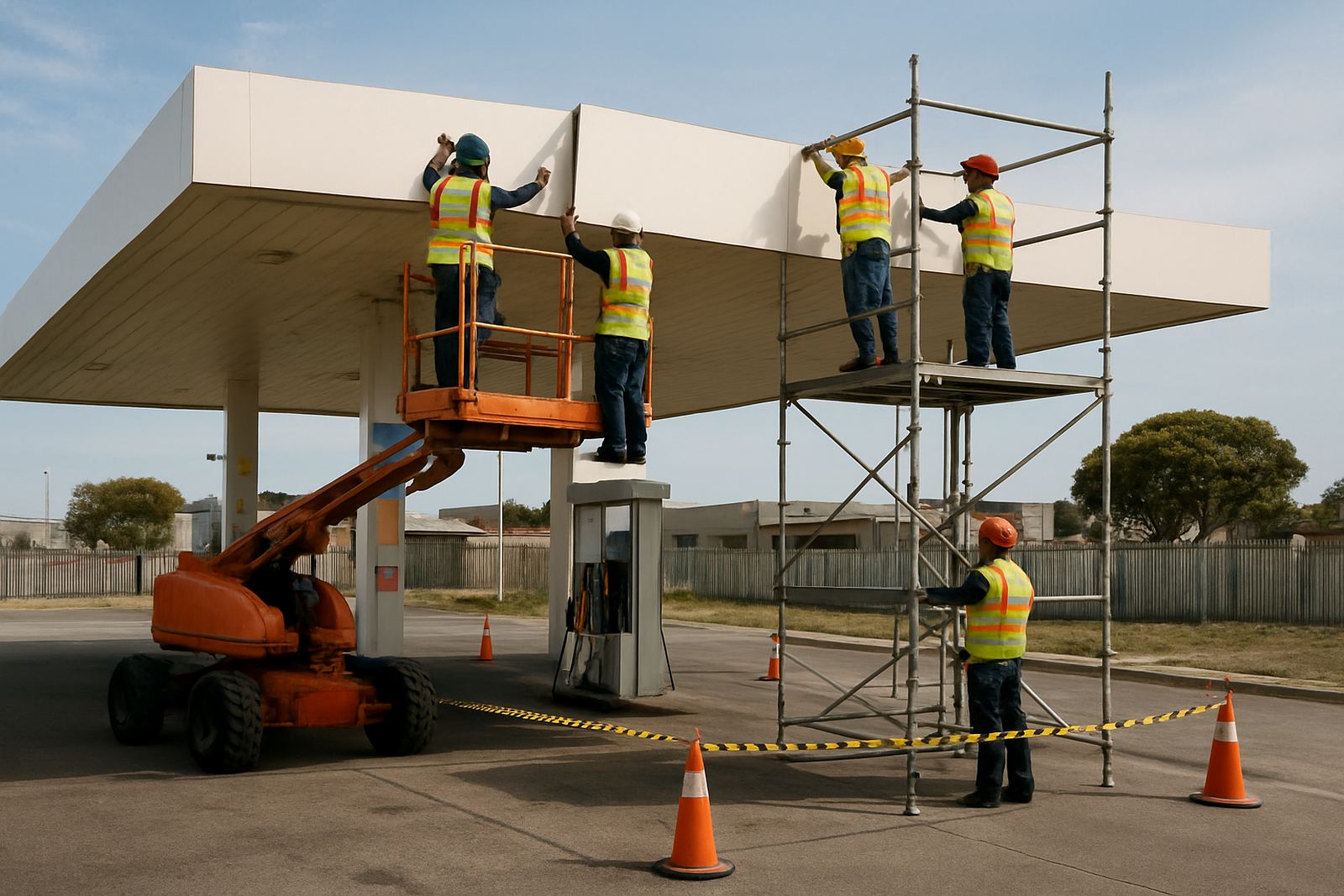
On some sites the sign can be fixed from ground level. On others we need scaffold access or a platform because the face sits above a boomed entrance, a high wall or a cantilever frame. If the sign includes lighting, we check the access point for the electrician and make sure the cabling route is practical before the crew starts. In humid coastal areas we also look closely at corrosion, especially where fixings meet mild steel or where water can sit inside a frame.
- Works well on new developments and existing entrance upgrades
- Useful where the sign maker needs a separate rigging team on site
- Suitable for sealed roads, paving, gravel shoulders and compact yards
- Can be planned around municipal access and estate security procedures
Installation, power and access planning before we lift
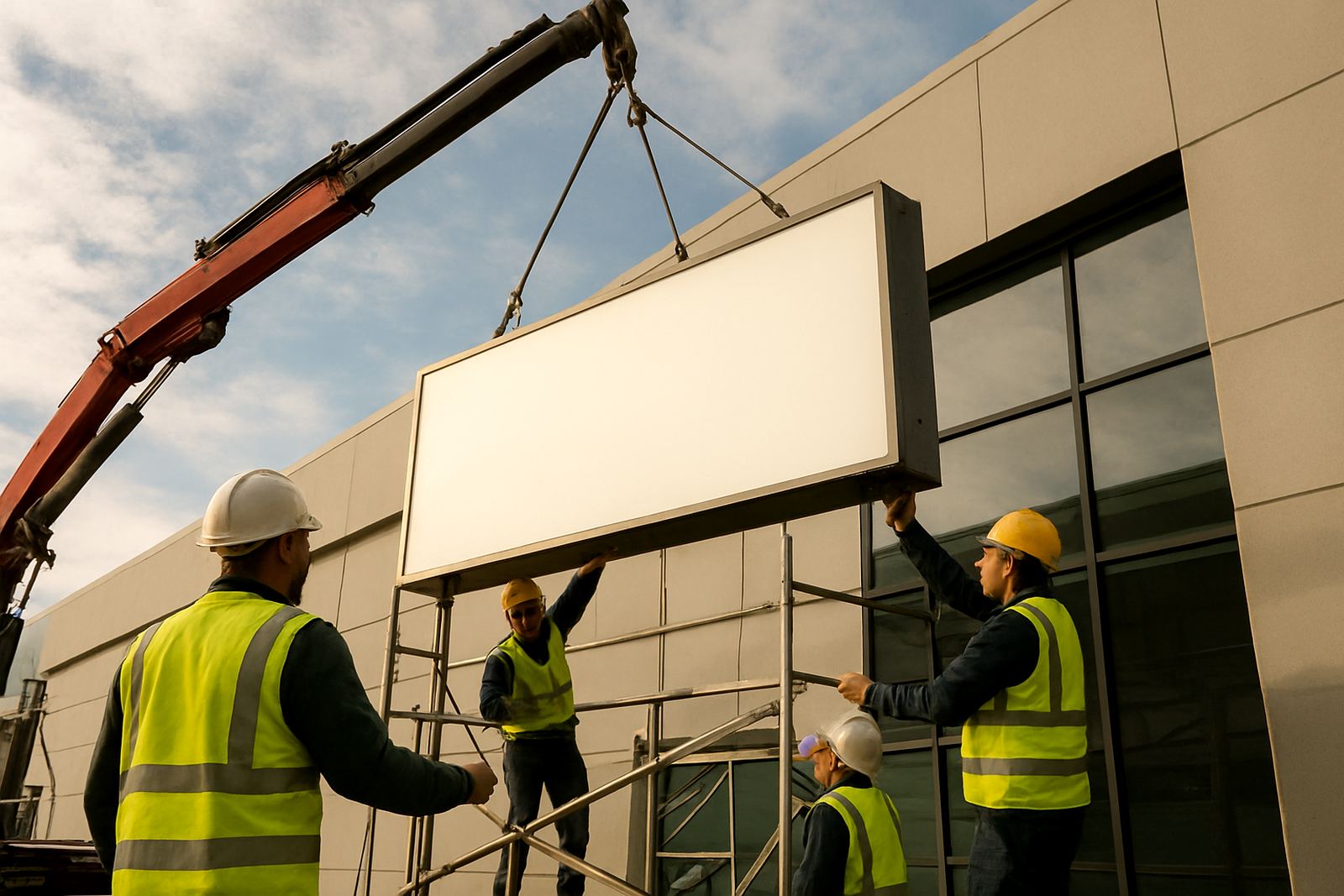
Good installation starts with a site survey. We check the entry height, fixing points, ground conditions, traffic flow and any overhead obstructions such as trees, cables or security beams. For larger entrance signs we prepare lift planning so the sign arrives on site in the right sections and the crew knows the sequence before any equipment is unloaded.
If the sign is illuminated, power needs must be confirmed early. Most entrance signs need a suitable supply point, isolated switching and weather-protected cable routing. Some signs use mains power and some use low-voltage lighting with a separate driver or transformer. We do not design the electrical system, but we do need to know where the power will enter the sign, how the access panel opens, and whether the control gear is inside the sign or nearby. That saves time and avoids repeat visits, which is important on estates where access is tightly controlled. A clean lift plan also helps when the site has a narrow boom gate or a slope that affects truck position.
Care, cleaning and routine servicing after installation
Once the sign is up, it should be checked after the first heavy wind, after any building work nearby and again at regular maintenance intervals. We service entrance signs for sign shops that need a crew to inspect fixings, replace failed lamps or drivers, clean faces and re-secure loose panels. On exposed sites, especially near the coast, fixings and hinges can work loose over time and powder-coated parts may need attention sooner than expected.
Routine servicing may include tightening brackets, checking for water ingress, cleaning dust from faces, testing illumination and replacing damaged sections after vehicle impact or storm movement. If the sign is hard to reach, we can arrange lighting access, scaffold access or platform work. For estates that want minimal disruption, maintenance visits can be scheduled early morning or in quieter periods. That keeps the entrance looking tidy and avoids a last-minute emergency callout when the sign starts to sag or a face goes dark.
What to check before you order an estate entrance sign
Before production starts, it helps to confirm the size, mounting method, wording and whether the sign is lit or non-lit. We also recommend checking who is responsible for the bases, power and site access because that affects the installation plan. A clear brief avoids delays and cuts down on changes once the sign is already fabricated.
- Exact opening size and available height above the driveway
- Whether the sign is wall-fixed, post-mounted or suspended
- Surface material at the fixing point, such as brick, concrete or steel
- Lighting details, power source and access to the control gear
- Any estate rules, municipal restrictions or security booking requirements
- Preferred installation date and whether the site remains open to traffic
If the entrance sign is being replaced, tell us whether the old unit must be removed first and if the opening needs temporary closure. For busy sites in Johannesburg or Cape Town, that timing matters. Our crews work with sign makers who want the rigging handled properly, without competing for the signage job itself.
Key facts
| Product type | Estate entrance signs for residential and business developments |
|---|---|
| Common widths | 600 mm to 6 m plus, depending on the entrance and structure |
| Common materials | Aluminium composite, acrylic, powder-coated steel, stainless steel, routed lettering |
| Mounting methods | Wall fixing, post mounting, base plates, concrete plinths, suspended frames |
| Access support | Scaffold access, platform work, lighting access and lift planning |
| Service areas | Cape Town, Paarden Eiland, Bellville, Somerset West, Paarl, Johannesburg CBD, Sandton, Midrand, East Rand |